Our Impact Category: Policy Change

  • Foreign Affairs Ministry promises reform of document attestation services after The Fourth Estate investigation

    Foreign Affairs Ministry promises reform of document attestation services after The Fourth Estate investigation

    The Ministry of Foreign Affairs says it is introducing reforms to digitize the payment of fees for document attestation services offered by the Ministry to eliminate the human interface that is susceptible to extortion.

    “Reforms are being pursued to make the payment process cashless, and digital platforms are being developed to anchor the entire attestation process and drastically reduce human interface,” it said in a statement.

    The Ministry’s statement followed The Fourth Estate’s latest investigation, which exposed how applicants for document attestation services at the Ministry are being fleeced to pay exorbitant fees for services between GHS 900 and GHS 1200 for services that should cost GHS 200.      

    The findings from the investigations have triggered a response from the Ministry of Foreign Affairs, which says the “reforms will produce desirable outcomes similar to what we have achieved with Passport Administration in Ghana.”

    The Fourth Estate commended

    The Ministry commended The Fourth Estate for the investigation and said the findings would help improve governance and accountability.

    However, the Ministry insists it does not tolerate middlemen or third-party facilitators in attestation services. It says any such practice runs against its own standards of integrity and transparency.

    The statement placed the blame squarely on what it called unscrupulous middlemen. It says these individuals who take advantage of vulnerable citizens have no official link with the Ministry.

    “We reiterate that the parliamentary approved fees for attestation is GHS200 which is collected by officials of the Controller and Accountant-General who issue the appropriate receipts,” it said. “No one should engage the services of middlemen — it is strictly illegal. Citizens with relevant information, enquiries or complaints are encouraged to call: +233 240913284/ +233 240793072.”

    Middleman sanctioned, reported to police

    The Ministry confirmed that the man implicated in the investigation has been sanctioned. It said he has been reported to law enforcement for further investigation and prosecution.

    “The said gentleman has also been prohibited from entering the premises of the Ministry of Foreign Affairs,” the statement said.

    The Ministry had told The Fourth Estate during the investigations that Michael Gomeh, the man who demanded GHS 900 from its undercover, to facilitate a fraudulent attestation, was not its employee.

    However, The Fourth Estate found that Mr Gomeh is in fact a staff member seconded to the Ministry from National Security.

    The statement does not name Mr Gomeh or say which institution has sanctioned him.

    Reforms promised

    The Ministry said it has been working on reforms to its consular and attestation services even before the investigation. It said it is moving toward a cashless payment system. It also said digital platforms are being built to reduce human contact in the attestation process.

    The Ministry reiterated that the approved fee for attestation is GHS200. It also said this fee is collected only by officials of the Controller and Accountant General, who issue proper receipts.

    The statement noted that the attestation process involves several institutions across different arms of government. It said work has been ongoing for months to improve coordination and credibility across these institutions.

    Unanswered questions remain

    The Ministry’s statement does not address how forged documents were successfully attested during The Fourth Estate’s undercover test. It also does not explain why front desk staff routinely directed applicants to unofficial facilitators inside the building.

    Background

    Ghana’s Ministry of Foreign Affairs charges GHS200 for attesting and validating travel documents, a service some embassies require before they process visa applications.

    But The Fourth Estate investigation found applicants were paying far more than that, sometimes as much as GHS1,200, through unofficial middlemen operating inside the Ministry itself.

    The investigation focused on document validation needed for certain embassies in Ghana, including the Egyptian Embassy, which since October 2025 has required bank statements and invitation letters to be validated by the Ministry before granting visas.

    Victims said front desk staff at the Ministry routinely directed them to men in suits inside the building who offered to speed up the process for a fee.

    To test this, The Fourth Estate reporter went undercover with a forged invitation letter for an event in Egypt.

    The receptionist referred the reporter to Michael Gomeh, who wore a Ministry staff tag.

    Gomeh charged GHS900 to handle the attestation. A week later, the reporter received validated documents along with an official receipt showing only GHS265 had been paid.

    Despite using forged paperwork, the documents came back endorsed on official Ministry letterhead, signed by the Director of the Consular and Humanitarian Affairs Bureau.

  • Health Ministry to tighten hospital payment systems after The Fourth Estate’s ‘Medical Kalabule’ investigation

    Health Ministry to tighten hospital payment systems after The Fourth Estate’s ‘Medical Kalabule’ investigation

    The Ministry of Health says it will strengthen payment controls and reform financing systems in public hospitals after The Fourth Estate’s investigation exposed practices that compelled some patients at the Greater Accra Regional Hospital (Ridge Hospital) to purchase surgical items themselves.

    The investigation, titled Medical Kalabule: Inside Ridge Hospital’s Prescription Scam (Part One), documented how patients seeking treatment at the hospital were allegedly subjected to practices that imposed additional financial burdens, raising concerns about accountability and compliance with established payment procedures.

    Following the publication of the investigation, the Minister for Health, Kwabena Mintah Akandoh, announced plans to establish an investigative committee to examine allegations of patient exploitation and unprofessional conduct at the hospital.

    In the statement issued after the publication on January 19, 2026, the Ministry expressed sympathy to patients and their families who may have experienced unprofessional conduct in health facilities, while reaffirming the government’s commitment to reducing the financial and emotional burden associated with accessing healthcare.

    The Ministry said it was “deeply concerned and surprised” by the findings contained in the investigation, describing the allegations as serious and warranting a thorough inquiry. It subsequently constituted a committee and tasked it with submitting its findings within 14 working days.

    When the committee presented its report on March 16, 2026, it confirmed several systemic weaknesses that created opportunities for the exploitation of patients.

    Among its findings, the committee established that a medical officer had breached professional standards by accepting money directly from a patient to procure a surgical item required for an amputation, contrary to Ghana Health Service regulations. The finding corroborated evidence uncovered by The Fourth Estate.

    The committee also identified huge institutional gaps and recommended measures to strengthen oversight, including improving complaint-handling systems in hospitals, introducing mandatory orientation on legal and ethical standards for health workers, and enhancing documentation and monitoring of neurosurgical procedures and the use of medical implants.

    It further recommended the development of a clear policy framework to regulate intramural practice in public health facilities, an area that has long attracted concerns over informal payments.

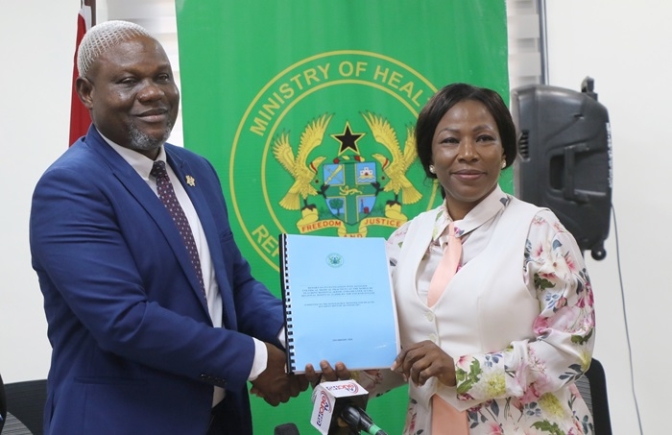
    Receiving the report on behalf of the Health Minister, Deputy Minister for Health, Prof. Grace Ayensu-Danquah, said the Ministry would implement reforms to improve transparency, accountability and equitable access to essential medical supplies.

    She said the Ministry would strengthen procurement systems, enforce strict compliance with approved payment protocols and ensure that patients receive safe and ethical care without being subjected to direct or informal payments.

    Prof. Ayensu-Danquah commended the committee for its work and assured that the Ministry would study its recommendations and take the necessary action.

  • Forest Invasion: Government finally revokes contentious LI 2462

    Forest Invasion: Government finally revokes contentious LI 2462

    After sustained pressure from environmentalists and journalists, the John Mahama government has finally revoked the contentious Legal Instrument (L.I.) 2462 that opened up Ghana’s ecologically sensitive areas, including forest reserves for mining. 

    This follows the maturing of the Environmental Protection (Mining in Forest Reserves) Revocation Instrument, 2025. The Minister for Lands and Natural Resources, Emmanuel Armah-Kofi Buah, laid the instrument in Parliament on October 31, 2025.

    In accordance with Article 11(7) of the constitution, the regulation was revoked on December 10, 2025 after 21 Parliamentary sitting days.

    Reacting to the revocation of the Legal Instrument, the Deputy National Director of A Rocha Ghana, Daryl Bosu, said:  

    “This is a crucial victory for Ghana’s forests. Yet even now, as we celebrate, forests continue to be destroyed by artisanal mining, illegal farming, and logging activities with no effective action in sight,” he said.  “To secure this win, we must urgently halt illegal activities, grow back our forests, and in the long term, develop and implement a progressive national forest protection program, while upgrading the Forestry Commission to effectively deal with these new age threats.”

    When the minister laid the Revocation Instrument in Parliament, he said the regulation had been amended due to intense public outcry. The amendment resulted in the creation of L.I. 2501, which came into force on June 2, 2025, he said.

    But civil society advocates and concerned citizens opposed the amendment. They argued that the new regulation still left the country’s forest reserves vulnerable.

    Mr Armah-Kofi Buah said the government gave in to the demands after consulting with experts and the groundswell against the regulation.

    “We are showing Ghanaians that we are committed to protecting the environment, our forest, and our water bodies,” he said. 

    With The Fourth Estate revealing the faces behind the forest invasion, the National Democratic Congress, then in opposition, promised to revoke the law.

    However, the Mahama government made a U-turn on the issue and rather amended part of the regulation, taking away the power of the president to waive the protection of protected forest reserves, including globally significant biodiversity areas.

    The decision incensed environmental activists who accused the government of not living up to its word.  This compelled the Ministry of Lands and Natural Resources to re-lay the law before parliament for revocation.  

    Background

    In early 2023, a coalition of civil society organizations (CSOs), including A Rocha Ghana and Nature & Development Foundation (NDF), raised the alarm about how the L.I.

    However, their concerns fell on deaf ears.

    Their demands remained unheeded to until The Fourth Estate revealed in September 2024, how officials of the then ruling party, the New Patriotic Party, and government appointees of that regime, were granted concessions to mine and prospect in forest reserves.

    The expose uncovered the identities of NPP officials and government appointees who were scrambling for mining licences in Ghana’s forest reserves. The owners of some of the companies that have obtained these licences included the mayor of Ghana’s second biggest city, Kumasi, Sam Pyne, and a Parliamentary Candidate for the NPP in Juaben, Francis Owusu-Akyaw.

    The Ashanti Regional Chairman of the NPP, Bernard Antwi Boasiako, the District Chief Executive of Wassa East, Emmanuel Boakye, and the NPP’s Women’s Organizer in the Western Region, Angela Bint Ntaama, including a presidential staffer, Harriet Kyeremanteng, all had companies whose licences were waiting ministerial approval to mine in forest reserves.

    The Fourth Estate’s investigations also revealed that since 2023 at least 10 companies have been granted mining leases to mine in 11 mining forest reserves. Four of the companies were to operate in globally significant biodiversity areas. As of August 13, 2024, our investigations also uncovered that at least 25 companies had filed 32 applications to mine and prospect in 24 forest reserves.

    The investigative report produced a groundswell for the immediate revocation of the regulation. A month after publication, the Attorney General of the past government instructed the Ministry of Environment, Science, Technology, and Innovation, along with the Environmental Protection Agency (EPA), to “suspend the enforcement of the Environmental Protection (Mining in Forest Reserves) Regulations 2023 (LI 2462) with immediate effect”.

    However, it took the incumbent government to actually revoke the law, reverting the regulation of Ghana’s forest reserves to an administrative framework for mining called the Environmental Guideline for Mining in Production Forest Reserves, which permits limited mining of not more than 2% of timber production reserves.

    YOU MAY ALSO WANT TO READ:

    Forest Invasion: Companies owned by Wontumi, Kumasi mayor & others scramble to mine in Ghana’s forest reserves – The Fourth Estate (thefourthestategh.com)

    Forest invasion: Land Minister’s half-truth to Parliament & the contradictions fueling mining in Ghana’s forest reserves 

    Forest Invasion: Minerals Commission deletes critical information about mining companies after The Fourth Estate revelations – The Fourth Estate

  • Scholarship bonanza: Parliament passes new bill to amend how scholarships are awarded after The Fourth Estate exposé

    Scholarship bonanza: Parliament passes new bill to amend how scholarships are awarded after The Fourth Estate exposé

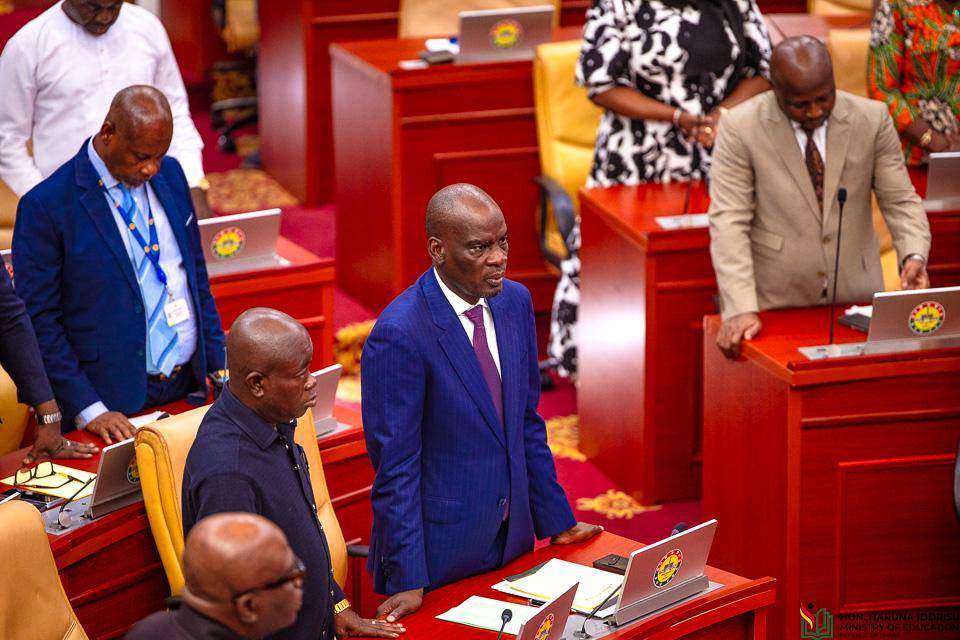
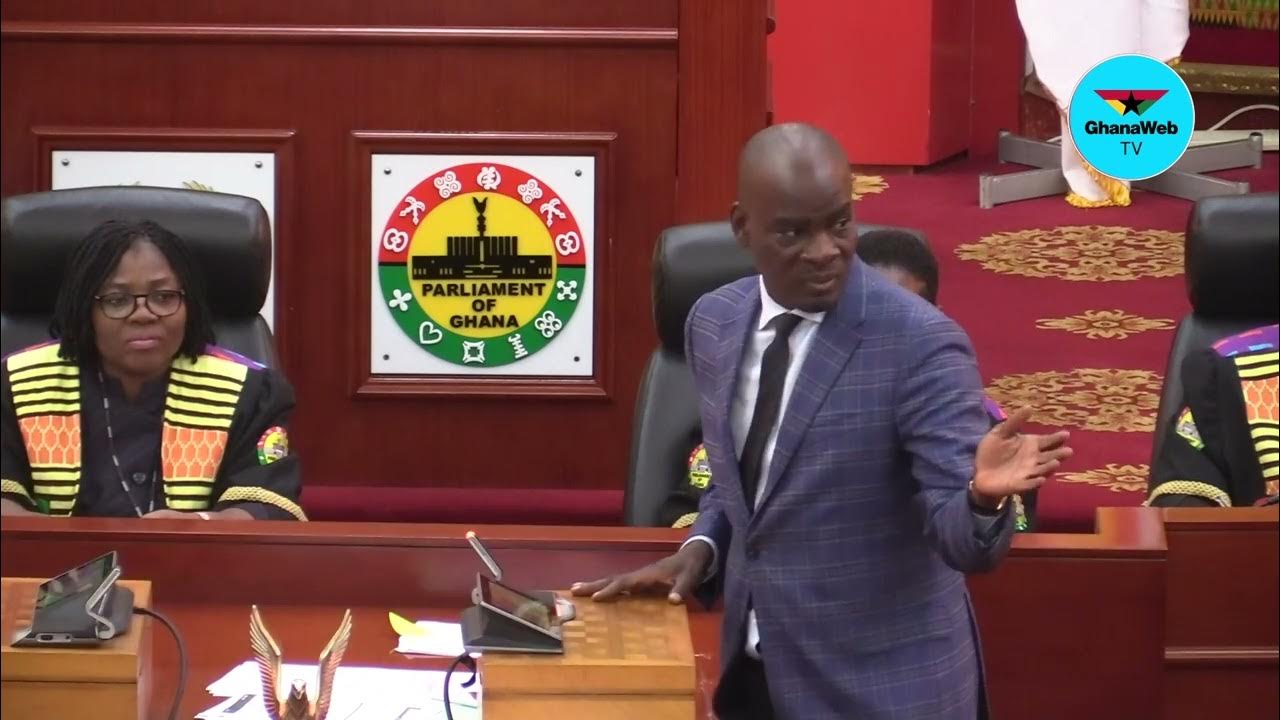
    Parliament has passed the Ghana Scholarships Bill, following what Education Minister Haruna Iddrisu says were extensive consultations with major stakeholders.

    The new bill, which is awaiting presidential assent, aims to establish the Ghana Scholarships Authority, which will oversee and reform the awarding of government educational scholarships .

    The bill, which was laid before parliament in July, was suspended after calls by  civil society organisations  for broader stakeholder consultations. The Citizens’ Coalition, which led the call, argued that the earlier draft failed to address the structural weaknesses in the country’s scholarship system and risked institutionalising opacity, nepotism, and political interference. With those consultations now concluded, Parliament has approved the bill.

    The new legislation follows The Fourth Estate’s exposé, The Scholarship Bonanza, which uncovered how government scholarships meant to support academically gifted but financially disadvantaged students were often dished out to individuals with strong political ties and those from affluent backgrounds. 

    Key provisions of the bill

     According to the bill, the Authority will be required to ensure gender equity in the award of government scholarships, publish details of applicants and beneficiaries, and fund foreign scholarships for programmes that are not available in the country.

    Once assented to by the President, the legislation would usher in a new era in the administration of scholarships, eliminating political patronage, corruption, cronyism and nepotism in the award of government scholarships. Under the new law, only Ghanaians who are academically brilliant but financially needy will be eligible for scholarships.

    The bill also introduces strict accountability measures, requiring beneficiaries to return to the country to serve.Beneficiaries who refuse to return to Ghana  after completing their studies will be required to repay the full scholarship amount, plus interest at the prevailing Bank of Ghana rate.

    Governance structure and ministerial powers

    The legislation establishes a governing board for the Ghana Scholarships Authority, chaired by a presidential appointee and composed of senior representatives from the Ministries of Education, Finance, Labour and Employment, Youth Development and Foreign Affairs. The board will also include a representative from the Attorney-General’s Office, one nominee from the Association of Ghana Industries, the Director-General of the Scholarship Authority and three presidential nominees, at least one of whom must be a woman.

     In consultation with the Board, the Minister of Education will develop regulations to guide the administration of scholarships, including procedures for applying, eligibility criteria, as well as any other requirements necessary for the effective implementation of the Act.

    Moving the motion ahead of the passage of the bill, the Minister of Education, Haruna Iddrisu, stressed that the Act will guarantee fairness by prioritising individuals who genuinely need support. He said the reforms will eliminate favouritism and political influence, while creating a transparent system grounded in merit and need.

    “I believe that the establishment of the Ghana Scholarship Authority will streamline the administration of scholarships and make it accessible to students from disadvantaged backgrounds,” the minister added.

    He further said that the authority would be tasked with establishing clear eligibility criteria and monitoring compliance, while ensuring accountability for the use of public funds allocated to education support.

    The Ghana Scholarships Secretariat, established in 1960 by a Presidential fiat, has for decades overseen scholarship awards without a legislative framework. In practice, its operations have been shaped by conventions and decisions of the secretariat’s management, conditions that opened the door to political patronage, corruption and nepotism in the award of government scholarships.

    The Scholarship Bonanza series, The Fourth Estate’s investigations, exposed a list of politically connected individuals and social elites as beneficiaries of scholarship awards, including Dr. Dennis Addo, the founder of the Claron Hospital, and a member of the New Patriotic Party; Lucie Ekeleba Blay, daughter of Freddie Blay, the then Board Chairman of the Ghana National Petroleum Corporation and former National Chairman of the NPP; Gifty Oware-Mensah, the then Deputy Director of the Ghana National Service Secretariat; and Nana Adubea Asante-Apeatu, the daughter of a former Inspector-General of Police, David Asante-Apeatu.

    Some individuals also received multiple scholarships, with amounts ranging from GBP 13,250 to GBP 55,000, covering tuition and living expenses for foreign studies. Meanwhile, countless deserving students in Ghana are denied this support and are left struggling to continue their education. Others outside the political and influential circles who received scholarships are now facing harsh realities, tuition and living expenses are in arrears, leaving some at risk of deportation. Others are forced to turn to unconventional means just to scrape together enough money for tuition and hostel fees.

    The exposé triggered national outrage and demands for accountability. The former Auditor-General, Daniel Yao Domelevo, the Executive Director of the Institute of Education Studies, Dr Peter Anti, and the former President of the Ghana Bar Association, Yaw Acheampong Boafo, criticised the practice and urged Parliament to enact a law to reform the Secretariat’s operations to promote equity and transparency in the administration of scholarships.

    Heading to the 2024 general elections, both the National Democratic Congress (NDC), then in opposition, and the ruling New Patriotic Party (NPP) pledged to reform the government scholarship scheme. President John Dramani Mahama, who was then a flagbearer, criticised what he called entrenched political patronage in the scholarship scheme and committed to aligning scholarship awards with national development goals. He also pledged to introduce legislation to regulate the award of scholarships, barring political appointees and their associates from benefiting and to eliminate corruption from the regime.

  • Scholarship Bonanza: Government lays bill before Parliament to overhaul scholarships scheme

    Scholarship Bonanza: Government lays bill before Parliament to overhaul scholarships scheme

    The Minister of Education, Haruna Iddrisu, has laid a bill before Parliament, the Scholarships Authority Bill, a law aimed at overhauling the country’s scholarship system, which he acknowledged has long been plagued by cronyism and nepotism.

    Laid before the House on Tuesday, July 8, the bill seeks to transform the Ghana Scholarships Secretariat into an Authority with a mandate to ensure scholarships are awarded on the basis of merit and financial need.

    “The policy underpinning this bill is to deal with nepotism and cronyism associated with the award of scholarships,” the Education Minister told Parliament. “We want to strengthen the Ghana Scholarships Secretariat into an Authority to administer scholarships meritoriously to deserving Ghanaian students. Need will be a defining value of the Ghana Scholarship Authority if established.”

    The Minister further explained that the Authority would align its scholarship allocations with the country’s human resource and development priorities, placing emphasis on areas such as science, mathematics, and education.

    The new legislation follows The Fourth Estate’s exposé, The Scholarship Bonanza, which uncovered how government scholarships meant to support academically gifted but financially disadvantaged students were often dished out to individuals with strong political ties and those from affluent backgrounds. 

    The Scholarship Bonanza series exposed a list of politically connected individuals and social elites as beneficiaries of scholarship awards, including Dr. Dennis Addo, the founder of the Claron Hospital, and a member of the New Patriotic Party; Lucie Ekeleba Blay, daughter of Freddie Blay, the then Board Chairman of the Ghana National Petroleum Corporation and former National Chairman of the NPP; Gifty Oware-Mensah, the then Deputy Director of the Ghana National Service Secretariat; and Nana Adubea Asante-Apeatu, the daughter of a former Inspector-General of Police, David Asante-Apeatu.

    The investigation also revealed that some individuals received multiple scholarships, with amounts ranging from GBP 13,250 to GBP 55,000, covering tuition and living expenses for foreign studies. Meanwhile, countless deserving students in Ghana are denied this support and are left struggling to continue their education. Others outside the political and influential circles who received scholarships are now facing harsh realities—tuition and living expenses are in arrears, leaving some at risk of deportation. Others are forced to turn to unconventional means just to scrape together enough money for tuition and hostel fees.

    The investigation led to nationwide outrage and political discourse, sparking demands for accountability and pressure for the scholarship system to be overhauled. The former Auditor-General, Daniel Yao Domelevo; the Executive Director of the Institute of Education Studies, Dr Peter Anti; and the former President of the Ghana Bar Association, Yaw Acheampong Boafo, criticised the practice and urged Parliament to enact a law to streamline the Secretariat’s operations to promote equity and transparency in the administration of scholarships.

    In the lead-up to the 2024 general elections, both the National Democratic Congress (NDC), then in opposition, and the ruling New Patriotic Party (NPP) pledged to reform the government scholarship scheme.

    The NDC, in its manifesto launched on August 24, 2024, promised to introduce legislation to regulate the award of scholarships, barring political appointees and their associates from benefitting. It further pledged to align scholarship awards with national policies and eliminate political patronage, corruption, cronyism, and nepotism in the award of government scholarships.

     President John Dramani Mahama, who was then a flagbearer, criticised what he described as entrenched political patronage in the scholarship scheme and committed to aligning scholarship awards with national development goals.

    At the same time, the New Patriotic Party (NPP) also promised in its 2024 manifesto to enhance transparency by publishing a comprehensive list of scholarship beneficiaries annually.

    The NPP proposed integrating databases across agencies managing public scholarship schemes, including the Scholarship Secretariat, Student Loans Trust Fund (SLTF), GETFund, and GNPC Scholarship Scheme, to improve oversight and eliminate duplications.

    The then Vice President and flagbearer of the NPP, Dr. Mahamudu Bawumia, reaffirmed this commitment during a media engagement, stressing the party’s intention to streamline and bring transparency to the administration of public scholarships.

  • Scholarship Bonanza: Government to overhaul scholarship scheme through new bill

    Scholarship Bonanza: Government to overhaul scholarship scheme through new bill

    The Ministry of Education is set to restructure the Scholarship Secretariat through a new scholarship bill, the Ghana Scholarship Authority Bill.

     The Minister for Education, Haruna Iddrisu has said the bill will be laid before Parliament when it reconvenes.

    He announced the inauguration of the Board of Trustees of the Ghana Education Trust Fund (GETFund) in Accra. Mr. Iddrisu stated that the new bill is intended to eliminate the cronyism and nepotism that have long plagued the administration of scholarships in the country.

    “Apart from dealing with cronyism and nepotism and giving scholarships to those who are undeserving, the emphasis will be on merit,” he said. The minister added that the new law would ensure that scholarships are awarded to deserving students and help Ghanaian institutions develop world-class faculties.

    He announced the introduction of a new Local Scholarship Initiative as part of the proposed reforms. He explained that the initiative would allow each public university in Ghana to receive support for the training of at least five doctoral candidates locally.

    The reforms follow an investigation by The Fourth Estate, which revealed that scholarships meant to support academically gifted but financially disadvantaged students were often dished out to individuals with strong political ties and people from well-off backgrounds.  

    The Scholarship Bonanza series exposed a list of politically connected individuals and social elites as beneficiaries of scholarship awards, including Dr. Dennis Addo, the founder of the Claron Hospital, and a member of the New Patriotic Party; Lucie Ekeleba Blay, daughter of Freddie Blay, the then Board Chairman of the Ghana National Petroleum Corporation and former National Chairman of the NPP; Gifty Oware-Mensah, the then Deputy Director of the Ghana National Service Secretariat; and Nana Adubea Asante-Apeatu, the daughter of a former Inspector-General of Police, David Asante-Apeatu.

    The investigation also found cases where the Scholarship Secretariat awarded some individuals multiple scholarships, with amounts ranging from GBP 13,250 to GBP 55,000, covering tuition and living expenses for foreign studies. Meanwhile, countless deserving students in Ghana are denied this support and are left struggling to continue their education. Many others outside the political and influential circles who received scholarships are now facing harsh realities—tuition and living expenses are in arrears, leaving some at risk of deportation. Others are forced to turn to unconventional means just to scrape together enough money for tuition and hostel fees.

    The investigative series is based on analyses of data reluctantly provided by the Scholarships Secretariat in response to a right-to-information request for a list of scholarship beneficiaries.

    The investigation led to widespread public outrage and political discourse, sparking demands for accountability and pressure for the scholarship system to be overhauled. The former Auditor-General, Daniel Yao Domelevo; the Executive Director of the Institute of Education Studies, Dr Peter Anti; and the former President of the Ghana Bar Association, Yaw Acheampong Boafo, condemned the practice and urged Parliament to enact a law to streamline the Secretariat’s operations to promote equity and transparency in the administration of scholarships.

    In the lead-up to the 2024 general elections, both the National Democratic Congress (NDC), then in opposition, and the ruling New Patriotic Party (NPP) pledged to reform the government scholarship scheme.

    The NDC, in its manifesto launched on August 24, 2024, said it will introduce legislation to regulate the award of scholarships, barring political appointees and their associates from benefitting. It further pledged to align scholarship awards with national policies and eliminate political patronage, corruption, cronyism, and nepotism in the award of government scholarships.

     President John Dramani Mahama, who was then a flagbearer, criticised what he described as entrenched political patronage in the scholarship scheme and committed to aligning scholarship awards with national development goals.

    At the same time, the New Patriotic Party (NPP) also promised in its 2024 manifesto to enhance transparency by publishing a comprehensive list of scholarship beneficiaries annually.

    The NPP proposed integrating databases across agencies managing public scholarship schemes—including the Scholarship Secretariat, Student Loans Trust Fund (SLTF), GETFund, and GNPC Scholarship Scheme—to improve oversight and eliminate duplications.

    The then Vice President and flagbearer of the NPP, Dr. Mahamudu Bawumia, reaffirmed this commitment during a media engagement, stressing the party’s intention to streamline and bring transparency to the administration of public scholarships.

    YOU MAY ALSO WANT TO READ:

    Scholarships Bonanza: CEO, Freddie Blay & former IGP’s daughters among those who grabbed scholarships for the needy

    Scholarships bonanza: How some are struggling while others received double

    Scholarships Bonanza: How Scholarships Secretariat blows millions abroad on courses available in Ghana