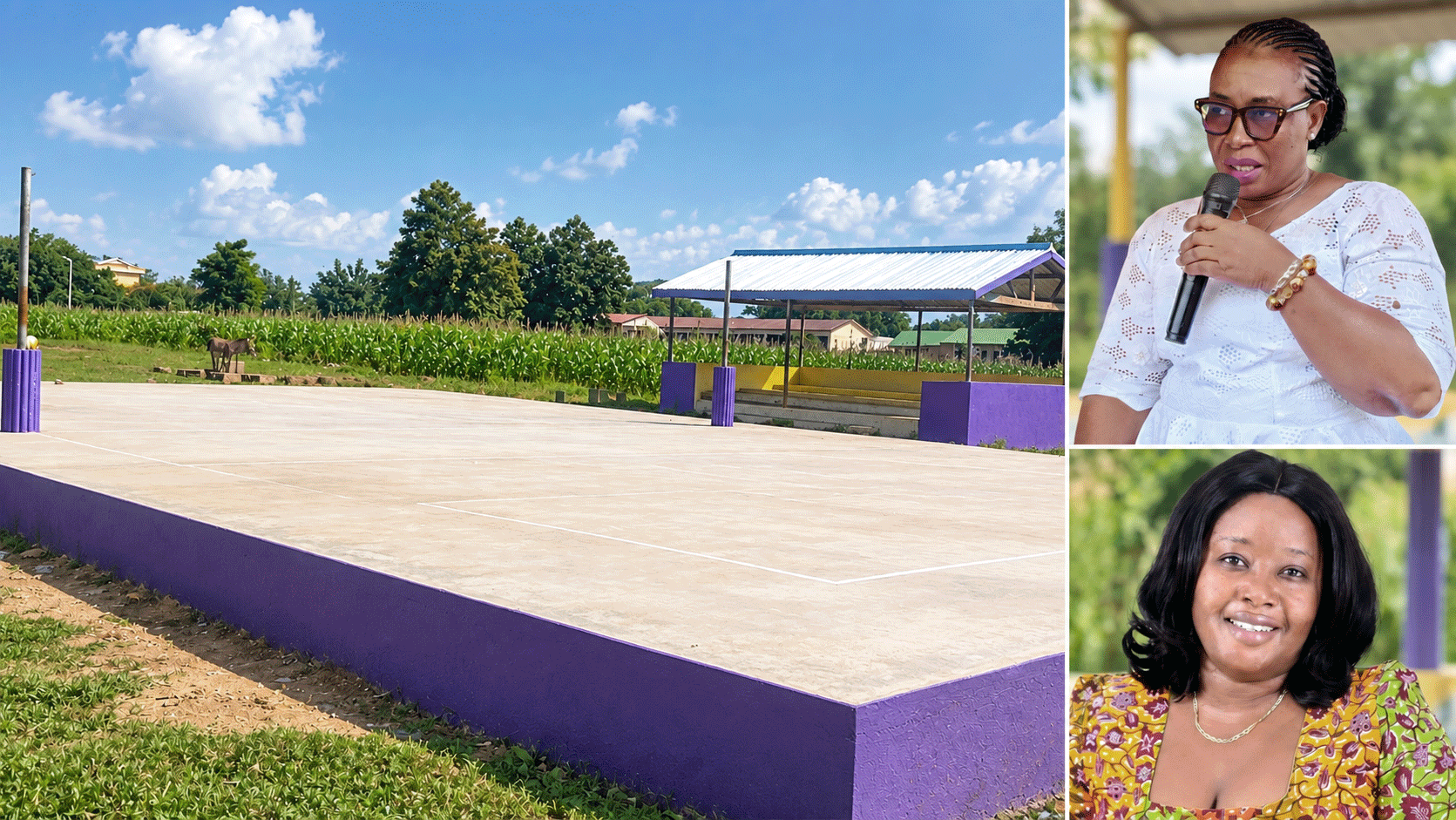
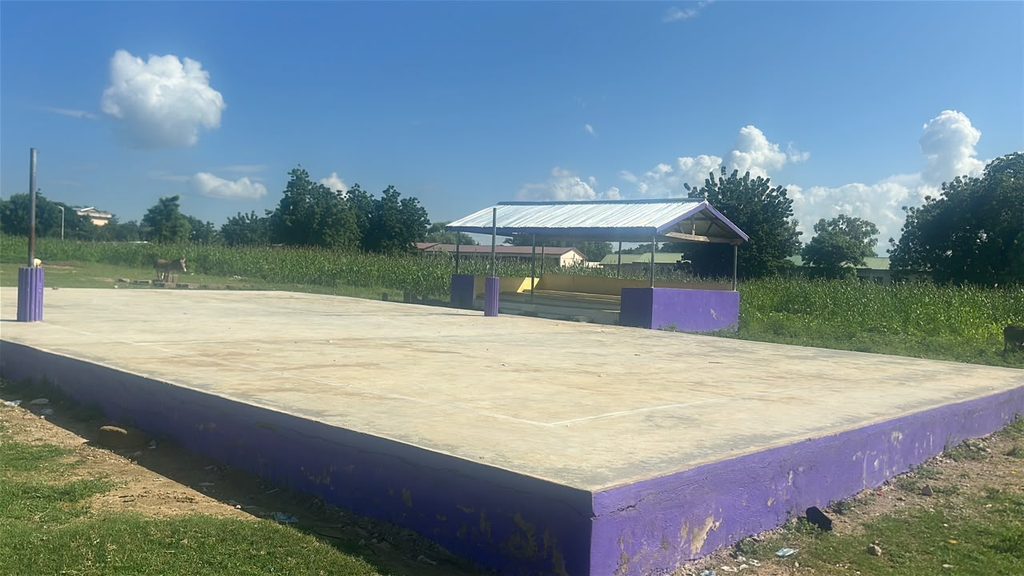
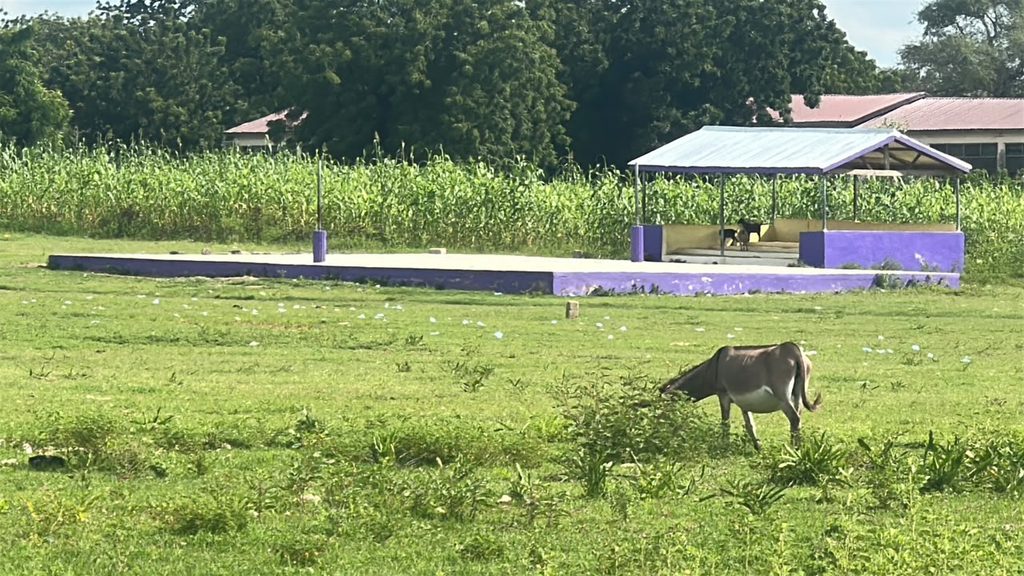
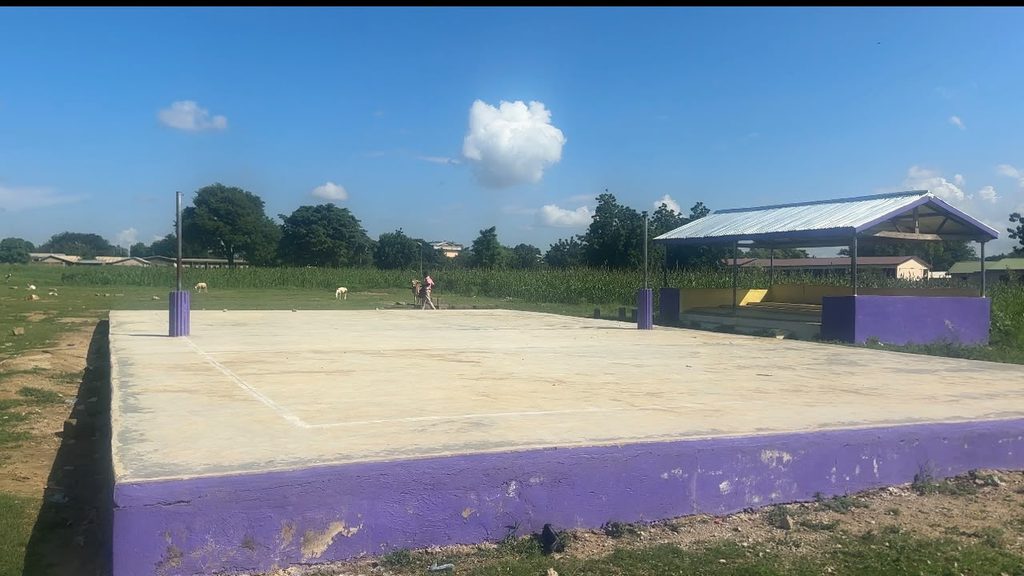
A volleyball court built at a cost of more than GHS213,000 in the Bongo District of the Upper East Region has remained unused for more than two years, after young people in the community rejected the facility.
The youth say they were not consulted before the Bongo District Assembly constructed the court and argue that the money would have been better spent improving a football park that is already widely used by young people.
The facility was constructed in 2024 under the World Bank-funded Gulf of Guinea Northern Regions Social Cohesion (SOCO) Project, which supports infrastructure and social cohesion initiatives in northern Ghana.
The rejected volleyball court in Bongo.
But some young people in Bongo told The Fourth Estate that volleyball game has little following in the community and questioned why the Assembly chose to invest in the sport.
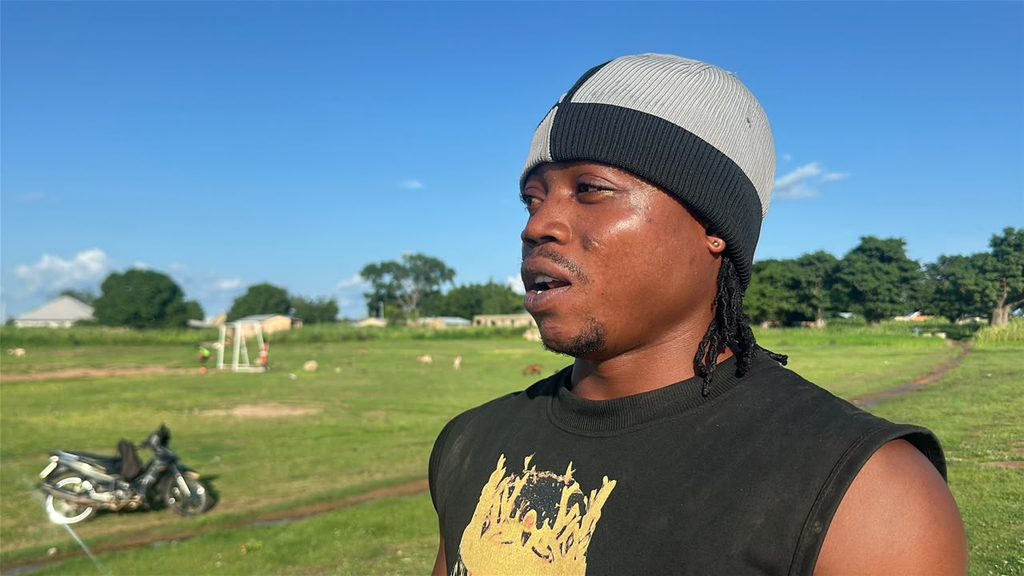
For 23-year-old Godwin Akurubire, the decision is particularly difficult to understand given the sporting interests and economic challenges facing young people in the area.
Godwin Akurubire, resident of Bongo
“There are no volleyball players in Bongo,” he said. “Even if [the Assembly] were bent on spending the money on sporting activity, it should have been our football park. What all the youth here like is football.”
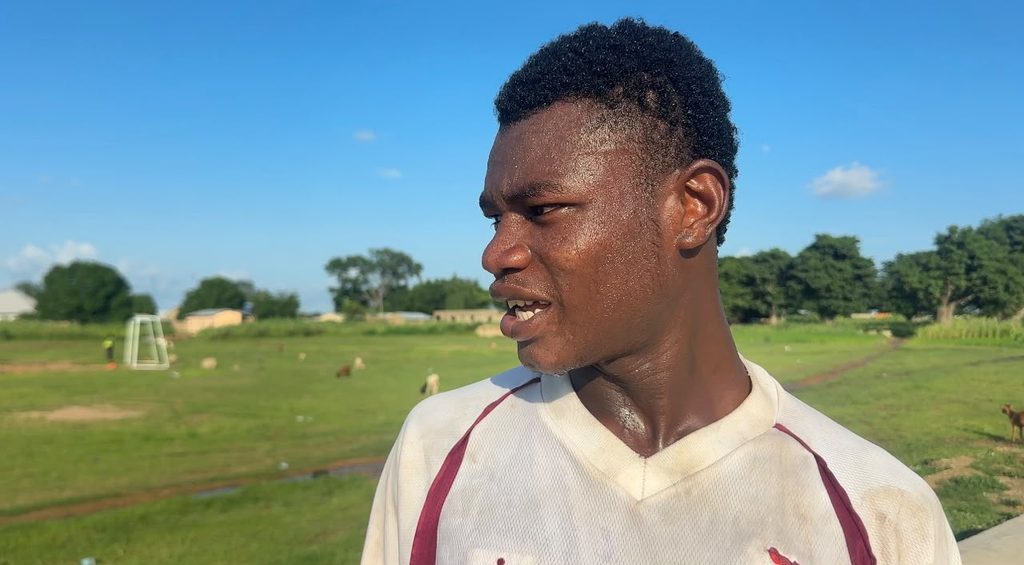
Rodney Aduko, a 20-year-old resident, also questioned the usefulness of the facility.
Rodney Aduko, resident of Bongo.
Pointing to the community football park, he said: “Every day, we come there to play football and yet they say they did this thing for the community. This thing, I do not see its use for us as youth. Here in Bongo, I have never seen any person who plays or has interest in playing volleyball.”
Mba Asampana, Assembly Member for the Bongo-Atampiisi Electoral Area, where the court is located, described the facility as a “deathtrap and a waste of state resources”.
“Looking at how high it is, who would risk himself to play there?” he asked.
Mr Asampana also claimed that assembly members were not consulted before the decision was made to construct the volleyball court.
Rita Atanga, a former Bongo District Chief Executive who was involved in the decision to construct the volleyball court, declined to comment when contacted by The Fourth Estate.
Documents obtained from the Bongo District Assembly show that the GHS213,490 project was also supposed to include a urinal.
Assembly officials told The Fourth Estate, however, that the money allocated for the project was insufficient to build it.
Bongo District Planning Officer Kugoriba Thomas defended the decision to construct the volleyball court, saying it was intended to provide young people with inclusive recreational activities and help steer them away from social problems.
The rejected volleyball court
Questions have also been raised about the design and safety of the facility.
Abdul-Rahman Danladi, head coach of Ghana’s senior women’s national indoor volleyball team, told The Fourth Estate the court may not be fit for purpose because of its height and the limited space surrounding the playing area.
“The court is very high,” he said. “And if it’s high like that, they should have at least expanded it because it is very narrow.”
Mr Danladi said players chasing a ball beyond the cemented playing area risked falling from the elevated court and suffering injuries.
“The best way is to expand it or, better still, construct a lower platform around it so it would not cause any danger to the players,” he said.
He suggested that gravel could also be placed around the court to reduce the risk of injury.
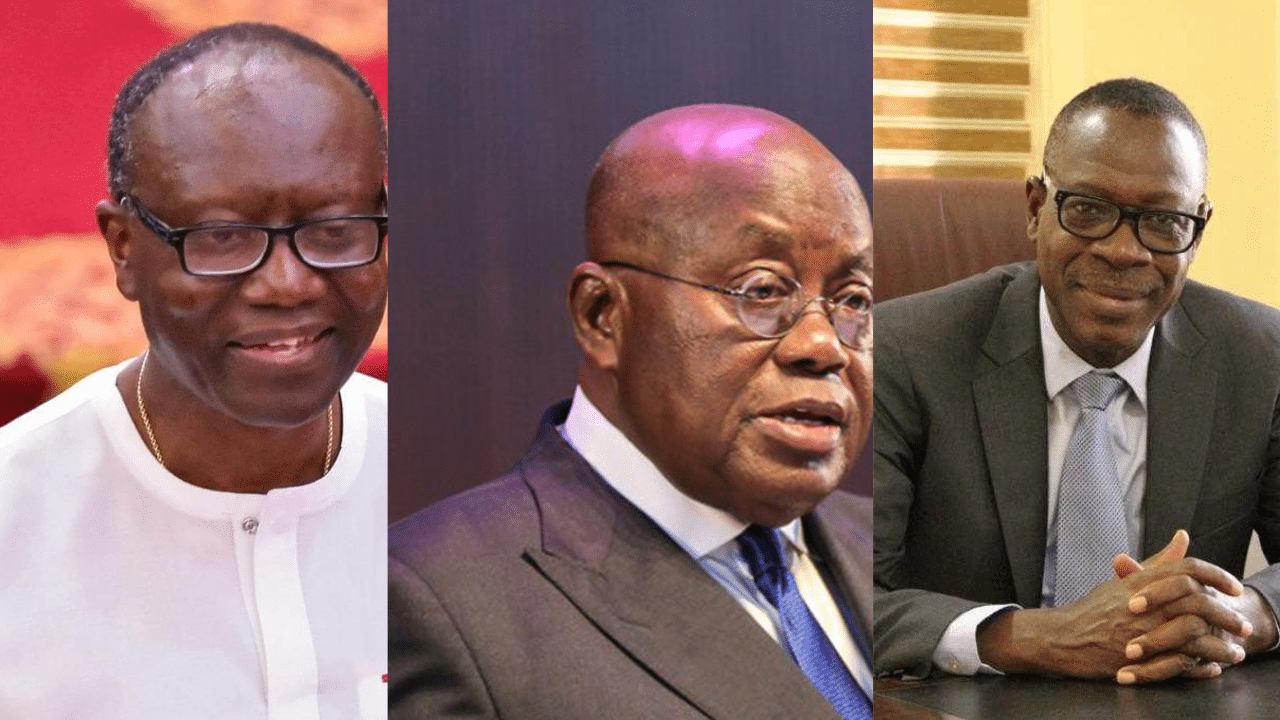
President Akufo-Addo has ordered an immediate suspension of the contract between the Ministry of Finance and Ghana Revenue Authority (GRA) and Strategic Mobilisation Ghana Limited (SML), the company contracted to undertake revenue assurance services in the downstream and upstream petroleum sector and the mining sector.
The president has also directed an audit firm, KPMG, to investigate the services SML renders to the GRA and submit its report in two weeks.
According to a statement signed by the communication’s director at the presidency, Eugene Arhin, President Akufo-Addo “also directed the Ministry of Finance and the Ghana Revenue Authority to suspend the performance contract pending the submission of the audit report, including any payments presently envisaged under its terms.”
KPMG has also been directed to “assess the appropriateness of the contract methodology, verifying compliance with legal standards and industry practices in the procurement process for the selection of SML.”
The president also tasked KPMG to, among others “evaluate the value benefit that SML has so far offered to the GRA through this engagement.”
The Fourth Estate investigations also showed that SML had made false claims that it was checking under-reporting, diversion and dilution in the country’s downstream petroleum sector. When The Fourth Estate team pointed the false claims to the company, the Managing Director, Christian Tetteh Sottie, admitted the company was not into those services.
“Oh no, we are not involved in diversion. We are only at the depots. If the thing [petroleum product] is lifted, we don’t know if [it is diverted],” Mr. Sottie said.
The Finance Committee’s resolution adopted by Parliament on Friday, December 22, 2023, stated that the multi-year contract signed with SML should have been approved by Parliament but this was not done.
“The committee noted that the contract between GRA and SML being a multiyear commitment requires parliamentary approval under section 33 of the Public Financial Management Act 2016. The committee recommends that all payments beginning the next fiscal year be suspended until this house considers the committee’s report on its investigations,” the resolution stated.
A contract is deemed to be multi-year when it goes beyond a year, according to the Public Financial Management Act 2016. This means that the first contract for revenue assurance in the downstream petroleum sector in 2019 and the second covering the upstream petroleum and the gold mining sector in 2023 are in contravention of the law.
Aside from this, Parliament also said it would investigate the matter.
“The Committee further decided to investigate these projects in accordance with article 103 of the national constitution and will be submitting its report to this house.”
The minority leader in parliament, Dr. Cassiel Ato Forson, said the deal in its “current shape is not valid.”
President Akufo-Addo’s appointment of KPMG to audit the so-called revenue assurance agreement between Ghana Revenue Authority (GRA) and Strategic Mobilisation Limited (SML) has come too late in the day.
Dr Forson, in a social media post, has described the recent statement from the president as a “whitewashing attempt” since parliament had already “directed the finance committee to audit the infamous agreement and the committee is actively involved in the matter.”
He said the statement by the president would not deter parliament from investigating the matter and ensuring an end to corruption.
“The whitewashing attempt by the president in the name of an audit will not dissuade Parliament from looking into this matter to stop the siphoning of state resources into the private pockets of government officials and their crony business partners” the minority leader added.
KPMG’s practice oversight bosses should prudently preserve the firm’s reputation & drop this assignment. This issue is a hot political potato right now. The nature of the allegations requires an IN-DEPTH look by state bodies with the RIGHT POWERS & INDEPENDENCE. KPMG has neither. https://t.co/QFhgLQa8eW
Meanwhile, the Vice President of the policy think tank, Imani Ghana, Bright Simons, has called on KPMG to reject the offer to investigate the deal between SML and GRA due to its political nature.
“KPMG’s practice oversight bosses should prudently preserve the firm’s reputation and drop this assignment. This issue is a hot political potato right now. The nature of the allegations requires an in-depth look by state bodies with the right powers and independence. KPMG has neither,” Mr. Simons stated on X(formerly Twitter).
KPMG has its integrity at stake if it accepts this job. It is a client of GRA and its investigation against the leaders of one of its LARGE portfolios is exceedingly suspicious. Simply unethical. https://t.co/vnn274HcEI
The Executive Director of the African Centre for Energy Policy, Ben Boakye, who also reacted to the president’s statement has also cast doubts on KPMG’s ability to do an independent work.
“KPMG has its integrity at stake if it accepts this job. It is a client of GRA and its investigations against the leaders of one of its large portfolios is exceedingly suspicious. simply unethical,” Mr Boakye stated.
Since the publication of our latest investigations on the government’s contract with Strategic Mobilisation Ghana Limited (SML), we have seen and read official reactions and a page purporting to be from the signed contract stating that the duration of the consolidated contract is 5, and not 10 years as we stated in our story.
We note, as we have stated in our interviews, that it is possible the duration of the contract may have changed from what our sources made available to us.
What remains clear and valid is that SML DOES NOT deserve a share of revenue in every litre of fuel Ghanaians consume, a share of revenue in every barrel of oil Ghana produces and a share of revenue in every ounce of gold Ghana produces even for a day let alone 5 years.
When we interviewed officials of the Ghana Revenue Authority (GRA) and SML during our investigation, we did not mention the expanded contract. This is because the expanded contract was initiated when our investigation into the government’s dealings with SML was underway.
The investigative team only got to know about the expansion of the contract to cover the upstream petroleum sector and the gold mining sector after we concluded our interviews with both the GRA and SML.
Sources who knew we were working on the SML deal and believing that the expansion was going to hurt Ghana even more than the original contract, reached out to us with information on this contract.
Before we published the story, we wrote to the GRA and the Ministry of Finance, requesting information on the said contract. This is a due diligence required by the ethics of our profession.
Neither the GRA nor the Ministry of Finance confirmed the existence of the expanded contract until after we published the story, which then compelled them to publicly confirm the existence of the expanded contract. The GRA and Ministry of Finance refused to give us copies of the contracts and other related documents even though we wrote to both institutions requesting information under the Right to Information Law. Our first letter to the GRA was in July this year, 5 months before we published the story, and we have since not received a response.
The angle of the story on the expanded contract that entitles SML to over $100 million a year was only possible because of our multiple sources, who leaked some details of the contract to us. We have since received more leaks and information on the contracts and other related ones.
However, since two of the parties to the contract, the GRA and SML, have stated in their rejoinders that the consolidated contract is for 5 years, we will work with the 5 years. We have accordingly provided an editor’s note to the published articles and will stick to 5 years in our reporting going forward.
We, however, reject any allegation that the documents we published were doctored. These are documents we received from multiple reliable sources for our use in the interest of the nation. The parties to the contract have not disputed the substance and contents of the documents we shared revealing the monumental amounts SML would be undeservedly entitled to under the expanded contract regardless of the duration.
One thing is sure, the allegation of doctoring or altering any text of the documents are completely without basis. We will NEVER do any such. A forensic examination of the disputed page we published would reveal that not even a single letter of the text has been tampered with.
It is obvious the focus on the duration of the contract is a red herring intended to draw attention from the substance of the investigation, which has shown that there is no justification to pay SML over $100 million a year as will be the case under the expanded contract.
We wish to reiterate that the evidence in our documentary clearly shows that SML DOES NOT deserve what this contract entitles it to—a share of revenue in every litre of fuel Ghanaians consume, a share of revenue in every barrel of oil Ghana produces and a share of revenue in every ounce of gold Ghana produces – even for a day, let alone 5 years.
Knowing that whistle-blowers stand the risk of victimization, such as losing their jobs and sometimes even their lives, we restrain ourselves from sharing certain details that could link the information to our sources.
We will send letters to remind the GRA and Ministry of Finance that our RTI requests remain unanswered.
Parliament has directed the Ghana Revenue Authority(GRA) to suspend payments to Strategic Mobilisation Limited (SML), the company it contracted in 2019 to undertake revenue assurance services.
An investigation by The Fourth Estate revealed several anomalies with the contract and its execution.
The Finance Committee’s resolution adopted by Parliament on Friday, December 22, 2023, stated that the multi-year contract signed with SML should have been approved by Parliament but this was not done.
“The committee noted that the contract between GRA and SML being a multiyear commitment requires parliamentary approval under section 33 of the Public Financial Management Act 2016. The committee recommends that all payments beginning the next fiscal year be suspended until this house considers the committee’s report on its investigations,” the resolution stated.
A contract is deemed to be multi-year when it goes beyond a year, according to the Public Financial Management Act 2016. This means that the first contract for revenue assurance in the downstream petroleum sector in 2019 and the second covering the upstream petroleum and the gold mining sector in 2023 are in contravention of the law.
Aside from this, Parliament also said it would investigate the matter.
“The Committee further decided to investigate these projects in accordance with article 103 of the national constitution and will be submitting its report to this house.”
The minority leader in parliament, Dr. Cassiel Ato Forson, said the deal in its “current shape is not valid.”
The intervention of Parliament is in response to The Fourth Estate‘s investigation of how the GRA and the Ministry of Finance signed a shady deal with SML, an offshoot of a timber company in Ghana. The downstream petroleum sector contract earns SML up to GH₵24 million every month.
The investigation also showed that SML has been awarded a contract worth nearly US$100 million a year for revenue assurance in the upstream petroleum and gold mining sector in 2023.
The Fourth Estate investigations also showed that SML had made false claims that it was checking under-reporting, diversion and dilution in the country’s downstream petroleum sector. When we pointed the false claims to the company, the Managing Director, Christian Tetteh Sottie, admitted the company was not into those services.
“Oh no, we are not involved in diversion. We are only at the depots. If the thing [petroleum product] is lifted, we don’t know if [it is diverted],” Mr. Sottie said.
He added: “It is GRA, Customs, that will determine where it goes, and they will follow up. We are not capable. We don’t have men outside.”
“We don’t go into that,” he said when we asked whether SML had “ever detected or identified any issues of under declaration.”
SML also claimed that it had been able to save Ghana GH₵3 billion in the last three years since it started its work.
When we asked Christian Tetteh Sottie how the company saved the money, he said he did not about the claim of saving GH₵3 billion.
The IT Engineer for SML, Prince Sarpong, said it was a misreporting caused by the journalists he had made a presentation to.
“It was a mistake because if you look at other publications, it was just a consultation between GRA and SML. I did the presentation, and I was giving them the expected revenue. Our system can generate expected revenue, so what we did was not even the accurate figure because only GRA can give accurate figures. So, that is a caption by journalists.“
After the publication of The Fourth Estate‘s investigation, the GRA reiterated the discredited claim that SML had saved Ghana GH₵3 billion. Revenue figures we obtained from the GRA from 2012 to 2022, however, showed that the average growth yearly in revenue before SML’s engagement was 47% as compared to SML’s period of 13.6% average yearly growth.
Although the GRA contracted SML for revenue assurance services, it does not use the readings from SML’s metres for revenue collection. The GRA officials told The Fourth Estate that they use the readings metres installed at the loading gantries at the various depots across the country.
The IT Systems Engineer of SML Ghana, Prince Sarpong, has contradicted himself and his managing director’s statement that the GH₵3 billion the company claimed to have saved was false.
The company had claimed that but for its operations, Ghana would have lost GH₵3 billion. When The Fourth Estate confronted the management of the company and challenged them to prove it, they said they didn’t put out the figure as savings to the state and that the media misreported them.
The Managing Director, Christian Tetteh Sottie, had the following interaction with Manasseh Azure Awuni of The Fourth Estate:
MANASSEH: What I want is the agreement from here that the figures are not accurate and that we cannot say that your intervention saved GH₵3 billion.
MR SOTTIE: I have told you that [in terms of the] GH₵3 billion, I am not aware [of it] because when we were told about the publication, we even called the journalist … I think he [journalist] picked it out of context. I can’t remember the GHS 3 billion. I remember the GH₵ 1 billion.
MANASSEH: But the GH₵3 billion was from your outfit?
MR SOTTIE: Yes, you remember when you were talking, I was still speaking about GH₵1 billion. Because, after one year, that was the statement I put out.
MANASSEH: So, who put the GH₵3 billion out?
The IT Systems Engineer of SML Ghana, Prince Sarpong, interrupted at this point and explained that it was the media that got it wrong.
MR SARPONG: It was a mistake because if you look at other publications, it was just a consultation between GRA and SML. I did the presentation, and I was giving them the expected revenue. Our system can generate expected revenue, so what we did was not even the accurate figure because only GRA can give accurate figures. So, that is a caption by journalists.
In that report, we never said we are giving accurate revenue estimates. The whole report, if you look at it, was a collaboration between GRA and SML. So in that presentation, journalists were here. I did the presentation and in that presentation, I was giving them expected revenue and the last presentation per our audit system can generate expected revenue so what we did was not even the accurate figure.
We never talked about accurate figures because we are not GRA. It is only GRA that can give you accurate figures. When we are talking about this, it depends on how it was reported. So no one actually said that we generated accurately. So, that is a caption by journalists.
MANASSEH: The problem here is that if the journalist made a mistake, it is also on your website this morning even as we speak [in July 2023]. This has been there since February [2023]. So, if a journalist makes a mistake and reports something I did not say, and I put that same thing on my website, then it means an endorsement.
MR SOTTIE: As for me, I don’t know about any website matters.
Despite the availability of video evidence, Mr Sarpong, on Tuesday stated that the company had saved Ghana GH₵3 billion from its operations. He said this when SML invited some journalists to tour the company after The Fourth Estate‘s publication of the documentary on the company’s operations.
He said: What actually happened with the GH₵3 billion is, as I talked about, the money is all about the volume. So if there’s an increase in volume, there is an increase in revenue and since SML started operations, we can confidently say that there has been an average pointly [sic] increase of 100 million litres. So if you multiply it by 24 months, with the tax component that–we are not even using the 1.74 but the old tax component which is 1.44– that will arrive at the GH₵3 billion that we talked about.
With this, he contradicted not only his managing director but also his earlier assertion that the claim of saving GH₵3 billion had been made by false media reports.
In a press statement after the media encounter, SML Ghana denied any wrongdoing and accused The Fourth Estate of inaccuracy.
The public relations department of SML Ghana issued a rejoinder to the story. As dictated by our editorial policy, we publish the rejoinder verbatim.
STATEMENT BY SML ON THE DOCUMENTARY BY THE FOURTH ESTATE ON THE YET TO BE OPERATIONALIZED CONTRACT ON UPSTREAM PETROLEUM PRODUCTION AND MINERALS AND METALS RESOURCES VALUE CHAIN
The company has taken note of a documentary that has been aired by the fourth estate’s team and places these on record.
The documentary represents a set of misrepresentations, false claims, and a general lack of understanding on the entire operations of the company.
We challenge Fourth Estate to produce any contract anywhere that is for a 10-year period. The 5th PPA Board at its 46th Board meeting in a letter referenced PPA/CEO/09/2286/23 approved a contract duration of five (5) years.
Again, it’s NOT TRUE that SML takes $100 million annually from its contract. The Upstream operations of the company has not yet begun, and no revenue has been realized. No monies have been paid to SML; the $100 million per year payment to SML that has been alleged is purely a figment of the author’s imagination and not factual.
SML’s engagements with GRA is solely a risk reward contract. GRA invests nothing in the entire investment chain. There is no cost commitment from the GRA. SML is not exempted from the payment of duties and taxes.
Again 31% of SML’s would be monthly earnings goes to GRA as taxes per the law.
A good-intentioned and professional investigation would have established SML’s investments cost and compared to its earnings to make an informed position.
Again, we challenge him to produce any evidence of wrongdoing in this contract arrangement.
SML’s charging formula is standard in the industry and same is being used by other service providers in the industry.
SML’s work forms the base data at the depots for revenue assurance and auditing. They declare the base volumes upon which any gap or deficit in the eventual volumes declared will expose those in the chain.
The downstream petroleum sector’s reported figures have significantly increased because of SML over the time; from an average of 350 million liters per month in 2018 and 2019, to 450 million liters per month as of June 2020. This indicates a rise of more than thirty-three percent (33%) in volume reporting, and an average of an extra 100 million litres per month which translates into revenue.
A careful scrutiny of the work of NPA in terms of taking account and reporting the transactions using ERDMS within the downstream petroleum sector would show that it was not adequate and suited in giving revenue assurance to GRA. The NPA system was designed for its operations and was not suited for providing revenue assurance for tax purposes.
SML installed ultrasonic flow meters to check the volumes of petroleum products loaded at the gantries from the depots to reconcile in real time with the volumes recorded in ICUMS. This system additionally assures Customs that no loading activities occur in the depot in their absence. The installed metering system is designed to detect and record the movement of petroleum products at the depots.
SML’s work is designed to culminate in the checking of the products in the tank using automatic tank gauging system. This aims at replacing the current system of Custom Officers climbing the tank using a dip stick to measure fuel volumes. By utilizing this, the GRA can calculate the overall quantity of petroleum products in depots nationwide to gauge revenue, provide Customs with data for reconciliation, and facilitate the tracking of oil movements during inter-depot and inter-tank transfers. Moreover, it aids in identifying leaks and notification of overfills.
SML takes pride in its committed and highly skilled technical team, whose combined expertise propels our success in delivering innovative solutions. The team consists of seasoned professionals with diverse backgrounds, ensuring a comprehensive approach to addressing the most intricate technical challenges. The SML technical team comprises Ghanaian-trained engineers and expatriates from the United States, with work experience ranging from 5 to 25 years in the petroleum industry and the instrumentation and controls sector. The team’s expertise spans across petroleum engineering, process engineering, IT System Engineering, Cybersecurity Engineering, instrumentation, and controls, as well as Electrical and Mechanical Engineering.
We are aware of the heightened efforts by the Cartel in the oil ring whose illegal trade is being collapsed and is fighting to undermine Government’s fight against illegalities in the petroleum sector.
The Communication and Public Relations Department of the Ghana Revenue Authority issued a rejoinder to the story. As dictated by our editorial policy, we publish the rejoinder verbatim.
The attention of the Board and Management of Ghana Revenue Authority (GRA) has been drawn to a publication made by The Fourth Estate on its website on 18th December 2023 and subsequent publications in various media. The Publication alleges that the Hon.Minister for Finance has awarded a ‘’questionable’’ contract to Strategic Mobilization Ghana Limited (SML) to monitor Upstream Petroleum Production and to Audit the value chain of Minerals and Metals Resources.
BACKGROUND TO CONTRACT
The GRA affirms that, together with the Ministry of Finance, it has signed a consolidated contract with SML to monitor and audit; (a) Downstream Petroleum Sector (2019) (b) Upstream Petroleum Production (2023) (c) Minerals and Metals Resources Value Chain (2023) The new and consolidated contract which is for a term of five (5) years and not ten (10) years (as alleged by the publication) was agreed upon based on the performance of SML in monitoring the downstream petroleum sector and the provision of instant reconciliation of realtime data in the sector.
PERFORMANCE OF DOWNSTREAM PETROLEUM ASSURANCE CONTRACT
1. Prior to the engagement of SML, GRA operated a manual system for the measurement of fuel in depots. The use of dipsticks for measurement was archaic and posed a risk to officers who climbed a ladder to measure the fuel in the tankers. It was inefficient and prone to revenue leakages. Currently, oil deposited by the Bulk-Oil Distribution Companies in the depots is measured by SML with the aid of sensors installed on the depots (Red flow metres). During offloading from the depots, SML again measures all the various liftings of the Oil Marketing Companies (OMCs).
2. All these pieces of information are captured and reconciled with data from the ICUMS. This is done with the GRA petroleum unit. If there are discrepancies, Customs inform the OMC to enter a post-entry to correct the differences.
3. SML in the petroleum sector provides additional data independent of the Customs ICUMS data capable of validating anomalies in quantities imported, discharged and accounted for by way of taxes.
4. The revenue assurance exercise undertaken by EY Ghana and later by the Revenue Assurance and Compliance Enforcement (RACE) of the Ministry of Finance confirmed systemic deficiencies in the accounting and collection of petroleum taxes between 2015 and 2020. The mode of transmission of data from various sources and systems was fraught with inconsistencies resulting in loss of revenue. Extensive reconciliation had to be done on the various platforms and institutions within the Petroleum Downstream value chain to collect revenue that would have otherwise been lost.
5. The work of SML over the period has led to a significant increase in the figures reported in the downstream petroleum sector, from an average of 350 million litres per month in 2018 and 2019, to 450 million litres per month from 2020/2021. This represents over a thirty- three per cent (33%) increase in volume reporting and an average of an extra 100 million litres per month at a levy rate of GHS1.44p. The extra revenue variance gained for the two (2) years will exceed GHS3 billion. This performance is attributable mainly to the introduction of ICUMS and SML systems.
THE CONSOLIDATED CONTRACT
Based on the performance of Strategic Mobilization Ghana (SML) Limited, the Ministry of Finance directed that the existing contract of SML be expanded to cover the petroleum Upstream and the Mining Sector to minimize the risk of revenue leakages. The Consolidated Contract seeks to leverage the experience, technology, and know-how of SML Ghana Limited in the Downstream Petroleum Sector and the Minerals and Metals Sector to provide revenue assurance in the Upstream.
RESPONSE TO ALLEGATIONS BY FOURTH ESTATE
1. GRA restate that the consolidated contract which is a risk-reward contract seeks to bring efficiency in Revenue Assurance Services provided to GRA. SML per the contract is required to provide resources for the execution of the contract. By implication, if there is no value addition, SML is not paid. In short, the principle of risk and reward is the fulcrum of the contract.
2. The Contract is for five (5) years and is performance-based and approved under Section 40 of the Public Procurement Act, Act 663, 2003. The Board and Management www.gra.gov.gh affirm that all legal and proper processes were followed in procuring the services of SML.
3. SML solely financed the capital expenditures and cutting-edge technology that is employed in the monitoring and auditing services provided to GRA in the Downstream Petroleum Sector.
CONCLUSION
GRA is confident that with the introduction of various initiatives, technology, and revenue assurance measures such as this, GRA will continue to see a significant increase in revenue such as the about 50% year-on-year increase in revenue this year. However, GRA will continue to explore more methods of blocking leakages and increasing compliance to enable us to attain a national Tax to GDP ratio of over 18%. –End–
SIGNED COMMUNICATION AND PUBLIC AFFAIRS DEPARTMENT
The President of Ghana is variously referred to as the ‘First Gentleman of the Land’ by the people, a name that suggests venerability but also grants the president immense power.
The President has the Authority to influence laws through a Parliamentary majority and enjoys benefits such as tax exemptions. This makes it clear that taxes are only for ordinary citizens and not for the President who some argue deserves a tax break as juicy as his title.
According to Article 68 (5) of the 1992 constitution, the president’s salary, allowances, facilities, pensions, and gratuity are all tax-exempt, even after his tenure ends.
Article 68 – Conditions Of Office Of President:
(1) The President shall not, while he continues in office as President—
(a) Hold any other office of profit or emolument whether private or public and whether directly or indirectly; or
(b) Hold the office of chancellor or head of any university in Ghana.
(2) The President shall not, on leaving office as President, hold any office of profit or emolument, except with the permission of Parliament, in any establishment, either directly or indirectly, other than that of the State.
(3) The President shall receive such salary, allowances and facilities as may be prescribed by Parliament on the recommendations of the committee referred to in article 71 of this Constitution.
(4) On leaving office, the President shall receive a gratuity in addition to pension, equivalent to his salary and other allowances and facilities prescribed by Parliament in accordance with clause (3) of this article.
(5) The salary, allowances, facilities, pensions and gratuity referred to in clauses (3) and (4) shall be exempt from tax.
However, after many years of Ghanaian Presidents enjoying this unique privilege, many are beginning to question its fairness. “He lives in the country, benefiting from its infrastructure – the roads, water, electricity – all funded by taxpayers. So why the tax exemption?” queries Jaris, a resident of Accra.
But this was a law crafted way back in 1992, at the assumption of the Fourth Republic even before Jaris was born. With the increasing introduction of new taxes that seek to generate revenue for the state, many Ghanaians feel the burden is huge, and the president needs to pay taxes. The question of whether the President of Ghana should pay taxes or not is a complex and contentious issue, with valid arguments on both sides.
The Arguments
The President of the Republic of Ghana serves as both the Head of State and Head of Government, as well as the Commander-in-Chief of the Ghana Armed Forces. As the custodian of the Constitution, the President is responsible for overseeing all that happens in the country. Additionally, the President has Presidential Immunity from taxation, which is rooted in the Constitution to ensure that the office remains focused on national affairs without undue distractions. This immunity also protects the President’s security, as certain details regarding his income and assets need to remain confidential.
However, in a democratic state like Ghana, taxation should be a matter of equity and fairness. With increasing economic challenges, taxing the highest office in the land sends a strong message of shared responsibility, demonstrating that everyone should bear the burden of building the nation. The President is not only a political leader but also a symbolic figurehead. Leading by example and demonstrating a willingness to pay tax can foster a sense of unity and shared sacrifice among citizens. It can help build trust between the government and the people.
Although the amount that will be collected from taxing the President is relatively small, it can contribute to government revenue. Given that even the poorest citizens pay taxes, such as the E-Levy, every additional source of revenue can help fund essential public services and social programs.
Previous Constitutional Provisions
The historical analysis of Ghana’s presidential taxation status based on the past constitutions from 1957 to 1992 reveals an interesting pattern spanning four Republics.
While the President was exempted from paying taxes in some cases, he was not exempted in others, the exemption status appears to have oscillated between being in favour of the President and subjecting the President to regular tax obligations, indicating a dynamic aspect of Ghana’s constitutional history related to presidential taxation.
Infographic by: Ibrahim Khalilulahi Usman
1957 Ghana (Constitution) Order in Council: The Governor-General was exempted from paying taxes on his emoluments. This indicates a preferential tax treatment for the Governor, possibly as Ghana was transitioning from Gold Coast to an independent state.
1960 Constitution (1960-1966): During this period, the President was not exempted from paying taxes on his emoluments. This shift could have been influenced by various factors, such as Nkrumah’s political ideologies.
1969 Constitution (1969–1972): The President was once again exempted from paying taxes on his emoluments, reverting to the previous tax treatment. This change may have reflected a shift in the political landscape or a reconsideration of the President’s role in the country’s finances.
1979 Constitution (1979–1981): In this period, the President was not exempted from paying taxes on his emoluments once more. This suggests that tax policies underwent alterations, possibly as a response to economic challenges and evolving fiscal strategies.
These highlight a degree of variability in Ghana’s approach to taxing presidential emoluments over the years. These differences are likely to correspond with shifts in political leadership, economic conditions, and fiscal policies.
In 2010, the late President Professor John Evans Fiifi Atta Mills established a Commission to consult with the people of Ghana on the operation of the 1992 Constitution and suggest any necessary changes. The Commission received numerous submissions regarding the taxation of the President, which were categorised into two opinions.
Late President John Atta Mills (Photo source: graphic.com)
A significant number of submissions called for the current legal regime, where the President’s emoluments are not subject to tax, to be maintained. This view argues that the President’s job is challenging, and he must be motivated with tax relief. The President was also likened to traditional rulers or a king who, in ancient times, did not pay taxes but exacted taxes from their subjects. Therefore, the President should be exempted from paying taxes on his emoluments.
On the other hand, almost an equal number of submissions called for the emoluments of the President to be taxable. This position argues that the President, as the number one citizen in Ghana, must set a good example for others to follow. If the President does not pay taxes on his emoluments, it gives others enough reason to evade taxes. Widening the tax net in Ghana has been challenging, and requiring the President to pay tax will encourage Ghanaians not to avoid tax.
The 2011 National Constitution Review Conference also deliberated on this issue and concluded that the President should pay taxes on his salary and emoluments as this would set a good example for the rest of the citizenry.
After reviewing all sides of the debates on this issue, the Commission recommended that the President should pay tax on his salary and emoluments as an example to the rest of the citizenry.
The most recent discussion on this subject was at a forum organised by the Media Foundation for West Africa, the Ghana Revenue Authority, and the Financial Intelligence Centre in Accra. Although it focused on enhancing domestic resource mobilization and combating illicit financial flows, a debate ensued between the audience and panel members when one of the participants questioned why the President is exempted from paying taxes.
Dominic Dokbilla Naab, the Assistant Commissioner of the Ghana Revenue Authority and Special Technical Adviser to the Commissioner General, explained the legal provisions, but the participants expressed dissent indicating that this ongoing debate over the President’s tax exemption is far from over.
The Nigerian example
A Premium Times report reveals that the provisions of a Personal Income Tax (Amendment) Act made it compulsory for the personal incomes of all categories of workers, including the President, governors and their deputies, as well as ministers and other top political office holders to be liable to taxation.
The law was signed by President Goodluck Jonathan when he was in office.
Former President Goodluck Jonathan
“With the review of income exempted from tax, the President, Vice president, governors and deputy governors of state and other categories of political office holders will now pay tax on all their income as is done by every other taxpayer,” Chairman, Joint Tax Board, Ifueko Omoigui Okauru, said at a media briefing to formally unveil the Act in Abuja, a report by the Premium Times in 2012 captured.
Conclusion
In conclusion, the debate over whether the President of Ghana should pay taxes reflects broader discussions about equity, leadership, and fiscal responsibility. Finding a balanced solution that considers both the financial contributions of the President and the potential challenges associated with taxing the highest office is essential.
It is a matter that requires careful consideration of legal, administrative, and political implications to ensure that the country’s governance and fiscal systems remain effective and fair. Even if it is considered, it needs to go through parliamentary approval and implementation of amendments to the 1992 Constitution as prescribed by the 2010 Constitutional Review Commission.
For now, the President will continue to enjoy his ‘tax-free’ emoluments, while the ordinary citizens work hard to pay him.
Ibrahim Khalilulahi Usman, Next Generation Investigative Journalism Fellow, 2023.
As a journalist, I firmly believe in the importance of media criticism. It’s a necessary part of our job that keeps us accountable and guides us towards delivering the best possible work while maintaining the trust of our audiences and stakeholders.
Let’s begin by understanding the fundamentals of journalism. The Elements of Journalism, a book by Bill Kovach and Tom Rosenstiel, underscores that truth is the cornerstone of journalism. This means that journalists must gather and verify facts, and present a fair and reliable account opened to further investigation. Unfortunately, over time, some media outlets have veered away from this obligation of truth, inviting justified criticism. Yet, it’s important to recognise that not all media criticisms are constructive. Some are actually meant to destroy.
US, UK example
According to the Reuters Digital News Report 2023, the sources and drivers of media criticism vary by market. In some countries like the United States, Turkey, and Hungary, politicians and political activists are the primary sources of media critique. In contrast, in the United Kingdom, criticism often stems from celebrities, comedians, and social media figures.
In Ghana, I’ve identified two major sources of media criticism: That is from citizens and politicians.
From Citizens: Criticism from the public often focuses on dissatisfaction with media reporting trends. For instance, there was a time when the Ghanaian media seemed preoccupied with accidents and tragic stories, driven by the perception that bad news sells. This prompted public outcry, leading to a positive shift towards more balanced and uplifting news stories. Similarly, criticism arose when the content of telenovelas was considered excessively explicit and culturally insensitive due to their explicit sexual nature. Media houses broadcasting these shows responded by adjusting their content to align with cultural norms and societal values.
From Politicians: Politicians and their supporters are another significant source of media criticism in Ghana. This trend mirrors patterns observed in several markets globally. These critiques often arise when politicians perceive media reports as biased or unfavourable to their interests.
Unfortunately, criticism from politicians in Ghana has, at times, escalated to physical attacks on journalists. A notable incident involved Hajia Fati, a prominent advocate of Ghana’s ruling party, the New Patriotic Party (NPP), physically assaulting a journalist who was simply doing her job. This unfortunate incident occurred during the coverage of aspirants collecting nomination forms at the NPP headquarters.
Hajia Fati (Photo source: graphic online)
A more tragic example highlights the severity of such criticism as in the case of Kennedy Agyapong, a Member of Parliament from the ruling NPP, who consistently criticised investigative journalism and even exposed the image of investigative journalist Ahmed Hussein Suale. Tragically, this disclosure led to the assassination of Ahmed Hussein Suale by unknown gunmen in January 2019.
These incidents underscore the severe consequences that political criticism can have on journalists in Ghana. It goes beyond words and enters into that of physical threats and harm.
Kennedy Agyapong
On the other hand, both private and government institutions, including security services, have, at one point or another, voiced their concerns about the media’s performance. These concerns range from accusations of misreporting, under-reporting, to over-reporting. Even the National Media Commission (NMC) has not been immune to substantial criticism, with some labelling it ineffective and others suggesting it has become too politicised. The NMC, in turn, has not shied away from offering its own critiques, particularly targeting journalists and media organisations where necessary. It’s important to note that criticism of the media can come from any corner, and it can come at any time.
Imperfections
Journalism is often referred to as the Fourth Estate of the Realm as it is built on the principles of truth, accuracy, and impartiality. Journalists strive to provide their readers with essential information for informed decision-making. However, journalists are just human beings, and like all humans, they are prone to errors. Therefore, criticism plays a vital role in the media industry.
Even before external criticism comes into play, the media has built-in mechanisms for self-assessment. These mechanisms operate at both the pre-production and post-production stages of news programming. During the pre-production phase, editors collaborate to plan news programs carefully, ensuring accuracy, fairness, and relevance. During Post-production, there’s a thorough review process to evaluate the effectiveness of the news coverage. While it’s true that self-criticism may have dwindled in some newsrooms, it remains a potent tool that the media can employ to hold itself accountable for its actions and decisions.
The public expects journalists to scrutinise public figures and institutions rigorously. However, for this relationship to remain healthy, journalists should be ready for criticisms. Criticism often arises from a place of concern or disagreement. Therefore, journalists and media organisations should see it as an opportunity to learn and adapt. Accepting criticism demonstrates transparency and self-regulation, which is vital for maintaining public trust.
Constructive criticism acts as a quality assurance mechanism in journalism. Journalists and media organisations should embrace criticism as an opportunity to refine their work. Critiques can help identify inaccuracies, biases, or oversights that may have crept into a story. Valuing constructive feedback means correcting mistakes, improving accuracy, and upholding the integrity of the profession.
Credibility and trust are the lifeblood of journalism. The more journalists and media outlets demonstrate their willingness to engage with criticism, the more credible and trustworthy they become. Constructive feedback should be seen as a way to foster professional growth, and media organisations should encourage an open culture that welcomes criticism from both within and outside their newsroom. By doing so, media outlets can strengthen their editorial processes and enhance the overall quality of their content.
In conclusion, media criticism is essential for upholding the principles of journalism and maintaining public trust. It should be fair, constructive, and aimed at improving the quality of journalism, not at serving personal interests or political agenda.
The writer of this feature, Ibrahim Khalilulahi Usman, is a fellow of the Next Generation Investigative Journalism Fellowship at the Media Foundation for West Africa (MFWA), NGIJ Fellow, 2023.
In recent times, Ghana has seen an alarming increase in attacks on journalists, raising concerns about the country’s press freedom. As a journalist dedicated to truth and transparency, it is critical that I write on these attacks within the framework of the 1992 Constitution, which enshrines the ideals of free expression and the press. This opinion aims to bring attention to the important subject of attacks on journalists and advocate for the protection of our fundamental rights.
Ghana’s 1992 Constitution, often regarded as one of Africa’s most progressive, clearly emphasises the necessity of a free press in a flourishing democracy. The right to free speech and expression, including freedom of the press, is guaranteed in Chapter 5 by Article 21(1) (a) of the Constitution. This constitutional provision emphasises the critical role that journalists play in fostering transparency, accountability, and human rights protection in our society.
It reads: “All persons shall have the right to freedom of speech and expression, which shall include freedom of the press and other media.”
Despite these fundamental safeguards, journalists in Ghana continue to experience threats, intimidation, and violence. These attacks on journalists threaten not only the lives and well-being of those dedicated to bringing information to the public but also the very fabric of our democracy.
Watchdog
A free and vibrant press is an essential component of any healthy democracy. Journalists act as watchdogs, keeping those in power accountable and informing the public. Attacks on journalists jeopardise this critical function, undermining democracy’s basic underpinnings. In spirit and language, the Constitution mandates the protection of journalists in order to safeguard the democratic ideals that Ghanaians cherish.
On October 7, 2023, at precisely 9:00pm on UTV Showbiz, an entertainment program, some ruling New Patriotic Party (NPP) members attacked the studios of UTV and sabotaged the program.
Audiences were left unattended to for quite sometime before the show resumed. In a peaceful democracy like Ghana, this is simply unacceptable.
UTV is a Ghanaian private television station. It is owned by Despite Media Group, one of the country’s leading media businesses.
When the issue went to court, an Achimota Magistrate Court convicted and only fined the 16 NPP members who invaded the premises of UTV and obstructed its primetime show.
According to the court, each person is to pay an amount of GH¢2,400.00 only.
The 16 hooligans were charged with conspiracy to commit crime and rioting. They pleaded guilty to the charges.
Prison is the finest place for these criminals to reform in any true country. As the phrase goes, ignorance of the law is no excuse.
Other attacks against journalists
March 2016: Latif Iddrisu, a Joy News journalist, was attacked by a group of men during the Talensi by-election. The attackers accused him of biased reporting.
January 2019: Ahmed Hussein-Suale, an investigative journalist who worked on the ‘Number 12’ documentary that exposed corruption in Ghanaian football, was shot dead by unidentified gunmen on a motorbike. His death raised concerns about the safety of journalists.
Ahmed Hussein-Suale, Photo source: BBC
January 2021: Erastus Asare Donkor, a journalist with The Multimedia Group Limited, specifically Joy FM, was attacked while covering the Ejura protest. He faced physical assault and had his equipment destroyed by a mob.
April 2021: Ohemaa Sakyiwaa, a reporter with Adom FM, was assaulted by National Security operatives while covering an event at the Kwame Nkrumah Interchange in Accra.
May 2021: Godfred Tanam, a journalist with 3News, was assaulted by a group of police officers while covering an accident scene. The officers were captured on video physically assaulting Tanam.
June 2021: Manasseh Azure Awuni, an award-winning investigative journalist, reportedly received threats and intimidation after publishing an article critical of the government’s handling of a military agreement.
These, as well as many more I haven’t included, are violations of our right to free expression.
One of the key issues contributing to these attacks is the lack of punishment for those who perpetrate violence against journalists. While the Constitution guarantees freedom of the press, it is equally important that those who violate this freedom are held accountable under the law. Impunity for such attacks only emboldens those who seek to silence the media and restrict the flow of information.
It is critical that the Ghanaian government takes decisive action to address these concerns. This involves enhancing the legal framework to safeguard journalists and bring those who attack or threaten them to account. Furthermore, law enforcement officials should be trained to recognise the special obstacles that journalists face and how to safeguard them adequately.
It is also critical to establish a culture of respect for journalism and media independence. Public officials, political leaders, and the general public should acknowledge the critical role of journalists as societal watchdogs who hold people in power accountable. A free and independent press is a basic right in every democratic society, and we must all do our part to maintain and defend it.
Finally, attacks on journalists in Ghana endanger not only individual journalists but also the democratic foundations established in the 1992 Constitution. As a journalist, it is our responsibility to speak out against these attacks and push for the safeguarding of our constitutional rights.
The government, judicial system, and civil society must work together to create a free atmosphere for journalists, nurturing a thriving democracy that will stand the test of time.
Only by working together can we ensure that the ideals enshrined in the 1992 Constitution are protected and that journalists’ voices continue to resonate as protectors of truth and democracy.