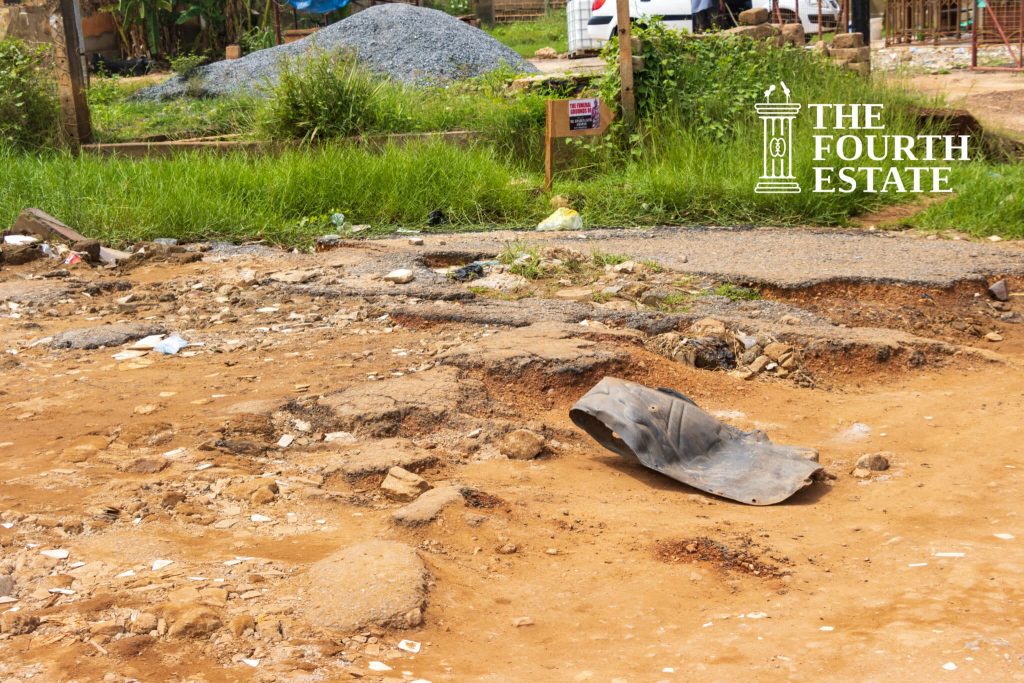
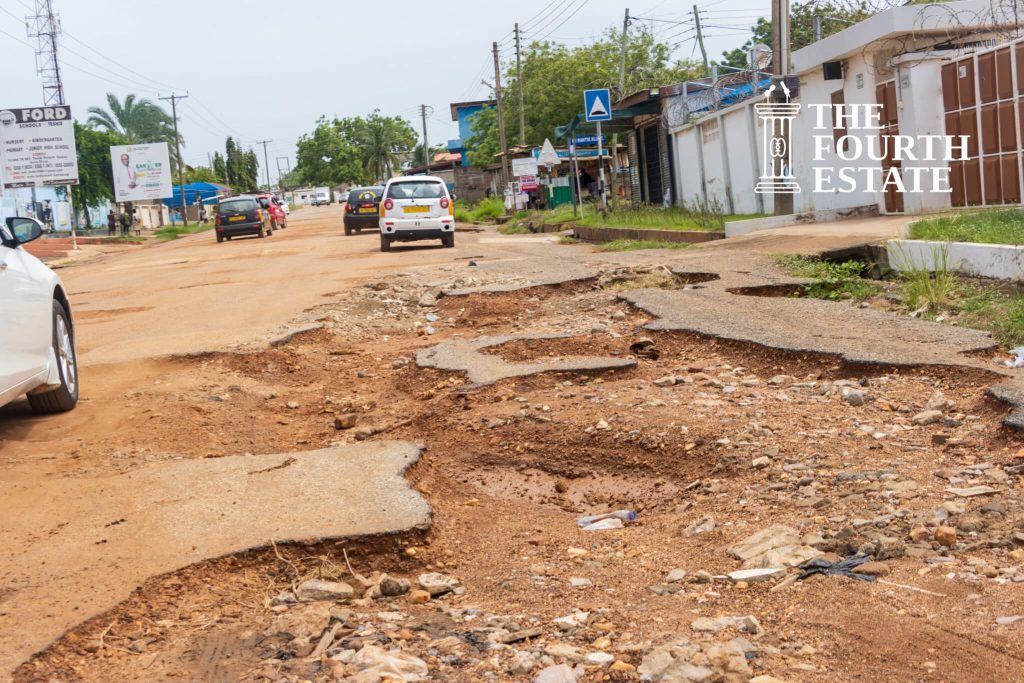
A picture, it is said, is worth a thousand words. In the case of the dilapidated state of Accra’s roads, this adage rings even more true. Potholes, those sneaky craters that hide beneath unsuspecting tyres, have become an all-too-familiar sight on the roads of the vibrant Ghanaian capital.
In this photographic exposé, we delve into some of the struggles that are routinely faced by Accra residents as they navigate all manner of obstacles, highlighting the level of decay of the city’s road network. This is just a peek into a troublesome, daunting state of affairs.
Photo by: Clement Edward Kumsah/The Fourth Estate
This photograph freezes a moment in time, capturing a worn-out stretch of road on the Kaneshie-Odorkor-Mallam highway. This stretch resembles a lunar landscape, ridden with countless potholes. It serves as a harsh reminder of the challenges faced by both pedestrians and motorists alike.
Photo by: Clement Edward Kumsah/The Fourth Estate
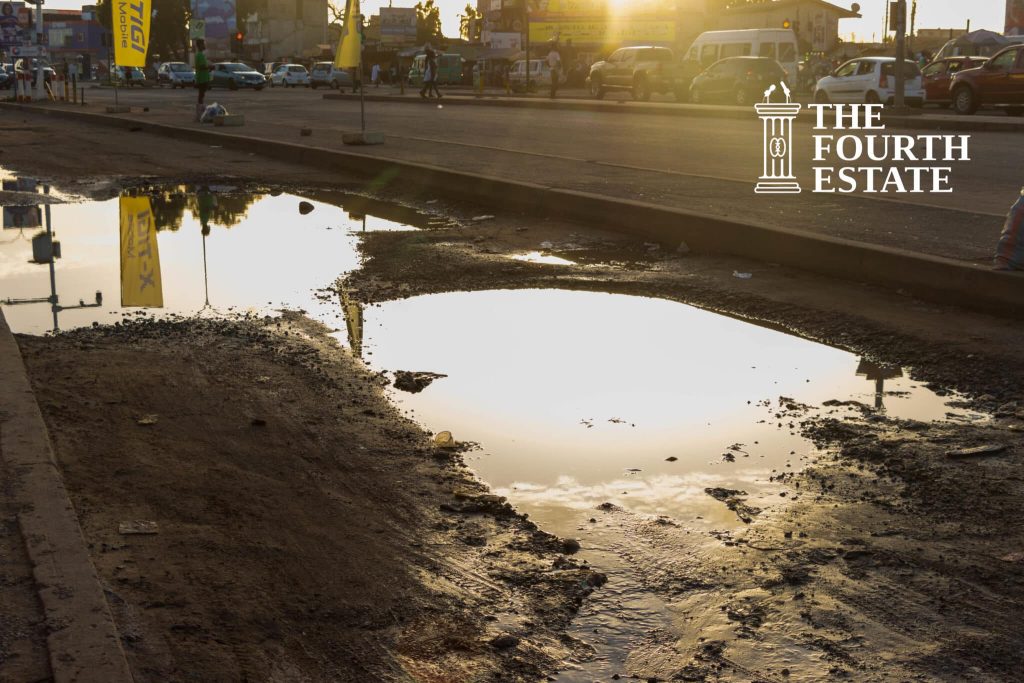
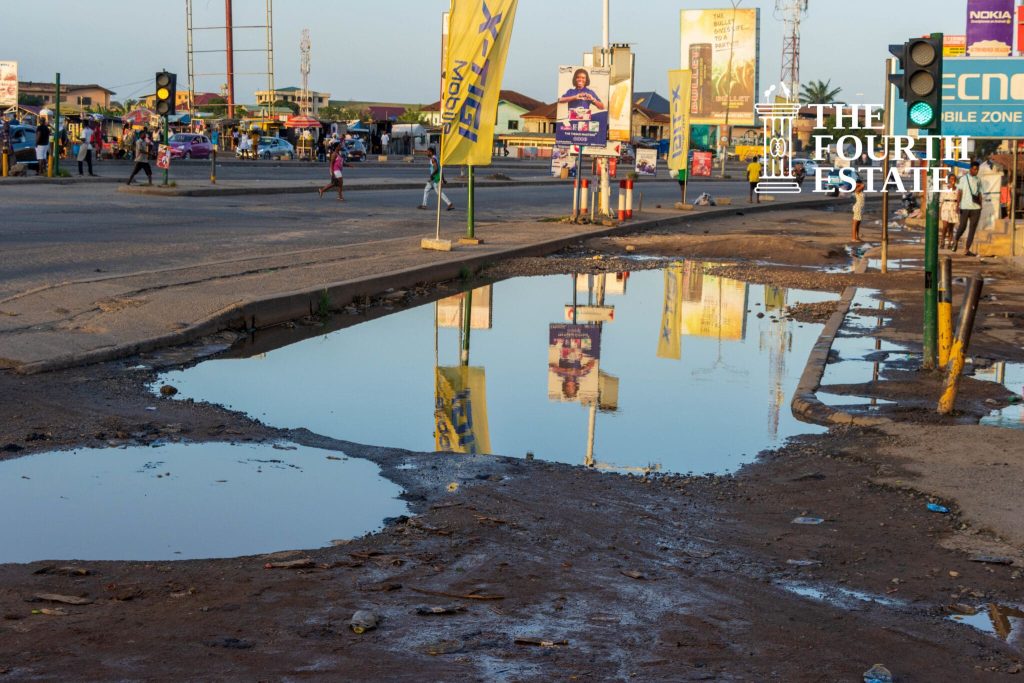
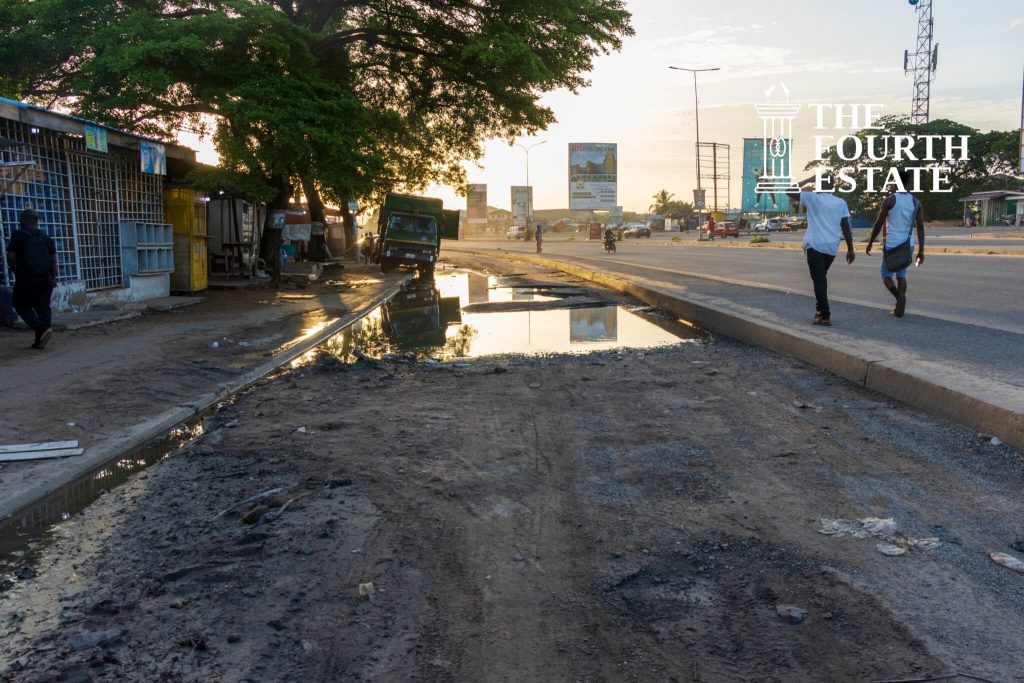
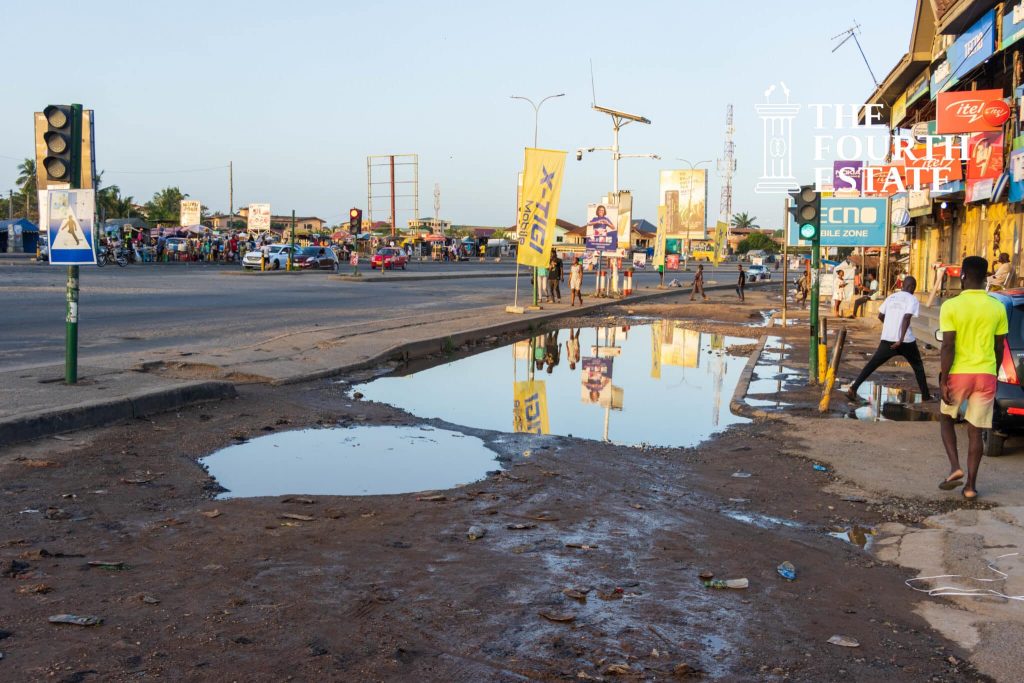
While many pray for rain for various reasons, many residents of Accra suffer nightmares after heavy rainfalls. At the Odorkor traffic light, in front of a Tecno shop on the Kaneshie-Odorkor-Mallam, pools of water collect within massive potholes, creating miniature ponds that mockingly reflect the large roadside hoardings that deliver the city’s commercial messaging above.
Photo by: Clement Edward Kumsah/The Fourth Estate
This photograph was shot a few steps away from the Odorkor traffic light. It shines a light on the collateral damage inflicted by these unforgiving road craters on already tired vehicles. Here, a motorist slants over a flat tire. Besides the inconvenience, the flat tire is also a real reminder of the toll that potholes exact on residents’ savings and productivity.
Photo by: Clement Edward Kumsah/The Fourth Estate
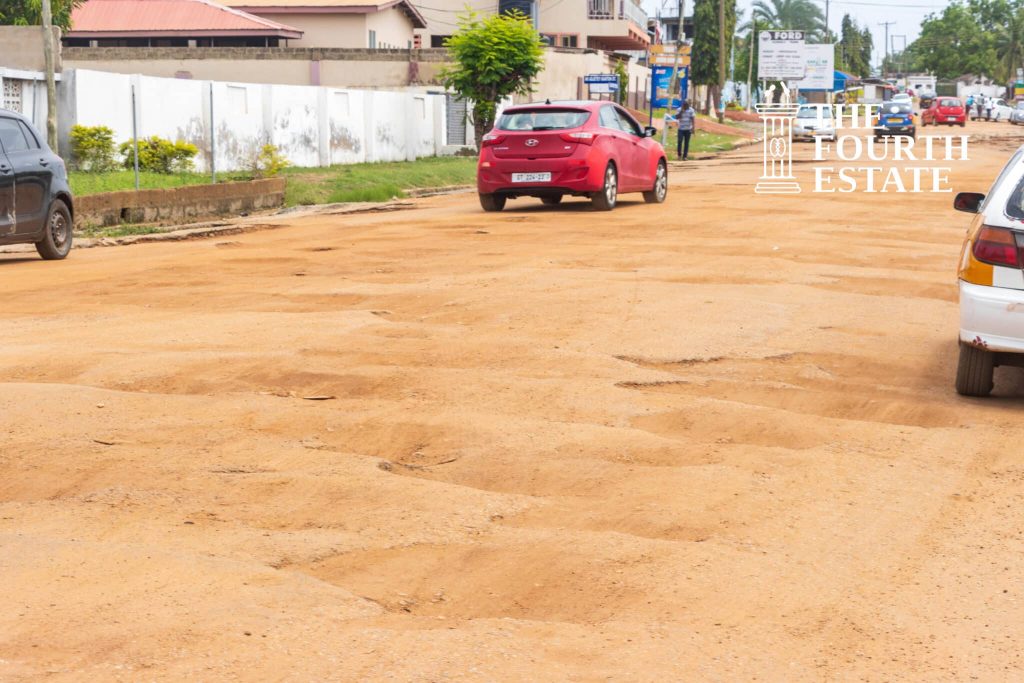
This frame from The Teshie Ford School junction captures the convergence of chaos and patience as motorists navigate a once paved but currently a rugged dirt road pocked with holes. Like skilled acrobats, motorists manoeuvre their vehicles, defying the odds, and flitting through the obstacles presented by some of Accra’s treacherous road infrastructure.
Photo by: Clement Edward Kumsah/The Fourth Estate
This photograph is taken from the outer lane at the Odorkor traffic light on the K.A. Busia Highway. A weary pedestrian valiantly navigates a minefield of potholes. Each step is a delicate dance, avoiding the abyss and maintaining momentum. This epitomizes the daily struggle faced by many of Accra’s residents as they strive to forge ahead in the face of challenging road conditions.
Photo by: Clement Edward Kumsah/The Fourth Estate
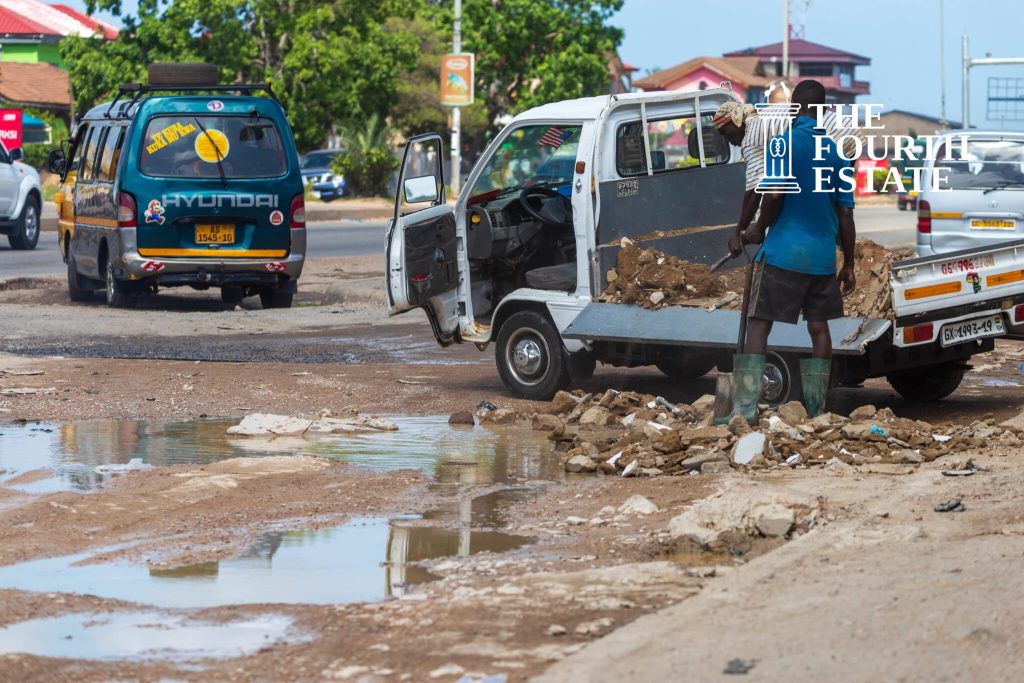
Right in front of Kpogas Furniture showroom on K.A. Busia Highway, we witness a collaborative effort of a group of determined youth embarking on a mission to repair a massive crater in the middle of the major highway. With shovels in hand and unshakable resolve, they toil under the scorching sun, filling the potholes with debris from collapsed building walls.
Photo by: Clement Edward Kumsah/The Fourth Estate
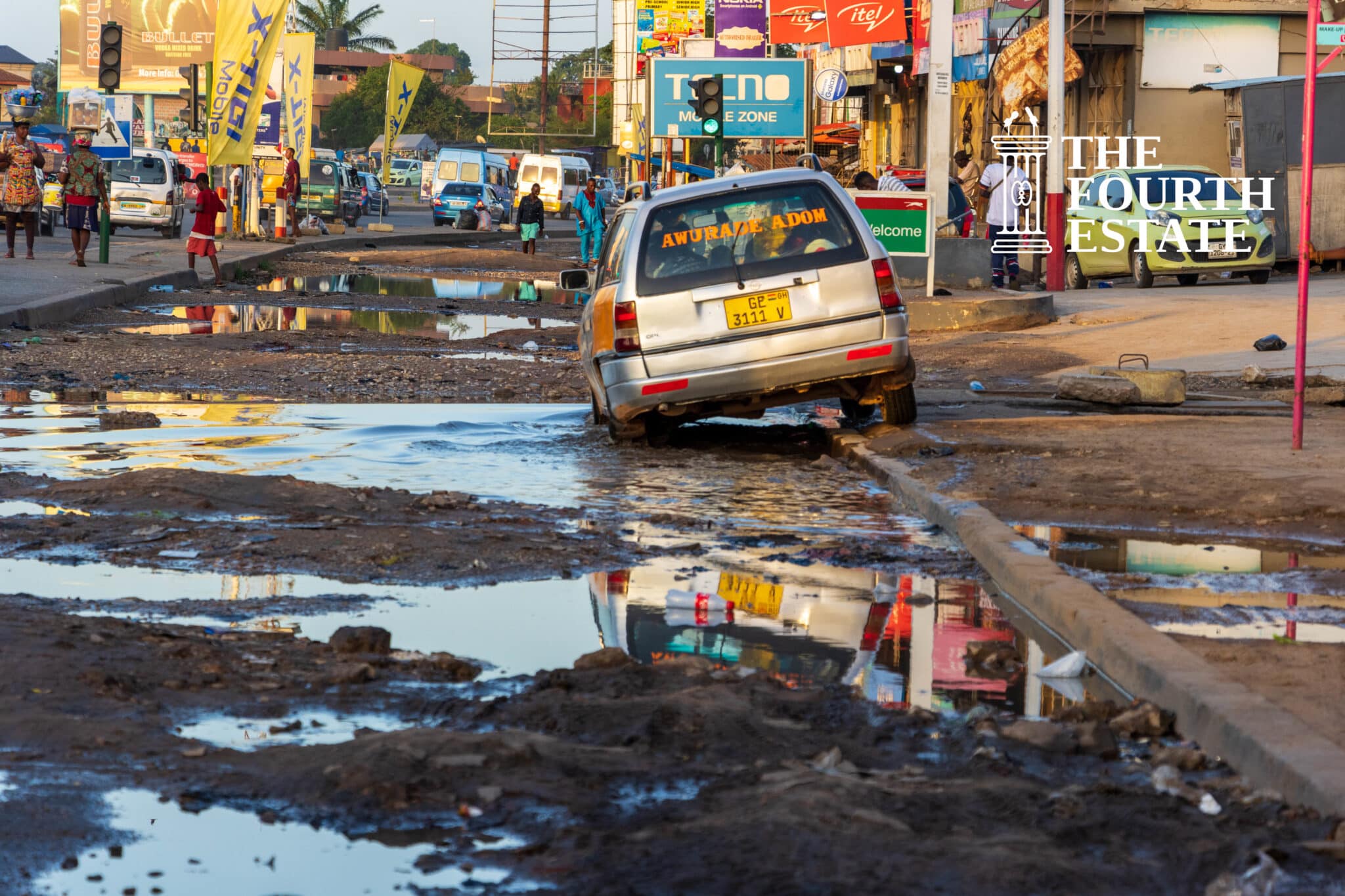
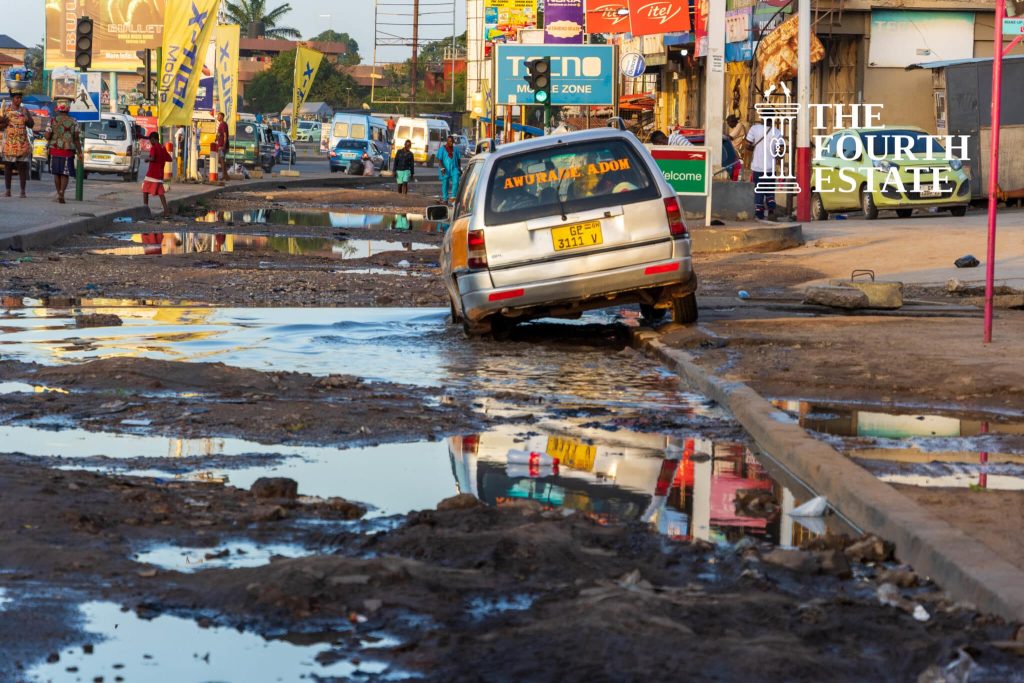
Under the protection of ‘Awurade Adom’, and with the hope of an old testament Israelite crossing the Red Sea, this taxi driver and his passengers attempt to go through this pond in front of a Puma fuel station at Odorkor on the K.A. Busia Highway faced with two obstacles: that of the vast pothole itself, and the dirty water that fills it.
Photo by: Clement Edward Kumsah/The Fourth Estate
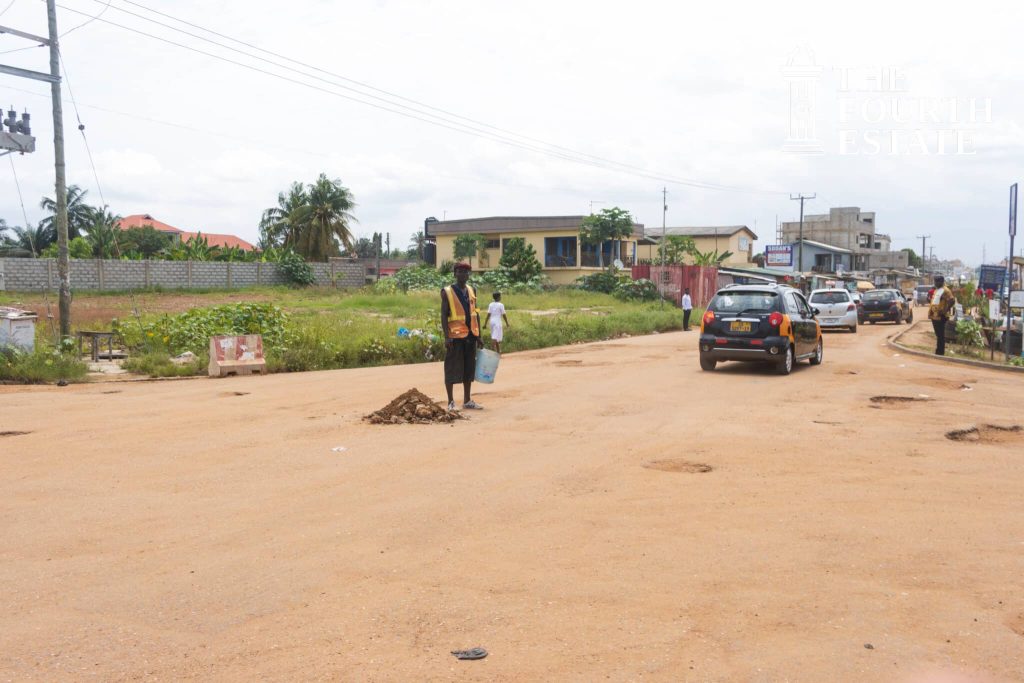
A young man at a T-Junction near Ford School at Teshie readies himself to tackle the task the city has ignored– provide a motorable road for residents and pedestrians. With bucket in hand, poised and ready to fill the potholes on the dilapidated road, this image symbolizes the efforts some are putting in to restore roads while improving their peculiar economic conditions.
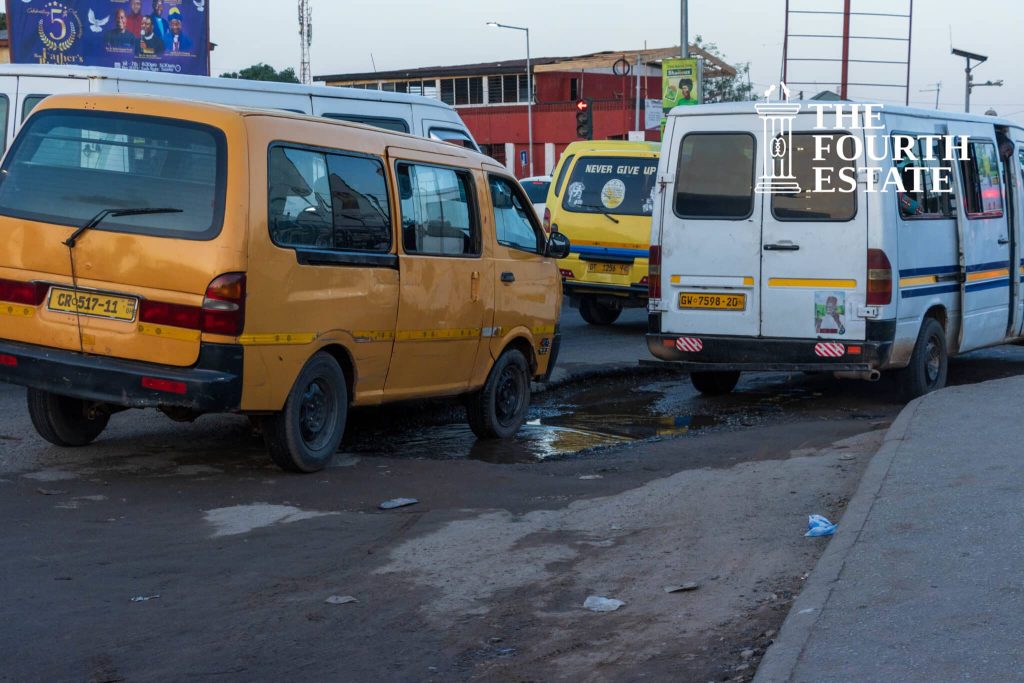
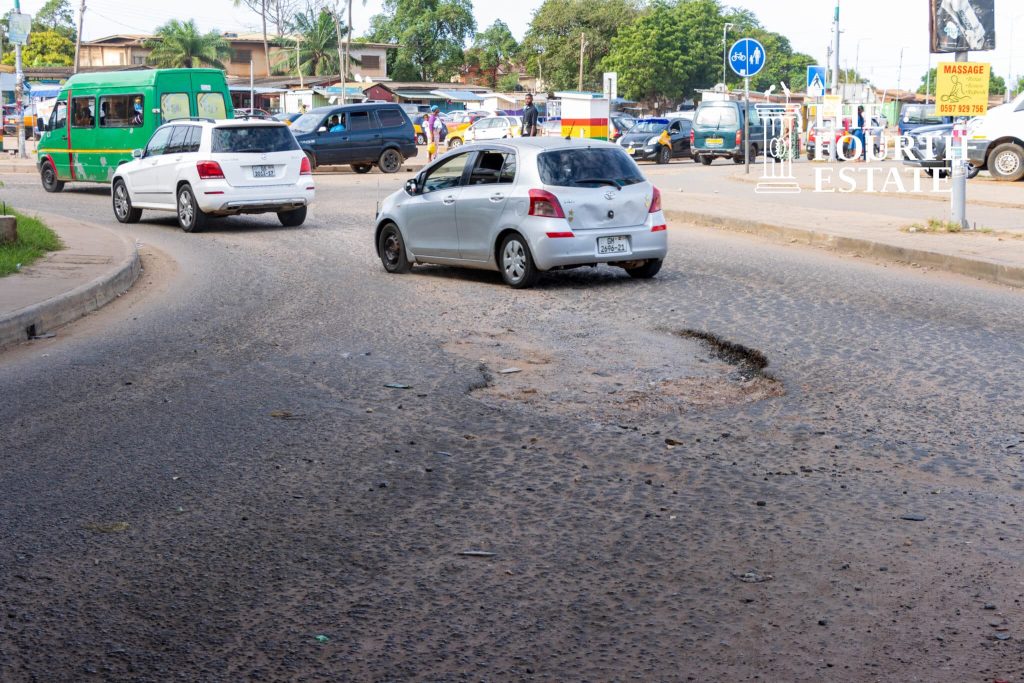
Below are random pictures of more decayed roads in Accra.
Picture taken at Kaneshie First Light on K.A Busia Highway. (Photo by: Clement Edward Kumsah/The Fourth Estate)A Shot taken at Atomic roundabout.(Photo by: Clement Edward Kumsah/The Fourth Estate)
A Shot taken at 6th Avenue, Greda Estate, Teshie (Photo by: Clement Edward Kumsah/The Fourth Estate)An Image from Ford Schools street in Teshie (Photo by: Clement Edward Kumsah/The Fourth Estate)
These photographs provide just a peek into the daily struggles faced by some residents in Accra, and remind us of the urgent need for infrastructure revival. From damaged vehicles to disrupted commutes, the impact of these potholes cannot be understated.
It is a call to action, not just for local authorities, but also for all stakeholders involved, to come together and pave the way for a smoother future for all. Until then, Accra’s residents will continue their delicate dance with the potholes, hoping to navigate the treacherous maze, one tire rotation at a time.
In 1995, the citizens of Ghana were at their wits’ end.
The high cost of living and the introduction of the Value Added Tax policy by the Jerry John Rawlings administration motivated the discontented citizens to stage the biggest demonstration in Ghana’s political history.
About 100,000 people partook in the “Kume Preko” (just kill me) demonstration to drive home their displeasure about the “insensitivity” of the then Jerry John Rawlings administration.
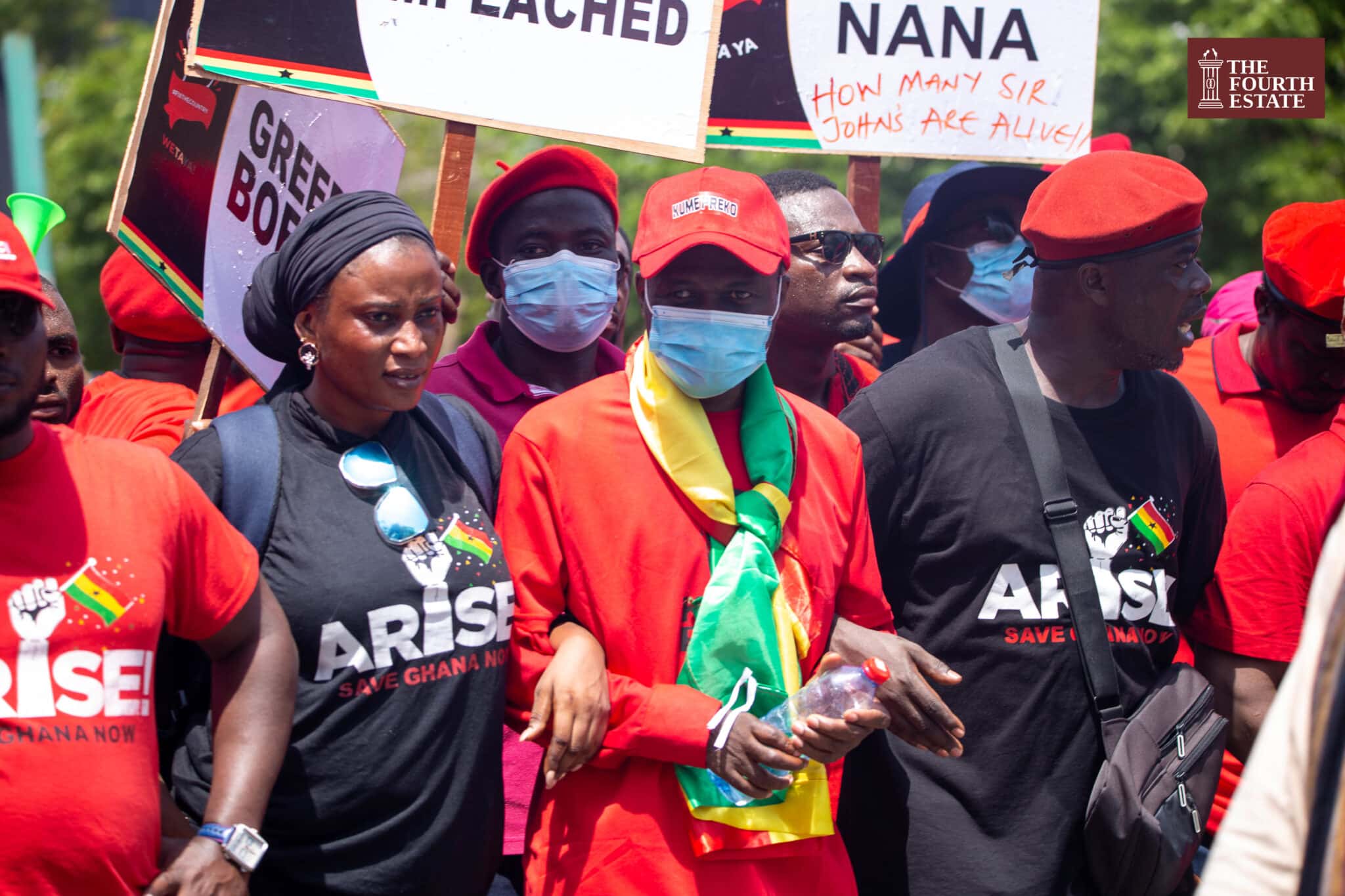
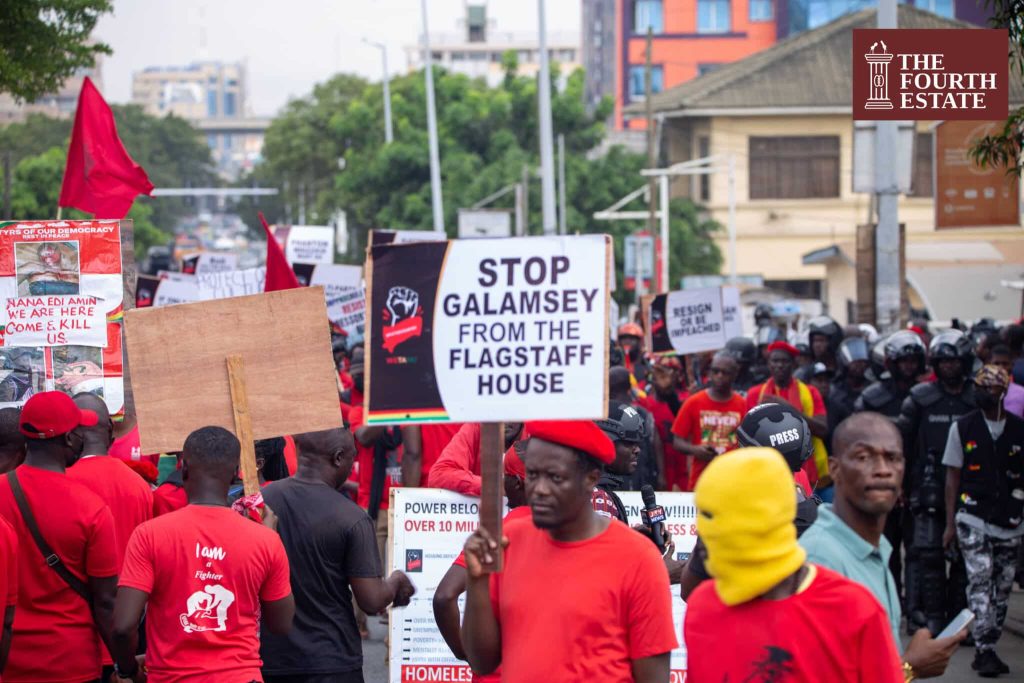
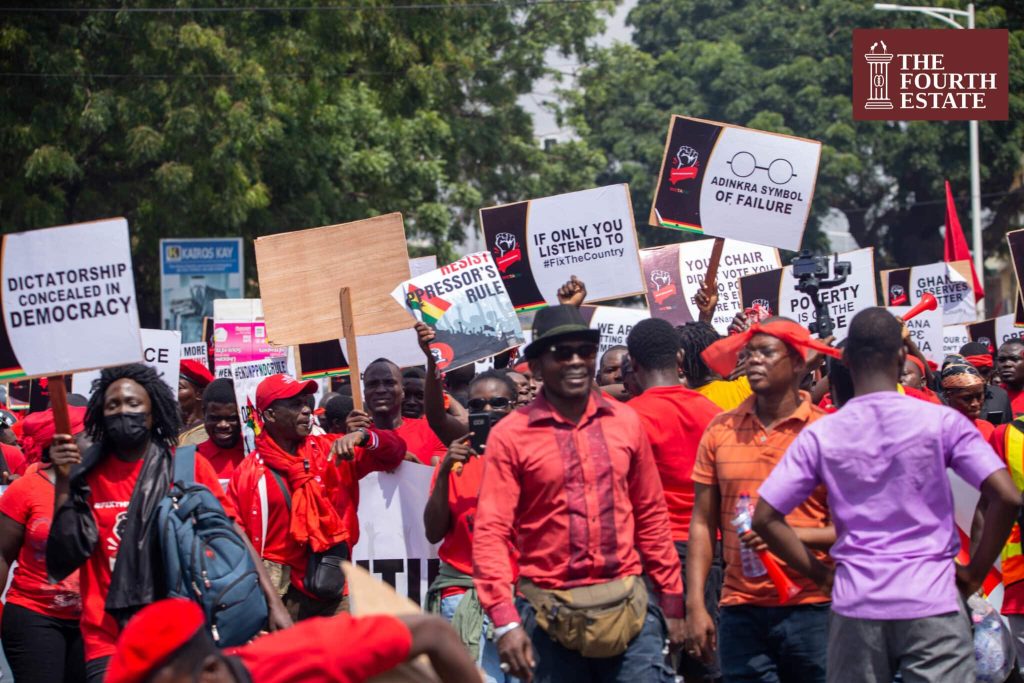
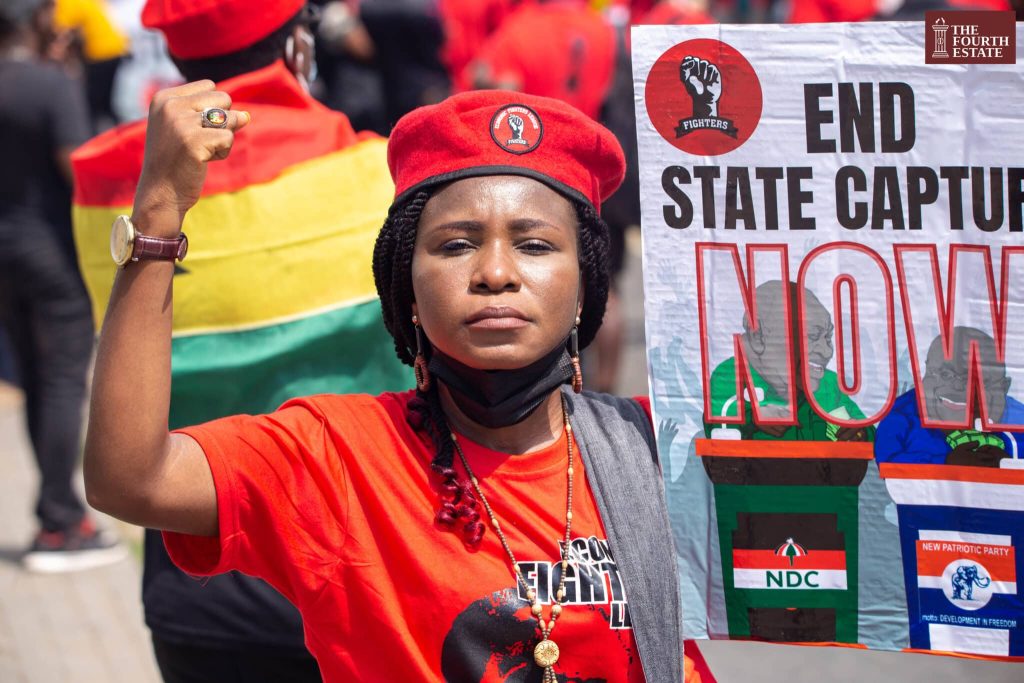
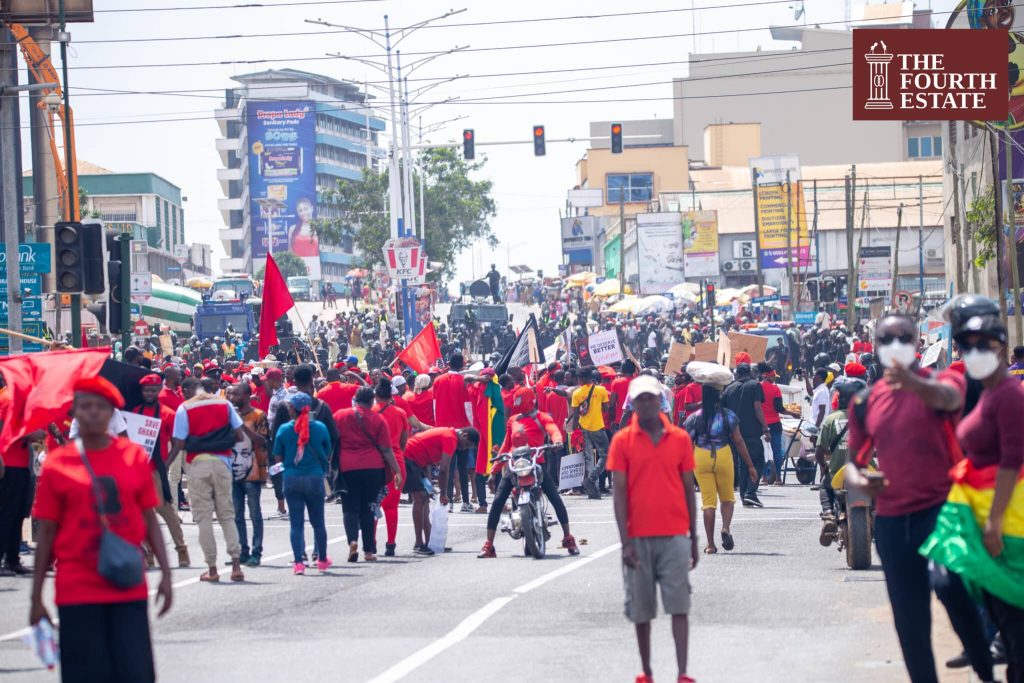
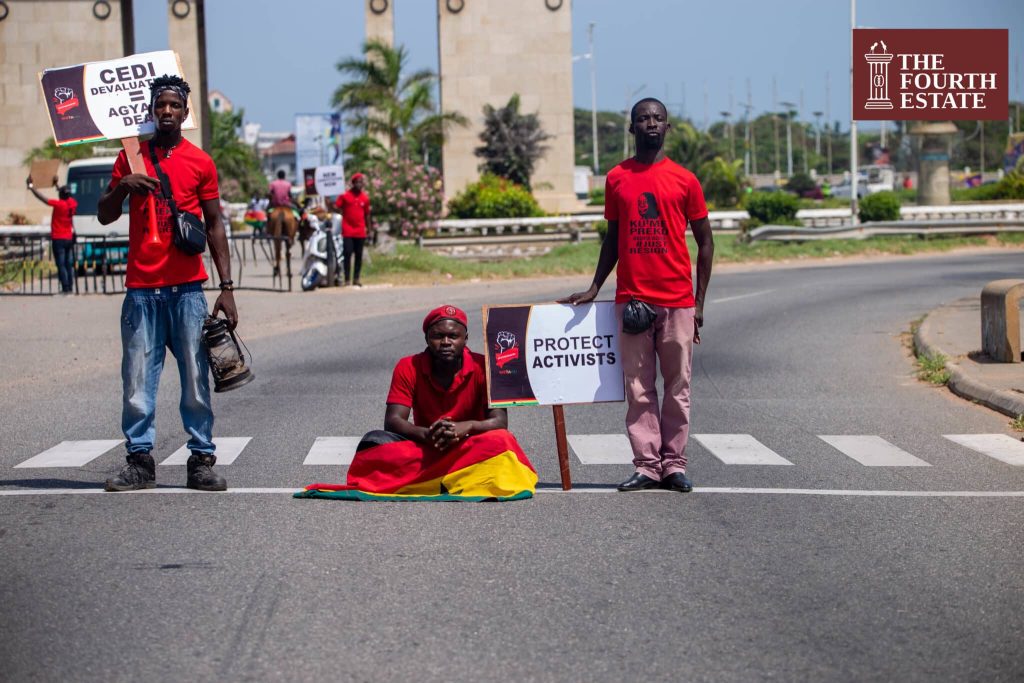
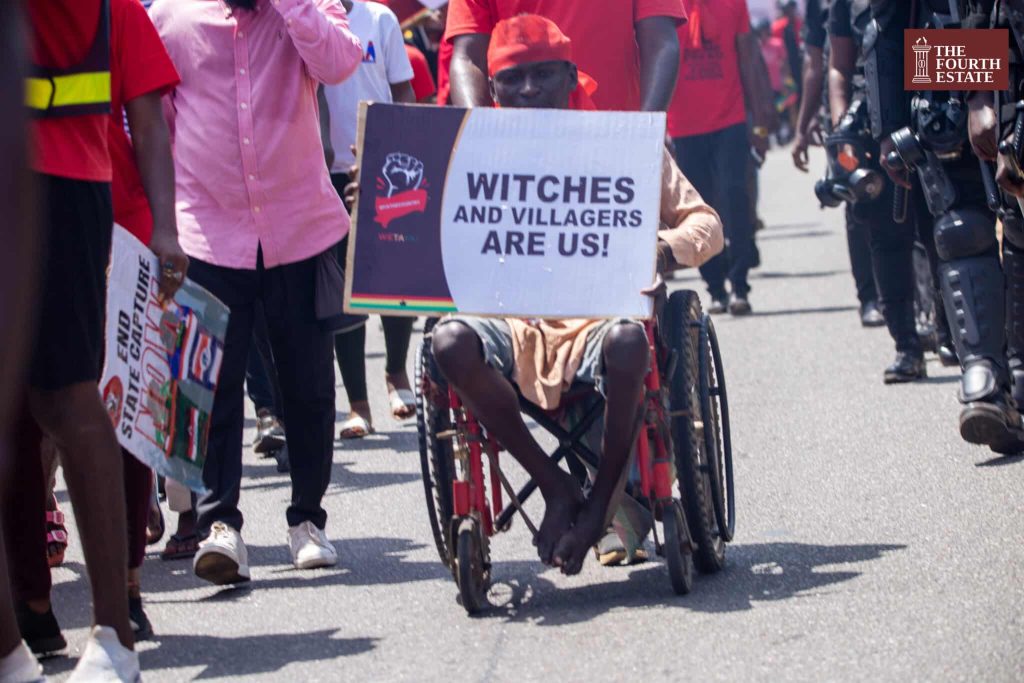
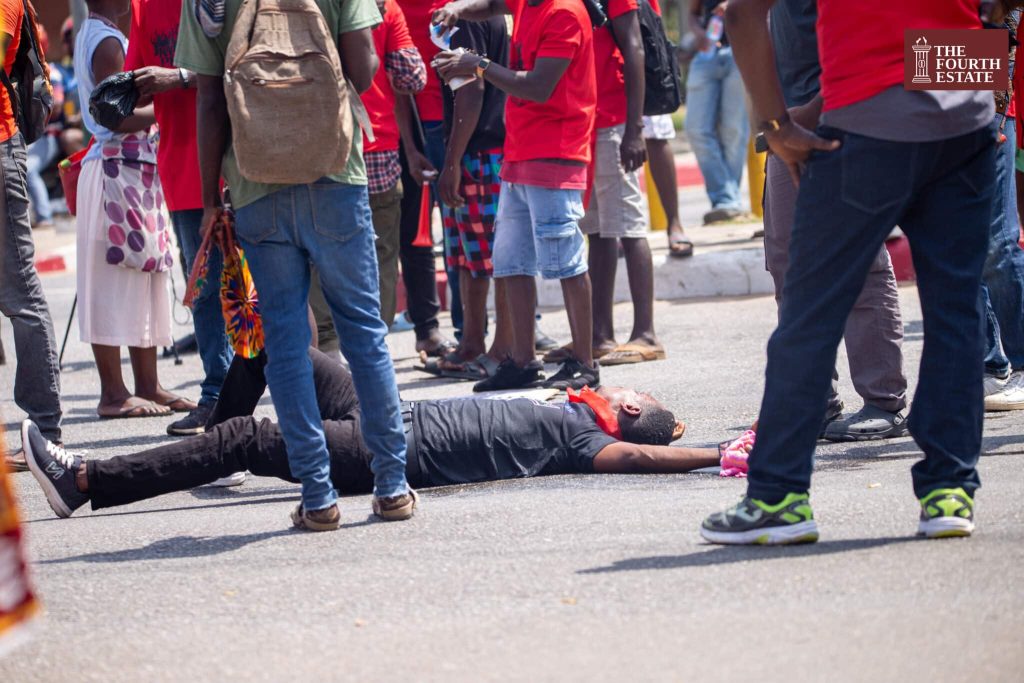
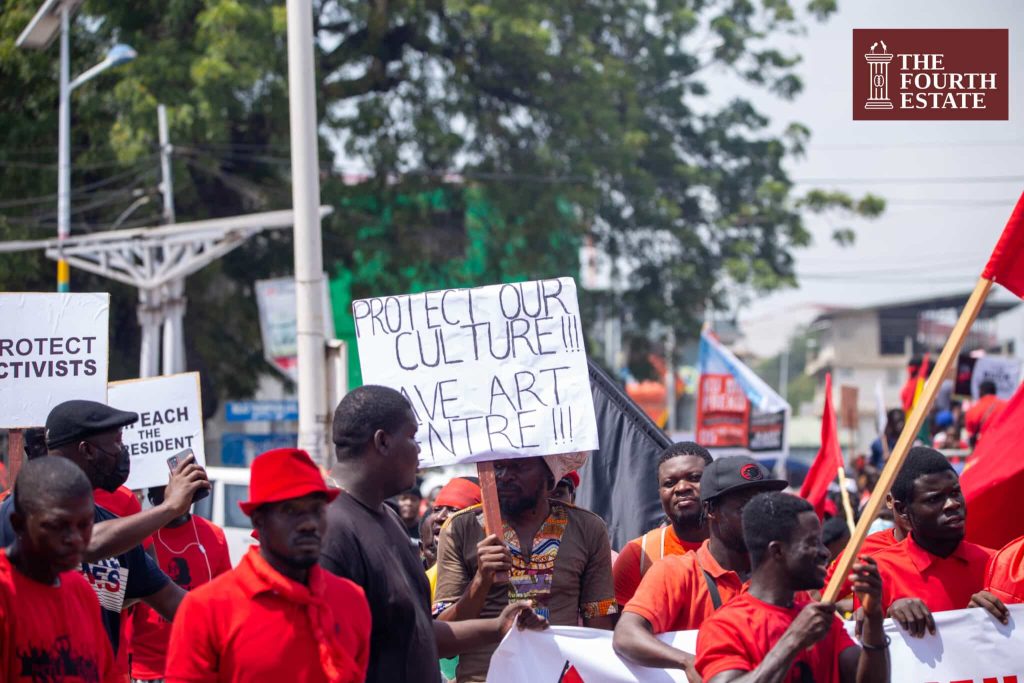
After 27 years, some Ghanaians say the conditions that necessitated Kume Preko have worsened. Today, thousands of protesters marched from Obra Spot in Accra to Independence Square in what was dubbed “Kume Preko reloaded” to demand the resignation of President Akuffo-Addo, Vice President Dr. Mahamudu Bawumia, Finance Minister Ken Ofori-Atta, and some key members of his government.
These demands came against the backdrop of the hikes in food prices, the deterioration of the cedi, and the general economic hardships facing Ghanaians.
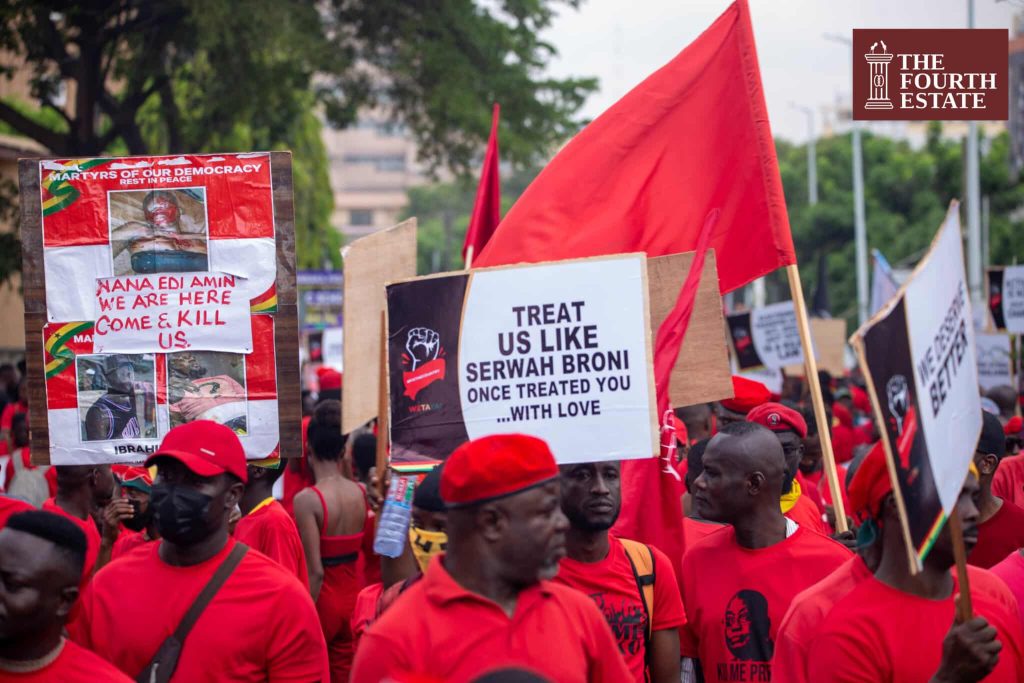
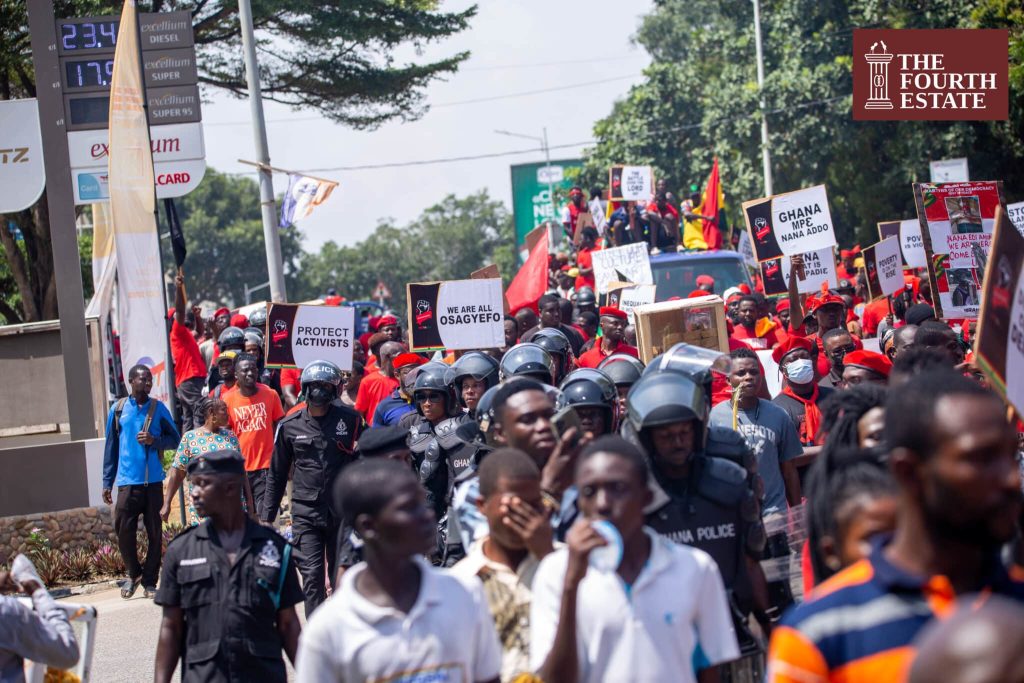
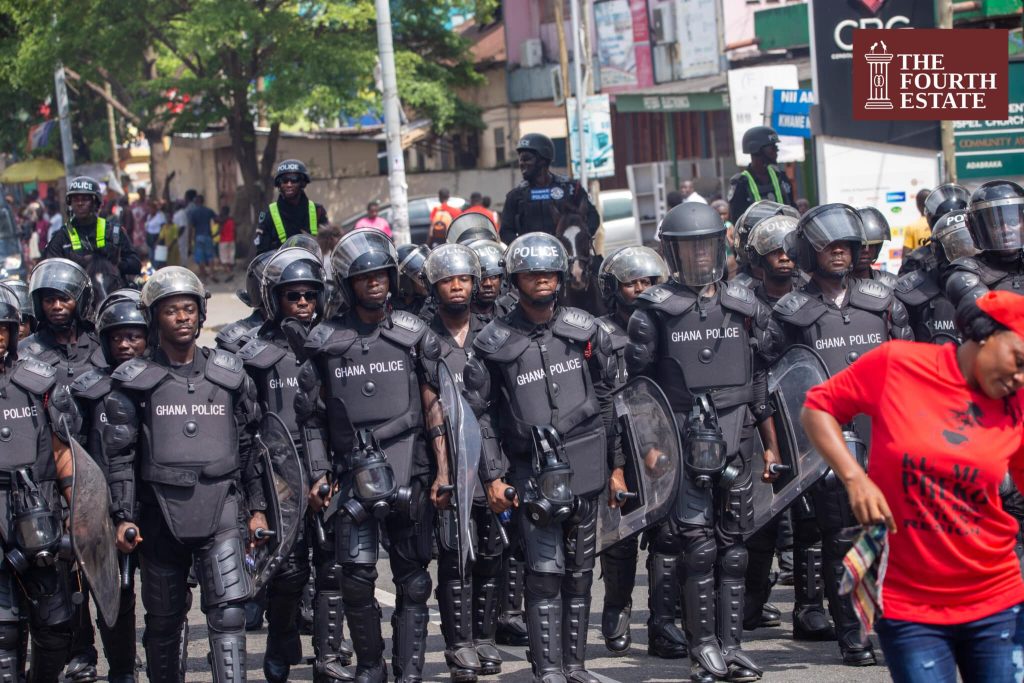
The protesters dressed in shirts imprinted with the face of the president held placards and sang one patriotic song after another. The protestors, including aggrieved market women, could be seen chanting “Away! Away! Away!” as they slowly marched to their destination under the watchful eyes of the teeming police.
A section of protestors at the demonstration
A market woman who was hitting a metal bowl with a piece of wood, like a traditional town crier had a message for the president: “Nana, have mercy on us. Nana, we are hungry. We are tired. The high cost of maize and other foodstuff has made it impossible for me to continue my kenkey business. My children and I are starving.”
“During his [2016] campaign, Kalypo was Ghc 1.50. Now, we have to buy one for Ghc 6.00. Nana, why? Why are you this wicked?” Paa Yaw, a 32-year-old driver, asked.
Months before the demonstration, a section of the Ghanaians called for the resignation of the Minister of Finance, Ken Ofori-Atta, whom they said had failed woefully in the discharge of his duties.
Addressing the crowd at the Independence Square, Martin Kpebu reiterated his demand for the president to resign from office.
“As we are all aware, the cedi is the worst currency in Africa and the world. Even Afghanistan, where the Taliban are in charge, their currency is stronger than the cedi. So, we are also making the point that once we’ve gathered here as citizens, and we’ve expressed our disgust at the obscene thievery, at the obscene corruption, at the obscene conflict of interest, it means that Akuffo Addo, Bawumia and Ofori Atta must go!”
Martin Kpebu ended with the famous campaign message of vice President Mahamudu Bawumia.
“Fuel prices have gone up, isn’t it? Transport fares have gone up, isn’t it? So, what are we experiencing now, teachers are suffering, demonstrators are suffering, lawyers are suffering, market women are suffering, and journalists are suffering!”
A placard on display at the demonstration
Background
In recent times, Ghana’s economy has been reeling under pressure with inflation climbing from 13% in January 2022 to an all-time high of 37.2% in September 2022.
In addition, the Ghana Cedi is consistently losing its value to the US Dollar and other major trading currencies across the globe, making Ghanaians spend more on food, shelter, and other basic necessities.
The World Bank’s October 2022 Africa Pulse Report ranked Ghana as the country with the highest food prices in Sub-Saharan Africa in 2022. Since January 2022, food prices have gone up by 122%.
Currently, petrol and diesel prices are at a record high whilst public transport fares have increased by over 100% since January. Water and electricity tariffs have also risen by 27.2% and 21.6% this year.
Meanwhile, the government has formally sought the support of the International Monetary Fund (IMF) to help improve the macroeconomic stability of the country. It, however, insists that the challenges being faced are due to the adverse effects of COVID-19 and the Russia-Ukraine war, a claim that has been debunked by many economists and experts.
PC: Clement E. Kumsah/The Fourth EstatePC: Clement E. Kumsah/The Fourth EstatePC: Clement E. Kumsah/The Fourth EstatePC: Clement E. Kumsah/The Fourth EstatePC: Clement E. Kumsah/The Fourth EstatePC: Clement E. Kumsah/The Fourth EstatePC: Clement E. Kumsah/The Fourth EstatePC: Clement E. Kumsah/The Fourth EstatePC: Clement E. Kumsah/The Fourth Estate
The ordinary road users feel safe on just two occasions on the numerous killer roads that exist in Ghana. The first occasion is when the President or the Vice-President is scheduled to use those roads for an official trip.
And the other is when police recruits are being taken through an academic demonstration on the roads for marks before their graduation.
A case in point is the Upper East Region. In this part of the country, it is needless to notify the public of an impending visit of the president by announcing it on the radio.
It is also unnecessary to decorate streetlight poles standing along highways with the governing party’s flags and propaganda posters to herald the coming of the Jubilee House to town.
The masses can tell on their own that Mr President is on his way, or that the Vice-President is soon to arrive, just when they see long-broken traffic lights suddenly being fixed everywhere.
And whenever the masses wake up to the unusual sights of police officers directing traffic in the region, they ask one another, “Who has come to town?”
Before the demise of the immediate-past Regional Chief Imam, Alhaji Sheik Tahir Saeed, in 2022, the main road that leads to his residence from Rev. Eastwood Anaba’s church headquarters in the region’s capital, Bolgatanga, was riddled with ‘pot-wells’ that evolved from long-ignored potholes.
But because it was anticipated that the Jubilee House would join in a major prayer gathering that had been programmed for the late cleric at his residence, the “killer cesspits” on the road were filled at a do-or-die speed before the prayer-offering ceremony was due.
The “ultramodern traffic lights” President Akufo-Addo commissioned in front of the Ghana Broadcasting Corporation (GBC) station in Bolgatanga just two months before the 2020 general elections fell into disrepair long ago. The authorities who should act without delay have seen it.
But the current status of the facility is going to remain the least of their worries until the Jubilee House drafts another itinerary that requires using that intersection to the Builsaland, Navrongo or Paga to renew its ‘marriage vows’ with the divided electorate.
Even the majority of the only 12 sets of traffic lights that exist in the region are not reliable. Some of them intermittently behave like trafficators or hazard lights― showing only the amber (yellow) lights to road users on and off for months. Some of the traffic lights concoct terrible chaos because they are obviously not properly configured. At present, only four of the 12 sets of traffic lights in the region are functioning.
It is a traffic taboo for traffic lights to direct road users heading through intersecting paths to pass at the same time. But the traffic lights at the SSNIT House Junction in the capital break this taboo with impunity thanks to the obvious error of the configurators.
The traffic lights have been preset to give road users moving East (towards the Black Star Hotel), West (towards Tanzui) and South (towards Tamale) the green light simultaneously! Meanwhile, there are no white lane markings showing road users at the intersection where to correctly position themselves.
For many months, the traffic lights at the same SSNIT House Junction did not function. They only worked as trafficators and hazard lights for that months-long period. They were fixed recently only after an ambulance crushed two children at the junction on their way to school in June, this year. One of the children died instantly. I honestly have no details as to whether the other child survived or not.
There are some extremely busy road junctions in the region capital without any traffic lights. You also would not find any police officer directing traffic at those intersections. Examples are the joints many casually refer to as Abole Junction, STC Junction, High Court Junction, Maclean Dam Junction and Fire Service Junction in the capital.
But I personally call these joints ‘Miracle Junction’, ‘You-are-on-your-own Intersection’, ‘Free-for-All Crossroads’ or ‘Nearer-my-God-to-Thee Link’. I call them so because it takes nothing beyond a rare miracle to escape being dispatched to God prematurely or maimed in auto-crashes at those spots. Parents are being killed in front of their children at those junctions while taking their kids to school. And several children are being maimed and killed there, too.
But before the Commander-in-Chief or the Next-in-Rank arrives in the region, engineers are seen dripping with sweat as they move from place to place under instructions from above to raise long-broken traffic lights from the dead!
When the Jubilee House comes to Town
When the Jubilee House comes to town, the police suddenly become visible. They are not visible to enforce law and order. They only resurface to temporarily restore law and order from a recycle bin where almost a complete set of traffic rules and regulations has been unduly dumped and kept for a very long time.
So long as the Presidency is in the region, the state agencies in charge of public road safety remain around and awake to their duties. That is the only period the underprivileged road users feel the law is not just around but also awake to protect them.
In other words, the ordinary road users in the region do not have the right to safety because the system has a preference for The VIPs of the State and prejudice toward The Nobodies of the Nation. The common citizens only have the privilege of safety. And that privilege is always short-lived as it is only linked to the time the President and the Vice-President are enjoying their rights to safety on the unsafe roads.
The ‘Snoring’ Minister of State
The role of every Regional Minister as the Chairperson of the Regional Coordinating Council, per the Local Government Act, 1993 (Act 462), is to “harmonise, coordinate and monitor national-level policies and programmes”.
I drew the Regional Minister’s attention in 2021 to a number of reasons road-traffic crashes were a serious threat to the people he was being paid to protect. I told him (among other things) that some signposts had been planted practically in the bellies of some roads and that those signposts were blocking the views of road users at some junctions, causing calamities. He did not do anything about that concern.
Subsequently, a road-traffic crash claimed another life around one of such junctions along Akanyene Street (informally called Regional Library Road) in Bolgatanga weeks after I had raised that concern. That is just one among too many tragic instances.
He took office on 15th March, 2021. It is evident he has not done (and might not do) anything about that piece of information he received in 2021 regarding the safety of the ordinary people on the roads in his region. Those killer signposts are still at the same spots in June, 2022. Road-traffic crashes killed at least 86 people in the region in 2021, according to the National Road Safety Authority (NRSA).
The logbook of the Motor Traffic and Transport Directorate (MTTD) contains 214 crashes involving 329 vehicles recorded in the region during that year. And 86 people were killed while 272 people were injured on the road in the year he assumed office.
The latest injuries may mean that we will see more physically disabled voters struggling to join queues at the 2024 general elections to cast their votes for or against the same selfish powers under whose watch they became disabled.
The Region’s Biggest Nightmare
There are three major evils the region is confronted with today.
❖ Armed robbery attack.
❖ Armed conflict.
❖ And road traffic crashes.
Road traffic crashes are the region’s biggest nightmare at the moment. It is killing more people than any of the other evils is doing. Conflicts claimed 9 lives in the region in 2021, according to state sources. The Upper East Regional Police Headquarters says the region recorded 127 armed robbery cases during the same year, with only one person (a nurse) killed.
But road-traffic crashes alone took 86 lives within the same period. And just between January and March, 2022, 10 people died and 44 road users got injured in 38 road-traffic crashes recorded in the region.
According to the secretariat of the Ghana Federation of Disability Organisations (GFDO) in the region, road-traffic crashes are mutilating road users so fast and so wide that the GFDO regional office says it is now running out of membership forms. Authorities at the Upper East Regional Hospital say the road-traffic crash is the most regular cause of all emergency cases at the facility.
The Presidency can show a keen interest in commissioning traffic lights in an election year. But when the traffic lights are down and the Presidency is being criticised for not showing any interest again in getting them fixed after the election year has passed, the government’s communications squad sprints to the Presidency’s defence at a cheetah’s speed.
If the President was not too busy, and did not feel too big, to commission traffic lights before the 2020 elections, why is he too busy, and why does he feel too big, now to answer questions as the traffic lights badly need fixing for the same voters and their children?
When the 2019 Novel Coronavirus hit China late in 2019, it seemed very abstract until it took a deadly and devastating tour of the world.
Africa was spared at the beginning. When countries such as Spain, Italy and the US swayed under the weighty grief of the virus, Africa was generally free, fueling conspiracy theories that blacks were immune to the virus.
The pandemic eventually hit Africa, but it was mild when compared to the devastation in other continents.
As in many countries in Africa, Ghana’s healthcare system was already in a sorry state. Even before the pandemic, it was a common feature to have patients turned away from hospitals because of the lack of beds. Consumables such as gloves were a luxury in some health facilities.
In Ghana, for instance, the entire country of about 30 million people had only 67 ventilators in all public health facilities, less than half the ministers of state at the time.
The main testing centres responsible for over 95% of the tests conducted in the country survived mainly on grants from foreign donors.
In the following documentary, The Fourth Estate’s Manasseh Azure Awuni comprehensively examines Ghana’s fight against the pandemic and reveals that, even with the milder impact of the virus here, some people died because they could not get care.
He also reveals, using the undercover method, how some people took undue advantage of the shortage of Covid-19 testing to make money.
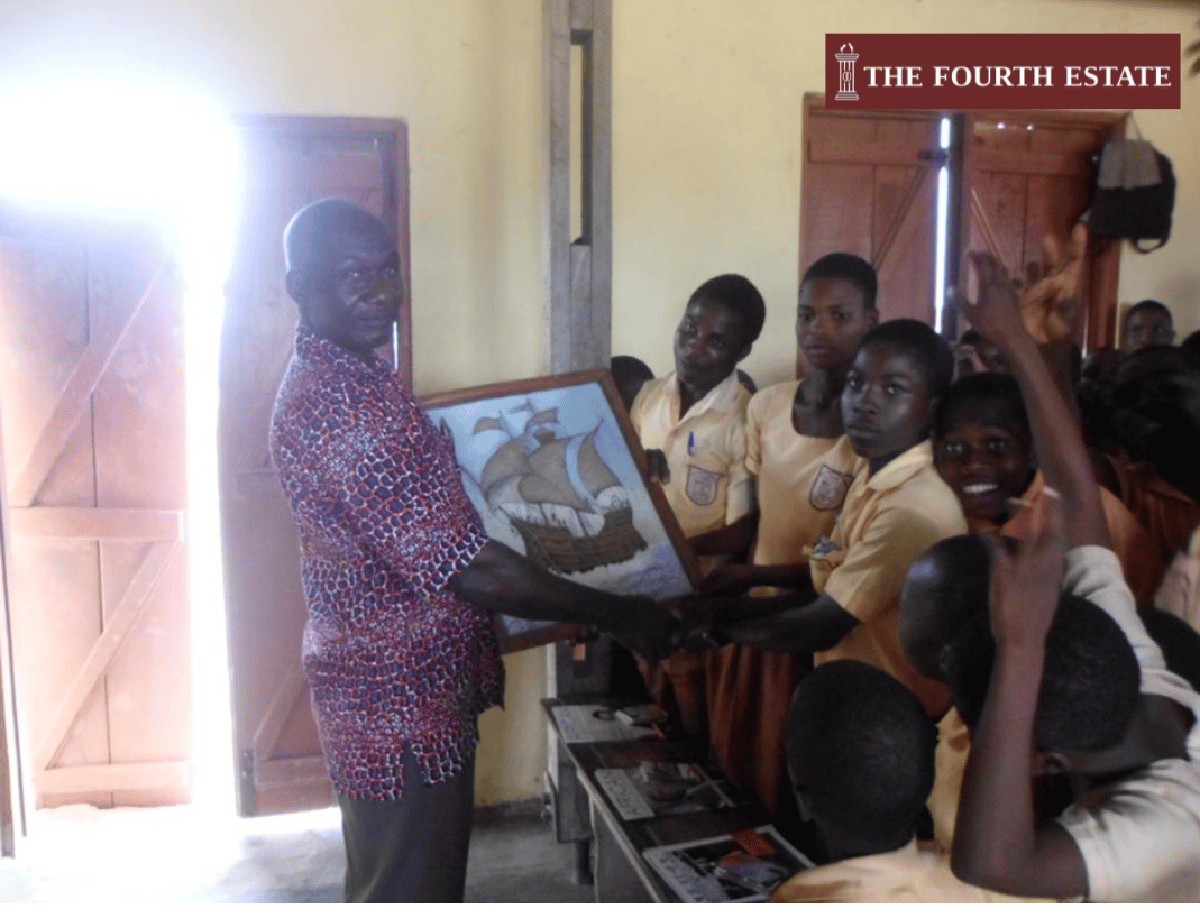
Four years ago, Selorm Dzaka and his classmates would have dashed into the belly of the only remaining legacy of the Catholic Church on the tiny island—the Fuveme RC Basic School—to seek refuge from the rains.
But not this time.
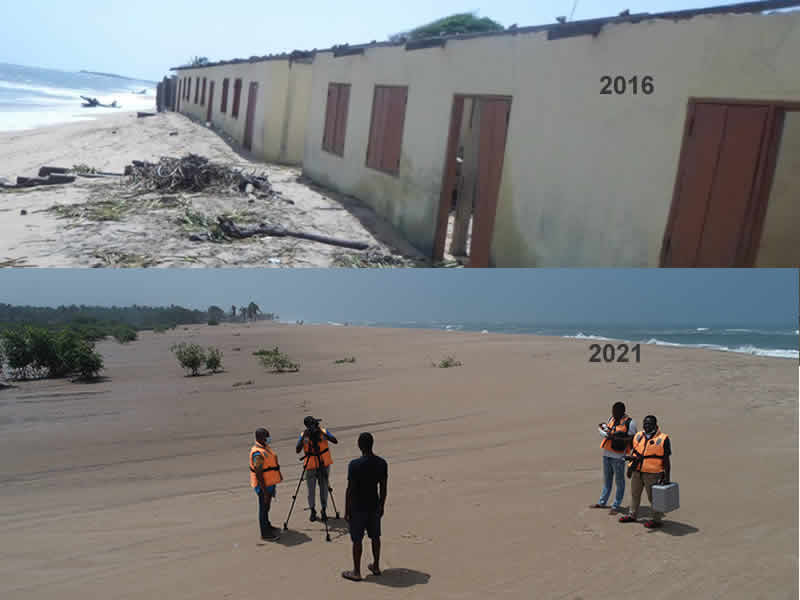
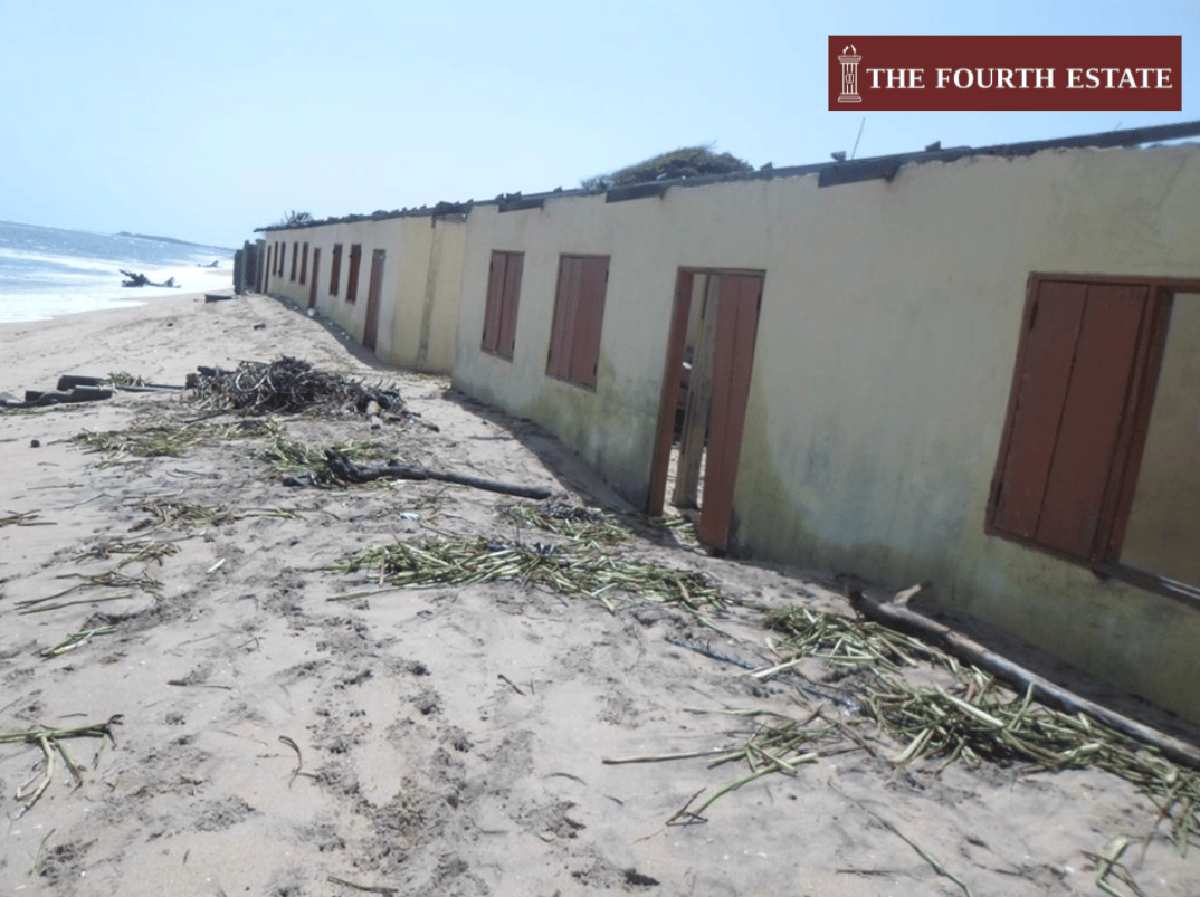
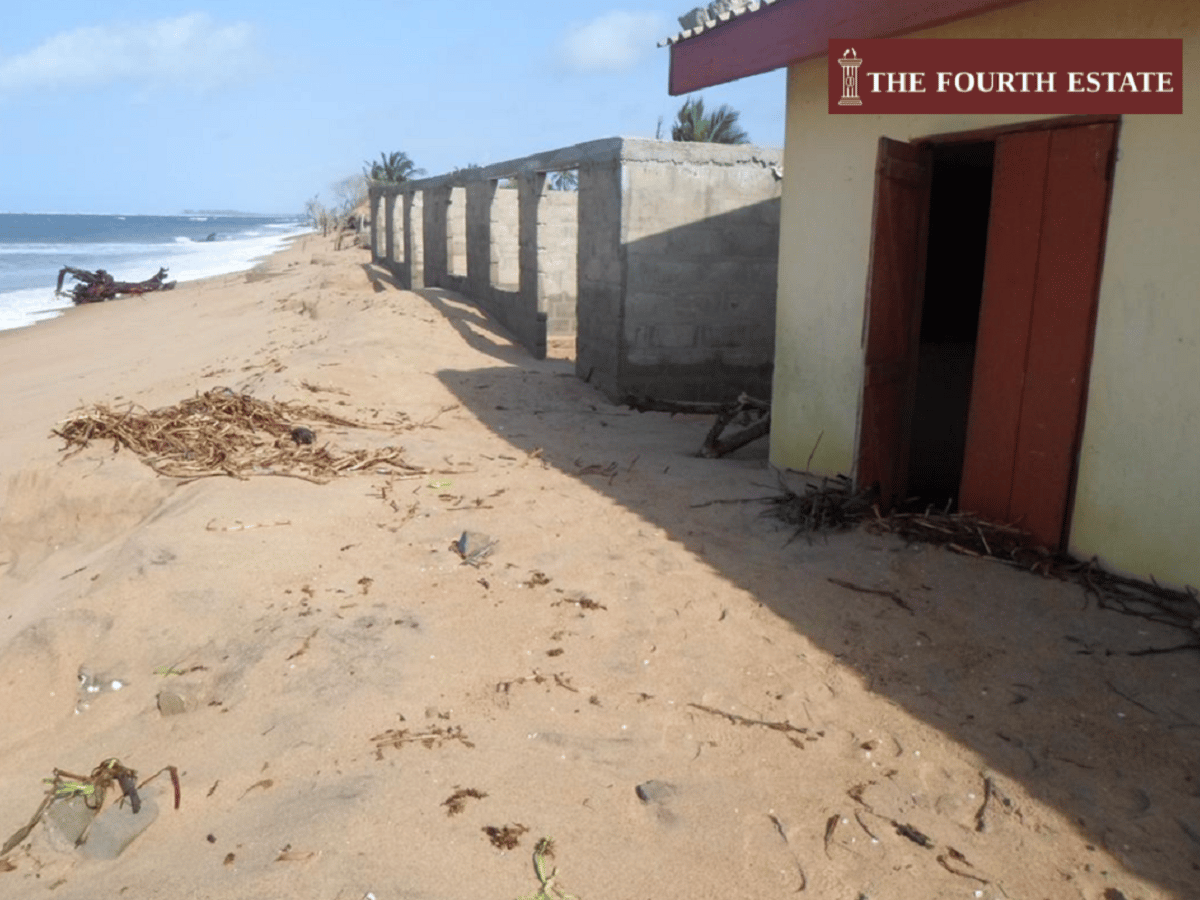
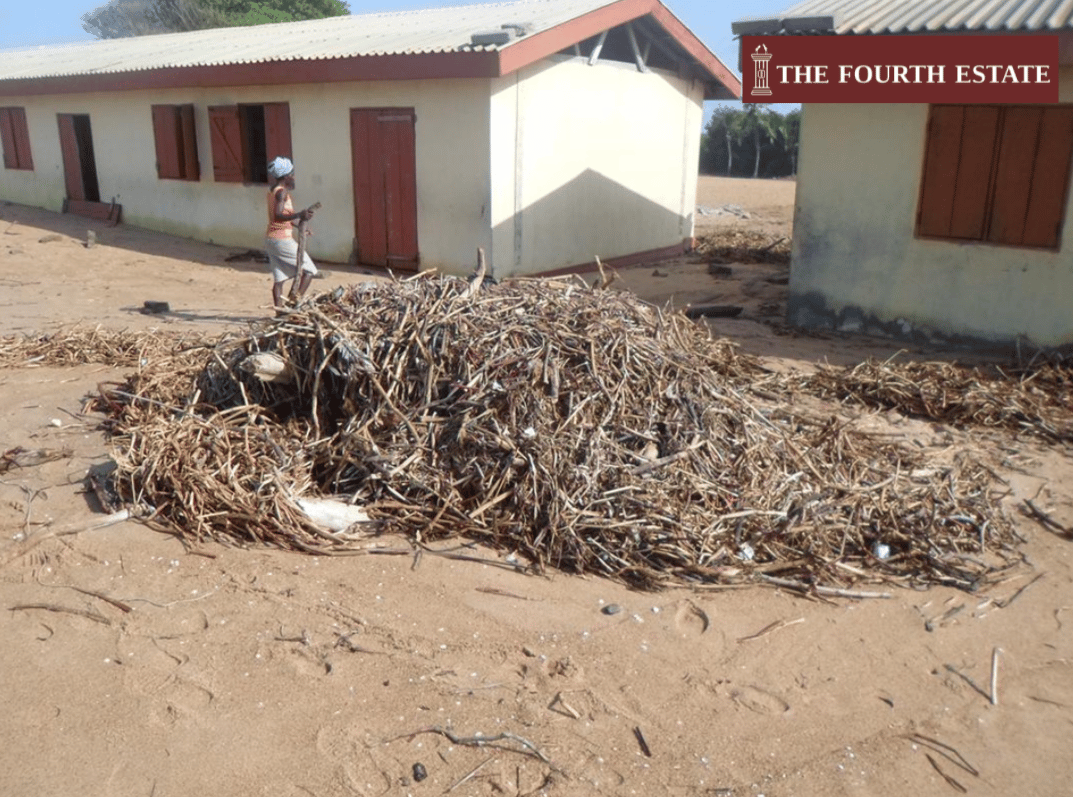
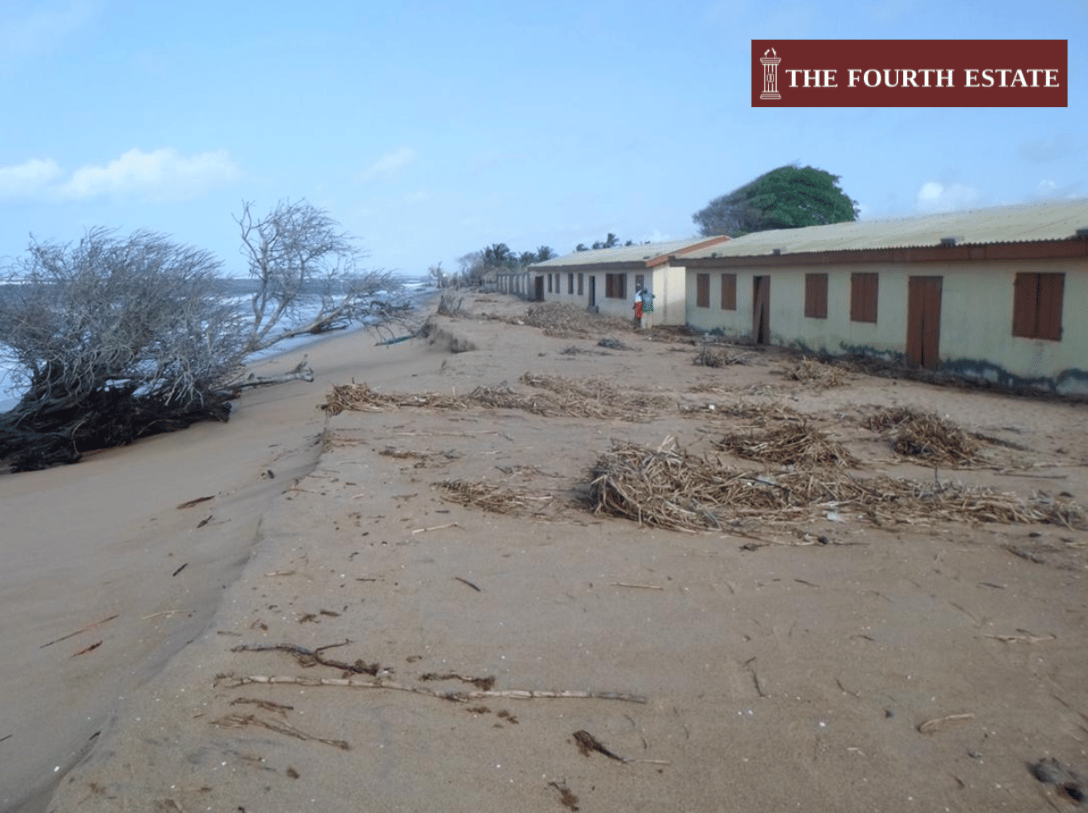
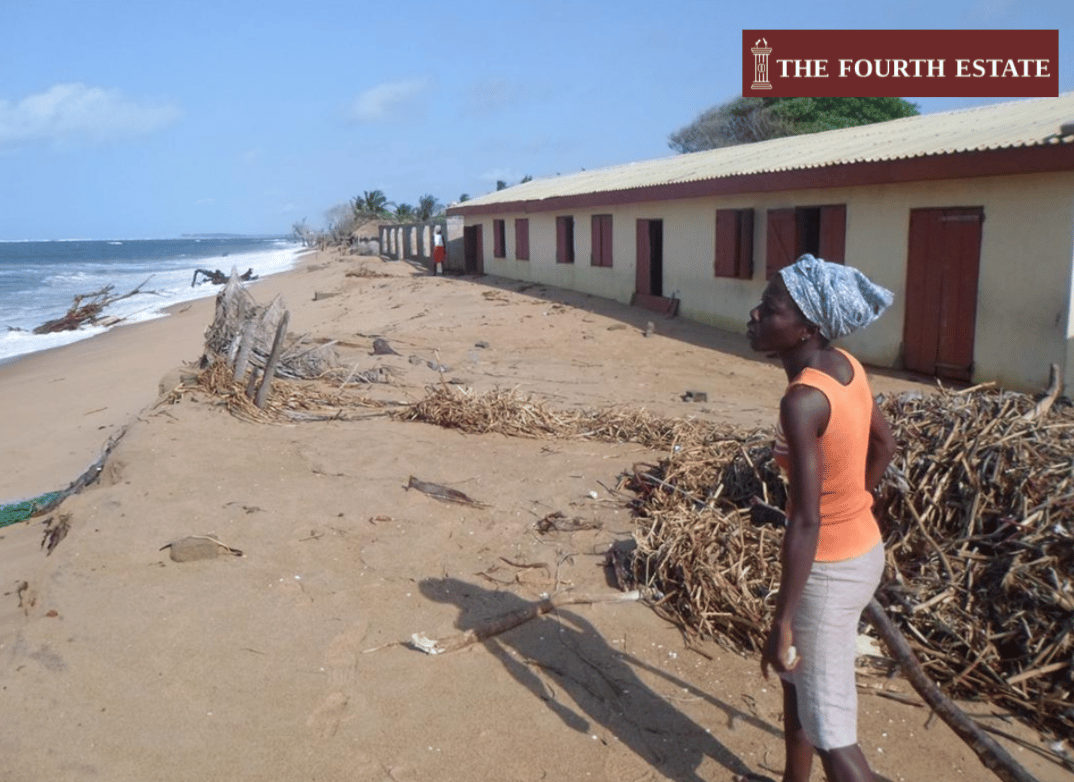
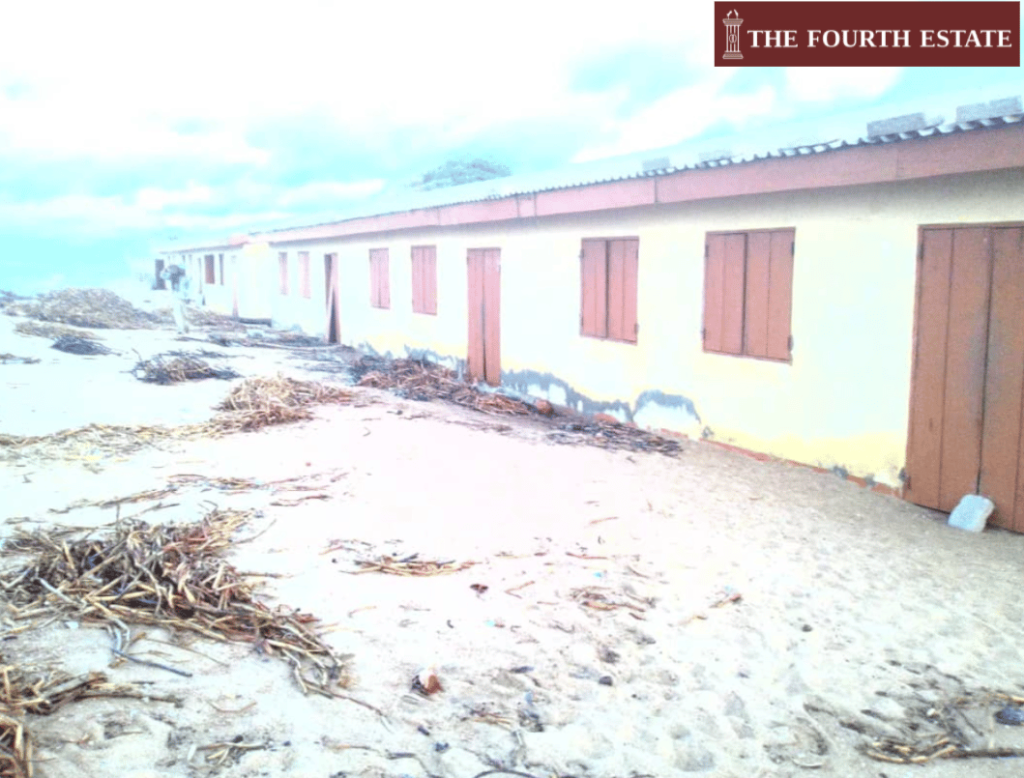
Not even its concrete walls can be traced. The sea, the vicious sea, brought it down and swallowed its debris.
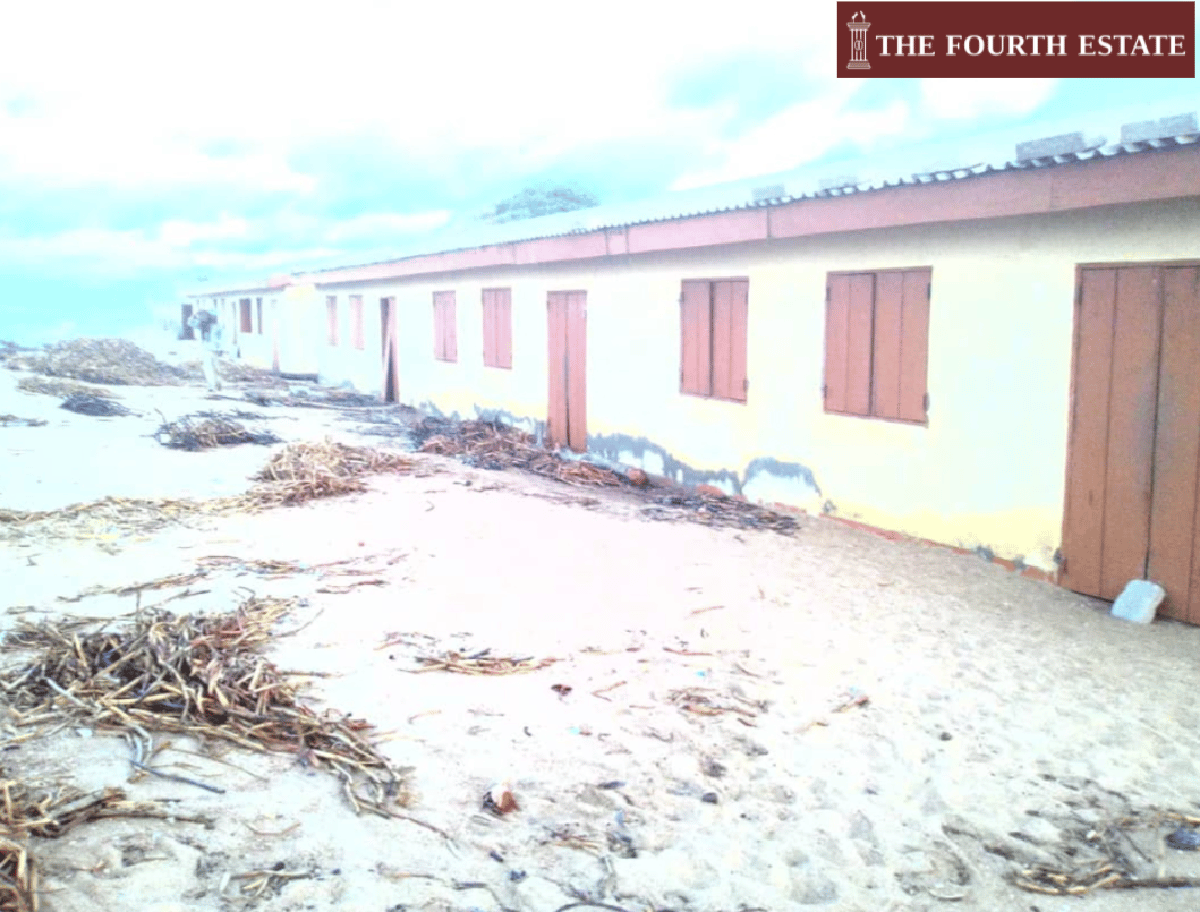
“The sea had been inching closer and closer every year until 2016 when water began to enter the building, and eventually the walls broke down,” the headmaster, Cornelius Adzido, recalled. The incident caused the relocation of the school to about 500 metres away from its old site.
When this reporter visited Fuveme in 2016, the community was praying and hoping for a sea defence wall.
It was not built. The 2.8-kilometre Atorkor sea defence project was expected to cushion some coastal communities in the then Keta Municipality (now Anloga District) against destructive tidal waves. But the construction didn’t progress beyond Akplorwotorkor.
It meant Fuveme was left exposed. Over the years, the waves have pounded the village (Fuveme), causing extensive damage to property, including homes and churches, and sometimes cutting the inhabitants off from the rest of the district.
A large section of the fishing community has been reduced to a pile of rubble as the advancing tidal waves turbocharged by climate change continue to inch closer. It created a new estuary in May 2021.
According to experts, rising sea levels linked to the melting of polar ice caps is causing coastal erosion, which slowly submerges communities along the coast.
So, the Fuveme RC Basic School became a victim of an imperial ocean claiming territories. It is an occurrence climate change experts blame on human activities such as sand winning and deforestation as well as natural causes such as wind, water and other forces.
Five years ago, the school had trees around it. But as the sea moved closer, it mowed them down. As the situation got worse, the sea began to flood the compound and the classrooms with its debris. By August 2016, the classrooms collapsed, leaving teachers and students stranded.
Months after the old school disappeared under the ocean, the Anloga District Assembly and the community mobilised and built a new one.
But far from the relative beauty of the destroyed structure, the current one looks like a market shed. Overlooking the ocean, the new Fuveme RC Basic School stands like a helpless and desolate memorial awaiting another violent end.
The school has a population of more than 200 pupils. It is just a few metres away from the shore. Its management, teachers and pupils are constantly reminded of the danger creeping closer.
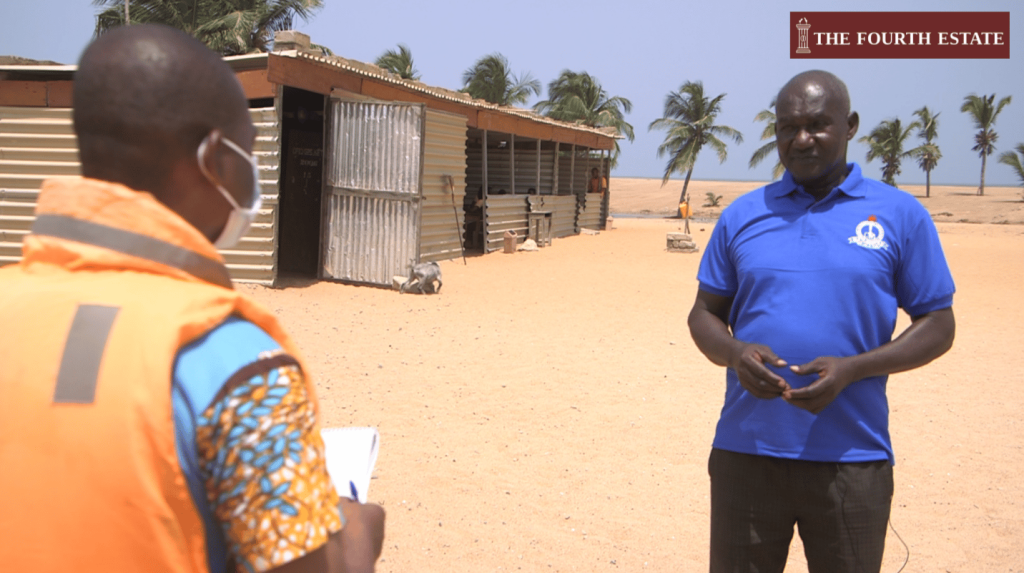
The headmaster, Cornelius Adzido, (right) of the school in a chat with The Fourth Estate journalist, Seth J. Bokpe. Behind the headmaster is the JHS classrooms and the sea Photo: Clement E. KumsaH
“The school is about 150 metres [from the sea]. I don’t know how it will happen in the future. The fear is that if it [the sea] takes this school away, there will be no school in this community,” the headmaster said of the predictable end of the school.
“The children will have to move far away to other places. The whole community will be deserted. Our prayer is for the school to be protected so that it can help the people in the community,” he added.
But there are other problems too.
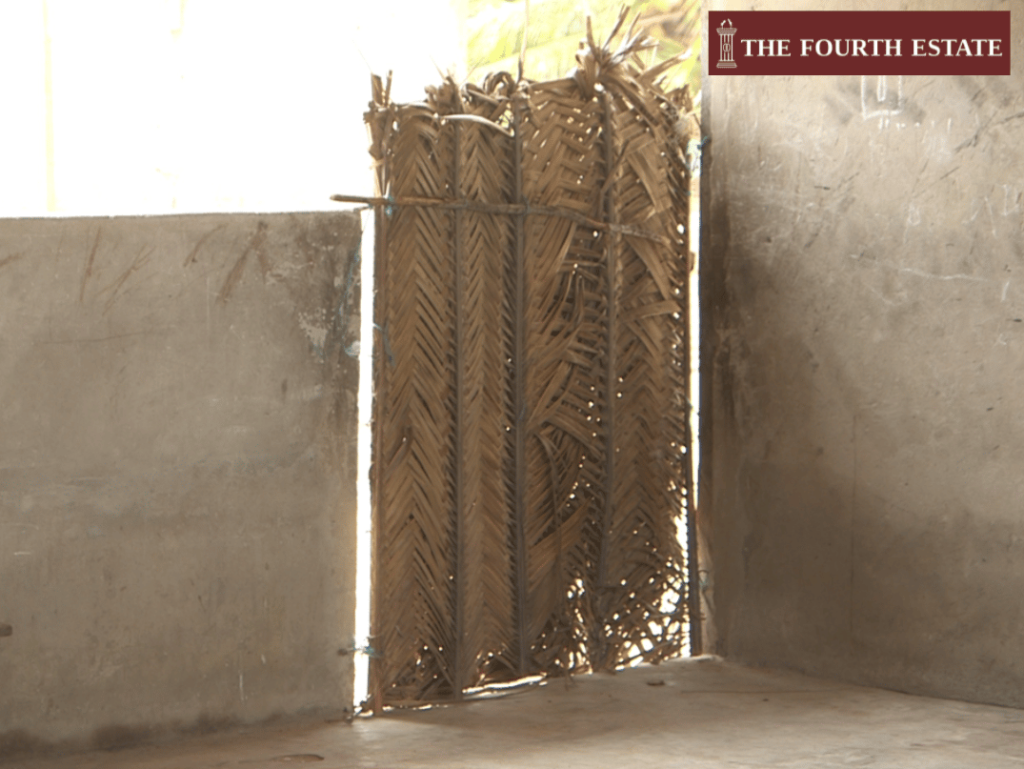
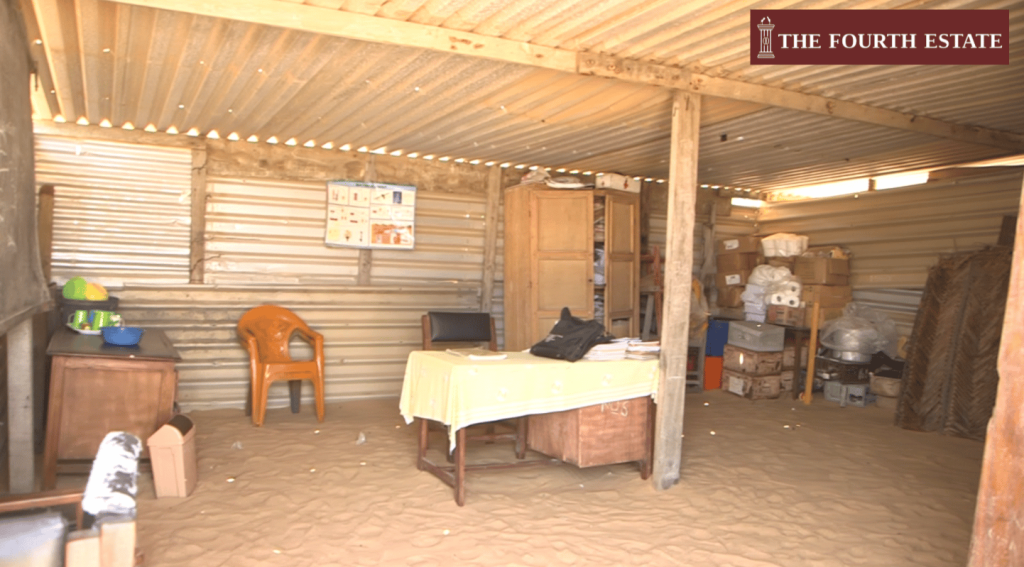
Classrooms from Primary One to Six are windowless and the doors are made of palm fronds. They are empty except for a few desks scattered across and are complemented by kitchen stools and tables the pupils bring from home.
Coconut frond is the closest the school has to getting a door for its classrooms Photo: Clement E. Kumsah
However, another classroom has been packed with desks, awaiting the completion of a new school block, just behind the six-classroom block.
The floors in the primary classrooms are cemented, a luxury their senior counterparts in the junior high school (JSH) could only wish for.
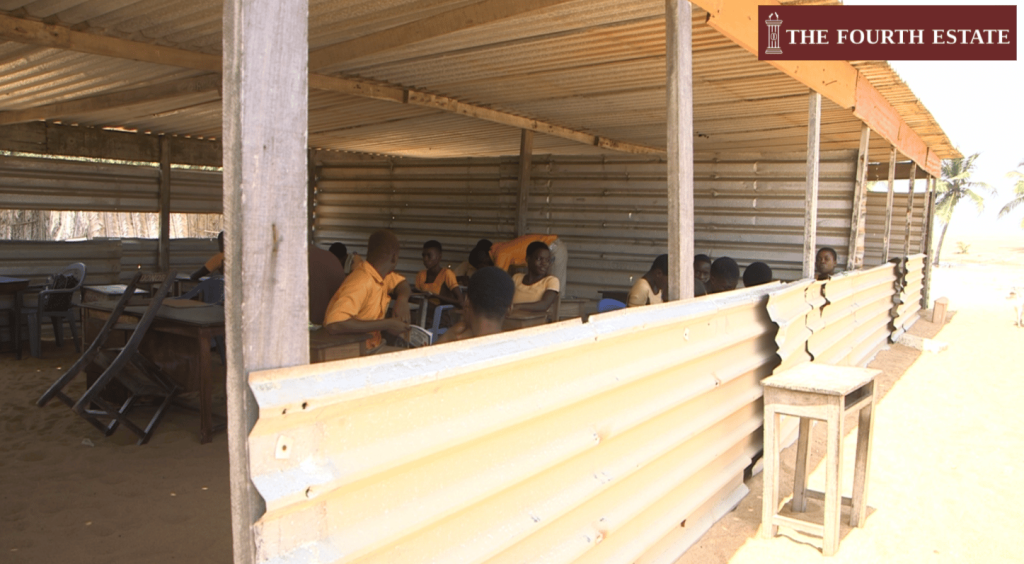
The JHS classrooms were constructed from corrugated iron sheets and the floor is as bare as the seashore.
The JHS classrooms were built from iron sheets and the floors are bare. Photo: Clement E. Kumsah
A new classroom block is under construction, but the contractor was not at the site when The Fourth Estate visited the school in July.
A student who declined to give his name said the classroom could sometimes be extremely hot on sunny days and when the rain comes with a storm, school comes to a sudden end.
“When it is raining, our classroom is not protected from the rain. Rain enters it and gets us wet, so we close early,” he said.
The headmaster’s office is no different from the JHS block. Occasionally, domestic animals walk in and out of the office.
The headmaster’s refuse
But that is the least of the concerns of the headmaster. The school has even bigger problems that are undermining academic work.
“We are facing a lot of problems. We are also suffering from a furniture shortage. We don’t have any toilet facility in the school,” he said.
He added: “We have challenges with teachers. I don’t know whether they tag the school a deprived school that is why teachers are not coming. In the whole of the primary [section], we have only two teachers and in KG, we have only one teacher. The JHS form one to three, we have two teachers, so we have a staffing problem here,” Mr Adzido lamented.
The inadequate staff of the school had taken its toll on the school’s academic performance, he said.
While declining to go into the figures, he said Form Three students who wrote last year’s Basic Education Certificate Examination (B.E.C.E.) flunked it.
“Formerly, the JHS pupils were doing well because the teachers were with them. Last year, they couldn’t perform well because they had only two teachers with them.”
The school, he added, had in the past produced students for some secondary schools in the Volta Region, including Keta Secondary Technical School, Anloga Senior High School and Sogakope Senior High School.
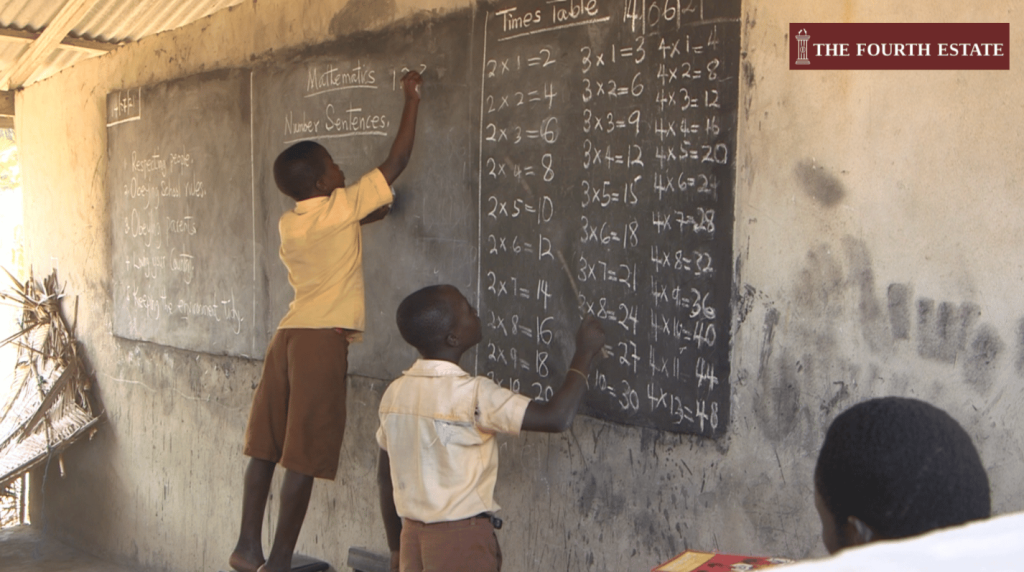
To find a solution to the situation at the Primary level, Mr Adzido said the classes had been combined. Primary One and Two pupils share the same classroom and teacher. So do their peers in Primary Three and Four, as well as those in Five and Six.
It’s Mathematics time Photo: Clement E. Kumsah
The Parent-Teacher Association (PTA) chairman of the school, Jacob Afetorgbor, who has spent almost his entire 41 years on the shrinking patch of land situated between the sea and the Keta lagoon, said the community was helpless.
According to him, the community had resettled at least four times since 1993 when visible signs of sea erosion began to take its toll on Fuveme.
“It is heart-breaking that nothing much has been done to stop the sea from taking over our land. The future of our children depends on their education, but we are not even sure if this structure will be here for another 10 years,” he said, clasping his hands around his neck.
Anloga District Assembly
When contacted, the Anloga District Coordinating Director, Emmanuel Dzakpasu, told The Fourth Estate that while the construction of a sea defence wall at Fuveme was beyond the financial muscle of the assembly, it was engaging the Ministry of Works and Housing for the minister to visit the area and assess the dangers facing such communities.
On the inadequate desks and teachers, he said the assembly would work with the district directorate of education to ensure that the packed desks were released to the pupils while efforts were made to assess the teacher needs of the school.
As conversations about the fate of the school go on, residents of Fuveme are anticipating that decision-makers will roll out their mitigation plan early enough to tame the ocean and save their land and school.
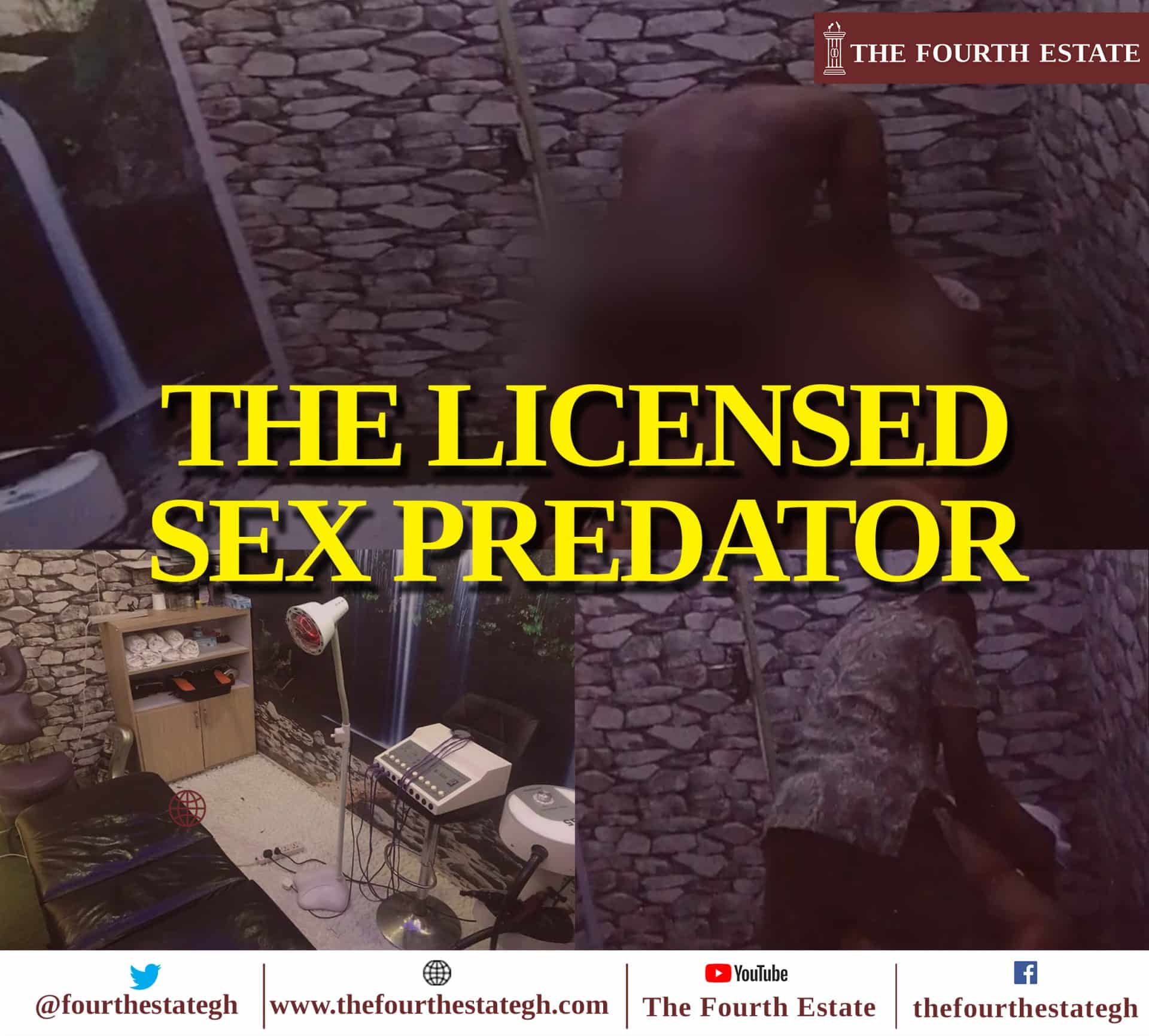
In The Fourth Estate’s latest investigation, Manasseh Azure Awuni, exposes a licensed health practitioner whose predatory activities have broken the hearts and homes of desperate women who wanted healthcare.
The investigation, which started last year, is due to be published in text and video reports. Below are the schedules:
Part 1 of text: Wednesday, September 22, 2021, at 7:00 GMT.
Part 2 of text: Thursday, September 23, 2021, at 7:00 GMT
Full Video: Friday, September 24, 2021, at 9:00 GMT.
Prosper Ahmed Amunquandoh pushed a paper to the manager of the Global Container Terminal (GCT) at the Tema Port, Mr. Kudjoe Wonder Kagbetoh.
“We are here to inspect these containers suspected to contain charcoal meant for illegal export,” he said, an undercurrent of tamed fury and frustration in his voice.
Amunquandoh is the inspector-in-charge of renewable energy at the Ghana Energy Commission. He leads a group of officers to enforce the laws and regulations, including clamping down on the illegal export of charcoal.
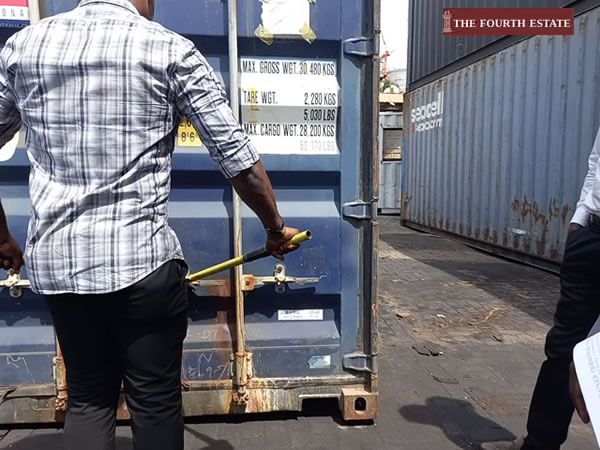
At his instruction, a terminal hand emerges and trudges over with a giant container seal cutter to confront a seal affixed to the 20-footer container with serial number, SUDU 7934298.
With some practised force, the worker breaks the seal. The container, with its squeaking metal doors and bars, flings open, displaying the contraband content.
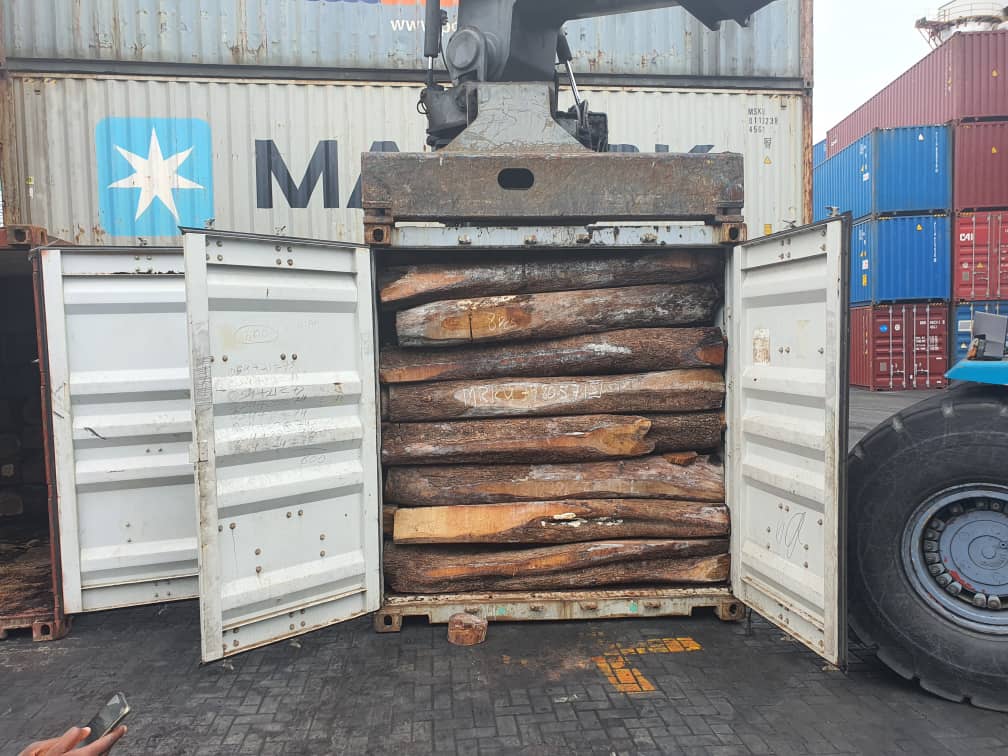
It is not charcoal. It is rosewood. Its harvesting, transportation, processing, and export have been banned since March 2019.
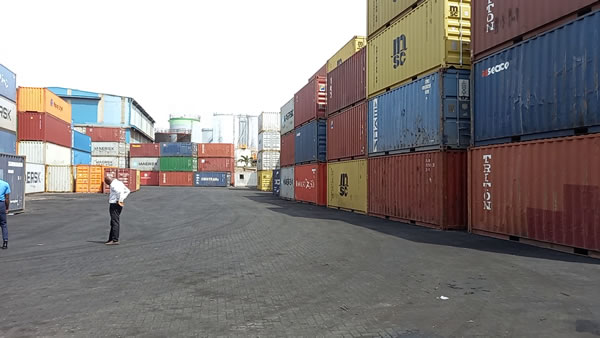
This is one of five containers of rosewood found at GCT
Several weeks of coordinated surveillance, intelligence gathering has paid off.
===========================
Why is rosewood in high demand?
Rosewood has a dark, deep reddish hue, sometimes purple, sometimes cherry. Add this to its strong, sweet smell and that explains the name rosewood. It is the colour and smell that conspired to give it the name.
Rosewood grows in areas where the sun shines all year—the tropics. And that makes Ghana one of the countries where the tree blossoms. No one really cared about harvesting rosewood in Ghana. Like any other locals used it in negligible quantities, for fuel at home.
But everything changed in about 2004, according to a government report.
Rosewood from Ghana hit Chinese shores. And when China, with a population of 1.398billion, develops a taste for anything in the world, the demand literally shores up.
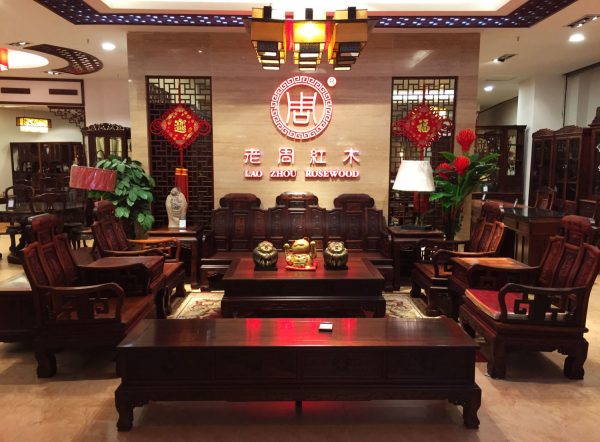
In China, rosewood products are highly coveted and used mainly for aesthetically pleasing ornamental furniture, those reminiscent of the Ming and Qing dynasties of China. The wood is also used for producing musical instruments, and its oil is extracted for its antidepressant, antiseptic, aphrodisiac, and antibacterial properties.
Rosewood furniture for sale at Shanghai’s Macalline Furniture Mall. Owning rosewood furniture has long conveyed a status of wealth in China. SANDY ONG
In China, rosewood products are associated with class, wealth, and success. The middle and upper classes cannot have enough of it. A rosewood-carved bed can fetch a cool $1million in plush Shanghai showrooms, according to Times Magazine.
While other tropical hardwood species can go for $1,700 per ton, rosewood can go for $17,000—ten times more. And those in Thailand can fetch up to $50,000 per cubic meter.
With that kind of money at stake, impoverished loggers in Cambodia, Ghana, Zambia, and Thailand are hugely incentivized to destroy ecological areas to feed an insatiable Chinese appetite.
That is how come China has been able to import a total of 3.5million tonnes of rosewood valued at $2.4billion from 2000 to 2013.
That is how, in Ghana, the illegal felling of rosewood trees in places like Tamale, Buipe, Yipala, the Mole National Park, and more than a dozen other forest zones from 2012 to 2019 has seen at least 489,700 rosewoods move from Ghana to mainly China.
That is how in Thailand, the forests have become war zones, with loggers armed with AK-47 rifles and grenades.
In Ghana, rosewood grows in dry savannah regions in the north of the country. Northern Ghana is already threatened by desertification that triggered a number of failed tree-planting programmes by the government. The illegal and indiscriminate felling of rosewood, therefore, aggravates the environmental problems in northern Ghana.
Ghana has banned trading in rosewood five times since 2012. The latest ban came on March 11, 2019. But the country remains a prime target for illegal export. With Chinese business cartels lurking around impoverished areas in Ghana, where the supply of money meets a desperate demand for wealth, or rather a desire to get out of poverty.
=======================
Tracking trucks, terminals, and Tema
In early June 2021, five trucks emerged on the radar of the Energy Commission’s continuous surveillance and intelligence gathering activities.
The trucks were first noticed in Kumasi, heading for Accra. Their contents moved unchecked at various checkpoints of the Forestry Commission. The Energy Commission had intelligence that the cargo could be charcoal about to be illegally exported through the port. And so, Mr. Amunquandoh and his team kept their eyes on Tema, terminals, and trucks.
By June 17, 2021, one of these containers had finally parked inside the Global Container Terminal (GCT), a large, sprawling space where containers meant for export waited for necessary approval documents from the Customs Divisions of the Ghana Revenue Authority before leaving the country.
Mr. Amunquandoh contacted the Forestry Commission and it assigned Winifred Ohene Wiafe, the Tema District Manager of Forestry Services Division to join him inspect the container, SUDU 7934298.
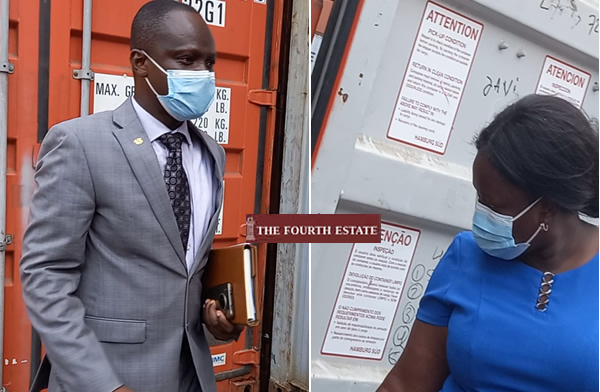
Prosper Amunquandoh of the Energy Commission and Winifred Wiafe of the Forestry Commission teamed up at GCT
He needed her because the Forestry Commission checks illegal export of Rosewood while the Energy Commission deals with the illegal export of charcoal. And intelligence had it that smugglers would conceal rosewood deep inside the container and cover it up with bags of charcoal to divert suspicion from authorities.
The two officials from the two state institutions and a representative of the terminal would, therefore, inspect it together. If the goods were charcoal, the Energy Commission had jurisdiction to determine if it was being illegally exported. If it was Rosewood, the Forestry Commission would take over.
At 12 p.m., on June 17, the two inspectors walked into the terminal. A container of Rosewood was being offloaded brazenly into another container.
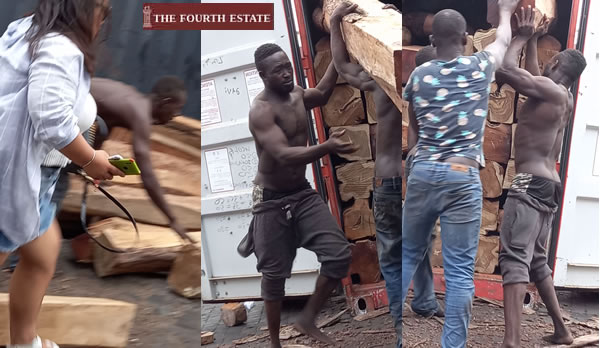
The young men were captured packing logs of rosewood right inside the terminal
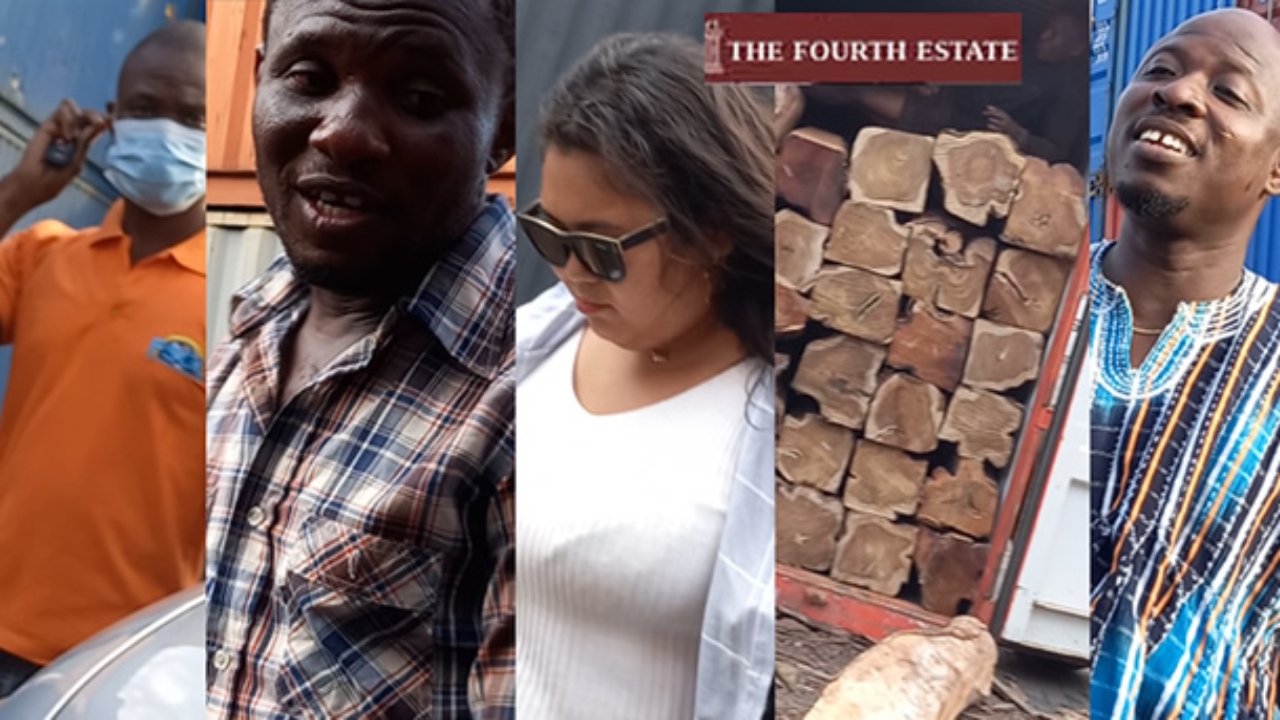
A middle-aged man in charge of this offloading was Mohammed Yusif. There were seven others with him. They were two Chinese nationals, at least two Ghanaians, the rest were brawny youths who Mohammed Yusif said were Togolese. They were masterful in arranging the heavy wood neatly into the containers.
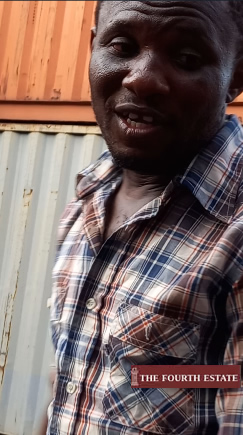
Mohammed Yusif drove a container of rosewood into the terminal. He claims he bought it through auction
According to Mohammed Yusif, he had bought the rosewood from the Forestry Commission, which, he said, had auctioned them after impoundment. But Mrs. Ohene Wiafe cast doubt on Yusif’s account. After examining the wood, she said some of the rosewoods were freshly cut, meaning they had been recently harvested despite the government’s ban.
But Yusif stood by his story and claimed he had re-sold the wood to a Chinese entity. The new owners were packing the goods into a new container. They had contracted Jonada as its shipping agent to export a 20-footer container of rosewood.
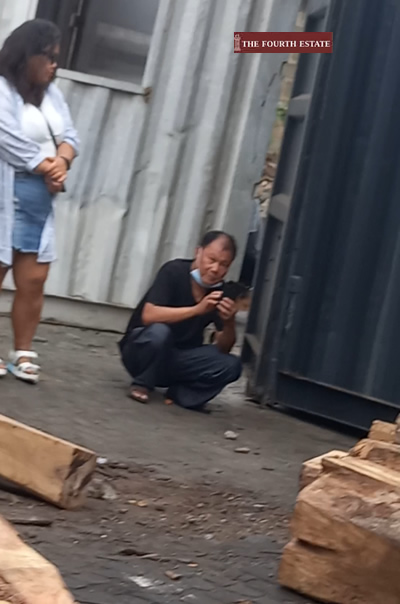
Two Chinese nationals were seen at GCT on June 17, 2021
While he spoke cajolingly, trying to establish some friendship in an air of suspected illegality, Winifred Ohene Wiafe sent word to the shipping line and to the Forestry Commission, alerting them to trigger processes to detain the container.
Yusif suspected it. The Chinese suspected it. But in that uncomfortable assembly of two state officers and some seven smugglers, no one said it.
But the terminal manager, Kudjoe Wonder Kagbetoh, would not have the team inspect it without following due processes. “Bring an official letter,” he said, explaining that he would need it to show the container owners if they reported a break-in.
The inspection team backed off, promising to be back with the letter. On Tuesday, June 22, 2021, the letter was delivered. Three days later, Amunquandoh came back to the terminal. He was in the company of a Customs officer, A.K Attra. One official from the Forestry Commission was needed to complete the inspections team. They waited for Winifred Ohene Wiafe in vain. She did not show up despite several calls.
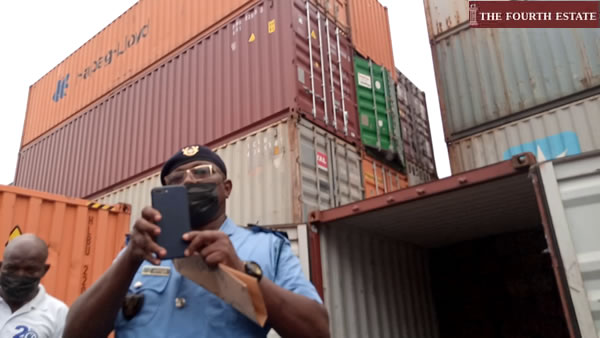
Custom officer A.K Attra
Three containers were opened because those were the ones that were found/located by the officials of the Terminal. The Container Numbers of three were UACU3840352, TLLU2598583, and MRKU7980575.
The team did not open the fifth container, TCLU9913631, because it could not be found at the time of the inspection.
Since the containers did not contain charcoal, and there was no official from the Forestry Commission, the Energy Commission reported the matter to the Sector Commander of Customs at the Tema Port, Julius Aweya Kantu.
When the officers were about leaving the terminal, they met a Forestry Commission official who was later identified as Samuel Osei Kofi who was entering the Terminal. He told the Customs officers that the owners of the rosewood may have valid permits. The Customs officers told him to come to the office of the Sector Commander the next Monday, June 28, 2021, and show the permits. If they are genuine, Customs would allow the owners to ship the items, they told him.
On Monday, June 28, 2021, at the Sector Commander’s office, Customs officials and Mr. Amunquandoh waited for the Forestry Commission officer Samuel Osei Kofi to join the team once again for the final search for the fifth suspected container. Interestingly, “Samuel Osei Kofi” didn’t show up on Monday.
The team made calls to find a different Forestry Commission official to join the inspection.
But no one came.
The inspection team went into the terminal again to inspect the final container, TCLU9913631. Busted.
Done and busted! It was rosewood.
After three inspections, five containers of rosewood were found and were seized.
On June 30, 2021, following the media reports, suddenly half a dozen top officials of the Forestry Commission showed up at the terminal. The deputy minister for Lands and Forestry, Benito Owusu Bio, had come to inspect the containers and assure the country that the ministry would investigate the matter, possibly within a month.
On the sidelines, the Forestry Commission’s Chief Executive, John M. Allotey, re-echoed the words of the deputy minister, “We will investigate and get to the bottom of this.”
But during three rounds of inspection, the Forestry Commission showed up at only once.
The Fourth Estate has contacted the Forestry Commission to explain its auction process for rosewood and also steps it has been taking to deal with the harvesting and transporting of rosewood.
But the Commission has declined to speak, referring our reporters to the Lands and Natural Resources Ministry. The Ministry has already indicated, it is investigating the matter.
Who are the agents behind these intended shipments?
===========================
On June 2021, 17, a Toyota Highlander with registration number GT 7144-21 pulled up inside the Global Container Terminal (GCT) in Tema Port. Two men climbed out and waited.
This was on the first day when The Fourth Estate reporters had got wind of suspected rosewood loading at the Tema Port and had come to the port to follow the trail of illegality.
It was on this same day that the Energy Commission’s inspector in charge of renewable energy, Prosper Ahmed Amunquandoh, and the Tema District Manager of Forestry Services Division, Winifred Ohene Wiafe, were questioning Yusif, a driver and a self-confessed rosewood dealer who was supervising the carting of rosewood into container number SUDU7934298.
While the two officials were interrogating Yusif, Amunquandoh’s phone rang several times. One of the two men in front of GCT office had been calling him. But Amunquandoh did not answer.
He emerged from inside the terminal to find the two men sharking around the car, waiting for him. One of them approached him, flashing his diastema and a wide smile. His name is Christopher Asante. He has described himself as a staunch NPP member and also claimed to be part of the presidential security detail. He also claimed that the Energy Minister, Matthew Opoku Prempeh is his “father”.
The Fourth Estate’s sources close to the presidency, said Christopher Asante was often seen, during the early days of the Akufo-Addo government, at the Jubilee House (the Office of the President), but the sources could not confirm his official position. The source explained that sometimes party boys like to establish relationships with government officials so they can use such relationships to peddle influence.
He came forward to speak to Prosper Amunquandoh, who looked quite uncomfortable engaging him.
“A whole presidential security, you don’t want to speak to me? … Prosper don’t [sic] want to meet me,” Asante said.
He claimed that he was supposed to have “traveled with the old man [ referring to the president] in Kumasi”, but had come to the port because of Amunquandoh.
Prosper responded that he had been too busy to speak to him and after the initial exchanges, Asante excused the Energy Commission inspector to do his work.
“Finish and let’s talk,” Asante said. But he grew uncomfortable in the presence of suspicious company so he signaled to Prosper that he would get in touch soon.
According to The Fourth Estate sources, Asante Christopher linked to an investigation being carried out by the Energy Commission on an alleged illegal export of charcoal to China.
Asante had contacted a shipping agent, Felix Sankari of Flexisco Sun Gh (Ltd), and through alleged collusion, exported 10 containers of Charcoal containing an estimated 5,000 bags with an international market value of $1.6million.
Intelligence and surveillance activities by the Energy Commission had been trailing the containers, but before they could be nabbed, the two suspects were able to ship the goods out of the country on May 16, 2021.
The goods made a transit through Belgium and headed to its destination in China, sources close to The Fourth Estate have revealed.
According to a source, the containers have been tracked down and maybe heading back to Ghana’s shores.
The alleged illegal export of charcoal is not the only issue linked to Felxisco Company Ltd. He is also involved in eight containers of unlicensed commercial quantities of charcoal impounded by the Energy Commission.
When Christopher Asante and Felix Sankari, the two persons linked to illegal activities, showed up at the GCT Terminal on June 17, 2021, after a container of Rosewood had been busted, it raised suspicion of their involvement.
Asante peddles influence and claims he is connected to powerful people in government.
When The Fourth Estate’s undercover reporters encountered him, he suggested he had a relationship with Matthew Opoku Prempeh, Ghana’s Energy Minister.
When the news website contacted the Energy Minister, he told our reporter through his spokesperson, Rodney Nkrumah-Boateng, that he had nothing to do with Asante. The minister has called for his arrest.
The spokesperson said the minister has been battling with influence peddlers and persons using fake accounts presenting themselves to be what they are not.
It has been close to two months since the Energy Commission went to do the work of the Forestry Commission and tracked down five containers.
It has also been close to two months since the Lands and Natural Resources Ministry vowed to investigate the seizure of these containers.
At the Global Container Terminal, information on every container that enters the terminal is a click away on the computers in the company’s office. Once the name of the shipping agent is identified, the name of the exporter can be known.
But nothing has been heard yet of the culprits.
Ghana signed a voluntary partnership agreement (VPA) with the EU which includes a wood traceability system from production zones to end buyers, although progress is slow due to strong vested interests among political elites, a World Wild Life Fund 2020 report has said.
Ghana’s environmental suicide
In June 2021, the government launched The Green Ghana project to plant five million trees. The initiative, which is being implemented by the Ministry of Lands and Natural Resources and the Forestry Commission of Ghana, is to preserve the country’s depleting forest cover.
The initiative was supported by significant sections of society and important stakeholders such as religious and professional organisations, chiefs and traditional authorities, Metropolitan, Municipal, and District Assemblies (MMDAs), schools, and companies.
According to Globalforestwatch.org, Ghana has, from 2001 to 2020, lost 1.31million hectares of tree cover. That is more than one million rugby fields. The loss is equivalent to a 19% decrease of the country’s tree cover since 2000, equivalent to 676Mt of carbon dioxide emissions.
In 2020 alone, the country lost more than 336,000 acres of natural forest, according to Globalforestwatch.org.
When trees are cut indiscriminately, humans invite a response from nature. And when this response comes, the impact can be deadly as seen in extreme weather conditions such as flooding and famine-causing dry weather.
The impact of climate change in Ghana has been studied by several pro-environment governmental and non-governmental organisations and scientists. A 2013 report assessed the impact of climate change in the northern parts of the country, especially in eight communities in Garu Tempane and East Mamprusi Districts.
The report found that farmers were finding it difficult to know when to plant because of changing rainfall patterns. Climate change is also perceived to be affecting livestock, making access to water for animals more difficult and affecting the availability of forage. When it rains, it rains very heavily over a short period of time and when the weather is hot, it is very hot.
The fast depletion of the forest attracted the attention of the World Wildlife Fund, the largest independent conservation organization.
The WWF 2020 report identified four factors of deforestation in Ghana as smallholder farming, legal and illegal commercial logging, fuelwood and charcoal, and mining operations. And when the worldwide body highlighted 24 active deforestation fronts in the world, nine of these fronts were in Africa.


![[FULL DOCUMENTARY] SAVED BY GRACE: Ghana Against Covid-19](https://cms.thefourthestategh.com/wp-content/uploads/2021/12/save-by-grace-1-final.jpg)