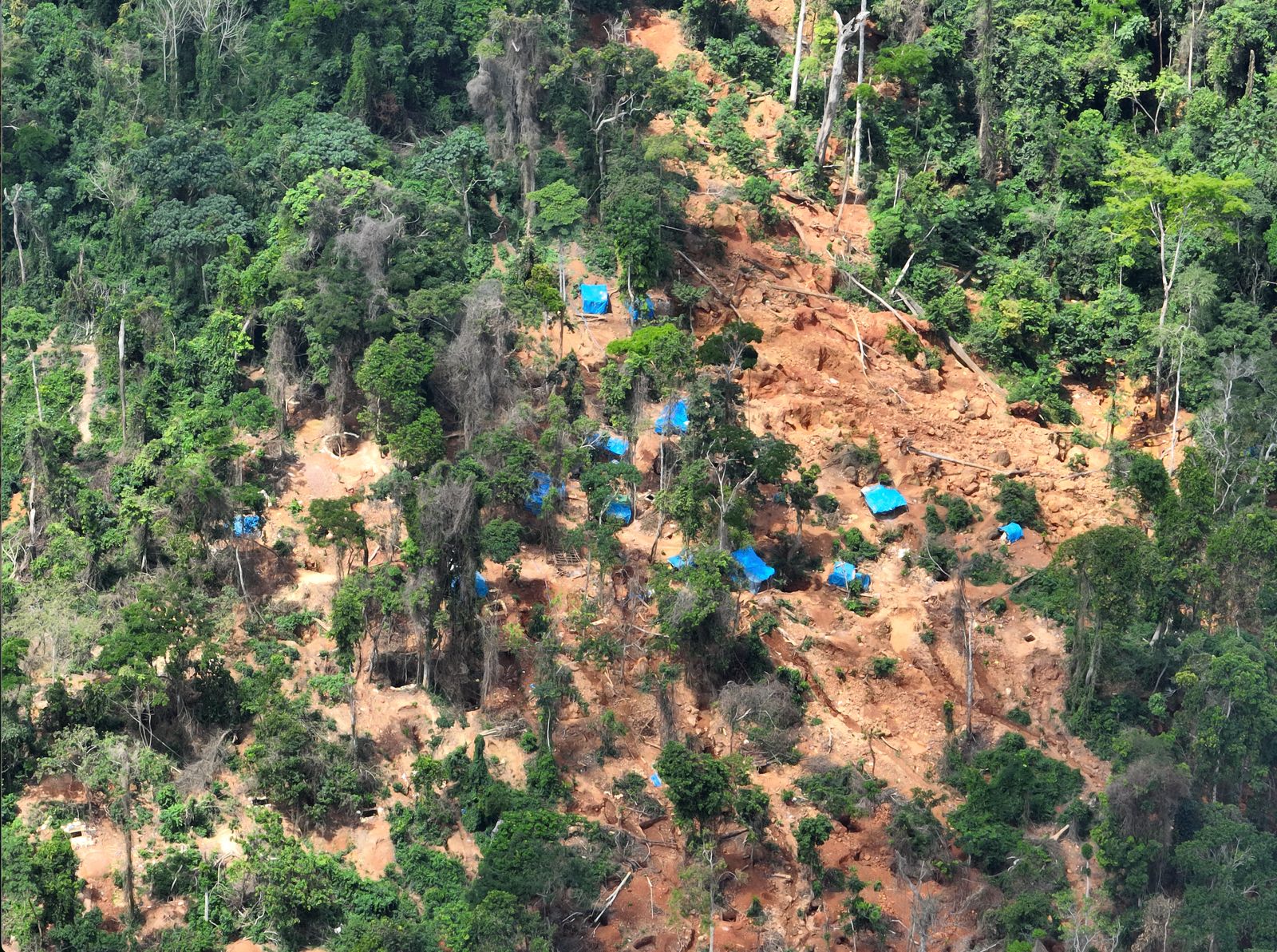
Dawn breaks in Atewa, casting sunlight over what remains of a once-thriving landscape central to human survival. The 263 km² Atewa Forest Reserve in the Eastern Region (once a jewel in Ghana’s ecological crown and the largest reserve closest to Accra) is rapidly shifting from lush greenery into a toxic, muddy wasteland with open brown pits and silt-choked streams.
In January 2026, the forest marked 100 years as a gazetted reserve. At the centennial ceremony, the Okyehene, Osaagyefo Amoatia Oforipanin II, reiterated its original purpose: safeguarding Ghana’s water sources.
Atewa (Atiwa), in the Akyem language, means “the head” — a fitting name for a forest that serves as the source of some of Ghana’s major rivers: the Densu, Ayensu and Birim. These rivers travel far beyond the forest canopy.
The Ayensu flows through Obuoho and Ayensuano to the Kwanyako and Winneba headworks in the Central Region. The Birim supplies the Kyebi waterworks before joining the Pra River. The Densu travels more than 120 kilometres to the Weija Dam, serving large parts of Accra.
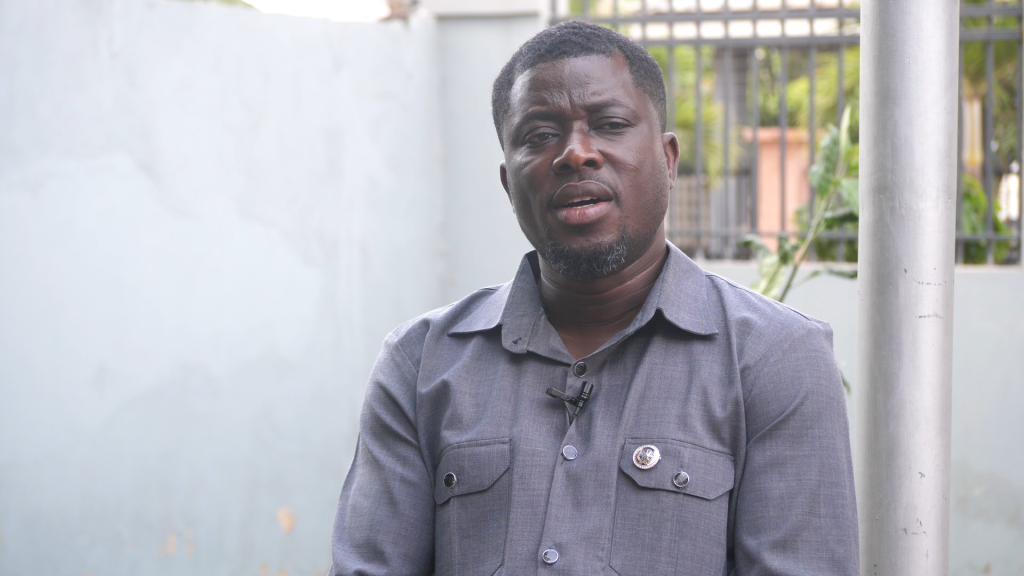
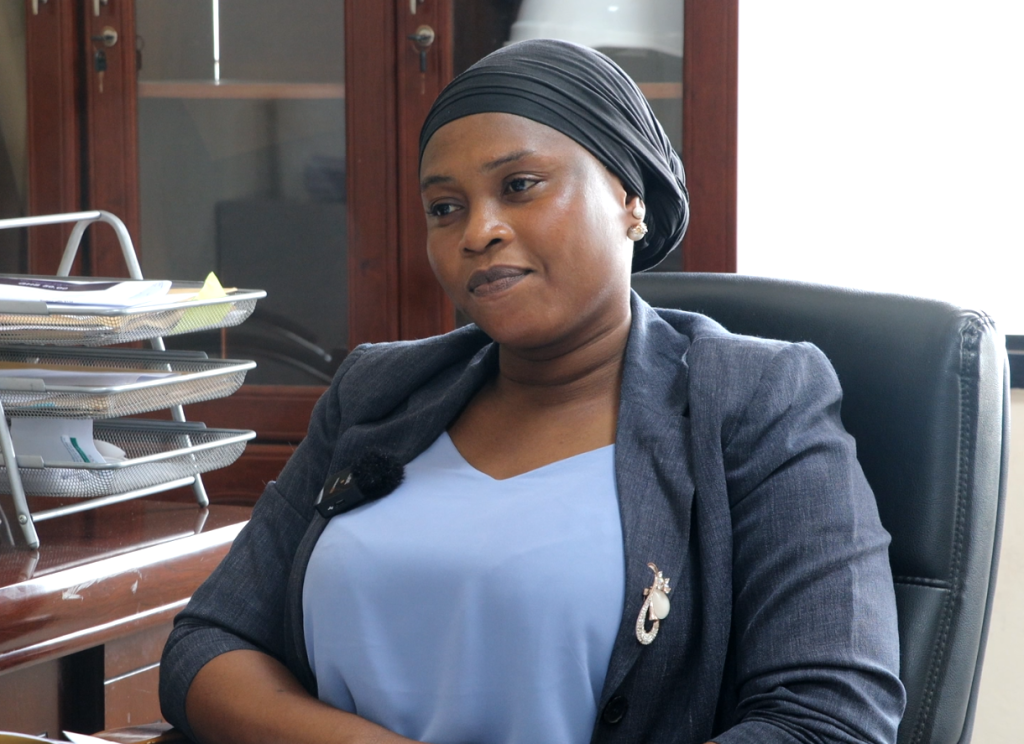
Elikem Kotoko, Deputy Director in Charge of Operations, Forestry Commission.
“This is why we all must be concerned with what happens in Atewa,” says Elikem Kotoko, the Forestry Commission’s Deputy Director in Charge of operations.
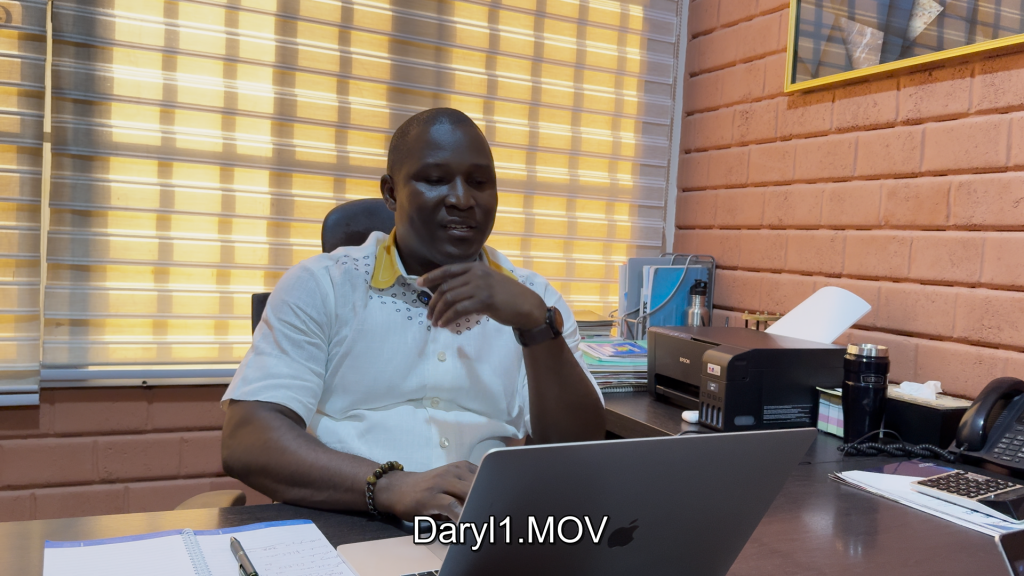
“Atewa provides water for over five million people,” says Daryl Bosu, environmental scientist at A Rocha Ghana. “As a Globally Significant Biodiversity Area, it is one of the most critical ecosystems in the country.”
A critical forest under siege
Today, Atewa’s critical headwater system is under severe threat. Illegal mining activity has spread across sections of the reserve, tearing through river formation zones and forest cover.
In November 2025, The Fourth Estate documented active mining inside the Atewa Forest Reserve along the Wankobi Stream, a source of the Birim River. The stream had been diverted for gold washing, and wastewater flowed back into the river system.
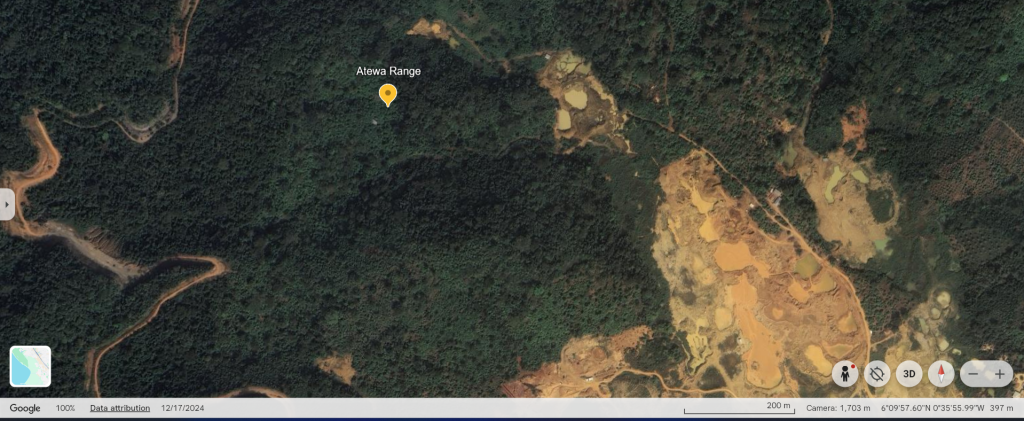
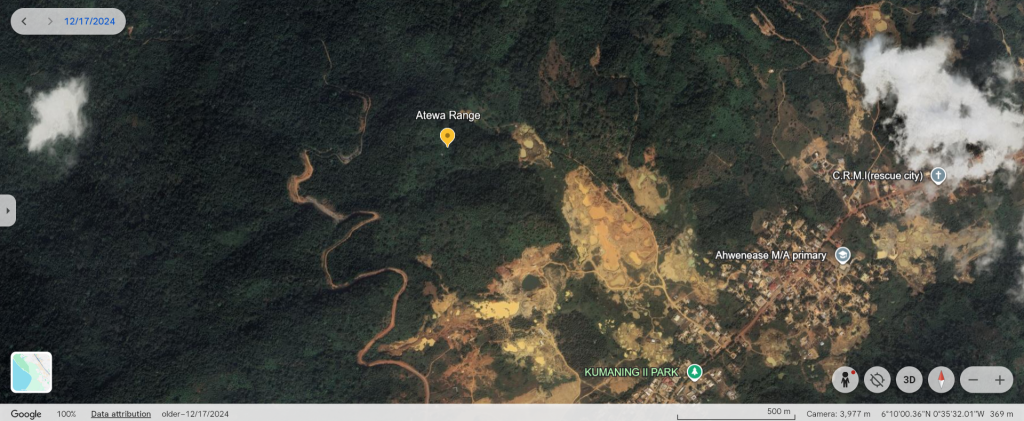
Drone footage and satellite imagery show extensive damage done in and around the Atewa Forest Reserve. Forest canopy has been stripped away, leaving open pits where streams once emerged clear. Google Earth imagery shows extensive degradation between 2015 and 2025, with visible open pits and bare lands replacing forest cover.
“We have lost a total of 12,000 football-pitch-equivalent forest cover to illegal mining in forest reserves,” says Elikem Kotoko.
Daryl Bosu explains that ongoing destruction disrupts the natural interaction between rainfall, tree canopies, and soil, which is essential for groundwater collection that feeds streams. As tree cover vanishes and topsoil is eroded, rivers experience a decline in both filtration and flow stability. This could cut communities from their water sources permanently.
“We might as well forget about getting water to drink from our rivers if we don’t tackle the issue from the source,” Bosu says.
More concerning evidence is revealed in a study by the University of Environment and Sustainable Development and the Ghana Atomic Energy Commission. The study documents the contents of water samples taken from these rivers as “a toxic cocktail of heavy metals”. Water samples collected at upstream points in Apapamu and Obuoho, where the rivers leave the forest, show high silt loads in areas where groundwater would typically remain clean and clear. Water Resources Commission data also shows water quality fluctuating between fair and poor in these zones from 2020 to 2025.
“Mining inside the Atewa Forest Reserve means the water is already contaminated with heavy metals from the source,” says Humphrey Darko of the CSIR Water Research Institute. “This means even communities without galamsey can be affected.”
These dangers are now the lived experiences of downstream communities several miles in Kwanyako, Winneba, Kyebi and Accra, where treatment plants are struggling with rising turbidity and contamination levels.
The fight to save Atewa
For a 62-year-old retired teacher, Nana Duodu in Segyimase, protecting the Atewa Forest Reserve has been a decades-long struggle.
“We marched 100 kilometres from Atewa to Accra,” Nana Duodu told The Fourth Estate. “And still, previous governments opened up the forest for bauxite mining.”
He points to the now-repealed LI 2462, which allowed forest reserves to be decommissioned for mining exploration.
“When people heard the government was to mine bauxite in Atewa, everyone felt they had to get something from the forest,” Duodu said.
Environmental activist Awula Serwah of EcoConscious Citizens argues that repealing LI 2462 is not enough.
“There has to be political will to fight this menace. Without the will, we kid ourselves,” she says.
Repossession claims and ground realities
Ghana has more than 200 forest reserves nationwide; 50 have recorded incidents of illegal mining encroachment, according to the Coalition Against Galamsey-Ghana and A Rocha Ghana 2026 monitoring reports.
In early 2025, government announced that nine forest reserves had been completely taken over by illegal miners and declared them “red zones.” Officials later stated that all nine, including Atewa, had been repossessed through joint operations by the Lands and Natural Resources Ministry, the Forestry Commission and the National Anti-Illegal Mining Operations Secretariat (NAIMOS).
However, field investigations inside Atewa in November 2025 found active mining within the reserve boundaries.
While NAIMOS reports indicated operations in 16 Eastern Region locations between November and December 2025, documents received from the ministry did not specify permanent deployments inside the Atewa Reserve itself.
Reports published on online platforms of NAIMOS and the Ministry of Lands and Natural Resources, claimed illegal mining had been halted in Atewa and along the Ayensu, Densu and Birim rivers. Sources stationed within Atewa dispute that characterization, stating operations occurred off-reserve.
“NAIMOS’ Atewa operations were a case of misreporting,” Bosu says, referencing observations from A Rocha field officers working in the area.
Both the Ministry and NAIMOS declined interview requests.
What is clear, however, is that NAIMOS’s enforcement officers have publicly cited confrontations with local actors and threats to personnel safety. Sources within NAIMOS told The Fourth Estate that, due to funding limitations, the secretariat had been significantly under-resourced, leading to security and safety risks.
“Because galamseyers have more weapons and know the terrain, it’s often easy to trap and attack enforcement officers,” says Elikem Kotoko. He explains that both the Forestry Commission and NAIMOS, as entities under the Lands and Natural Resources Ministry, grapple with insufficient resources in the illegal mining fight.
A national tragedy and policy shifts
On August 6, 2025, a helicopter crash killed eight people, including Defence Minister, Dr Edward Kofi Omane Boamah, Environment Minister Alhaji Dr Ibrahim Murtala Mohammed, and Acting Deputy National Security Coordinator, Alhaji Muniru Mohammed — high-ranking officials who were central to the war on galamsey.
The tragedy immediately ignited public concern that the absence of these key figures could weaken the already fragile battle against illegal mining. The tragedy intensified fears that momentum would stall, prompting civil society groups and some government actors to argue that only a state of emergency could prevent a deeper regression.
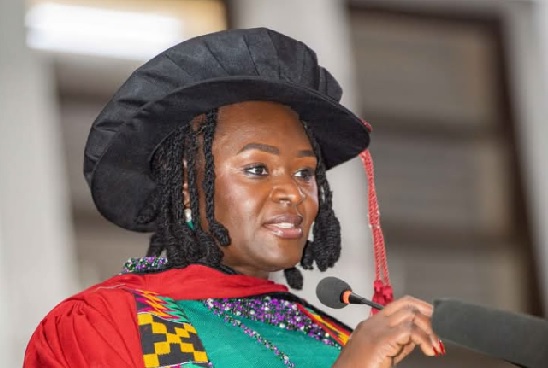
“We have to go radical. It’s not as if we don’t have what it takes to go radical,” the Chief Executive of the Environmental Protection Authority, Professor Nana Ama Brown-Klutse said in an interview in August 2025 on JoyNews.
Professor Nana Ama Brown-Klutse, CEO, EPA.
In September 2025, however, government chose to designate river bodies and forest reserves as national security zones.
“All water bodies and forest reserves are now national security zones, meaning ‘no go’ [areas],” said Lands and Natural Resources Minister Emmanuel Armah Kofi Buah. “We are preparing to deploy permanent security to these zones.”
Yet during field visits to Atewa in November 2025, no visible permanent security presence was observed.
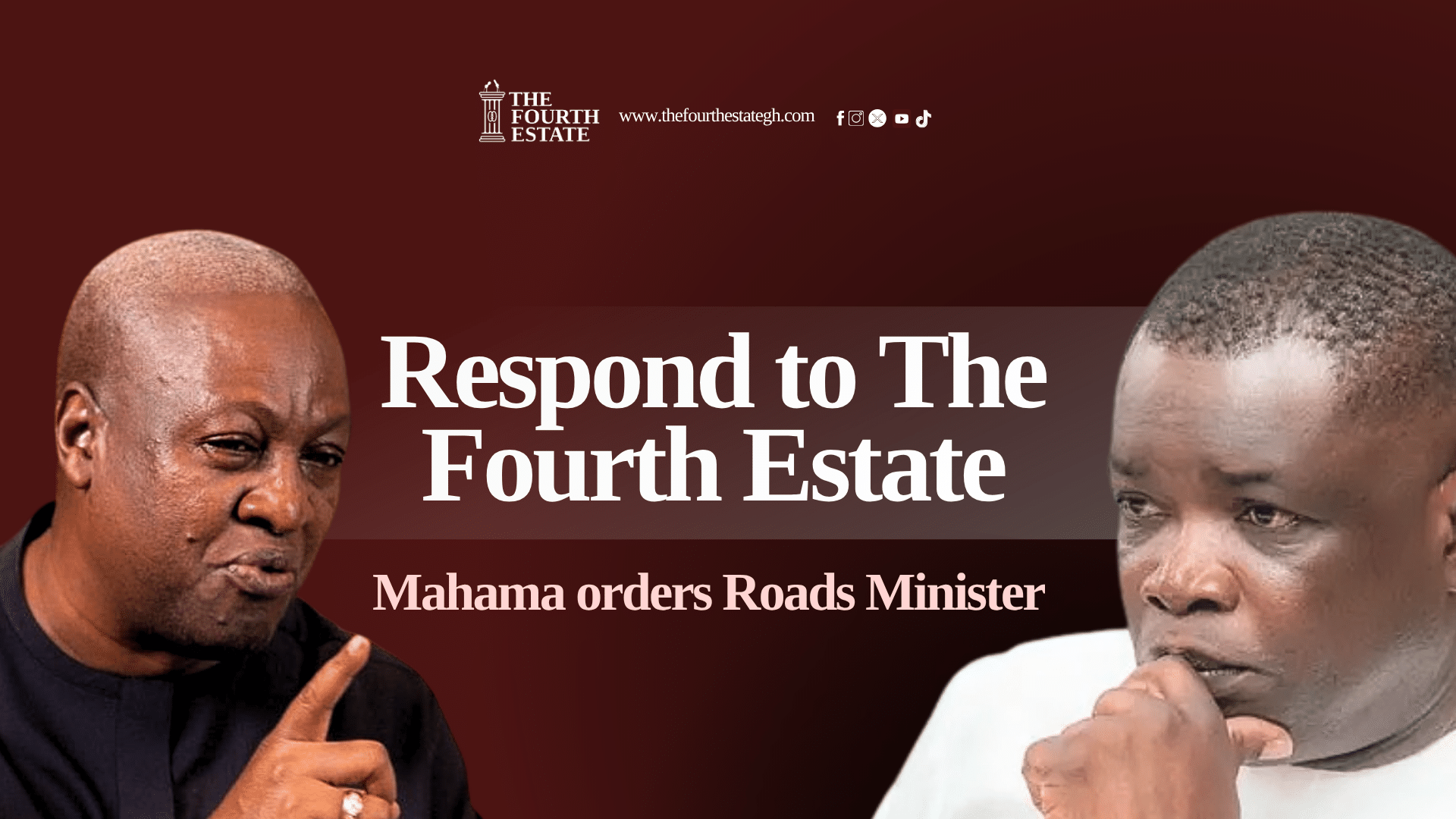
President John Dramani Mahama has directed the Minister of Roads and Highways, Kwame Governs Agbodza, to respond to concerns over sole-sourced contracts under the Big Push programme. The directive follows The Fourth Estate’s latest investigative report and requires a detailed response including a breakdown of contracts for the Presidency.
“Although we have seen snippets of the investigation from the media, I have instructed my office to obtain the full detailed report from the Fourth Estate and to conduct a study of the various allegations presented in the report,” the President said during a dialogue with civil society organisations at the Jubilee House in Accra, on Monday.
According to the President, while sole-sourcing is allowed under certain circumstances by the country’s procurement laws, “we would all agree that open, transparent tenders are always preferable for achieving competitive pricing and value for money.”
The President also said the procurement law would be reviewed to limit the use of sole-sourcing.
The President’s directive follows The Fourth Estate’s latest publication, which showed how the Ministry of Roads and Highways under Kwame Governs Agbodza had resorted mainly to the award of contracts under the Big Push programme through sole-sourcing.
The Fourth Estate revealed that out of 107 road contracts awarded under the Big Push programme, 81 were on a sole-sourcing basis and 26 on restricted tendering, with none awarded under competitive tendering.
The story also questioned past rhetoric of some members of the current administration, including Mr Agbodza, who criticised the Akufo-Addo administration for using sole-sourcing to fleece the state. In contrast, the current road minister supervised the award of 76% of contracts under sole-sourcing.
Subsequent reports also questioned the cost per kilometre of road contracts awarded under the Big Push Programme, particularly the 46-kilometre Dodo Pepesu-Nkwanta Road, which was initially constructed at the cost of €25.9 million but has now shot up to more than €63 million for rehabilitation.
The Fourth Estate also raised issues about how Growth 82 Global Ltd, a company registered in January 2025, and was awarded a multi-million-euro Dodo Pepesu-Nkwanta road for rehabilitation in December 2025.
That is not all. Build Managers, the company awarded the contract to upgrade the nine-kilometre Apegusu–Mpakadan feeder road at a cost of more than GHS146 million, indicated on its Social Security and National Insurance Trust (SSNIT) clearance certificate that it had only one employee.
Similarly, Sanam Ghana Limited, which is undertaking the upgrade of the Todome–Toh Kpalime–Dzemeni feeder road and the Dzemeni town roads, listed just four employees on its SSNIT clearance certificate—raising questions about the pre-contract qualifications of some of these companies.
Ministry’s response to the story
In response to The Fourth Estate’s findings, the Minister of Roads and Highways, Kwame Governs Agbodza, told Parliament that the ministry had awarded more than 400 road contracts, including those under the Big Push programme, through competitive bidding—without providing evidence to support the claim.
In an apparent attempt to discredit the story, the ministry published a list of 54 road contracts it had awarded, but notably omitted the procurement methods used.
An analysis of the published contracts shows that seven were awarded through selective tendering, while a staggering 47—representing 87%—were sole-sourced.
The report has triggered demand for accountability among a section of the public and civil society organisations, who are questioning the government’s commitment to limiting the use of sole-sourcing for government procurement.
While key figures in the current administration, including Sammy Gyamfi, then National Communications Officer of the National Democratic Congress (NDC); North Tongu MP Samuel Okudzeto Ablakwa, and the Minister of Roads and Highways, Kwame Governs Agbodza, previously condemned sole-sourcing as a breeding ground for corruption, the President, in two State of the Nation Addresses, committed his government to using the method only in rare instances.
On 26th November 2016, the Kojokrom railway station became the centre of national attention. The atmosphere was filled with excitement as President Mahama commissioned the Sekondi-Takoradi-to-Kojokrom railway line, declaring: “This marks the beginning of the transformation of the railway network in Ghana.” His words carried the weight of history. For decades, Ghana’s once-proud railway system, built in the colonial era to connect mines and ports, had languished in disrepair, becoming a relic of a bygone age. But on that day, in Kojokrom, it felt like a new narrative was being written.
The 15-kilometre suburban railway had terminals at Kojokrom, Sekondi, and Takoradi, with four stations in Sekondi Prisons, Ketan, Butuah, and Essaman, all within the Sekondi-Takoradi metropolis. The project, which cost the state $165 million, was to enhance the movement of goods and passengers in the area. The people in the metropolis were jubilant, hopeful, and full of joy.
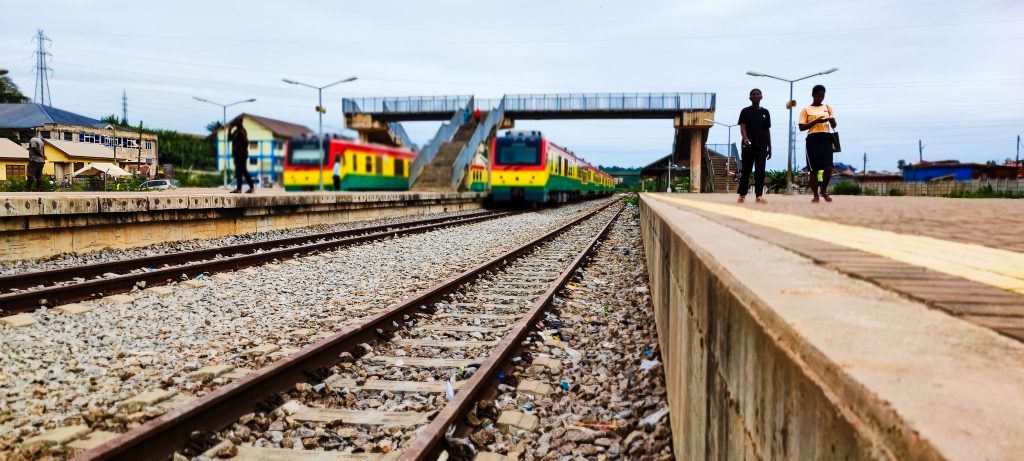
A wide shot of abandoned trains at Kojokrom train station
The reconstruction of the rail lines, which began in 2012, consisted of a five-kilometre single-lane track from Kojokrom to Sekondi and a 10-kilometre track from Kojokrom to Takoradi.
Nearly a decade later, the promise of transformation has withered.
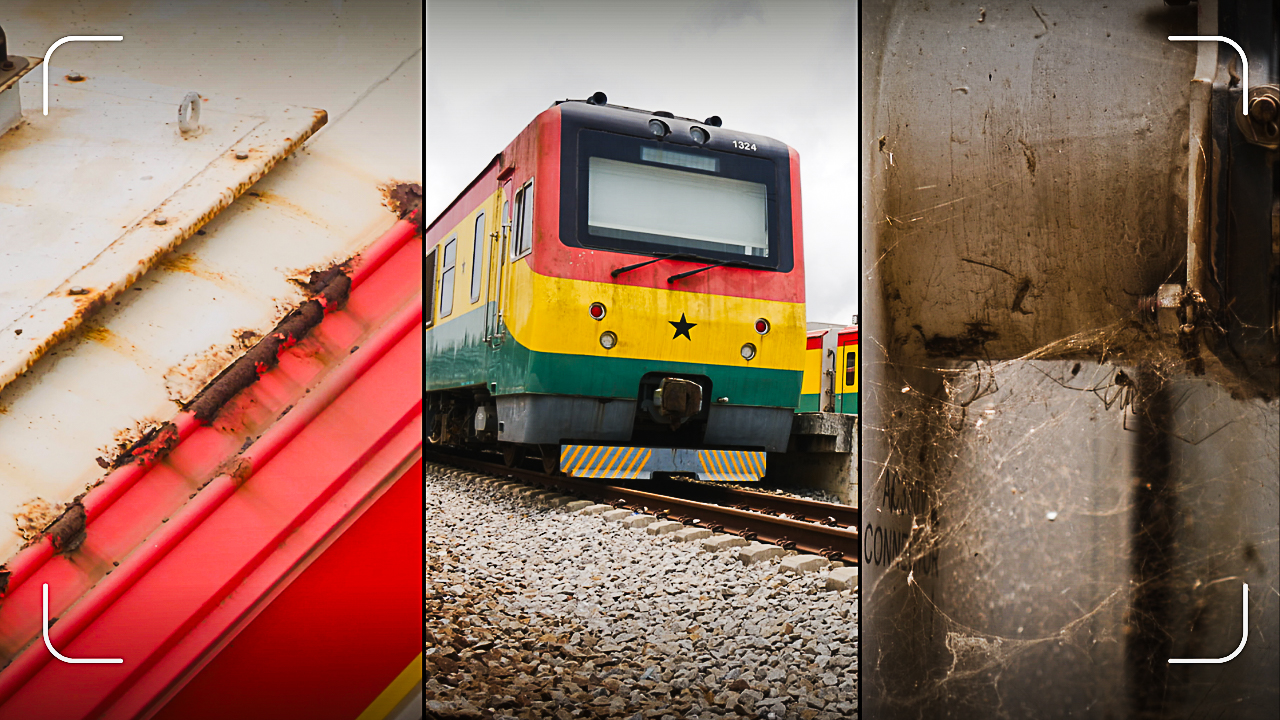
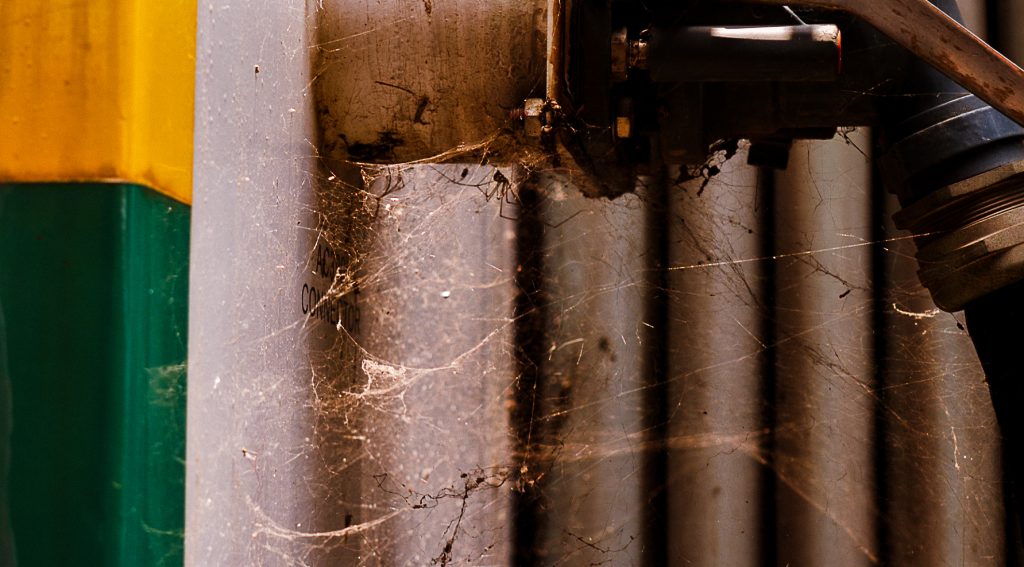
Today, The Fourth Estate can report that the Kojokrom train station is buried in an eerie silence—no train whistles, no passenger chatter, and no wheel clatter. The shine of the metal mesh seat is dampened by rust. The silver boarding gates are also losing their lustre. Weeds are creeping over the roof of the building. In this quiet decay, spiders have woven intricate cobwebs.
Cobwebs take over trains parked at Kojokrom train station
Rust has eaten into the metal of the two stagnant luxurious coaches like a slow-burning fire, spreading in shades of reddish-brown and orange, leaving behind jagged textures that flake at the slightest touch.
The $165 million investment now lies in ruin. Each idle day turns the trains from assets to liabilities.
Voices of Disappointment
A student of the University of Mines and Technology, Michael Amponsah Safo, who walks on the rail line daily, said he gets angry anytime he sees the idle train.
On one of his daily commutes, he made a video and posted it on X, formerly twitter, ranting about how the coaches were rusting away.
“I have been schooling for months, and we have never seen any engineer coming to visit the train. We haven’t seen anybody boarding it. We haven’t seen anything being done about it. As a matter of urgency, the government must make the rail run again,” he ranted.
Just about five kilometres from Kojokrom is the Sekondi train station. The rail tracks are no longer for trains; they’re overrun by weeds. What was once meant to be a symbol of progress has now become a playground, where children play football and all sorts of games.
Sections of the station’s roofing are ripped, exposing metallic beams to sunshine and rain.
From an overpass bridge, Stephen Mensah gazes down at the silent Kojokrom train station. A spark of nostalgia lights up his face as he recalls the days when the trains hummed with life.
“I was excited when the trains were commissioned because they were fully air-conditioned. It was convenient, relaxing, and we could reach Takoradi in about 25 minutes. When the train was working, people from the villages came to sell foodstuffs without hassle.”
Despite the millions spent, the project has delivered nothing but rust and disappointment.
Stephen says residents plan to petition their Member of Parliament, Grace Ayensu Danquah of Esikado-Ketan, to push the Ministry of Railways to revive the line.
“We will discuss that with our MP, when she comes to the constituency. We will tell her to get in touch with the minister in charge of railways to operationalise the train service. The train should not be abandoned,” he said.
Another resident of Kojokrom, Kwabena Abadu, echoed the frustration of the suspended rail service. “In the past, it took about 20 minutes to travel from Kojokrom to Takoradi by road because the roads were good. But currently, sometimes it takes more than 30 to 45 minutes to get to Takoradi because of traffic jam,” he said.
Silence from the Authorities
The Ghana Railway Development Authority (GRDA), which oversaw the project, cannot explain why the $165 million line has ground to a halt. Its spokesperson, Sahadatu Alhassan, admitted the shutdown was linked to “issues between GRDA and the Ghana Railway Company” but refused to give details. Pressed for clarity, she could only say: “The least said about it, the better.”
Sahadatu Alhassan, P.R.O, GRDA.
She added,“No matter how many times you bring back this question, what I would say is we are working on it and everything will be resolved. You will see it run again; when, I cannot say, but we are doing our best.”
Her evasive answers mirror the silence of the rusting coaches. Nearly a decade after taxpayers funded the project, no official can say who is responsible or when services will resume. The line, once celebrated as a national milestone, is now trapped in bureaucratic limbo; and the people of Sekondi-Takoradi are demanding answers.
At the Government Accountability Series on 17th September 2025, the Minister for Transport, Joseph Bukari Nikpe, also dodged specifics.
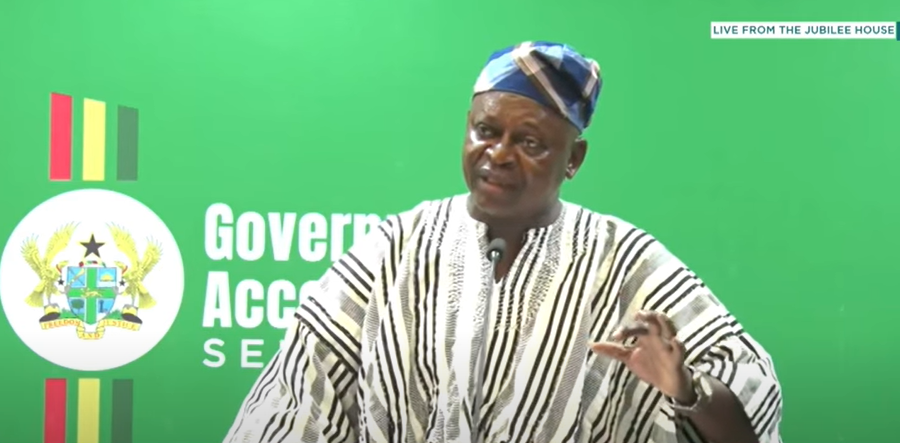
Minister for Transport, Joseph Bukari Nikpe.
Asked when Sekondi-Takoradi residents could expect services, he said: “…we inherited a situation where contractors had abandoned sites because of unpaid certificates. We have gone into discussions with them and, as I reported, Amandi has resumed work. Other contractors remain, and the Attorney General’s office is assisting us to resolve contractual arrangements.”
The minister’s explanation did not specifically include when the rail service would begin and what caused it to be suspended.
The Kojokrom–Takoradi railway was troubled from the start. Though commissioned in 2016, full operations only began ten months later. On March 9, 2020, the line was suspended for conversion from narrow to standard gauge. This was because the then Minister for Railway Development, Joe Ghartey, said the Kojokrom to Takoradi rail line had to be converted to a standard gauge because Ghana’s policy was to ensure all rail lines were upgraded and modernised. COVID-19 prolonged the shutdown. Operations resumed briefly in October 2020 but remained erratic. In 2024, the service was suspended entirely and has not returned.
Since then, the tracks have wasted away, overtaken by weeds, rust, and silence. For the people of Sekondi-Takoradi, the rail service meant to speed their journeys and revive business now stands as a painful reminder that in Ghana, promises of progress can so easily be derailed.
At Sekondi, the broken station clock hangs frozen, hands stiff against the dial. Like that clock, the $165 million railway project remains stuck in time -abandoned, seemingly forgotten and definitely decaying.
Wednesday, June 29, 2022, marked exactly a year since the police shot and killed the 58-year-old polling station organiser of the governing New Patriotic Party (NPP) in Ntoaso in the Eastern Region.
On that day the police also killed the only suspect they arrested alive, handcuffed. They shot and killed him on their way to the Police Headquarters.
Two months earlier, the police had killed four young men in the community. The police say they were suspected armed robbers. Even if the six men killed were suspected criminals as the police claimed, was it not possible to have taken some into custody alive for investigation?
A year on, there are no answers to what the community members say were extra-judicial killings by the police. In the following documentary, The Fourth Estateinvestigates the circumstances under which the police killed the six men in Ntoaso.
No one has found any metal bar or a torque arm or any sizeable part of the truck that exploded in Appiatse, a community near Bogoso in the Western Region
Loaded with rock-shattering mining explosives, the truck pulverised—nearly. The blast distributed the truck into little, hot metallic debris, lodged into soft human bodies—the neck, legs, stomach, and at least one victim’s anus, Appiatse Relief Committee’s Public Relations Officer, ThyWill Quarshie, told The Fourth Estate.
This metal object was removed from the anus of one of the victims.
The explosion fractured bones and flattened buildings.
The impact sent hundreds crashing to the ground, but 13 never got up. And some of those who never got up were not collected in one piece. A hand here. A leg there. And a head there. Others are too gory to describe.
It was January 20, 2022. And Appiatse, an obscure village without any notable regional significance, was shot into national prominence for the wrong reason.
Aerial view of Appiatse, showing the impact of the blast
The deadly explosion happened when a motorcycle reportedly collided with a truck carrying explosives. The result was explosive.
Ella Baidoo was 15-months old
Ella Baidoo stood little chance when the burning truck parked not too far from her mother’s shop
“Ella was always smiling, playing, and repeating words after me,” her mother, Theodora, recalls. Theodora ran a small mobile money kiosk in Appiatse. That was where Ella was playing with another child. As she played, her mother was on the phone with Ella’s 28-year-old father, Emmanuel Baidoo. He is a mechanic and was out of town.
Almost suddenly, Theodora said she saw a moving ball of fire screech to a halt, parked on the same stretch of road where her shop was. She said she bundled her daughter and her playmate in a frenzied attempt to move to a safe distance.
All she remembered was a loud explosion as a building caved in on her and the children. Later that afternoon, Theodora Baidoo called her husband.
“Emmanuel, Ella is dead,” she said.
Emmanuel was distraught, abandoned work, and headed home. He lost his daughter and his home. His five-year-old niece, Kate Afranie, had to be airlifted to the Korle-Bu Teaching Hospital in Accra, over 300 kilometres away, for emergency treatment.
Ella’s mother, Theodora Baidoo
His sister, 35-year-old Patience Baidoo, who sold food at Appiatse lost one eye in the Appiatse explosion.
Appiatse is a mining community situated along the Tarkwa-Bogoso-Ayamfuri road in the Western Region. Its proximity to the road gives the village an economic advantage because they are able to buy and sell.
A 43-year-old farmer, Kwabena Appiatse, who bears the same name as the village explained how the village got its name. “The town was named after my father’s uncle”, he said, after we found him in the company of victims of the disaster who have now been camped at Dumase.
The name is a combination of two Akan words: “Appea” (a male name) and “tse” (stays/lives). The name of the village means “Appiah lives here”, an explanation other residents also confirmed to The Fourth Estate.
Cheered up by how the history of the town is associated with his name, Kwabena Appiatse was also saddened by how the tragedy also claimed the life of his mother.
Akua Nyame, 80years
Kwabena Appiatse’s mother was an octogenarian who was too weak to move when the blast shook the foundations of the houses, collapsing many. Kwabena Appiatse said he had gone to his cocoa farm with his wife. On their way home, they heard a blast. “I did not dare to run down to find my family,” he said.
Kwabena Appiatse is a cocoa farmer
Kwabena said they stayed away in the farms until sunset, and came back home to find that his mother, Akua Nyame, was among the dead. She was in the same room as Kwabena’s sister. She was unwell and resting.
But at the sound of the loud blast, the shackles of sickness fell off, and she run out for her life. The building collapsed after she left the room and killed her mother.
The deceased Akua Nyame was recognised in the village as a birth attendant and also experienced in traditional medicines. Her body was found at sunset, coloured in cement dust.
Michael Afriyie, 19years
Michael Afriyie is a teenager and breadwinner for his mother
Michael Afriyie was one of the curious bystanders who stayed close to the burning truck carrying the explosives. Many of them were filming the accident with their phones and running commentary in Twi. Michael Afriyie’s last moments on earth were captured in one of those videos. The teenager was wearing a Nigerian national football team jersey.
Michael was the fifth of six children born to 56-year-old Martha Ahoahe. He apprenticed as an electrical repairer. But that day he did not go to work, his mother said.
Instead, they went to her pepper farm to water it as temperatures soared. She said she returned home with her son and indulged in one of her favourite itineraries of the day—watching the news.
“I switched on the TV and Michael stepped out to buy food,” she said.
Michael soon rushed back to alert her mother of a burning truck by the roadside and then rushed out again to fill a gaping curiosity. Several of the victims who spoke to The Fourth Estate said they did not know the truck carried explosives.
So when they stood by, they did not believe they were in any great harm watching the fireball from a distance which they thought was safe. Michael was caught in the ensuing blast and died instantly.
He was the only, among his siblings, one who lived with his mother in Appiaste. “I will miss Michael dearly,” Martha agonised over her loss. “He was my breadwinner when there was nothing at home.”
Emmanuel Quainoo, 29years
Emmanuel Quainoo was popularly known as Oboye
Emmanuel Quainoo, a carpenter was fasting on that day. His wife, Diana Assandoh, told The Fourth Estate he was fasting in memory of his late father who had died just around the same period in 2021. It is customary that after the anniversary of the passing, the family meets to unveil the tomb.
Diana said days before the disaster, her husband while at Bepo, an adjoining village, had received a message from his pastor. She said the pastor had directed him to fast ahead of the unveiling. So the couple fasted. Diana said she did not go out to sell plantain that day. Sitting on a bench, the couple broke the fast at midday. Emmanuel went inside to pray.
Emmanuel and Diana in happier times
However, the electrical wiring in the house began acting funny. They came out to put off all electrical gadgets as news of a burning truck filtered through the village.
The two went off to find their three children. Diana said when they found the children, she left her husband standing by a church building in the middle of the town.
That was when the explosion happened. “The blast lifted him off the ground and something slashed the stomach,” she recounted.
His intestines gushed out.
Emmanuel Quainoo sustained a deep cut on his stomach and was rushed to a hospital where there were efforts to save him. Diana said she saw her husband at the hospital and believed he would survive. The next day, she was told, Emmanuel Quainoo had passed.
“I have been crying a lot and I find it difficult to sleep,” Emmanuel’s mother mourned his son, the second of five children.
Her husband, Emmanuel’s father, died on February 17, 2021. Her son died on January 20, 2022, fresh month of agony for the old woman who was about to be reminded of the pain of losing her husband.
Martin Kweku, 43years
Daniel Kweku was an elder of The Church of Pentecost
Martin Kweku lives in Atuabo in Tarkwa. The 43-year old businessman also deals in gold buying and was on his way to buying the precious metal when he was involved in the tragedy. He was an elder of The Church of Pentecost. He left behind his wife and two young children.
Enoch Obeng, 40years
Enoch Obeng is the fourth of five children born to parents who are now too frail to work on their farms.
Before the disaster, the family had already lost three of the children, leaving Enoch and his sister, Marian Obeng-Baah.
Being the man of the two, the responsibility of taking care of his parents disproportionately fell on him. With two children to look after as a single father, the need for the JHS graduate to develop multiple streams of income was apparent.
He did some alluvial mining after completing JSS at a Roman Catholic school in the community. He then went into cocoa farming. His farm was at Baakoyemobo. He also did some odd jobs here and there.
On the day of the calamity, he bid goodbye to his brother-in-law at Bogoso, indicating he was leaving for Appiatse for some work with his friends who are masons. The family later heard he was numbered among the fatalities.
Enoch Obeng left behind two children.
Daniel Armah, 35years
Daniel Armah
Daniel could not complete his senior high school education. He eventually found work as a taxi driver in Wiawso in the Western North Region, his brother Eric Ackaah told The Fourth Estate. Daniel wanted to up his driving experience to handle buses that ply long routes.
He started as a mate (conductor) on one such long-distance bus. On one of those journeys, he was making a 220-km trip from Takoradi to Wiawso. The bus uses the Bogoso road through Appiatse. It is not clear why Daniel was not on the bus, but rather on the ground in Appiatse.
When the blast happened Daniel was pierced in his ribs and his wrist by an unidentified object. “He died later of internal bleeding,” a doctor who performed an autopsy on him told the family
According to Eric Ackaah, the doctor told the family that Daniel did not receive early treatment following the blast. “He was not managed well,” Eric reported.
Daniel was a member of The Church of Pentecost, a man who stayed out of trouble. He was survived by a wife, Rita Marfo, who is a trader and three children, twin boys— aged four years and a one-year-old girl.
Eric Gyimah, 24 years
Eric Gyimah was the eldest of a family of five siblings
Eric Gyimah’s father, Emmanuel Gyimah, gave The Fourth Estate this account concerning his son:
Eric was his first of five children. He lived in Takoradi and worked at Stella Logistics, near the VIP Station in Takoradi.
On Monday, January 17, 2022, his father, a driver, picked up his son to drop him off at work as was the usual practice. Eric was going to supply some logistics and was going to be away until Thursday, January 20, 2022
His father was also going to be away until Friday. The two planned that when Eric returned on Thursday, and his father on Friday, they would go and do some work on land they had acquired.
But his father did not return on Thursday. “I heard the news on Friday morning,” he said.
Emmanuel Gyimah said he loved his son because he was an obedient boy. He revealed how he struggled to get his son a job at Omega Logistics after Eric completed Takoradi Technical Institute, having studied electrical wiring but was not getting jobs.
His son also loved their last born, a toddler named Kwame, because he was his only brother among the five children. Before leaving for the trip, Eric Gyimah had paid Kwame’s school fees in fulfilment of his promise that he would see his younger brother through school.
It was not to be.
Ebenezer Anan Jackson, 43yrs
Portia Amakye a 24-year-old trader said she met Ebenezer Jackson, a mason when he came to do some masonry work where she lived in Appiatse. A romantic relationship developed, and in 2018, the two got married. They had two children, a six-year-old girl, and a three-year-old boy. When billows of smoke clutched the sky on that ill-fated day, it aroused Ebenezer’s curiosity so he went to the scene of the burning truck.
A tyre had come off blazing and landed in front of a shop. Ekow went in to help put out the fire from the tyre. Portia said she saw her husband standing on the other side of the road, opposite the burning truck.
She said they did not know the truck carried explosives. At the sound of the blast, she fell unconscious, her husband fell dead.
She sustained injuries and had a surgical procedure performed on her waist area.
Ebenezer Anan Jackson was buried on March 5, 2022, at Kwamankese near Mankessim in the Central Region.
Isaac Buayin, 45years
An old photo of Isaac Buayin is among the few photos his family have of him after the blast destroyed his home and took his life.
John Buayin said he rushed to Appiatse from another town to look for his wife and children after he heard of the blast. He found out that a building had collapsed on his entire nuclear family.
“My wife was the one whose hand was sticking out of a rabble in the video,” he told The Fourth Estate. Eventually, they survived. But his elder brother, Isaac Buayin, a barber, was found in the rubble, dead. He left behind two children.
John’s wife got blinded by the blast. She is a food vendor who lamented the immediate change in her physical condition.
Isaac Anane, 35years
Isaac Anane
Hannah Antwi, a 28-year-old cook, said she lost her husband, Isaac Anane, a carpenter. She was out of town doing some work on the day of the disaster. She was only informed her husband was among the casualties. She only saw her husband unconscious and bleeding at the Tarkwa Government Hospital.
“I saw him but I could not speak to him,” she said. Isaac died the next day. He is survived by his wife and two children.
Emmanuel Awinguda, 24years
Emmanuel was preparing to take a bath and leave for town. He did not get to take the bath, he got to leave for eternity.
Emmanuel Awinguda worked as a farmhand and also did some mining, according to his girlfriend, Mabel, who said she had come from the Northern Region to spend some days with him. On that fateful day, the two went to Bepo, a nearby town, where Emmanuel had a haircut. They returned and decided to go to Bogoso.
Mabel said she went to fetch water to take a bath when she saw the burning truck screech to a halt by the side of the road, not too far from where they lived.
“I told him that we should go and take our bags from the room before something bad happened,” she said. “But he held my hand and asked what if something happened while we were inside the room. He said we should stay outside so that if something happened, we could run away.”
In a split second, the blast threw them to the ground. “I couldn’t breathe, I couldn’t hear anything for a moment,” Mabel recalled. She saw Emmanuel on the ground too, “he dragged himself to lean by a collapsed building and told me to just lie down.”
Mabel was rushed into a car that sent casualties to the hospital. But Emmanuel did not survive from the injuries to his stomach.
“They said there were several piercings in his stomach,” his girlfriend said.
Justice Kwesi Takwa, 21years
Perhaps the most popular of the victims, Justice was loved in the community and was praised for his serviceability.
When senior high schools resumed in January 2021 after Covid-19, Justice did not join his mates. During the break, he took to commercial tricycle riding and had tasted the empowerment that money brings.
His parents gave up on trying to get him back to school. His mother was at least happy that their son was earning a living and he was also supporting the home. As time went by, Justice met a young woman, Doris, and the two started a relationship.
On Wednesday, January 19, 2022, Doris said she came to visit Justice and left in the evening to Bepo, where she stayed with her family. Justice promised to visit her the following day, Thursday.
Doris said, from her home in Bepo she could see the disaster. When Michael was not picking up her calls, she said she got worried. She grew even more fearful when someone told her family not to allow her to go to Appiatse. Later, her worst fear was confirmed. “They told me he was dead, lying by the side of the road.”
Justice and Doris
Justice Takwa was an expectant father. Doris is five months pregnant.
The Appiatse Relief Committee on March 3, 2022, began disbursing Gh¢6000 to each bereaved family for the burial while each of the 895 affected residents got Gh¢200.
Food donations from companies, humanitarian and religious organisations and individuals have continued since the incident.
In the meantime, displaced persons have been camped on land belonging to a mining company in the area. These places of abode will be temporary. Another committee, the Appiatse Reconstruction Committee, has begun the task of rebuilding a community destroyed by what many analysts call carelessness on the part of those carrying the explosives.
Some of the buildings are being roofed as temporary homes for the displaced.
The disaster raised questions about safety regulations surrounding the transport of delicate, dangerous mining logistics such as explosives.
And while the blast is becoming history to the rest of the nation, the shockwaves are not. They continue to vibrate throughout the lives of the people. All roofs in the community were blown away and some families are still nursing otherwise able-bodied relatives who have been maimed.
When the 2019 Novel Coronavirus hit China late in 2019, it seemed very abstract until it took a deadly and devastating tour of the world.
Africa was spared at the beginning. When countries such as Spain, Italy and the US swayed under the weighty grief of the virus, Africa was generally free, fueling conspiracy theories that blacks were immune to the virus.
The pandemic eventually hit Africa, but it was mild when compared to the devastation in other continents.
As in many countries in Africa, Ghana’s healthcare system was already in a sorry state. Even before the pandemic, it was a common feature to have patients turned away from hospitals because of the lack of beds. Consumables such as gloves were a luxury in some health facilities.
In Ghana, for instance, the entire country of about 30 million people had only 67 ventilators in all public health facilities, less than half the ministers of state at the time.
The main testing centres responsible for over 95% of the tests conducted in the country survived mainly on grants from foreign donors.
In the following documentary, The Fourth Estate’s Manasseh Azure Awuni comprehensively examines Ghana’s fight against the pandemic and reveals that, even with the milder impact of the virus here, some people died because they could not get care.
He also reveals, using the undercover method, how some people took undue advantage of the shortage of Covid-19 testing to make money.
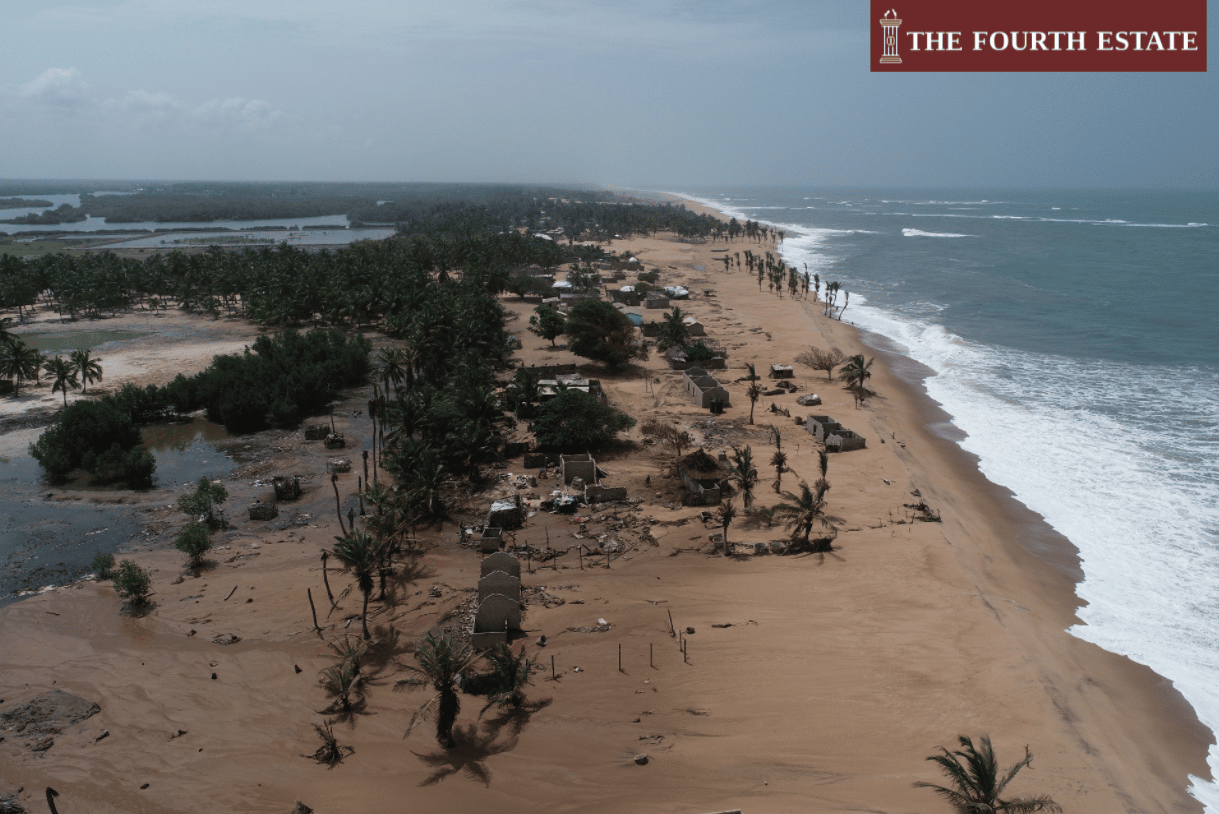
On November 5, 2021, tidal waves pounded the shores of the Volta Region, reportedly leaving thousands of homes submerged and residents homeless.
But the danger has been announcing itself for years.
In Fuveme, one of the communities The Fourth Estate visited in July 2021, the doom was predictable. A school that was rebuilt after it was destroyed faced a second destruction by the tidal waves.
When this reporter visited Fuveme in 2016, the community pleaded for the umpteenth time their need for a sea defence wall.
It has not been built. The 2.8-kilometre Atorkor sea defence project was expected to cushion some coastal communities in the then Keta Municipality (now Anloga District) against destructive tidal waves. But the construction didn’t progress beyond Akplorwotorkor.
It meant Fuveme was left exposed. Over the years, the waves have pounded the village (Fuveme), causing extensive damage to property, sometimes cutting the inhabitants off from the rest of the district.
A large section of the fishing community has been reduced to a pile of rubble as the advancing tidal waves turbocharged byclimate changecontinue to inch closer. It created a new estuary in May 2021.
According to experts, rising sea levels linked to the melting of polar ice caps due to rising levels of carbon dioxide in the atmosphere is causing coastal erosion.
So, the Fuveme RC Basic School became a victim of an imperial ocean claiming territories. It is an occurrence climate change experts blame on human activities such as sand winning and deforestation as well as natural causes such as wind, water.
Interestingly, the communities behind the sea defence wall in parts of Keta, Atorkor, Akplorwotorkor and Agavedzi– were left untouched.
When Jonathan Ohene Nkunim was arrested, he turned to the investigative journalist whose work had led to the arrest and said:
“The last time you came, I wanted to confess to you, but I didn’t know whether I could trust you or not.”
The investigative journalist said little. Ohene Nkunim would go on a confession spree.
From the University of Ghana Law Faculty, where he was arrested, to his residence and health facility in Gbawe, he confessed to the police in the car.
At the Nature’s Hand Therapeutic Centre, where he had used his practice as a ploy to sexually assault, scores of women, he did not stop the confession.
“What have I not done? Where have I not gone?” he said, his hands flying in despair.
He explained that he had taken steps to tame his unusual sexual desires, but he had failed. There was a time he paused his practice for some time, he claimed, just to deal with the unbridled sexual desires. But that did not work.
So, he continued to unleash it on unsuspecting and desperate women in search of relief from agonising pain and in search of the fruit of the womb. After sleeping with the women in the treatment cubicle, he said he sometimes wept.
“Sometimes, I cry and my workers think, probably, I’m praying. It’s guilt and regret. It’s guilt and regret, and I’ve worked on it,” he said.
“Is it spiritual?” the investigative journalist asked. Jonathan had projected himself on social media as a very spiritual Christian.
“I won’t say it’s spiritual,” he replied and blamed it on the neuromuscular diagnosis method.
“You know, the technique I told you about the day you came[here],” he reminded the journalist about his brand of diagnosis, which he did by touching the veins on the back of his patients’ palms.
“The neurodiagnostic—I realised that when I do it continuously, I get sexually unstable,” he said.
“It’s random. It’s not like every woman I see,” he told the investigative reporter. And as if to explain his guilt away, he added that he did not sleep with some of the women who visited his facility.
His victims included a couple who had gone to Nature’s Hand Therapeutic Centre in 2018 to seek his help to be able to conceive. He ended up sleeping with the woman. She felt guilty about the affair and confessed to her husband. And that was how the seven-year-old marriage ended.
A young woman was on the verge of suicide because the heart-wrenching pain from her spinal cord convinced her that ending her life was a better option. Someone offered her a lifeline, Jonathan Ohene Nkunim’s hotline.
Ohene Nkunim raped her the first day she entered the facility in pain and lay on the massage bed.
He left incriminating evidence in his WhatsApp conversation with her after the ordeal. He admitted he did not seek her permission before having sex with her.
Nkunim claimed the procedure he wanted to perform required sexual arousal. He said he should have “sensitised” her before proceeding. Nkunim then apologised profusely. But he did not stop.
The next time she visited, he had sex with her. It happened until she left for another facility to continue the treatment.
These and other victims had suffered silently because of the shame associated with their ordeal–sex. They said they feared to speak up in a system that blamed the victims rather than the perpetrator. Despite their fears, they eventually found their voices and opened up to a journalist they felt they could trust.
On the day of his arrest, Nkunim said three months earlier, he had taken steps to deal with his sexual desires and was now in control.
It was during the same period when the investigative journalist first walked into his facility and told him about his investigation into the alleged sexual assault of women who visited Nature’s Hand Therapeutic Centre.
After an initial outright denial, he later admitted to the mild ones such as the woman whose affair resulted in a divorce. He denied the serious allegation of the woman who said she was raped at the facility.
“If it were to be true, I should be in jail right now,” he said.
He said there was never any sexual encounter between him and that woman. The woman had fallen for him, he claimed, but to escape the temptation to sleep with her, he discontinued the treatment.
But there is a video of him having sex with the woman in his facility. The woman said she recorded one of her sessions when it became clear that Nkunim was not stopping despite his assurances.
She was suicidal and had psyched herself to endure whatever it would take for her not to be paralysed. And that worked to Nkunim’s advantage until she could not endure it any longer.
When The Fourth Estate began its investigations, it sent a female undercover agent who went to seek treatment at Nature’s Hand Therapeutic Centre.
On the phone, Jonathan Ohene Nkunim diagnosed her with lumbar spondylosis after asking her to bend and tell him where the pain was. She lied to him, lying down, that the pain was felt in her lower back. The condition is a wear and tear of the lower back spinal discs.
That’s how Jonathan Ohene Nkunim, who would lie to the undercover agent that he was a medical doctor, diagnosed her.
He later claimed that he was a physiotherapist when the years he gave as attending the University of Ghana did not match the number of years medical training takes in the country.
But The Fourth Estate later found out he was not a physiotherapist as he claimed. The Fourth Estate also found out that he had not worked at the physiotherapy unit at the Korle-Bu Teaching Hospital as he claimed.
When The Fourth Estate’s lead investigative journalist confronted him, he admitted he had lied to Stephanie, the undercover agent, to inspire her.
He promised to tell her the truth on her next visit to Nature’s Hand Therapeutic Centre.
“I call her Madam Detective,” Ohene Nkunim said of Stephanie because the WhatsApp conversations he’d had with her were very probing.
When the journalist left the facility, a phone in his pocket was notified of a WhatsApp message. It was a message from Jonathan Ohene Nkunim, saying he had done “nasty” things. He said he had lied about his credentials and asked the recipient to forgive him.
His intended recipient was Stephanie. But the actual recipient was The Fourth Estate’s investigative journalist who just left his facility. He was the one who had been extracting information from Ohene Nkunim in the name of Stephanie.
“What I have done is terrible,” he said on camera on the day of his arrest.
The Fourth Estate’s sources at the police say he did not deny the allegations levelled against him when the police interrogated him. He was asked how many women he had violated and he said he had lost count.
On Tuesday, September 28, 2021, Jonathan Ohene Nkunim was charged with rape when he made his first appearance in court.
He was denied bail and is due to reappear at the Kaneshie District Court, near the Ministry of Information, on October 12, 2021, at 11 a.m.
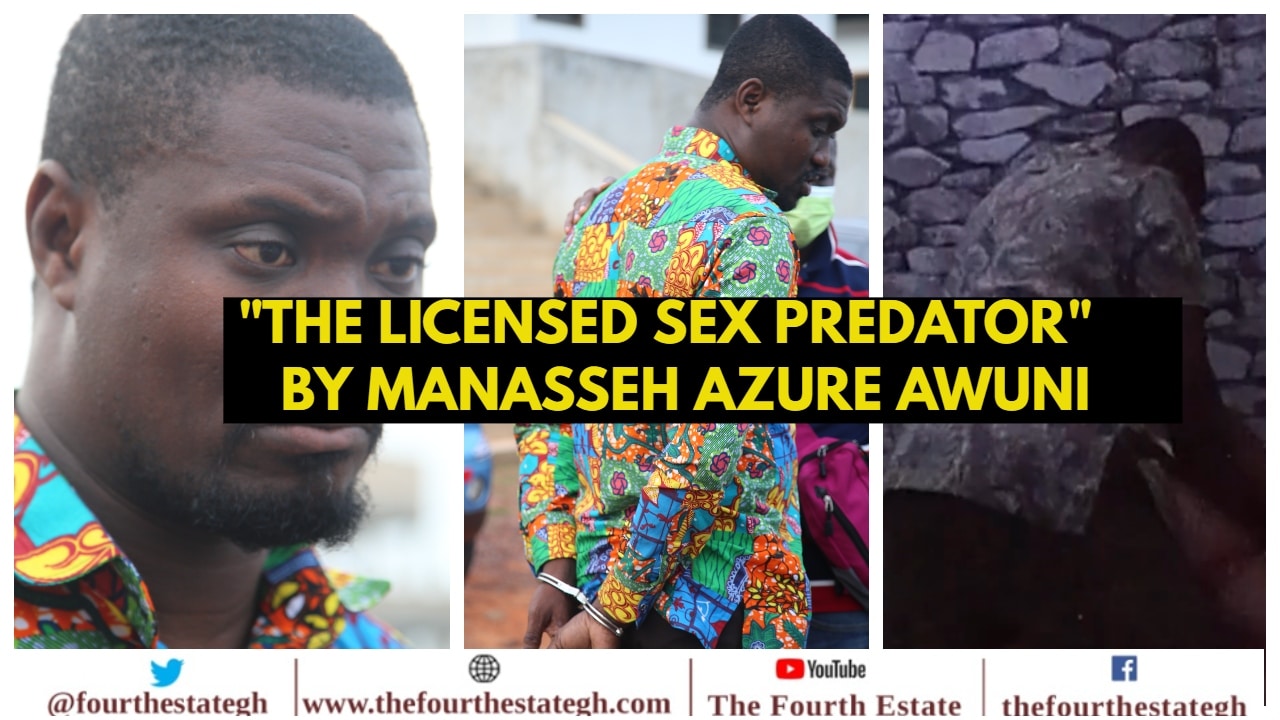
In the following investigative report, Manasseh Azure Awuni of The Fourth Estate reveals how a licensed health practitioner in Ghana’s capital, Accra, used his facility and practice as bait to sexually assault scores of women who went there seeking treatment.
Apart from his unprofessional and criminal conduct, “Dr” Jonathan Ohene Nkunim and his facility, Nature’s Hand Therapeutic Centre, also had three licences from a state regulatory agency that is charged with the power to sanitise practitioner’s like him.
The investigation reveals the dubious process through which Ohene Nkunim acquired the licences and the role of regulatory officials in that.
Here is the full documentary titled, “The Licensed Sex Predator”
When Jonathan Ohene Nkunim beckoned his wife for a parting hug, it was like a scene from a romantic movie.
She hesitated, as if unsure whether to give in or pull away. Then she obliged.
He moved towards her; his arms outstretched. Hers were folded across her chest. And she leaned forward for a hug without maintaining eye contact with the tall man who held her tenderly and looked at her with affection.
It was a slow-moving act, filled with emotions.
Mr. Nkunim whispered words of encouragement. They appeared not to affect her mood. She was distraught. And justifiably so.
It was 7:30 a.m., and Mrs. Nkunim, who was nursing a three-month-old baby, was the subject of the prying eyes of half a dozen uninvited guests. They had intruded her home and ruined the sanctity of her early morning privacy.
The guests, who had not given her a clue about their visit, said little. But their presence provided enough clues that her eight-year-old marriage might never be the same.
Even if she did not expect the unsolicited morning visit, she had, in the past 24 hours, anticipated disruption to her life and those of every member of her family.
The previous day, she had seen the trailer of an investigative documentary that was yet to be aired. The documentary was titled “The Licensed Sex Predator”. For the right or wrong reason, someone had forwarded the trailer to her.
The trailer quoted the villain in the investigative piece as boldly proclaiming, “If it were to be true, I should be in jail by now.”
The man who made that bold pronouncement was her husband, Jonathan Ohene Nkunim, the man who had taken a vow to be faithful to her.
He was accused of sexually abusing women who visited his health facility, Nature’s Hand Therapeutic Centre, in Gbawe. When the investigative journalist first asked him, he denied the allegation and dared his accusers to prove it.
“I wanted to confess to you, but I didn’t know whether I could trust you or not,” he would later tell the journalist. The journalist was among the six men who visited his home that morning. The others were police officers from the Police Intelligence Directorate (PID).
Mrs. Nkunim was not only worried that allegations of that gravity were leveled against her husband. She and her husband knew the allegations were true because he said he had confessed to her.
Mr. Nkunim had told the visitors that his wife was his main worry in the unfolding scandal. The nursing mother was going to be hit hard by the impending doom. His shame would maim the collective fame of the gospel-singing couple.
So, Mrs. Nkunim’s expressions, like someone who was too shocked and sad to cry, were understandable. Her marriage was at the tipping point of possible ruin. And that was because her husband had ruined other marriages and relationships.
His victims included a couple who had gone to Nature’s Hand Therapeutic Centre in 2018 to seek his help to be able to conceive. He ended up sleeping with the woman. She felt guilty about the affair and confessed to her husband. And that was how the seven-year-old marriage ended.
A young woman was on the verge of suicide because the heart-wrenching pain from her spinal cord convinced her that ending her life was a better option. Someone offered her a lifeline, Jonathan Ohene Nkunim’s hotline.
Ohene Nkunim raped her the first day she entered the facility in pain and lay on the massage bed.
He left incriminating evidence in his WhatsApp conversation with her after the ordeal. He admitted he did not seek her permission before having sex with her. Mr. Nkunim claimed the procedure he wanted to perform required sexual arousal. He said he should have “sensitised” her before proceeding. Mr. Nkunim then apologised profusely. But he did not stop.
The next time she visited, he had sex with her. It happened until she left for another facility to continue the treatment.
These and other victims had suffered silently because of the shame associated with their ordeal–sex. They said they feared to speak up in a system that blamed the victims rather than the perpetrator. Despite their fears, they eventually found their voices and opened up to a journalist they felt they could trust.
Jonathan Ohene Nkunim, had been fearing for a day like this, but he often hoped it would never come. Three months ago, when the investigative journalist from The Fourth Estate visited him, he denied every allegation. That visit and a subsequent enquiry from the health regulatory body by the journalist resulted in a temporary closure of his facility. But he found a way out and got the place up and running again.
In his mind, he had scaled a dangerous hurdle and life was getting back to how it used to be. But the trailer of the documentary unsettled him.
Jonathan Ohene Nkunim consoling his wife when he first entered the house with the police. Photo Credit: Clement Edward Kumsah
That morning, Jonathan Ohene Nkunim told the police and journalists that he had summoned the courage to confess to his wife about his bad deeds-–his uncontrollable sexual escapades. His wife had understood him, he claimed and was helping him to reform.
“And now, this!” he spoke with tears in his eyes about the investigative documentary.
He would later tell the police during interrogation that he had lost count of the number of women he had sexually abused at his facility.
It is not clear whether he made the confession to his wife before or after the trailer was published, but there was one thing he may not have told his wife. It was the reason the couple had the visitors in their house.
When the trailer was published, he called and texted the journalist who produced the documentary to declare his intentions.
When the journalist could not answer his first set of calls, he left a text message: “I have poison in my hands right now…and I just need someone to talk to…I am sorry.”
He immediately followed that with another text message: “I am a bad person and I need to die.”
When the journalist spoke with him later, Jonathan Ohene Nkunim emphasised his readiness to end his life if the investigative documentary aired. He said he could not bear it.
He also mentioned the possibility of committing suicide to a former minister of state he had called to intervene and try to stop the documentary from airing.
And at 2:00 a.m. on Wednesday, a popular radio presenter, who spoke to the investigative journalist on the phone on behalf of Nkunim, repeated the same threat from Ohene Nkunim.
By 6:30 a.m., the plain cloth police personnel from the PID had picked him up behind the Law Faculty of the University of Ghana, about 20 kilometres from his home.
From the University of Ghana, the police wanted to visit his facility at Gbawe CP, but he had left the key to his office at home. So, he had to be taken home to pick it.
Before the police entered his house, however, he had a plea. He didn’t want to enter his apartment in handcuffs. His wife and children could not bear to see him shackled. He could not bear the inquisitive stare of curious neighbours. He did not want to cause a stir.
The police did not want to take chances. Their superiors would not forgive them if they went back to report that they had picked up the crime suspect who was threatening to commit suicide but could not restrain him from carrying out his threat when they got to his residence to pick a key.
Apart from one curious neighbour, a man in his sixties, sitting outside his gate with a radio set, the presence of the uniformed police in two unmarked vehicles and two journalists from The Fourth Estate in another vehicle did not create a scene.
The Director-General in charge of Operations at the Ghana Police Service, DCOP Mohammed Fuseini Suraji;and the Director-General in charge of the Police Intelligence Directorate, ACP Faustina Koduah Andoh-Kwofie; had each called and spoken with the leader of the team during the operation. They both emphasised the need for the suspect to be treated with dignity.
It appeared, for the first time in living memory, the Ghana Police Service, under the leadership of IGP Dr George Akufo-Dampare was living its motto: Service with Integrity.
Less than 12 hours before that operation, the police had interdicted four of its men for assaulting suspects in the Northern Region and had commenced disciplinary actions against them. So it wasn’t strange that the senior police officers emphasised the rights and dignity of Ohene Nkunim, especially when journalists were involved.
Outside the Nkunim’s apartment, the police weighed the instruction of their superiors against the safety of the suspect as well as the emotions of his family members. They removed the handcuffs but walked close to him. In the house, they assumed a friendly posture.
Before they entered the house, Mr. Nkunim asked for one more favour. His daughter was leaving for school and should not see him in that state. The police obliged and went in after the driver drove out of the gated apartment with two innocent children in the back seat.
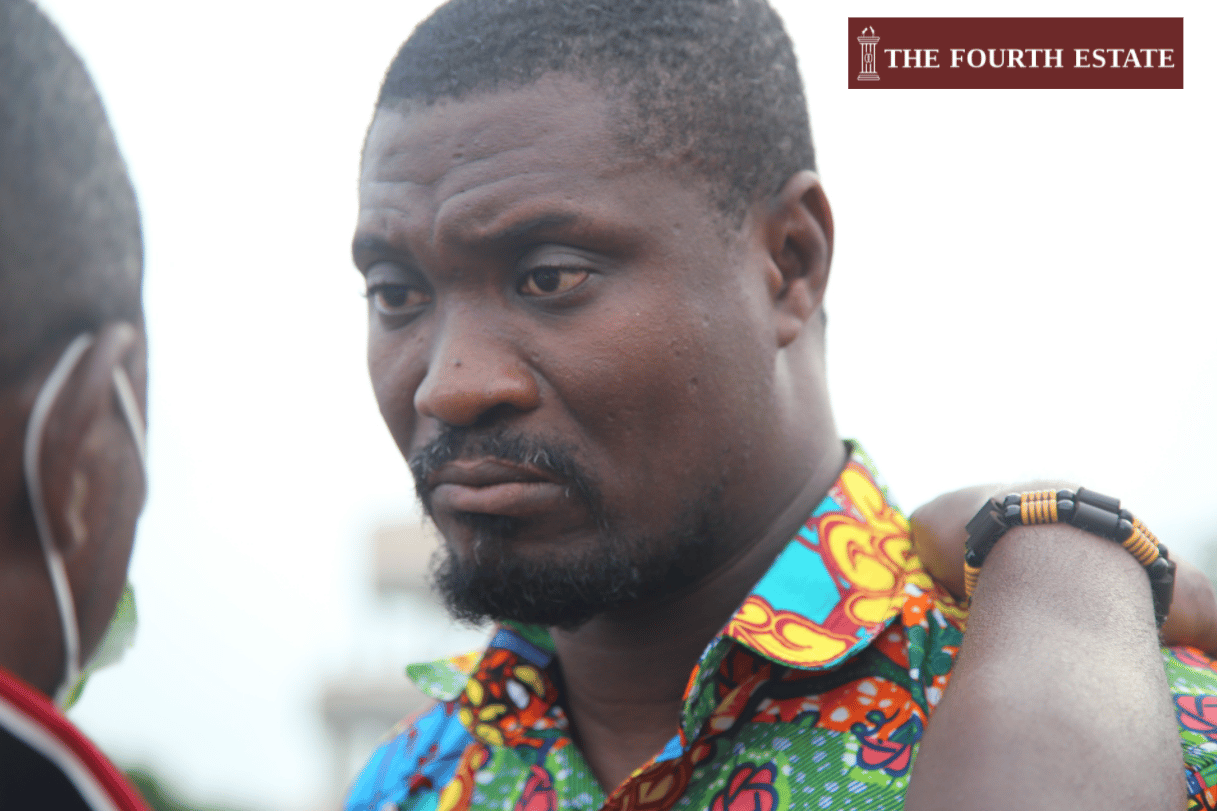
Jonathan Ohene Nkunim when he was first arrested: Photo Credit: Clement Edward Kumsah
When Jonathan Ohene Nkunim’s mother-in-law asked about their mission, the leader said he was their friend and they were going with him to resolve an issue that needed his presence. Perhaps he did not want the frail old woman to wail.
Jonathan’s last words in his house that morning were to his mother-in-law. He told her to take care of his wife while he was away, unsure how long he would be away.
In the car with the police and at Nature’s Hand Therapeutic Centre, Ohene Nkunim made more confessions. He said he had been helpless with his sexual desires and had often felt guilty after sleeping with his patients at the facility.
He had sought help but failed.
“Is it spiritual?” the investigative journalist asked. Jonathan had projected himself on social media as a very spiritual Christian.
“I won’t say it’s spiritual,” he replied and blamed it on the neuromuscular diagnosis method.
“It’s random. It’s not like every woman I see,” he told the investigative reporter that he did not sleep with some of the women who visited his facility.
“It’s guilt and regret. It’s guilt and regret, and I’ve worked on it.” he broke down in tears and asked for a second chance in order to reform.
That second chance is likely to be decided by the court. The police are going to press charges. And some of his victims quoted in the investigative report will testify in court.
The Fourth Estate can report that Nkunim has been cautioned on the charge of rape. The police have taken witness statements, including one from his victim. Apart from the sex offences, the police are also looking at breaches of health regulation laws.
At his facility that Wednesday morning, two vehicles were already waiting for him when he arrived with the police.
“I have got some issues to sort out, so there will not be any treatment today,” he told them in a way that did not suggest he was in trouble. The police still did not want to create a scene, so they allowed him to interact freely with his clients.
As the clients were leaving, he led the police to open the facility. Inside the facility, there were about 700 patients’ folders. He said about 200 of them were active patients. The rest had been treated and discharged.
“I have told my workers not to come to work today,” he said when asked when business for that day would start.
“When I was going out today, I knew I would not come back,” he added.
When he left for the University of Ghana that early morning, he intended to meet the investigative journalist and find out how he could stop the documentary from airing. “I will do whatever it takes,” he had told the journalist on the phone.
The navy-blue Bolt driver that drove him from home to the university bolted from the Law Faculty car park when he suspected that the two vehicles parked at the other side might be after him.
The journalist and his cameraman had been accosted by the security guards of the law school, one of whom was agitated that the faculty was being filmed without his consent. A heated argument ensued. The two security personnel, a police officer and the two journalists from The Fourth Estate with the camera in hand were enough to alarm any suspect.
Ohene Nkunim left before anyone noticed his presence. But the investigative journalist noticed that the vehicle that had parked near his vehicle pulled away suddenly without anyone alighting from it.
“Where have you reached, please?” he asked Jonathan Ohene Nkunim on the phone.
“I’ve entered and I’m going round to locate where you are,” Nkunim said.
“Did you come in our car or in an Uber?”
“I came in an Uber?”
“What’s the colour of the Uber?”
“It’s white,” Nkunim said after some hesitation.
At this stage, the investigative journalist was convinced Nkunim was the one in the blue vehicle that left the car park unceremoniously.
He alerted the police, and they traced it to the back of the Law Faculty, where Jonathan Ohene Nkunim was dressed in a multicoloured African print with black trousers and a pair of black shoes.
He surrendered his freedom to the law enforcement officers. And would fight for that freedom in the days that would follow.
He appeared to have accepted his fate. His last plea before he was taken to the police headquarters was that the documentary should be shelved for the sake of his family.


![[FULL DOCUMENTARY] SAVED BY GRACE: Ghana Against Covid-19](https://cms.thefourthestategh.com/wp-content/uploads/2021/12/save-by-grace-1-final.jpg)