Author: Evans Aziamor-Mensah

  • RTI Commission says cost  of Akufo-Addo’s private jet rentals can’t be disclosed

    The Right to Information (RTI) Commission has ruled that information on President Akufo-Addo’s travels on both private and state-owned presidential jets, and the accompanying cost incurred, should not be made public.

    The Commission said such information falls under the exempted information specified in section 5 of the RTI law. The RTI Commission cited national security concerns for its ruling.

    However, on June 24, 2022, while the petition was pending before the RTI Commission, the Director of Communications at the Presidency, Eugene Arhin, shared the president’s itinerary during one of President Akufo-Addo’s travels abroad. This contradicts the RTI commission’s decision that disclosing the type of flight, the President’s itinerary and the size of the delegation, puts the security of the President at risk and therefore, the information was exempted.

    While the president was still on the trip, the Director of Communications released a press statement and, among others, gave details of some of the places the president was yet to go:

    “…the President travelled to Belgium on board an Air France commercial flight (AF0584), which departed Accra on Sunday 7:20 PM, made a stop-over in Ouagadougou, Burkina Faso, and then continued to Paris. In fact, all of President Akufo Addo’s 12-member delegation travelled via commercial,” the press statement stated.

    It continued: “One such trip to be undertaken by the President, where the Presidential jet is to be used, will be on Sunday, 26th June, where he will travel to Lisbon, Portugal, to attend the 2022 UN Ocean Conference, and return home Wednesday, 29th June,” the statements issued by the Presidency said.

    Copy of the statement released by Director of Communications at the Presidency, Eugene Arhin on June 24,2022, while the President was still on the trip abroad.

    It was in response to allegations the Member of Parliament North Tongu, Samuel Okudzeto Ablakwa, had made that the President had hired a private jet for the trip in question.

    Though the office of the president gave details of a trip that was still pending, the RTI Commission ruled that information Manasseh was seeking about a past trip on similar issues could not be released.

    Manasseh Azure Awuni, in December 2021, requested information on the procurement process used in selecting the companies from which the presidency rented private jets for the president’s travels as well as the cost of renting the private jets between May and September 2021.

    The Editor-in-Chief of The Fourth Estate also wanted a copy of the assessment report which declared the current presidential jet technically unfit for use by the president for which the presidency resorted to the renting of private jets. The request also wanted to know the number of people who travelled with the president

    In a response on January 19, 2022, the Chief of Staff, Akosua Frema Osei-Opare, commended The Fourth Estate for its use of the RTI law. She, however, said the information requested was exempted according to the RTI law.

    “Your request for access to information on the president’s travel has been carefully considered and I have found that the information requested falls within the kinds of information classified as “exempt from disclosure” by the RTI Act as the information requests relate to:

    • The movement and travels of the president, the Commander-In-Chief of the Ghana Armed Forces, which information is a matter of national security.
    • Information on the processes leading to the choice by the President of a specific aircraft for his travels and the manner of those travels; and
    • The presidential jet is part of the equipment of the Ghana Armed Forces and thus, its use is part of the defence mechanisms of the Republic.

    “The Information requested is, therefore, exempt under sections 5(1) (b)(ii),9(1)(a) and (9)(2) of the RTI Act.

    Unsatisfied with the response, Manasseh wrote an internal appeal to President Akufo-Addo on February 10, 2022, for a review of the Chief of Staff’s decision. This step was in accordance with section 31 of the RTI Act, 2019 (Act 989).

    He argued that despite the Chief of Staff’s reference to section 5(1) of the RTI Act, section 5(2) of the Act states that “Information which contains factual or statistical data is not exempt information.”

    “Section 5(2) therefore excludes parts of our request, especially the portions relating to numbers, costs, and statistics, from being exempt,” he stated.

    “Moreover, the issue concerning the president’s hiring and travels in a private jet is an issue of public interest that has generated fierce debates and discussions in parliament, the media, and among the general public,” the appeal to the president stated.

    It continued: “For many citizens, the issue borders on the abuse of authority by the president, and neglect in the performance of his official function of protecting the public purse, especially when the state has a functioning presidential jet in Dassault Falcon 900-EXE, which is being used by some heads of States in the West African sub-region. My request, therefore, relates to the public interest and abuse of authority, in accordance with section 17(1)(d)(e), which states:

    “‘Despite a provision of this Act on information exempt from disclosure, information is not exempt from disclosure if the disclosure of the information reveals evidence of:

    (d)an abuse of authority or a neglect in the performance of an official function;

    or (e) any other matter of public interest and the benefits of disclosure clearly outweigh the harm or danger that the disclosure will cause.’”

    The appeal to the President said the response of the Chief of Staff failed to prove that disclosing the cost of the private jet rented by the president, and the procurement processes leading to that could jeopardise the security of the president.

    More than 15 days later, the president failed to respond to the internal review application as required by the RTI law. This necessitated an appeal to the RTI Commission on the matter.

    RTI Commission’s ruling

    It said a critical assessment of the requests by “the applicant [Manasseh Awuni Azure] shows that responses to those requests, in one way or the other, reveal information about the President’s movement: the number of people he normally travels with, the type of aircraft that is normally hired for his travels and the companies whose aircraft are normally hired and the movement of the presidential jet.”

    It added: “All these are things that pertain to the President’s security, the security of his movements, the security of the officers he travels with; all feeding into national security or security of the State. Information in that respect should therefore be exempt from disclosure in accordance with sections 5(1)(b)(ii) and 9 (1)(a), (2) of Act 989,” the commission’s ruling said.

    The ruling came 10 months after Manasseh Azure Awuni petitioned the Commission on the presidency’s refusal to disclose information on the cost of renting private jets for the president’s foreign travels, the procurement processes and the size of entourage which had become subject of intense public debate.

    The Commission said aside from grounding its ruling in Section 5 of the RTI law, the responses the Minister of National Security, Albert Kan Dapaah, gave Parliament in December 2021, affirmed its argument that the information be exempted from disclosure to the public.

    The National Minister had told Parliament that “recent official travels to France, Belgium, and South Africa by President Akufo-Addo are paid for out of the operational funds from the Ministry of National Security. Mr Speaker, payments out of the ministry’s operational funds are glued with rules of confidentiality and state secrecy and it is not the normal practice…to make the suggested disclosures.”

    Manasseh had argued to the commission that the information had statistical value and was, therefore, not exempted.

    The RTI Commission said although the cost of the President’s travel was statistical data, which should be permissible under Act 989, its view “is that where those figures tell on the security of the President and his entourage, and therefore the national security of the State, those ‘figures’ or statistical information ought to be exempted from disclosure under Act 989 per sections 5(1) (b)(ii),9(1)(a), (2)).’’

    The list of 13 exemptions in Section 5 of the Act includes information relating to law enforcement and public safety and security of the state, information prepared for the president, vice president or cabinet. Others are matters affecting international relations and information relating to economic or any other interest.

    Do other countries disclose the cost of their president’s travel?

    The demand for transparency and accountability about presidential travels and subsequent disclosure is not new. In other democracies, including countries in southern Africa and North America, governments have been open to parliamentary enquiries and right to information requests on the matter.

    South Africa

    In November 2011, South Africa’s Minister of Defence and Military Veterans, Lindiwe Sisulu, told Parliament that former South African President, Jacob Zuma’s, trip to the United States of America in September 2011 cost the public purse R6.3 million(the equivalent of $732,558).

    Botswana

    Botswana also ticked the box of transparency for presidential travels.  In August 2022, the Ministry for State President told lawmakers that President Mokgweetsi Masisi spent P18 million ($1,401,660) on his official trips to 26 countries including Ghana.

    United States

    In the United States of America, the Government’s Accountability Office disclosed in January 2019 that President Donald Trump’s four trips to Mar-a-Lago from February 3, 2017, to March 5, 2017, cost a little over US$13million.

    “We estimate that federal agencies incurred costs of about $13.6 million,” the office said.

    Through a freedom of information request, Judicial Watch, a non-governmental organisation in the United States which promotes transparency and accountability went to court and obtained information that former American President Barack Obama’s travel expenses for his eight years in office cost the US taxpayer $96,938,882.51.

    Canada

    In Canada, the Department of National Defence pegged Prime Minister, Justine Trudeau’s cost of travel on a two-day trip in August 2020 at Can$54,115.08.
    This information was made available through a freedom of information request.

    Prime Minister Canada travel itinerary
    The report above shows the Prime Minister’s itinerary and passenger manifest for an Aug. 29-30, 2019, trip to B.C. aboard a government jet. Source: Canada’s Department of National Defence
    Canadian Prime Minister's total travel cost
    The report above shows the Canadian Prime Minister’s total travel on the state-owned aircraft, the Government Challenger, in August 2019, along with the total cost. Source: Canada’s Department of National Defence

  • Boy awaiting BECE result dies in galamsey pit

    Boy awaiting BECE result dies in galamsey pit

    It was the hope of Madam Naomi Tabi that her son would pass his Basic Education Certificate Examination (BECE), go to the Agogo State College he always wanted to go to, become the soldier of his dream and finally liberate the family from abject poverty.

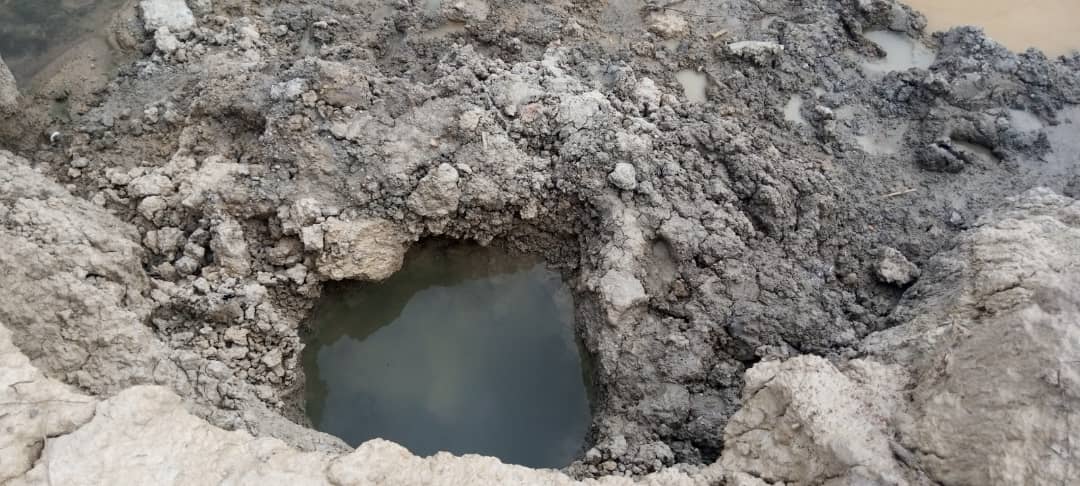
    However, the high ambitions of making it in life crashed when her son, Atobra, fell into an illegal mining- galamsey – pit in their neighbourhood and, died. The incident occurred just two weeks after he finished writing his BECE at the Manso Nkwanta D/A Basic School.

    “He left home that day with three other boys and returned. As a nursing mother, while I retired to bed that evening, he left again and never returned. We only heard a knock on our door and people unceasingly screaming our names to announce the tragedy,” she said.


    Samuel Anim, 16, died in the galamsey pit 2 weeks ago at Manso Nkwanta.

    Samuel Anim was 16 and full of life and hope. His dreams were not limited to Manso Nkwanta alone. He always wanted to relocate to Kumasi, where he thought his dreams had better prospects of materialising.

    Samuel Anim died on November 8, 2022, at 10 p.m. after he followed three other friends to the galamsey site. The owner of the site had already denied them access. His friend said they had mined gold from the area before so, though they were sacked, they decided to go in the night when the owner of the site would not be around.

    The galamsey pit at the outskirt of the Manso Nkwanta town in which Samuel Anim died.

    With hands thrown over her head, Naomi lamented, “I am handicapped because of the surgery I had during childbirth. He has been the one helping me with house chores and other activities as well as doing this to feed himself.”

    The people of Manso Nkwanta, Asuminya and Bebouabowu in the Amansie West District have been experiencing this heartbreak and have come to live with it because illegal mining is the major source of livelihood there.

    According to a resident and a parent, Edward Asuming, “Drowning doesn’t stop one from taking water.”

    “We have destroyed our own land with illegal mining. We are responsible for whatever is coming our way, but we are not ready to stop or let go galamsey because it is better than farming.”

    “This child went for money,” he said. “If things had gone well for him, he would have got the price of one cocoa bag, which is 880 cedis. How do you manage and discipline such a child as a parent when he is obviously richer than you are?”

    In Amansie West, there is no fear of death with the illegal mining pits now in the homes, as some residents have to work in the pits. Children swim and play in these muddy streams call Subini.

    A month before Samuel’s death, an Assistant headmaster in the Amansie South District slipped and fell into a galamsey pit, which led to his death.
    The National Disaster Management Organization (NADMO), says “Last three months, we had two people who drowned’ and “it’s becoming normal we at NADMO have been doing our best by visiting the sites and giving them education, but they don’t listen to us.”

    The Law

    The Mineral and Mining Regulations, 2012 (L.I. 2182) and the Environmental Assessment Regulations, 1999 (L.I. 1652), require small-scale mining (SSM) companies to ensure that all areas degraded by their operations are reclaimed.

    Twenty-two years after the passage of L. I 1652, small-scale mining companies operating in the country often fail with the requirements to post reclamation bonds, according to the Auditor-General’s report.

    “I will be selling two concessions to someone tomorrow. They are about fifty acres of land. I am making about 1 billion [GHS100,000] cedis and after I sell this land, I do not care what they do to it. I do not care whether they cover it or not,” a resident of Amansie West told The Fourth Estate.

    Residents here say the government cannot stop galamsey in the district because they cannot sit on money while they go hungry.

    The writers of this report, Diana Boakyewaa Amoako and Vincent Kevin Nugah, are Fellows of the Next Generation Investigative Journalism Fellowship at the Media Foundation for West Africa.

  • Latif Iddrisu’s Journalists Sanctuary International donates protective equipment to The Fourth Estate

    A media advocacy and safety organisation, Journalists Sanctuary International (JSI), has donated safety equipment to The Fourth Estate.

    The safety vest and protective helmet are to help journalists at The Fourth Estate to cover demonstrations and other volatile situations.

    Executive Director of JSI, Latif Iddrisu, who himself is a journalist, said there was a need to give full protection to journalists when they are covering potentially dangerous events like demonstrations.

    “We don’t want journalists to go there ‘naked’. We want you to be well-suited, protected and clearly marked so that there will be no doubt in anybody’s mind to attempt to attack a journalist.

    “This organisation has been set up because of what I have been through and I continue to recover from that experience. On that night, I wasn’t protected. I was ‘naked’. I didn’t have any bullet-proof vest with me or a helmet on my head to prevent the back of the gun that hit my head,” he told The Fourth Estate.

    The Fourth Estate receives safety kits
    From (L)- A staff of JSI, Executive Director of JSI, Latif Iddrissu, and staff of The Fourth Estate.

    Mr Iddrisu suffered a fractured head injury in 2018 when some Police personnel assaulted him at the police headquarters in Accra. He was reporting the detention of the Deputy General Secretary of the opposition National Democratic Congress (NDC), Koku Anyidoho, who was arrested for making inflammatory comments.

    Mr Iddrisu had asked one of the police officers a question about some of the crowd control equipment to facilitate his report but that resulted in the assault.

    The Police administration has said it was unable to identify the officers who assaulted the journalist because their CCTV cameras did not capture the assault.

    Before traveling to the United States of America for a medical check-up in July this year, he told JoyNews that the condition had slowed his growth and development as a journalist over the last four years.

    In order to prevent such injuries by journalists, he set up the JSI to champion the safety and protection of journalists covering volatile assignments.
    The donation, which the JSI has made to other media houses in Ghana, comes two days after the United Nations observed the day set aside to draw attention to the impunity of crimes against journalists, which is on the rise around the world.

    Workshop on the safety of journalists in the offing

    Mr Iddrissu said his new organisation would go beyond just advocacy for media freedom to provide practical tips and tools to journalists.
    He said this would create the needed sense of awareness journalists needed to continue to execute their tasks without the fear of being hurt.


  • SHS heads insist there’s food shortage despite government’s denial


    Some heads of senior high schools in Ghana have told The Fourth Estate that there are acute food shortages in their high schools.

    This is despite the denial by the Ministry of Education of the food shortage. In a press statement released on Tuesday, the ministry claimed that “adequate supplies of food items have been made to the schools in question.”

    However, when The Fourth Estate reached out to the heads of the schools that were quoted in the story, they said they were yet to be notified of any such supplies.

    The ministry’s denial was in response to The Fourth Estate publication on Monday in which some heads of senior high schools threatened to close down their schools if they did not receive food supplies.

    Even in the ministry’s denial, it admitted what it said were “recent disruptions within the food supply chain” in the schools.

    This statement came a day after The Fourth Estate’s story catalogued the severe food shortage which had hit schools across the country. For instance, the headmistress of Avatime Senior High School wrote to the regional director of education asking permission for the students to feed themselves if the school did not receive supplies by September 30.


    The letter from the Avatime Senior High School headmistress to the Volta regional director of education seeking permission to let students buy their own foods.

    The headmaster of Alavanyo Senior High Technical School, Rev Samuel Pius Elewokor, told the Regional Free SHS Secretariat that the students were no more given lunch due to the shortage of food supplies.

    alavayo_school_food_shortage

    The letter from the Alavanyo SHTS headmaster to the Volta Regional Free SHS Secretariat about the shortage of food supplies.


    Students of St. Paul’s Senior High School, Denu, shared rice and soup for lunch on Thursday, October 6, 2022. Video Credit: Kobby Kyei 

    In the Ahafo Region, the CHASS chairman has told the national executive committee that, heads of senior high schools have asked the regional director of education for an indefinite break until a solution is found.

    “The two weeks emergency food supply as promised on Monday is a mirage. Nothing has yet come to the schools in Ahafo with empty accounts. The situation is dire. We wrote through our regional Director to DG to grant us permission to give open exeat to the students to go home today, Wednesday, 5th October 2022 and stay until such a time that enough food and money arrangements could be made and sent to us. We have not received any response, from our Regional Director so what should we do?” he queried in a notice to the CHASS National executives.

    In the Upper West Region, the CHASS Chairman, Magnus Innocent, said donations from parents and philanthropists had become the lifeline for the schools.

    “What has happened particularly in the Upper West Region is that many of the suppliers are refusing to give because they say they have not been paid. If the supply is delayed for one more week, that will be terrible. It will be a disaster. We have appealed to the PTAs [parent-teacher associations] and old students to help and that’s what’s moving the schools on.”

    When The Fourth Estate contacted the Northern Regional Chairman of CHASS, Rev. Edward Azeka, after the ministry’s denial, he said he had not received any notification about food supplies or money.

    “I am currently in Koforidua for the CHASS conference, but as of the time we were leaving Tamale on Monday [October 10, 2022] dawn, we were still in food crisis. We had not received supplies,” he said.

    The Greater Accra Regional Chairman of CHASS, Paul Amoasi-Aquinas, told The Fourth Estate that, the schools were yet to receive any money, despite assurances from the Minister.

    “It is not only one region, so if it’s a lie, he [the minister of education] should also come and tell us. Our president, Alhaji, said he has been informed that they have released money for day schools and they are going to give perishables to boarders and next week. They will give [money for] recurrent [expenditure] to boarders as well.

    “So, we are waiting for it [the money] in our account… If he says we are lying, has the money reached our account?” Mr. Aquinas asked.

    A senior manager in charge of corporate affairs at the National Buffer Stock Company, Enmanuel Arthur, told The Fourth Estate Monday, October 10, 2022, that the company did not have the money to provide enough supplies to the schools.
    “It’s something that has been reoccurring and everybody has spoken about it. The minister is aware and all stakeholders are aware. The issue is money, and, since January, we have been finding a way to deal with the problem,” he added.

    He told The Fourth Estate this just a day before the ministry’s denial of the food shortage in senior high schools.

    When asked about how many suppliers the Buffer Stock Company owed, he said, “We are talking about suppliers across the country so it’s quite a number.”

    He, however, assured the schools of getting food supplies by midweek to prevent a shutdown.


    YOU MAY  ALSO READ TO READ:

    https://thefourthestategh.com/2022/10/10/the-situation-is-dire-shs-heads-threaten-to-shut-down-schools-over-acute-food-shortage/

    https://thefourthestategh.com/2022/07/09/crises-in-shs-schools-in-upper-west-to-stop-feeding-students-by-next-friday/


  • “The situation is dire,” SHS heads threaten to shut down schools over acute food shortage

    Some regional chairpersons of the Conference of Heads of Assisted Secondary Schools (CHASS) are on the verge of closing down schools if the government fails to provide food supplies.

    The association served notice to the Ministry of Education after it failed to meet a two-week emergency food supply deadline to provide the schools with food and money.

    According to the heads of these schools, students will be sent home until enough food and money are made available to the schools.

    The Fourth Estate has learned that the problem, which is threatening to affect teaching and learning is already starting to cause a stir among students in some schools.

    The regional chairmen of CHASS said they had relied on support from parent associations to feed students, breaching the Free SHS policy which does not allow parents to contribute to running the schools.

    The issue of food shortage is not new, but the government has often denied the problem.

    In an interview with The Fourth Estate, heads of senior high schools in the Greater Accra, Northern, Upper West, and Upper East Regions say this never-resolved situation has turned them into “magicians.”

    In a letter sighted by The Fourth Estate, the headmistress of the Avatime Senior High School in the Volta Region, Rebecca Mawusi Veny, said she would have no option but to ask the students to feed themselves should the challenge remain unresolved.

    The letter from the Avatime Senior High School headmistress to the Volta regional director of education seeking permission to let students buy their own foods.

    “…this unfortunate situation has been reported to the regional buffer stock company and other officers that matter, but the situation has remained the same. Director and Board of Directors, please I seek permission for my students to buy their own food come next week if nothing is done about the food situation,” her September 29, 2022 letter said.

    At the Alavanyo Senior High Technical School in the Volta Region, the Headmaster of the School, Rev Samuel Pius Elewokor, told the Regional Free SHS Secretariat that the students were no more given lunch due to the alarming situation the school found itself in.


    alavayo_school_food_shortage

    The letter from the Alavanyo SHTS headmaster to the Volta Regional Free SHS Secretariat about the shortage of food supplies.

    “We hope our request would be given a quick response because we currently feed the students with only breakfast and supper, and this can take us to Friday 30th September 2022.”

    The Volta Regional Chairman of CHASS told National Executives of CHASS that all other SHSs in the region were faced with similar or more challenges.

    He warned that should there be any further delay, “children can no longer stay in schools with empty stomachs.”

    “I am sad to communicate to you that schools in Volta Region are completely out of foodstuff and money. We are becoming helpless as we see our students go hungry. As parents and heads, we cannot stay unconcerned. … If nothing is done, children can no longer stay in schools with empty stomachs,” he said in a notice to CHASS national executives.

    In the Ahafo Region, the CHASS chairman has told the national executive committee that, heads of senior high schools have asked the regional director of education for an indefinite break until a solution is found.

    “The two weeks emergency food supply as promised on Monday is a mirage. Nothing has yet come to the schools in Ahafo with empty accounts. The situation is dire. We wrote through our regional Director to DG to grant us permission to give open exeat to the students to go home today, Wednesday, 5th October 2022 and stay until such a time that enough food and money arrangements could be made and sent to us. We have not received any response, from our Regional Director so what should we do?” he queried in a notice to the CHASS National executives.

    In the Northern Region, the CHASS Chairman, Edward Azeka, says the heads of SHSs have written a letter to the Director-General of the Ghana Education Service to close the schools if there was no money.

    “Financially, it is tough, when we made noise, they gave us some money that could only pay for the debts owed. Now we are in a dire situation. In the school I head, my form twos are in school for 18 weeks, and not a pesewa has been paid for their feeding.

    “It takes nothing but magic to feed over 1300 students for 18 weeks without any funding from the government. They owe us money even for the last academic year. Right now, we have written a letter to the Director-General that if there’s no money, they should close down the schools,” Mr Azeka told The Fourth Estate in a phone interview.

    In the Upper West Region, the CHASS Chairman, Magnus Innocent, said donations from parents and philanthropists had become the lifeline for the schools.

    “What has happened particularly in the Upper West Region is that many of the suppliers are refusing to give because they say they have not been paid. If the supply is delayed for one more week, that will be terrible. It will be a disaster. We have appealed to the PTAs [parent-teacher associations] and old students to help and that’s what’s moving the schools on.”

    When asked about the last time his school had received supplies, he burst out laughing for more than a minute, explaining, that was his answer.

    In the Greater-Accra Region where Paul Amoasi Aquinas is the CHASS Chairman, he said the situation was no different. He said although the education minister, Dr. Yaw Osei-Adutwum, had promised to dispatch food suppliers to the schools, the schools were yet to receive them.

    “The last time any funding came for feeding was in May for day students and July for the boarders,” he said. “Now the monies or the food are not coming. We had a meeting with the minister and the director-general last Monday and they promised to supply some food, but it’s not in.”

    “We told the minister that we’d feed the children with what we have so in some schools, they take rice water in the morning, Jollof in the afternoon and probably plain rice in the evening,” he told The Fourth Estate.

    This is not new to the challenges the heads of the schools complained of to The Fourth Estate.

    In July this year, heads of senior high schools in the Upper West region threatened to close down schools if an urgent food supply was not extended to them.

    The Upper West Region CHASS said the shortage at the time had resulted from the “non-payment of outstanding monies owed food suppliers.”

    During the same period, the Minister of Education, Dr. Yaw Osei-Adutwum, said in parliament that the government owed the National Food Buffer Stock Company GHS340million.

    A senior manager in charge of corporate affairs at the National Buffer Stock Company, Enmanuel Arthur, said the company did not the money to provide enough supplies to the schools.
    “It’s something that has been reoccurring and everybody has spoken about it. The minister is aware and all stakeholders are aware. The issue is money, and since January, we have been finding a way to deal with the problem,” he added.

    When asked about how many suppliers the Buffer Stock Company owed, he said, “We are talking about suppliers across the country so it’s quite a number.”

    He, however, assured the schools of getting food supplies by midweek to prevent a shutdown.

    YOU MAY ALSO WANT TO READ:

    https://thefourthestategh.com/2022/07/09/crises-in-shs-schools-in-upper-west-to-stop-feeding-students-by-next-friday/

    https://thefourthestategh.com/2021/08/18/zorkor-shs-students-stand-eat-in-the-sun-and-rain/


  • Captain Smart’s claim on Ghana’s free electricity export to Togo completely false


    On August 17, 2022, the host of Onua Maakye TV show, Blessed Godsbrain Smart, popularly known as Captain Smart, stated that Ghana distributed free electricity to Togo.

    Captain Smart said this when the Electricity Company of Ghana (ECG) disconnected residents of Yilo and Manya Krobo municipalities from the national grid for weeks.

    According to him, instead of cutting the area from the grid because of the people’s refusal to accept the installation of prepaid meters, ECG could have supplied the residents without any difficulty because the company distributed electricity to Togo for free.

    Fact-check Ghana has verified Captain Smart’s claim and presents the findings below.


    Claim: “…The loan that World Bank was supposed to give to Togo was given to Ghana on negotiations that Ghana export free electricity to Togo. I want to show you today that, the electricity we generate here in Ghana and export to Togo is free of charge.”

    Verdict: Completely false

    Explanation:  Data acquired from the Electricity Company of Ghana through a right to information request shows that Ghana does not export electricity to Togo for free.

    The Company said it has generated over $1 million from the export of electricity to Ghana’s eastern neighbour, Togo, for the year 2021.

    Below is a tabular representation of the amount of energy exported in Watt and the total revenue generated for the past five years.

    YEAR UNIT (KWH) TOTAL REVENUE (USD)
    2016 4,073,991.90 815,126.25
    2017 4,629,479.33 931,845.74
    2018 4,875,264.50 981,089.20
    2019 5,070,490.10 1,020,098.04
    2020 5,274,221.40 1,064,844.28
    2021 5,319,690.00 1,069,938.00
    Total  29,243,137.23 5,882,941.51


    From the data presented above, Captain Smart’s claim that Ghana exports free electricity to Togo is Completely false.

    The writer of this report, Diana Amoako Boakyewaa, is a Fellow of the Next Generation Investigative Journalism Fellowship at the Media Foundation for West Africa.

    YOU MAY ALSO WANT TO READ:

    https://thefourthestategh.com/2022/09/09/john-kumahs-claim-of-ghana-having-the-third-strongest-currency-in-africa-false/

    https://thefourthestategh.com/2022/09/08/john-kumahs-claim-on-total-infractions-in-auditor-generals-report-false/

  • John Kumah’s claim on total infractions in Auditor-General’s report false

    The Deputy Minister of Finance, John Kumah, has suggested that the total irregularities recorded in the 2021 Auditor-General’s report have dropped.

    Mr. Kumah said he was of the belief that much could be done to reduce the irregularities if reports on the recoveries made during the successive reports were published.

    The deputy minister made this claim on his Facebook page while commenting on the latest report by the Auditor-General. The report cited the total financial irregularities as GHS 17 billion.

    Fact-Check Ghana has verified the deputy minister’s claim and concludes that it is false.

    Claim: “Despite the fact that the 2021 Auditor-General’s report shows that total irregularities have dropped significantly as compared to previous years. I believe that this figure can be taken down further if we report on recovery’s(sic)…Despite the numerous leakages and infractions that still exist, the progress made in reducing the total irregularities is worth mentioning.”

    Verdict: False

    Explanation: The deputy minister’s claim that the “2021 Auditor-General’s report shows that total irregularities have dropped significantly as compared to previous years” cannot be true because the amounts recorded over the years have rather gone up. And this did not happen only with the 2021 report.

    In the last five years, the total amount of irregularities has increased. It was only in 2018 that the figure decreased significantly. It is not clear why the reduction from 2017 to 2018 was recorded, but the 2017 report was in respect of 2016, which was an election year. And election years are noted for profligate spending and high irregularities.

    From 2018 onwards, the total amounts from the financial irregularities have increased. In the year John Kumah claimed the figure dropped significantly, there was actually a 38% rise.

    Here is a tabular presentation of the total irregularities for the past 6 years.

    Year Total Irregularity (GHS) Percentage change (%)
    2016 718 m 142   (+)
    2017 12 bn 1572 (+)
    2018 3 bn 75     (-)
    2019 5.5 bn 81.8  (+)
    2020 12.8 bn 135   (+)
    2021 17.4 bn 38    (+)

    Key: – means percentage decrease from the previous year

            + means percentage increase from the previous year

    Source: Auditor-General’s report

    It is evident from the table above that the deputy minister’s claim of a reduction in total irregularities is false.

  • State vehicles sold to judges in unapproved auction despite Akufo-Addo’s 2017 ban

    The Auditor-General has indicted the Judicial Service for an unapproved auction of vehicles to judges and has ordered the retrieval of the 19 vehicles.

    The list of beneficiaries of the auctioned vehicles includes judges of the lower courts, judicial service staff and three retired Supreme Court judges who bought six out of the 19 vehicles.

    The Judges and Magistrates Association had defended the acquisition,  saying it is a convention that goes as far back as the Kufuor administration. The Auditor-General says the transaction is at odds with the Public Management Regulations 2019 which requires that any auction by a public entity must have the approval of the Minister of Finance.

    The findings are contained in the 2021 Auditor-General’s report, which covered ministries, departments and agencies (MDAs).

    “Regulation 158 of Public Financial Management Regulations, 2019 (L.I. 2378) states that the Principal Spending Officer of a covered entity shall obtain the prior written approval of the Minister for the transfer, exchange, sale, donation, contribution-in-kind, trust and any other disposal of any vehicles of the covered entity,” the report said.

    “In the absence of approval from the Minister for Finance, we recommended that the auction should be nullified, and the vehicles recovered,” the Auditor-General directed.

    Here is a list of beneficiaries of the auction.

    No. Name of Officer        Type of vehicle Vehicle Registration No. Value (GH¢)
    1 H/L Justice F. G. Korbieh Toyota Land Cruiser GR 8132-17 57,975.00
    2 H/L Justice N. S. Gbadegbe Toyota Land Cruiser GR 4158-17 67,047.00
    3 H/L Justice N. S. Gbadegbe Toyota Avalon Saloon GR 2777-14 27,570.90
    4 H/W Charles Y. Boateng Toyota Corolla Saloon GM 8311-13 9,090.00
    5 H/L Justice Julius Ansah Toyota Land Cruiser GR 4128-17 75,643.00
    6 H/L Justice Julius Ansah Toyota Avalon Saloon GT 2774-14 40,920.06
    7 H/L Justice Asmah K. Asiedu Toyota Corolla Saloon GN 4997-13 8,399.00
    8 Robert Cudjoe Toyota Corolla Saloon GM 9231-13 12,687.00
    9 H/L Justice Lawrence L Mensah Toyota Land Cruiser GR 1902-17 67,192.00
    10 H/L Barbara W. Acquah Toyota Fortuner Station Wagon GN 57-18 92,914.00
    11 H/L Thomas Ofedie Toyota Corolla Saloon GM 6826-13 7,509.00 12.
    12 H/L Justice Jennifer A Tagoe Toyota Fortuner-SUV GT 75-18 87,887.00
    13 H/L Justice E. K. Mensah Toyota Fortuner-SUV GT 30-18 59,000.00
    14 H/L Justice N. C. Agbevor Toyota Land Cruiser GT 796-19 123,620.00
    15 H/L Elizabeth Ankumah Toyota Fortuner-SUV GT 39-18 107,271.00
    16 H/L Justice Yaw Appau Toyota Land Cruiser 200 (v8) GR 6590-17 56,606.00
    17 H/L Justice Yaw Appau Toyota Avalon saloon GT 2945-14 48,632.00
    18 H/L Justice Jacob B. Boon Toyota Avensis GM 517-15 13,100.00
    19 H/L Justice Nathaniel Osam Toyota Fortuner SUV GT 49-18 60,445.00


    Akufo-Addo’s directive 

    The government’s policy used to be that public officials could buy state vehicles that were over two years old when the officials were leaving office.

    However, it often became a politically charged issue whenever power changed hands. The exiting administration is often accused of selling state vehicles cheaply to exiting government officials.

    The arrangement had become a byword for corruption in the country to the extent that in April 2017, President Nana Akufo-Addo banned such transactions.

    “These are difficult times for the Ghanaian people. The policy that has worked so far which is running into a lot of problems because of the way it has been abused, which is that officials can buy official cars. That policy will no longer work. No official is going to have the opportunity to buy his official car. So, we put an end to it,” the President told journalists after a ministers’ retreat at the Peduase Lodge in the Eastern Region.

    YOU MAY ALSO WANT TO READ:

    “Suspend payments to Zoomlion” -Auditor-General orders as contract sum hits GH₵324 million

  • SIM Card Registration deadline: Frustrated Ghana Card applicants to withdraw mobile savings


    Some Ghanaians who are still trying to get their National Identification Card (Ghana Card), say they will withdraw their mobile money savings if they’re unable to secure the cards before the deadline.

    Tomorrow (July 31, 2022) is the deadline for the registration of Subscriber Identity Module (SIM) cards in Ghana, and the Ghana Card is the only national ID that is accepted for registering SIM Cards.

    The Minister for Communications, Ursula Owusu-Ekuful, mentioned in her recent warning that all unregistered SIM cards will be blocked by July 31, 2022.

    As the deadline draws near, card-seeking crowds are growing tremendously on NIA premises across the country.

    The reasons for the subscribers’ presence at the centres vary. While some are in for card replacement, some are applying for the card for the first time. And while some want their cards to be updated, some are in the queue just for validation.

    The El Wak Stadium, a multipurpose sporting facility in Accra, has been the main NIA referral centre for the Ghana Card issuance exercise. That is where complex challenges from centres across the country are addressed.

    Some of the applicants who spoke to The Fourth Estate at the El Wak Stadium on Friday July 29, 2022, said the process had been terribly frustrating. Many of them said they had travelled to Accra from other regions and had been to the centre multiple times, but the NIA officials had not addressed their needs.

    Some said they had received assurances from NIA officials at the centre that their problems would be resolved by Friday. Their frustration rather peaked when they were told at the end of the sunny day that their cards were still not ready.

    Unable to contain it anymore, they stormed out of the stadium in their numbers and announced they were going to immediately withdraw all the savings in their mobile money accounts.


    Ronald Agbodza, one of the frustrated card-seekers who threatened to withdraw his mobile money before July 31, 2022, if he is unable to register his SIM card.

    “This is my third time coming here from Winneba for my card. They said I had to pay Gh¢30 for it. I paid the Gh¢30. They said I should come in three weeks’ time. I came; they said I should go and come in three weeks again. Today, too, I’m here and they are saying it is not ready.

    “Is there no mechanism they can put in place like an SMS? They can give you an SMS to inform you to come when your card is ready. And the so-called minister will say there is no extension. When you tell the truth in Ghana, they say you don’t respect,” one of the angry applicants, Ronald Agbodza, told The Fourth Estate Friday.

    He added: “As I am talking to you, I’m going to defend my thesis at 1:00 pm today at the University of Education, Winneba. I have come to Accra and you are telling me to go and come again. From here, I’m going to the mobile money vendor to take all my money in the SIM [card] because if they block it (the SIM card), my money is locked. I have to make a susu [savings] box and put my money inside. That is what the so-called leaders want us to do.”


    “It’s an Agenda to collapse Mobile Money Businesses.”


    One of the applicants questions the rush on the government’s part.

    As a section of the crowd, who vowed to withdraw their savings before Sunday, took leave of the stadium, a slightly grey-haired man, who had opted to wait his turn inside a car for his Ghana Card, screamed to have his voice heard.

    “Excuse me!” the man, who mentioned his name to The Fourth Estate as Frank Yullie, said with frustration. “We are Ghanaians. Why the rush? We spend the whole day here. You go, you come. You go, you come. Is it so necessary to the extent that only this Ghana Card is going to save Ghanaians?”

    Asked if he also had plans to withdraw his funds from his mobile money account, he replied: “What do you expect? Obviously. If the line is blocked, I won’t have access to my money. After taking the E-levy from my money, at the same time, they want to keep the rest of the money in their pockets.

    “This is a sabotage against mobile money businesses so that when people withdraw their monies, the businesses will collapse. That’s the implication,” he pointed out and exited the car to join an ongoing heated group discussion on the widespread dilemma.

    After the departure of some from the centre without their cards, many of the stadium’s mostly yellow plastic seats remained occupied. The occupants anchored their hopes on the positive outcomes that came the way of those ahead of them in the queues.

    But success went to only a lucky few.

    The majority of the crowd spent hours just staring at the football lawn.


    While waiting, some fell asleep in their seats. Those who appeared to have missed their breakfasts for the Ghana Card had to rely on anything fit for consumption around to sail through the afternoon. The majority of the crowd spent hours just staring at the football lawn. It was like a stadium with spectators but without a football match.


    A frustrated applicant says all national cards have no meaning if their issuance cannot be free of hitches.

    A man in a smock, slim and dreadlocked, tucked a hand into his pocket and pulled out three cards― a Ghana Card, a voter identity card and a National Health Insurance Scheme (NHIS) card― and threw them on the ground in front of the crowd. He said government had only produced the cards for national crises and not for national identification. He repeated the act and the words several times, picked the cards and left the arena in fury.

    “I have been here throughout the week,” said Mina Addai, a young woman who withdrew temporarily from the congested queues and took a seat in the sun. “We feel frustrated. The people providing the service are not enough. But I believe they will not block the SIM cards because a lot of people have borrowed huge sums of money from the service providers. The service providers will be at a loss if those SIM cards are blocked. I don’t think the service providers will allow that to happen.”

    Occasionally, there were altercations among the crowds over suspected attempts by some people to sidestep the queues into the rooms being used by the NIA officials for the exercise. At times, tempers erupted at the venue, with angry individuals criticising government and the NIA officials over the manner the exercise was being done.


    Frustrated applicants say the NIA officials are too few for the exercise.

    An NIA official apologised for what he called “technical hitches” and begged that the waiting crowd bear with the crew. It was not clear if his apology was unanimously accepted as some of the frustrated men and women rested their chins in their palms and were only looking at him in silence. Later, he provided another space, asking people to queue there. Nobody went there.

    “We are all frustrated. What we expect is, after taking our contacts, just give us an SMS that our cards are ready. It is not our will not to register our SIM cards, but the mechanism in itself is a barrier. It means what I have to do is to withdraw all my money from mobile money between today and tomorrow,” Abdul-Majeed Mohammed said.


  • Minerals Commission goes to Court of Appeal to fight The Fourth Estate’s RTI request

    The Minerals Commission has filed for a judicial review at the Court of Appeal in Accra to challenge a high court ruling on how much the Commission should charge for a right to information (RTI) request.

    The Minerals Commission charged The Fourth Estate $1000 in 2021 for information on companies granted mining licences.

    The Fourth Estate petitioned the RTI Commission on the charge. The RTI commission ruled that the Minerals Commission should release the information to The Fourth Estate at GH¢1.90 (approx. GH¢2) for PDF copies and GH¢1.80 per page for an A4 photocopy.

    The Minerals Commission disagreed with the RTI Commission’s ruling and went to the high court to challenge it. The high court upheld the RTI Commission’s ruling, a judgment that displeased the Minerals Commission.

    It has, therefore, taken the fight to the Court of Appeal. In court documents available to The Fourth Estate, the Minerals Commission contends that the high court judge, Justice Gifty Agyei Addo, did not only err in law by directing the Minerals Commission to give the information to The Fourth Estate.

    It also said, “The judgement is against the weight of the affidavit evidence before the court.”

    “The learned judge erred in law when she held that the 1st Respondent [RTI Commission] is vested with power under its enabling enactment (“Act 989”), to (i) determine whether the Appellant [Minerals Commission] misapplied the applicable statuses including regulation 4(1) of L. I 2176 as to the statutory fees in force as approved by Parliament for the Appellant (II) review and overturn the Appellant’s decision on fees on the basis of the misapplication of law,” the appeal partly reads.

    The Minerals Commission is also praying to the Court of Appeal to, among other reliefs, order that “the application fee payable for the requested information is the statutory fees in force under L. I 2176 and as stated by the Appellant in its letter of July 19, 2021, to the 2nd Respondent [The Fourth Estate].

    The RTI request that sparked the legal battle

    The Fourth Estate had requested a list of licensed mining companies and those whose licences had been revoked. The media entity, through an RTI request, also wanted to know how much the Minerals Commission had raised from charges on the importation of earth-moving equipment.

    “Kindly be informed that in accordance with section 75 of Act 989, Section 103 of the Minerals and Mining Act, 2006 (Act 703), as well as Regulation 4 of the Minerals and Mining (Licensing) Regulations,2012 (LI 2176), the application fee payable is the Ghana Cedi equivalent of five hundred US Dollars (US $500) per request. Thus, the applicable fee payable for the above information is the Ghana Cedi equivalent of one thousand US Dollars (US$1000),” the mining regulator said in response to the RTI request.

    The Fourth Estate wrote an appeal for a review of the Minerals Commission’s fees for information.

    “The Commission directs the Chief Executive Officer of the Minerals Commission, Mr Martin K. Ayisi, to ensure the application of a charge or fee of either 1.80 pesewas multiplied by the number of pages of information to be printed or 1.90 pesewas if the information in its entirety is to be emailed to the Applicant in PDF format,” the RTI Commission ruled in July 2021.

    The Minerals Commission proceeded to the high court to challenge the RTI Commission’s ruling describing it as “irrational, illegal, unconstitutional and flawed”.

    High court tussle and judgment

    In its writ, the Minerals Commission argued that “…in so far as the information requested by the Interest Party relates to mineral rights, any information from the Register of the Mineral Rights, is to be furnished in accordance with the prescribed legal requirement which includes payment by the Interest Party of the statutory fee.”

    It insisted that The Fourth Estate’s request fell under the Minerals and Mining Act 2006 (Act 703), which says the Commission shall maintain “a register of mineral rights in which shall be promptly recorded applications, grants, variations and dealings in, assignments, transfers, suspension, and cancellation of rights.”

    The Minerals Commission said the $1,000 charge was from Parliament’s L. I 2176, titled “Minerals and Mining (Licensing) Regulation, 2012, an institution, the Minerals Commission argued, is clothed with more powers than the RTI Commission.

    The RTI Commission said while it acknowledges the existence of L. I 2176, it does not apply to ordinary Ghanaians or journalists seeking statistical information, hence making the charge of $1,000 illegal.

    The RTI Commission also noted that since citizens had a right to information, whatever fees charged should be “pegged at an amount only to cater for the cost of reproducing that information to the applicant”.

    The high court agreed with the RTI Commission’s ruling on how much the Minerals Commission should charge even though parliament was yet to set the fees to be charged for RTI requests.

    “I cannot, but be bound by this sound reasoning of the highest court of the land that the inaction of Parliament should not prevent a constitutionally guaranteed right of a person to be violated. While it is within the remits of Parliament to engineer the necessary legislation to effectuate the demands and payment of fees under Act 989, the failure thereof, respectfully, cannot be a penal code for an applicant such as the instant,” Justice Gifty Adjei Addo ruled on March 17, 2022.

    “From the foregoing, I cannot accede to the contention of the applicant [Minerals Commission] that the respondent [RTI Commission] acted in excess of its jurisdiction, neither do I find any illegality, unreasonableness, or arbitrariness occasioned per the decision of the Respondent.

    “Accordingly, the instant action is dismissed for want of any merit,” the judge said.

    That challenge at the high court cost the Minerals Commission GH₵ 27,000.

    YOU MAY ALSO WANT TO READ:

    Minerals Commission loses case against RTI Commission over $1000 charge for information