Author: Evans Aziamor-Mensah

  • Minerals Commission spends GH₵27,000 to fight GH₵2 RTI ruling


    In July 2021, the Right to Information (RTI) Commission instructed the Minerals Commission to release information to The Fourth Estate at a cost of GH₵1.90 through the PDF format the media entity requested the information.

    If the Minerals Commission was to release the information in hard copy, it was instructed to charge GH₵1.80 per page, according to the ruling of the RTI Commission.

    But the Minerals Commission felt aggrieved and went to court to challenge the RTI Commission’s ruling. The High Court dismissed the Minerals Commission’s case and instructed it to release the information at the GH₵1.90 cost determined by the RTI Commission.

    The Minerals Commission says it spent almost GH₵ 27,000 of public funds on the legal challenge.

    The Minerals Commission had demanded one thousand dollars ($1,000) from The Fourth Estate in order to release the information, but both the RTI Commission and the court shot down that demand.

    The cost it incurred in challenging the RTI Commission’s ruling is almost four times of what it had ask The Fourth Estate to pay for the information.

    The Minerals Commission said it mounted the legal challenge as part of “our legal and constitutional right” to seek a judicial review of the RTI Commission’s decision.

    The Minerals Commission disclosed the legal cost it incurred when The Fourth Estate filed an RTI request to ask for how much it spent in court.

    “Kindly be informed that the cost incurred in pursuant of our legal and constitutional right of seeking the judicial review of the ruling of the RTI Commission in the High Court amounts to GH₵ 26, 831.25, inclusive of GTFL levy of 2.5%, NHIL/COVID levy of 3.5% and VAT of 12.5%,” the Minerals Commission said.

    The RTI request that sparked the legal battle

    The Fourth Estate had requested a list of licenced mining companies and those whose licences had been revoked. The media entity, through an RTI request, also wanted to know how much the Minerals Commission had raised from charges on the importation of earth-moving equipment.

    “Kindly be informed that in accordance with section 75 of Act 989, Section 103 of the Minerals and Mining Act, 2006 (Act 703), as well as Regulation 4 of the Minerals and Mining (Licensing) Regulations,2012 (LI 2176), the application fee payable is the Ghana Cedi equivalent of five hundred US Dollars (US $500) per request. Thus, the applicable fee payable for the above information is the Ghana Cedi equivalent of one thousand US Dollars (US$1000),” the mining regulator said in response to the RTI request.

    RTI advocates described the Minerals Commission’s demand of almost GHS 7000 for the information as “outrageous” and a “financial roadblock” to access to information.

    The RTI Commission agreed with the advocates when The Fourth Estate wrote an appeal for a review of the Minerals Commission’s fees for information.

    “The Commission directs the Chief Executive Officer of the Minerals Commission, Mr. Martin K. Ayisi, to ensure the application of a charge or fee of either 1.80 pesewas multiplied by the number of pages of information to be printed or 1.90 pesewas, if the information in its entirety is to be emailed to the Applicant in PDF format,” the RTI Commission ruled in July 2021.

    The Minerals Commission described the ruling as “irrational, illegal, unconstitutional and flawed” in court.

    High Court tussle and judgment

    In its writ, the Minerals Commission argued that “…in so far as the information requested by the Interest Party relates to mineral rights, any information from the Register of the Mineral Rights, is to be furnished in accordance with the prescribed legal requirement which includes payment by the Interest Party of the statutory fee.”

    It insisted that The Fourth Estate’s request fell under the Minerals and Mining Act 2006 (Act 703), which says the Commission shall maintain “a register of mineral rights in which shall be promptly recorded applications, grants, variations and dealings in, assignments, transfers, suspension, and cancellation of rights.”

    The Minerals Commission said the $1,000 charge was from Parliament’s L.I 2176, titled “Minerals and Mining (Licensing) Regulation, 2012, an institution, the Minerals Commission argued, is clothed with more powers than the RTI Commission.

    The RTI Commission said while it acknowledges the existence of regulation, L.I 2176, it does not apply to ordinary Ghanaians or journalists seeking statistical information, hence making the charge of $1,000 illegal.

    The RTI Commission’s lawyer, Kwadwo Addeah-Safo, argued that in arriving at GH¢1.90 (approx. GH¢2) as the fee to be charged for PDF copies and GH¢1.80 per page for an A4 photocopy, the Commission relied on “the reasonable man’s test” since Parliament was yet to approve fees and charges under the RTI law.

    The RTI Commission also noted that since citizens had a right to information, whatever fees charged should be “pegged at an amount only to cater for the cost of reproducing that information to the applicant”.

    The High Court agreed with the RTI Commission.

    “I cannot, but be bound by this sound reasoning of the highest court of the land that the inaction of Parliament should not prevent a constitutionally guaranteed right of a person to be violated. While it is within the remits of Parliament to engineer the necessary legislation to effectuate the demands and payment of fees under Act 989, the failure thereof, respectfully, cannot be a penal code for an applicant such as the instant,” Justice Gifty Adjei Addo ruled on March 17,2022.

    It continued:

    “From the foregoing, I cannot accede to the contention of the applicant [Minerals Commission] that the respondent [RTI Commission] acted in excess of its jurisdiction, neither do I find any illegality, unreasonableness, or arbitrariness occasioned per the decision of the Respondent.

    “Besides, I do not find the conduct of the Respondent in arriving at the impugned decision any error on its part patent on the face of the record, which error has occasioned a miscarriage of justice, to permit this Court to set aside the decision of the Respondent dated 19th July,2021.

    “Accordingly, the instant action is dismissed for want of any merit,” leaving intact the RTI Commission’s ruling in July 2021.
     

  • The Fourth Estate stories receive nominations in two international journalism awards

    The Fourth Estate stories receive nominations in two international journalism awards

    Two investigative stories published by The Fourth Estate have been nominated for two international journalism awards.

    The Licensed Sex Predator documentary has received a nomination for the People Journalism Prize for Africa (PJPA) while The COVID-19 spraying scandal initiated by President Akufo-Addo is among the 2022 longlist for the popular features category of the global One World Media awards, organised by the UK-based One World Media Foundation.

    Organisers of the One World Media Awards said they received more than 600 entries from across 101 countries and territories, up from 94 countries last year. The Fourth Estate’s story on The COVID-19 spraying scandal initiated by President Akufo-Addo has been nominated in that category alongside works from the BBC, Deutsche Welle (DW), Reuters and other international media organisations.

    “The quality and diversity of the entries were outstanding and it was tough to choose only ten in each category. But the results are in now and we are honoured to announce the longlists across all 15 awards! The final three nominees in each category chosen by our esteemed panel of judges will be announced by 4 May and the winners will be presented at the Awards ceremony on 16 June 2022,” One World Media said.

    They further explained that the stories that have made the longlist for 2022 highlighted stereotypes, “changed narratives and connect people across cultures”.

    The COVID-19 spraying scandal initiated by President Akufo-Addo is an investigative documentary produced by The Fourth Estate’s Editor-in-Chief, Manasseh Azure Awuni. It reveals shady dealings and acts of corruption in the sole-sourced contract awarded to the beleaguered waste management company, Zoomlion Ghana Limited. The story highlights how an order by President Akufo-Addo for the fumigation and disinfection of schools and markets in the wake of the COVID-19 outbreak in Ghana was neither backed by science nor common sense.

    The story also revealed that despite the existence of multiple contracts for fumigation and disinfection across the country, however, the president authorised yet another fumigation exercise. This was in the midst of the Covid-19 outbreak, which Scientists at the University of Ghana and the Kwame Nkrumah University of Science and Technology said even if there were COVID-19 cases in the schools before they were shut down, the virus would have died after three months.

    The Licensed Sex Predator, which has been nominated for the People Journalists for Africa category in the People Journalism Prize for Africa, alongside five others, exposed a self-styled physiotherapist, “Dr” Jonathan Ohene Nkunim of the Nature’s Hand Therapeutic Centre, who used his registered practice to sexually assault women seeking healthcare.

    The investigation, which lasted for more than a year, provided incontestable evidence leading to the arrest of the perpetrator, who is facing prosecution.

    https://www.youtube.com/watch?v=hCgXYeBoTlA&t=3s

    Organisers of the People Journalism Prize for Africa (PJPA) said the decision to shortlist journalists like Manasseh Azure Awuni is based on the journalists’ dedication to serving society with their craft.

    “This is an initiative to recognize and reward journalists, citizen reporters, and social justice newsmakers on the continent who have advanced society through their journalism and acts of journalist courage,” the organisers said in a press statement.

    This recognition comes within a year of the existence of The Fourth Estate, a non-profit journalism project of the Media Foundation for West Africa.

    This is not the first time the two stories nominated for the awards have attracted the attention of the journalism community.

    In January this year, the Global Investigative Journalism Network (GIJN), an international hub for the world’s investigative reporters, named the “The Licensed sex predator, among the top 10 best investigative stories from the continent in 2021.

    Extolling the story, the GIJN said, “Ghana’s latest investigative journalism nonprofit, The Fourth Estate, created by the Media Foundation for West Africa (MFWA), was the force behind one of the most consequential investigations to come out of Africa this past year,” it said.

    It continued: “Braving harrowing testimonies from victims and disturbing evidence from an undercover investigation, reporter Manasseh Azure Awuni exposed a health practitioner who used his registered practice to sexually assault women seeking reproductive treatment and support. The three-part series is one of those instances where an undercover investigation provides irrefutable evidence, despite denials by the perpetrator.

    “Eventually, the overwhelming proof against that proprietor led to his arrest and confession, putting to an end to his exploitation of desperate victims.”

    The GIJN also named The COVID-19 Spraying Scandal Initiated by President Akufo-Addo as one of its most outstanding stories for the month of January 2022.

  • SONA 2022: Has the NPP govt indeed built 10,875 km of new roads?

    At the State of the Nation Address (SONA) yesterday, President Akufo-Addo said his government’s performance in road construction was unprecedented.

    He said the NPP government had since 2017 built more roads than any other government which had been in power in the same period.

    “In the five years of my government, so far, more roads have been built, improved, and upgraded than at any other equivalent period under any government in the history of Ghana. Some ten thousand, eight hundred and seventy-five (10,875) kilometres of new roads have been constructed in these five (5) years,” the President said.

    Fact-Check Ghana has verified the claim and presents the explanation below.

    According to the Ministry of Roads and Highways, as of May 2021, the government had built 4,263.37 km of roads across the country. The figure is reported in a document on the website of the ministry titled “List of road projects 2017 – May 2021. The report says the kilometres of road built included asphalt overlay, construction, reconstruction, partial reconstruction and rehabilitation. Thus, 4,263.37 km of roads constructed by the government so far are not all new roads.

    Below are two tables copied from the list of roads projects document published by the Ministry of Roads and Highways. The tables show a breakdown of the types of road projects and the regions they are constructed.


    Source: Ministry of Roads and Highways.


    Source: Ministry of Roads and Highways.

    A month ago, on February 18, 2022, Minister for Roads and Highways, Kwasi Amoako-Attah, presented the same document on the floor of parliament. The Minister confirmed the same figure, 4,263.37 km, as the kilometres of road the government has built, as of May 2021.

    “Mr. Speaker, I have compiled all the roads intervention between 2017-2021 and it totals 4263.37KM and Mr. Speaker my ministry, because they want to offer prima facie evidence of what we have done, we have broken the roads intervention into regions and it covers all the 16 regions of our country and we have also gone further to itemize all the roads activities that constitutes that total number.”

    The official Twitter handle of the Ministry of Roads and Highway tweeted the Minister’s presentation in parliament.

    Even if all the 4,263.37 km road projects were to be considered as new roads, the difference between the figure the Minister for Roads and Highways, Kwasi Amoako-Attah, presented in parliament (4,263.37 km) and the figure President Akufo-Addo presented at the SONA (10,875 km) is 6,638.63 km.

    For President Akufo-Addo’s claim of 10,875km of road to be true, the government would have constructed 6,638.63km of new roads from May 2021 to March 2022.

    When Fact-Check Ghana reached out to the Public Relations Officer of the Ministry of Roads of Highways, Nasir Ahmad Yartey, for clarifications, he said he was unable to provide any information on the matter, but said that the Ministry would issue a press statement later.

    While Fact-Check Ghana cannot conclude President Akufo-Addo’s claim is completely false, the statement that the government has constructed 10,875 km is inconsistent with the data presented by the Ministry of Roads and Highways just last month.

  • Testing the RTI Law: Minister singles out MFWA and The Fourth Estate for praise

    Testing the RTI Law: Minister singles out MFWA and The Fourth Estate for praise

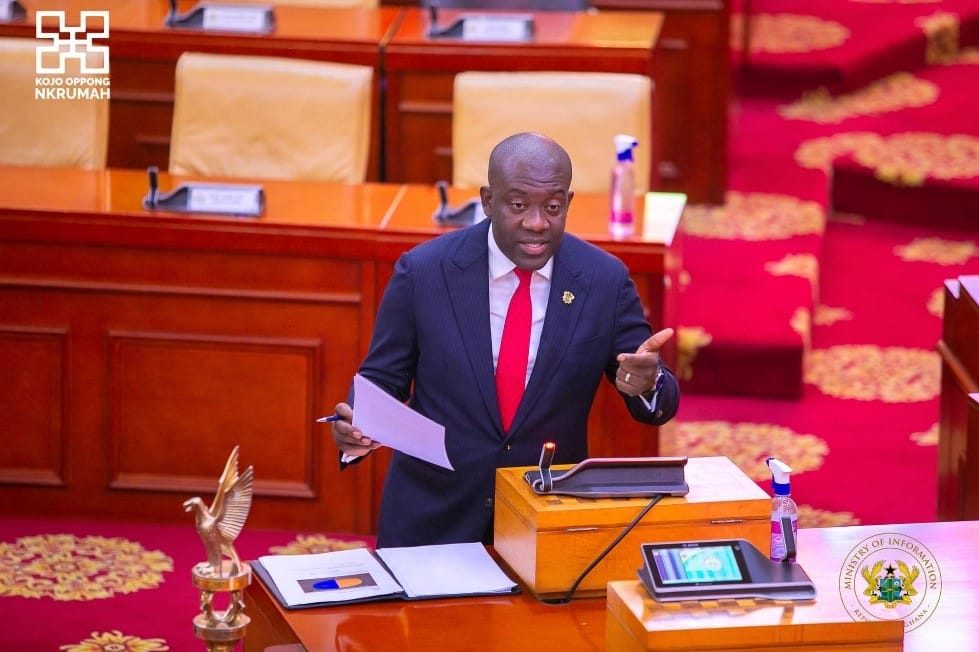
    The Minister of Information, Kojo Oppong Nkrumah, has singled out The Fourth Estate, a project of the Media Foundation for West Africa (MFWA), for praise in the testing of the Right to Information (RTI) Act.

    While responding to questions on the floor of Parliament on the operationalisation of the RTI law on March 15, 2022, the minister said the continuous efforts by the two entities have kept the RTI law alive.

    “Let me commend the civil society organisations in particular that have made it a point to test the system for information at various ministries, departments and agencies (MMDAs), and with your permission let me mention, for example, the Media Foundation for West Africa, The Fourth Estate that have done a lot of these applications.”

    The Fourth Estate has made 61 RTI requests to public institutions since March 2021. About half of the requests were made to test public institution’s compliance with the RTI law, while the rest were made as part of The Fourth Estate’s journalistic work on stories that required information from state institutions.

     The Fourth Estate has filed petitions at the RTI Commission, the independent adjudicative body responsible for the implementation of the RTI law on over a third of these requests after exhausting the internal appeal mechanisms within state institutions.

    On their side, the Media Foundation for West Africa (MFWA) has been a leading advocate on RTI Law since the campaign for its passage commenced some two decades ago. Since the law was passed in 2019, the MFWA has trained about 200 journalists, 150 local government officials, and countless citizens on how to use the RTI law. The organization has also held a number of sensitization forums that have brought together key stakeholders of the law including the Board Chair and Executive Secretary of the RTI Commission.

    Aside from sensitization and building capacities on the law including producing simplified versions of the RTI law, the MFWA also trained some citizen groups in the Ada East District Assembly in the Greater Accra Region, Sagnarigu Municipal Assembly in the Northern Region, and Ejura Sekyeredumase Municipal Assembly in the Ashanti Region. The MFWA guided members of the citizen groups to test the RTI law at the local district levels. The exercise revealed woefully low awareness and non-compliance with the law among local government authorities.

    The passage of the RTI law (2019, Act 989) in 2019 drew commendations from many access to information stakeholders.

    But it is beginning to dawn on the stakeholders that the celebrations were premature. Very few citizens are using the law and even fewer institutions are willing to release information.

    This was confirmed by the Information Minister Kojo Oppong-Nkrumah. The Minister said 85 requests were made in 2020 by individuals and institutions, and 129 in 2021. He said stakeholders should request information from public institutions to make the almost 20-year activism for the act worth the cost.

    Challenges with implementing the RTI law

    Anti-corruption campaigners touted the law as one of the most potent arsenals to crush corruption. They said it would increase transparency in the government, ensure proactive disclosure of information and set rules for requests and responses.

    But this was not to be. The Fourth Estate and the MFWA’s work have shown that state institutions do not disclose information proactively and those who request are sometimes frustrated in the process.

    For instance, Manasseh Azure Awuni of The Fourth Estate made a request on Ghana’s COVID-19 expenditure on school fumigation to the Ministry of Education in August 2020. The ministry responded to the request in August 2021, a year after the request was made. This was after many follow-ups.

    But the ministry did not give Manasseh the information he requested. It said the presidency was responsible for the activities based on which the information was requested. Manasseh then wrote to the presidency, but he received no response even after an appeal to the president.

    He then petitioned the RTI Commission. The presidency wrote to Manasseh that it had transferred the request to the Ghana Education Service, which, it said, had the information on the COVID-19 schools fumigation project. Manasseh is yet to receive feedback from the Ghana Education Service.

    Again, given the public interest associated with the president’s use of private jet despite the availability of a presidential jet, The Fourth Estate made a request for information from the Presidency in December 2021, demanding the cost of renting the private jets.

    The request also asked for the assessment report by the Ghana Armed Forces, which may have declared the presidential jet unfit for use, the reason the president had had to hire private jets.

    In a response on January 19, 2022, the Chief of Staff, Akosua Frema Osei-Opare commended The Fourth Estate for its use of the RTI law. She, however, said the information requested was exempt according to the RTI law.

    “Your request for access to information on the president’s travel has been carefully considered and I have found that the information requested falls within the kinds of information classified as “exempt from disclosure”

    Displeased, The Fourth Estate appealed to the president for an internal review. He did not respond to the appeal, a case of the priest not implementing his own sermon.

    The Fourth Estate dragged the presidency before the RTI Commission for its failure to release information to The Fourth Estate, arguing that the request relates to public interest and abuse of authority, in accordance with section 17(1)(d)(e) of the RTI law.

    MFWA’s programme officer, Adiza Moro Maiga, who has been on the frontline training CSOs, journalists, and community activists on the RTI law, said the challenge has moved from having the law passed to “having it work.”

    “Passing the law is not enough. The challenge is getting it running, and effective. If we don’t put in the structures to make sure it is working well and serve the purpose for which it is passed, then it becomes problematic,” she said.

    The MFWA-NCA tussle

    In 2020, the MFWA requested information from the National Communications Authority (NCA). The request was for the list of all authorized radio stations as of June 2020, and the full list of the number of radio stations closed down in 2017 during the NCA’s spectrum audit.

    The NCA demanded a fee of GHS2,000 for the information.

    The MFWA went to court, saying it was “convinced that the amount the NCA is demanding is prohibitive and liable to set a bad precedent, and a breach of the fundamental right to access information.”

    It, therefore, prayed the court declare the NCA’s request for GHH2,000 as inconsistent with the RTI law, and that the NCA could not arbitrarily use its own law to charge fees under the RTI.

    The court ruled that the NCA could not use its internal fees for requests made under the RTI law. It asked the MFWA to pay GHS 1,500 instead of the GHS 2,000 demanded by the NCA. Even though the MFWA had in principle gotten some of what it sought, the organisation was not pleased with the amount prescribed by the courts.

    “While we can pay the GHS1,500 fees decided by the court, it is important to underline the fact that the right to access public information under the RTI law accrues to all Ghanaians, including the lowest income earners. This precedent, can, therefore, discourage or disenable a certain class of Ghanaians from exercising this,” the MFWA registered its displeasure in the ruling.

    RTI Commission taken to court

    On Thursday, March 17, an Accra High Court affirmed a ruling by the RTI commission that said the Minerals Commission should release information to The Fourth Estate at GHS2, instead of the $1,000 the Minerals Commission had charged.

    The Fourth Estate had petitioned the RTI Commission after Minerals Commission charged $1,000, and argued that the charge was in contravention of the RTI law. The RTI Commission agreed with The Fourth Estate and slashed down the figure considerable.

    Feeling aggrieved, the Minerals Commission went to court to declare the ruling of the RTI Commission as “unconstitutional”. The court, however, stood by the RTI Commission’s decision.

  • Dubai-Expo 2022: Akufo-Addo’s claim on Ghana’s Foreign Direct Investment completely false

    President Akufo-Addo has touted Ghana’s economy as the best when compared with its West African neighbours.

    Highlighting the country’s achievements in trade and investments at the 2022 Dubai Expo, the President said Ghana was the largest receiver of Foreign Direct Investment in West Africa.

    Fact-Check Ghana has verified the claim and provided the verdict and explanation below.

    Claim: “We are the largest recipient of Foreign Direct Investment in West Africa”

    Verdict: Completely false

    Explanation: Until recently, Ghana was the biggest beneficiary in the volume of Foreign Direct Investment in the West African sub-region.

    The World Bank describes these investments as business decisions, or the purchase of interests in a company by investors that are outside the country–in this case, Ghana.

    Ghana lost this position to Nigeria in 2020, according to the latest World Investment Report by the United Nations Conference on Trade and Development (UNCTAD). The World Investment Report is released in June every year and details the Global flows of foreign direct investments in the previous year.

    The World Investment Report 2021 said Nigeria recorded a marginal increase in Foreign Direct Investment (FDI) for the year 2020, making her the largest recipient.

    “In West Africa, inflows to Nigeria increased slightly, from $2.3 billion in 2019 to $2.4 billion. The average price of crude oil dropped by 33% in 2020, and lower demand along with supply-side constraints caused by the slowdown in site development restricted FDI to the country in the first half of 2020.”

    The current report however noted that Ghana saw more than 50% decline in the volume of its FDI for the year 2020.

    “Ghana registered a 52% decline in FDI in 2020, leaving inflows at $1.9 billion, from $3.9 billion in 2019. Stringent lockdown measures in the first half of the year contributed to the investment decline, with the country among the first in the continent to impose mobility restrictions,” the report noted.

    The report further stated that “almost half of the FDI to Ghana was in manufacturing, whereas the services and mining sectors accounted for 25 and 16% of foreign investment.”

    Below is a tabular representation of West Africa’s volume of FDI in nominal terms by the World Bank.

    [FDI ­ inflows, by region and economy, 2015–2020 (Millions of dollars)]

    FDI INFLOWS

      2015 2016 2017 2018 2019 2020
    Benin 150 132 201 194 218 176
    Burkina Faso 232 391 3 268 163 149
    Cabo Verde 120 125 111 110 107 73
    Côte d’Ivoire 494 578 975 620 936 509
    Gambia 13 – 28 18 52 44 46d
    Ghana 3,192 3,485 3,255 2,989 3,879 1,877
    Guinea 53 1618 578 353 44  325
    Guinea-Bissau 19 24 16 21 72 20
    Liberia 627 453 248 129 87 87
    Mali 276 356 563 467 721 308
    Mauritania 502 271 587 773 887 978d
    Niger 529 301 339 466 717 367
    Nigeria 3,064 3,453 2,413 775 2,305 2,385
    Senegal 409 472 588 848 1065 1481
    Sierra Leone 252 138 129 218 368d 349d
    Togo 258 – 46 89 -183 346 639

    d- estimates   Source: World Investment Report,2021, page 248

    In Africa, the report said the five countries below are the largest recipients of FDI in 2020.

    • Egypt $5.9 billion
    • Republic of the Congo $4.0 billion
    • South Africa $3.1 billion
    • Ethiopia $2.4 billion
    • Nigeria $2.4 billion

    Following from the above, it is clear that President Akufo-Addo’s claim that Ghana is the largest recipient of Foreign Direct Investment is Completely false.

    You may also be interested in:

    https://thefourthestategh.com/2022/02/09/fact-checks-is-ghana-ranked-among-the-countries-that-best-managed-covid-19-in-the-world/

  • Special Prosecutor begins investigations into police recruitment

    Special Prosecutor begins investigations into police recruitment

    The Office of the Special Prosecutor has extended its tentacles into the Ghana Police Service as it begins investigations into the recruitment of course 51 cadet officers into the Ghana Police Academy.

    A statement signed by the Special Prosecutor, Kissi Agyebeng, on March 17, 2022, said the investigations will relate to corruption-related offences and the abuse of office by the individuals involved.

    The terse statement was scanty in details including when the recruitment happened and those behind it.

    “The investigations target specific cases of alleged corruption, and corruption-related offences of the use of office for profit, abuse of office, abuse of power, favouritism, nepotism, victimization and the selection of unqualified persons,” it said.

    This is the first time the special prosecutor has thrown its net into fishy waters of the many recruitment-related scandals the country has recorded.

    But it will not be the first time an agency has commenced investigations into a recruitment scam, particularly within the Police Service.

    The biggest in recent history led to the dismissal of the Director-General in charge of Human Resources of the Ghana Police Service, Commissioner of Police (COP), Patrick Timbillah.
    His dismissal was all there was to show for the scandal that caused the police major disgrace. No one was prosecuted.

    That action did little to enhance perceptions of corruption in police recruitment in Ghana.
    Analysts say that recruitment-related fraud was a major dent on the image of the police at a time, the law enforcement agency was reeling from accusations that its officers were in the habit of extorting money from people.

    The victims in the Timbillah case, who numbered about 200 paid between GHS 2000-4000 into bank accounts, some of which the police said was traced to him.

    Then police spokesperson David Ampah-Benin said the recruitment scam “…was so well-organised that all the victims were given letters purported to have been written by the police administration.”

    That would not be the last. In May and November 2017, two more incidents occurred.

    General Sergeant Kennedy Asomani was put before an Accra Circuit Court for collecting GH₵100,000 from forty-four persons under the pretext of enlisting them into the Ghana Police Service.

    A 62-year-old female retired fire officer, Kate Eva Boateng, was arrested for pocketing Ghc56,000 as an incentive to get six people recruited into various security agencies.

    In August 2021, the Director-General of Police Public Relations, Assistant Commissioner of Police (ACP) Kwesi Ofori, warned that anyone who engaged in a recruitment scam would be arrested.

    “Any fraudster who wants to take advantage of the publication of the Ghana Police Service 2021 recruitment process to swindle people will be dealt with ruthlessly according to the law.”

    But another happened in September 2021. This, however, was led by a three-man civilian gang who were arrested in Madina in the Greater Accra Region.

    The police and the judiciary often top the list of public organisations perceived to be the most corrupt by the Center for Democratic Governance (CDD) Ghana surveys.


  • Local Gov’t Service suspends controversial training after The Fourth Estate report

    Local Gov’t Service suspends controversial training after The Fourth Estate report

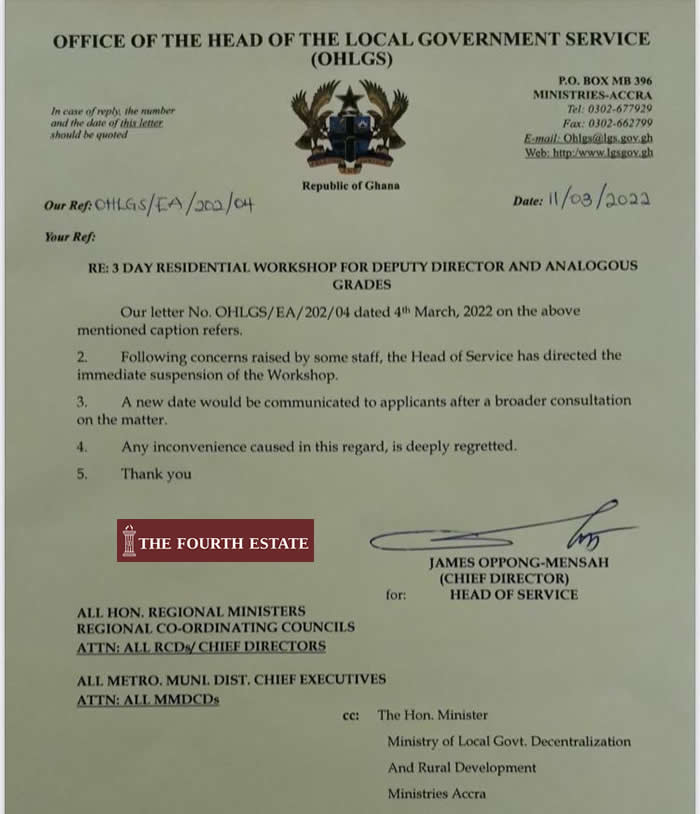
    The Local Government Service has suspended its planned workshop for its 240 workers, who were to pay Gh¢6,000 each for a promotion-interview training.

    The decision follows The Fourth Estate story which raised alarm on what some civil servants described as extortion.

    This money, the Local Government Service says, was meant for organising “a three-day High-Level Residential Refresher Training Workshop to prepare the officers for the impending interview”.

    “The amount will be used to cater for the training materials, accommodation, feeding as well as the administrative cost of the interview,” the letter explained.

    Less than 24 hours after The Fourth Estate report, the Chief Director of the Local Government Service, James Oppong-Mensah, has written to all directors withdrawing the March 3, 2022 directive.

    “Following concerns raised by some staff, the Head of the Service has directed an immediate suspension of the workshop,” the Chief Director said in his latest communication.

    It however said, “a new date would be communicated to applicants after a broader consultation on the matter”.

    The decision has triggered jubilation among civil servants who could not voice out their concerns openly for fear of victimisation.

    “The suspension is good. It’s a good thing because there is a lot of outrage everywhere. We are happy about it. This place is spoilt; I mean the Local Government Service. This money, they will, by all means, look for a way of taking it,” a civil servant who spoke on condition of anonymity said.

    “If The Fourth Estate had not blown the cover, nobody in the Local Government Service would have made them suspend this workshop. Left to the members of the Service alone, nobody would have been able to make any noise. You dare not. They would victimise you. They are good at victimising people. To victimise you, they can call you back to come and sit in the office and work under somebody whom you shouldn’t work under. They can send you to a district where you have no accommodation. They have so many ways of victimising people,”  another worker who knows the price of victimization stated.

    But some still have doubts.

    “They are now saying they are going to do broader consultation. They should do the broader consultation and we’ll see. Sometimes, they announce that they have suspended it but they still find a way to force people to pay in secret,” another one is in disbelief said.

    “We heard the Minister for Local Government and Rural Development has taken interest in the matter and he is very angry about it. We want to see how far it will go. We have also heard that they are likely to reduce the amount they are charging for the promotion interview and make the payment secret and before you know it the workshop has started,” another one speculated.

    The Chief Director of Local Government Service, James Oppong-Mensah, in an earlier interview with The Fourth Estate said payments for interviews -workshops were not new, but had been increased slightly this year due to economic hardships.

    “It’s not compulsory. They are not under compulsion to pay,” he told Editor-In-Chief, Manasseh Azure Awuni, adding that if someone was not able to pay the money and attend the preparation, they would still be allowed to take part in the interview.

    A planning officer had expressed fear things might get worse for his colleagues in the local government service if schemes of this nature were not stopped.

    “It doesn’t happen. You don’t have to go and pay for any promotion. Where are they going to get that Gh¢6,000? The truth of it is that it is robbery,” he said.

    Mr. Oppong-Mensah was unhappy that the employees had expressed their disapproval to the media instead of the management of the Local Government Service.

    When asked whether he did not see the amount being charged as very high, the Chief Director said even if the employees felt it was high, they had to use the right approach. They could have reached out to the Local Government Service for a negotiation, instead of going to the media.

  • Akufo-Addo’s Private Jet: The Fourth Estate drags presidency to RTI Commission

    The Fourth Estate has dragged Ghana’s presidency to the Right to Information (RTI) Commission for its refusal to disclose information on the cost of renting private jets for the president’s foreign travels.

     The petition to the RTI Commission is requesting for a review of the presidency’s refusal to grant the information, which was requested by the Editor-in-Chief of The Fourth Estate, Manasseh Azure Awuni.

    Manasseh filed a right to information request at the presidency on December 2, 2021, to know the cost of renting the private jet for President Akufo-Addo’s travels between May and September 2021.

    He also demanded information on the procurement processes used in selecting the company or companies renting the jets.

    The request also wanted an assessment report of the current state of Ghana’s presidential jet, which suggests it is technically unfit for foreign trips , for which reason the presidency rents private jets.

    In a response on January 19, 2022, the Chief of Staff, Akosua Frema Osei-Opare commended The Fourth Estate for its use of the RTI law. She, however, said the information requested was exempt according to the RTI law.

    “Your request for access to information on the president’s travel has been carefully considered and I have found that the information requested falls within the kinds of information classified as “exempt from disclosure” by the RTI Act as the information requests relate to:

    • The movement and travels of the president, the Commander-In-Chief of the Ghana Armed Forces, which information is a matter of national security.
    • Information on the processes leading to the choice by the President of a specific aircraft for his travels and the manner of those travels; and
    • The presidential jet is part of the equipment of the Ghana Armed Forces and thus, its use is part of the defence mechanisms of the Republic.

    “The Information requested is, therefore, exempt under sections 5(1) (b)(ii),9(1)(a) and (9)(2) of the RTI Act.

    “Accordingly, pursuant to section 23(4) and 27(1) (b) of the RTI Act, your request is hereby refused for the reasons above,” the Chief of Staff’s response stated.

    Unsatisfied with the response, Manasseh wrote an internal appeal to President Akufo-Addo on February 10, 2022, for a review of the Chief of Staff’s decision. This step was in accordance with section 31 of the RTI Act, 2019 (Act 989).

    He argued that despite the Chief of Staff’s reference to section 5(1) of the RTI Act, section 5(2) of the Act states that “Information which contains factual or statistical data is not exempt information.”

    “Section 5(2) therefore excludes parts of our request, especially the portions relating to numbers, costs, and statistics, from being exempt,” he stated.

    “Moreover, the issue concerning the president’s hiring and travels in a private jet is an issue of public interest that has generated fierce debates and discussions in parliament, the media, and among the general public,” the appeal to the president stated.

    It continued, “For many citizens, the issue borders on the abuse of authority by the president, and neglect in the performance of his official function of protecting the public purse, especially when the state has a functioning presidential jet in Dassault Falcon 900-EXE, which is being used by some heads of States in the West African sub-region. My request, therefore, relates to the public interest and abuse of authority, in accordance with section 17(1)(d)(e) which states:

    “‘Despite a provision of this Act on information exempt from disclosure, information is not exempt from disclosure if the disclosure of the information reveals evidence of:

    (d)an abuse of authority or a neglect in the performance of an official function;

    or (e) any other matter of public interest and the benefits of disclosure clearly outweigh the harm or danger that the disclosure will cause.’”

    The appeal to the President said the response of the Chief of Staff failed to prove that disclosing the cost of the private jet rented by the president, and the procurement processes leading to that could jeopardise the security of the president.

    More than 15 days later, the president failed to respond to the internal review application as required by the RTI law. This necessitated an appeal to the RTI Commission on the matter.

    While assenting to the RTI law, President Akufo-Addo had said in a Twitter post that the law “presents a further opportunity for Ghanaians to have access to relevant information on how the country is governed.”

    The president’s use of a private jet continues to generate intense debate and public discussions, with many stating that it berates the president’s promise of protecting the public purse.

    North Tongu Member of Parliament and Ranking Member of the Foreign Affairs Committee, Samuel Okudzeto Ablakwa, has waged a sole campaign on the president’s use of a private jet for travels while the state has a presidential jet, the Dassault Falcon 900-EXE.

    The National Security Minister, Albert Kan Dapaah, said in December 2021 that the government could not disclose the cost of the president’s private jet. He was responding to a question filed by Mr Ablakwa in Parliament.

    “Mr Speaker, recent official travels to France, Belgium and South Africa by President Akufo-Addo are paid out of the operational funds from the Ministry of National Security. Mr Speaker, payments of the operational funds are glued with rules of confidentiality and state secrecy and it is not the normal practice …to make suggested disclosures,” Mr Dapaah justified.

    This is the second time The Fourth Estate, through its Editor-in-Chief, Manasseh Azure Awuni, has taken the presidency to the RTI Commission.

    The first was when the presidency failed to respond to a request on the cost of fumigation and disinfestation contracts awarded to Zoomlion Ghana Limited to spray schools in the midst of the Covid-19.


  • “You’re not exempted”– RTI Commission fines Ghana Police Service GH¢ 50,000

    The Right to Information Commission has imposed a fine of GH¢50,000 on the Ghana Police Service (GPS) for denying The Fourth Estate access to information.

    This punitive measure resulted from the police administration’s refusal to respond to the RTI Commission’s request for an explanation. The Ghana Police Service has 14 days to pay the fine or risk paying a penalty of 10% of the amount for every 14 days thereafter.

    The RTI Commission has also ordered the Ghana Police Service to furnish The Fourth Estate with the information it requested within 14 days.

    The Commission’s ruling is contained in a document dated February 23, 2022, addressed to The Inspector-General of the Ghana Police Service and Evans Aziamor-Mensah of The Fourth Estate, who petitioned the Commission.

    “Based on the Respondent’s failure to make decisions on the Applicant’s application lodged with it, as well as its failure to respond to the Commission’s letter received by it, as administrative penalty of GH¢50,000 is imposed on the Respondent [Ghana Police Service) and this shall be payable to the Commission not later than 14 days after the date of receipt of this decision. The penalty so imposed shall attract an additional default penalty rate of 10% on the principal penalty sum of GH¢ 50,000 in the event of default for any additional 14 days thereafter,” the RTI Commission said.

    This is not the first time the Commission has imposed a fine on a state agency for failing to provide information to The Fourth Estate.

    The Ghana National Fire Service and the Health Facilities Regulatory Authority have been fined GH¢50,000 and GH¢30,000 respectively in January 2022.

    The Fourth Estate’s RTI application to the Ghana Police Service

     On August 19, 2021, The Fourth Estate’s Evans Aziamor-Mensah made an RTI application to Ghana Police Service requesting the following information:

    1. Budgetary allocations by the Government of Ghana to the Ghana Police Service for the years 2013,2014,2015,2016,2017,2018,2019, and 2020.
    2. The actual amounts disbursed from the budgetary allocation or received by the Ghana Police Service for the same years indicated in point one above

    After 14 days, when the Ghana Police Service failed to respond to the application, The Fourth Estate made an internal appeal to the Inspector-General of Police, who heads the Service, in line with the RTI Law, Act 989.

    On November 15, 2021, The Fourth Estate petitioned the RTI Commission after the Inspector-General of Police did not respond to the internal appeal.

     No response to RTI Commission

    On November 18, 2021, the RTI Commission wrote to the Ghana Police Service requesting the Service to furnish the Commission with the justification for the refusal to grant the Applicant (The Fourth Estate) access to the information requested.

    The Commission said the Ghana Police Service “failed, neglected, and/or refused to respond to the Commission’s request for justification” as of the time of this ruling.

    “The Commission deprecates the posture of the Respondent in the instant case and hereby makes it clear that, under Act 989, there is no public institution that is exempt from being called upon to disclose or release information; it is certain categories of information that are exempt from disclosure. Even those categories of information, the exemption may not be absolute, in some circumstances.”

    The RTI Commission also stated that it did not find the information The Fourth Estate had requested as exempt information under the RTI law.

    The RTI Commission concluded that the Ghana Police Service should release the information to The Fourth Estate at “a reasonable charge of Gh¢ 1.80 per sheet, where it is being released in hard copy, either through printing or photocopying”.

    If the information is to be emailed, the Commission ordered the Ghana Police Service to apply a charge of GH¢ 1.90.

    You may also read:

    https://thefourthestategh.com/2022/01/17/fire-service-fined-gh%c2%a250000-for-refusing-the-fourth-estate-information/

    https://thefourthestategh.com/2023/03/27/public-purse-bleeds-as-rti-commission-fines-10-institutions-gh%c2%a2920000/


  • Mr. President, E-nough!

    Dear President Akufo-Addo,

    When I went to the bank to pay my fees as a prospective student of the Ghana Institute of Journalism in 2016, a thick crowd of New Patriotic Party (NPP) supporters had gathered for a campaign nearby.

    It was the NPP parliamentary candidate for Tema West, Carlos Ahenkora, who was on the podium addressing the gathering.

    I overheard him say a vote for the NPP was a vote to rescue Ghana from the National Democratic Congress (NDC) government, which was mismanaging the economy and making it difficult for importers and freight forwarders.

    Being the owner of a freight forwarding company, he said the economic circumstances were crippling his business and those of many others.

    By September 2016, lectures had begun in school and so was the fierce campaign between you (candidate Nana Akufo-Addo) and the NDC’s John Mahama.

    It was a campaign between impunity, between the “dead goat” President Mahama and the well-branded Akufo-Addo, the human rights activist.  We were made to believe you would save Ghana from the wanton corruption that had engulfed our country.

    At your last campaign rally at the Trade Fair Centre at La, you touted your achievements and begged Ghanaians to give you a chance.

    Almost everyone, including some members of the clergy, thought you were better. Of course, you were. Or so you appeared.

    You won with an overwhelming number of votes ever recorded against an incumbent party. Carlos also won.

    Prior to begging for votes at the last rally, you had asked us to give you a try. This was in September 2016 at a rally in Wa.

    God has spoken, we are winning' - NPP
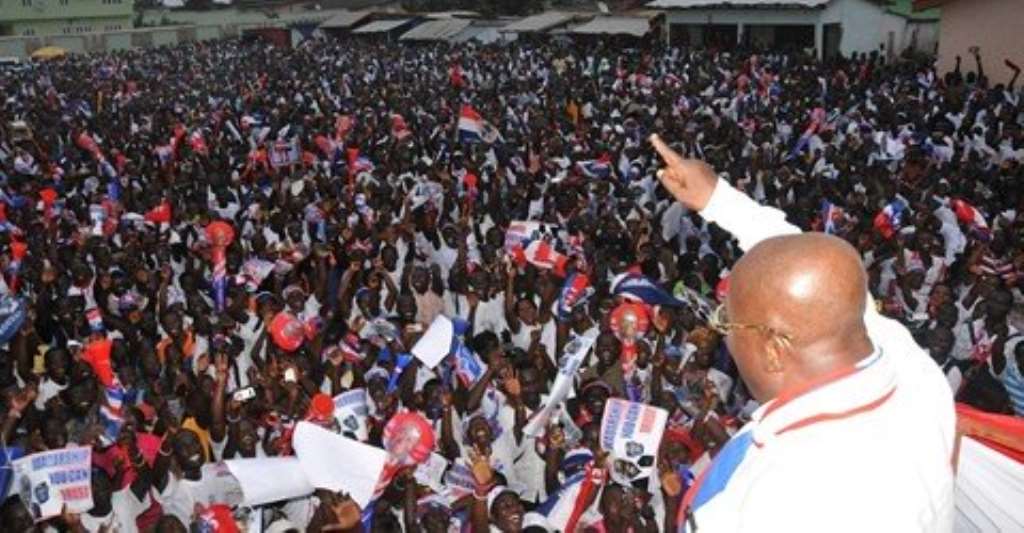
    On campaign platforms in 2016, Akufo-Addo never hid his disdain for what he described as the Mahama government’s lack of action on corruption. Credit: Modern Ghana

    “I’m prepared to beg the people of Ghana to be president if that is what is required to be done. You say ‘try me’  means that you are going to experiment, but the experience of the person who is there now has been a disastrous experience for our country. So, what is the purpose of continuity?”

    Sir, we have tried you for five years. In 2020, we had a referendum on your first term. From the results of the parliamentary election, Ghanaians neither said yes or no. After implementing free SHS, using Covid-19 to dole out freebies to enhance your chances, and contesting against the rejected John Mahama,  the outcome of the presidential poll should have alarmed you and made you sit up.

    Ideally, this should have informed how you should lead us in your second term. But you have lost it. As someone who listened to your message of hope with optimism, what I have observed in your presidential years doesn’t look good. The situation looks more hopeless than you met it.

    It appears globetrotting with your new-found love, the luxurious private jet, has made you tone-deaf to the current situation we find ourselves.

    But, Mr. President, to refresh your memory, the youth unemployment situation which you promised to tackle is rather on the ascendancy. The National Security ministry describes the situation as a security threat.

    The rising cost of living, and the ever-increasing fuel prices continue to take the little we make in this suffocating economy.  Corruption and wastage of our scarce resources are sinking our country. In fact, on the wastage, you are leading the charge as you continue to rent luxurious private jets for your personal comfort while refusing to account to the taxpayer.

    Mr President, it is difficult to convince anyone that we are poor when we rent a private jet for you and your entourage to attend meetings abroad while our country’s presidential jet either lies idle or is being used by presidents of other countries.

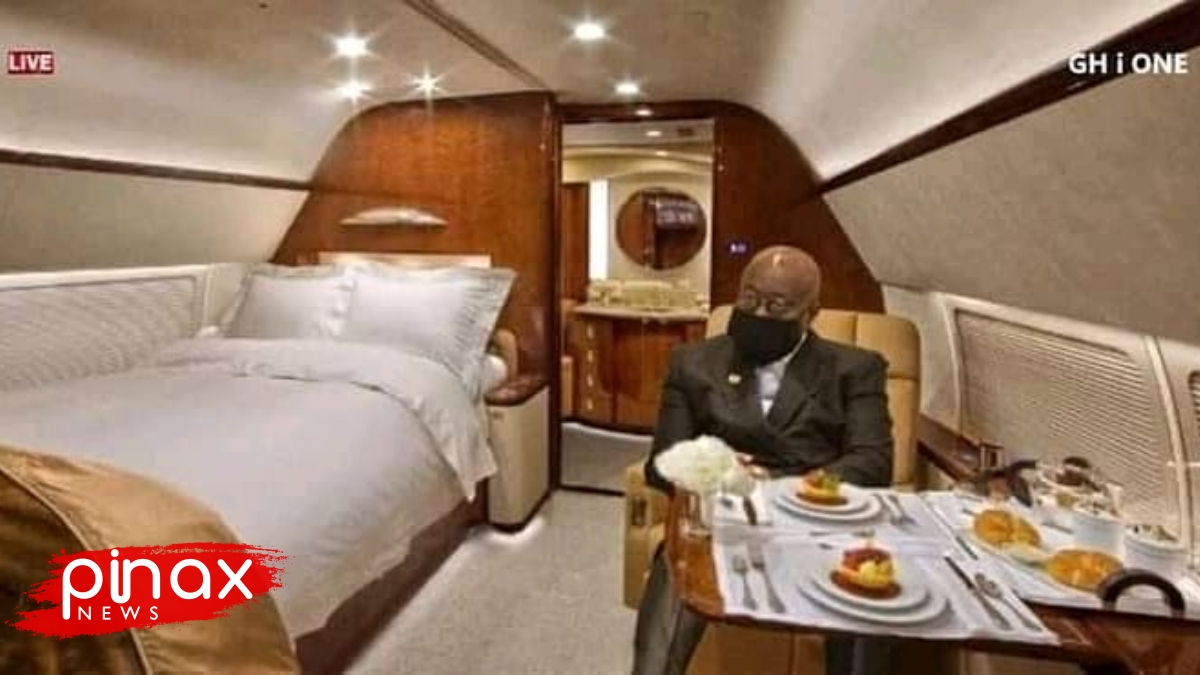
    Photo of Nana Akufo-Addo Having A Great Time In A Luxurious Aircraft Pops Up – Pinax News
    The President has been criticised for refusing to account for his use of luxurious private jets to travel around the world

    Your Minister for National Security says even the cost of the jet cannot be disclosed because it is a national security matter

    If anything, it is a mark of how grotesque the image and credibility of you and your government have become since taking over the affairs of this nation.

    Three weeks ago, when a section of Ghanaians were on the street against the proposed e-levy, you were off on a 10-day tour of some countries, a trip that is alleged to be costing the taxpayer almost GHS 5 million. That is 1% of how much you expect to raise for the state kitty from the e-levy. How insensitive!

    Mr President, my ‘konkonsa’ colleagues have reported that the economy you and our Vice-President Dr Mahamud Bawumia superintend over has been downgraded to Caa1.  Maybe you did not hear that and have not seen the need to cut down on the unnecessary perks of your office.

    Aren’t you in a hurry to develop Ghana again?

    Some Ghanaians say you are deaf to the sufferings of the citizens. Some say you’re just insensitive. And they are right.

    In years past when you had no burden of leadership as President, you poignantly rallied us to reflect on the direction of Ship Ghana, which President Mahama was captain.

    “Are we going to continue the disaster? Is that the right thing to do? We want to get rid of the disaster and bring in a new man with fresh ideas and a fresh direction for our nation. That is what we want to do,” this was you prior to your victory in 2016.

    What has changed? Not much. Or maybe a lot. A lot of clearing of corrupt appointees, nepotism and stinking arrogance of some of your ministers.

    Mr President, your former spokesperson, and now head of the National Petroleum Authority (NPA), Mustapha Hamid, granted an interview to the press during the 2016 NPP election and said, “If you reach a certain stage in life and there is nobody who can look you in the eye and tell you the truth, you are doomed and that is where our country has gotten to. We need to rescue this country.”

    Mr President, Mustapha’s statement is true then. And now. We need to rescue this country. Ghana needs rescuing from you and by you, at least in the next three years.

    You need to cut down on the profligate expenditure. You need to reduce the taxes on fuel.

    Tackle the employment challenges that threaten the peace of this country with much urgency as you attach to the media crackdown.

    Show us that you can deal with corruption not just in selected cases in the Mahama administration but also in your own.

    Resource the Office of the Special Prosecutor to work.

    And oh, Nana, E-levy.

    Relentlessly, you and your party pushed the idea of moving Ghana’s economy from “taxation to production”.

    Today in History: The 1995 'Kume Preko' protest that rocked Ghana
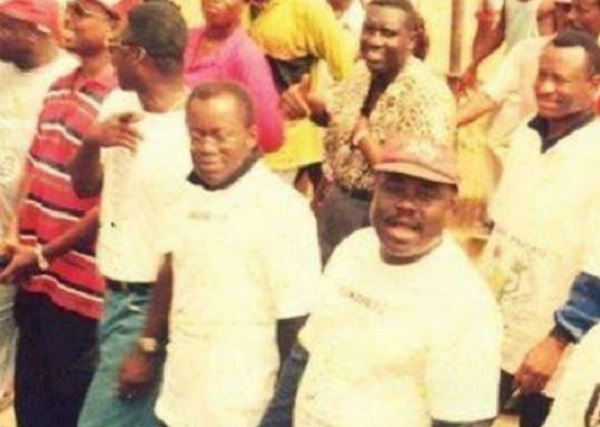
    Akufo-Addo (second right) was one of the leaders of the Kumi Preko demonstration against the introduction of VAT in 1995.   Credit: Ghanaweb

    However, the old ways of imposing stifling taxes on Ghanaians still persists. How ironic that you led the “kume preko” demonstration against Rawlings’ introduction of VAT!

    This E-levy defeats the reasons Ghanaians voted for your government, one of which was to be freed from unnecessary taxes.

    Mr President, a colleague of mine said you were an unprincipled power seeker, and I am beginning to think that is true of you.  Your actions and campaign for the presidency and your current attitude put a deep ocean between you and your former self.

    Your soubriquet in town now is “Yenka m’asem” (They can’t talk about me.)  The fact that you made your mark as an astute human rights advocate and defender of free speech makes this nickname troubling.

    While the cost of living is rising and living conditions worsening, you and your administration are saddling us with the Electronic Transactions Levy.

    Some fellow Ghanaians say you and some of your government officials are beginning to sound like the unlicensed drug sellers on public transport whose medicinal products could cure almost every disease such as piles, diabetes and impotence.

    Your Okyeame Kojo Oppong Nkrumah said if the E-levy is not passed, government workers would not get their salary.

    Your Agric Minister said the passage of the E-levy would help fund the distribution of fertilizers to farmers.

    Your defence minister said the passage of the E-levy would help us buy a jet so that you won’t rent the luxurious jet which is alleged to cost the taxpayer $14,000 per hour.

    Another said our failure to pay the E-levy would collapse the Free SHS Policy.

    The Finance Minister, Ken Ofori Atta, said by accepting the widely-rejected e-levy, every citizen would now have the moral right to demand accountability from the government.

    These and many more ridiculous justifications for a tax many have rejected make my head ache. What else would the E-levy be able to do?

    Fight corruption? Make you pay attention to the worsening plight of your citizens?

    Well, the Akans say, “Yetu wo fo na w’antie a, wokɔ Anteade”; to wit, if you do not heed advice, you will go to Anteade (the town for those who don’t heed advice).

    Until then, enough of the e-levy and its avalanche of fictitious solutions to our national problems.

    Mr President, this is e-nough.

    The writer, Evans Aziamor-Mensah, is a journalist with The Fourth Estate.