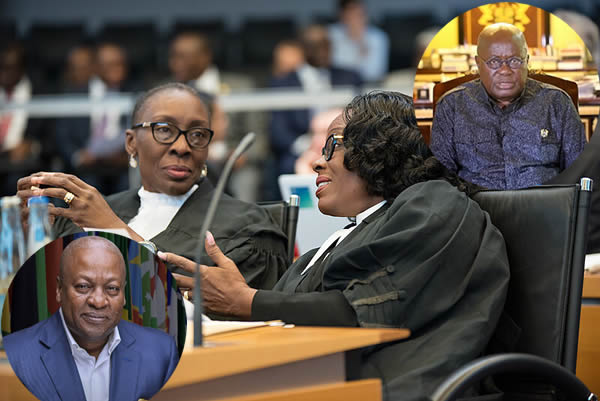
Author: Seth J. Bokpe

  • INSIDE STORY: How gov’t slept on gas contract, and woke up to $70m judgment debt

    INSIDE STORY: How gov’t slept on gas contract, and woke up to $70m judgment debt

    The dust is still hovering over the US$170-million judgment debt case Ghana lost in the United Kingdom, but the government has been slapped with yet another judgment debt worth almost US$ 70 million.

    Again, it is a fallout from an energy contract that went for international arbitration. Again, the agreement predates the Akufo-Addo administration, but this administration has been partly complicit in how Ghanaian taxpayers will pay for their government’s actions and inaction, but without any benefit.

    It is a double blow to the government which has been trying to parry its negligence in the US$170-million judgment debt, which a London Commercial Court said was too late to appeal. The government had fallen on Covid-19 and the 2020 election as excuses for failing to set aside an arbitration it lost to the Ghana Power Generation Company (GPGC).

    Just like GPGC, which won US$170 million without producing a kilowatt of power, the West Africa Gas Limited (WAGL) also got US$68.5 million without delivering a cubic meter of the gas it was contracted to produce.

    In total, the Ghanaian taxpayer will be billed US$ 238.5 million for those two debts the courts considered an error in judgment on the part of the Ghana government.

    In cedi terms, at an exchange rate of a dollar to GH₵ 5.7, the two debts amount to a little over GH₵ 1.3 billion. This amount is more than the GH₵ 1.2 billion the government committed to its flagship agriculture policy, Planting for Food and Jobs for three years (2017 to 2019).

    The Judgment Debt

    The WAGL had initially demanded almost US$ 1.1 billion in recovery fees but had to slash it drastically to almost $400 million for undisclosed reasons. The company’s grievance included the fact that the government of Ghana failed to provide “a revolving irrevocable cumulative standby letter of credit” as well as obtain all “approval necessary to purchase, receive and use gas” under the agreement.

    A breakdown of the latest award indicates that almost US$68 million will go to third-party suppliers, engineering companies, and management companies that the WAGL hired to execute the contract while $578,971 is compensation for travel and legal costs the company incurred during the contract.

    That aside, Ghana will also pay £353,000 in legal and arbitration costs. Signed on October 8, 2015, the contract was called Gas Supply Agreement (GSA) and required that the company, West Africa Gas Limited (WAGL), build the required infrastructure and supply gas to Ghana for 10 years.
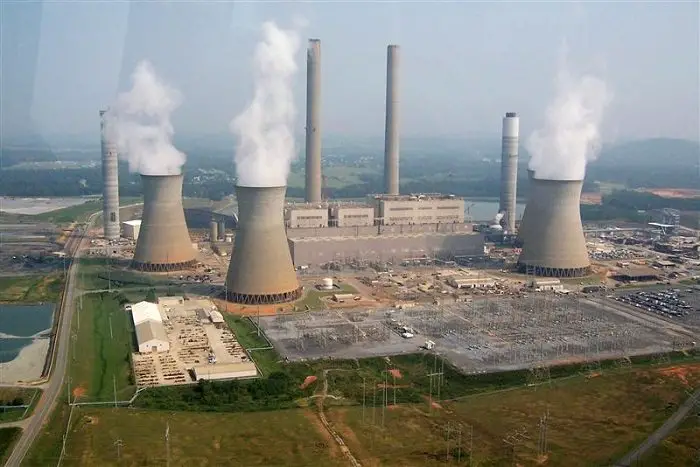
     judgment debt: Construction begins on largest gas power plant in Ghana
    The WAGL agreement was meant to provide gas to power the country’s power plants

    WAGL is a joint venture company of Nigerian oil and gas giants, Ocean Bed Trading (BVI), a member of the Sahara Group; and the Nigerian National Petroleum Company.

    Ghana’s counterclaim for the breach of contract and demand for approximately US$ 88 million was dismissed. WAGL’s demand for $310 million as a cost incurred in contracting one of its service providers was also thrown out.

    It will not be the first time the Sahara Group is involved in a controversy in Ghana. During the Mills administration, the oil conglomerate was accused of allegedly using a phony company in a US$48 million crude oil transaction with the Tema Oil Refinery.  Another company claimed ownership of the product. But the Sahara Group vehemently denied the allegations.  A Bureau of National Investigations (Now National Intelligence Bureau) later cleared the company of any wrongdoing.

    The WAGL Contract

    Signed on October 8, 2015, the contract was called Gas Supply Agreement (GSA) and required that the company build the infrastructure and supply gas to Ghana for 10 years.

    Unlike the GCGP contract, which the government abrogated, this time, it was the WAGL that terminated its deal with the state, citing bureaucratic bottlenecks.

    The agreement allowed it to do so. But it must have a strong case to abandon the deal or risk compensating Ghana. The London Arbitration panel believed the Nigerian company was justified in walking away from the contract.

    When Ghana’s energy crisis bit hard between 2012 and 2016, courting the anger of the public ahead of the 2016 elections, Mahama’s government signed a wave of power purchase agreements, including gas supply contracts to increase the country’s power generation capacity.

    75m Nigerians Lack Access to Electricity, Says World Bank Report | Nigeria Electricity Hub
    Ghana’s crippling energy crisis forced the government to sign a wave of agreements including the WAGL one

    The WAGL deal was meant to deliver gas at a time the country’s energy sector balance sheet was in deficit. While the government was expanding the country’s generation capacity, critics pointed out the problem was more financial than technical. The energy sector debt was crippling banks.

     Ghana’s agreement with WAGL did not require that the government spend a cent except to help the company secure a letter of credit for an initial US$ 140 million for the first four months. The letter of credit was to assure banks that the government of Ghana would be willing to shoulder the liabilities in the event that the company failed to meet its liabilities.

    The Mahama administration was also required to validate the agreement with the Attorney-General’s opinion on the contract’s validity, the government’s ability to honour its financial obligations, as well as parliamentary approval.

    On the part of the company, it was expected to build its own financial backbone and also build the infrastructure required as there was no berthing facility at the Tema Port.

    It was also to get its license from Ghana’s Energy Commission.

    On January 21, 2016, the Ministry of Justice confirmed, on behalf of the Attorney General, that the GSA did not contravene any existing law and could be executed by the parties.

    After the signing of the agreement on March 8, 2015, it would take a number of letters and reminders from the WAGL to the government asking to be updated on the parliamentary approval, the letter of credit, and the other government obligations.

    The letters, which were dated December 28, 2015; May 27, 2016; September 26, 2016; and October 5, 2016; provided updates on the projects, but received only one response from the Ministry of Power.

    Judgement Debt : President Mahama chairs last Cabinet Meeting at the Flagst… | Flickr
    The deal received a cabinet approval

    Even before the first cubic meter of LNG was delivered, the Mahama administration on   March 18, 2016, a year after the contract was due, expanded the scope of the contract. The government increased the duration of the contract, the daily contract quantity, and contract quantity.  The variation of the contract received presidential and Cabinet endorsements.

    But the deadline for the completion was not extended or waived. This would later come to haunt the Ghanaian taxpayer.

    It was in October 2016 that the agreement and an addendum to expand its scope received parliamentary approval. This was a year after the deal was signed and seven months after the WAGL was expected to be complete (March 8, 2016) and feed power plants in Tema with gas.

    With both eyes on the 2016 elections and the tension eased by an improvement in the power situation, it appeared the Mahama government took its eyes off the WAGL deal. It eventually lost the 2016 elections to Nana Akufo-Addo.

    On January 6, 2017, a day before President Nana Akufo-Addo was sworn-in, WAGL through its lawyers, Clyde & Co, wrote to the outgoing Mahama government with a number of reminders. It seemed to be a subtle wink at the new administration of its unfinished business.

    In that letter, the company noted that it had “already been exposed to very significant project costs, but had been prevented from progressing matters as a result of the GoG’s failure to comply with its obligations,” adding that the “WAGL’s exposure was continuing to grow.”

    That letter received no response.

    Interestingly, while WAGL and the government struggled to fulfill the terms of the contract, the Ghana National Petroleum Corporation (GNPC) was signing other gas supply deals.

    On December 1, 2016, GNPC entered into a 20- year contract with a Norwegian oil and gas giant, Höegh LNG, for the supply of natural gas to power plants in Tema.

    On September 14, 2017, GNPC concluded an agreement with a multi-billion Russian company, Gazprom, for the supply of liquified natural gas.

    In September 2018, the Energy Ministry also announced that the China Harbour Engineering Company had been appointed to build onshore facilities and that Jiangnan Shipyard had been appointed to provide a floating storage regasification unit (FSRU)— a special type of ship used for LNG transfer.

    Ironically, a similar FSRU facility, Mt Golar Tundra, which was hired by WAGL, had docked at the Tema Harbour from May 27, 2016, to September 2017.

    The arrival of WAGL’s facility was known to officials of the Ghanaian government, who oversaw the contracting of a similar facility later. The vessel left the country in 2017 because its owners were growing agitated over the lack of payments from WAGL.

    Service providers angry

    From May to December 2015, WAGL signed a number of construction, service agreements, and consultancy services, including the hiring of vessels at its own expense.

    However, with the company failing to meet its financial obligations to these companies became agitated.

    On April 18, 2016, FMC, the company manufacturing the loading arm for the gas delivery, froze its work stating that “upon receipt of the funds, manufacturing would restart and a new schedule and delivery date would be provided and notified.”

    On July 5, 2017, Amazon, which was to handle construction work, issued a notice of termination of its contract with WAGL for its failure to make payment and demanded the payment $310 million being its contract sum.

    On September 19, 2017, Golar, the vessel for storage facility (FSRU) gave notice of termination and withdrawal.

    New administration’s complicity

    Just like its predecessor, which failed to clear the legal and administrative hurdles to allow the agreement to be executed, it appeared the Akufo-Addo administration took little interest in the contract. This compelled the company to write another letter on August 3, 2017, its frustrations were glaring in that correspondence.

    “Upon Parliament’s approval of the binding GSA… and subsequent kick of meeting (with members of your team in attendance) of 16 December 2016, we are yet to be formally engaged by the Ministry of Energy in expediting steps towards the implementation of the project. Her previous correspondence, and in the bid to curtail the exposure, WAGL has been inclined to slow the pace of execution,” the arbitration quoted WAGL.

    The company also reminded the government of the cost it was incurred while the contract crawled at the pace of a tortoise.

    This got the attention of the GNPC, which wrote to the WAGL on September 4, 2018, inviting it to negotiations, adding that following a review of the country’s power requirements, the Ministry of Energy was considering an implementation of the project to be executed by WAGL in Takoradi instead of the original agreed location in Tema, necessitating a review of the GSA.

    This also happened in the GPGC case, where the company was asked to relocate from Takoradi to Kpone – causing another layer of delay.

    But eight months later—April 22, 2019 — WAGL pulled the plug on the deal.  This was almost three years after the contract was signed. For an emergency agreement meant to provide gas solutions for an ailing power sector within five months (October 8, 2015, to March 8, 2016), 36 months later, it was still teething.

    With the terms of the deal allowing WAGL “to terminate [the] agreement with immediate effect” if any of the conditions were not met by the execution date, it received a shot in the arm to walk away.

    In simpler terms, both sides renounced their obligation under the contract. Consequently, on July 25, 2019, WAGL  began an arbitration action against the government before the London Court.

    During the arbitration, which ended on January 15, 2021, WAGL claimed that there was no provision in the agreement which held it to an obligation to comply with its conditions before invoking the termination clause or to give notice of the government defaults before termination.

    “WAGL contended that it was not suggested that by waiting until April 22, 2019, to terminate the GSA [Gas Supply Agreement], WAGL waived its right to do so,” the court’s documents said.

    Like a jealous spouse, the company told the court that the Akufo-Addo administration’s coldness towards it was because there was another partner in the picture.

    “WAGL further submitted that the GoG had decided that it no longer wished to purchase Gas from WAGL and that was why the GoG did not fulfill the remaining Buyer’s Conditions as it was able to receive gas at a considerably cheaper price from Gazprom, namely at a saving of some US$400 million,” the court document explained.

    The company also justified its inability to fulfill all its obligations, saying it had “repeatedly warned the GoG, it had been obliged to slow down its progress with the project because of the delays on the part of GoG, as buyer, in obtaining Parliamentary approval and, thereafter, providing the letter of credit. As to the former, GoG failed to ask for it, let alone obtain Parliamentary Approval before March 8, 2016.”

    In response, the government said the company’s decision was an early legal ejaculation.

    It disputed the company’s right to terminate the agreement on various grounds and argued that if the company was minded to abrogate the contract, it should have been done on March 8, 2016, the date task should have been executed.

    “GoG adds that it satisfied all but two of its conditions before WAGL prematurely terminated the GSA. While accepting that it did not establish the letter of credit or the disputed amount account under, it submitted that the time frame for complying with that requirement was distorted following the parties’ decision to amend the GSA by entering into an addendum to vary the terms of the GSA. By that decision, the parties, by necessary implication, waived the period of compliance, both of which required parliamentary approval,” the government argued.

    The government’s legal team led by the then Deputy Attorney General, Godfred Yeboah Dame, said the company’s decision to terminate the deal tied the government’s hand, preventing it from fulfilling its part of the contract.

    That is not all.

    “GoG also argued in oral submissions that WAGL did not use its reasonable endeavours to perform the GSA because it [WAGL] did not even obtain a license to import LNG into Ghana in accordance with the provisions of the Energy Commissions Act. WAGL only provided a LNG provisional license in the name of Sahara,” the court document said.

    On its failure to provide a letter of credit, the government’s position was that until WAGL had satisfied all of its conditions, particularly the completion of the infrastructure works, and was in a position to supply gas, the government’s financial obligation did not arise.

    “GoG submitted that WAGL’s admission that it could not raise financing as a result of GoG’s failure to establish an LC, even though the contract did not make the establishment of an LC a contingent condition for WAGL to raise financing for the contract, laid bare the real reason why WAGL was compelled to terminate the contract, namely that WAGL did not have the financial capacity to complete the project.”

    The court’s decision

    The three-member arbitration panel, comprising a Nigerian academic, Prof Fidelis Oditah;  a veteran Nigerian lawyer,  Dorothy Ufot, and presided over by an international arbitrator, Hilary Heilbron, reasoned that WAGL made a more convincing case.

    It unanimously agreed that although both parties failed to meet their obligations under the agreement, the WAGL had incurred costs that would have been avoided if the government had been responsive.

    It provided eight reasons for which WAGL’s failure to terminate the deal on the deadline date of March 8, 2016, saying the decision was commercially not viable.

    “As WAGL argued, it would be very uncommercial if the GoG could announce that it was not going to further perform, yet WAGL had to undertake further expenditure to complete, for example the infrastructure works, which would mean an increased Recovery Fee which GoG would ultimately have to pay. That would be in neither party’s interests,” the court document stated.

    The tribunal, therefore concluded that there was no time limit on the exercise of the right to terminate the agreement on the part of the WAGL.

    “The Tribunal rejects the contention that the seller [WAGL]can only terminate the GSA” if it itself has complied with all its conditions.

    You can reach the writer of this story, Seth Bokpe, via email at seth@thefourthestateghcom. You can follow him on Twitter @thekekeli

  • FULL REPORT: Ghana to pay $170 million judgment debt as London court declares “Covid-19 and election” excuse as “intrinsically weak.”

    FULL REPORT: Ghana to pay $170 million judgment debt as London court declares “Covid-19 and election” excuse as “intrinsically weak.”

    A United Kingdom Court says it is too late for Ghana to appeal against a US $164 million judgment debt awarded against it for wrongfully terminating the contract of an independent power producer, Ghana Power Generation Company (GPGC) Limited.

    The contract was initially worth US$ 24.9 million per annum over the contract period of four years, making US$99.6 million.

    The government failed to apply and set aside the January 26, 2021 decision of the London-based United Nations Commission on International Trade Law (UNCITRAL) Tribunal.

    Rather, it turned up at a London Commercial Court with two excuses as impediments–the country’s 2020 presidential and parliamentary elections and that some key officials in the Attorney General’s Office contracted COVID-19.

    The verdict 

    The three-member arbitration tribunal chaired by John Beechey, a former President of the International Criminal Court’s Court of Arbitration, and co-chaired by Prof Albert Fiadjoe, a Ghanaian academic, sided with the power producer and awarded almost US$170 million, including interest.

    Out of the total, U$134.35 million represents the early termination payment claim, which itself is made up of US $69.36 million as early termination fee, US$58.49 million for mobilisation costs, US$6.46 million as demobilisation cost and US$32,448 as preservation and maintenance cost.

    The tribunal also awarded US$614,353.86 against the country as the cost of the tribunal, and costs of US$3 million against Ghana, being the legal fees expended by the GPGC during the arbitration.

    Major highlights of the tribunal’s decision included the fact that the Ahenkora Committee which recommended the termination of the contract did not have sufficient ground in coming to the conclusion that the GPGC was entitled to only $US18 million in early termination fees.

    The tribunal, in dismissing Ghana’s case, delved into the basis for terminating the contract, stating that the evidence before it indicated that “GPGC did have a building permit for the Blue Ocean Site issued by the Kpone-Katamanso District Assembly on  August 15, 2017.”

    “GoG [The government] has not been able to adduce any statute or regulation, including the Energy Commission Act, which addresses the requirement for any such additional construction permit,” the Tribunal ruled.

    “On the basis of the record as it now stands, it is apparent that even as Dr. Ahenkorah [Energy Commission Executive Secretary at the time]  was putting up further hurdles over which he required GPGC to jump in pursuit of its provisional generation license in November 2017, the Minister of Energy was about to seek the approval of the Ghanaian Parliament of a decision to terminate the EPA along with a number of other PPAs, based upon the Report of the PPA Committee chaired by Dr. Ahenkorah,” it said.

    The Delay in Challenging the Verdict

    Under British law, the government had 28 days to challenge the tribunal’s decision. However, it went to sleep only to appear in court three days to the expiry of the deadline to ask for an extension.

    Omnia Strategy, a British law firm, made the case for extension and asked for 56 days—twice the allowed grace period.

    However, the court set March 8, 2021, for the Government to file the processes to challenge the Tribunal’s decision in January. But again, the government took a long nap until April 1, 2021, before filing. This time, another British law firm, Volterra Fietta, had instructions from the government to begin the process.

    The law firm, which tagged itself as the only dedicated public international law firm in the world, explained that the new Attorney General, Godfred Yeboah Dame, had only been sworn in on March 5, and the firm received the directive to represent Ghana 10 days later.

    But ruling on the matter on June 8, 2021, the court had no sympathies.  It said the excuses were unreasonable and “intrinsically weak.”

    The presiding judge, Justice Butcher did not hold back.

    The judge said the government’s delay was “significant and substantial” as its request for a second extension had come 38 days after the statutory deadline and 27 days after the first extension expired, the Global Arbitration Review (GAR) reported.

    That is not all.

    He noted that the large sum of money involved in the arbitration was not enough grounds for the appeal to take as long as it did.

    “The fact that the Attorney General had not been sworn until March 5 did not mean the government was unable to act in the meantime, the judge said.

    Ghana 2020 Elections Results: John Mahama vs Nana Akufo-Addo 'must-win' Greater Accra, Central, Western Region den Ashanti, Volta Region on 7 December - BBC News Pidgin
    The government says the 2020 elections and COVID-19 prevented its response

    While the government clothed its excuses in COVID-19 and the elections, interestingly, during the UNCITRAL arbitration process, which started on August 20, 2018, and ended on January 26, 2021, all correspondents were via email and letters.

    In fact, the hearing was done virtually via zoom in October 2020 because of the COVID-19 scourge, which had forced countries into isolation.

    The new A-G, Godfred Yeboah Dame, who was previously the Deputy Attorney-General, was also part of Ghana’s 22-man arbitration team led by former Attorney General, Gloria Akuffo.

    On January 11, 2021, even before the tribunal gave its judgment, President Nana Akufo-Addo had appointed caretaker ministers. As of early March, although the Minister of Justice Attorney-General was not on the list of caretaker ministers, the British law firm, Omni Strategy made an appearance on behalf of the government.

    While the British Commercial Court waited for the Ghanaian government, it appeared the Akufo-Addo administration’s focus was on the 2020 election petition in which the flagbearer of the National Democratic Congress (NDC), John Mahama, went to court to challenge the results of the polls, which he described as “fraudulent.”

    Why the arbitration 

    In 2018, the GPGC opted for international arbitration as it sought compensation of more than US$134 million for what it said was the unlawful cancellation of its contract to produce electricity for Ghana.

    In its counterclaim, the Government of Ghana contended that it was owed an early termination payment and sought additional damages because the company had failed to execute its part of the bargain.

    The agreement between the Government of Ghana and GPGC predates the Akufo-Addo administration.

    The deal was signed by the Mahama administration with Dr Kwabena Donkor (right) as the Energy Minister  Photo credit: GHOne Tv

    Between 2013 and 2016, Ghana struggled with an epileptic power supply. Desperate to find a solution as citizens’ anger boiled and elections loomed, the Mahama administration signed a raft of power purchasing agreements.

    In February 2015, the government entered into negotiations with GPGC to provide a fast-track power-generation solution involving the relocation of two existing gas turbine combined-cycle power plants from Italy to Ghana. The power plants were to provide the country with an emergency power supply of up to 107 megawatts (“MW”) for four years

    The contract was signed June 3, 2015, and endorsed by Parliament on July 23, 2015. By November 2016, the plants were shipped to Ghana after an inspection by Francis Dzata, the then technical advisor to the Minister of Power, Dr Kwabena Donkor.

    However, a year after the signatures, the government set up a committee to review its power purchase agreements including that of the GPGC.

    Although there was a change in government in 2017, the committee, chaired by the then Executive Secretary of the Energy Commission, Dr. Alfred Kwabena Ofosu-Ahenkora, continued its work and submitted its report in April 2017.

    “In November 2017, the Minister of Energy reported to Parliament that the PPA Committee Report had recommended that four PPAs with a combined capacity of 1,810MW be deferred until 2018-2025, three PPAs with a combined capacity of 1,150MW be deferred beyond 2025 and 11 PPAs with a combined capacity of 2,808MW, among them the GPGC EPA[energy purchase agreement], be terminated,” the tribunal documents said.

    The Energy Minister, Boakye Agyarko, told Parliament that: “… the Government stands to make significant savings from the deferment and/or termination of the reviewed PPAs. The estimated cost for the terminations is USD 402.39 million, compared to an average annual capacity cost of USD 586 million each year or a cumulative cost of USD 7.619 billion from 2018 to 2030.”

    According to the tribunal’s documents, in an analysis of the GPGC contract, the Ahenkora Committee concluded that “ … the Committee set forth for consideration the option of termination of the EPA [GPGC ]at an estimated cost of US$ 18 million rather than the payment of an excess capacity charge of US$ 24.9 million per annum over the contract period of 4 years.”

    It further reasoned that despite the high cost of its operation, the plant was likely to be idle.

    “The likelihood of the plant being idle is further heightened by the fact that it is a pure natural gas-fired turbine to be located in Tema where there is inadequate gas to feed it.

    “There is, therefore, a high probability of the plant remaining idle even if allowed to proceed. The actual development cost of the project to date should be verified and used as a guide in negotiations for termination,” the Ahenkorah Committee said.

    The termination

    The Akufo-Addo administration said it was concerned about the “substantial excess” capacity and its effect on the public purse.

    However, it did not immediately terminate the contract. There were several engagements with the GPGC, including siting of the power plant, which was moved from Aboadze in the Western Region to Kpone in the Greater Accra Region.

    It was on February 18, 2018, that the Ministry of Energy axed the GPGC deal, alleging that the company failed to fulfil its obligations.

    The decision was based on the Attorney-General’s recommendation in a letter dated August 28, 2017. The A-G also had instructions from a Cabinet memo dated June 20, 2017, the tribunal’s documents revealed.

    In its letter to the power producer, the ministry said “….[EPA] was executed during the power crises as an emergency power project. The term of the agreement commences from the signature date until forty-eight (48) days after the full commercial operation date.

    It continued, “In accordance with the terms and conditions of the agreement, the agreement should have become effective on 3rd August 2015 except the parties mutually extend the period for the fulfilment of the conditions precedent to the effectiveness of the agreement.

    “Following a review of the agreement and of the project, we note that the parties have not mutually extended the period for the fulfilment of the conditions precedent,” the ministry’s termination letter to the company said in full.

    AMERI Power Deal: The cooked lies that kicked out Boakye Agyarko
    The agreement was terminated under former Energy Minister, Boakye Agyarko’s tenure     Photo credit: Graphic Online

    Offering further clarifications for tossing out the agreement, the Energy Ministry, then led by Boakye Agyarko, said:

    1. GPGC had neither reached financial close, nor achieved full commercial operation date, largely because some of the conditions subsequent upon which the latter commitments were dependent had not been fulfilled 30 days after the effective date.
    2. Contrary to the requirements of Section 11 of the Energy Commission Act, GPGC had not obtained a license to engage in the business or commercial activity for the sale of electricity from the Energy Commission. GPGC, therefore, had no capacity to execute the EPA and “(a)accordingly, the EPA is null and void for want of capacity.
    3. GPGC had started construction activities on site without siting and construction permits and those activities were illegal.
    4. The non-fulfilment of the Conditions Subsequent was: “… wholly attributable to the action or inaction of GPGC and, if, on the date of termination, any Condition Subsequent has not been satisfied by GPGC as a result for reasons attributable to GPGC, GPGC shall pay GoG the Early Termination Payment and other reasonable costs incurred by GoG within … 90 days of the issue, by GOG, of a termination notice.”

    Subsequently, the Energy Commission on February 20, 2018, issued a directive signed by its Executive Secretary, Dr. Alfred Kwabena Ofosu-Ahenkorah, ordering the GPGC to stop work.

    Dr. Alfred Kwabena Ofosu-Ahenkorah’s Committee recommended the abrogation of the agreement on reason of cost-benefit analysis        Photo credit: Voltz News

    However, the company fought back, accusing the government of acting in bad faith. It said the government’s reason for terminating the contract was more financial than technical.

    In its statement of claim to the tribunal, the GPGC insisted that the government delayed a number of its obligations that would have made it easy for the company to execute the contract.

    These include the failure of the Mahama administration to provide a site for the plants 10-months after the contract was signed because of “unexpected reasons.”

    Under the agreement, the Mahama administration was required to obtain parliamentary approval for tax exemptions for the GPGC during the operation of the plant. However, the company said in spite of repeated requests, the government failed to obtain the parliamentary approval, thereby forcing GPGC to pay certain taxes that necessarily had a negative impact on its cash flows.

    Again, the company claimed that the Energy Commission unreasonably delayed and withheld the issuance of its energy generation license, while the government failed to take any steps to facilitate or expedite the approval process.

    It claimed before the termination, the Ministry of Energy gave its word that the contract would not be cancelled.

    From the tribunal’s document, on October 10, 2017, “at a meeting at the Ministry of Energy, GPGC was assured by Mr. Michael Opam (the Ministry of Energy’s Technical Advisor) that the GPGC project had the support of the Minister and that although other projects were to be cancelled or delayed, the GPGC project was to go ahead.

    “Mr Opam told GPGC that he himself would be its point of contact for the Project. He instructed GPGC to proceed with the construction of the gas pipeline between the Blue Ocean Site [Kpone] and the nearest VRA metering station,” the court documents revealed.

    After the contract was annulled, the company in a protest letter to the minister said it was surprised by the government’s action despite a number of assurances between April and July 2018 that the contract would be reinstated.

    With its fate sealed, the GPGC accepted the government’s rejection and terminated the deal on August 13, 2018. According to the company, the government had concluded that it “was cheaper to terminate the EPA rather than to allow” it to continue.

    It was the case of the company that, having cancelled the contract, the Akufo-Addo administration failed to honour its financial obligations–the “Early Termination Payment—under the agreement.

    It, therefore, went to the tribunal to demand that the government compensate it for breaching the contract.

    Judgment Debt

    Judgment debt is a politically charged terminology in Ghana.

    It became a by-word for corruption and weak governance in Ghana after a businessman Alfred Agbesi Woyome was paid more than 51 million cedis over what he claimed was a wrongful termination of his contract with the government in 2006.

    New Date For Woyome Properties Judgement - DailyGuide Network
    Alfred Agbesi Woyome’s default judgment opened the judgment debt can of worms in Ghana      Photo credit: Citi Newsroom

    The payment was in respect of the abrogation of a contract for the construction of stadiums for the African Cup of Nations in 2008.The Supreme Court reversed the judgment after the court found it was an avenue to “create, loot and share.”

    President John Mahama set up the Judgment Debt Commission to review judgment debts that had been paid, but the comprehensive report of the Commission and its recommendations did not appear to have any effect on the menace of judgment debts that plagued the country.

    The ritualistic payment of huge sums of money for abrogated contracts does not appear to be going anywhere soon.

    You can reach the writer of this story, Seth Bokpe, via email at seth@thefourthestateghcom. You can follow him on Twitter @thekekeli
  • Dead and deadly: Traffic lights that kill and maim

    Dead and deadly: Traffic lights that kill and maim

    The decision to help a feeble old man cross the busy Weija-Kasoa road on December 11, 2015, came to Ebenezer Asare naturally.

    The 43-year-old plumber was noted for his selfless acts of kindness. And helping an old man cross the road, according to those who knew him, was a humanitarian act he wouldn’t hesitate to undertake because it cost him nothing.

    But this act—his last— cost him everything.

    It would be his last day for many things: the routine walk to the roadside with his ever-smiling wife, Grace Quarshie; his last day of wishing his wife was pregnant with their first child; his last day fixing broken pipes or laying new ones.

    On that cloudy Friday, at the Kasoa Galilea neighbourhood in the Central Region, the soft-spoken plumber and his wife walked out of their home into the temperate morning breeze after a long night of torment fueled by a power outage. It was at a time when Ghana was in the throes of the energy crisis. But the power outage would only be remembered because of the gloomier incident that followed the gloomy night.

    Ebenezer Asare lost his life tragically here

     How it happened

    At the bus stop, his wife hopped into a Dansoman-bound trotro vehicle to ply her trade for the day. Ebenezer Asare was headed for Achimota but had to wait for a family friend for a brief engagement before he set off.

    Pedestrians on the busy Kasoa-Accra road were held hostage by speeding vehicles. Characteristically flying as though they were on an emergency assignment, the drivers refused to allow pedestrians to cross the expressway that connects the Greater Accra Region to the Central and Western regions.

    The traffic light at the junction, which would have created a lull for pedestrians to cross the highway, had become part of the dysfunctional monuments that serve as a needless reminder to Ghanaians of their broken systems.

    While Mr. Asare waited, an old man approached him for help to cross the road.

    After many attempts, Mr. Asare saw a gap between the last vehicle that sped past and an oncoming one and decided to take a dash across the road with his frail companion. But the two did not survive the sprint across the busy highway.

    A truck carrying sachet water hit them midway through their journey across the road. The old man died instantly, right before a dysfunctional traffic light. His head was severed from his body, his mutilated remains scattered on the road.

    Ebenezer Asare was temporarily lucky, his wife of five years recounted.

    The plumber was thrown onto a truck used for carrying goods, popularly known as Abossey Okai Macho, and the search of the nearest hospital to save what remained of his life.

    Madam Grace Quarshie, a seamstress, hadn’t started the day’s business when the news reached her.

    “I had just got to work and was praying when my phone rang.  His [Ebenezer Asare’s] phone was smashed into pieces. But the driver who took him to the hospital retrieved his SIM card and inserted it into his [the driver’s] phone and got my number, which was saved as ‘my wife,” she recounted how she was contacted.

    “All the drivers who got to the accident scene just speed pass without helping. It was the good Samaritan driving ‘Abossey Okai Macho’ who picked him up and sent him to the hospital.”

    The driver who picked the injured Ebenezer Asare was handicapped because he did not know the nearest hospital.

    “He was a stranger in the area. So, even when I showed him a nearby health facility for at least first aid, onlookers were screaming about a hospital in Kasoa.  The man rather headed to Kasoa and got into a gridlock.  My husband bled so much that by the time he got to the hospital and they were about to put oxygen on him, he had died,” she told The Fourth Estate, damming her tears.

    Grace Quarshie lost her husband near a dysfunctional traffic light Photo credit: Clement E. Kumsah

    Ebenezer Asare, a GDP-contributing member of the Ghanaian society, is now data for graph-plotting officials of the National Road Safety Authority (NRSA) who say he was one of 1,802 pedestrians killed in 2015.

    “Broken traffic lights contribute a great deal [to road accidents] … it creates disorderliness in the road environment, especially in cases when the police or traffic wardens will not be available to provide sanity,” the Head of Regulations, Inspections and Compliance of the NSRA, Kwame Kodua Atuahene, told The Fourth Estate.

    While the NRSA keeps plotting graphs and the police continue to collect the dead from the country’s roads, the information given to them, in part, by the still defunct, death-causing, limb-dismembering, and blind traffic light at Kasoa Galilea keeps rising.

    Almost six years after Mr. Asare’s death, the dysfunctional traffic light, which could have saved his life, remains unfixed, and many continue to perish or get injured at the same spot.

    Worrying statistics

    Apart from being one of 1,802 people to have suffered road fatalities in 2015, Ebenezer Asare was also on the roll of the 831 pedestrians killed that year while crossing a road, according to statistics from the National Road Safety Authority (NRSA).

    In that same year, 364 pedestrians within his age range (36-45) were killed in the country’s road carnage.

    In the last three years, an average of eight to 10 people got injured on the country’s roads daily, while about two or three die partly because of malfunctioning traffic lights.

    “Helplessness” of Department of Urban Roads

    Mrs. Pat Ony did not see this accident near Kasoa. But accidents are déjà vu for her. She sees them more than the average Ghanaian would see. It’s part of her job to see them. And if you asked how her day went today, her unconventional conversational pick-up lines could be, “I didn’t see any accident today.”

    And it is because she is the head of the Accra Traffic Management Center, an office full of live videos from CCTV cameras fixed at vantage points on roads from Accra’s central business district to the Neoplan Bus at Achimota in Accra, recording every road incident.

    Inside her office, you would see a panel of screens hanging on the wall as the eyes of their staff dart from screen to screen looking for something that screams trouble.

    The Accra Traffic Centre

    “You could have a vehicle crash into a set of controllers or the signal system and then the vehicle runs away. That is one of several ways in which traffic lights get damaged,” she said.

    Then there is also another list: power trips and outages, cable theft, dumping of refuse into the controllers, and rodents chewing cables.

    All these conspire to ensure that traffic lights at nearly 40 intersections in Accra, out of more than 200, are no longer working or are faulty.

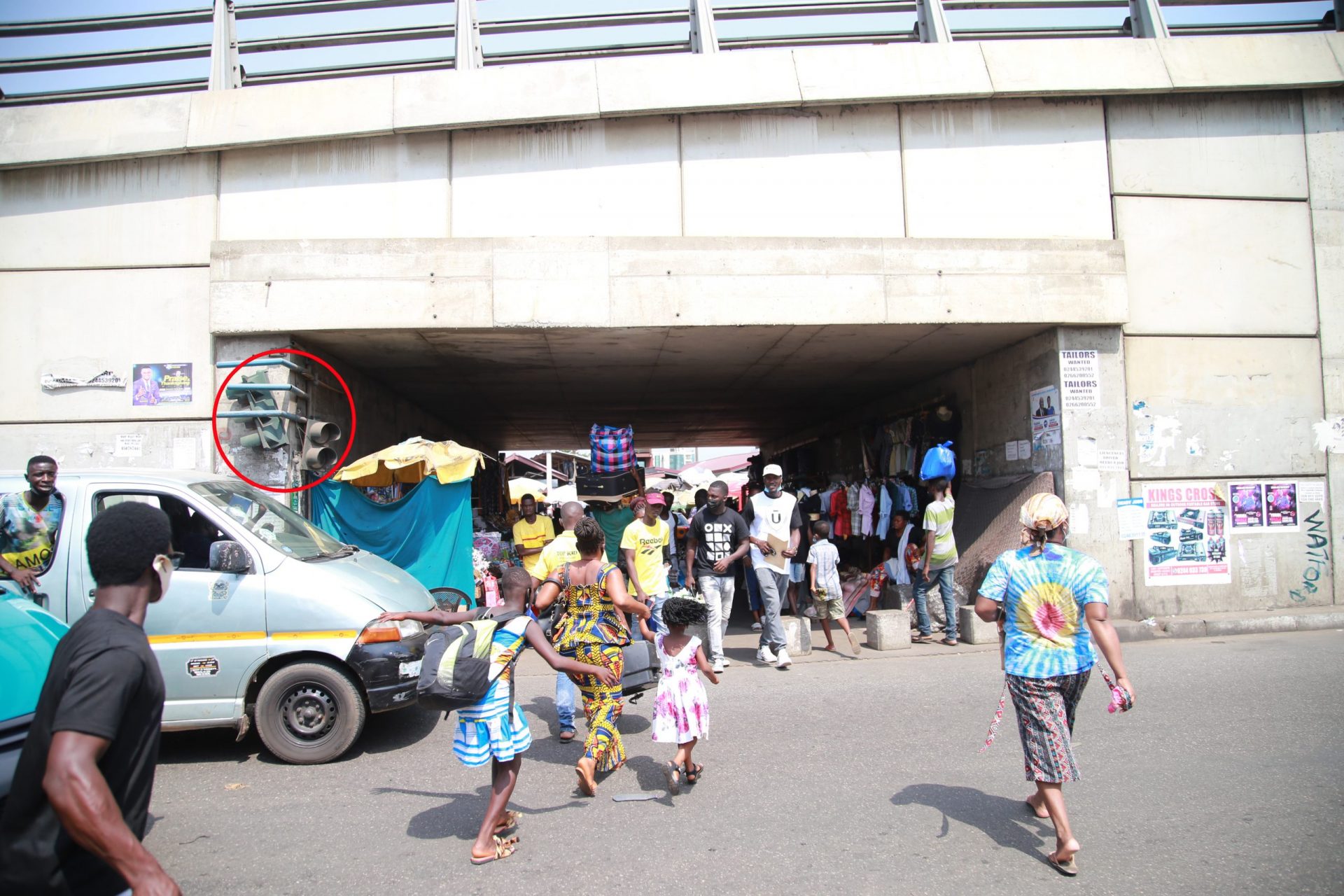
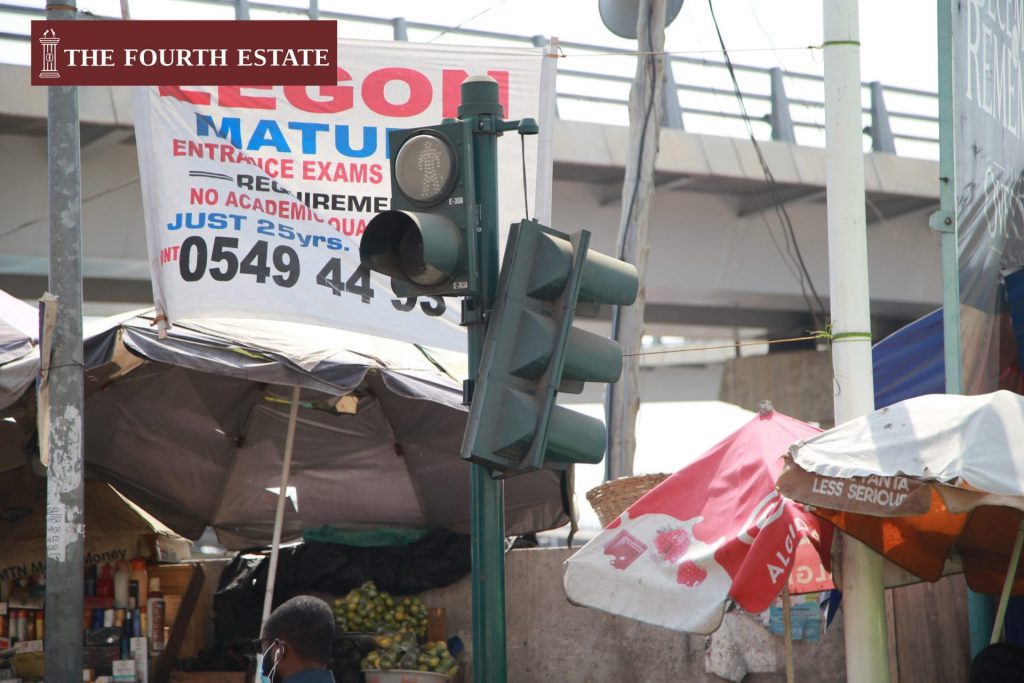
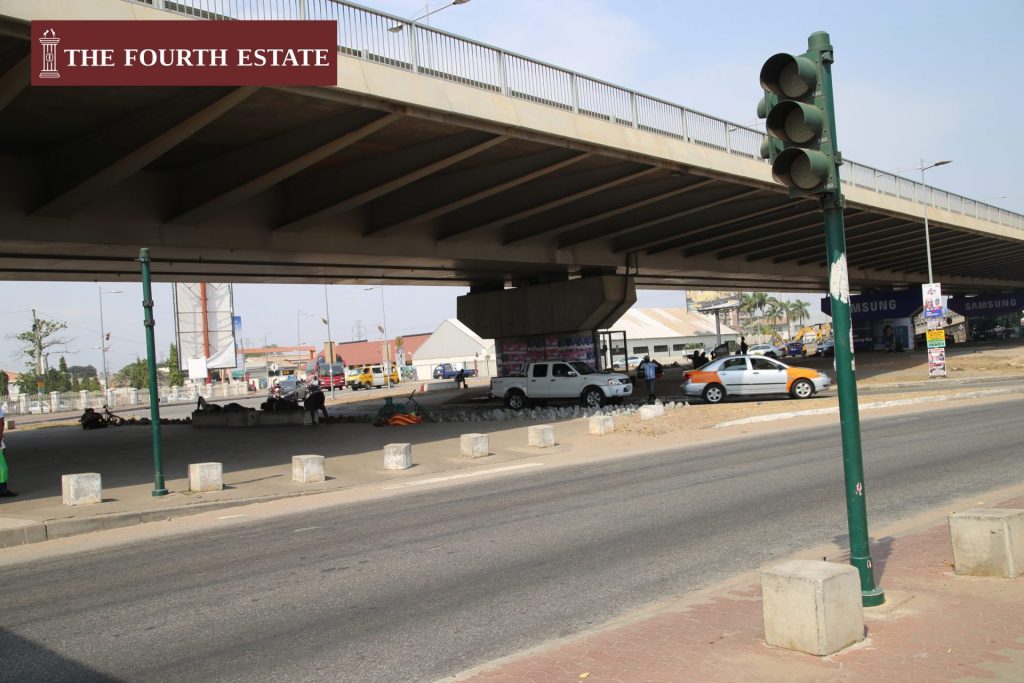
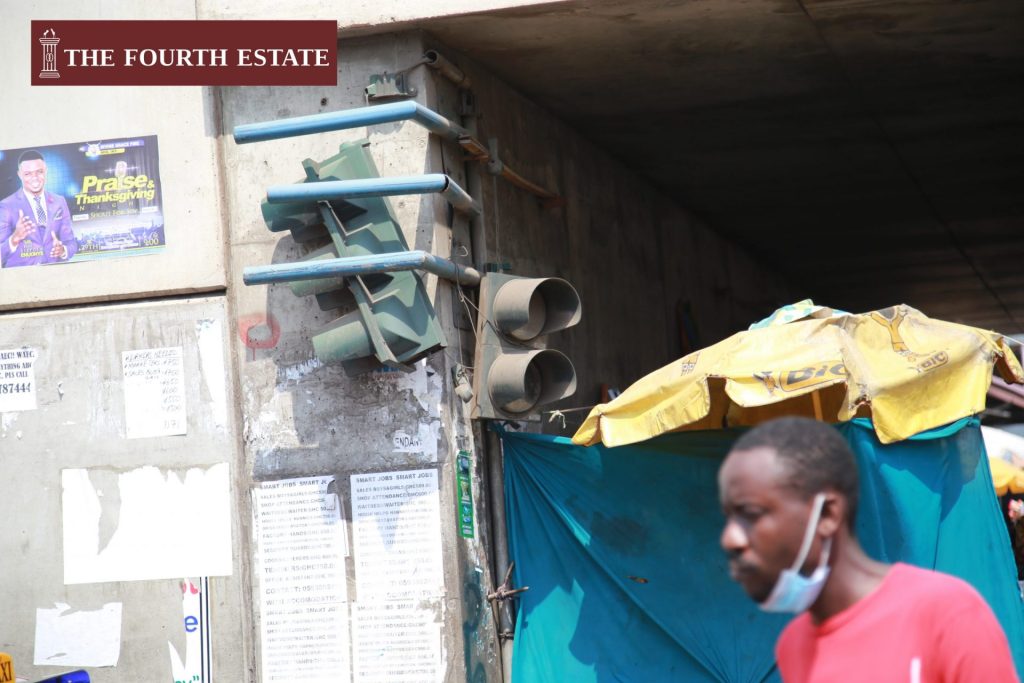
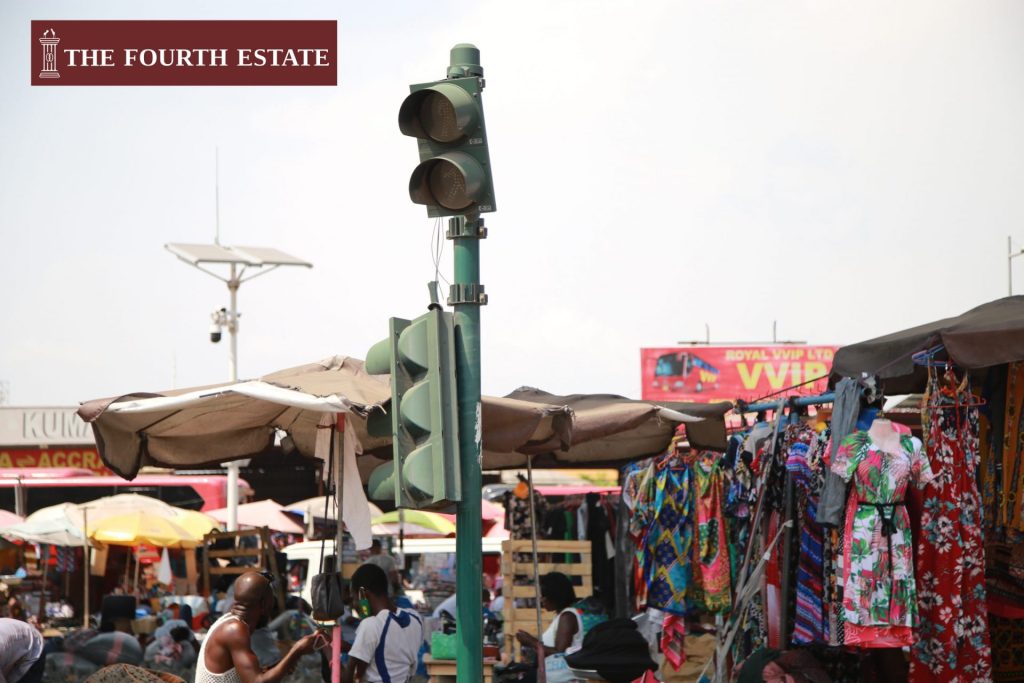
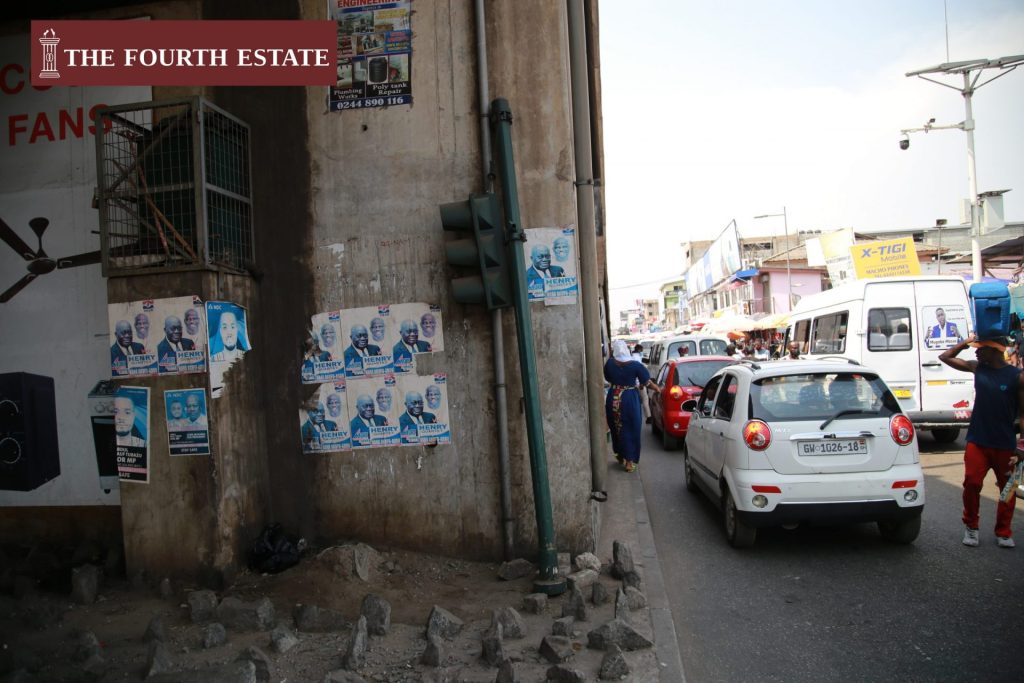
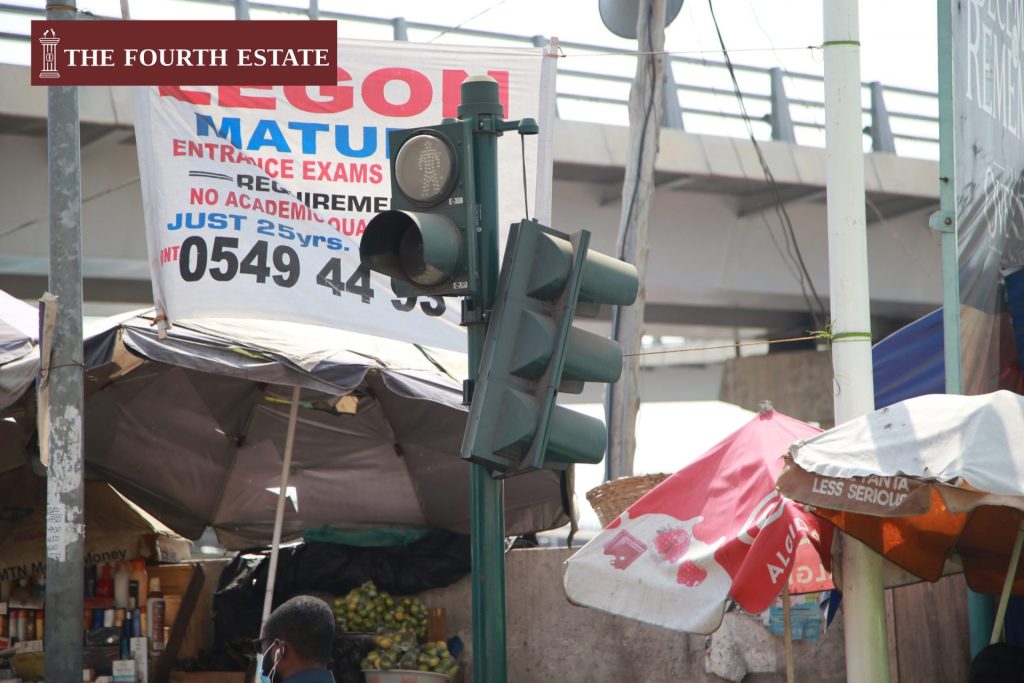
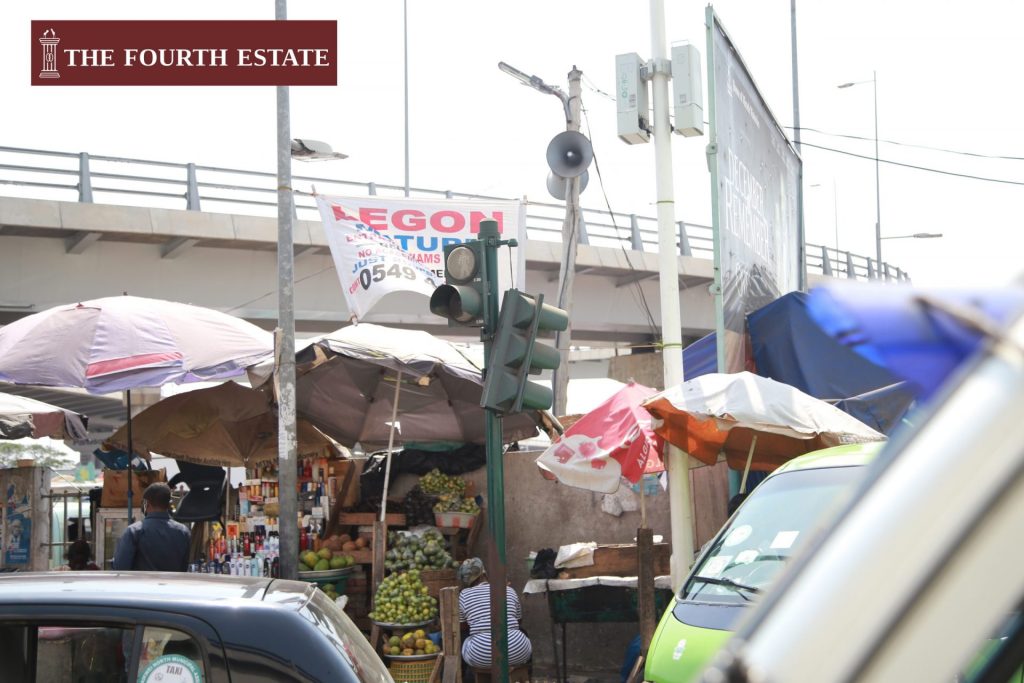
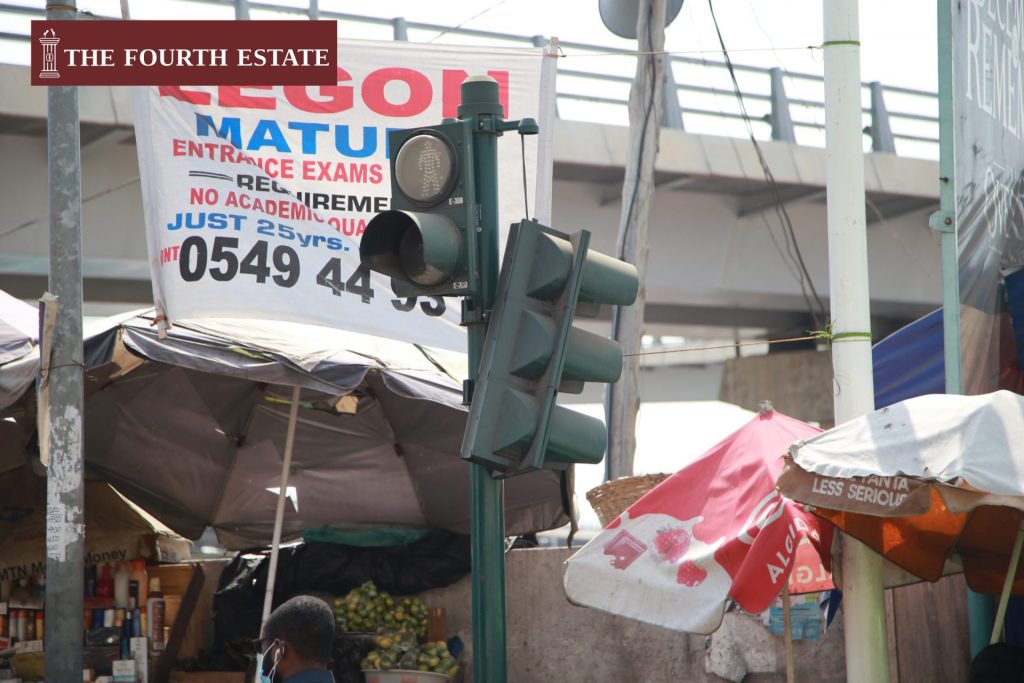
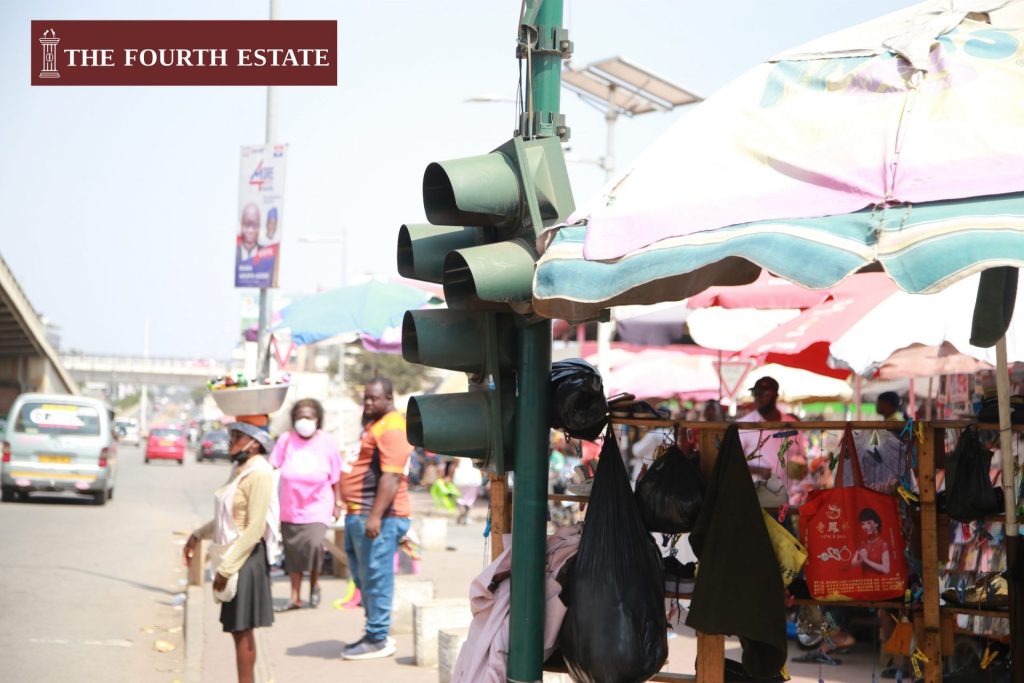
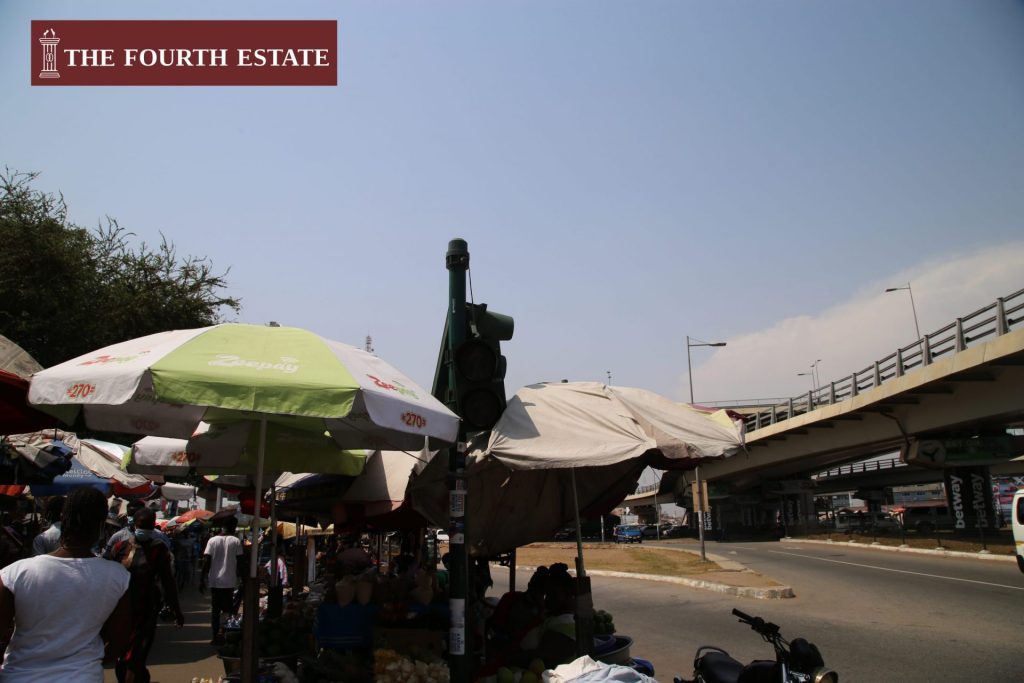
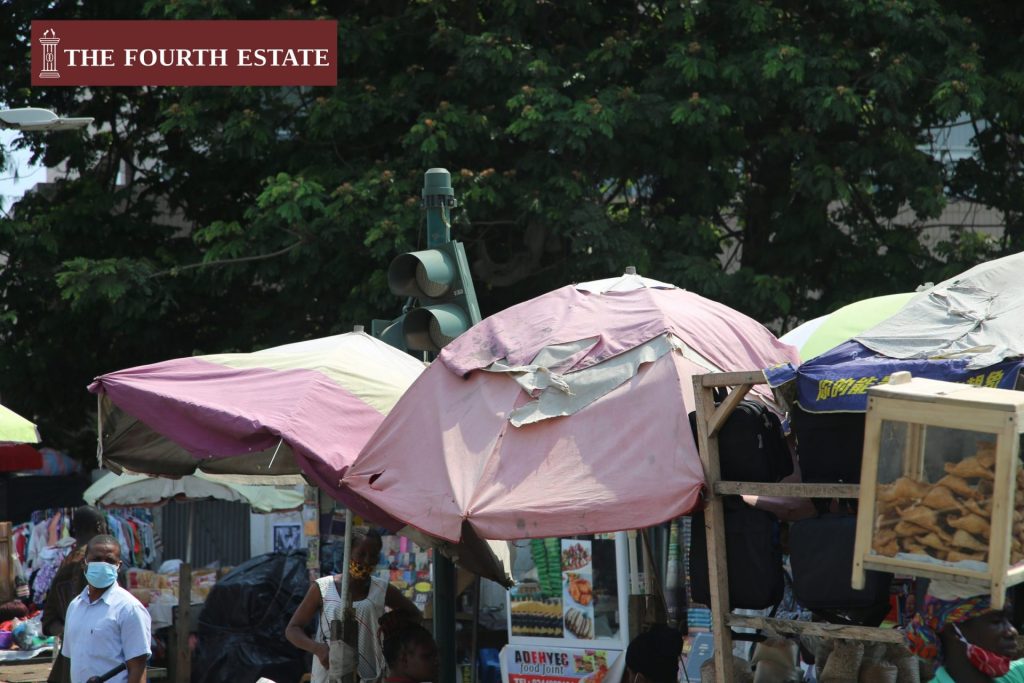
    When The Fourth Estate visited the Kwame Nkrumah Interchange, the team counted at least 20 non-functional traffic lights.

    Some of the traffic lights are barely hanging on a wire Photo credit: Clement E. Kumsah

    The Kwame Nkrumah Circle is a major transit point for travelers navigating not just Accra, but the entire country. The Department of Urban Roads estimates that 84,000 vehicles ply the route daily. The pedestrian traffic is equally thick in the Kwame Nkrumah Circle area, the second-largest commercial area in Accra after the central business district.

    Apart from the traffic lights in front of the old Vodafone head office on the Circle-Achimota road, not a single traffic light functions at all the seven other intersections at the Kwame Nkrumah Circle.

    In response to a Right to Information (RTI) request by The Fourth Estate, the Ministry of Roads and Highways said the defect warranty on traffic lights at the newly constructed roads and facilities at the Kwame Nkrumah Interchange area expired in 2015.

    The Nkrumah Circle interchange was completed in October 2016.

    Traffic lights near the VVIP station, Orion Cinema, Ridge Taxi Rank, GCB Tower, Kaneshie and Neoplan lorry parks and the SSNIT Office near the New Times Corporation are all down.

    Most of these broken lights hang loosely on the wires that were meant to supply power to them.

    Living the dangers daily

    Inside a commercial vehicle that has seen better days, Abdul Karim Iddrisu, a trotro driver, kept his gaze on his dashboard, which has a miniature plastic dog with a limp neck.

    He bit into rockbuns wrapped in a plastic bag. In between chewing and sipping a bottle of malt drink, he pointed to a broken traffic light and frowned.

    “That one there has been down for more than two years. Every day, we must exercise extreme caution in order not to knock down people. You find pedestrians running across the road recklessly. It is as if they don’t care about their lives,” he said as he chomped his snack, occasionally using the back of his palm to wipe his mouth.

    While the NRSA official acknowledged that broken traffic lights contributed to pedestrian knockdowns and crashes in general, he said the authority was unaware that almost all the traffic lights at the entire Kwame Nkrumah Circle were down.

    “No, it has not come to our attention. It is one of the things we are working on to see how we could receive prompt notices of this nature.

    “Broken traffic lights contribute a great deal [to road accidents]. When you get into the environment, the expectation is that you communicate with the road signage and the fixtures. So, if for any reason traffic lights are malfunctioning, it creates disorderliness in the road environment, especially in cases when the police or traffic wardens will not be available to provide sanity.”

    Culture of maintenance

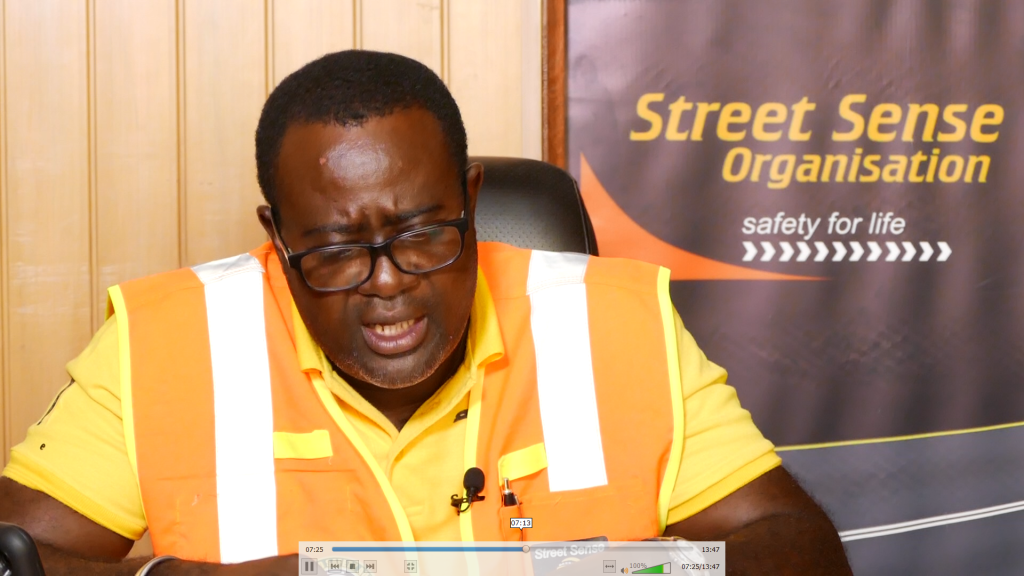
     Samson Odoi, the national coordinator of Street Sense Organisation

    On a storey building near the Kwame Nkrumah Circle, Mr. Samson Odoi, the national coordinator of Street Sense Organisation, an NGO that champions road safety, agreed that malfunctioning traffic lights contributed to pedestrian knockdowns and road accidents in general.

    “The Motor Traffic and Transport Department and the city guards are there to ensure enforcement, but it is not their responsibility to enforce proper parking, among others. It is not their responsibility to put up traffic signs,” he explains.

    The two road safety experts accused the Department of Urban Roads and the assemblies of failing to live up to their mandate.

    Once these traffic lights are up, it is the responsibility of Urban Roads and the assemblies to ensure that these traffic lights are fully operational. It is like a white elephant. Why put something in place [for safety] and it won’t be fully functional?” Mr. Odoi asked.

    NRSA’s Head of Regulations, Inspections and Compliance, Kwame Koduah Atuahene,

    On his part, Mr Atuahene said the Department of Urban Roads and the assemblies were responsible for maintaining traffic lights in the city.

    He, however, said the NRSA was planning to develop an app that would “allow for the public to give us real-time notification of these infractions, especially when they relate to institutional irresponsibility.”

    “The idea of the app is that a simple capture of either image or video notification of the location will bring the infraction to our attention.”

    While thanking The Fourth Estate for bringing the situation at the Kwame Nkrumah Circle to the attention of the authority, he said a team would be dispatched to the area (on March 2, 2021) for the authority to take the appropriate action.

    Unfulfilled promise

    Some of these traffic lights have been off for more than three years and have been subjects of media campaigns in the past.

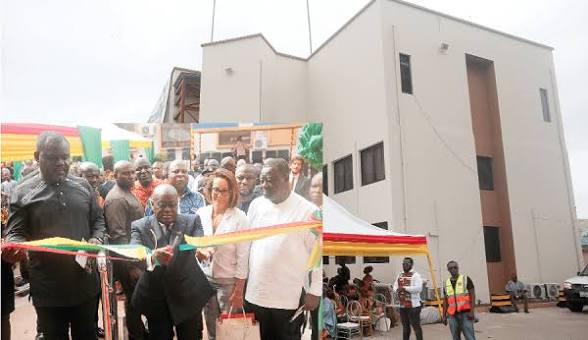
    In January 2019, the Roads and Highways Minister, Kwasi Amoako Atta said his ministry would establish a Traffic Management Centre to remotely coordinate all traffic signals. That centre was inaugurated by President Nana Akufo-Addo on August 2, 2019.

     President Akufo-Addo inaugurating the traffic
    management centre. Photo credit: Graphic Online

    At the event, the President said 41 traffic lights had been upgraded between the Neoplan Assembly Plant at Achimota to the Central Business District of Accra and that the upgrade included the changing of traffic controllers from isolated intersection controllers, which could not communicate with one another, to interconnected adaptive controllers.

    But, perhaps, what the president did not know was that not all the traffic lights on the route were functioning.

    To make matters worse, a $100 million contract—the Accra Intelligent Traffic Management System—a project intended to help manage traffic, promote road safety and improve security in the country generally is headed to the courts.

    Beijing Everyway Traffic and Lighting Technology Company Limited has served notice of a legal tussle after the contract approved in November 2020 and awarded to it was re-awarded to another Chinese firm, Huawei Ghana.

    While the legal battle builds up, the NRSA’s Head of Regulations, Inspections and Compliance, Kwame Koduah Atuahene, said the authority had decided that it would not serve anybody’s interest to continue to hold brief for some of its stakeholder institutions.

    “In the past, we tried to rationalise and provide an explanation for why something is not happening in a way that we desire. This year with the support of the media, we want to begin to call out the relevant stakeholder institutions. That is the only way this country will see an improvement. So, if there is someone in charge of Urban Roads who has a duty to ensure that our lights stay on, there is no reason that he shouldn’t speak to those issues,” he said.

    He said the law empowered the commission to issue administrative penalties against erring institutions, adding that the focus of the authority’s mandate was to ensure that institutions work.

    “If there is any institution that is involved in road safety activity that is regulated by standard and yet chooses to ignore the standard or implement them anyhow,  we need to use the opportunities to ensure that the right things are done,” he said.

    The Urban Roads conundrum

    The head of Accra Traffic Management Centre, Mrs Pat Ony, acknowledged serious challenges with keeping all the traffic lights running.

    “You could have a vehicle crash into a set of controllers or the signal system and then the vehicle runs away. It becomes the burden of the department to replace it.  You could also have the driver owning up through the police but unable to pay. Then the department is forced to do the replacement,” she said.

    With hesitation and a smile, she agreed that the Kwame Nkrumah Circle traffic lights have been down for a while, saying “It has been long, yes. We plan to do the replacement in the parts that have been destroyed or damaged.”

    In response to the increasing concerns about faulty traffic lights in Accra, the Minister of Roads and Highways, Kwesi Amoako Atta, on January 22, 2019, said the city’s faulty and broken traffic lights would be confined to history by June that year.

    But that did not happen.

    Ms Ony says the challenges have been about the availability of funds.

    “…that has been said by our minister. What we are planning to do is to do a replacement. It takes money to do all that. The damages far outnumber the funds we have for replacement,” she explained.

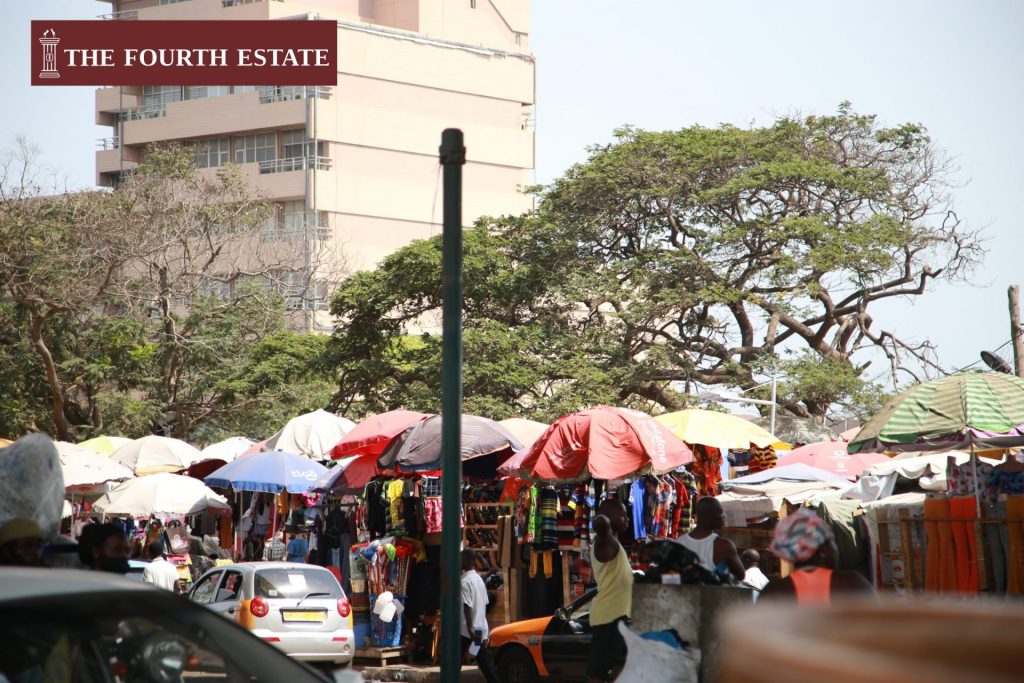
    Below are pictures of some of the broken down and malfunctioning traffic lights at the Kwame Nkrumah Circle: 

  • The hanging estates of Aburi: a waiting disaster

    The hanging estates of Aburi: a waiting disaster

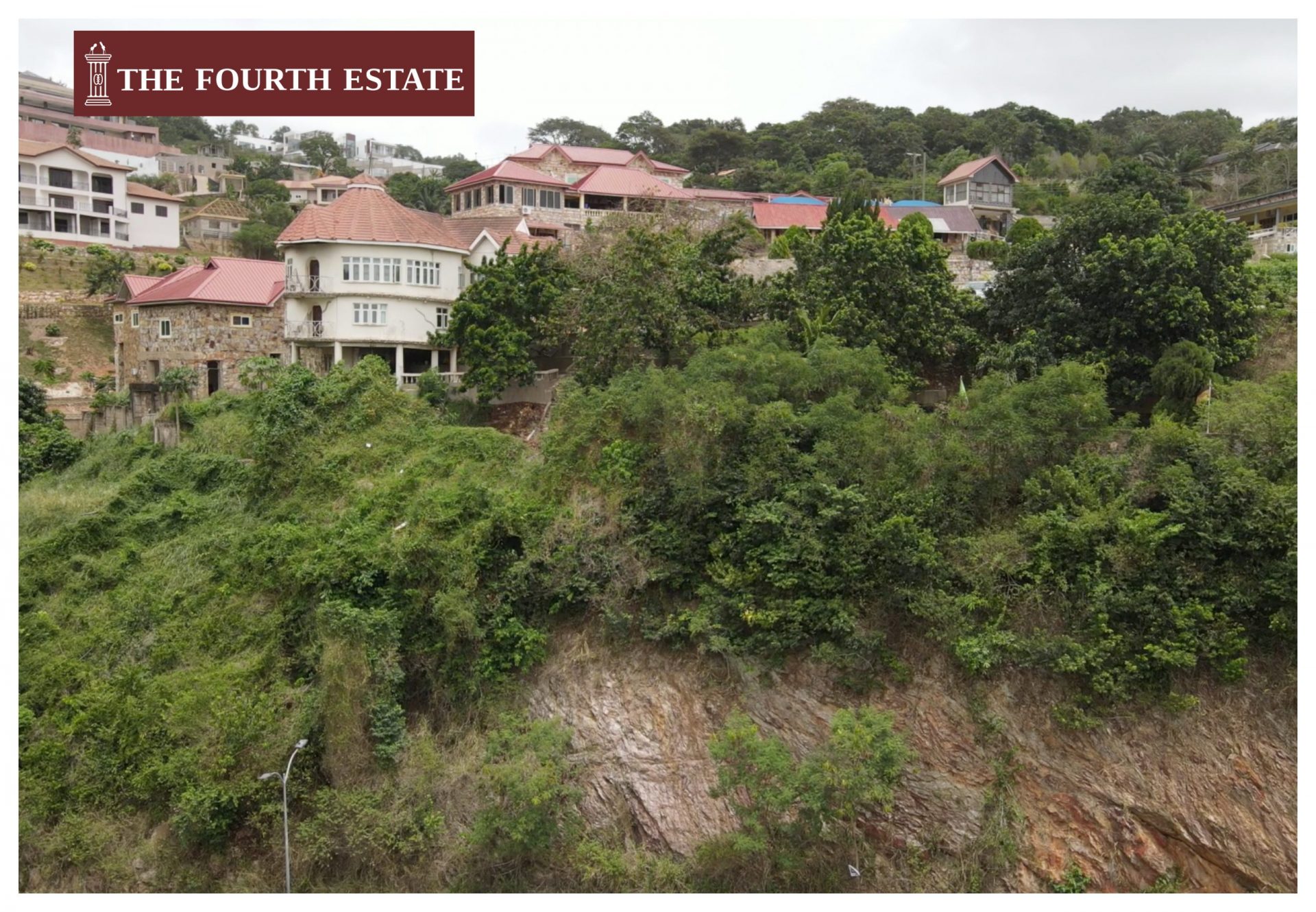
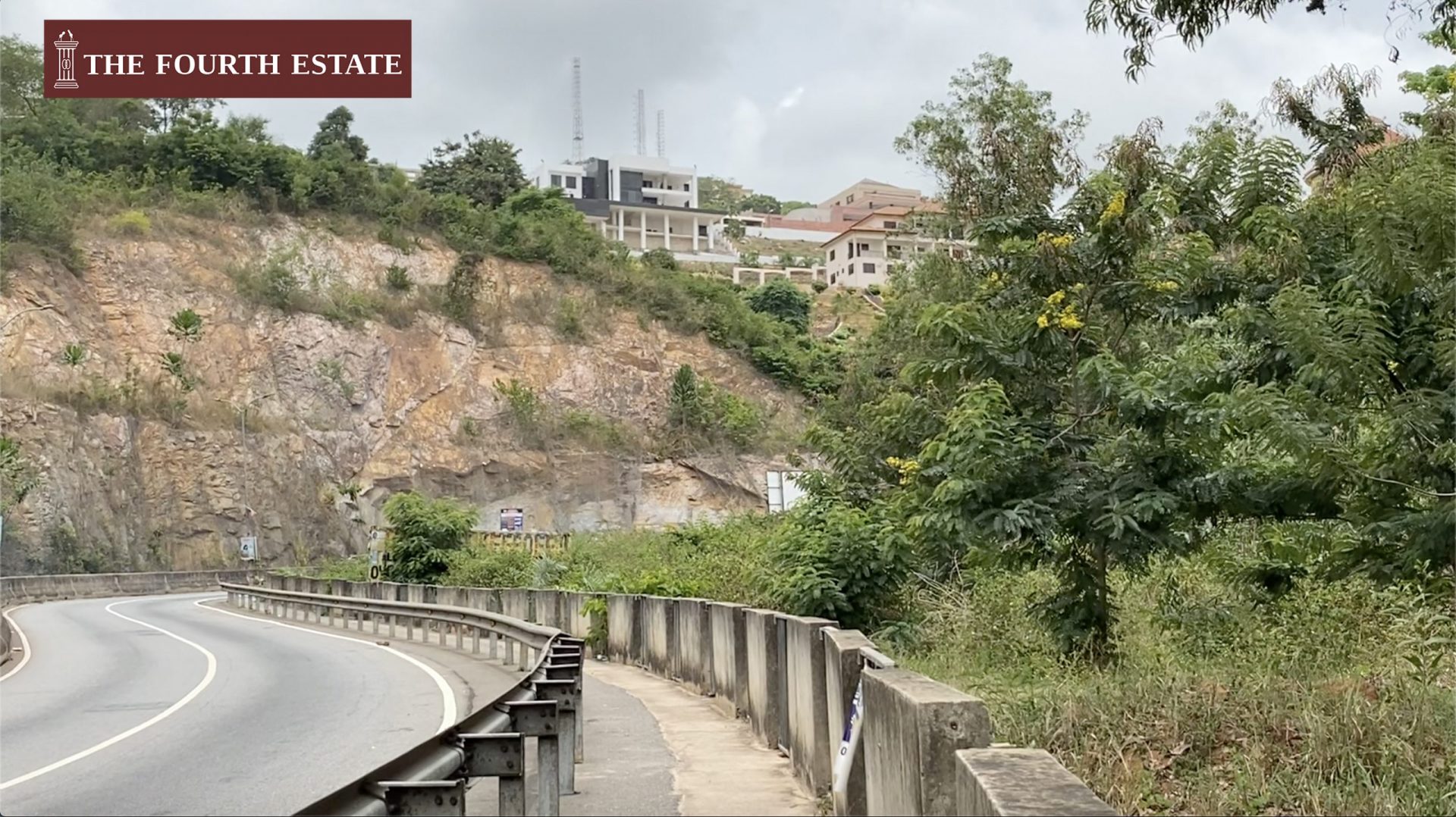
    On the edge of a cliff along the Aburi Hills where Accra’s urban sprawl seems relentless, a semi-finished mansion sits precariously, overlooking the endless convoy of commercial and private vehicles that whiz below it.

    On its fence wall, a mason splatters mortar and, with his trowel, smoothens the fence of the giant edifice.

    The aerial photographs, transmitted by The Fourth Estates’ drone hovering above the mason and his fellow workers, show a grand edifice that looks more like a resort than a residential facility.

    But whether it is a resort or private residential facility, it is in the good company of many gigantic buildings that are threatening to outshine the iconic presidential retreat centre located in the area—the Peduase Lodge—which used to enjoy an absolute monopoly of palatial grandeur on that part of the Akuapem range.

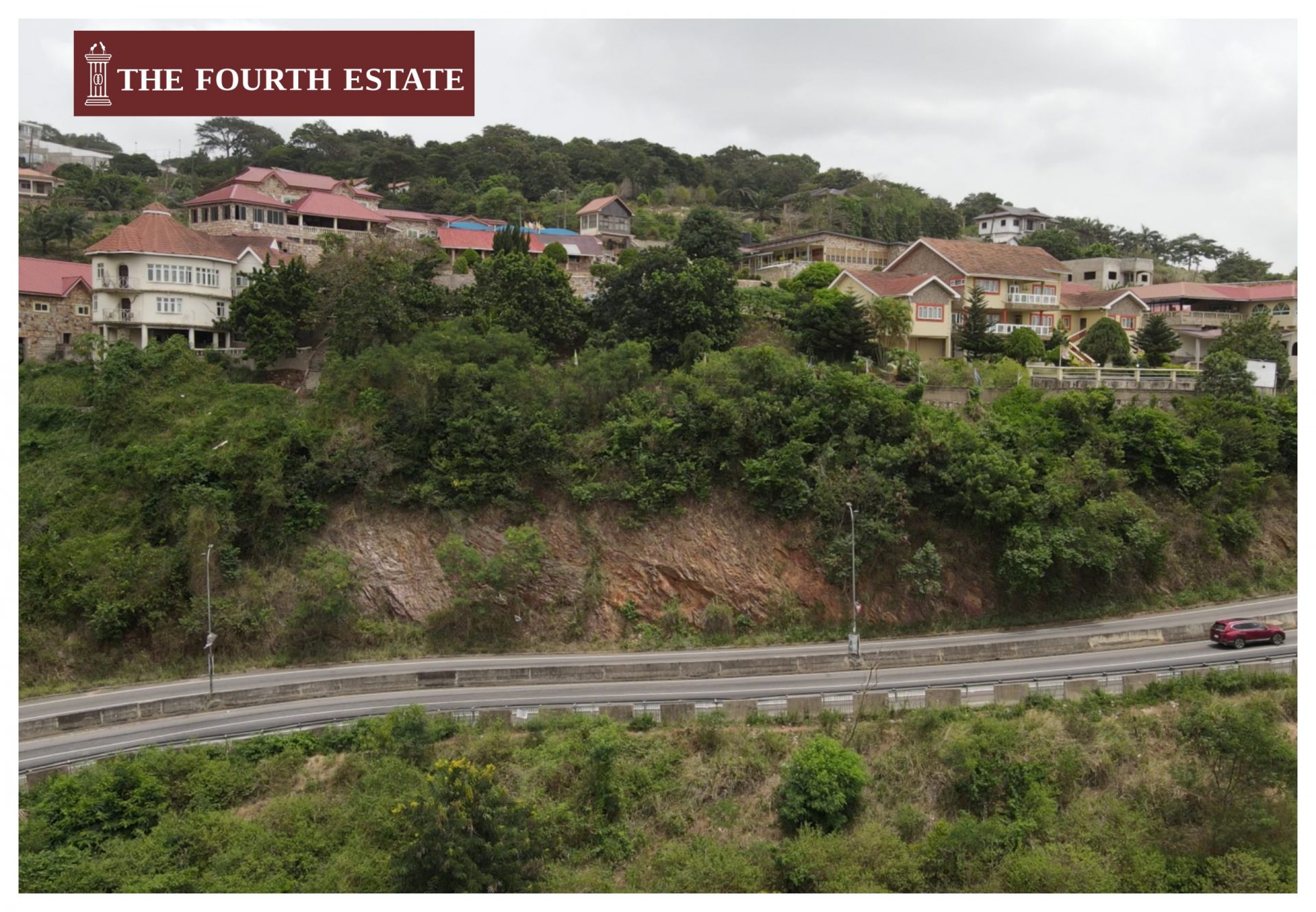
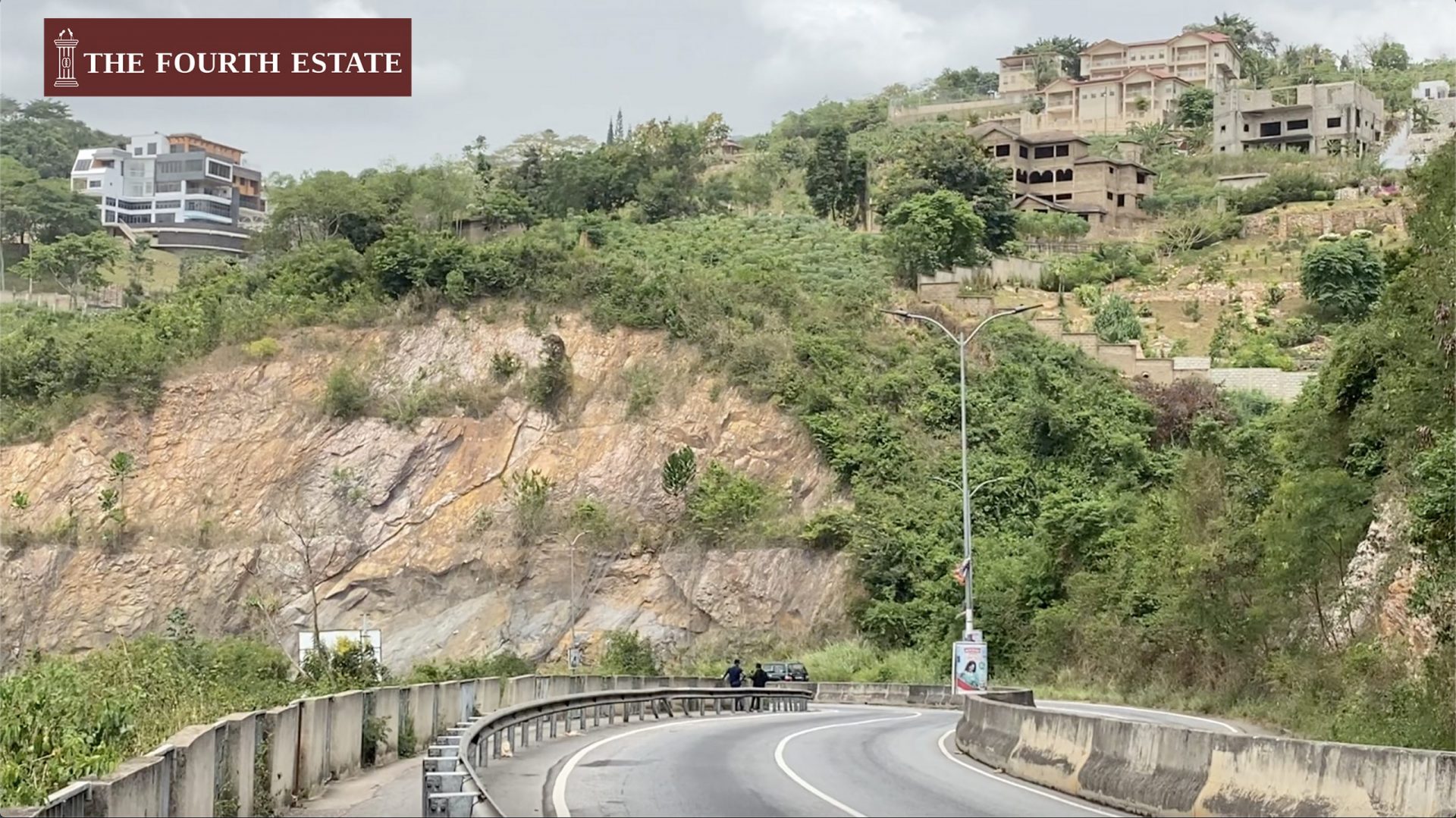
    This building in question is one of the many buildings sprouting along the Accra-Aburi highway. The road meanders along this section of the Akuapem range like a giant snake. The highway lies beneath most of the houses because the contractors working on the road had to cut through the edge of the hills to build the road.

    The Geological Survey Authority has warned that the slopes are too dangerous to build on

    If the mason dropped a tennis ball outside the fence wall of the building, the probability that it would find its way onto the Aburi-Accra section of the dual-carriage highway would be ten out of ten.

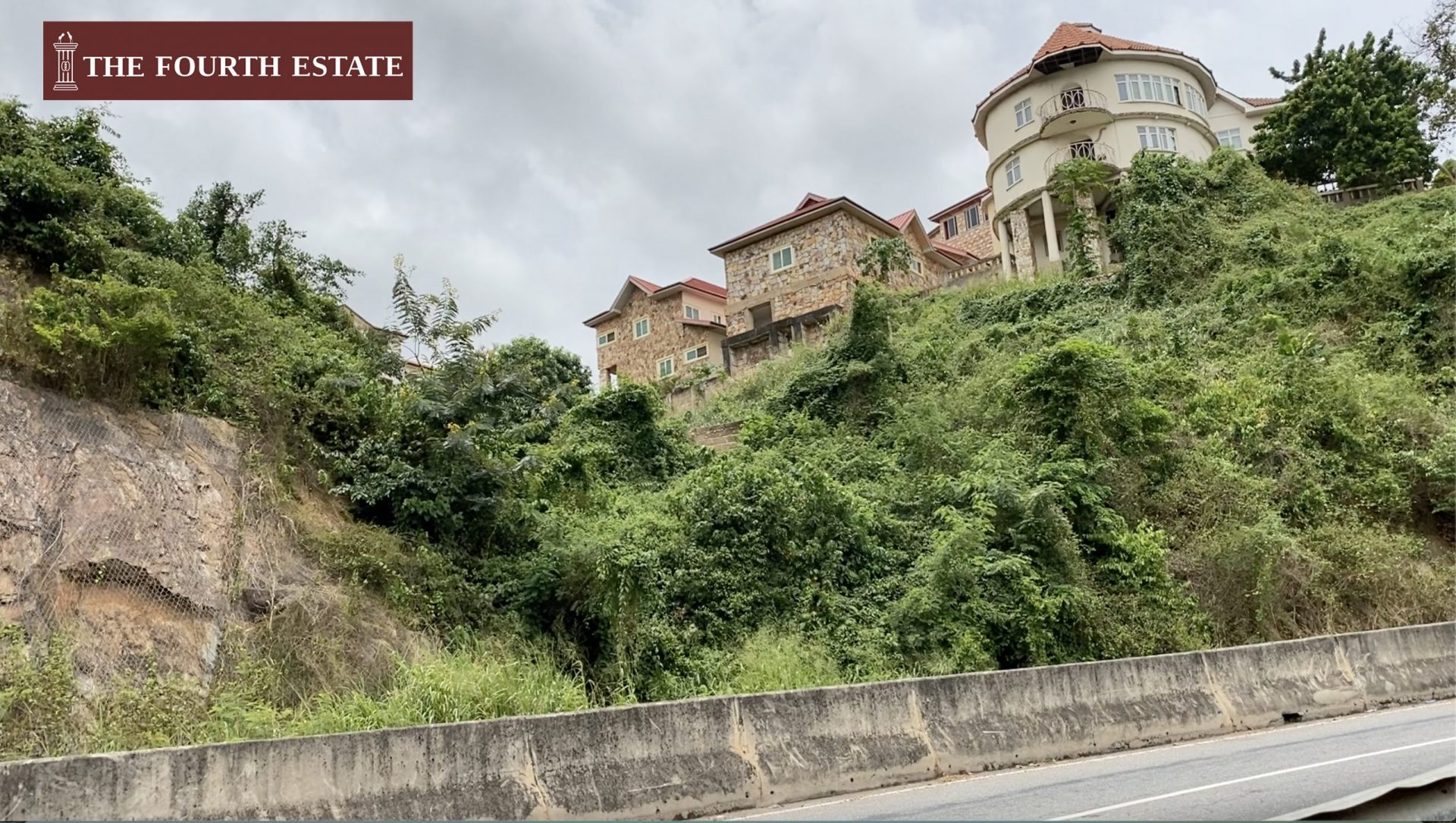
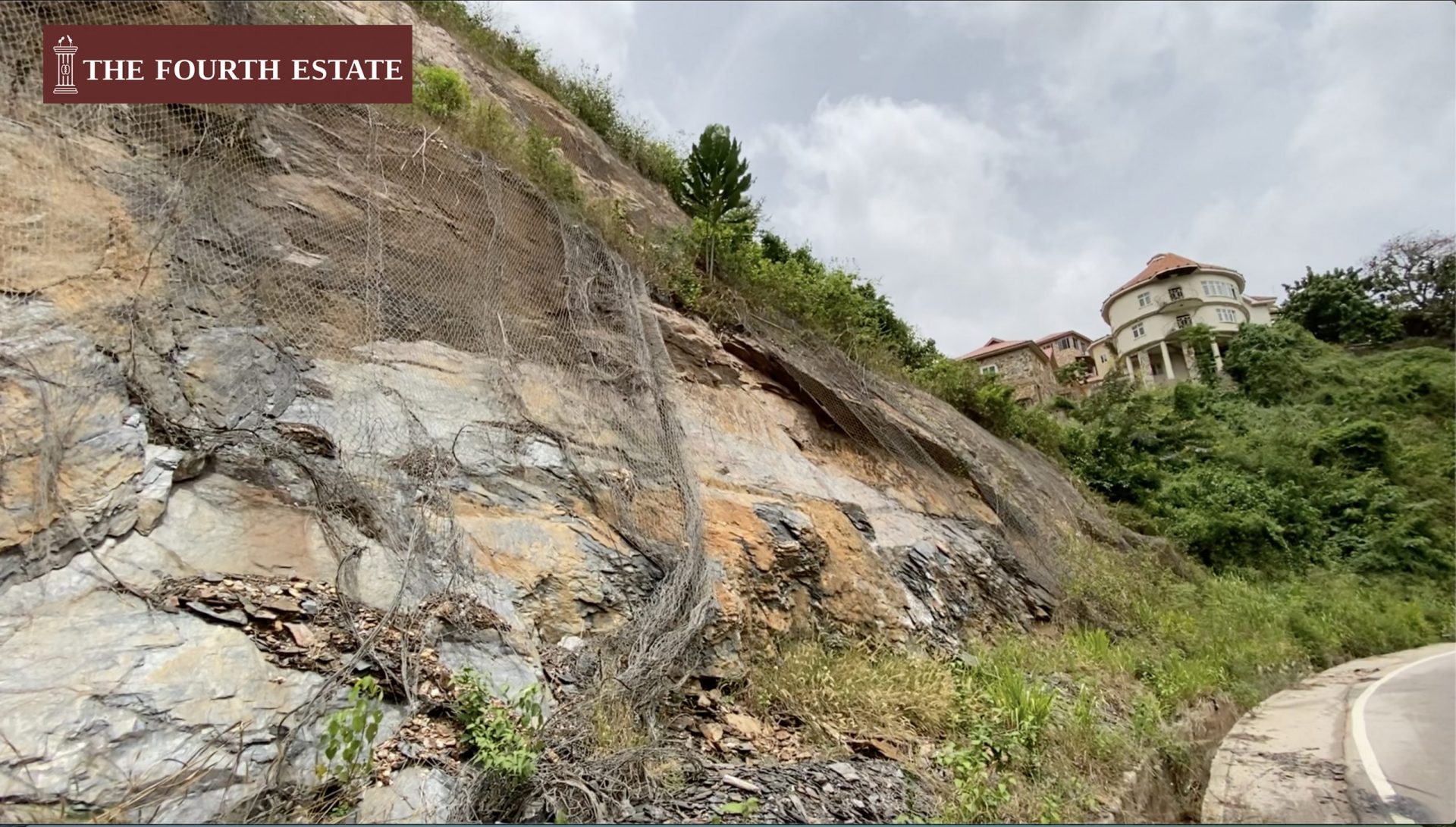
    The boulders between the houses above and the road below are held from falling by giant metallic mesh, a project that cost the nation 11 million cedis to undertake when, in 2016, the falling rocks posed an immense danger to motorists on the Aburi-Accra section, forcing authorities to close the road for about a year.

    The house the mason and his fellow workers were finishing when the news crew of The Fourth Estate visited the area in March 2021, as well as other such buildings along the edge of the Aburi Hills, were among the main reason authorities gave for the falling boulders.

    The scores of houses and hotels scattered up the hills and the cliffs along the road are the glamorous investment of some of Ghana’s wealthy folks on the serene Aburi Hills. But beneath the veneer of affluence is chaotic and unbridled destruction of the vegetation.

    Hundreds of buildings like these ones are competing for space with the lush green vegetation, a major attraction of the Aburi Mountains

    From afar, the dangers are not visible, but a closer look shows hair-raising environmental degradation, an obscene desecration of the verdant vegetation, which portends greater danger than what has been experienced in the past, according to experts.

    After the contractors cut through the mountainous stretch during the reconstruction of the road about 14 years ago, the boulders acted as a retaining wall.

    But, today, just like the buildings, the boulders perch precariously on one another, ready to fall at the least disturbance, onto the Accra-bound section of the road.

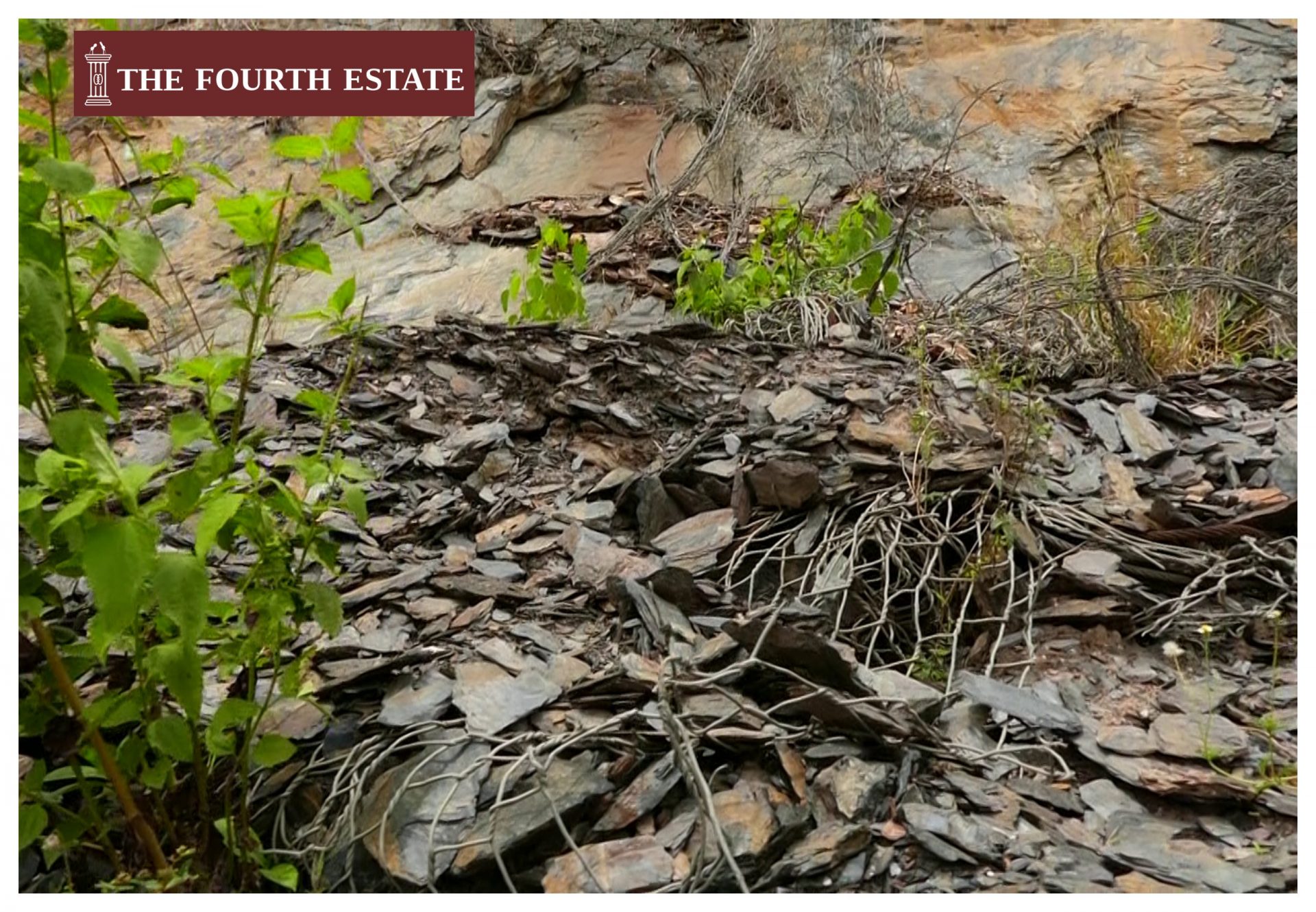
    Along the stretch, some of the rocks are seen falling onto the road despite attempts by contractors to restrain them with the giant mesh.

    While the buildings might be contributing to reducing Ghana’s burgeoning housing deficit—more than two million— the loss of vegetation comes with enormous cost to those living beneath the hills.

    Earthquake warnings

    The Head of the Geological Survey Authority’s Earthquake Monitoring and Geo-Hazards Division, Nicholas Opoku, agrees that there are gloomy days ahead for buildings on the sloping side of the Aburi Mountains.

    For years, the Ghana Geological Survey Authority (GGSA) has been warning that the series of earth tremors in parts of the Greater Accra Region signal a possible earthquake of greater magnitude in the future.

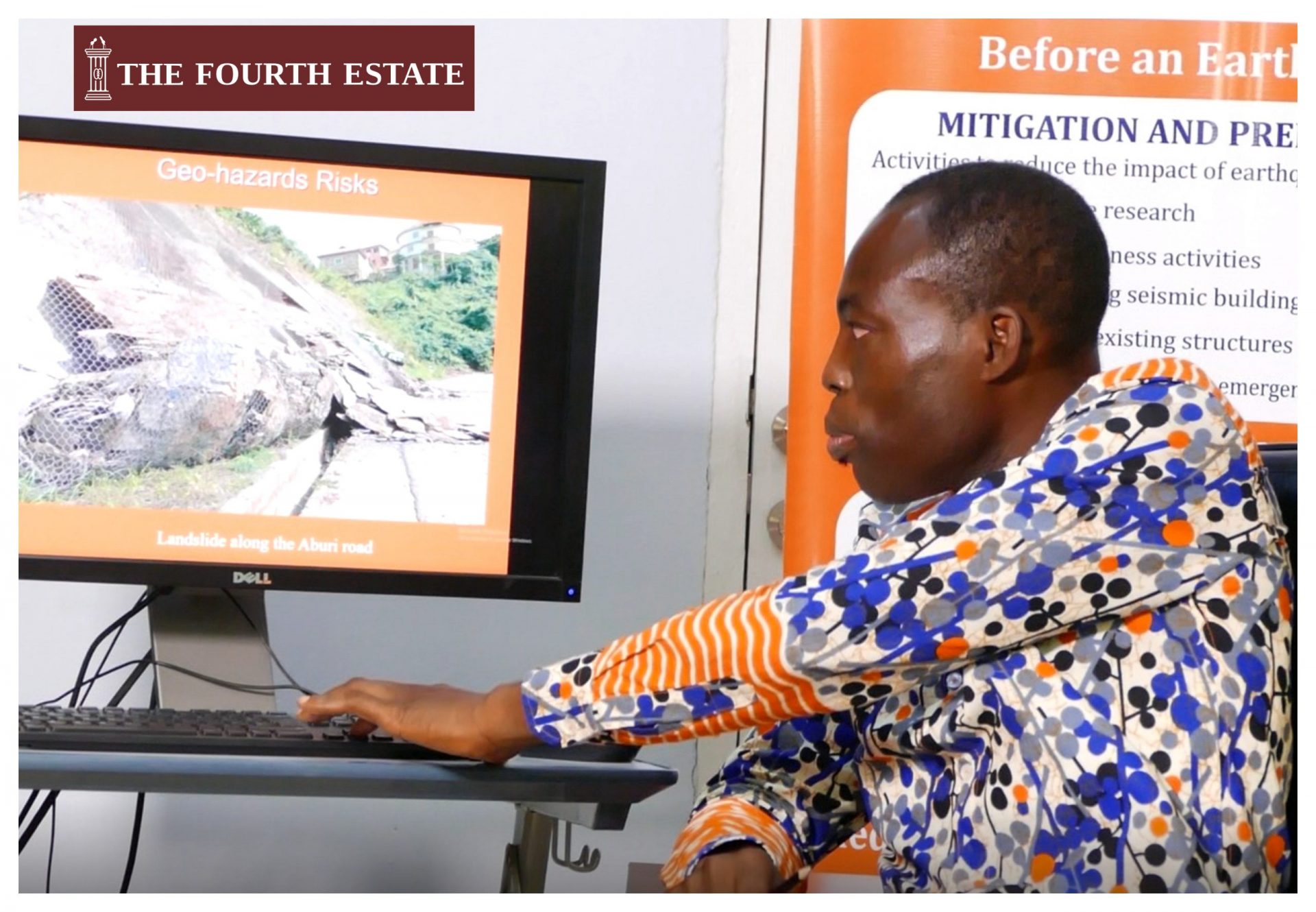
    Mr Opoku shows a landslide from the past

    Its principal seismologist, Nicholas Opoku, who has studied the situation on the Aburi Mountains, warns that its sloping parts are a dangerous place to build. According to him, it connects to the epicentre of Ghana’s earthquakes, which runs from Gomoa Fetteh in the Central Region, through McCarthy Hill in Accra toward the Akuapim range, all the way to Ho in the Volta Region.

    “That stretch of the mountain [Aburi] is actually a fault zone, meaning it is a potential source of earthquakes. But these earthquakes are much more prominent along the coastal areas, that is [Gomoa] Nyanyano where the mountains meet the coastal boundary fault. It is the reason we have a lot of earthquakes around the Weija area.”

    But there is more to the littering of buildings on the Aburi Hills than the dangers of earthquakes.

    Threat to life down the Aburi Hills

    Charles Kwadam, a resident of Oyarifa UT Estate down the Aburi Hills, says those of them who live in the area have been at the receiving end of the vagaries of the depleted hills, especially during the rainy season.

    Mr. Kwadam relocated to the countryside due to what he terms “excessive noise” in the part of Accra where he used to live.

    But the peace of mind he craved now remains a remote dream as brick and mortar continue to increase on the sloping mountain with the developers stripping the mountain of its dense, green vegetation.

    With the mountain barely able to hold torrents of rain as the buildings on the highland increased, erosion has created deep gullies, pushing down the debris of floodwater and soil into the walled estate through the entrance, which faces the hills.

    Mr. Kwadam observes that the degradation has been so inimical to the residents that it has become necessary to reengineer their homes by raising concrete slabs, fixing new tiles, and creating waterways to escape the wrath of water whenever it rains.

    “Trees which hitherto served as water blocks and prevented soil erosion have been chopped down for construction purposes,” he says, pointing to a thick cloud of smoke from a nearby clearing on the hill.

    “All the water that collects on the mountain now comes down to the estate because there are no drains to collect the water from there,” he tells The Fourth Estate.

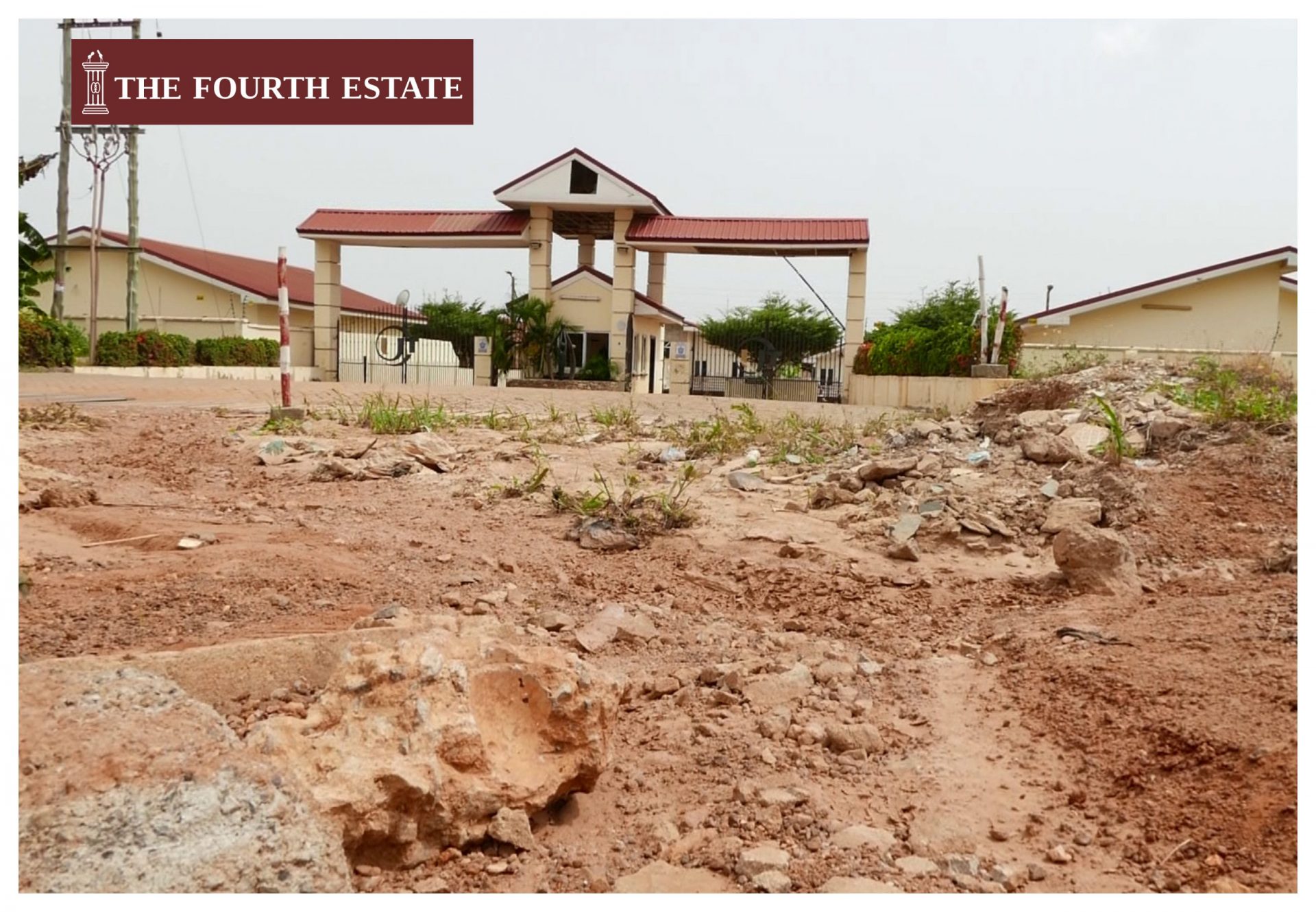
    Erosion has eaten away parts of the entrance of the Estate down the mountain

    With the flood pounding the entrance of the estate, half of it has been beaten into a gully, making it almost impossible to drive into the community.

    Mr. Kwadam says although their plight has been reported to the authorities, “nothing useful has ever come out from our complaints.”

    “This house located at the junction here lost its beam due to the amount of water it has to contend with every time it rains,” Mr. Kwadam says of a house outside the entrance of UT Estates. It bears the unrestrained brunt of the raging water from the hills when it rains. The owners, he says, have had to carry out additional works by laying PVC pipes to create a pathway for water that collects in the compound.

    Along a dusty road outside the estate towards the top of the mountain, Baba Salifu, a carpenter, says the dust is the least of his concerns. Rainy nights are vigil nights for his family; they stay awake to collect and throw out floodwater that inundates their home after each heavy downpour.

    To him, life was better some years back in the then virgin-green valley beneath the picturesque mountain. With the current spate of developments on the mountain without any proper drainage system, he fears the worse might happen if there is no intervention from the authorities.

    “[The] government should come in to help with a proper drainage system big enough to collect water from atop the mountain,” he says.

    Possible landslide like the deadly one in Sierra Leone

    Nicholas Opoku cautions against siting buildings carelessly along the mountain. He says the it is equally dangerous in the event of landslides.

    “My fear is that these landslides are activated by major rainfalls because when you have a major downpour, they destabilise the slope and move materials down the slope. So, buildings that are on such slopes will lose their foundation when the materials are coming down, leading to the collapse of the building. It can cause major damage to the buildings, injuries, or even death. We’ve seen it in Sierra Leone.

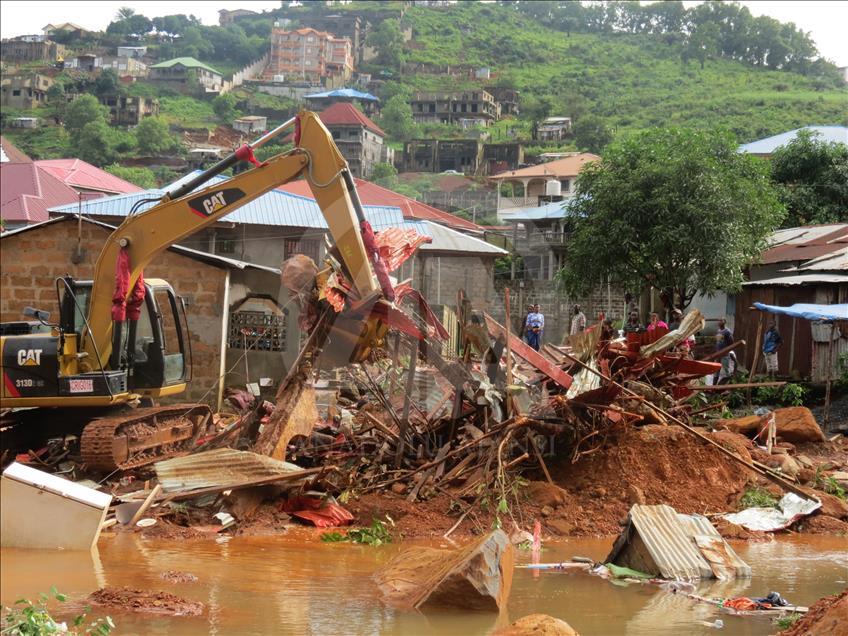
    Sierra Leone landslide kills hundreds
    Debris from the mudslide being cleared after more than a thousand people lost their lives in the Freetown disaster. Credit: Anadolu Agency

    “The prevailing conditions which caused the Sierra Leone landslide or mudslide is almost the same as what is happening along our fault zones, especially in Aburi. The entire mountain has an inherent weakness because it is an earthquake-prone zone. Most of the rocks there are fractured. There are a lot of cracks in the rocks, so with a little disturbance, these rocks fall down,” he explains.

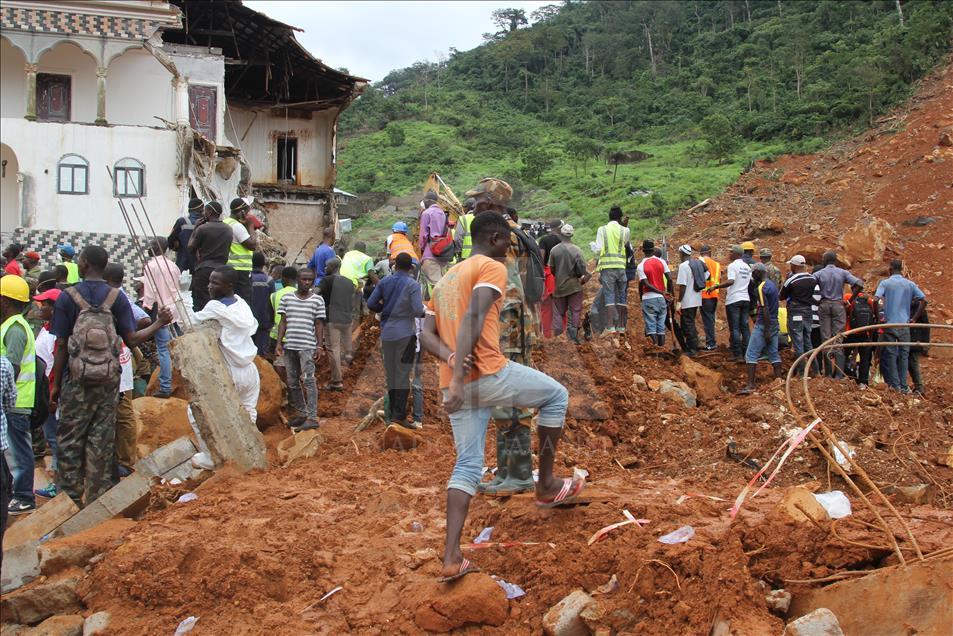
    On August 14, 2017, more than 1,000 people lost their lives in a devastating twin disaster—mudslide and flood—which swept through the Sugarloaf Mountain in Sierra Leone’s capital, Freetown.

    The outlook of the Sierra Leonean hills mirrors Aburi Mountains in many ways –up on the hills, multi-storey houses either have either been built or are being built on dangerously steep slopes once covered by a forest.

    A World Bank report points to a multifaceted issue that caused the Freetown slide. These include heavy rainfall, the steep nature of the sloping mountain as well as human interference.

    File photo: Residents look on as rescue workers remove wreckages at the Regent region of Freetown after a landslide struck on August 14, 2017. Credit: Anadolu Agency

    The report also observes that the area the landslide occurred was within a protected forest reserve. However, over time, the development of large houses had occurred, some illegally (without permits) and some with permits.

    The Aburi Mountain has had its share of the landslide from 2010 to 2019, compelling the Roads and Transport Committee of Parliament to call for the urgent demolishing of buildings along the mountains as a solution to recurring landslides.

    The boulders between the houses above and the road are held from falling by a giant metallic mesh

    Some rocks tore through the wire mesh

    Their call was as a result of a landslide, which induced flooding, displacing 559 residents after four hours of rain, Graphic Online reported on October 28, 2019.

    But nothing happened.

    With little land planning or enforcement of building codes to guide the built environment on the mountain, Mr. Opoku says the rate at which buildings are springing up on the mountain, “is increasing the risk each day as we keep developing those areas.”

    He says as real estate developers prepare the foundation for buildings, they cut sections of the mountains and over-steepen the slope, which increases the risk of landslides.

    “They are also removing the vegetative cover which helps check the landside. The development is endangering the place and making it prone to landslide,” he adds

    Although the newly passed Geological Survey Act 2016 (Act 928) requires that site investigations be carried out before any construction work is done, the law is restricted to only major state projects.

    Mr. Opoku says none of the buildings on the Aburi Mountain have had their site assessment done because the buildings would have to be of a particular height before a developer is required to do a site assessment.

    When contractors cut through the rocks to construct this road, it attracted a lot of real estate developers

    “In a landslide-prone area, you don’t need to put a massive building because there can be a failure of the foundation,” he adds.

    Asked if the authority has projections on when such a disaster might happen, Mr. Opoku is of the expert view that “geohazards are very difficult to predict but the activities will let us know whether we are increasing the risk of having it.”

    He also indicates that it is too late to reduce the risk in the heavily built areas but is quick to add that future developments should be controlled.

    Ghana’s earthquake red flags were recently raised when it came out that key national assets, including the Jubilee House, Kotoka International Airport, Tema Harbor, the Akosombo dam, and others, are at risk of collapsing if an earthquake occurs.

    A committee set up by the government to assess Ghana’s disaster preparedness earmarked the earthquake-prone zones in a report. President Nana Akufo-Addo issued a call to action to the stakeholders in the emergency preparedness space.

     Ghana’s earthquake and landslide history

    Ghana has had earthquakes dating back to more than 200 years, according to a document titled the “Gold Coast Geological Survey Bulletin 13”.  The significant ones were in 1862, 1906 and 1939 with smaller ones in 1858, 1863, 1883, 1907, 1911, 1918-19,1923,1925,1930 and 1933-1935 and 1939.

    The country also has a long history of landslides dating as far back as 1933. These include:

    March 5, 2005

    The entire Afram Plains District and part of the Kwahu South District were cut off from the rest of the country as a result of a landslide at Kam, a village near Pitiku Junction in the Eastern Region, after a heavy downpour.
    The first landslide in the area occurred in 1972.

    June 20, 2010

    A heavy downpour triggered a landslide on the Peduase-Water Works road, a stretch of the Ayi-Mensah-Aburi dual carriageway in the Eastern Region.
    The landslide occurred close to a two-storey building on the edge of the rocky mountain, blocking part of the road.

    October 6, 2010

    A landslide that occurred during a heavy downpour at Adukrom-Yensi in the Eastern Region killed three people and destroyed many properties.

    October 25, 2012

    Twenty acres of cocoa farm was destroyed at Wassa Asikuma and Wassa Nkran in the Prestea Huni/Valley District in the Western Region following heavy rainfall. It affected 60 cocoa farmers.

    June 2013

    Loose parts of the mountain fell and blocked the Kasoa-Weija portion of the road after a heavy downpour, resulting in a traffic jam for hours.

    October 18, 2019

    After nearly an hour of heavy rains, some rock particles and debris eroded from the Aburi mountain and landed on the highway blocking a part of the road.

    EDITOR’S NOTE: This story shall not be republished or broadcast, in part or in full, in any form or shape without the express permission of the Editor-in-Chief.

    You can reach the writers via email at [email protected]/[email protected], or on Twitter @thekekeli