Author: Seth J. Bokpe

  • “We’ve lost members because of your report,” Lighthouse  sues ‘The Fourth Estate’

    “We’ve lost members because of your report,” Lighthouse sues ‘The Fourth Estate’

    The Lighthouse Chapel International (LCI) says it is counting its losses, including loss of members, after The Fourth Estate’s publications on six of its pastors who have resigned and sued the church for economic exploitation.

    The six have said repeated exploitation and emotional abuse forced them to resign from the church.

    “In the immediate aftermath of the publications there was a complete uproar in the plaintiff’s [Lighthouse] branches throughout Ghana with many of the members completely horrified and threatening to leave the church, which some actually did,” the church said in a defamation suit against some members of The Fourth Estate team.

    The suit named the Editor-in-Chief of The Fourth Estate, Manasseh Azure Awuni; the reporter who worked on the story, Edwin Appiah; the Executive Director of the Media Foundation for West Africa, Sulemana Braimah and the Media Foundation for West Africa(MFWA), as defendants.

    The Fourth Estate is a non-profit journalism project of the MFWA.

    Eight months after the publication, the church said it was unable to “quantify and or particularize the loss it has suffered or sustained” after the series of stories on the issue.

    The LCI said it would amend the suit when it is done taking stock of damages and the losses “become available.”

    Six former ministers of the church sued the church in April this year for non-payment of their pension contributions, economic exploitation and emotional abuse.

    You may also be interested in: 

    Darkness in a lighthouse Part 2: “Suicide attempts, begging pastors” 

    Darkness in a lighthouse(3): Bishop Dag prayed for me to divorce my wife 

    They say they were drawn into the ministry by their spiritual father, founder and Presiding Bishop of LCI, Dag Heward-Mills. Most of them, who served as student-leaders in the gospel, said they were not given employment letters. There was no formal employer-employee relationship when they transitioned into full-time service of the Lord after graduation. This, they said, the church took advantage of and mistreated them.

    The six have resigned and sued LCI, which used to be the epicentre of their spiritual and social lives. They are praying the court to compel the church to pay their SSNIT contributions and damages for the rights, which the church violated.

    They believe there are more silent victims among the 111 bishops and over 2,300 pastors of Lighthouse, who are currently shepherding more than 6,070 churches in 92 countries across the world.

    Apart from enforcing their rights, the six former pastors say the reason they are speaking up is to ensure that those still serving in the church do not suffer what they have been through.

    The church, in response, counter-sued its former pastors and now The Fourth Estate for the fallout.

    In its statement of claim, the LCI said the relationship between the church and its founder, Bishop Dag Heward-Mills, was inseparable.

    Bishop Heward-Mills, the medical doctor who dropped the stethoscope for the cross in 1991, preaches unalloyed loyalty– one the resigned pastors no longer want to be part of.

    “It is the plaintiff’s contention that the relationship of the plaintiff [LCI] and its founder is a closely fused and inseparable that an attack on the plaintiff’s leader is as good as an attack, both directly and indirectly, against the plaintiff.”

    The church claimed that The Fourth Estate’s publication meant that, The Lighthouse was engaged in a “long term deceptive agenda of inducing its employees and volunteers into untoward reliance on the plaintiff and so succumbing to subservient dependence on the plaintiff.”

    The LCI claimed the publications sought to suggest that the church was “not only intolerant but extremely callous, insensitive, inconsiderate and cold-hearted in its treatment of and abandonment of its volunteers and employees with exacting demands calculated to house them out of their posts.”

    That is not all.

    LCI contended that the publication dented its image and it had “suffered considerable damage distress and embarrassment, and has also suffered special and aggravated damage.”

    The church wants the court to restrain The Fourth Estate from publishing “similar words defamatory of the plaintiff.”

    It also wants The Fourth Estate to apologise for the stories and also pull down all the stories.

    Those stories also contain the former pastors’ accounts of the sacrifices they made in establishing churches they were forced to abandon because of a church policy.

  • TRAILER: The Fourth Estate to release documentary on scandal authorised by the presidency

    TRAILER: The Fourth Estate to release documentary on scandal authorised by the presidency

    The Fourth Estate will on, Friday, December 17, 2021, release a documentary on scandalous Covid-19 contracts that was authorised by the Office of the President.

    The contracts were awarded to sanitation companies to fumigate and disinfect markets, schools and other public places in the wake of the Covid-19 outbreak.

    The investigative documentary by The Fourth Estate’s Manasseh Azure Awuni reveals, with evidence, that there was no need for the contracts.

    The documentary also reveals that even if there was any need for the contracts, there were existing contractual arrangements to do the work without awarding new contracts.

    Besides, a number of metropolitan, municipal and district assemblies also had the capacity to do the work. However, they were asked to stop while hundreds of millions of cedis were paid to some companies with records of shady deals with the government to do the work.

    The full documentary will be published on The Fourth Estate on Friday morning.

    Watch the trailer below:

  • I fear chiefs, religious leaders more than political interference –Special Prosecutor

    I fear chiefs, religious leaders more than political interference –Special Prosecutor

    Ghana’s first Special Prosecutor, Martin Amidu, resigned from office in November 2020, alleging partisan political interference in his work.

    But the man who has succeeded him, Kissi Agyebeng, says he does not fear that that kind of interference. Rather, those he’s worried about are chiefs, religious leaders and his inner circles.

    “I do not really fear political interference, because before I took this position there were some assurances I [got] from the powers that be and it is not everything I can say in public. But …traditional leaders that is where I fear most. I have gone and told them something to tell their royals that if any one of them shows up at my doorstep with all due respect, I won’t accept an apology. That is resonating,” he said at a press conference to mark International Anti-Corruption Day in Accra on Thursday.

    He continued: “I’m not doing it publicly, but that is what I fear most. Interference from church, friends, family. I have a family and imagine there is a family meeting and someone has committed corruption and corruption-related crime and my family head is begging on the person’s behalf, that is more difficult than the President saying this is our political person. Look the other way. That, I do not fear at all,” he said.

    Mr Agyebeng is not the first public officer holder to harbour such fears—senior police officers, for instance, have complained about requests to abandon cases from religious leaders and chiefs.

    Interference and precedence

    Martin Amidu writes: Do Not Be Like Thomas Whose Eyes Could Not See – Akufo- Addo's Sputnik-V, Agyapa & Other Affairs
    Mr Amidu (left) and President Akufo-Addo took jabs at each other after the former resigned as Ghana’s first Special Prosecutor, alleging political interference in his work

    Mr Amidu, who verbally brawled with President Nana Akufo-Addo after his resignation had attributed his decision to step down to the traumatic experiences he went through after he released the findings of his corruption-assessment report on the Agyapa Royalties deal.

    In that transaction, the government was seeking to raise a billion dollars from the London and Ghana stock exchanges in exchange for 49% of Ghana’s mineral royalties for development projects. The deal raised suspicions from civil society and the Minority in Parliament.

    Mr Amidu investigated the deal and raised issues with some aspects of it, which he said lacked value for money and also breached the country’s international transaction laws.

    When Martin Amidu was appointed on February 20, 2018, many hoped that his office would become the state’s biggest arsenal against corruption. But it never was.

    Mr Amidu had complained about the lack of logistics, office space, and personnel to champion his cause.

    His successor, Kissi Agyebeng said he inherited an office that was in a coma and “immediately triggered the processes to set up and operationalise the Office, to staff it with specialized trained personnel and to fit it with the required material resources and equipment.”

    He said the fight against corruption had, in effect, been put in reverse for three years, but his work in the last four months had resuscitated the fight to protect the public purse with a “renewed fervour.”

    Mr Agyebeng, the 43-year-old Special Prosecutor, who abandoned his successful law career in August this year to chase looters of the public purse, said his office had completed a review of all the alleged cases of corruption and corruption-related offences before it.

    Kissi Agyebeng has capacity, experience & intellect to succeed as Special Prosecutor” – Akufo-Addo
    Mr Agyebeng was sworn-in August 2021 by President Nana Akufo-Addo (right)

    A line up of cases

    “Currently, the OSP is investigating thirty-one (31) active cases and it will, in due course, commence the prosecution in the courts of the cases it considers probatively strong with evidence. There is no case commenced by the OSP pending in the courts at the moment,” he said.

    He declined to go into the specifics offhand, but that list could include the recent Juaben MCE bribery scandal, the sacked Public Procurement Authority, A.B. Adjei’s contract for sale scandal, and the “galamsey” bribery scandal against a presidential staffer, Charles Bissue.

    “Putting things out there when you are not too sure whether you want to prosecute at this stage is that you may end up destroying people’s reputation for life. Because immediately you mention that you’re this or that person there is negative attention to the person. That is why I have refrained from touching on the specific cases.”

    Corruption League Table

    Mr Agyebeng also plans a name and shame initiative for next year. Modelled on the globally respected Corruption Perception Index (CPI), the Annual Ghana Corruption League Table will assess perceived levels of public sector corruption in the estimation of experts and business people to be published on December 9, every year.

    He calls it a “pressure pressure-for-progress drive” his version of a localized barometer of Ghana’s most corrupt institutions.

    “In aid of this, public agencies would be ranked against each other on a corruption barometer,” he said with a smile.

    In 2019, the Special Prosecutor’s office was allocated 180 million cedis as the war chest for the fight against corruption. Out of this, the Office received only three million cedis.

    For the 2022 fiscal year, the OSP budgeted GHc 1.2 billion for capital and recurrent expenditure. However, only GHc 80 million was allocated, representing only 6.6% of what was requested.

    While appreciating the government’s effort, Mr Agyebeng did not hesitate in pointing out that his office would move at the pace of a tortoise without adequate funding.

    “Without money, we can’t do anything. We will be reduced to writing long letters without any force,” he said.

    His predecessor wrote more epistles than he prosecuted cases.

    “We need money for everything, especially our operations. On the question of whether what has been allocated is sufficient, generally in Ghana, nothing is sufficient. What has been put there, I have seen but it doesn’t match up to my expectations. But I cannot give up. I’ll continue pushing the envelope to get what we would require to establish and operationalize this office well.”

     Corruption risk assessment of contracts

    While his predecessor did only one risk assessment that he said informed his decision to quit, the current OSP is opening the scope to cover more than contracts.

    “The OSP would carry out anti-corruption risk assessment and review of all major public contracts, legislation and draft legislation. This is intended to avoid toxic deals and the prevalence of judgment debts and arbitrary awards,” he said.

    “The OSP would also require all public institutions, departments, agencies, and companies to prepare and submit Integrity Plans intended at assessing deficiencies in their regulations, procedures, policies, guidelines, administration, instructions and internal control mechanisms to determine their vulnerability and exposure to corrupt practices and the prescription of curative measures to manage such susceptibility to corruption and corruption-related offences. I am setting up internal control mechanisms to prevent corruption at the OSP itself,” Mr Agyebeng said.


  • Fuveme: Before and after the destructive tidal waves

    Fuveme: Before and after the destructive tidal waves

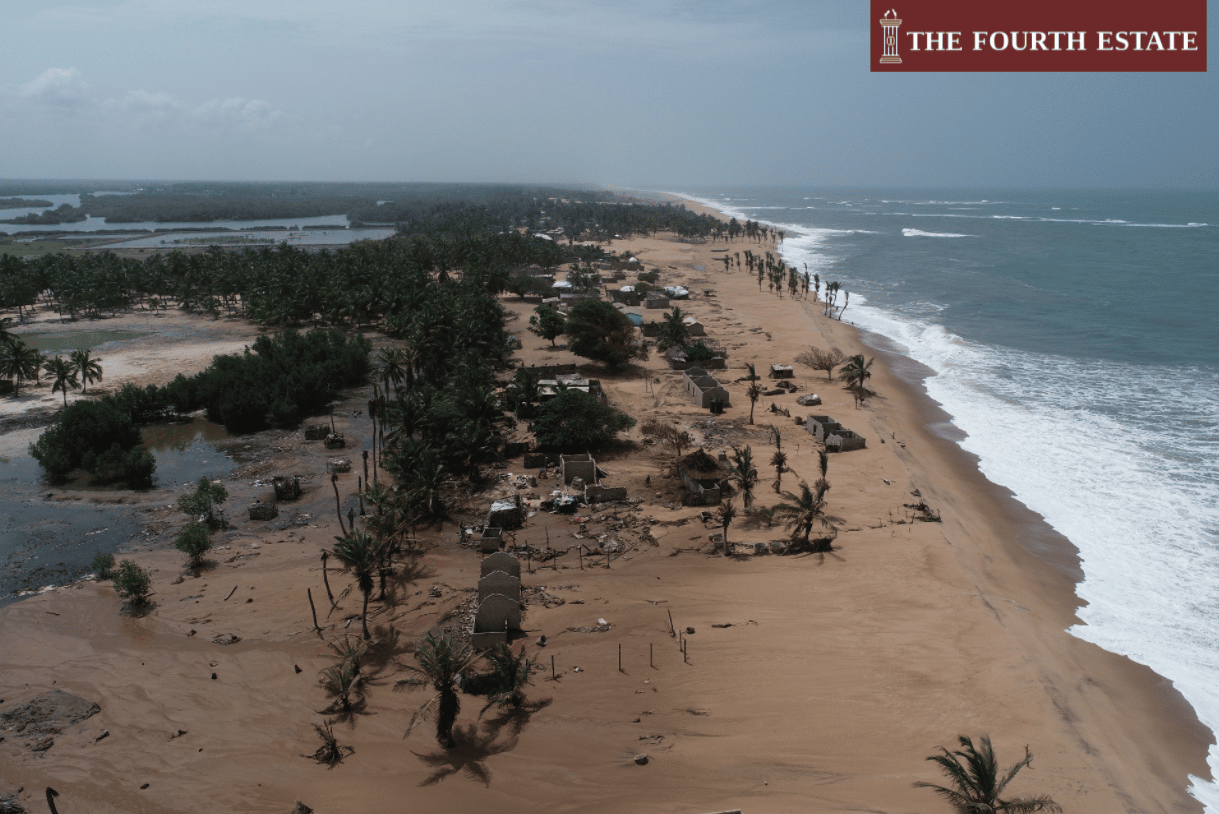
    On November 5, 2021, tidal waves pounded the shores of the Volta Region, reportedly leaving thousands of homes submerged and residents homeless.

    But the danger has been announcing itself for years.

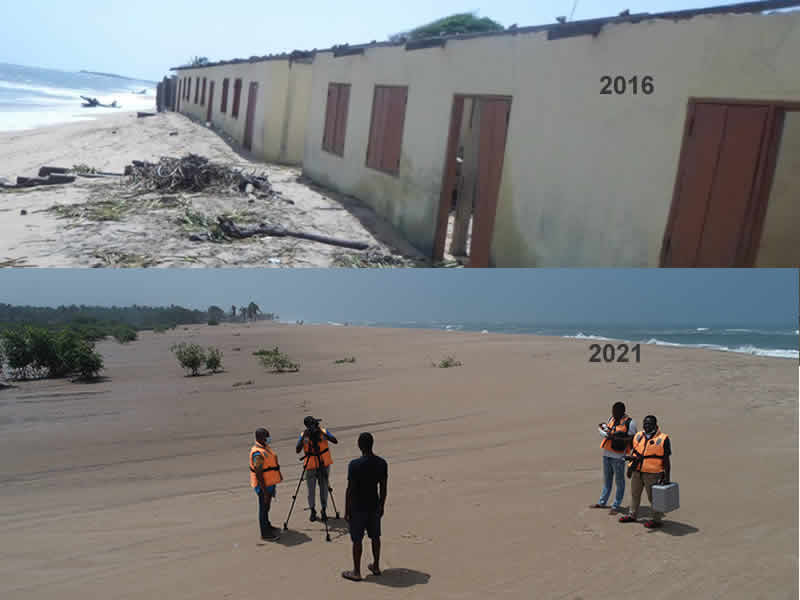
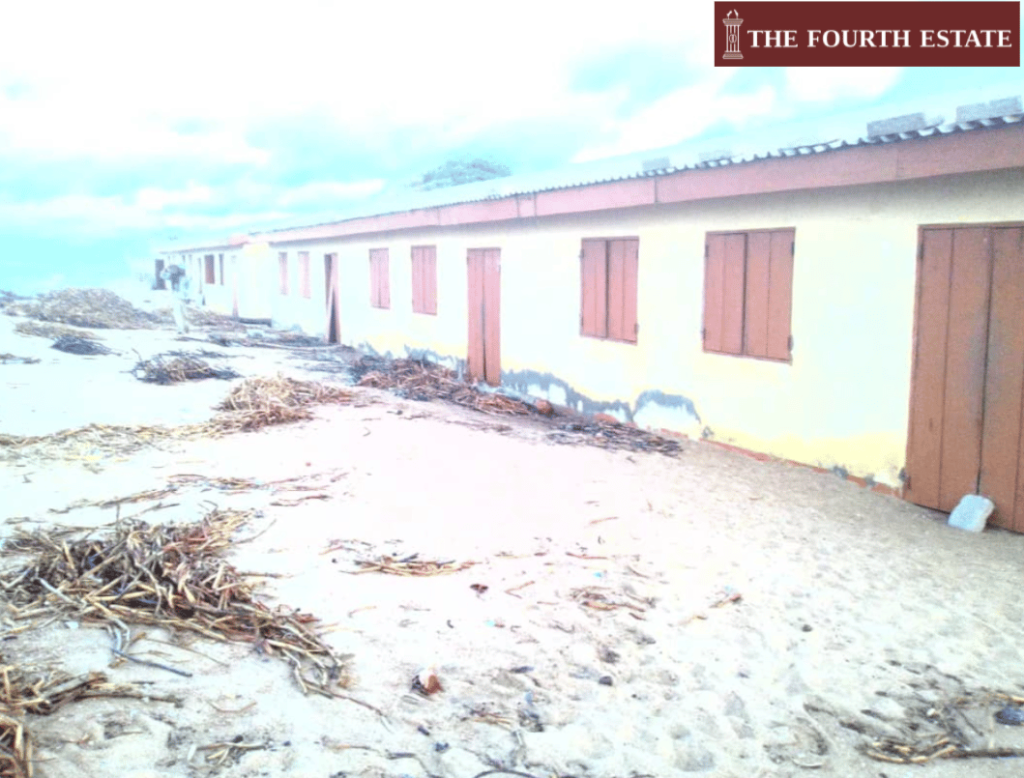
    In Fuveme, one of the communities The Fourth Estate visited in July 2021, the doom was predictable. A school that was rebuilt after it was destroyed faced a second destruction by the tidal waves.

    https://thefourthestategh.com/2021/10/14/the-school-bracing-for-a-second-disappearance-under-the-sea/

    When this reporter visited Fuveme in 2016, the community pleaded for the umpteenth time their need for a sea defence wall.

    It has not been built. The 2.8-kilometre Atorkor sea defence project was expected to cushion some coastal communities in the then Keta Municipality (now Anloga District) against destructive tidal waves. But the construction didn’t progress beyond Akplorwotorkor.

    It meant Fuveme was left exposed. Over the years, the waves have pounded the village (Fuveme), causing extensive damage to property, sometimes cutting the inhabitants off from the rest of the district.

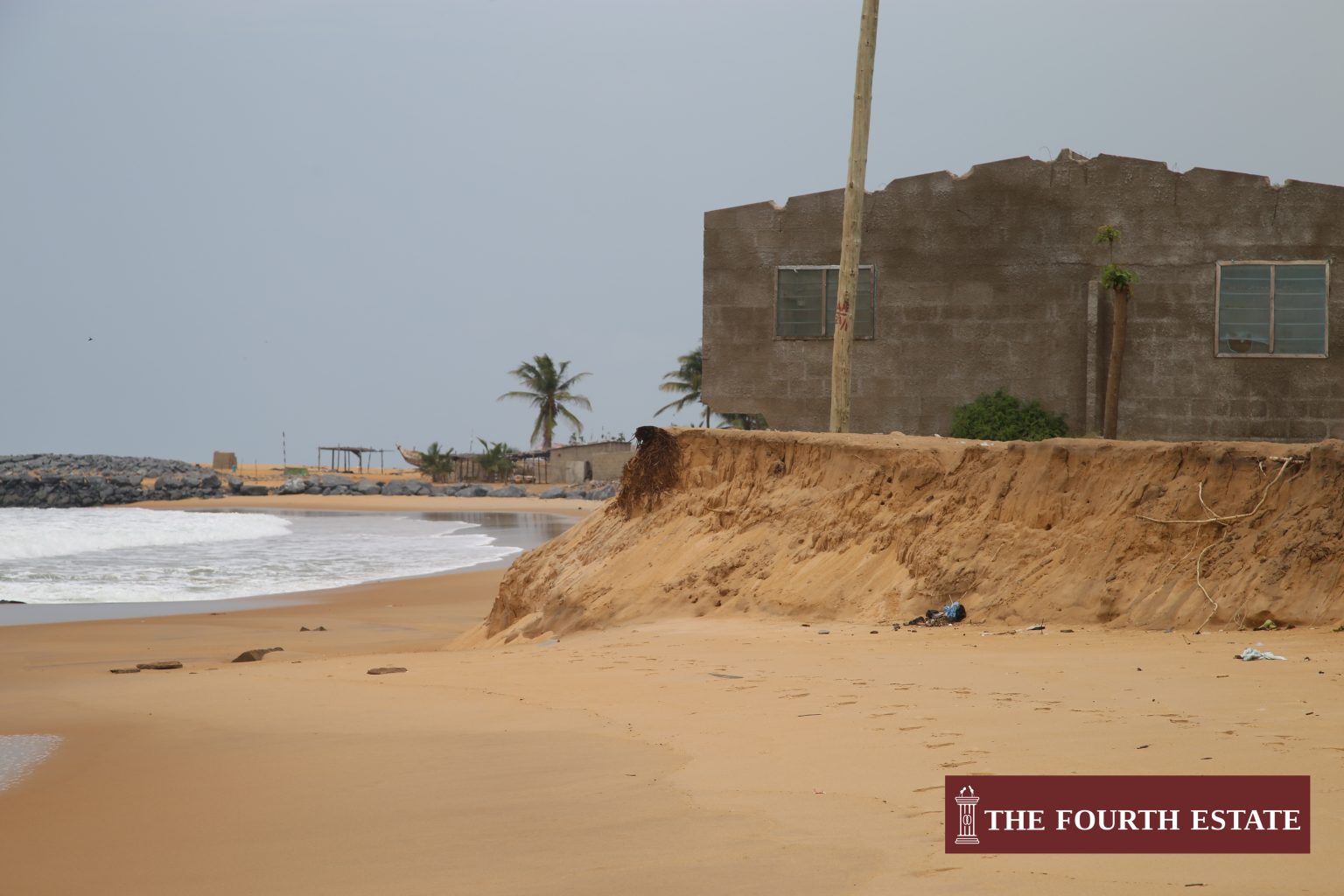
    A large section of the fishing community has been reduced to a pile of rubble as the advancing tidal waves turbocharged by climate change continue to inch closer. It created a new estuary in May 2021.

    According to experts, rising sea levels linked to the melting of polar ice caps due to rising levels of carbon dioxide in the atmosphere is causing coastal erosion.

    So, the Fuveme RC Basic School became a victim of an imperial ocean claiming territories. It is an occurrence climate change experts blame on human activities such as sand winning and deforestation as well as natural causes such as wind, water.

    Interestingly, the communities behind the sea defence wall in parts of Keta, Atorkor, Akplorwotorkor and Agavedzi– were left untouched.

  • The school bracing for a second disappearance under the sea

    The school bracing for a second disappearance under the sea

    Four years ago, Selorm Dzaka and his classmates would have dashed into the belly of the only remaining legacy of the Catholic Church on the tiny island—the Fuveme RC Basic School—to seek refuge from the rains.

    But not this time.

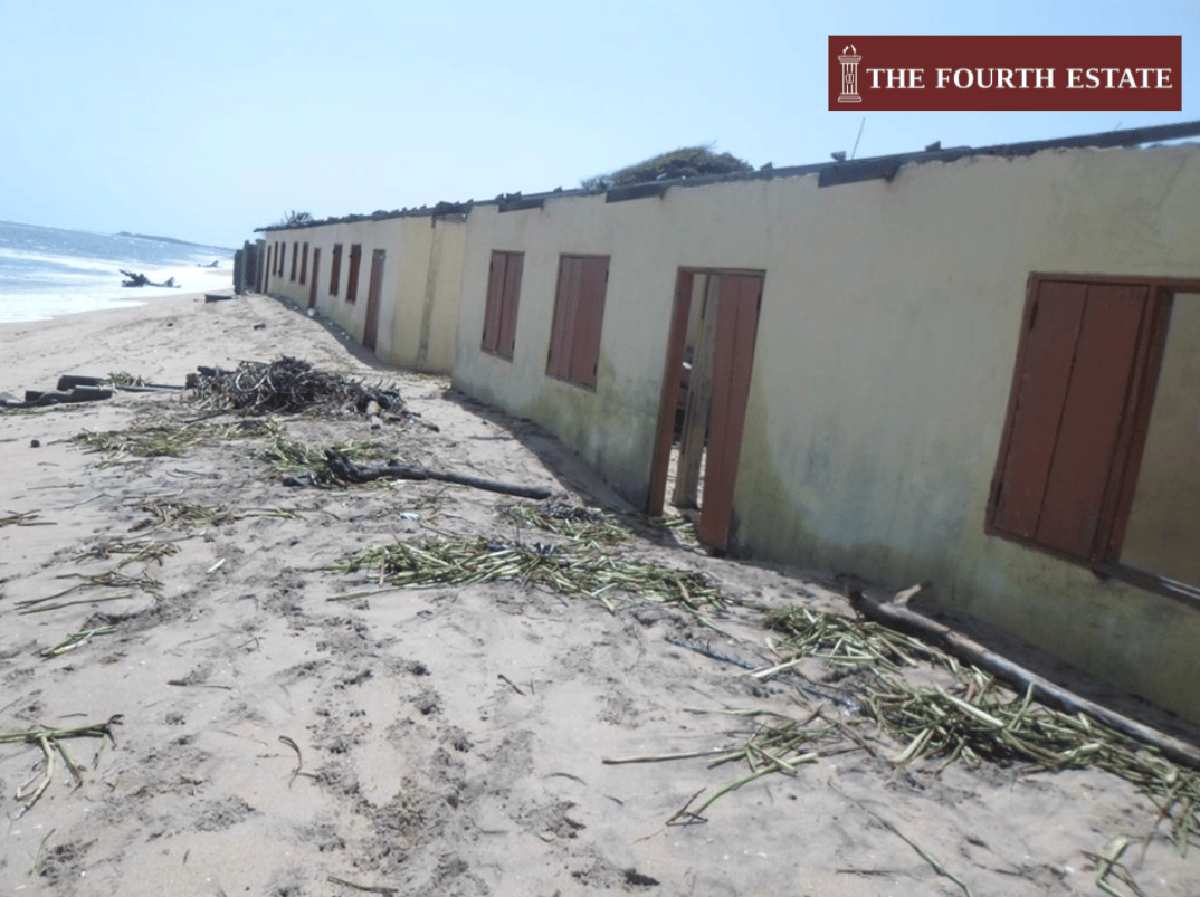
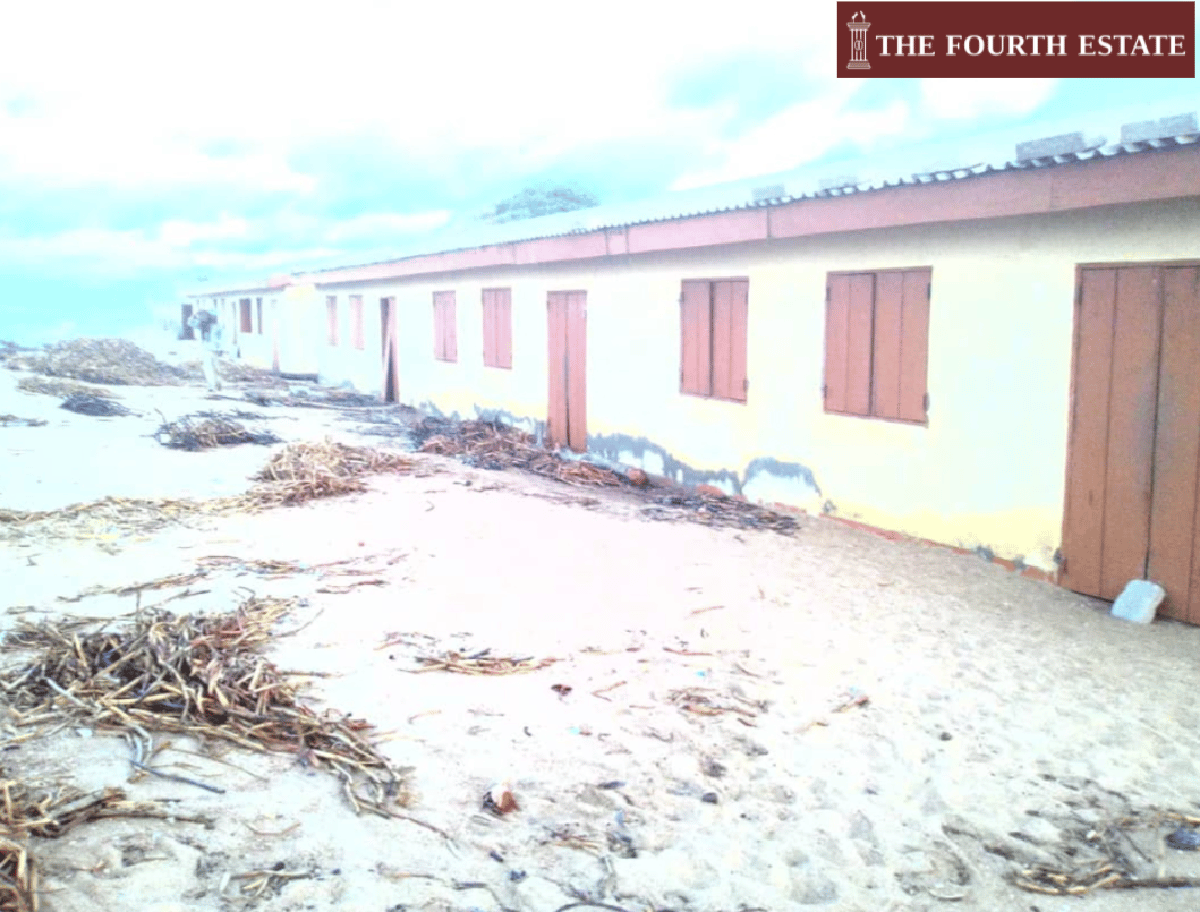
    Not even its concrete walls can be traced. The sea, the vicious sea, brought it down and swallowed its debris.

    “The sea had been inching closer and closer every year until 2016 when water began to enter the building, and eventually the walls broke down,” the headmaster, Cornelius Adzido, recalled. The incident caused the relocation of the school to about 500 metres away from its old site.


    When this reporter visited Fuveme in 2016, the community was praying and hoping for a sea defence wall.

    It was not built. The 2.8-kilometre Atorkor sea defence project was expected to cushion some coastal communities in the then Keta Municipality (now Anloga District) against destructive tidal waves. But the construction didn’t progress beyond Akplorwotorkor.

    It meant Fuveme was left exposed. Over the years, the waves have pounded the village (Fuveme), causing extensive damage to property, including homes and churches, and sometimes cutting the inhabitants off from the rest of the district.

    A large section of the fishing community has been reduced to a pile of rubble as the advancing tidal waves turbocharged by climate change continue to inch closer. It created a new estuary in May 2021.

    According to experts, rising sea levels linked to the melting of polar ice caps is causing coastal erosion, which slowly submerges communities along the coast.

    So, the Fuveme RC Basic School became a victim of an imperial ocean claiming territories. It is an occurrence climate change experts blame on human activities such as sand winning and deforestation as well as natural causes such as wind, water and other forces.

    Five years ago, the school had trees around it. But as the sea moved closer, it mowed them down. As the situation got worse, the sea began to flood the compound and the classrooms with its debris. By August 2016, the classrooms collapsed, leaving teachers and students stranded.

    Months after the old school disappeared under the ocean, the Anloga District Assembly and the community mobilised and built a new one.

    But far from the relative beauty of the destroyed structure, the current one looks like a market shed. Overlooking the ocean, the new Fuveme RC Basic School stands like a helpless and desolate memorial awaiting another violent end.

    The school has a population of more than 200 pupils. It is just a few metres away from the shore. Its management, teachers and pupils are constantly reminded of the danger creeping closer.

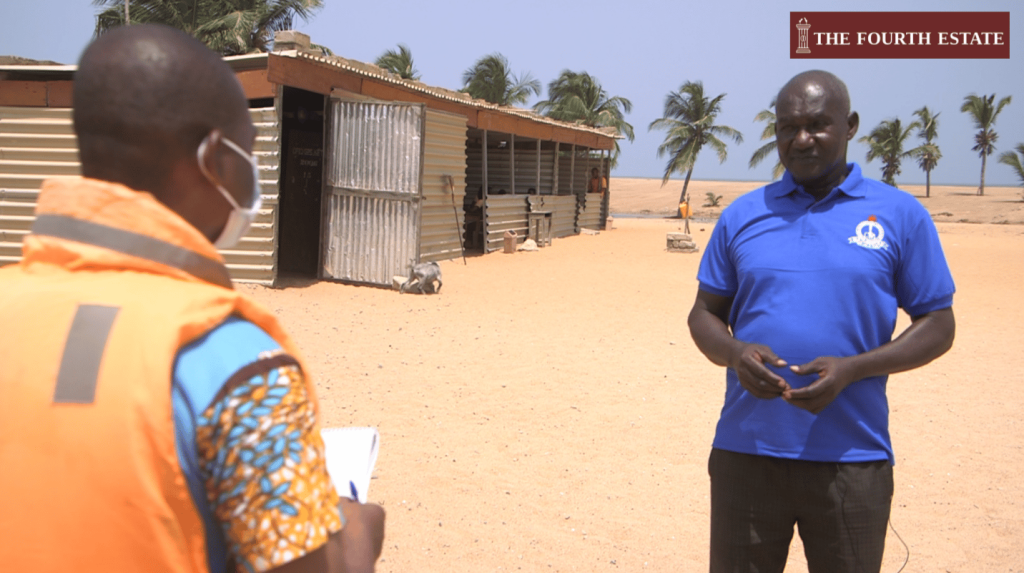
    The headmaster, Cornelius Adzido, (right) of the school in a chat with The Fourth Estate journalist, Seth J. Bokpe. Behind the headmaster is the JHS classrooms and the sea     Photo: Clement E. KumsaH

    “The school is about 150 metres [from the sea]. I don’t know how it will happen in the future. The fear is that if it [the sea] takes this school away, there will be no school in this community,” the headmaster said of the predictable end of the school.

    “The children will have to move far away to other places. The whole community will be deserted. Our prayer is for the school to be protected so that it can help the people in the community,” he added.

    But there are other problems too.

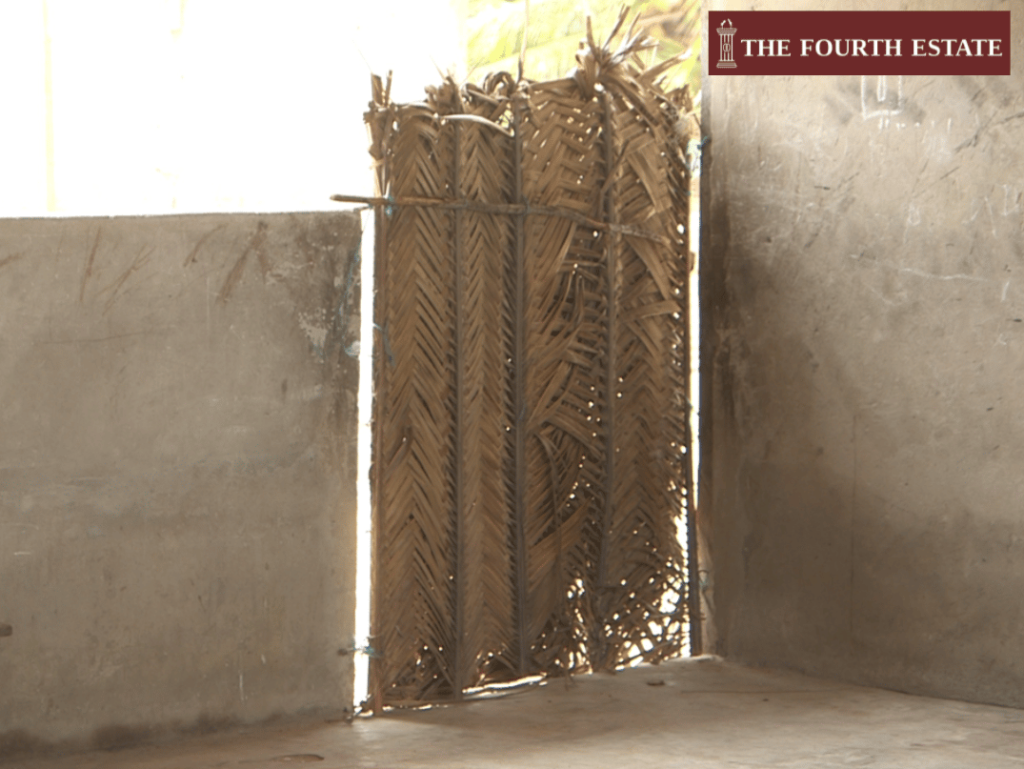
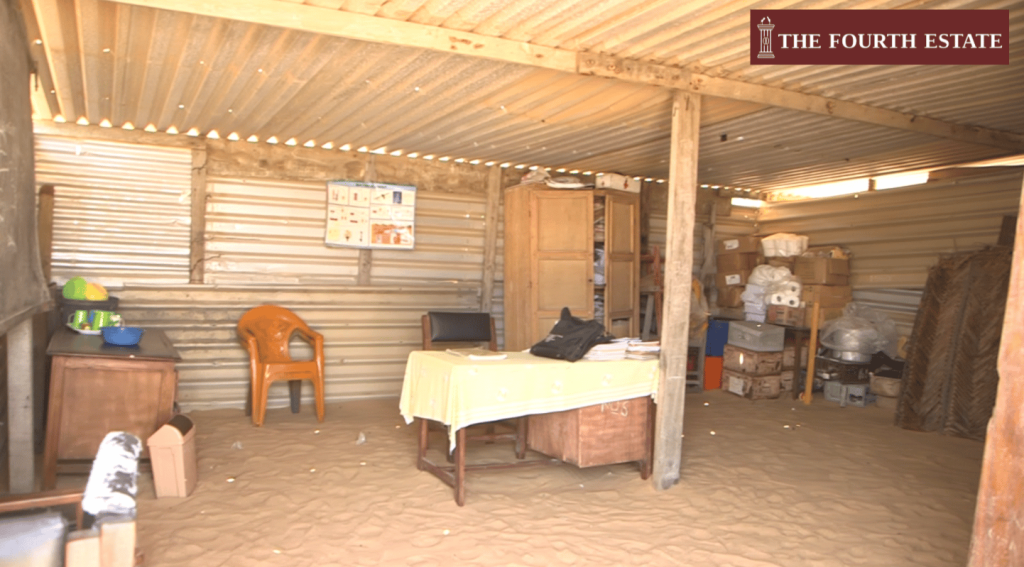
    Classrooms from Primary One to Six are windowless and the doors are made of palm fronds.  They are empty except for a few desks scattered across and are complemented by kitchen stools and tables the pupils bring from home.

    Coconut frond is the closest the school has to getting a door for its classrooms Photo: Clement E. Kumsah

    However, another classroom has been packed with desks, awaiting the completion of a new school block, just behind the six-classroom block.

    The floors in the primary classrooms are cemented, a luxury their senior counterparts in the junior high school (JSH) could only wish for.

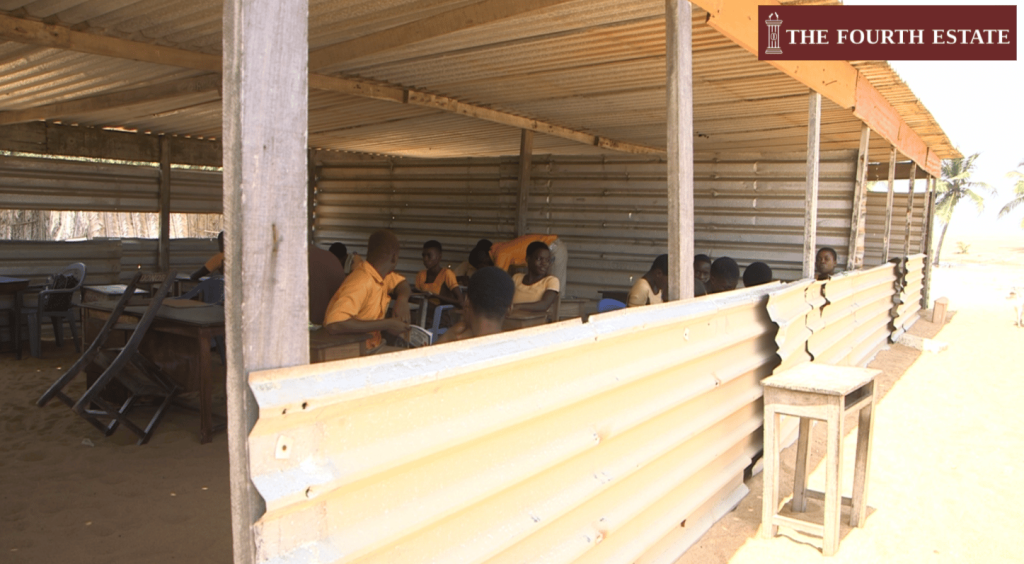
    The JHS classrooms were constructed from corrugated iron sheets and the floor is as bare as the seashore.

    The JHS classrooms were built from iron sheets and the floors are bare. Photo: Clement E. Kumsah

    A new classroom block is under construction, but the contractor was not at the site when The Fourth Estate visited the school in July.

    A student who declined to give his name said the classroom could sometimes be extremely hot on sunny days and when the rain comes with a storm, school comes to a sudden end.

    “When it is raining, our classroom is not protected from the rain. Rain enters it and gets us wet, so we close early,” he said.

    The headmaster’s office is no different from the JHS block. Occasionally, domestic animals walk in and out of the office.

    The headmaster’s refuse

    But that is the least of the concerns of the headmaster. The school has even bigger problems that are undermining academic work.

    “We are facing a lot of problems. We are also suffering from a furniture shortage. We don’t have any toilet facility in the school,” he said.

    He added: “We have challenges with teachers. I don’t know whether they tag the school a deprived school that is why teachers are not coming. In the whole of the primary [section], we have only two teachers and in KG, we have only one teacher. The JHS form one to three, we have two teachers, so we have a staffing problem here,” Mr  Adzido lamented.

    The inadequate staff of the school had taken its toll on the school’s academic performance, he said.

    While declining to go into the figures, he said Form Three students who wrote last year’s Basic Education Certificate Examination (B.E.C.E.) flunked it.

    “Formerly, the JHS pupils were doing well because the teachers were with them. Last year, they couldn’t perform well because they had only two teachers with them.”

    The school, he added, had in the past produced students for some secondary schools in the Volta Region, including Keta Secondary Technical School, Anloga Senior High School and Sogakope Senior High School.

    To find a solution to the situation at the Primary level, Mr Adzido said the classes had been combined. Primary One and Two pupils share the same classroom and teacher. So do their peers in Primary Three and Four,  as well as those in Five and Six.

    It’s Mathematics time Photo: Clement E. Kumsah

    The Parent-Teacher Association (PTA) chairman of the school, Jacob Afetorgbor, who has spent almost his entire 41 years on the shrinking patch of land situated between the sea and the Keta lagoon, said the community was helpless.

    According to him, the community had resettled at least four times since 1993 when visible signs of sea erosion began to take its toll on Fuveme.

    “It is heart-breaking that nothing much has been done to stop the sea from taking over our land. The future of our children depends on their education, but we are not even sure if this structure will be here for another 10 years,” he said, clasping his hands around his neck.

    Anloga District Assembly

    When contacted, the Anloga District Coordinating Director, Emmanuel Dzakpasu, told The Fourth Estate that while the construction of a sea defence wall at Fuveme was beyond the financial muscle of the assembly, it was engaging the Ministry of Works and Housing for the minister to visit the area and assess the dangers facing such communities.

    On the inadequate desks and teachers, he said the assembly would work with the district directorate of education to ensure that the packed desks were released to the pupils while efforts were made to assess the teacher needs of the school.

    As conversations about the fate of the school go on, residents of Fuveme are anticipating that decision-makers will roll out their mitigation plan early enough to tame the ocean and save their land and school.

    They can only hope.

  • TESTING RTI LAW: The 33 public institutions that passed or failed

    TESTING RTI LAW: The 33 public institutions that passed or failed

    By  Kwaku Krobea Asante & Seth J. Bokpe 

                          ——————————————————————

    “I don’t care where the letter is coming from. Drop it in that box and leave.  There is COVID-19. I will not sign anything!”

    With those words uttered in very harsh tones, a receptionist at the Ministry of Education dismissed a journalist from The Fourth Estate.

    No amount of explanation, including the fact that the letter was a right to information (RTI) request and needed to be acknowledged, would make her budge that afternoon of March 29, 2021.

    She ranted, insisting no letter was moving beyond the airconditioned reception on a day the sun was at its fiery worst.

    The letter was one of 36 requests The Fourth Estate made to 33 public institutions. Those requests were a test of the efficacy of the Right to Information (RTI) law, which had been described as an antidote to corruption.

    Needless to say, the Ministry of Education, where the receptionist works, is one of the institutions that refused The Fourth Estate access to information 14 days after the letter was submitted.

    When Parliament passed the RTI law in 2019, its main advocates–the media, civil society groups and anti-corruption campaigners–touted it as another arsenal to crush corruption. They said it would increase transparency in the government, ensure proactive disclosure of information and set rules for requests and responses.

    Passing Ghana’s RTI law did not come easy.  It had triggered political promises and failures before and after elections.

    From the outset, it appeared successive governments did not want to open up for scrutiny through the RTI. But civil society organisations moved from push to shove. And finally got it done.

    The journey

    In 1996, a leading governance think tank in Ghana, the Institute of Economic Affairs (IEA), wrote to the Bank of Ghana (BoG) to request information. The IEA made the request in the exercise of its fundamental right to information as enshrined in Article 21 (1) (f) of the 1992 Constitution. The request was to test a law that hadn’t been given the opportunity to even fail.

    That request triggered what has been arguably the longest advocacy for the passage of a law (the RTI law) in recent years. It would take 19 years for Ghana to pass a law that Sweden approved in 1776.

    The IEA drafted the RTI Bill in 1999. It was reviewed in 2003, 2005 and 2007, and presented to Parliament in 2010.

    ALSO READ: RTI Commission orders Scholarship Secretariat to release beneficiaries list

    The bill gathered momentum in the dying embers of the Mahama administration in 2016 but hit a snag. Members of the opposition New Patriotic Party (NPP) protested the timing of the intended passage of the bill. The NPP had won the 2016 elections and suspected that the outgoing government wanted to set traps with the law.

    However, in 2019, after another round of sustained pressure from civil society, the Akufo-Addo administration passed the law. Ghana joined a global league of more than 100 countries that had passed the RTI law.

    Fifty-six (56) days after the passage of the bill, on May 21, 2020, President Akufo-Addo assented to it within 24 hours of receiving the law. The assent was broadcast on national television.

    “I am very happy that this law has finally been passed, and I did make the commitment that, when it was brought to me, I would give my assent to it right away. It was, in fact, brought to me yesterday afternoon,” the President said.

    “But, on second thought, I felt that I should sign it in the plain view of the Ghanaian people, for you to know that this long, winding parliamentary process has finally come to an end,” he added.

    The passage and assenting of the RTI law (Right to Information Act, 2019, Act 989) drew commendations from many local and international stakeholders and civil society organisations.

    The law, which took effect on January 2, 2020, is expected to make it easier for the public to request and receive information from public institutions in Ghana.

    But it is beginning to dawn on civil society and the media that the celebrations were premature. Very few people are using the law and very few institutions are willing to release information.

    Testing the law 

    Between March and July 2021, The Fourth Estate put the Right to Information Act to a litmus test. The objective was to assess how effective the legislation was being implemented in public institutions.

    The Fourth Estate made 36 requests for information from 33 ministries departments and agencies (MMDAs) working under the three arms of government –-the executive, legislature and judiciary. The Fourth Estate purposively selected MMDAs that are related to the functioning of the RTI law

    There was also a focus on institutions that have recently engaged in key activities or projects of crucial concern to national development. In some cases, one institution received more than one request for information.

    The following institutions received The Fourth Estate’s requests for information:

    Nearly 60% of the applications by The Fourth Estate were refused access to information

    The RTI law emphasises time and feedback. It stipulates that an information officer of a public institution must respond to an applicant within 14 days of receiving the request for information. The response must indicate if the information requested is available and whether access will be granted or not.

    “Where an information officer fails to determine an application within fourteen days after the application is received by the public institution, the application is deemed to have been refused and the applicant has the right to seek redress under sections 31 to 39.” Section 23 (5) of the RTI law states.

    At the end of 14 days after making the requests, 52% (17 out of the 33) institutions failed to acknowledge or respond. In RTI terms, they refused The Fourth Estate access to information.

    Even though  16  other institutions provided feedback to The Fourth Estate’s applications, not all of them followed up with granting us access to the information. Many of them merely acknowledged the requests but failed to provide the information.

    However, the following institution must be separated for commendation. They did not only respond to The Fourth Estate’s application but granted access to the information within 14 days.

    Internal review

    In the case of refusal and neglect to provide the information requested, Section 31 of the law provides a pathway—application for internal review:

    “Except as otherwise provided in this Act, a person aggrieved by a decision of the information officer of a public institution may submit an application for internal review of that decision to the head of the public institution.”

    The Fourth Estate followed the process and made an application to the heads of all the institutions whose information officers did not respond to the requests or failed to give us the information requested.

    The heads of the institutions included sector ministers, the Speaker of Parliament, CEOs and managing directors of state-owned enterprises. Some of the institutions provided the information following the appeal. In the case of Parliament, The Fourth Estate did not only write an internal review after the initial application, but it also wrote a reminder letter.

    This means The Fourth Estate wrote three times to the institution that passed the RTI law before the information was finally granted, a case of the priest not believing in his own sermon.

    Some of the responses received following the internal appeal to the heads of institutions revealed the lack of awareness and understanding of the RTI law among public institutions. They also underscored the general aversion to transparency and how the internal communication structures of the civil service are set up to block such requests.

    A general aversion to releasing information despite the existence of the RTI law

    The spirit of the RTI law encourages proactive disclosure of information. The law stipulates that public institutions must publish periodically a manual providing key and specific pieces of information relating to their work. The manual has not been produced by any public institution yet.

    Section 18 (5)] of the RTI law envisages that institutions guide applicants in making their requests as they may not have detailed knowledge about the work of the institution:

    “Where an application does not sufficiently describe the information required, the public institution to which the application is made shall so inform the applicant and offer the applicant the necessary assistance to identify the information.”

    GETFund

     The Fourth Estate wrote to the GETFund requesting the list of scholarship beneficiaries and the amount disbursed to them under the Fund for 2019 and 2020. The request also included a list of education infrastructure the Fund had sponsored from 2016 to 2020.

    The GETFund, after failing to make a determination on the request within 14 days, hand-delivered a letter signed by its Administrator to the premises of The Fourth Estate. 

    “The response to your letter is ambiguous,” the letter said.

    But a lecturer at the Ghana Institute of Journalism and RTI advocate, Zakaria Tanko, differed with the GETFund.

    “These are all legitimate requests, and the request is going to a public institution. I can confidently say none of this is exempt [not supposed to be released] information,” lawyer Tanko said.

    Similar responses were received from many institutions.

    Ministry of Sanitation and Water Resources

    The Fourth Estate requested a copy of the contract on the regional waste recycling plant from the Ministry of Sanitation and Water Resources. It made the request following news reports that the contract was between the Government of Ghana (GoG) and Jospong group, hence stated that the Ministry provided it “contracts for the construction of regional waste recycling plants between the Government of Ghana and the Jospong Group.”

    However, the Ministry, in a letter signed by Anthony Komla Dovlo, responded blankly stating that “there is no contract between the Ministry of Sanitation and Water Resources, and for that matter, Government of Ghana, and Jospong.”

    The ministry ignored provisions of section 18 (5) of the RTI law. It was not interested in providing any further detail on the said contract or either guide The Fourth Estate to know where to access the information.

    Ghana National Fire Service

    The Ghana National Fire Service denied The Fourth Estate a request for reports on the Accra Atomic Junction Gas explosion, the June 3 fire disaster, and the fire outbreak at the Ghana Revenue Authority office near the Kwame Nkrumah Circle in 2020. The fire service cited ethical constraints.

    “Fire reports involving institutions and individuals cannot be made available to you. Legally, we are not bound to release such reports until permission has been granted by such institutions and individuals concerned,” is aid.

    “The ethics of our profession does not entreat us to divulge such information to a third party who was directly involved in [the] said incident,” the service added.

    Ministry of Works and Housing

    The Ministry of Works and Housing declined to release a copy of the Ghana Institution of Surveyors audit report on the Saglemi Housing Project. It also did not grant our request to know the government’s contribution to developing the Saglemi Housing Project since 2017.

    The head of RTI at the ministry, Zakaria Musah, said in a letter that the matter was under investigation at the CID and that the request would only be ready after the investigations.

    Mr Tanko did not understand what the ministry meant when they say the matter was under investigation.

    “For that Saglemi Housing, I don’t know whether the case has gone to court, nobody has been arrested,” he said.

    “If you make that request to the police, then the police could say it is subject of investigations. But even that, if the subject is made aware of the content of the information, then you are entitled to receive the information as well. I’m not too sure what level of investigation they are talking about.”

    General observations on RTI law’s functionality

    Aside from the general unwillingness on the part of public institutions to release information, The Fourth Estate made some other observations based on the responses received from the institutions.

    There appears to be a widespread low understanding of the law and the principles on which it functions. Specifically, many of the institutions were conflicted on whether RTI law overrode their Acts, which also guide them on how to release information.

    The Ghana National Fire Service provided The Fourth Estate information on fire outbreaks and locations in Ghana from 2016 to 2020 and charged GHs 150.00. They explained that it was the standard fee they charged for the information requested, and so requesting for information under the RTI law was no different. Meanwhile, Section 78  of the RTI law indicates that an applicant only pays for the reproduction of the information requested.

    Also, the RTI Commission, in a landmark ruling, directed the Minerals Commission to charge GHs 1.90 instead of the equivalence of $1,000 the Minerals Commission had asked The Fourth Estate to pay based on one of their establishing Acts.

    Poor internal communication

    The Fourth Estate also observed that poor internal communication channels and red tapeism that characterise the civil service are a major blockade to the functioning of the RTI law. Many of the institutions including the DVLA, GNFS, and EOCO, provided feedback to The Fourth Estate that they did not receive the initial application for information.

    Meanwhile, for every application, The Fourth Estate ensured that the officers, mostly front desk officers, who received the request signed or stamped a copy as evidence that the request has been filed. Interestingly, many of these institutions would later find the application after the appeal to the heads of the institutions.

    There also appears to be no clearly defined structure or destination in some of the institutions where applications were supposed to go. Indeed, a considerable number of the front desk officers who liaised between the general public and institutions did not know a thing about the RTI law and who must be the recipient of the applications.

    Therefore, based on their own discretion, the front desk officers directed the requests to whichever department they were convinced must deal with the request. This creates a high possibility of an RTI application getting missing in a public institution.

    The RTI law indicates that an applicant must state in which means they want the information delivered to them. In all the requests, The Fourth Estate indicated that the information be sent to it via email or that we should be invited to pick it up.

    More than half of the institutions that granted access invited us to pick up the letters in person even when we had suggested the information should be scanned and sent to us via email. In fact, the EPA’s initial response to The Fourth Estate’s request was sent through the post office box without notifying the news portal that it has been sent.

    Law passed, let’s make it work 

    With these teething problems to grapple with, a Programmes officer at the Media Foundation for West Africa, Adiza Moro Maiga, did not mince words.

    “Passing the law is not enough. The challenge is getting it running, and effective. If we don’t put in the structures to make sure it is working well and serve the purpose for which it is passed, then it becomes problematic,” she said.

    Ms Maiga, who has been on the frontline training CSOs, journalists and community activists on the RTI law, said the challenge has moved from having the law passed to “having it work.”

    RTI Commission’s Reviewing

    In what is supposed to be the last stage of the appealing process, after the heads of institutions failed to respond, The Fourth Estate wrote to the RTI Commission. The requests were the first the Commission received since it was established in October 2019.

    In all, The Fourth Estate made 11 appeals at the Commission against 11 institutions that had either failed to provide full disclosure of information or didn’t respond to our requests at all. Some of the institutions had also transferred our request to other institutions but had failed to follow it up.

    At the time of filing this report, the Commission had written to all of these institutions requesting an explanation or justification for denying The Fourth Estate information.

    In the cause of the appeals, the Ministry of Education and Legal Aid Commission released partial information to The Fourth Estate.

    In an interview with The Fourth Estate, the Executive Secretary of the commission, Mr Yaw Sarpong Boateng, said the challenges with the release of information had been because in the past civil servants swore the oath of secrecy before taking office to protect information within the system.

    “This is a novel situation we find ourselves in. Hitherto, people who have operated with secrecy are being confronted with disclosure. We obviously will have some challenges. But with education and time, we will cross the bridge,” he said.

    Mr. Zakaria Tanko, who is also a member of the RTI Coalition, said, “The more you make information available to people, the more they want to hold you accountable. The more they will feel empowered, the more you will be called upon to be transparent and open in your affairs and the more issues about corruption will be in the spotlight.”

    He continued: “If you want to find out why it was difficult to pass the right to information law, it is because of the fear of the unknown. It is like you are arming your enemies. During training with some MMDCEs, they were clearly angry with the government for passing the RTI law because even without the right to the information, they claimed they were being harassed by journalists and now the media is being given ammunition.”

    READ ALSO: 
    Release information for GH₵2 not GH₵6,000: RTI Commission orders Minerals Commission

    The Fourth Estate petitions RTI Commission over refusal of 11 MMDAs to release information

    Minerals Commission sues RTI Commission for ordering it to charge GH₵2 for information

    MFWA-NCA case: A judgment that monetises our fundamental right to information

  • Bongo scandal: ARB Apex Bank investigates Maltaaba Community Bank

    Bongo scandal: ARB Apex Bank investigates Maltaaba Community Bank

     The ARB Apex Bank has opened investigations into how officials of the Bongo District Assembly and the Maltaaba Community Bank conspired to allow the assembly to withdraw money from a contractor’s account without his permission. 

    ARB Apex Bank, which regulates rural and community banks in Ghana, has dispatched a team to the Upper East Region to further probe the matter for possible sanctions.

    Sources at the ARB Apex Bank told The Fourth Estate that their probe is to establish the role the bank and individuals of the bank played in the transaction.

    This follows an investigation by The Fourth Estate’s Manasseh Azure Awuni, which revealed that the Maltaaba Community Bank was twice complicit in allowing the withdrawal of money from the account of Asumbekere Karim Anagbila, the CEO of Aporgan K-A Enterprise, without his approval.

    In total, the assembly withdrew GH₵187,520 in two tranches of GH₵ 31,000 and GH₵156,000 respectively.

    When Karim confronted the bank about the first withdrawal, the text notification on his account was disabled only to be activated after the money was withdrawn.

    The Fourth Estate’s investigations have revealed that both withdrawals were facilitated by officials of the Bongo District Assembly.

    The withdrawals were in respect of a shady contract the Bongo District Assembly’s management allegedly awarded to itself using Karim’s company without his permission.

    The deal was fronted by Baba Nsobilla Sebastian, an official of the National Health Insurance Authority in the Bongo District.

    Karim’s company, Aporgan K-A. Enterprise, was awarded a contract in November 2020 to drill 10 boreholes within six months in some communities in the Bongo District at the cost of GH₵219,820.

    But another contract was signed the same day as a contract awarded to Aporgan K-A Enterprise. Effectively, both contracts were awarded to Aporgan K-A Enterprise, but one was without Karim’s knowledge or permission.

    The payment was to be made based on the amount of work executed at every stage of the contract for which the contractor raised the certificate for payment.

    The consultant for the project, according to the two-page contract, was the head of the works department of the Bongo District Assembly, David Aruk, who withdraw the first tranche. Karim said when he detected the withdrawal of money from his account by the head of the works department of the assembly, he followed up to enquire from the assembly and he was given rather worrying details.

    Officials of the Bongo District Assembly said someone had used Karim’s company for another contract with the assembly so the GH₵31,000 withdrawn from his account was in respect of that contract.

    After the first withdrawal, Karim complained to the bank and the assembly and cautioned them never to withdraw any money without his permission.

    As a sign of good faith, he said the assembly officials asked him to deposit a blank cheque with the assembly, which he did with only a signature on the cheque.

    The agreement was that when the work was done and he inspected it, he would go with the assembly officials to withdraw the money.

    He said this meeting was held at the district assembly on June 12, 2021. The assembly’s officials present included the District Coordinating Director, the District Finance Officer, the Head of Works Department, and others.

    But the assembly breached the agreement.

    It withdrew GH₵156,000 without the contractor’s approval

    The bank failed to notify Karim and also failed to tell him who took the money from his account. In fact, they allegedly deactivated the notification on his account.

    Peter Ayinbisa Ayamga, the then DCE for Bongo, has insisted he did nothing wrong in the transaction. He admitted awarding the contract to two different persons who presented the same business for the advertised job, but he said that was normal.


    He said the boreholes were drilled and were in use, and that was the most important thing. The Fourth Estate visited three of the sites where handpumps had been fixed and the boreholes were being used.

    The DCE swore that he did not benefit financially from the contracts. He believed the agitation over the deal was an attempt by his detractors to undermine his chances of being retained as the DCE of Bongo by President Akufo-Addo.

    “I can tell and swear by your camera and the video you’re using that this whole contract, even GHc1 has not come to my pocket. I swear same by my vehicle,” he said.

    “If someone got the money and bought pito or beer for me, [it’s] different. But to take part in that project process and they say, ‘chief executive, take this one’, I swear by my car lorry steer, as I leave here, I shouldn’t get home.”

    Subsequently, the DCE said he had ordered the assembly to withhold the payment of money to the main contract awarded to Karim’s company. He said the payment would not be made until the scandal surrounding the illegal withdrawals from Karim’s account had been resolved.

    Meanwhile, the District Chief Executive who headed the assembly during the scandal has not been re-nominated by the President. He has been replaced by Rita Atanga.

    Read the full story:

    THE BONGO SCANDAL: Assembly withdraws GH₵187,000 from contractor’s bank account without permission

  • Dear Sea, you are invited into our homes. The sand is gone

    Dear Sea, you are invited into our homes. The sand is gone

    Keta literally means “on top of sand.” When you remove the sand, there will be nothing on top. And that is exactly what sand winners are doing to this popular community by the coastline. When sand winners win, everyone else will lose.

    Here is the story of Keta and Anloga, communities in the Volta region losing their soil cover while the sea waits for the intrusive destruction of the economically viable towns.

    ————————————————————————————————–

    Keta is a stretch of land sandwiched between a lagoon and, literally, the deep blue sea. Over there, economic life consists basically of fishing in the lagoon or in the sea and farming on the land.

    “I used to produce vegetables like shallot, okro, cabbage, and carrot depending on the season,” Joel Ahiabu looked back at those days when he could earn between GH₵ 2,000 and GH₵ 3,000 a month depending on the season.

    Mawuli Aziati, a resident of Anloga also recalled the days when fishing fetched enough to take care of the family. Not anymore.

    “Our fishermen go to the sea and bring back almost empty nets. The fish stock is depleted,” he said and pointed accusing fingers at pair trawling, a type of fishing banned in Ghana’s waters.

    Joel said he also lost his farmland.

    “The landowner said his brothers in Accra wanted to build. So, at the end of my last harvest, I shouldn’t plant anything again,” the 30-year-old explained.

    With the two main economic activities in decline, the youth of this area are literally digging elsewhere for jobs. They are digging sand.

    “If you can’t farm or catch fish, you can fetch sand and sell. It is in abundance,” Mawuli Aziati rationalised. Sand winning, removing the soil cover for building and construction, is on the rise. It is an acknowledged reality in Keta, residents told The Fourth Estate.

    “It costs GHc 60 for a trip of sand. Even that is expensive for most people. So, they fetch it themselves. You don’t expect us to see free sand, and yet go searching for it elsewhere,” Mr Aziati continued.

    But the cost of each trip of sand is cheaper than the problems the miners create. While the youths remove the sand, the sea is removing the community. When sand winners win, everyone loses.

    Catching sand winners

    It’s 8 p.m. Five men—one behind the wheel, the other in the passenger seat and three others—were in the bucket of a rickety pickup truck. Inside the pickup were head-pans and shovels.

    The five men whizzed past a semi-lit Zotorglo street in Keta, where The Fourth Estate team had parked a black SUV with tinted glass.

    As the truck whizzed past, the men in the bucket cast suspicious glances at a black SUV and headed towards the beach.

    The Fourth Estate’s SUV followed the pickup truck to the beach in an audacious attempt to patrol a sprawling coastline at 8 p.m., the moon’s poor illumination hampering our inexperienced efforts at tracking down suspected sand winners.

    When The Fourth Estate team arrived at the beach, there was no sign of the pickup truck nor its passengers. The gang of sand winners had disappeared under the blanket of the darkness that clothed the shorelines of Keta municipality and Anloga District.

    It was the second time The Fourth Estate team was at the shore in the night. Like the fishermen who caught nothing, the team caught no one. But by sunrise, fresh evidence of sand mining littered the shore.

    Hordes of sand had been piled at the beach and footprints of vehicle tyres crisscrossed the coast.

    The sand winners pile sand on the shores        Photo: Clement E. Kumsah

    After the failed attempt to observe the sand winners at work at the beach that night, a drone was deployed into the sky to capture their illegal operation, but the screen was pitch black. Another fruitless effort on the second night of chasing illegal sand miners.

    “They normally come in the night and dawn to fetch the sand because there is hardly any patrol from the police or the local assemblies,” said Marcus Nunekpeku, a resident.

    He explained that there were countless routes from the coastline out into the adjoining communities. Once the sand winners suspected surveillance on one side of the coast, they could easily escape through a different route with or without the sand.

    Beauty & the beast

    Keta’s turquoise waters and clean beaches earn the community good reviews from local and international tourists. It’s a beauty. Only that it is next to a beast—tidal waves.

    During sea erosion, part of Keta’s sandy earth is swept away and transported by the natural force of tidal waves. Tidal waves are already strong but they are helped even more by climate change, a condition in which the weather patterns are extreme. If the sun is hot, it is really hot. If it rains, it pours in torrents. And if it is tidal waves, it is really a watery battering.

    Keta, Anloga, and other coastal communities in the Volta Region are not like some coastal communities in other parts of the country where rocky cliffs somewhat resist the troubling advances of coastal erosion. In the coastal communities in the Volta Region, the massive sand dunes acted as a natural barrier between the ocean and the land.

    But as the coast vanishes into the sea, all that is left is the sand. It is no match for the pushy ocean which has already swallowed an undocumented number of homes and social infrastructure.

    Crumbled walls like this one are common along the coast of the Volta Region          Photo: Clement E. Kumsah

    This real threat has not stopped unemployed youth armed with shovels and head pans from exacerbating the challenges confronting the fragile coastline. They cart away the only barrier between the ocean and the homes, churches, markets and even shrines.

    Although sand winning is banned along beaches in the country, it continues to be a source of sand supply for the real estate sector.


    Data on sand consumption in Ghana is difficult to come by because the industry is highly informal.

    Commenting on the possible reprisal of sand winning on the country’s coast, the Director of Institute of Environment and Sanitation Studies of the University of Ghana, Prof Kwasi Appeaning-Addo, warned of the fate that awaits Keta if sand winning continued the way it had been

    “It can create a channel for waves to attack and erode the beach systems due to the forcing of wave energy at a particular point,” he explained.

    The antidote, he suggested was for local authorities to provide alternative locations for sand winning away from the coast.

    On law enforcement, which currently is lax, the marine scientist said, “agencies should be empowered to enforce the ban on beach sand winning. It should be made very unattractive.”

    Removing sand to build houses that cannot stand

    But why is this illegal activity so rife?

    Keta is an urbanised community. It is a municipal assembly, which on paper means it has the same legal status as the Ayawaso West Municipality where the University of Ghana is cited.

    Municipality is a fancy local government language for a dense population which comes with it a huge demand for housing and social services.

    People are moving from rural areas in the Volta region to urban Keta. They need houses, which usually demand sand for the construction.

    While the Ghana Statistical Service projected Ghana’s housing deficit to hit two million by 2020, the Ghana Real Estates Developers Association (GREDA) put their forecast at 5.7 million by 2020.

    This means the demand for sand in Keta is not likely to go down anytime soon unless something is done to protect the coastal community.

    But according to the District Coordinating Director of the Anloga District Assembly, Emmanuel Kwame Dzakpasu, “sand winning has not come to the attention of the assembly.”

    “They are all in the communities and they would not report any issue to us,” he said.

    Emmanuel Dzakpasu said there was a ban on winning sand at the coast, so he expected that the community members would “report to us anytime they see any truck going to the seashore to win sand so that we can inform the police to go and apprehend them.”

    He said he got the complaints after the illegality had been done. “They [community members] only complain to us that they [sand miners] have been winning sand.”

    The District Coordinating Director also had a complaint of his own: “We don’t have a standing force to be roaming the beaches to see where and when they are winning sand.”

    What is the way forward? The Fourth Estate wanted to know from him.

    “We will still engage the assembly members and let them know the dangers of winning sand at the coastline and task them to alert us anytime they see any truck at the coastline,” he said.

    “Stopping illegal sand winning won’t be easy,” said Joel, the former farmer, former sand winner and now fuel attendant.

    He earns GHC1,200 a month. It is not better than farming which earned him more than GHC2000 a month, but it is better than destroying the environment through sand winning. He remembers why he stopped. He said a scorpion stung him once and the fear of being killed by venom resolved his internal conflict of earning a living at the expense of the environment.

    The Anloga district coordinating director’s idea of stopping the illegality however remains persuasion.

    “We’ll encourage them to call the police hotline to get the people arrested,” he listed remedial steps to stop the removal of sand, a resource which the United Nations Environment Programme (UNEP), has described as the world’s second-most extracted and traded resource behind only water.

    The world’s appetite for coastal sand is not only going into real estate or construction.

    According to climate change experts, anyone who wears eyeglasses uses a cell phone and toothpaste is creating demand for mined sand, rendering coastal communities of sand winning more vulnerable to the growing effects of climate change and rising sea levels.

    The removal of the sand in Keta and Anloga also poses a threat to the tourism industry because beachfront tourism facility owners are faced with ad-hoc measures to save investments.

    “When the sea defence wall was constructed, it brought a lot of relief to us because our business was protected but the sand mining particularly at a section of the shore that is not protected exposes us to a lot of risks,” a hotel manager who asked to remain anonymous for fear of reprisals said.

    The hospitality industry has benefited greatly from the construction of the Keta sea defence wall

    Beyond Keta and Anloga, coastal communities including Biriwa and Moore both in the Central Region are also struggling to cope with degradation. And this continues from the Volta region to the Central region where truckloads of sand are scooped from the shores.

    Ghana faces a tradeoff between housing deficit, unemployment, and the need to protect the coast. While the country’s laws prohibit sand winning along the coast, the reality is that the laws are not enforced.

    Considering the sea erosion witnessed in the Keta and Anloga areas, it appears as the sand vanishes, an unwritten invitation is thrown to the sea:

    Dear Sea, you can come inside our homes, for the sandy barrier is gone.

    You can reach the writer of this story, Seth J. Bokpe, via email at [email protected]. You can follow him on Twitter @thekekeli

    YOU MAY ALSO BE INTERESTED IN:

  • The students who are taught how to cry

    The students who are taught how to cry

     On the fenceless campus of a school at Battor Manya in the Volta Region, two boys aggressively stared at each other. They uttered no words. Just growls.

     On the fenceless campus of a school at Battor Manya in the Volta Region, two boys aggressively stared at each other. They uttered no words. Just growls.

     On the fenceless campus of a school at Battor Manya in the Volta Region, two boys aggressively stared at each other. They uttered no words. Just growls.

    But just as one expected the pugilist in them to trade punches, one of the protagonists suddenly knelt down, gently parting short-manicured grasses. His compatriot lost interest and walked away, scratching buttocks that peeked through his torn shorts.

    About 20 metres away, another group of children huddled together. They hugged and shouted names. One bulky student with the voice of a ring-side announcer screamed invectives that are common in coastal communities in Accra. They were directed at no one. His peers burst into unrestrained laughter.

    “Break over! Break over! Go back!” a teacher shouted, his hands pointing to a row of green and white buildings. The fits of laughter came to a sudden end.

    A first-time visitor is likely to be bemused by this rare spectacle. For the teachers and children of The Three Kings Special School for the Mentally Handicapped, however, it was a daily ritual.

    But there is a part of the school’s training here that is likely to grip a visitor’s attention more than what happens on the playgrounds.

    The signboard of the Three Kings Special School  PHOTO: Clement Edward Kumsah

    The students who are taught how to cry

    The Assistant Headmaster of the School, Wisdom Asantide, has spent two decades of his life in this school. Like an intravenous infusion, he has been trying to infuse the school’s aim into its students.

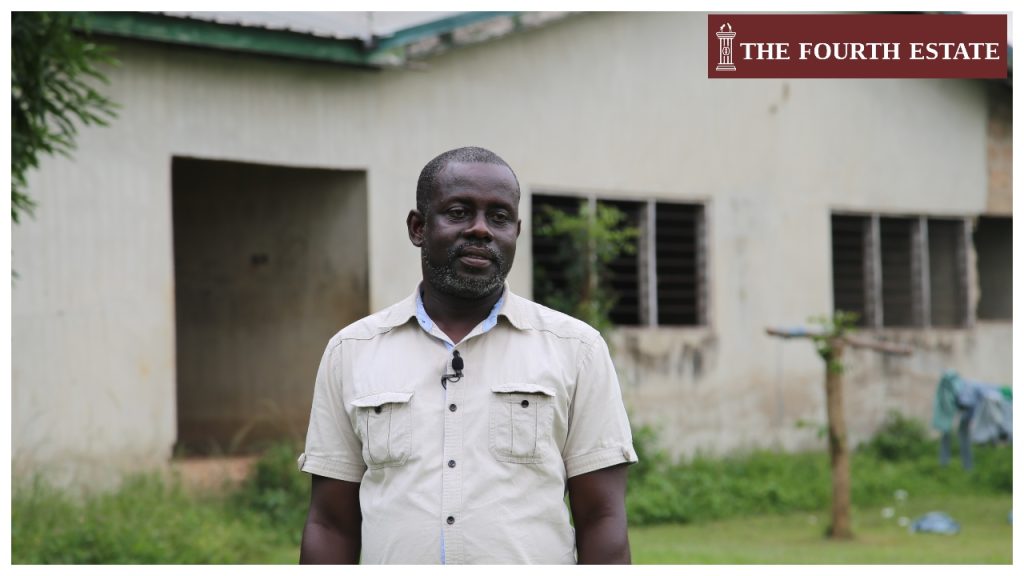
    “The children we have around,” he explained, “are children with intellectual disabilities. They have problems with communications, movement, writing skills, understanding, recall and abstract thinking. These are some of the problems they exhibit.”

    Wisdom Asantide, Assistant Headmaster of the Three Kings Special School PHOTO: Clement Edward Kumsah

    “Their thinking is just about now. They can’t think beyond, say, ‘in the next ten minutes, I will be doing this. I will do that.’ They don’t plan as such because they don’t have the capacity to do that. So, whatever they have around is what they think about,” he said of their abilities.

    With dementia taking over their brains, some of the students store nothing in their minds. They remember nothing.

    “If you teach them the figure one, and ask again in the next few minutes, they start mentioning whatever comes into their mind. With constant practice, some will be able to identify things. That is why we are not so much into academics because teaching them the subjects we learn in a normal school will just be a waste of time. Ours is basically about giving them some self-help skills, vocational skills to survive,” Mr. Asante said.

    In ordinary life, the sight of crying children can easily irritate or draw sympathy from parents, but in Three Kings Special School, learning to cry is part of the curriculum.

    Unlike their normal counterparts, some children living with intellectual disabilities are unable to express emotions.

    “Some of them don’t even know danger. They don’t feel any pain. If they’re in a situation in which there is pain, it is very difficult for them to express it. Speech is a problem for them. So, if that person is able to cry, then you’ll know that something serious is happening to him or her.”

    A noble idea suffers setbacks

    In 1995, when the leadership of the St Maria Goretti Catholic Church in Battor understood the need to provide opportunities for the vulnerable, they settled on a school for the mentally handicapped.

    The Three Kings Special School for the Mentally Handicapped was built to help rehabilitate the behavioural and learning deficits of its students through academic and social skills necessary for easy integration into society.

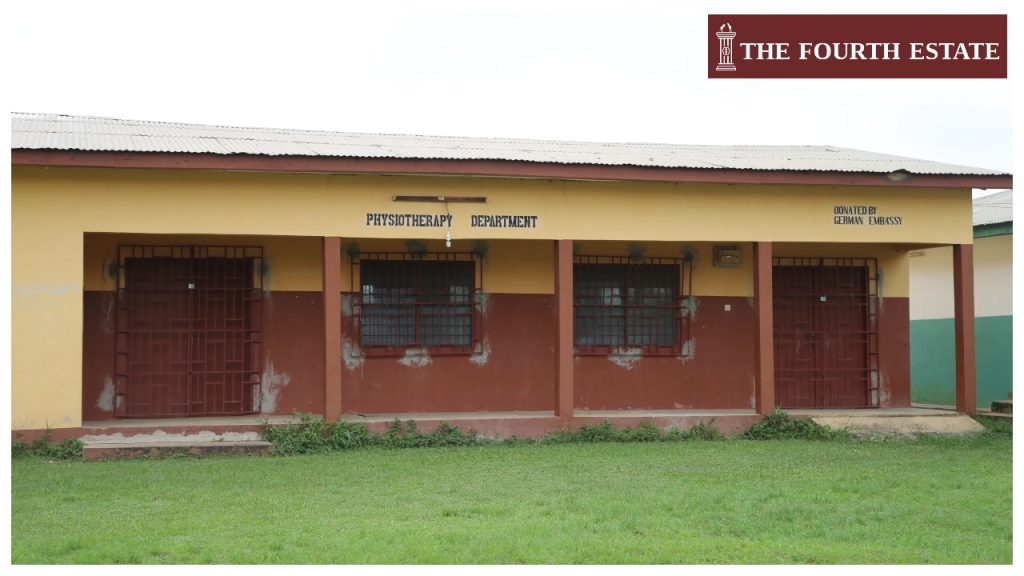
    The school’s Physiotherapy Unit has been shut down because it has no instructor PHOTO: Clement Edward Kumsah

    The church acquired land far from the prying eyes of the public and built a school that would later attract students mainly from the Greater Accra and Eastern regions.

    Five years later, the school was absorbed into the public school system and is currently administered by the Ghana Education Service.

    The oldest of three special schools in the Volta Region, Three Kings accepts students with learning and emotional disabilities from age nine. Per the school’s curriculum, a student should be ready to be integrated into society after 10 years.

    It currently houses 115 students from age 12 to the mid-30s. Many are adults with the minds of children.

    The “forest” in dormitories

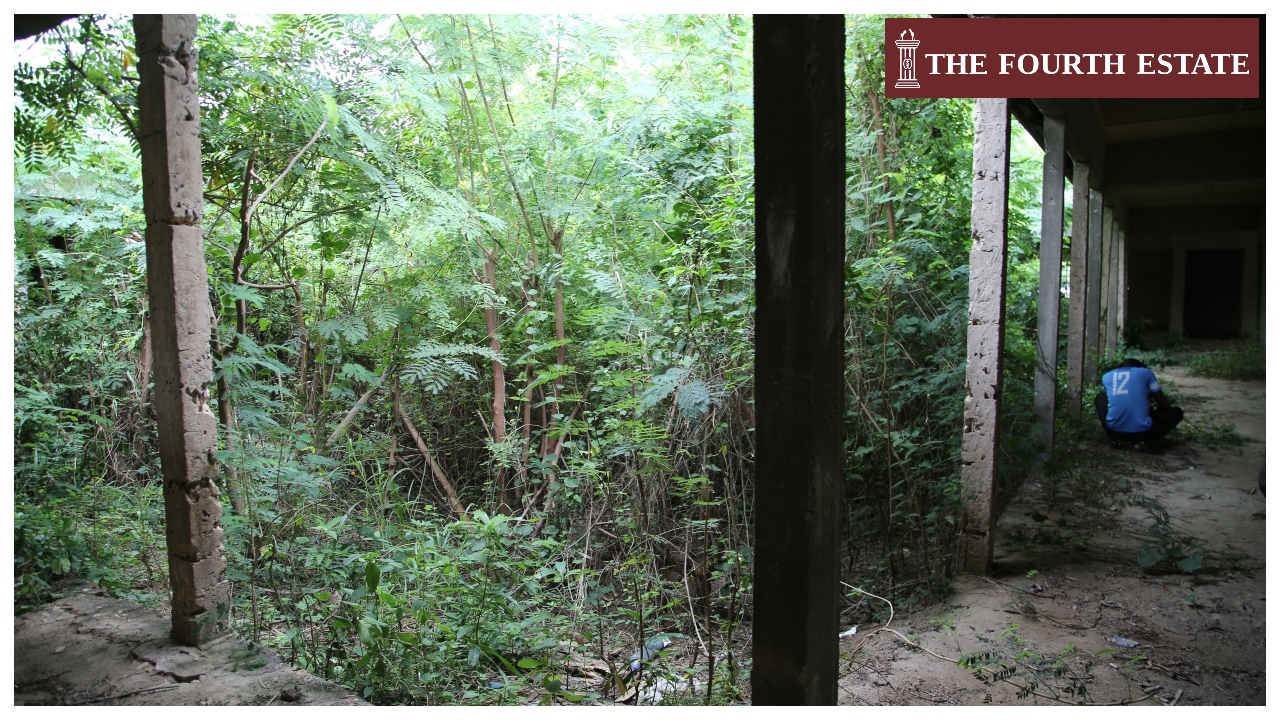
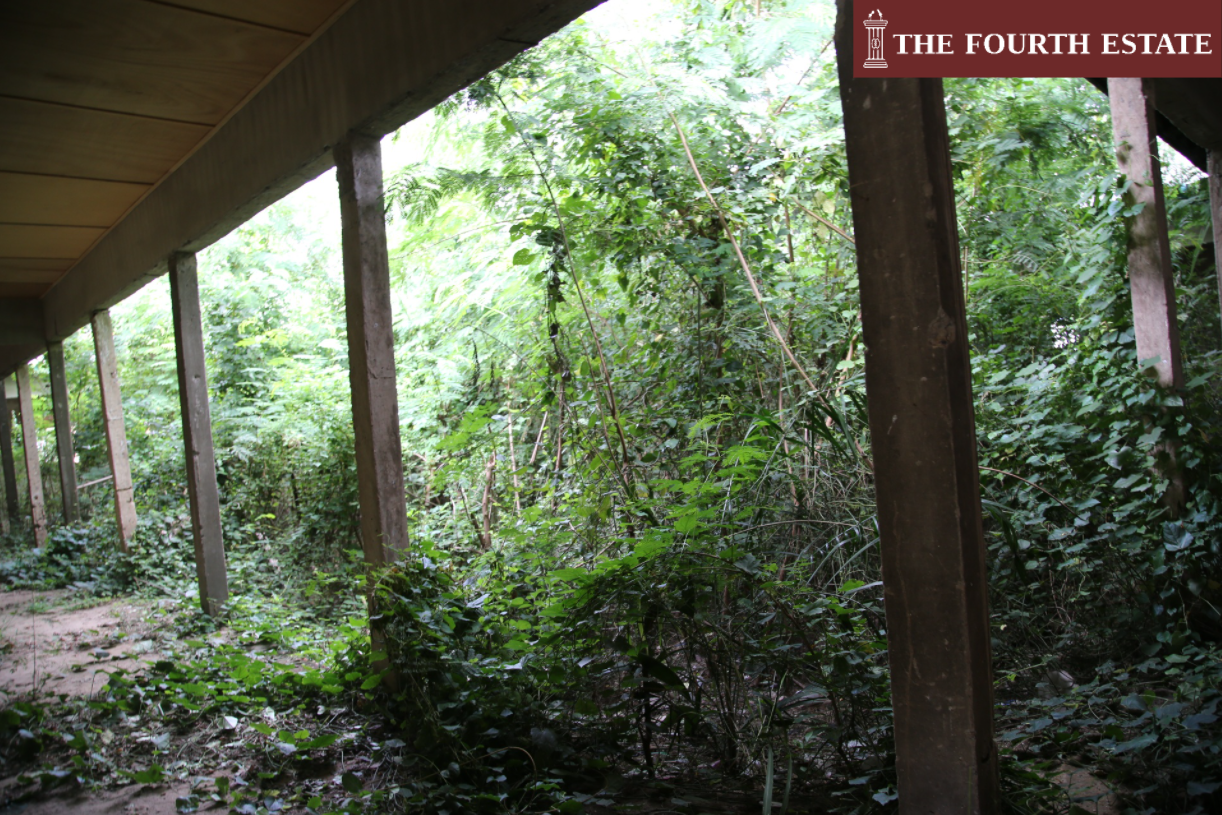
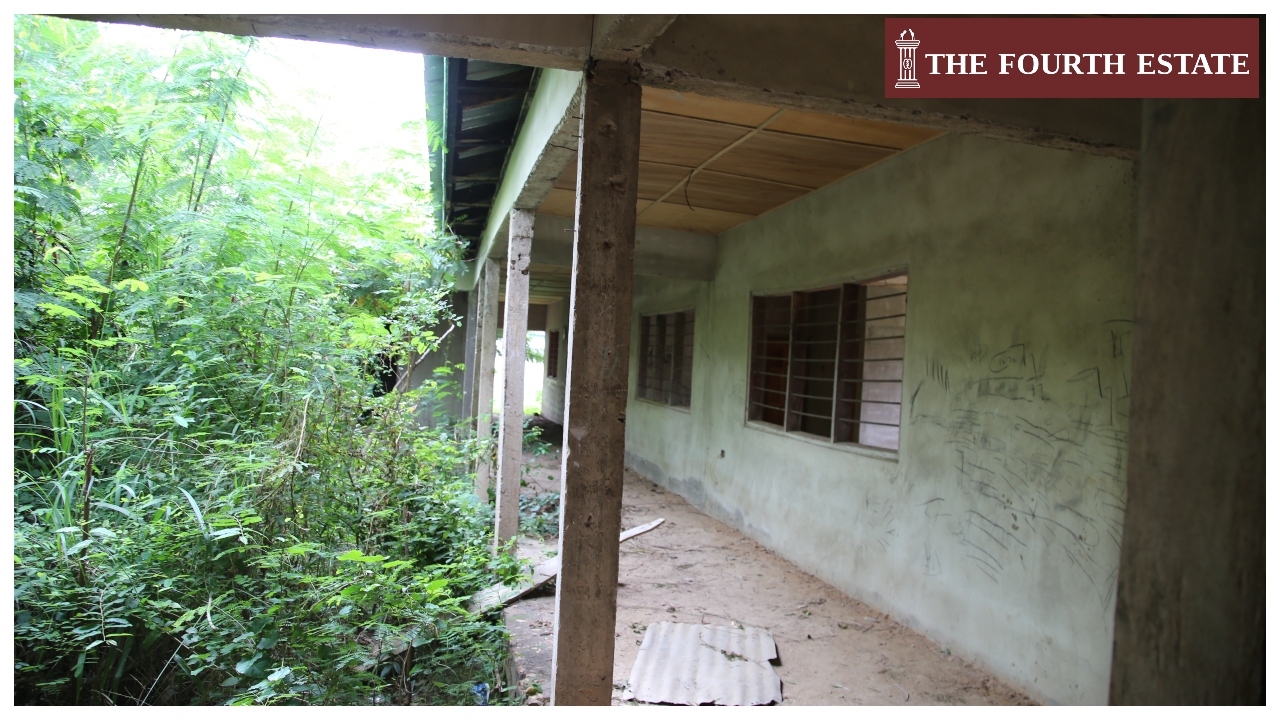
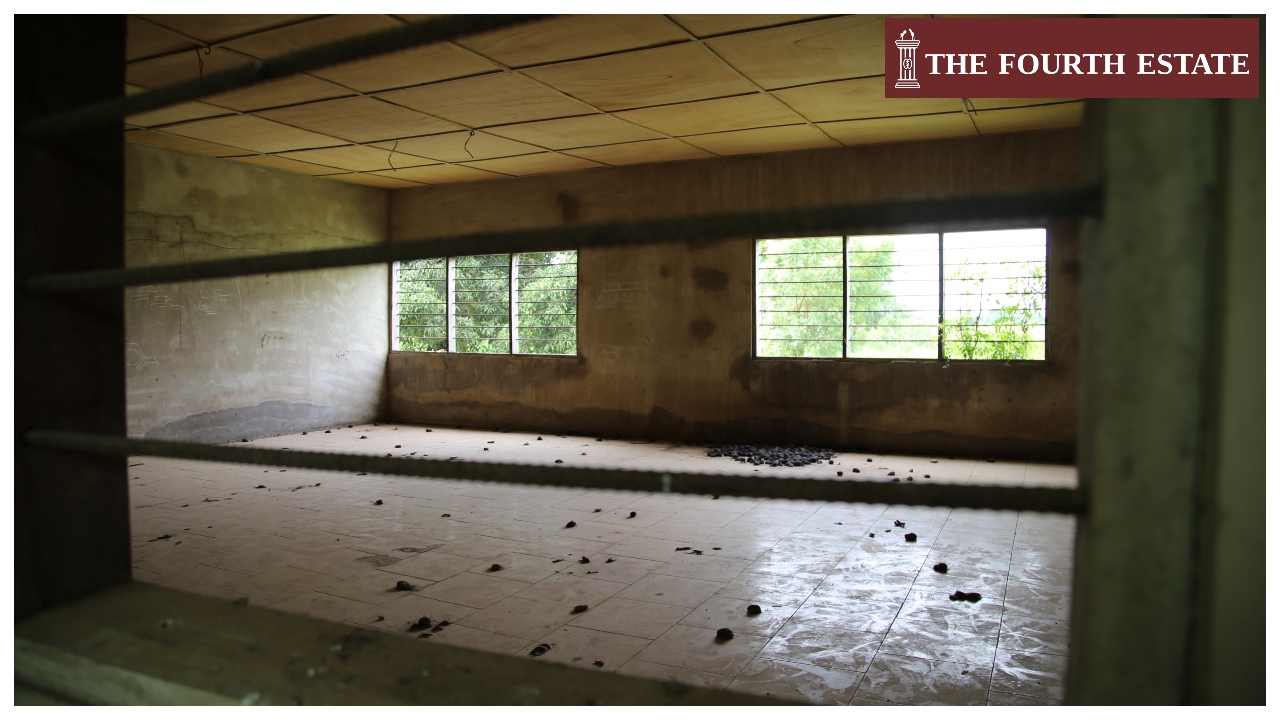
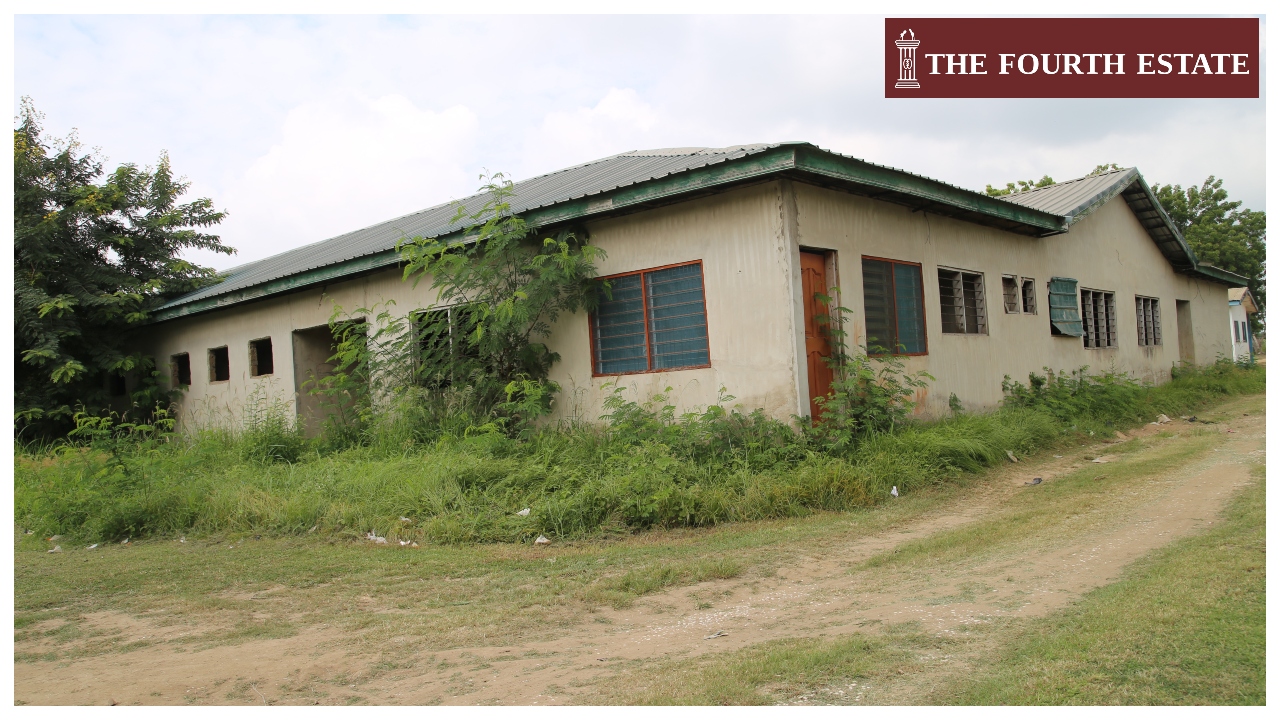
    Inside an uncompleted four-block dormitory at The Three Kings Special School, nature has invited itself and turned the corridors into a habitat for tree, shrubs and creeping plants—a disturbing monument of waste.

    Such is the nature of the thicket that one would struggle to walk through the verdant greenery. The entire space has the eerie appearance of a haunted home.

    This Ghana Education Trust Fund (GETFund) project was awarded on September 24, 2007, and was expected to be completed on August 5, 2008, as a solution to the accommodation problem in the ever-growing school.

    But by the time the 2008 election was over, it was forgotten. The contractor, Omstar Construction, complained of a lack of funds to complete the 100-bed structure.

    “The contractor was serious with the job and worked until 2008 when the change of government came, and he started complaining of funds. He managed to complete the roofing and did the tiling.

    “But somewhere along the line, he stopped coming to the site and it was all about funds,” Mr. Asantide recalled in an interview with The Fourth Estate.

    A decade after the project stalled, the owner of the construction company, whose name Mr. Asantide remembered only as Nene, died.

    The dormitories, built around a courtyard, were expected to accommodate 25 students per room with provisions for caregivers, also known as mothers. The dormitories would have separate bedrooms, a kitchen, and a bath.

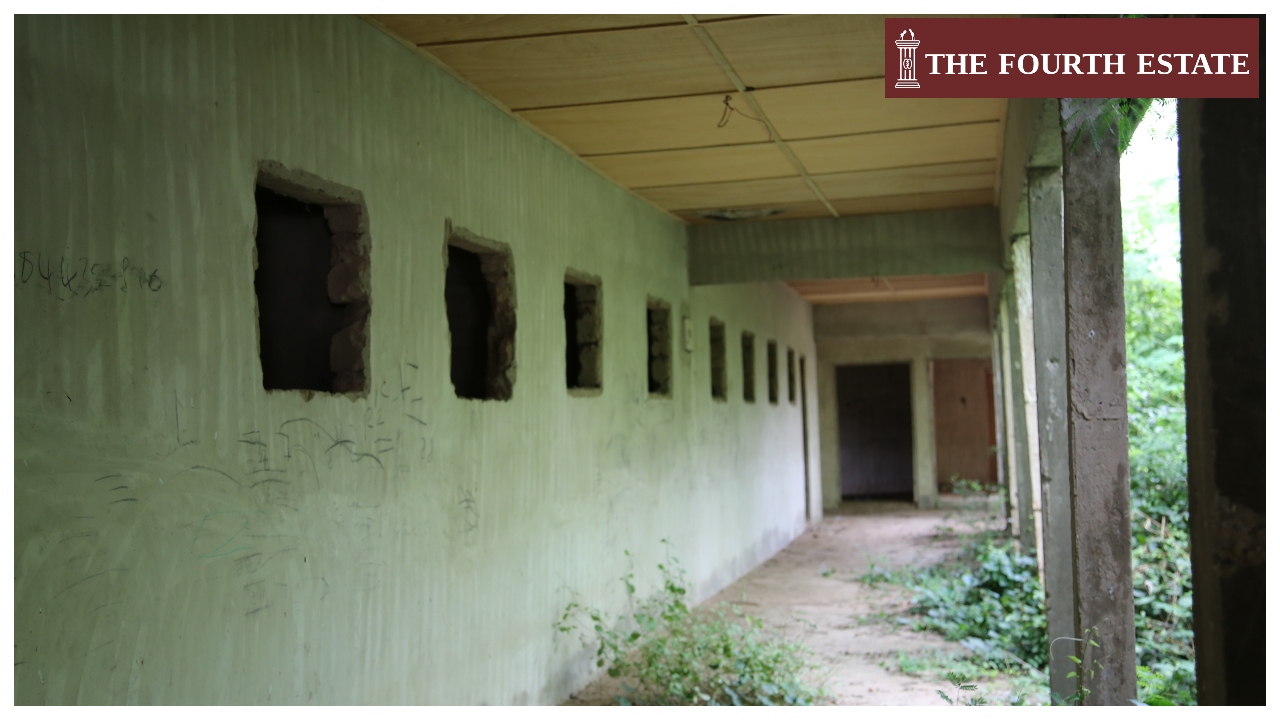
    Currently, the structure has been roofed and wired. The cables hang loosely in almost every room. Some ceilings have been completed. Doors and windows are yet to be fixed. Not much has been done on the 20 washrooms.

    Inside the dormitories and caregivers’ apartments, everything imaginable in an uncompleted building snaps at your attention. There is an army of wall geckos and a lounge of lizards preying on the insects that have made the space their home.

    A brown canvass (rotten mangoes) of unintended art littered the tiled floor—the handiwork of the special students. In their moments of fun, they are said to pelt the blocks and rooms with mangoes, as if to drive away the spirits stalling the project.

    Outside, foliage is overgrown around the building. With only two labourers and a 10-acre land, Mr Asantide said there were very few muscles to tame the ever-growing weed. So, they prioritized the habitable spaces.

    In 2020, the Architectural Engineering Services (AESL) went to the site to introduce a group of people to continue the job. One of them, the assistant headmaster said, is the contractor’s son. But he could not do much because of the same old story—lack of funds.

    “He said he was going to look for a loan and come back. Since then, he has not returned,” Mr Asantide recalled.

    In 2007, when the government decided to build the dormitories to ease congestion, there were 80 students. With a 44% increase in the number of students to date, the school ran out of options.

    “We had to convert some of our classrooms into dormitories even though we don’t have enough classrooms. Because of the accommodation challenges, a lot of students are on a waiting list. Parents come and go, but we are not able to help because of the accommodation problems. We can’t take all of them,” Mr. Asantinde said.

    He observed that the congestion could sometimes be suffocating.

    According to him, the crowding resulted in heat in the rooms. The students don’t feel comfortable in the rooms when the sun is high and controlling them becomes difficult for the mothers [caregivers].

    “As mothers, we have a big challenge because we don’t have our own spaces,” a caregiver told The Fourth Estate. “It makes it difficult to even cook. Sometimes, you could be cooking in the corridor and a child would just defecate by you. Some even get seizures and fall on the cooking pot. If we have our own spaces, we won’t be recording such unfortunate accidents. We are suffering.”

    No records at assembly

    north_tongu_district_assembly
    The North Tongu District Assembly, Coordinating Director, A.M Awal Suhiyini PHOTO: Clement Edward Kumsah

    When The Fourth Estate reached out to the North Tongu District Assembly, the District Coordinating Director, A.M Awal Suhiyini, said the assembly [created in 2012] was new and had no records of the abandoned project.

    He was, however, quick to add that when the District Chief Executive, Richard Collins Arku, was informed about the state of the abandoned dormitory project, he followed up to the GETFund, where he learnt that the contractor had died.

    Mr. Suhuyini was lost between hesitation and a frown when he was asked whether the assembly was willing to complete the 14-year-old project.

    “As a district assembly, we don’t have it in our plans to complete it. As an assembly, before we can complete it, we would have to ensure that the project is terminated before it can be repackaged and re-awarded,” he explained.

    GETFund responds

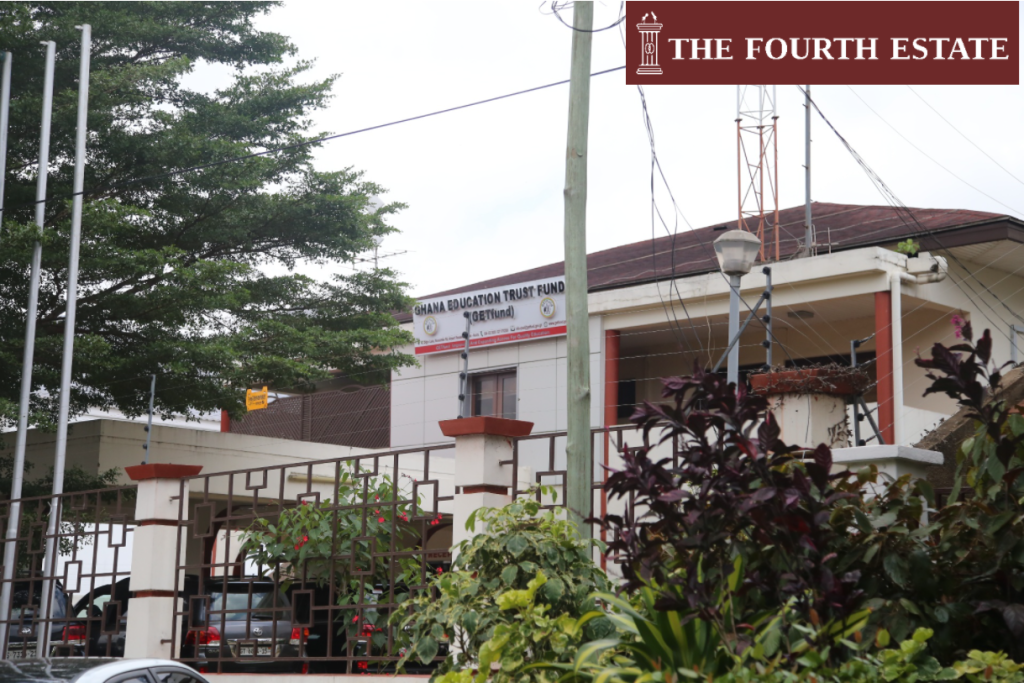
    GETFund office in Accra PHOTO: Clement Edward Kumsah

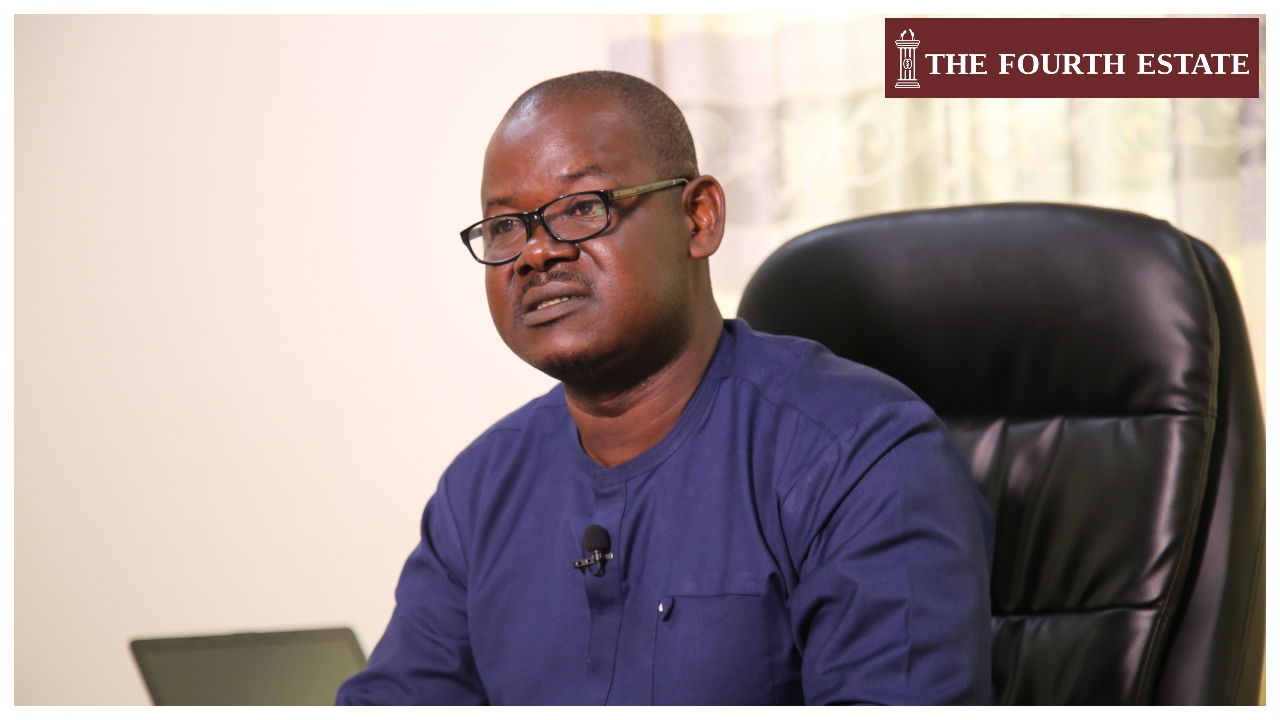
    The acting Head of Project Monitoring and Evaluation at GETFund, Godfred Schandorff, however, acknowledged the existence of the project, which was originally scheduled to be completed within a year.

    The project was estimated to cost  GH₵ 350,455. When the contractor, Omstar could not complete it, the company asked for a review of the contract sum given the rise in the cost of building materials. This was approved by the Volta Regional Coordinating Council. However, Omstar could not complete the work.

    Mr. Schandorff said the fund had fulfilled all its financial obligations to the contractor, with the last certificate of work honoured in 2009. The company had received almost GH₵ 44,000 for the work done, as it was paid based on work done in phases.

    Mr. Schandorff said although GEtFund financed projects, it did not have control over the award of contracts and supervision, except to engage the project supervisor, in this case, the Architectural Engineering Services (AESL).

    “The structures and bureaucracies of the system are beyond the control of the GETFund. To hire and to fire is out of our scope,” he said of the award and execution of contracts.

    On the way forward, he said the AESL could re-engineer the project to get it completed.

    By re-engineering, he meant the project would be revived through either the awarding institution (Ministry of Education). The ministry could terminate the contract and re-award it to another contractor or offer it to the same contractor at a new contract sum.

    From there, he said the fund would be informed to take the needed action.

    AESL reviewing the project

    That decision has been taken by the AESL. The Volta Regional Consultant, Richard Osei Amanfo, told The Fourth Estate, “It’s unfortunate the project has delayed. Currently, we are seeking rectification from the review board of the Volta Regional Coordinating Council (VRCC). The contract sum has changed and needs authority (sic) to continue work.”

    He said without the approval of the VRCC, GETFund would not pay for the completion of the project.

    The son and brother of the late contractor, he said, had brought letters to the AESL and expressed their desire to continue with the project.

    AESL figures indicate that as of 2014, the cost has jumped up to almost GH₵ 817,000

    Encroachment, disappearing students

    What was in the past an isolated asylum for children with mental challenges (hhttps://backinmotionsspt.com/diazepam/) is now a highly sought-after real estate address.

    The school authorities are fending off encroachers. But they fear that it may not be too long before the school’s 10-acre land shrinks.  But Mr. Asantide is worried about the safety of the children.

    “Because the school has not been fenced, the children walk out of their limits [boundaries]. They go beyond the school boundaries and sometimes we have to go and look for them,” he said.

    Forging ahead despite challenges

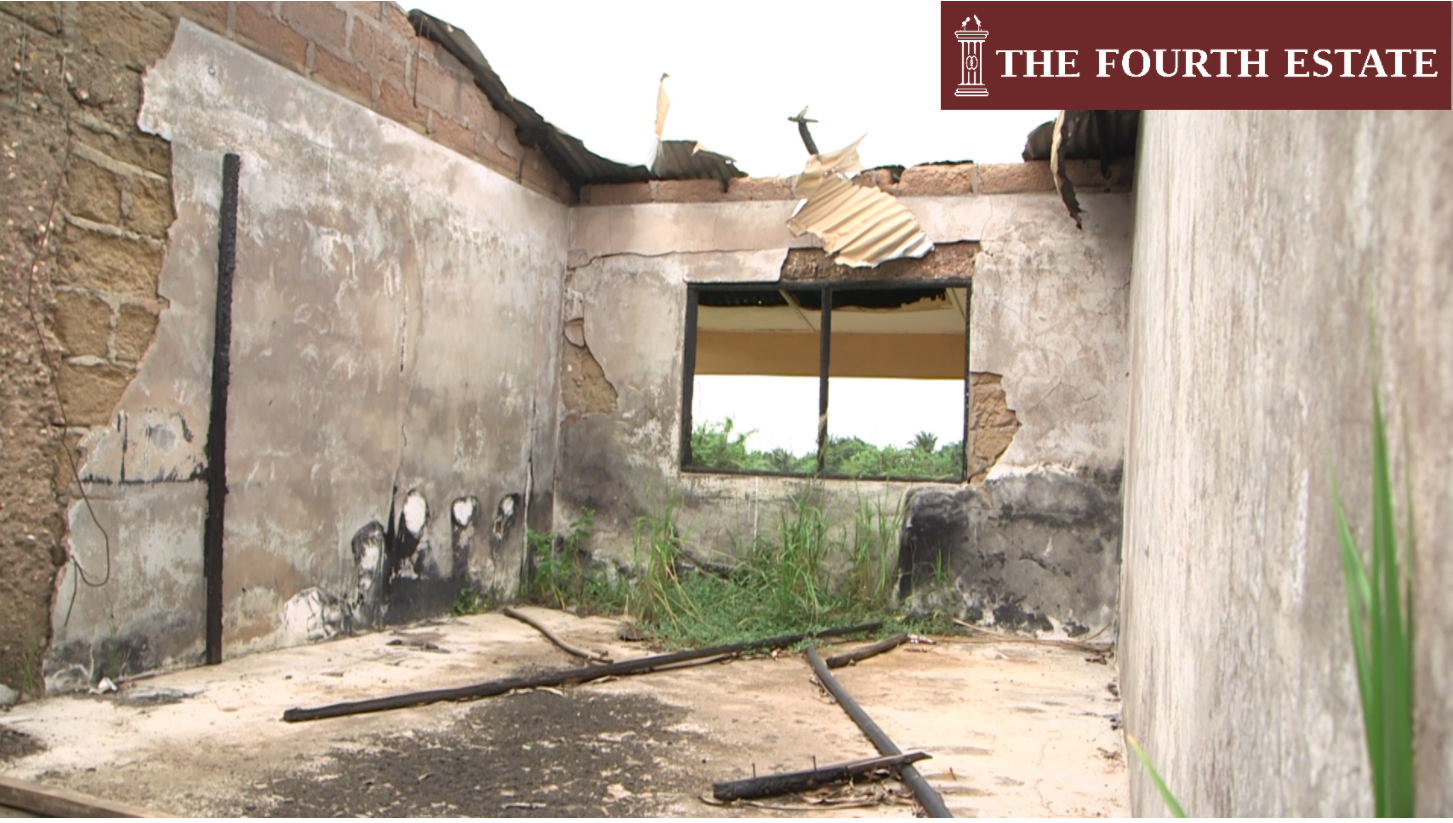
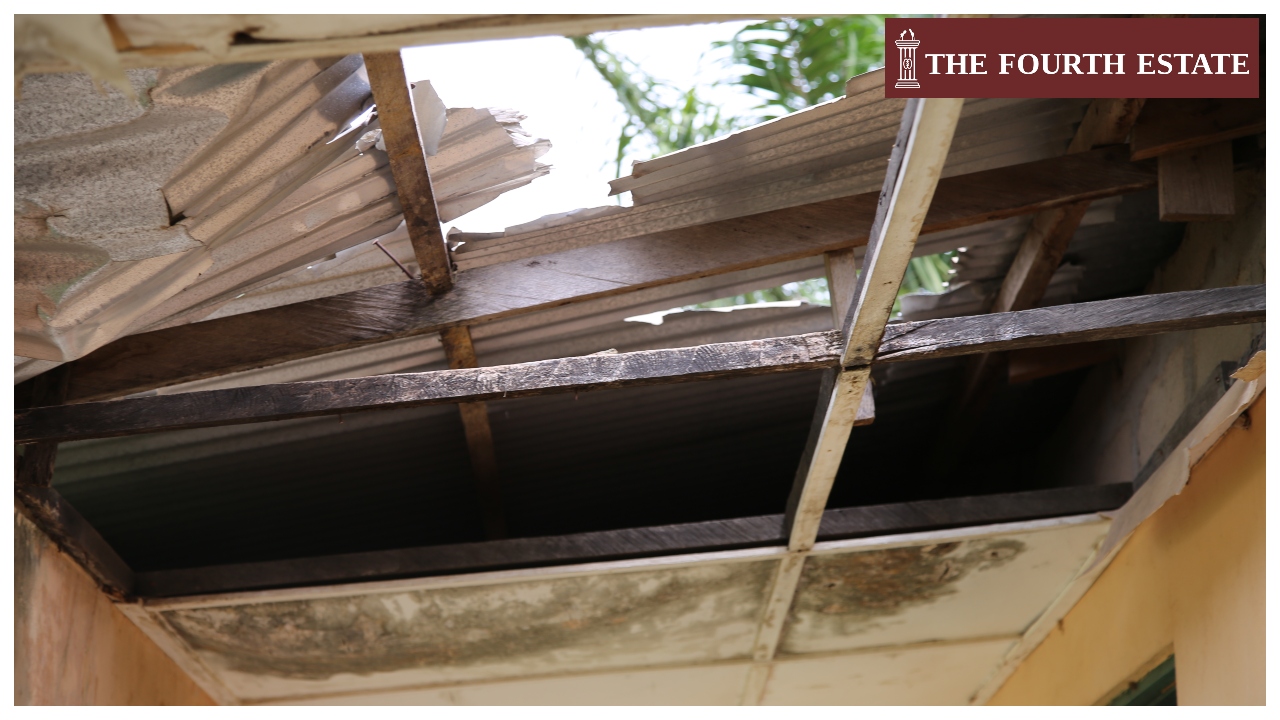
    Walking into the workshops of the school is like a step into chaos after a storm-battered roof, broken ceilings, a burnt storeroom and training rooms at the mercy of the weather.

    Here, time seems to travel at a slower speed. It could take the average student months to stitch something together. Training materials are barely enough.

    The school’s only storeroom for artifacts was reduced to ashes in 2018. The Ghana National Fire Service has asked that it should be pulled down because it is too risky to be used. But five years on, nothing has happened.

    In spite of all the deficiencies, some of the teachers have reason to smile because some of the students are picking up vocations.

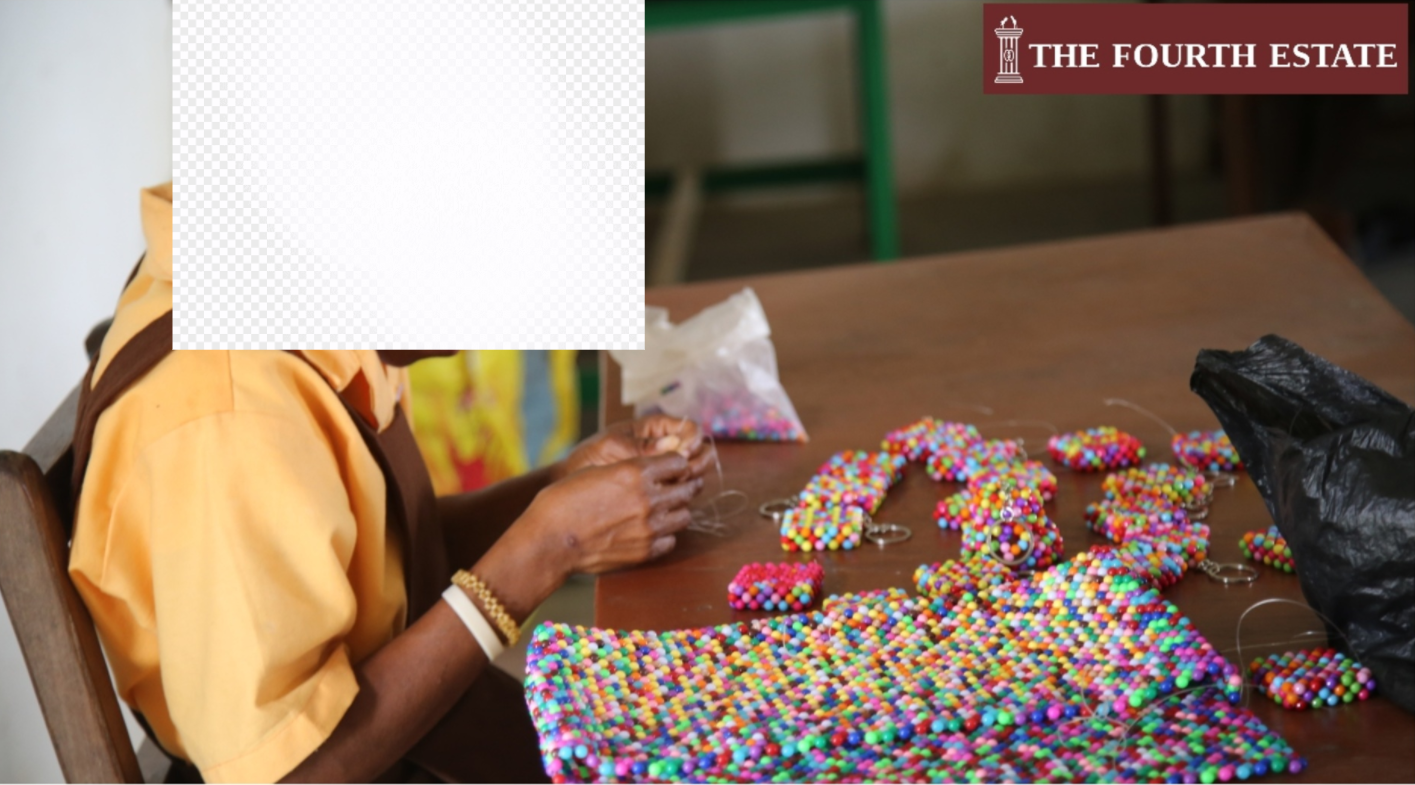
    Among them is 34-year-old Edem Klege. Partially blind and mentally challenged, her fingers were swift as she wove at the time of our visit.

    A 34-year old student of  the Three Kings Special School, Edem Klege PHOTO: Clement Edward Kumsah


    Her teacher, Cothilda Afeku, described the shy-looking tricenarian as being quick to pick up what she is taught. Her peers take at least 12 months to master bead-making and other skills.

    As her colleagues twisted and tied bundles of clothes of different colours into doormats, she smiled to herself, occasionally squinting to squeeze thread through the eye of a bead. The more she threaded the beads, the more she tapped her feet, as if to ward off tension in her legs.

    Next door, two students stared attentively at the mat as another vocational teacher, Joseph Appah, wove a labyrinth of ropes into a doormat. They take turns to make the same move.

    He has his frustrating moments teaching students with little memory to recall what they had been thought the day or term earlier, but Mr. Appah said he found joy in contributing to the change in the lives of his students.

    “I have accepted that it is my work. I’m not bothered. My aim is that at the end of the day, at least, one of them will learn it and practice [make a living out of it].”

    A WHO 2012 data estimated that of the 21.6 million people living in Ghana at the time, 650,000 were suffering from a severe mental disorder and a further 2,166, 000 were suffering from a moderate to mild mental disorder.

    The treatment gap is 98% of the total population expected to have a mental disorder, meaning only two percent of the country’s mentally sick got treated.

    In some communities, mental illness is seen as a taboo and the mentally ill are referred to as “mad people.” Ex-communicated by their families, they are forced to roam the streets in tattered clothes and eat from refuse dumps.

    But the students of the Three Kings Special School are isolated from stigmatization and are helped to have a future –a sanctuary that disability experts would want to be protected and resourced.

    It is a reason the authorities of the school say the government and interest groups in education and mental health should pay attention to their disturbing plight.

    Students of this school might have difficulty crying, but their teachers do not think those in charge of the country’s resources need to see tears before they can give a sympathetic ear to the predicament of students and caregivers at The Three Kings Special School for the Mentally Handicapped

  • “Suspend payments to Zoomlion” –Auditor-General orders as  contract sum hits GH₵324 million

    “Suspend payments to Zoomlion” –Auditor-General orders as contract sum hits GH₵324 million

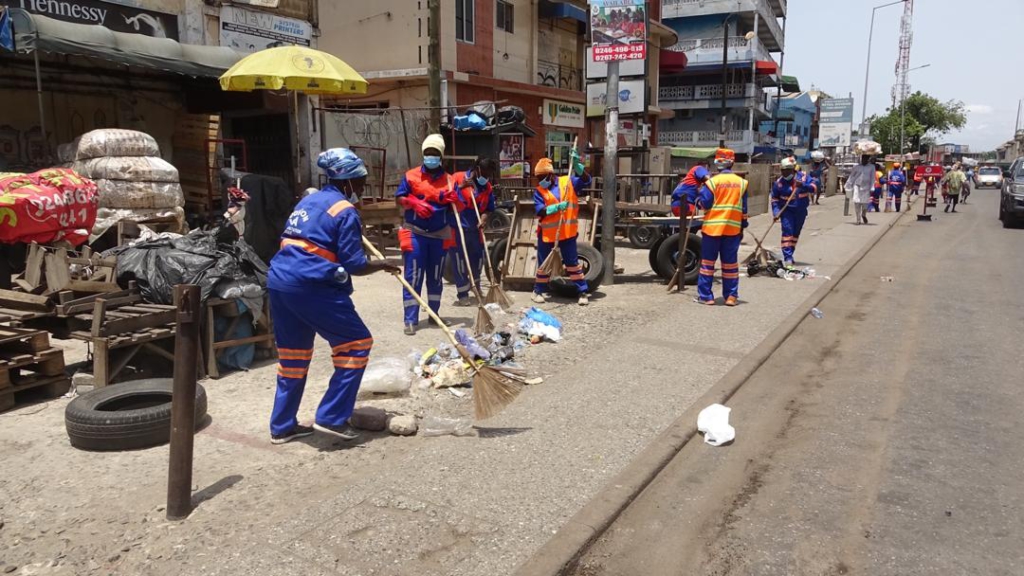
    At the crack of dawn, while most people are still in bed, Ama Djoleto (not her real name) wakes up at 4 a.m. to get ready for her street-sweeping job.

    Draped in her blue and orange uniform, she drags herself out of the house and walks through the dark streets of her neighbourhood with a broom in hand.

    She has her fears, fears of being harmed in the early hours of the morning because of recent happenings in her area. But she cannot afford to miss work.

    It is not the kind of job the mother of two wanted. The salary is bad, she says. Her monthly take-home is GH₵ 180 or $30. The job comes with a lot of contempt from road users and the danger of being hurt.

    So, for about GH₵ 6 a day, she sweats her dawn away, risking being knocked down by vehicles on the Achimota-Ofankor highway for what she describes as a pittance.

    Ama is among the 45,000 people across the country who are working under the Sanitation Model of the Youth Employment Agency (YEA). The YEA recruits them but they are supervised by Zoomlion to sweep. This contract has been running since 2006 when the National  Youth Employment Programme was first initiated to provide hope for the teeming unemployed youth in Ghana.

    Zoomlion Clears Air on payment to sanitation staff – Today Newspaper
    The sweepers are paid GHc 180 out of the GHc 600 Zoomlion is paid

    The government allocates GH₵ 600 to each sweeper. Out of this, GH₵ 180 goes to the sweeper and GH₵ 420 to Zoomlion as logistics and management fee monthly.

    This means, out of the GH₵7,200 allocated to each sweeper annually, they receive GH₵2,160, while the lion’s share of GH₵5,040 goes to Zoomlion.

    The amount allocated to the beneficiary used to be GH₵500, out of which GH₵ 100 went to the beneficiaries and GH₵400 went to Zoomlion. The review in the allocation happened about two years ago.

    But the Auditor-General’s report on  2020 Management and Utilization of the District Assemblies Common Fund and other Statutory Funds said this was done without any documented approval.

    “This allowed Zoomlion Ghana Ltd a monthly entitlement of GH₵ 500 management fees for each of the 45,000 personnel on the Module in the sum of GH₵ 270 million per annum. The fee was increased to GH₵ 600 in 2019, raising the annual fee payable from GH₵270 million in 2018 to GH₵ 324 million in 2019,” the Auditor-General’s report said.

    The figures also mean that the management fees went up by GH₵54 million out of which the sweepers take home 30% of the amount allocated, while Zoomlion takes 70%.

    The Audit Service said it did not get any relevant documents to authenticate the payments. However, the Auditor-General said the payments were made on the instruction of the YEA Executive Director.

    The District Assemblies Common Fund made the payments and told the state auditors that “the implementation and supervision of work done were within the domain of the YEA,” the audit report said.

    With that in mind, the Auditor-General wrote to the YEA, requesting evidence of engagement of personnel and related employment records for verification.

    According to the report, the YEA confirmed that a new contract was signed between the YEA and Zoomlion Ghana Ltd in 2019.

    However, the Auditor-General was not convinced.

    The report, therefore, recommended to the Administrator of the District Assemblies Common Fund to “suspend further payments on the module until we are provided with the related employment and performance records by YEA for our validation.”

    The Auditor-General continued, “We also recommend to the Administrator to make future payments based on submission of certified work performance by YEA countersigned by the Coordinating Directors of Assemblies or their representatives.”

    Meanwhile, various investigations into the implementation of the programme have revealed that the sweepers sometimes have to buy their own brooms—the main tools for their trade.

    In 2013, after the GYEEDA Scandal by Manasseh Azure Awuni, the government set up a committee that reviewed the contracts and found many anomalies with the Zoomlion contract. The Committee recommended the discontinuation of the contract, but the government did not do it.

    The opposition New Patriotic Party (NPP) at the time put pressure on the Mahama administration to terminate the contract. After winning the 2016 election, however, the NPP government rather increased the management and logistics fee for Zoomlion.

    That is not all the concerns the latest audit report found.

    The Auditor-General also said the DACF paid a little over GH₵ 3.8 million to Zoomlion for fumigation and SIP services for 38 newly created assemblies that had not begun operations.

    Zoomlion asked to sustain fumigation of institutions
    The Auditor-General says Zoomlion was paid, although it did not fumigate assemblies that were yet to be operational

    The assemblies were not inaugurated in March 2018 and their agreements with Zoomlion took effect from April 2018.

    The payment is 2018, the Auditor-General said, contravened Regulation 39 of the now-repealed Financial Administration Regulations, 2004 (L.I 1802) which required heads of accounts to ensure that payments were cleared.

    “We considered the payment to be unjustified and loss to the Fund, as the allocation to the newly created assemblies did not warrant payment to Zoomlion Ghana Ltd for no work doNE,” the report said.

    It explained that the assemblies indicated that Zoomlion Ltd would perform extra services to recover the amount.

    It, therefore, directed the administrator of DACF to provide evidence of the scope of work undertaken by Zoomlion Ltd to offset the payment to recover the GH₵3.8 million from Zoomlion.

    In yet another deal, the Auditor-General asked a Jospong company to cough up GHc 95 million, which one of its waste management subsidiaries, Sewerage Systems Ghana Limited, received from the District Assemblies Common Fund (DACF).

    Zoomlion commissions Lavender Hill Faecal Treatment Plant
    Lavender Hill Treatment plant

    YOU MAY ALSO BE INTERESTED IN: ROBBING THE ASSEMBLIES (PART THREE)