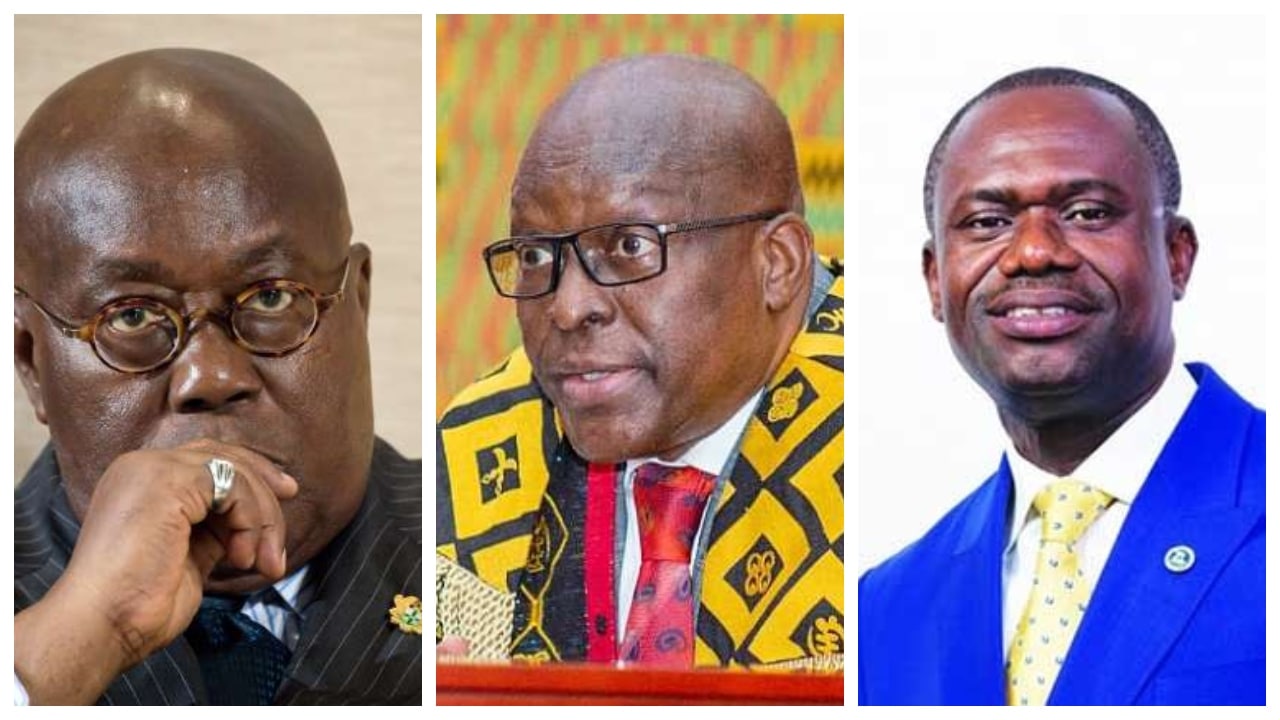
The Minister of Food and Agriculture, Dr Owusu Afriyie Akoto, on February 3, 2022, engaged with potential investors at a breakfast meeting in Accra. The one-day event, organised by the Tony Blair Institute for Global Change, was meant to woo investors into Ghana’s agriculture sector.
The event was attended by the former British Prime Minister, Tony Blair. Ghana’s Agric minister claimed in his speech that, over the last five years, the agriculture sector had tremendously improved.
He attributed the achievement to the rollout of the government’s flagship agriculture policy, Planting for Food and Jobs (PFJ).
Referring to the vast investment opportunities in the country’s agriculture value chain, the minister rallied the country’s domestic and foreign investors to take advantage of what he described as a booming agriculture sector.
The minister, who oversaw the Planting for Food and Jobs policy, had a lot more to say about it. He compared the production figures of some major food crops before the Akufo-Addo administration took office with figures the PFJ had recorded.
Former British Minister, Tony Blair (left) and Ghana’s Minister of Food and Agriculture, Dr Owusu Afriyie Akoto (left)
“Take soybean for example, before 2017 we were producing less than 100,000 tonnes but, today we are more than quarter of a million. We have quadrupled our rice production and we are a net exporter of maize to neighbouring countries,” he said.
Fact-Check Ghana has verified some of the claims Dr Akoto made and presents the facts below.
Claim: “Take soybean, for example, before 2017 we were producing less than 100,000 tonnes but, today we are more than a quarter of a million.”
Verdict: Completely false
Explanation:
Figures from the Ministry of Food and Agriculture’s (MOFA) Statistics, Research and Information Directorate (SRID) showed that the country has produced more than 100,000 tonnes of soya bean since 2009, that is 13 years ago.
Fact-Check Ghana obtained the data from the ministry using the Right to Information law. Below is a table showing the annual production figures of soybean since 2008.
From the table above, Ghana crossed 100,000 metric tonnes of production of soya bean in 2009. The production has since increased gradually over the period.
It is therefore completely false that before 2017, Ghana was producing less than 100,00 metric tonnes of soya beans.
The minister also said that Ghana was now producing more than a quarter of a million (250,000) metric tonnes of soya bean following the implementation of the PFJ.
However, the data from his own ministry MOFA as presented in the table indicates does not support the claim. In 2020, the country recorded 202,243mt. The ministry has forecasted 221,249mt for the 2021 cropping season. The country’s production is not even up to 250,000 mt let alone more than that.
It is therefore completely false that the country’s soya bean figures now stand at more than half a million tonnes.
“We have quadrupled our rice production”
Verdict: Completely false
Explanation:
Data from the Ministry of Food and Agriculture’s (MOFA) Statistics, Research and Information Directorate (SRID) indicates that even though the annual production of rice has increased since 2017, the figure has not quadrupled. Below is a table showing the annual production figures of rice since 2016.
When the sun set on Mahama’s administration in 2016, the country recorded 687,679mt of rice. Quadrupling the production of rice would mean recording 2,750, 716 mt. In 2020, Ghana recorded 986,905mt. The ministry has forecasted that the country would record 1,072,682 mt of rice in 2021. The figure is not even up to double the production data in 2016.
The minister claim is, therefore, completely false.
In the last two weeks, there have been major developmentsin Ghana’s media and freedom of expression landscape. A number of radio presentersand civic actors have been arrested and put before the law courts mainly for publishing what is said to be false information or information with the potential to breach the peace of the country.
One radio presenter has been jailed for contempt of court. During the same period, a journalist has been mercilessly beaten up by police officers in the Western Region of Ghana.
The recent developments are not unique. They only represent an amplification of Ghana’s gradual but rapid slide into a crisis in journalistic practice, oppression of media freedom and the muzzling of free speech.
The apparent crisis at hand represents a toxic mix that has the potential to undermine media freedom and freedom of expression in Ghana. It also has the potential to reverse Ghana’s modest gains towards democratic consolidation, peace and security. This is because, while reckless speech can undermine the peace of the country, attempts at dealing with such acts through the powers of the state, when not well managed, can result in undue tension and rancour that could equally undermine the peace of the country.
The situation that confronts the country, therefore, needs to be urgently addressed in order to fully restore the role and value of the media and free speech in Ghana’s democratic enterprise.
Undoubtedly, what is being witnessed is the consequence of the combination of the following three critical and broad factors in the political economy of the Ghanaian media and freedom of expression environment:
A wave of reckless, unprofessional practices in the media and by the media;
The absence of effective regulatory institutions and mechanisms;
A phenomenal surge in repression, oppression and intimidation by a government that is increasingly becoming despotic rather than democratic.
In this first part of what is to be a series of analysis, I will be looking at the first point – the phenomenon of reckless, unprofessional practices in the media and by the media.
Recklessness in the Media and by the Media
Just as elsewhere, journalism or media practice in Ghana has never been perfect. Being a human endeavour, there will always be slips and imperfections. However, over time, there appears to be a free fall in adherence to standards and ethics by media practitioners and media organisations.
In the name of media freedoms, it has become very common to hear or see people baselessly abuse others on radio, TV or online. Pure fabrications, outright lies and unsubstantiated allegations in sections of the media are perpetrated with disdain. It is sometimes done as if to suggest that the laws of Ghana guarantee both media freedom and media recklessness.
Indeed, nearly all thereckless conduct in the mediaand by the media happens on certain types of media platforms – the ones that are openly partisan with partisan owners. Such media outlets often exist, not for the business of journalism, but to serve the interest of either the governing New Patriotic Party (NPP) or the main opposition national Democratic Congress (NDC). What matters to such outlets is partisan interest, not journalistic ethics.
For the NPP, such abusive media outlets have included Oman FM, Womtumi Radio and their affiliate TV stations (NET2 TV and Wontumi TV respectively), among many others across the country. For the NDC, such outlets have included Power FM and Accra FM (and before the Akufo-Addo government’s decision to selectively shut down opposition radio stations ahead of the last elections, it would have included Radio Gold and Radio XYZ), and several others in the country.
For many of these partisan media organisations, the situation has literally become ‘anything goes,’ so long as what goes is in the interest of the political party of the owners. Professionalism doesn’t matter. Presenters on many of these stations act as if the assessment of their performance is based on how abusive they are against members of their opposing political party.
Leaders and members of the governing NPP, including the President of the Republic have expressed concerns about media unprofessionalism and reckless media conduct. But it appears they are concerned only when such unprofessional conduct happens on opposition media platforms. When their allied media organisations such as Oman FM or Wontumi Radio do the same things it appears okay. They loathe unprofessionalism on opposition media outlets but love same on their allied partisan outlets.
The situation was not different when the main opposition NDC was in power, except that the then John Mahama government was admittedly more tolerant of dissent.
Some Illustrations
From June 2020 to May 2021 for example, the Media Foundation for West Africa (MFWA) monitored incidents of ethical violations on 10 Accra-based local language radio stations. During the period, a total of 1,754 incidents of ethical violations were recorded on the 10 radio stations.
As highlighted in the graph below, just three stations, namely Power FM, Oman FM and Accra FM, accounted for 1,463 of the violations representing 83.4% of the ethical violations.
Monthly reports were issued spotlighting the high frequency of ethical abuses especially on the three radio stations. Recommendations were also made each month on what could be done to correct or address the situation. But no one heeded. Managers of the stations couldn’t be bothered. Regulatory agencies showed no concern. The ethical violations continued unabated.
Again, ahead of the 2020 elections, the MFWA monitoredincidents of abusive content on 60 radio stations across the country. A total of 582 incidents of abusive or indecent expressions were tracked and documented. The main types of abuse were insulting and offensive comments; and unsubstantiated allegations. See the graph below for the trend on types of violations.
Once again, the leading perpetrators of abusive content were the same partisan radio stations. In fact, just five out of the 60 radio stations monitored—namely Oman FM, Wontumi Radio, Ash FM, Power FM and Accra FM—accounted for 432 (74%) of the 582 of the incidents of violations. The table below indicates the number of violations recorded on each of the five partisan radio stations.
Oman FM
Wontumi Radio
Ash FM
Power FM
Accra FM
126
99
87
85
32
At the time, the MFWA also highlighted the personalities who were the leading perpetrators of abusive language on the networks. Those persons included the owners of the two topmost abusive radio stations (Oman FM and Wontumi Radio). As a country, we looked on despite the monthly presentation of facts and evidence from the media monitoring work.
The top three most abusive stations belonged to leading members of the ruling NPP. But leadership and members of the party and government were not perturbed. Presumably, they loved the reckless effusions, the false claims and the abuse because the victims of those abuses were members of the NDC.
At the time, the leadership and members of the NDC loved the reckless conduct on their allied radio stations too. The most abusive presenters including Mugabe Maase and Oheneba Boamah Bennie were among the most popular and loved folks among NDC party loyalists and fanatics.
As a country, we looked on while all these acts of unprofessionalism and abuses were going on as if such conduct did not matter for our democracy, for our peace and security, and for the morals of our society.
But how and whose actions got us into where we are? Who can and should be acting to help correct the situation? An attempt to respond to these important questions will be the subject matter of part two of this series while part three will focus on the intolerance and despotic tendencies of the government as far as media freedom is concerned.
The writer, Sulemana Braimah, is the Executive Director of the Media Foundation for West Africa.
On October 9, 2016, a voice rang, clear and loud like an ancient church bell, in the wilderness of Ghana’s political opposition:
“We need a leader who is sensitive to the needs of his people. We need a leader who is going to move Ghana forward. I’m inspired by our leader, I’m inspired by his integrity, and I’m inspired by his honesty. I’m inspired by his incorruptibility, I’m inspired by his courage, I’m inspired by his tenacity. Let’s rise for change.”
That voice belonged to Samira Bawumia, the wife of the New Patriotic Party (NPP’s) vice presidential candidate, who had become a favourite speaker at NPP rallies in 2016.
During therallyto crown the NPP manifesto outdooring in 2016, female speakers, including Mrs Ursula Owusu-Ekuful, the Member of Parliament (MP) for Ablekuma West; the then Women Organiser of the NPP, Ms Otiko Djaba; the wife of the NPP presidential candidate, Mrs Rebecca Akufo-Addo dazzled the crowd.
That day, the NPP sold its Free Senior High School policy, the One Constituency, $1 million; One village, One dam; and the One District, One Factory among other policies that dazed the NDC and left the then ruling party’s communication team clueless about counter-campaign promises.
In the midst of the sea of red, white and blue flags, the speeches were sometimes sentimental, particularly when Mrs Akufo-Addo said she knew her husband would do exactly what he promised.
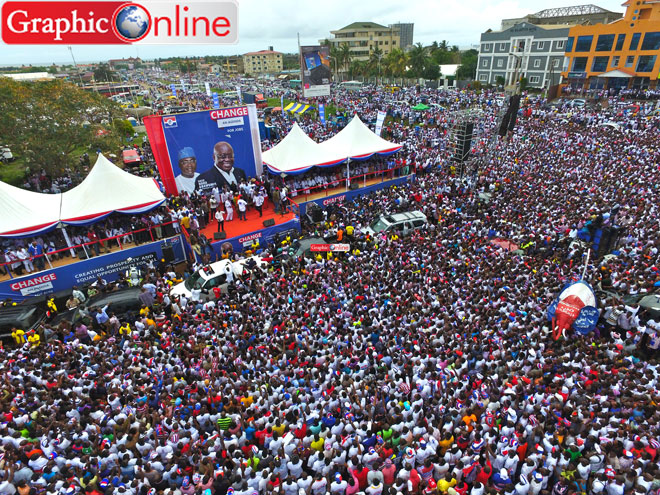
On October 9, 2016, thousands of NPP supporters gathered at the Trade Fair Centre in Accra as the party sold its manifesto promises to Ghanaians
“I know my husband and he would do all he said or promised,” the significant half of the NPP presidential candidate said in Ga.
To drum home their message of change, many in the thick crowd carried bells, which they rang with the mantra, “The time is up” a slogan picked from a Tigo advert in the heat of the country’s energy crisis. The NPP turned it into a slogan ostensibly to tell President John Dramani Mahama that his time was up.
By December 10, 2016, Mahama’s time was up.
The man, who broke the jinx of the Johns and became the first Ghanaian without the first name John to occupy the Office of the President since 1992, immediately got to work.
He froze the procurement of new cars. To put the icing on the directive, we were told he was even using his personal old Mercedez Benz. How nice, a president who understood austerity.
The president’s hype men would spin that gesture, often taking a jab at former President Mahama who, against better judgement, asked to be given the official bungalow he was occupying as part of his benefits.
The problem with propaganda is that after the crafty advertising is done, people want to see the performance of the advertised actor himself, not the work of gifted praise-singers.
That is exactly where President Akufo-Addo has left us scratching our heads.
Sleeping on the job
The months that followed made it obvious that the president’s attempt at austerity was more about populism than protecting the public purpose. In all, 110 ministers and their deputies formed the government of the country that was receiving economic balms from the World Bank. That number would jump to more than 120 later when the regional ministers of the newly created regions were appointed.
The justification was that there was so much work and that the end would justify the numbers. Time obviously hasn’t vindicated the president.
After cutting down his elephant-sized administration in his second term, one would have thought the president would keep his appointees on their toes. Instead, he has provided them with a mattress and pillow, often deflecting public criticism of their performance.
In other jurisdictions where citizens are taken seriously by their leaders, the likes of the Health Minister, Kwaku Agyemang Manu, and the Senior Presidential Advisor, Yaw Osafo-Maafo, will not even allow the shadows of the Jubilee House to fall on them.
Mr Agyeman-Manu supervised the procurement of Sputnik-V vaccines, which was later found to be fraught with procurement breaches. No apologies came from him. He rather took time off time to cool off. The former Senior Minister’s sin was the role he played in the procurement of a service that was disallowed and surcharged by the Auditor-General. The fallout of this was the tossing of Auditor-General, Daniel Domelevo, out of office.
With all their deficiencies as leaders, under Rawlings, Kufuor, and even Mills, ministers went to bed with an eye open, hoping not to be surprised in reshuffles.
Today, the man who told us in 2016 that “God did not put us on this rich land to be poor. It is bad leadership that makes us poor,” appears to have lost his zest for inspiring leadership.
Kumi preko, #Fixthecountry and e-levy
Our president prides himself in activism. Ghanaians remember him for being a forerunner in the Kumi Preko (kill me now) protests that hit the Rawlings administration when it introduced the value-added tax (VAT).
It worked. Temporarily, the Rawlings government suspended the implementation of the tax meant to replace the sales tax.
Akufo-Addo( front, second right) was among the leaders of the Kumi Preko demonstrations Credit: myjoyonline
But it came at a cost—at least two people died.
Ironically, when #Fixthecountry demanded accountability from the champion ‘Atta’ of protests, almost everything was done to gag them but for a Supreme Court intervention.
With hindsight, one would have thought that the man who led demonstrations that resulted in the death of his compatriots would prioritise broad consultations when introducing a new tax. To his credit, the pugilists we discovered in parliament should make up for the shortfall of boxing champions. Now we know where to find boxers and wrestlers for our national teams.
The hardships of 1995—including the rising cost of living, cut-throat fuel price and youth unemployment—are worse today.
Ghanaians are not on the street in protest against the e-levy, but it is shocking the public anger against this tax is lost on the president and his team.
Instead of learning from the past, the President and his men are trying hard to bully their way through parliament with a shoe-string majority, if any at all.
Fighting corruption
If, in 2016, any soothsayer had told me that the Mahama administration’s worst ranking on the Corruption Perception Index would be Akufo-Addo’s best, I would have told him or her to throw his or her cowries away and become the eyes of bats during the day.
But, alas, the president’s actions since 2017 portray a man who is more interested in keeping his party’s image intact than pushing his chief legal advisor, the Attorney-General, to deal decisively with corrupt appointees.
We sang choruses against the corrupt deals under the Mahama administration. In 2016, we had a choice. A choice between an obviously corrupt administration and a man sold to us as a saint.
But comparing the two today, Mahama would qualify for sainthood when we are marking the scripts of effort to deal with corruption.
At least, that administration initiated the prosecution of Abuga Pele, a former National Coordinator of the Ghana Youth Employment and Entrepreneurial Development Agency (GYEEDA) and Alhassan Imoro, a former National Service Secretariat Executive Director on allegations of corruption. These were Mahama’s appointees.
Abuga Pele was jailed, and the case against Mr. Imoro is still travelling through the legal mill.
How has his administration dealt with his appointees? What has happened to those who supervised the disappearance of excavators seized from illegal miners and tricycles belonging to the Northern Development Authority?
The President’s worst record in the fight against corruption came in sacking Daniel Domelevo, who is considered the most effective Auditor-General in the Fourth Republic and, perhaps, in the history of Ghana. No matter how hard President Akufo-Addo tries to explain it away, it’s still a blot on the president’s already questionable credentials.
Luxurious jet vs no accountability
It is shocking that the man who campaigned against wastage in past administrations now flies in luxurious private jets and finds it convenient to hide behind national security to refuse to account to the people. While the president travels in rented jets, some presidents in West Africa travel in Ghana’s presidential jet.
No one is demanding the President’s itinerary. But his ministers have been ducking the questions of transparency and accountability so much that one begins to wonder if we’re not dealing with a mistaken identity.
Interestingly, the president as a member of parliament had in the past dug holes into the proposal for a new presidential jet. Then, as the MP for Abuakwa, Nana Akufo-Addo expressed horror at the thought of Rawlings buying a presidential jet in 1998 at a time the economy was on its knees and Ghanaians were struggling to keep their head above the tide.
So, what exactly has changed? Are we better off today? Are we able to afford fuel cheaper than before? Is our healthcare system more sophisticated?
Indeed, our elders were right when they said a chameleon can only change its colour but not its skin.
You can reach the writer via email at [email protected]. You can follow him on twitter @thekekeli
In 2016, Nana Addo Dankwa Akufo-Addo of the opposition New Patriotic Party (NPP) campaigned on corruption and promised to wage a meaningful war against the menace if he was voted into office. His message resonated with many Ghanaian voters because of the many corruption scandals in the John Mahama administration.
But five years into Akufo-Addo’s presidency, Ghana’s best score in Transparency International’s Corruption Perception Index (CPI) is 43 out of 100. This is the worst score Ghana recorded in the John Mahama era.
Ghana’s best CPI score in the past 10 years was in 2014 when the country scored 48. It dropped to 40 in 2017, went up marginally to 41 in 2018, stayed that way in 2019 before climbing marginally to 43 in 2020 and 2021.
In the latest CPI, Ghana ranked 73 out of 180 countries /territories assessed annually by Transparency International, the global anti-graft body.
“Ghana’s current performance is still below 50, which is the expected average and thus leaves much to be desired,” a statement issued by the Ghana Integrity Initiative, the local chapter of Transparency International, said.
With most African countries among the worst performers on the corruption index, Ghana’s score of 43 placed her 9th along with Senegal out of 49 Sub-Saharan African countries in 2021.
The 2021 CPI, according to Transparency International, focused on corruption, democracy and human rights.
“TI’s research shows a strong correlation between anti-corruption and respect for human rights, and that very few countries have managed to establish effective control of corruption without also respecting human rights. Of the 23 countries that have significantly declined on the CPI since 2012, 19 also declined on their civil liberties score,” it explained.
Ghana’s performance on the Democracy Index has seen a decline between 2015 and 2020 from 6.86 to 6.501 (out of a possible score of 10), the CPI figures indicated.
Ghana’s score on the CPI remained stagnant two years in a row. Source: Ghana Integrity Initiative
Akufo-Addo’s anti-corruption rhetoric and the corruption reality index of his presidency
Even though the country’s performance has generally been unimpressive, it appears to be worse under the tenure of President Akufo-Addo.
Ghana’s CPI scores from 2012 to 2019 indicate that the worst performance within the period was recorded in the last five years.
Nana Addo Dankwa Akufo-Addo rode on the moral high horse of incorruptibility to the presidency. In the 2016 election, he promised to fight corruption and restore integrity in the public sector if voted into office. After winning the election, however, his critics say that fight has been done with only his lips.
The administration’s fight against corruption has largely been touted under claims that it had over the years resourced anti-graft institutions including Parliament, the Audit Service and the Commission on Human Rights and Administrative Justice.
It used to be the claim that the Public Procurement Authority had saved billions of cedis from scrutinising public contracts until the “Contracts for Sale” investigation by Manasseh Azure Awuni challenged those figures and the government could not release any evidence to back it. The head of the public procurement authority, Adjenim Boateng Adjei was also found to own companies that sold government contracts to prospective buyers.
The government has, since that investigation, stopped using the PPA as an example of how it has fought corruption.
Anti-corruption campaigners say the Akufo-Addo administration’s actions, including hounding Auditor-General Daniel Yaw Domelevo out of office while closing his eyes on alleged acts of corruption in the government, have undermined his anti-corruption rhetoric.
In the CPI press release, the Ghana Integrity Initiative acknowledged the government’s efforts but noted that it was not making much of a difference.
“Although the government is known to have taken some measures to address the canker and abuse of public office, impunity remains a problem,” it said.
Two months earlier, on January 5, 2021, when he visited Parliament to deliver the last SONA in his first term as president, his over 3,500-word speech also failed to address corruption or even mention the word.
It was the first time in 13 years that a president of Ghana had failed to mention the word corruption while giving the State of the Nation Address.
President Akufo-Addo failed to mention “corruption” or “corrupt” in his 2021 SONA, the first time in 13 years.
No commitment to the fight against corruption
There has not been closure on the many alleged cases of corruption in the Akufo-Addo era. These scandals include the “Contract for Sale Scandal involving the Public Procurement Authority CEO, the “galamsey” bribery scandal involving a presidential staffer; the Kelni GVG, PDS sales, BOST oil adulteration scandals as well as the missing excavators and the disappearance of 400 motor tricycles at the Northern Development Authority (NDA). Not a single appointee in his government was prosecuted for corruption.
The prosecutions, however, are focused on former appointees of the Mahama administration.
Although many had expected that the appointment of Martin Amidu in 2018 as the country’s first Special Prosecutor would give the fight against corruption the needed shot in the arm, it ended up eroding public confidence in the corruption fight. Mr. Amidu resigned in 2020 and accused the president of interfering in his work.
According to his critics, the body language of President Akufo-Addo has not given an indication that he hates corruption and is prepared to tackle the monstrous canker head-on.
When the Minister of Health, Kwaku Agyeman Manu was implicated in COVID-19 vaccine procurement irregularities, President Akufo-Addo joked about the scandal despite enormous pressure on him to fire and prosecute the minister.
Civil Society Groups criticizes President Akufo-Addo when he praised the CEO of Jospong Group of Companies in 2017.
In 2020, under the guise of COVID-19, the presidency cooked a fumigation contract that allowed Zoomlion to milk the system of millions of cedis. Although schools were closed for more than three months, Zoomlion was given a contract to fumigate schools against the virus. This together with market fumigations cost Ghana about 500 million Ghana cedis, according to The Fourth Estate’s estimates from government figures.
This was despite the fact that the World Health Organisation had indicated that such exercises were not effective in containing the virus. The Fourth Estate’s investigations further revealed that the scandalous fumigations had been an annual ritual fraught with corruption and had become a subject of police investigations.
TI’s recommendations on tackling corruption
Transparency International has recommended that governments around the world should lend themselves to accountability, restore and strengthen institutional checks on power as well as uphold the right to information on government spending. In the case of Ghana, its local chapter, the GII, has recommended the following:
Enhance institutional checks on power
Public oversight bodies including anti-corruption agencies and the supreme audit institution must operate fully independent from the executive as their mandates stipulate. They should continuously be well-resourced with budgets allocated to them fully disbursed and empowered to effectively investigate and sanction corruption timeously.
Empower citizens to hold power to account
Agencies of state responsible for guarding the rights of citizens should take active roles in ensuring expeditious investigations into violations of the rights of civil society and media activists as well as human rights defenders and facilitate justice for crimes against all. Parliament and the courts should also be vigilant in preventing executive overreach.
Sanction the corrupt to serve as a deterrent
Ghana is touted to have considerable anti-corruption frameworks including sanctioning laws. However, not enough commitment on sanctioning corruption, particularly, political corruption has been demonstrated in recent years. Government and state anti-corruption institutions must effectively work towards making corruption a high risk and a low gain venture in order to reduce the incidences of abuse of power, impunity and corruption.
Improve transparency and accountability in political party and campaign financing
The Electoral Commission should be held accountable to ensure the enforcement of the Political Parties Act, 2000 (Act 574), particularly Section 21 which relates to the disclosure of funding sources by political parties. Parliament should also amend Act 574 to include disclosure on funding sources for candidates contesting Presidential and Parliamentary elections. There should also be a ceiling on how much can be raised and spent by candidates contesting these elections.
Promote efficient public service delivery and anti-corruption through digitization
Evidence from the ongoing digitization projects of government suggests that automated processes within relevant public institutions (GRA) have reduced human 5 contacts and also have the potential to help reduce corruption. Government should, therefore, expedite its digitization programme and extend electronic services to all Ministries, Departments and Agencies (MDAs) and digitization of services that are in high demand by citizens must be prioritized
The Fourth Estate had requested information, but the request was ignored. The Right to Information (RTI) Commission wanted an explanation from the Health Facilities Regulatory Agency (HeFRA) on why it refused to grant the information.
But the health regulator, again, did not respond.
For its intransigence, the RTI Commission has penalised HeFRA with a GH₵30,000 fine. The institution mandated to license health facilities in the country will have to cough out the amount within 14 days.
This isn’t the Commission’s first punitive measure against a state institution for failing to release information to an applicant and cold-shouldering the commission. For committing a mirror-image of HeFRA’s offence, the commission recently slapped the Ghana National Fire Service (GNFS) with a GH₵50,000 penalty.
Should HeFRA default in the payment of the penalty, it faces an additional 10% penalty on the principal every14 days.
In a ruling dated January 5, 2022, the RTI Commission also ordered the Registrar of HeFRA, Dr Philip Bannor, to ensure that the information was released to The Fourth Estate within 14 days.
On March 29, 2021, The Fourth Estate’s Kwaku Krobea Asante wrote to HeFRA requesting the following information:
The date Frontiers Healthcare Services Limited applied for the HeFRA license and the date the licence was issued to the company to undertake COVID-19 tests at the airport.
The license status of some listed health facilities in Accra and Kumasi as of March 2021.
HeFRA did not respond.
Per Section 23 (1)-(2) of the RTI law, HeFRA had 14 days to determine whether it had the information or not.
“Where an application for access is received by a public institution, the Information Officer shall take a decision on the application and send a written notice to the applicant within fourteen days from the date of receipt of the application.
“The notice shall state (a) whether or not access the information will be given, and (b) whether access to only a part of the information can be given and the reason for giving only a part.”
Since HeFRA’s information officer failed to fulfil his or her obligation, Mr. Asante took the next step in the RTI law which is stipulated in Section 23(5):
“Where the information officer fails to determine an application within fourteen days after the application is received by public institutions, the applicant is deemed to have been refused and the applicant has the right to seek redress under Section 31 to 39.”
That redress required Mr. Asante to petition the Registrar, who is the head of the institution, for an internal review of the decision not to release the information.
He did that on May 27, 2021. The Registrar had 15 days to communicate his decision to the applicant.
But again, HeFRA did not bother to respond as required by Section 33(1) of the RTI law.
Left with no options. Mr. Asante petitioned the RTI Commission on July 8, 2021, in compliance with Section 65(1) of the law which states:
“A person who is not satisfied with a decision of a public institution or relevant private body may apply to the commission for a review of the decision.”
In the ruling signed by its Executive Director, Yaw Sarpong Boateng, the RTI Commission had no kind words for HeFRA.
“The Commission deplores the posture of the Respondent [HeFRA] in the instant case and hereby makes it clear under Act 989 [RTI law], there is no public institution that is exempt from being called upon to disclose or release information; it is certain categories of information that are exempted exempt from disclosure.
It insisted there was no blanket exemption for any state institution.
“Even with those categories of information, the exemption may not be absolute, where it in the interest of the public or the Harm’s test prevails,” the Executive Director explained.
In backing The Fourth Estate’s request, the commission said it did not find the information sought, which HeFRA denied, as “falling into the range of exempt information under Act 989.”
The commission maintained that it was clothed with the power to “make any determination as the Commission considers just and equitable, including issuing recommendations or penalties in matters before the Commission.”
When Parliament passed the RTI law in 2019, its main advocates—the media, civil society groups and anti-corruption campaigners—touted it as a potent weapon in the fight against corruption. They said it would increase transparency in the government, ensure proactive disclosure of information and set rules for requests and responses.
The passage and assenting of the RTI law (Right to Information Act, 2019, Act 989) drew commendations from many local and international stakeholders and civil society organisations.
The law, which took effect on January 2, 2020, is expected to make it easier for the public to request and receive information from public institutions in Ghana.
But it is beginning to dawn on civil society and the media that the celebrations were premature because The Fourth Estate has established that very few institutions are willing to comply with the law and release information.
Meanwhile, HeFRA has released the information requested to The Fourth Estate but is yet to pay the fine.
Months before its first publication, The Fourth Estate contacted a prominent bishop within the charismatic fraternity in Ghana to get an audience of the leadership of the Lighthouse Chapel International (LCI.
The news entity also wrote to the church to request information/interview on the allegations raised by six former bishops and pastors of LCI.g
But, on both occasions, the church refused to comment on the matter.
These and other revelations are contained in the defence filed by The Fourth Estate team in response to a defamation suit brought against it by Lighthouse.
The church had claimed among other things in a defamation suitthat the publication by The Fourth Estate in April last year was one-sided.
The Fourth Estate, however, indicated that when the top charismatic bishop intervened and Lighthouse refused to speak to the allegations, it wrote again to the church more than a month before the publication. The church failed to respond.
The church has, in three separate suits, claimed that the reportage had dipped the church’s name in the mud.
The suit named the Editor-in-Chief of The Fourth Estate, Manasseh Azure Awuni; the reporter who worked on the story, Edwin Appiah; the Executive Director of the Media Foundation for West Africa, Sulemana Braimah and the Media Foundation for West Africa (MFWA), as defendants.
In its defence, TheFourth Estate refuted the church’s claim that the stories were one-sided and prejudicial.
According to the defence filed on January 6, 2022, The Fourth Estate “offered [the] plaintiff [LCI] the opportunity of a sought response/reaction including through an equally well known and respected preacher-intermediary, as well as by writing formally to request information but plaintiff declined, neglected, refused or failed to avail itself by any means.”
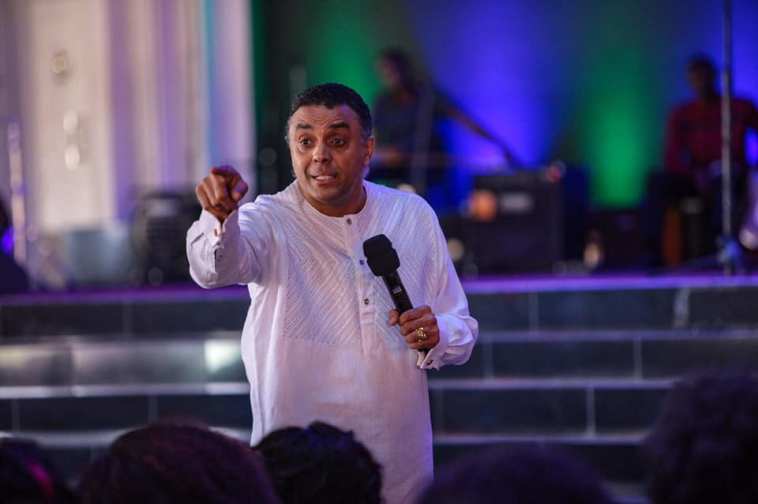
That, letter dated March 17, 2021, was addressed to the Presiding Bishop of Lighthouse, Dag Heward-Mills.
Even though the church failed to respond, The Fourth Estate quoted significantly from the church’s response to one of the six pastors as well as the church’s position in the issues from correspondence between the church and the pastors.
In its defence, The Fourth Estate said the publication was based on matters of fact, privilege, justified, in the public interest and fair comment.
Background
Six former ministersof the Lighthouse sued the church in April last year for non-payment of their pension contributions, economic exploitation and emotional abuse.
They said they had been drawn into the ministry by their spiritual father, founder and Presiding Bishop of LCI, Dag Heward-Mills. Most of them, who served as student-leaders in the gospel, said they were not given employment letters.
There was no formal employer-employee relationship when they transitioned into full-time service of the Lord after graduation. They said they trusted their spiritual father, Bishop Dag Heward-Mills, and that defined their working relationship with the church. This, they said, the church took advantage of and mistreated them.
They, therefore, resigned and sued LCI, which used to be the epicentre of their spiritual and social lives. They are praying the court to compel the church to pay their pension contributions and damages for the violation of their human rights by the church.
They believe there are more silent victims among the 111 bishops and over 2,300 pastors of Lighthouse, who are currently shepherding more than 6,070 churches in 92 countries across the world.
Apart from enforcing their rights, the six former pastors say the reason they are speaking up is to ensure that those still serving in the church do not suffer what they have been through.
The church, in response, counter-sued its former pastors and now The Fourth Estate for the fallout.
In its statement of claim, the LCI said the relationship between the church and its founder, Bishop Dag Heward-Mills, was inseparable.
Bishop Heward-Mills, the medical doctor who dropped the stethoscope for the cross in 1991, preaches unalloyed loyalty—one the resigned pastors now claim took the better part of their lives in exchange for compensations that did not reflect the church’s own policies.
LCI’s case against The Fourth Estate
The church claimed that The Fourth Estate’s publication meant that the LCI was engaged in a “long term deceptive agenda of inducing its employees and volunteers into untoward reliance on the plaintiff and so succumbing to subservient dependence on the plaintiff.”
The LCI also claimed the publications sought to suggest that the church was “not only intolerant but extremely callous, insensitive, inconsiderate and cold-hearted in its treatment of and abandonment of its volunteers and employees with exacting demands calculated to hound them out of their posts.”
“In the immediate aftermath of the publications there was a complete uproar in the plaintiff’s [Lighthouse] branches throughout Ghana with many of the members completely horrified and threatening to leave the church, which some actually did,” LCI also claimed its defamation suit.
The LCI claimed The Fourth Estate’s stories had profit motives and was launched “within a media space of fierce competition for attention in which the more sensational a story is, the more readership and consequent financial gain.”
The Fourth Estate defence
The Fourth Estate said far from being the money-making machine the LCI claimed, the platform was a non-profit publication. This explains the absence of an opportunity for advertisement or advertorials on the website.
The defence explained that at all times the publications were reliant “on facts contained in arranged interviews, other official documents and a body of correspondence between officers of plaintiff [LCI] including its Human Resource outfit, and plaintiff’s founder and leader on the one part and [the] said former employees of plaintiff and consultants/ advisors on other the part, and formal complaints to the Social Security and National Insurance Trust (SSNIT).”
It also grounded the stories as qualifying for privilege and public interest, citing reasons including the fact the matters were subject to ongoing litigation in the High Court, and that they were based on the outcome of investigations by The Fourth Estate.
The defence also said the issues were of significant public interest. It said the LCI had an immense public status and asserted a lot of influence and that a critique of non-compliance of the LCI with the Pensions Act in defaulting to pay the contribution of its employee was a matter of legitimate public concern and fair comment.
The Fourth Estate’s lawyers also reasoned that the publications also qualified to be fair comment/ opinion.
It argued that what the church was seeking was “an unconstitutional censorship in the nature of a gagging order against the defendant having failed in its attempts to dictate what in its view ought to be the accepted professional standards of journalism, dictate the content and control the editorial direction of [the] said publication.”
The defence said the LCI’s chief aim was an attempt “in a game of chance to use this suit to unlawfully shackle the defendants and prevent them from exercising their lawful professional duties in what in commonly known in jurisdictions, including the United States of America as SLAPP (Strategic Lawsuit Against Public Participation).”
An investigation by The Fourth Estate has been named among the best investigative reports in sub-Saharan Africa for 2021.
This comes barely a year into the existence of The Fourth Estate a not-for-profit journalism project by the Media Foundation for West Africa (MFWA).
The Global Investigative Journalism Network (GIJN), an international hub for the world’s investigative reporters, named the “The Licensed sex predator, an investigative piece by The Fourth Estate’s Editor-in-Chief, Manasseh Azure Awuni, among the top 10 best investigative stories from the continent.
The ten stories that made the list were selected from eight countries—Ghana, Cameroon, Kenya, South Africa, Nigeria, Rwanda, Liberia and Uganda.
“This collection of 10 investigative stories across eight countries in Africa is a demonstration of what’s possible when reporters on the continent receive the right leadership and support,” the GIJN wrote.
In an investigation that lasted over a year, The Fourth Estate revealed how some women have been sexually assaulted by a self-styled physiotherapist, “Dr” Jonathan Ohene Nkunim in his Nature’s Hand Therapeutic Centre.
“Dr” Ohene Nkunim’s victims included a couple who had gone to Nature’s Hand Therapeutic Centre, Gbawe, Accra in 2018 to seek his help to be able to conceive. He ended up sleeping with the woman. Feeling guilty about the affair, she confessed to her husband and that was how the seven-year-old marriage ended.
A young woman was on the verge of suicide because the heart-wrenching pain from her spinal cord convinced her that ending her life was a better option. Someone offered her a lifeline, Jonathan Ohene Nkunim’s hotline.
Ohene Nkunim raped her the first day she entered the facility in pain and lay on the massage bed.
He left incriminating evidence in his WhatsApp conversation with her after the ordeal. He admitted he did not seek her permission before having sex with her.
Nkunim claimed the procedure he wanted to perform required sexual arousal. He said he should have “sensitised” her before proceeding. Nkunim then apologised profusely. But he did not stop.
Eulogising the story, the GIJN said:
“Ghana’s latest investigative journalism nonprofit,The Fourth Estate, created by the Media Foundation for West Africa (MFWA), was the force behind one of the most consequential investigations to come out of Africa this past year.
“Braving harrowing testimonies from victims and disturbing evidence from an undercover investigation, reporter Manasseh Azure Awuni exposed a health practitioner who used his registered practice to sexually assault women seeking reproductive treatment and support. The three-part series is one of those instances where an undercover investigation provides irrefutable evidence, despite denials by the perpetrator.
“Eventually, the overwhelming proof against that proprietorled to his arrest andconfession, putting to an end to his exploitation of desperate victims.”
The GIJN described as “remarkable” the level of investigative journalism that emerged from sub-Saharan Africa in 2021 particularly at a time newsrooms in Africa were increasingly struggling with shortages of cash and threats to press freedom.
“For many of the eye-catching stories that made it to this year’s editor’s pick, the reporting time ranged from three months to a full year. This points to a growing ability by journalists in Africa to dedicate ample time — and, indeed, resources — to a single story,” it said.
But there is more to it.
“Several factors account for this strong dedication to in-depth reporting. First, nonprofit media outlets are helping fill the vacuum created by cash and resource-strapped traditional media organizations. Foundations and development agencies are also offering more consistent and more generous reporting grants, with greater opportunities for long-form investigations, even for freelance journalists,” it explained.
Here are some other major stories reported by The Fourth Estate in 2021:
Patients of the Tamale Central Hospital who need to go under the surgeon’s knife may have to look elsewhere. This follows the decision of the hospital to freeze all surgeries.
The surgeries have been cancelled because the hospital has run out of the logistics necessary to keep its theatre running for the last three weeks.
“It is with deep regret that I write to inform you of the cancellation of all surgeries with effect from Thursday, 23rd December 2021. This decision has been necessitated by the shortage of essential supplies and water in the hospital,” a memo from the hospital’s specialist surgeon to its medical superintendent said.
According to the memo, the health facility had been coping with the shortage by asking patients to buy “almost all the consumables for their surgeries.” That decision had to be put on hold because of “negative media discussions”, the memo dated December 22, 2021, added.
Ordinarily, patients who cannot access medical care at the Tamale Central Hospital can opt for the Tamale Teaching Hospital (TTH), but this will not be the case this festive season.
The Fourth Estate’s sources at the TTH, the biggest referral hospital in the five regions of the north, say there is “a break in elective surgery and specialist outpatient department (OPD).”
The TTH, however, performs emergency surgeries.
The shortage of essential drugs in major hospitals in Tamale is not new. In March 2015, an acute essential drugs shortage hit the 800-bed Tamale Teaching Hospital, forcing the management to ask patients to buy their medications from outside.
The most recent case of the cancellation of surgeries at the Tamale Teaching Hospital was in July 2020. The hospital cancelled 900 surgeries in the first 12 weeks of the coronavirus outbreak in Ghana.
The Ghana Broadcasting Corporation reported that the hospital’s Head of the Department of Surgery, Professor Stephen Tabiri, attributed the decision to uncertainty over the nature of the novel virus, which had caused some anxiety among hospital management and staff.
It compelled the hospital to suspend non-emergency surgeries, including cancer surgeries.
He said some patients suffered as a result, but added that there was nothing the hospital could do under the circumstances.
“If you cancel a cancer surgery, you finish everything. If the patient is supposed to go for surgery and you cancel it, at the end of the twelve (12) weeks, the cancer will spread over the whole body and there is nothing you can do,” he explained.
Hospitals in the Tamale metropolis are also caught in the snag of the perennial water shortages. Residents in the Northern regional capital have been struggling with this for decades. The hospitals have not been spared.
The Ghana News Agency (GNA) reported in January 2007 that work came to a standstill at the Tamale Teaching Hospital between 8 a.m. and 5 p.m. following an acute water shortage.
The Laboratory Department was the worst affected. Patients were either sent home or not attended to. Some patients had to send for water from home for bathing.
Similar water shortages were again experienced in 2014 and 2015. The major referral hospital had to rely on tanker services and the Ghana National Fire Service for water supplies.
Water shortage in Tamale is a peculiar problem Credit: Savannah News
It is for this reason that when President Nana Addo Dankwa Akufo-Addo cut the sod for the construction of the Tamale Water Supply Project in July 2020, the city erupted with jubilations.
The Tamale Water Supply Project is meant to expand the supply capacity of the Tamale Metropolitan area. It is aimed at improving the flexibility of water supply by building a new water supply system that will rely on the White Volta at Yapei. The system is expected to pump 29.7 million gallons per day to households and institutions.
“This will be, by far, the biggest water project in the five northern regions, and the second biggest in the history of our country,” President Akufo-Addo said.
But 18 months later, the project still remains a campaign promise. Not much has been done. The taps still cough air when opened.
While residents wait for the president’s promise to be fulfilled, patients awaiting surgery are running out of hope.
The Tamale Central Hospital has promised that “surgeries will resume as soon as supplies are provided.”
The question both patients and the management of the hospital cannot answer is, “How soon?”
Investigative journalist Edward Adeti has been threatened with death threats. The Bolgatanga-based journalist, who recently joined The Fourth Estate, received the death threat when a Facebook post about his move was published.
“This is the worst I have received so far. The faceless texter or texters telling me that I will be shot and burnt as it happened to some police officersin Bolgatanga [Upper East regional capital]. When things like this happen. I quickly think of my family,” he said of his fears.
The text message to The Fourth Estate journalist read:
The Maltaaba Bank is in reference to The Fourth Estate’s expose on illegal deals between officials of the Maltaaba Community Bank and the Bongo District Assembly.
Adeti has received similar threats in the past. In May 2019, the journalist reported a series of death threats to the Bureau of National Investigations after his investigative work forced Rockson Bukari, a Minister of State, to resign on April 29, 2019.
Adeti had recorded the minister allegedly trying to bribe him to drop an investigative story.
The investigative story produced in 2018 exposed a compromising relationship between a Chinese mining firm and a judge handling a case involving that firm. The judge at the centre of the scandal, Justice Jacob Boon, eventually recused himself when the case was brought before him at the Bolgatanga High Court Room One on December 17, 2018.
Adeti recalled that one Mubarak, a resident in the Upper East Region, went on Facebook and wrote similar threats that “ I was a fool and would live to regret this.”
He said, since then, the intimidation had been far and in between until last Friday when he received the latest threats.
The Fourth Estate’s checks show that the number is registered in the name of Awine Atiah.
Adeti said he suspected that the person who sent the message was probably working with others because of the word “we” used in the text message he received at 4:52 am.
After his resignation, Mr. Bukari was never put to court after the incident.
Adeti, therefore, wondered how a court could exonerate him and added that the latest threat was based on what he described as a false publication on Dreamzfmonline that endangered his life and that of his family.
He has since reported the matter to the police who have invited the management of Dreamz FM for a meeting on Wednesday, December 22, 2021.
For many investigative journalists in Ghana, the brutal killing of investigative journalist Ahmed Suale on January 16, 2019, is a constant reminder that they are endangered.
The Member of Parliament for Pru East, Dr Kwabena Donkor, was boiling with rage on the floor of parliament.
He is the ranking member of the Employment and Labour Relations Committee of Parliament and had sighted a breakdown of payments made to beneficiaries of the Sanitation Module of the Youth Employment Agency (YEA).
He was shocked at the fact that the government of Ghana, through the YEA, paid Zoomlion Ghana Limited GH₵ 600 per person per month, but the company paid each worker GH₵ 180 and kept the rest of the GH₵ 420 as management and logistics fees.
He said it was an injustice being done to the poor women who swept the markets and streets and asked parliament to have a look at it.
The Speaker of Parliament, Alban S.K. Bagbin, directed the Employment and Labour Relations Committee, to investigate the matter and report to the House in February 2022.
Here is the video of Dr Kwabena Donkor’s submission:
Background of Contract fraught with allegations of Fraud
The anomalies with this contract were first revealed in 2013 by Manasseh Azure Awuni in the GYEEDA Corruption Scandal.
The contract was being renewed every two years. The 2011 to 2013 contract expired in February 2013.
Within the period, the government of Ghana investigative committee, which probed the scandal after Manasseh’s investigations found the contract to have been inflated by at least GH₵ 74 million (or 21 million US dollars at the time). The committee recommended discontinuation of the contract but the government did not act on the findings.
The Akufo-Addo-led NPP criticized the contract in opposition but in government, they extended it without addressing the malfeasance they criticised.
Between March 2013 and February 2019, that deal cost the nation GH₵ 1.62 billion (or $400million) without any written agreement or approval from the Public Procurement Authority.
Before the terms of the contract were changed slightly after 2019, the government was paying Zoomlion GH₵500 a month, and the company paid the sweepers GH₵ 100 and kept GH₵ 400 as management fees.
GYEEDA was investigated.
The GYEEDA investigative Committee asked for a breakdown of the management fees in 2013 and after analysing the figures, the Committee came up with the following in its report.
On page 131 of the GYEEDA Report that got Abuga Pele and Philip Assibit jailed, the Committee made adverse findings on Zoomlion’s contract. This is what the committee said:
“A schedule provided by Zoomlion to support the amount of management fees raises serious value for money issues. We have analyzed below a few of the cost lines within the schedule to reveal the significant windfall profits that Zoomlion is making. In the schedule that Zoomlion provided, Zoomlion suggests that at a management fee rate of GH₵400, it is making a loss of circa GHS18 per beneficiary. Aside being illogical, this claim is also inaccurate and deceptive.
“By Zoomlion’s own admission, the cost of a fully fitted tricycle is GH₵1,200 and they are replaced every two years. The total number of tricycles in circulation is less than 10,000 (about 6,000). Even assuming 10,000 tricycles, Zoomlion requires only GHS12m every two years to replace them but charges the MOYS GH₵37.5 million, an excess of over GH₵25.5m”
“By Zoomlion’s own admission, the tricycles are robust and hardly breakdown yet MOYS pays GH₵22.82m over the term of the contract to repair them. The cost of repair is almost double the cost of purchase. This is inappropriate.”
“Zoomlion suggests that it buys motorbikes for its supervisors (numbering about 600) and replaces them every two years. Zoomlion suggests that the cost of a motorbike is circa GH1500, meaning that Zoomlion requires GHS900K to replace them every two years. MOYS however pays GH₵49.64m over the two years period for motorbikes. This is an overcharge of circa GH₵48.7m.”
Despite these findings, no attempt was made to retrieve the monies or prosecute the government officials and private sector players that were responsible for these amounts.
The Akufo-Addo administration campaigned on the scandal but continued with the contracts when it won power in December 2016.