Author: Seth J. Bokpe

  • Exclusive: Akufo-Addo’s 18 ministers who never declared their assets

    Exclusive: Akufo-Addo’s 18 ministers who never declared their assets

    At the peak of President Nana Addo Dankwa Akufo-Addo’s first term, he had sworn in more than 126 ministers and deputy ministers. Some of them resigned and were replaced.

    They took the sacred Oath of Ministers, to “uphold, preserve, protect and defend the Constitution of the Republic of Ghana.”

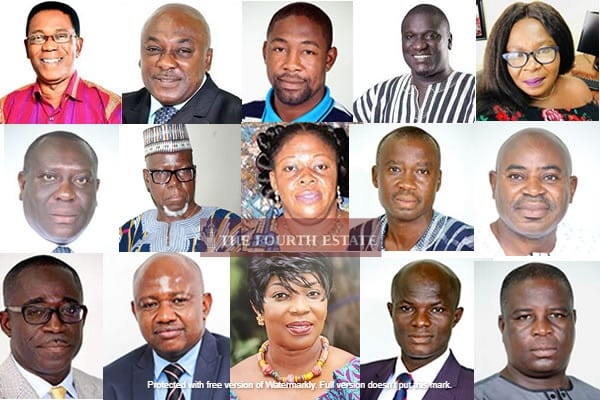
    But, five years later, The Fourth Estate has found that at least 18 of them reneged on one of their first and basic obligations to the constitution—the declaration of their assets and liabilities.

    President Akufo-Addo has complied fully with the asset declaration law since coming into office as president in January 2017. He has declared his assets three times since assuming office.

    Records available to The Fourth Estate indicate that the president declared his assets on January 24, 2017, February 17, 2021, and May 7, 2021.

    His ministers and deputy ministers who served in his first term and are serving in his second term are supposed to also have declared their assets and liabilities three times by now.

    On July 18, 2017, president Akufo-Addo said that all his appointees had declared their assets.

    Information available to The Fourth Estate, however, reveals that at least 19 of the ministers and deputy ministers have not declared, not even once since 2017.

    What does the Asset Declaration law say?

    By law, ministers are to declare their assets within six months in office and latest six months after the end of a government’s first term.

    Article 286 (1) of the 1992 Constitution states that “a person who holds a public office mentioned in clause (5) of this Article shall submit to the Auditor-General a written declaration of all property or assets owned by, or liabilities owed by, him whether directly or indirectly (a) within three months after the coming into force of this Constitution or before taking office, as the case may be, (b) at the end of every four years; and (b) at the end of his term of office.”

    The Constitution requires the declaration to be done before the public officer takes office. However, Section 1(4)(c) of the Public Office Holders (Declaration of Assets and Disqualification) Act directs public office holders to meet this requirement not later than six months after taking office, at the end of every four years and not later than six months at the end of his or her term.

    The law requires that the President, Vice-President, the Speaker, Deputy Speakers of Parliament, ministers and deputy ministers of state, ambassadors, the Chief Justice and managers of public institutions in which the state has interest submit to the Auditor-General written declarations of all property or assets owned by, or liabilities owed by them, whether directly or indirectly.

    They are required to declare their assets relating to:

    (a)lands, houses and buildings;
    (b) farms;
    (c) concessions;
    (d) trust or family property in respect of which the officer has beneficial interest;
    (e) vehicles, plant and machinery, fishing boats, trawlers, generating plants;
    (f) business interests;
    (g) securities and bank balances;
    (h) bonds and treasury bills;
    (i) jewellery of the value of ¢5 million [now ¢500] or above; objects of art of the value of ¢5 million or above;
    (j) life and other insurance policies;
    (k) such other properties as are specified on the declaration form.

    On March 4, 2022, The Fourth Estate wrote to the Audit Service, under the right to information law, requesting information on public office holders who had declared their assets from January 2013 up to that date.

    The Audit Service responded with the data on May 17, 2022. Combing through the two booklets of almost 350 pages, The Fourth Estate did not find the names of 19 ministers and deputy ministers who have served in the Akufo-Addo administration since 2017.
     

    Who are the defaulting appointees?

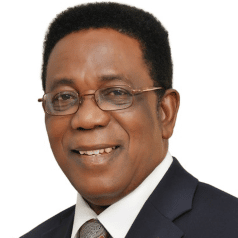
    Prof Kwesi Yankah: The Fourth Estate could not find the name of the minister of state in charge of tertiary education, who served in the Akufo-Addo administration from 2017 to 2020. An academic don, Prof. Yankah contested the 2020 parliamentary election in the Agona East Constituency on the ticket of the governing New Patriotic Party (NPP) but lost. He was in office from April 4, 2017, to January 7, 2021.
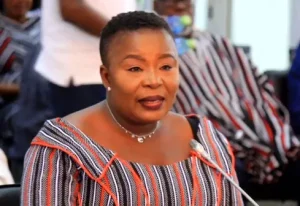
    Tangoba Abayege: She succeeded Rockson Bukari as the Upper East Regional Minister after Mr. Bukari was moved to the presidency as minister of state in 2018. Like her predecessor, Tangoba Abayege did not declare her assets. Tangoba Abayage, who lost the Navrongo Central parliamentary polls in 2020 was also missing from the list. Before becoming regional minister, she was Ghana’s ambassador to Italy. She was in office from November 2018 to January 7, 2021.
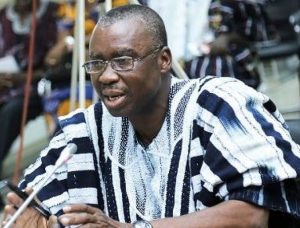
    Salifu Adam Braimah: He was the Savannah Regional Minister, who contested but lost the Salaga South parliamentary seat. He did not disclose his assets. He was in office from March 27, 2019, to August  2021.
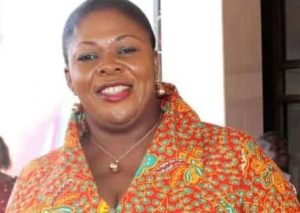
    Evelyn Ama Kumi-Richardson: When the Bono Regional minister-designate came to the floor of parliament for approval in April 2019, it met stiff opposition from the minority National Democratic Congress (NDC).

    The NDC lawmakers alleged at the Appointments Committee of Parliament that Evelyn Ama Kumi-Richardson, who had been a former Sunyani Municipal Chief Executive, committed perjury in the declaration of assets and refund of money to the state as demanded in the Auditor General’s report.

    There were also unanswered questions regarding the redistribution of a vested land. But the report of the Appointments Committee of Parliament, which recommended Ms Kumi-Richardson’s approval by majority decision, cleared her of all the allegations by the Auditor General.

    After secret voting, the minority had their say but the majority had their way.

    Despite this, Ms. Kumi Richardson did not declare her asset when parliament approved her to become a regional minister. She served from March 27, 2019, to January 7, 2021.

    Also, on the list of the ministers and deputy ministers who failed to declare their assets are the following and the portfolios they served:

    • Sulemana Alhassan–Upper West Regional Minister (March 27, 2019, to January 7, 2021)
    • Carlos Ahenkorah–Deputy Minister, Trade and Industry  (April 11, 2017, to July 3, 2020)
    • William Owuraku Aidoo–Deputy Minister, Energy (April 11, 2017, to January 7, 2021.) He was reappointed when President Akufo-Addo won a second term.
    • Vincent Sowah Odotei–Deputy Minister, Communications (April 2017 to April 2020).
    • Bernard Oko Boye–Deputy Health Minister (April 20, 2020, to January 7, 2021).
    • Anthony N-Yoh Puowele Karbo–Deputy Minister, Roads & Highways  (April 11, 2017, to January 7, 2021)
    • Francis Kingsley Ato Cudjoe–Deputy Minister, Fisheries & Aquaculture (April 11, 2017, to January 7, 2021)
    • Siaka Stevens–Deputy Regional Minister, Bono  (March 27, 2019, to January 2021)
    • Samuel Yeyu Tika–Deputy Regional Minister, Savannah ( March 27, 2019, to January 2021)
    • Tahiru Tia Ahmed–Deputy Regional Minister, North East – (March 27, 2019, to January 7, 2021)
    • Johnson Avuletey–Deputy Regional Minister, Volta Region – (March 27, 2019, to January 2021)
    • Thomas Adjei Baffour–Deputy Regional Minister, Central – March 3, 2017, to January 7, 2021
    • Joseph Tetteh–Deputy Regional Minister, Eastern  (March 3, 2017, to August 2018)
    • Elizabeth Kwatsoo Tetteh Sackey–Deputy Regional Minister, Greater Accra (March 3, 2017, to January 7, 2021).

    Two out of the 19 defaulters, Carlos Ahenkora and William Owuraku Aidoo, are still lawmakers in the current Parliament. But Vincent Sowah Odotei, Bernard Oko Boye, Anthony Karbo, Francis Kingsley Ato Cudjoe, Siaka Steven and Joseph Tetteh lost their seats in the 2020 election.

    Four others who were deputy regional ministers in Akufo Addo’s first term have been offered new jobs in the president’s second term.

    They are William Owuraku Aidoo,  Bernard Oko Boye, Elizabeth Kwatsoo Tetteh Sackey and Samuel Yeyu Tika. They are expected to declare their assets in their current positions but they haven’t.

    The MPs in the list also swore the oath of lawmakers to “uphold, preserve, protect and defend the Constitution of the Republic of Ghana.”

    But they desecrated the oath.

    Responses to The Fourth Estate

    Asset declaration is seen as crucial in fighting corruption by helping to track illicit wealth public office holders acquire while in office.

    You may also want to read: EXCLUSIVE: Sir John did not declare his assets

    Per the law, any assets acquired by a public officer holder after the initial declaration, which does not come from “sources reasonably attributed to income, gift, loan, inheritance or any other reasonable source would be classified” as illegal.

    The Fourth Estate reached out to the ministers whose names were not found in the asset declaration list for comments. Here are those we contacted and their responses.
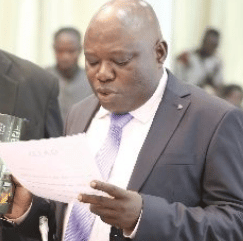
    • Thomas Adjei Baffoe –Deputy Regional Minister, Central

    The Audit Service stated that no public office holder declared their assets in the Central Region from 2017 to 2019.

    But Thomas Adjei Baffoe, who served as deputy Central Regional Minister from March 2017 to January 7, 2021, insisted, he did.

    “I declared my assets. I deposited them at the regional office of the Audit Service. It was even one of the employees of the Local Government who does audits, who did it for me. His name is Ben Issah,” he told The Fourth Estate.

    Asked for the evidence of his declaration, he said he was not sure he took it from the said officer but said he would check and get back to this reporter because he was not in Cape Coast.

    • Prof Kwesi Yankah–Minister of State in charge of Tertiary Education

    All attempts to reach him failed. Calls, texts and WhatsApp messages were not responded to.
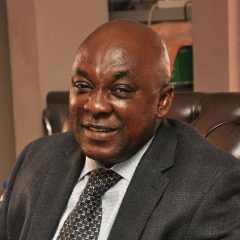
    • Carlos Ahenkora–MP for Tema West & former Deputy Minister of Trade

    He resigned in July 2020 after public pressure mounted on the president to sack him for breaching the COVID-19 restrictions. He had tested positive for the virus and went to campaign instead of self-isolating.

    Mr. Ahenkora told The Fourth Estate he fulfilled his asset declaration obligation and that he submitted his forms to the Tema office of the Audit Service.

    “It is not true. I have declared my assets,” he said, but added, “I don’t know if I can give you the date, but I did declare my asset. Check with the Audit Service.”

    “The Audit Service has given us the document [list of those who declared their assets] we needed, from 2013 to 2021,” this reporter pointed out to him.

    “My brother, I am telling you that I have declared my assets and I am asking you to check well before you make pronouncements, because I know I declared my asset in 2017,” he said.

    “I didn’t finish the term because I resigned along the line. I am 120% sure that I declared my asset,” he added.

    “So, when you exited, too, you declared?”

    “I resigned so I did not declare. My term was terminated. I did not finish.”

    “But, sir, when you exit, you still have to.”

    “I don’t have that information. I didn’t have that advice.”
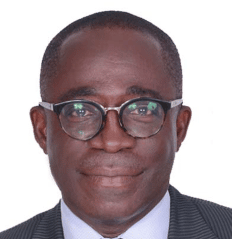
    • William Owuraku Aidoo–Deputy Minister of Energy (MP, Afigya Kwabre South)

    He said he declared his assets in the Ashanti regional office of the Audit Service in Kumasi.

    “I did. I did it in Kumasi after the elections,” he said but couldn’t remember the exact date.

    When The Fourth Estate asked if he declared in 2021, after he exited as a deputy minister, his tone turned condescending.

    “But in what capacity are you calling me. You are a journalist. You cannot call and interrogate me like this.

    “Sir, I am not interrogating you. I’m just giving you a fair…”

    “Why don’t you write to me,” he snapped

    “I should write to you?”

    “Yes, if you think there is something I have not done right, write to me. Today is Sunday, you don’t have the temerity to call me that I haven’t declared my asset (sic). Massa, don’t call me again.”
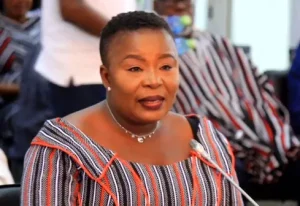
    • Tangoba Abayege–Upper East Regional Minister (former Ambassador to Italy)

    She said she declared her assets to Parliament prior to her vetting because she thought that was expected of her.

    “I didn’t know it was supposed to be the Audit Service. It was Parliament that vetted me. That is where I submitted every document, including my tax clearance certificate.”

    She, however, urged the Audit Service to make the declaration easy because some of the questions were cumbersome and unreasonable, including the value of family land, which she said she didn’t buy.
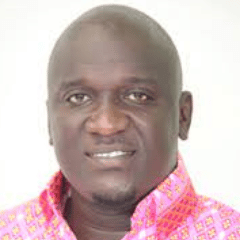
    Anthony Karbo–Deputy Roads & Highway Minister (former MP, Lawra)

    In a response to a WhatsApp message, he said, “It was done as far back as 2017 and submitted to Audit Service. Thank you.”

    A follow-up question on whether he declared in Accra or Wa and if he also declared again when he exited and any evidence was not responded to.
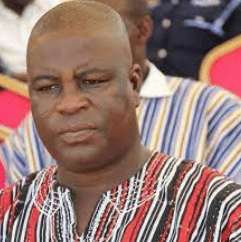
    • Joseph Tetteh–Deputy Eastern Regional Minister & Former MP, Upper Manya Krobo

    He said prior to the 2016 elections, he filed the document at the Audit Service Head Office in Accra as part of the election requirement.

    “We did it before we entered Parliament,” he said.

    “So, you did it as an aspirant?”

    “Yes, by then.”

    “So, when you became an MP, you did not?”

    “No, I didn’t. I also became a minister. I didn’t until I left parliament.”

    “When you read Article 286 and Act 550, it says when you become an MP you have to declare your assets and when you become minister, you have to.

    “Ah! That is what I didn’t do. I didn’t do anything like that.”

    “But is there any reason why you didn’t?”

    “I thought I did it before entering Parliament. Maybe parliament would take that one. I was not asked to do it again.”

    “There was no orientation to do it again?”

    “I can’t remember.”

    “The president said at a point that you all had declared your assets.”

    “I can’t remember.”

    “He said it on July 18, 2017, that all his appointees had declared their assets. At that time, I’m sure you were a deputy minister.”

    “July 18, yes, yes, I was a deputy minister.”

    Joseph Tetteh said he would check from his personal assistant if he did, but he couldn’t remember.
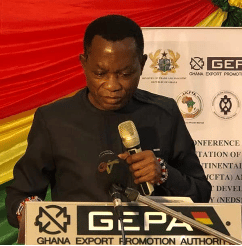
    • Johnson Avuletey–Deputy Volta Regional Minister

    He said when he was in office, he didn’t add any property to what he had, so he didn’t know what to declare.

    “I was in my own house before I was appointed. Is it necessary for me to declare that one too?” he asked, suggesting it was only properties gotten from the public office that had to be declared.”

    “When you come to the office, you have to declare within six months and when you exit, too, within six months, you have to declare,” The Fourth Estate reminded him.

    “Ok, ok,” he said, like someone who just received a new insight.

    “Was there no orientation on this?”

    “We didn’t have any orientation about that. I was not given any form to declare my assets. When I was an assemblyman, I declared assets. When I became a deputy minister for just two years, there was nothing like that,” he added.

    Rockson Bukari–Upper East Regional Minister

    Mr Bukari told The Fourth Estate his lawyer did it on his behalf in Bolgatanga.

    He, however, said he couldn’t remember where he had put the receipt.

    Asked whether he did when he left office, he said he couldn’t remember.

    But he said he would get in touch with his lawyer for clarity.

    • Evelyn Ama Kumi Richardson–Bono Regional Minister

    She insisted she declared her assets.

    “Please, I declared,” she said.

    “Do you have records of it?

    “Yes.”

    “I would be very grateful if you could provide the evidence. You know when you file it, they give you a receipt.”

    “Well, I’ll see if I can submit the receipt.”

    “I would be grateful if you do because we want to get this clarity.”

    “I did. Even Parliament was demanding a copy. So, I sent it to them.”

    “When you were leaving, too, you declared?

    “When I was leaving, I think I picked a form. But I’m not too sure…”
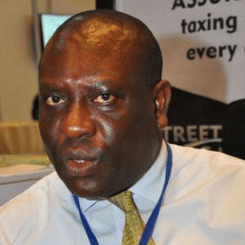
    • Vincent Sowah Odotei- Deputy Minister, Communication (former MP, La-Dadekotopon MP)

    He was relieved of his job in April 2020.  Calls, text and WhatsApp messages to him were not responded to.
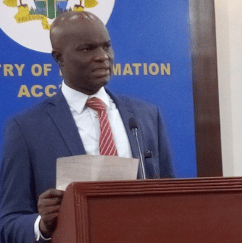
    Francis Kingsley Ato Cudjoe – Deputy Minister, Fisheries & Aquaculture (former MP, Ekumfi)

    He said he completed his application with his personal assistant and handed it over to him for submission. He, however, admitted not declaring his asset when he left office.

    • Samuel Yeyu Tika – Deputy Regional Minister, Savannah (now Deputy Chief Executive, Minerals Commission)

    He told The Fourth Estate he declared his assets in the Tamale office of the Audit Service.

    He, however, said he couldn’t remember the exact dates he filed the document.

    He was also not sure if he filed it when he contested for parliament or afterward but was confident that he did.

    He said he would reach out to his accountant for the details. He later called to say the accountant was not sure.

    • Siaka Stevens, Deputy Bono Regional Minister 
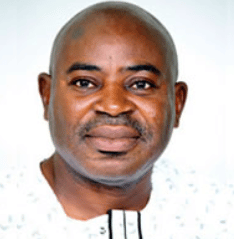
    He said before he became a deputy minister, he had declared his asset as a member of parliament.

    “I spent two years in office as a Deputy Minister. I didn’t add anything to it.”

    “When you left office, did you declare?”

    “If you exit? I’ve not seen that portion of the law that says so.”

    “So, when you enter office, you declare within six months and when you exit too, you have six months to do so.”

    “I’m not privy to that law.”

    “You can check Article 286 and Act 550”

    “I’ll check.”

    “But where did you file it?”

    “I filed it in Accra. The day I went to file, I even met Akua Donkor. I went right after her.”

    Mr Stevens became a deputy minister in March 2019.

    He said he didn’t declare his asset as a deputy regional minister.

    “We were there for only two years.”

    “Sir, the law doesn’t say if you’re there for two years you shouldn’t declare your assets. If you even spent six months, you have to. A lot can happen in six months.

    With that, he laughed …

    “As for that, I didn’t do it.”

    • Sulemana Alhassan–Upper West Regional Minister
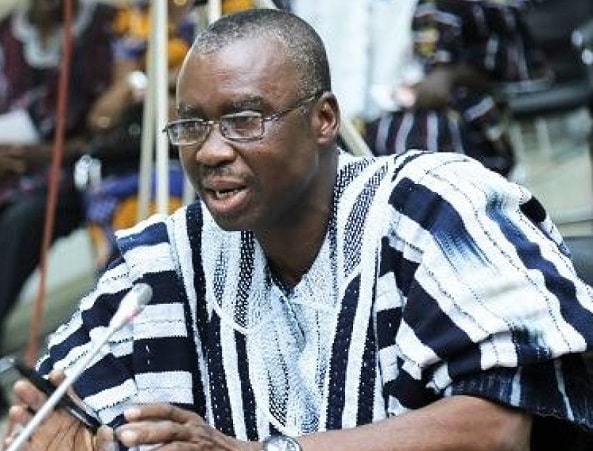
    When he was asked about his asset declaration profile, he laughed out loud and said, “I’m no more even in the system.”

    According to him, he had started the process with the regional coordinating director at the time, but could not remember if the document went to the Audit Service.

    • Tahiru Tia Ahmed– Deputy Regional Minister, North East
    He couldn’t be reached for comment.

    • Elizabeth Kwatsoo Tetteh Sackey–Deputy Regional Minister, Greater Accra (now Metropolitan Chief Executive, Accra Metropolis)
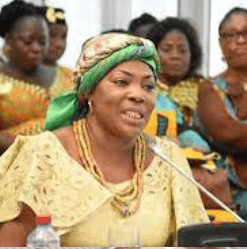
    She didn’t respond to calls, text and WhatsApp messages.

    • Bernard Oko Boye — Deputy Health Minister (now CEO, National Health Insurance Authority)
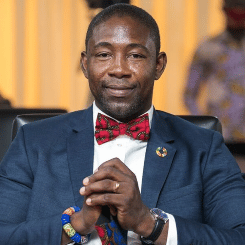
    He didn’t respond to calls, text and WhatsApp messages.

    Sack them

    Reacting to The Fourth Estate’s findings, the Executive Secretary of the Ghana Anti-Corruption Coalition, Beauty Emefa Narteh, expressed disappointment at the revelations. She wants the president to be more than just a role model in asset declaration.

    “You can’t appoint people and then they do the opposite of what you do. What measures did the president put in place to even ensure that his appointees do what is required in terms of asset declaration?” she asked.

    She continued, “It shouldn’t take the president too much to determine if his appointees have declared their assets or not. As an appointing authority, he could have added that they show evidence of declaration. He could have easily confirmed it. This situation is a wake-up call to the president to ensure that his appointees do not go contrary to what he is promoting.

    “Based on this information, those who are currently in government, I think the president should do the needful by sacking them for embarrassing him in such a manner.”

    She said the President should be worried about the non-compliance because the appointees may be breaking other laws on his blind side.

    CHRAJ investigations 

    She also urged the Commission of Human Rights and Administrative Justice (CHRAJ) to immediately investigate such appointees.

    In February this year, CHRAJ banned the former board chairman of the Public Procurement Authority, Prof. Douglas Boateng, from holding public office for the next two years after CHRAJ found out in the Contracts for Sale investigations that he had failed to declare his assets.

     Asset declaration law is a weak law

    Critics of Ghana’s asset declaration laws say it is opaque because what is declared cannot be verified or published by the Auditor-General.

    A former Auditor-General, Daniel Yao Domelevo, agrees. “What is missing in Ghana’s situation is verifying the asset to ensure that it’s in conformity with what has been declared.”

    Mr Domelevo recommends a lifestyle audit for public office holders to match their income with their possessions, he told Joy News.

    “The current asset declaration is a substandard measure of transparency and accountability. If we can’t verify what you declared, where lies the transparency and accountability. It’s unfortunate,” Beauty Emefa Narteh agrees.

    Anti-corruption campaigners believe the repealed Provisional National Defence Council (PNDC) Law 280 in 1998 which regulated asset declaration during Rawlings’ military and civil administration was much more transparent.

    Under that law, public officials had a thirty days grace period to declare their assets and it had to be done every two years. The Auditor-General also had 14 days to publish all assets declared by public office holders.

    However, even that law had its critics who claimed it was nothing more than a charade.

    For instance, the Ghanaian Chronicle reported on October 26, 1992, that the bank balances declared by some senior members of the PNDC were less than one month’s pension of a retired civil servant.

    But, unlike the current laws, it had a relatively stiffer punishment for those who broke it.

    Section 4 of that decree stated that persons who contravened the law were “liable on conviction to a fine not exceeding five hundred penalty units or to imprisonment not exceeding two years or to both the fine and the imprisonment.”

    With the current system, at worse, a person guilty of failing to declare his or her assets can only be banned from holding public office for 10 years, according to provisions of Act 550.

    The law, however, gives CHRAJ  a lot of discretion to decide the appropriate sanction. It is probably the reason the former Board Chairman of the Public Procurement Authority, Prof Douglas Boateng, was in February this year banned from holding public office for two years.

    That discretion, Beauty Emefa Narteh said, must be taken away and specific punitive measures put in place to deal with any kleptomaniacs in public office.

    Editors note: In an earlier version of this story, Rockson Bukari, was listed as one of the appointees who didn’t declare his asset. He has, however, produced evidence showing he did it on April 28, 2018. He, however, didn’t repeat the obligation when he exited office.

    Adwoa Adobea-Owusu, Evans Aziamor-Mensah, Paul Gozo & Prosper Prince Midedzi of The Fourth Estate also contributed to this story. 
  • EXCLUSIVE: Sir John did not declare his assets

    The Fourth Estate can report that the late Chief Executive of the Forestry Commission, Kwadwo Owusu Afriyie, whose will has left some Ghanaians in shock and stoked the call for accountability in governance, did not declare his asset while in office.

    Popularly called Sir John, Mr. Afriyie was a former general secretary of the governing New Patriotic Party (NPP). He died of Covid-19-related complications on July 1, 2020, while still in office as the head of the Forestry Commission.

    The massive wealth he bequeathed to his family and loved ones has shocked many Ghanaians since The Fourth Estate exclusively revealed the contents of his will. Of particular interest have been the large parcels of land he owned at the Achimota Forest and the Ramsar site, a protected area he had warned people against acquiring land while he was in office.

    Some have also questioned when he acquired the properties.

    Information The Fourth Estate has requested and received from the Audit Service reveals that Kwadwo Owusu Afriyie did not declare his assets before taking office and did not declare them throughout his tenure as the CEO of the Forestry Commission.

    Per the laws regulating asset declaration in Ghana—Article 286 of the 1992 Constitution and Public Office Holders (Declaration of Assets and Disqualification) Act—Mr Afriyie should have declared assets relating to the following:

    (a) lands, houses and buildings;
    (b) farms;
    (c) concessions;
    (d) trust or family property in respect of which the officer has beneficial interest;
    (e) vehicles, plant and machinery, fishing boats, trawlers, generating plants;
    (f) business interests;
    (g) securities and bank balances;
    (h) bonds and treasury bills;
    (i) jewellery of the value of ¢5 million [now ¢500] or above; objects of art of the value of ¢5 million or above;
    (j) life and other insurance policies;
    (k) such other properties as are specified on the declaration form.

    Sir John had a long list of properties including 13 houses at various locations in Accra and Kumasi and his hometown, Sakora Wonoo, in the Ashanti Region. These houses are:

    1. House on plot number GA54480 located in Ogbojo, East Legon, and dated February 12, 2018
    2. House on plot number GA 55329 located at Oyarifa No. 2, dated May 11, 2018
    3. House on plot number GA 55475 located at Oyarifa No.1, dated September 27, 2017
    4. House on plot number GA 5881 located at Adjiringanor, Accra, (white House), dated August 7, 2019.
    5. A 6-bedroom house located at Patangbe, Ogbojo, near East Legon.
    6. A  4-bedroom house located in Mempeheusem, East Legon
    7. A 3-bedroom house on plot number TDA 4140 located in Mempehuesem, East Legon
    8. Another 3-bedroom house on plot number TDA 4140 located in Mempehuesem, East Legon
    9. A 4-bedroom house on plot number GA56838 located in East Legon and dated October 25, 2018
    10. A 5-bedroom house located in Sakora Wonoo
    11. A 4-storey building located in East Legon, with 10 apartments, each apartment consisting of 3-bedrooms; and five apartments, each consisting of two bedrooms
    12. A house at East Legon Hills
    13. A house in Kumasi, Ashanti region

    Assets Sir John dated while in office

    Sir John was appointed the CEO of the Forestry Commission in March 2017

    His will does not state when most of the landed properties, money in bank accounts and investments were acquired or the businesses he owned were set up.

    However, he named dates along with the registration details of five of the houses in his will. Incidentally, all five dates were while he was the CEO of the Forestry Commission.

    When he was just six months in office, his house acquired at Oyarifa No. 1 is dated September 27, 2017 with the registration.

    A second house at Ogbojo in Accra is dated February 12, 2018, along with the details in the will.

    A third house in Sir John’s collection is dated May 11, 2018, in the will, and a fourth on October 25, 2018.

    By his 30th month in office, Sir John, a lawyer and NPP’s general secretary from 2010 to 2014, had five houses registered in his name. The fifth one came on August 7, 2019.

    Eight other houses contained in his will do not have the dates of acquisition.

    His listed wealth also included 12 parcels of land.

    Sir John’s will also contains 15 foreign and local bank and investment accounts (both individual and corporate ) with one of the local banks having GH₵ 2 million.

    His list of businesses includes a fuel station located at Kentinkrono in the Ashanti Region; 10 fuel tankers (worth about $780,000, according to The Fourth Estate’s checks); one teak plantation located at Nkawie in the Ashanti Region; a rubber plantation located in the Eastern Region; three stalls located at the new Kejetia market in Kumasi, also in the Ashanti Region and Farms at Ejura in the Ashanti Region.

    That is not all.

    He owned a fleet of 15 private vehicles, including a Lexus LX570, Lexus V6, Mercedes Benz E68 Sport AMG, Honda Pilot V6, Honda Accord Sport, Toyota Landcruiser V8, Ford 150 and Lexus Saloon Car, 2019 model.

    The Fourth Estate verifies if Sir John declared his assets

    The Fourth Estate has, through a right to information request to the Audit Service, found that Kwadwo Owusu Afriyie, who led the country’s forestry sector regulator for almost four years failed to file his assets and liabilities as required by law.

    This is clearly in violation of Article 286(1) of the 1992 Constitution, which requires public office holders to declare the assets they hold directly or indirectly before taking office, at the end of every four years; and at the end of their term of office.

    The law requires that the President, Vice-President, the Speaker, Deputy Speakers of Parliament, ministers and deputy ministers of state, ambassadors, the Chief Justice and managers of public institutions in which the state has interest submit to the Auditor-General written declarations of all property or assets owned by, or liabilities owed by them, whether directly or indirectly.

    Sir John did not.

    Asset declaration just a formality?

    Critics of Ghana’s asset declaration laws say it is nothing more than a formality since there is no means to verify what public office holders disclose.

    This is because laws forbid public disclosure of the assets declared by the public officers concerned unless demanded as evidence by a court of competent jurisdiction, a commission of inquiry appointed under Article 278 or before an investigator appointed by the Commissioner for Human Rights and Administrative Justice.

    But anti-graft crusaders including, Vitus Azeem, a former executive director of the Ghana Integrity Initiative, had described the law as opaque with parliament lacking the will to amend it because it wouldn’t favour public office holders.

    “It does not make the law an effective tool to fight corruption,” he said, and points to the possibilities of dodging as the ideal situation should be that the Auditor-General could open the envelope and verify if the assets mentioned did exist or “if it was just a blank sheet that has been put into an envelope”.

    The case against asset verification 
    There have been a lot of cases made against the verification of assets declared. Civil Society Organisations, including the Centre for Democratic Development (CDD) noted some of these arguments against asset declarations in their research and publications. One argument against closing the assets declared to the public is the socio-cultural setting.

    Some argue that in the context of Ghana’s extended family system, which relies heavily on  relatives, disclosing public office holders’ assets would make them vulnerable to undue pressure from needy relatives.

    Another justification has been that publicising the assets of public officials could deter “good” persons from entering public service.

    However, CDD-Ghana has shredded these arguments describing them as a red herring.

    CDD has noted that politicians and other elites are themselves given to needless displays of ostentation and self-importance, mainly as a way of establishing their “big man” credentials and reputation as “patrons”. It argues that it is disingenuous for these same elites to resist the disclosures of their assets on the grounds that it would give undue publicity to the private wealth of public officeholders.

    Controversies in the Sir John era as Forestry Commission CEO

    During Kwadwo Owusu Afriyie’s tenure of office, the Environmental Investigation Agency (EIA) released a damning report on the illegal trade and felling of rosewood trees had continued despite a ban being in place since 2012.

    “Since 2012, over 540,000 tons of rosewood – the equivalent of 23,478 twenty-foot containers or approximately six million trees – were illegally harvested and imported into China from Ghana while bans on harvest and trade have been in place,” the report said.

    The investigations found “a massive institutionalised timber trafficking scheme, enabled by high-level corruption and collusion.”

    When he addressed a press conference on September 5, 2019, Kwadwo Owusu Afriyie said from 2012 to May 2019, a total of 300,368.94 cubic metres of rosewood equivalent to 257,230 trees had been exported and not six million trees as alleged by the EIA.

    As an antidote to the illegal rosewood trade, he said the commission had decided to among other things, burn all seized rosewood in order to deter people from engaging in cutting down the tree since all other measures had failed.

    It didn’t happen.

    In the heat of the crackdown on illegal mining (galamsey) in 2018, some residents of Koboro in the Amansie Central District in the Ashanti Region, a notorious illegal mining hub, labeled Sir John as an illegal miner.

    In his defence, he explained that he had contracted a company to undertake a reclamation exercise and not an illegal mining activity in the Apamprama Forest located in the area.

    His will, however, revealed that he had interests in gold mining companies while he was in office.

    YOU CAN ALSO READ:

    FULL DETAILS: Achimota Forest lands, gold businesses and guns in Sir John’s will 

    FULL LIST: All the 75 properties contained in Sir John’s will 

    VIDEO : Sir John warned chiefs against selling the Ramsar lands he willed to his sisters

  • VIDEO FLASHBACK: Sir John warned chiefs against selling the Ramsar lands he willed to his sisters

    VIDEO FLASHBACK: Sir John warned chiefs against selling the Ramsar lands he willed to his sisters

    “We have also put out a number of publications in the dailies, alerting people that the Forestry Commission has not given any chief or individual any right to sell land or authorise the putting up of buildings within the Ramsar Site. We have also warned the public not to purchase land within the Ramsar Site, from anybody.”

    Those were the words of the late chief executive officer (CEO) of the Forestry Commission, Kwadwo Owusu Afriyie, when he visited the Sakumono Ramsar on August 7, 2018.

    But almost four years later, it has emerged that the man whose duty it was to protect the Ramsar site from human activity actually got a portion of the land for himself.

    Popularly known as Sir John, the self-acclaimed knight of Ghana politics actually got 5.07 acres and willed it to his four sisters: Abena Saah, Comfort Amoateng, Abena Konadu and Juliet Akua Arko, and their children.

    That is more than 20 plots of the protected land, which is a buffer zone to protect Tema, Sakumono and their environs against flood, pollution, breeding of fish for the Sakumono Lagoon as well as for recreational activities.

    The Ramsar sites are also serve as the relaxation and feeding grounds for over 70 waterbird species. That particular site serves as the breeding ground for about three marine turtle species.

    The Ramsar sites are not for human habitation, a reason the Forestry Commission head warned the chiefs and people who traded the land for development projects.

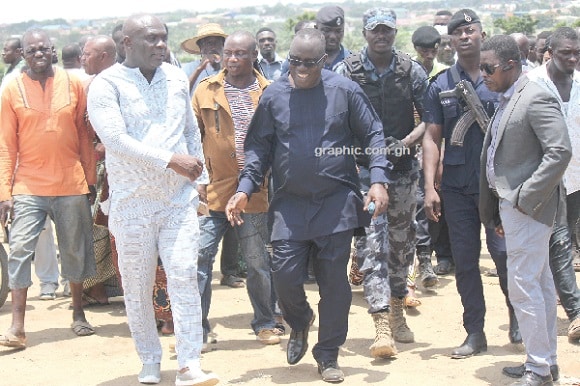
    Sir John with some community leaders when he toured the Ramsar site             Credit: Graphic Online

    As he went round with a retinue of chiefs, Forestry Commission officials and officials of the Tema Development Company, Sir John asked owners of unauthorised buildings at the Sakumono Ramsar site to rectify their stay on the land as tenants as no chief had the right to sell the protected area to them.

    “When I saw the encroachment in Klagon, I thought that was even serious, but what I’ve seen here even makes it worse. Indeed, both the right side and the left side are all parts of the Ramsar site and yet, the massive encroachment we’ve seen beggars disbelieve(sic),” he said.

     He continued, “Those who alleged that they bought it from the chiefs should go back and collect their monies. If they got it for free, fine then there is nothing to worry their head about. But whatever it is, we can’t let them[houses] stand. It will be demolished.”

    The Sakumo Ramsar Site was established alongside four other coastal Ramsar Sites in 1992.

    It is the only wetland wholly owned by the government. The other four sites—Keta, Songhor , Muni-Pomadze, Densu Delta– belong to stools.

    While insisting that the commission had no intention of demolishing existing properties on the site, he warned that the Commission would not tolerate any new development in the area which had been encroached upon by developers who had filed the wetlands and built structures without permits.

    “After 2006, we noticed that the place was being encroached by illegal developers. We did carry out some demolition in the past with the support of the Tema Metropolitan Assembly and TDC,” he said.

    Sir John also said the commission had demarcated the area, setting a buffer zone that could not be crossed.

    But it appears he crossed that buffer zone before crossing to the other side.

    It is not just at the Ramsar site Sir John acquired land, he also acquires lands in the Achimota Forest.

    In total, he acquired four parcels of land at the Achimota Forest, the biggest one being 5.541 acres.

    These details are contained in the  will he made less than two months before his death.

  • Endangered Dreams: The hopeful children battling deprivation

    Fifteen-year-old Kojo Ibrahim was a pupil at Laterbiokorshie Basic School in Accra. His dream was to become an electrical engineer.

    But that dream suffered violence about a decade ago when his parents fought, leading to his mother packing out of the house. The separation of the marriage also marked the beginning of a separation between Kojo and his dream.

    Kojo’s father, Kofi Akalinya, a night security man at Ashfoam Company Limited in the North Industrial Area in Accra, had difficulty taking care of him.

    Pushed against the ‘financial wall’, Kofi Akalinya decided to take his son to his hometown. That is how Kojo’s dream to become an electrical engineer was electrocuted. His father truncated his education in Accra at Basic Five and sent him to Kalaxi,  arguably the most deprived community in the Sissala East District of the Upper West Region. Here, there is no electricity.

    Kojo’s dream appears frozen

    The distance between Kalaxi in the northernmost part of Ghana and Otengkope-Dawa in the Ningo-Prampram District in the Greater Accra Region down south is over 800 kilometres.

    But Melody Nartey and Abraham Dadibo, who live in Otengkope-Dawa, have much in common with Kojo of Kalaxi. They are united in deprivation, and their aims of reaching their dreams through the bridge called education are dimming before their young and helpless eyes.

    At 18, Melody’s dreams of becoming a nurse to save lives, while 15-year-old Abraham dreams of becoming a pilot.

    But with the dying prospects of education at the moment, Melody’s future is under threat and Abraham’s destiny is in jeopardy.

    The fates of Kojo, Melody and Abraham reflect the world of many children across Ghana.

    Kojo’s life at Kalaxi

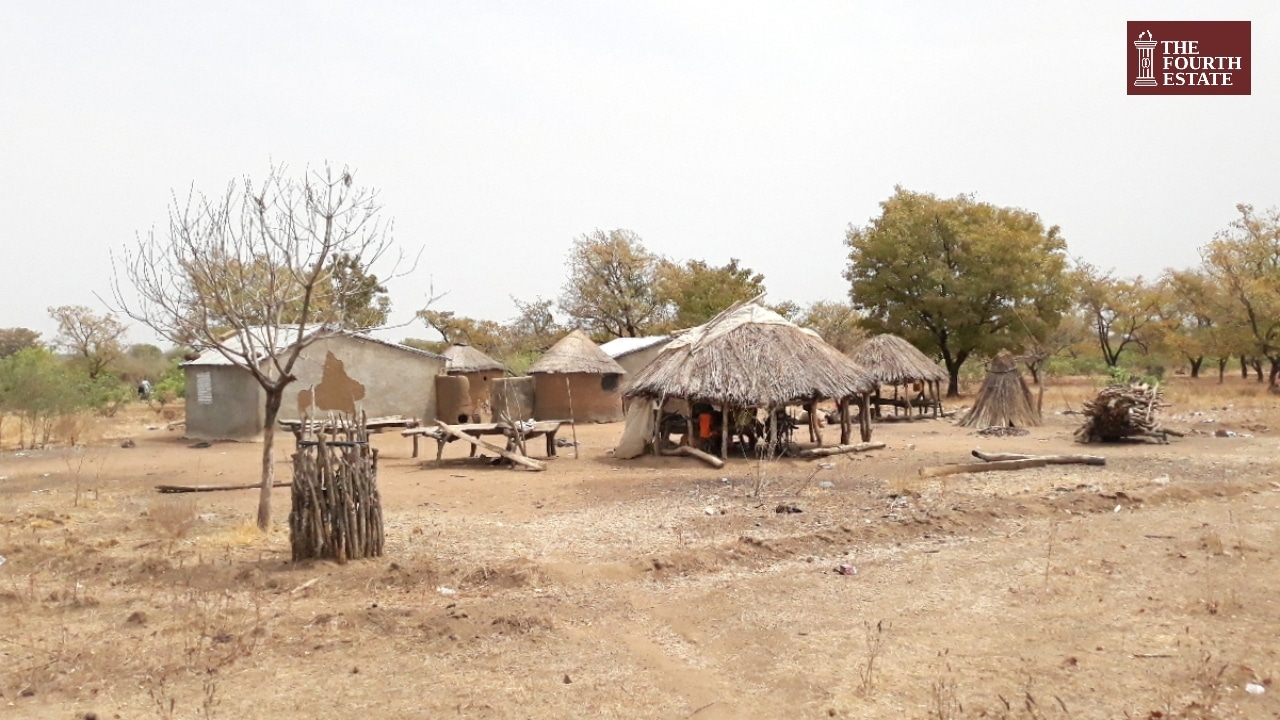
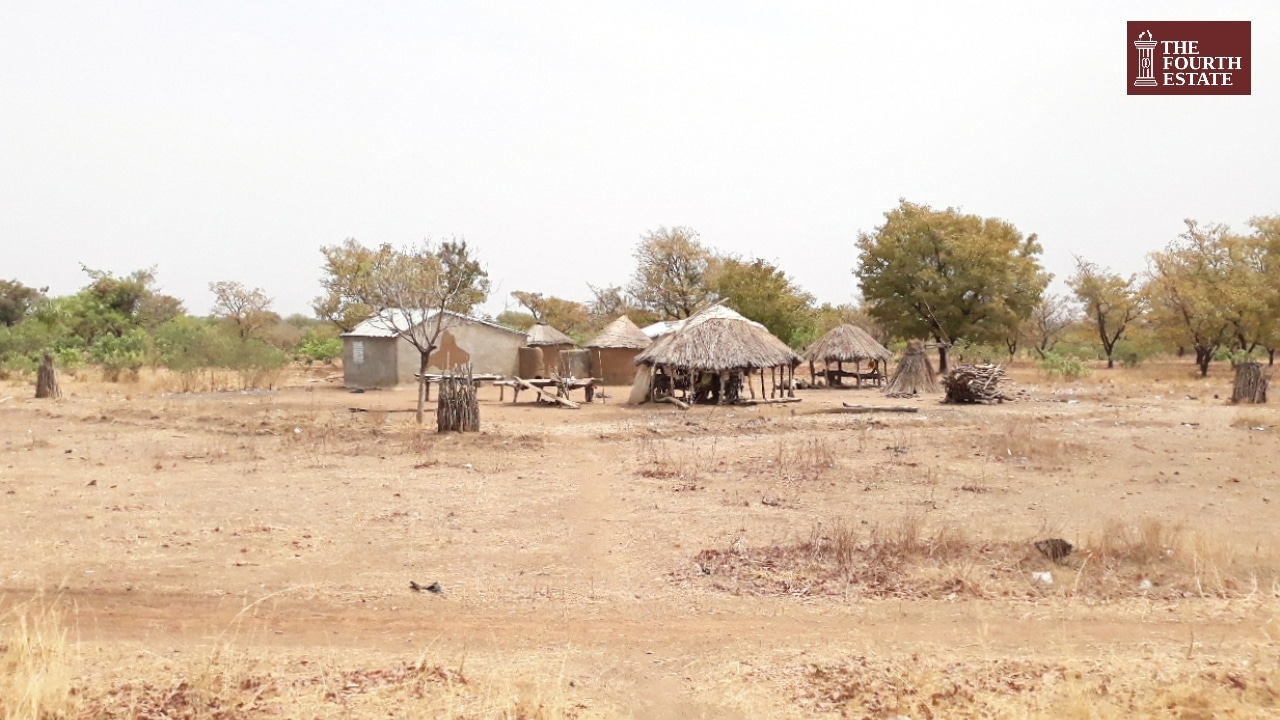
    Kalaxi may bear some semblance to Galaxy, a popular Samsung mobile device, in spelling and pronunciation. But Kalaxi is the exact opposite of the sought-after Samsung mobile phone brand, with nothing to crave for except, perhaps, tuo zaafi, a popular staple in Northern Ghana.

    kalaxi_images
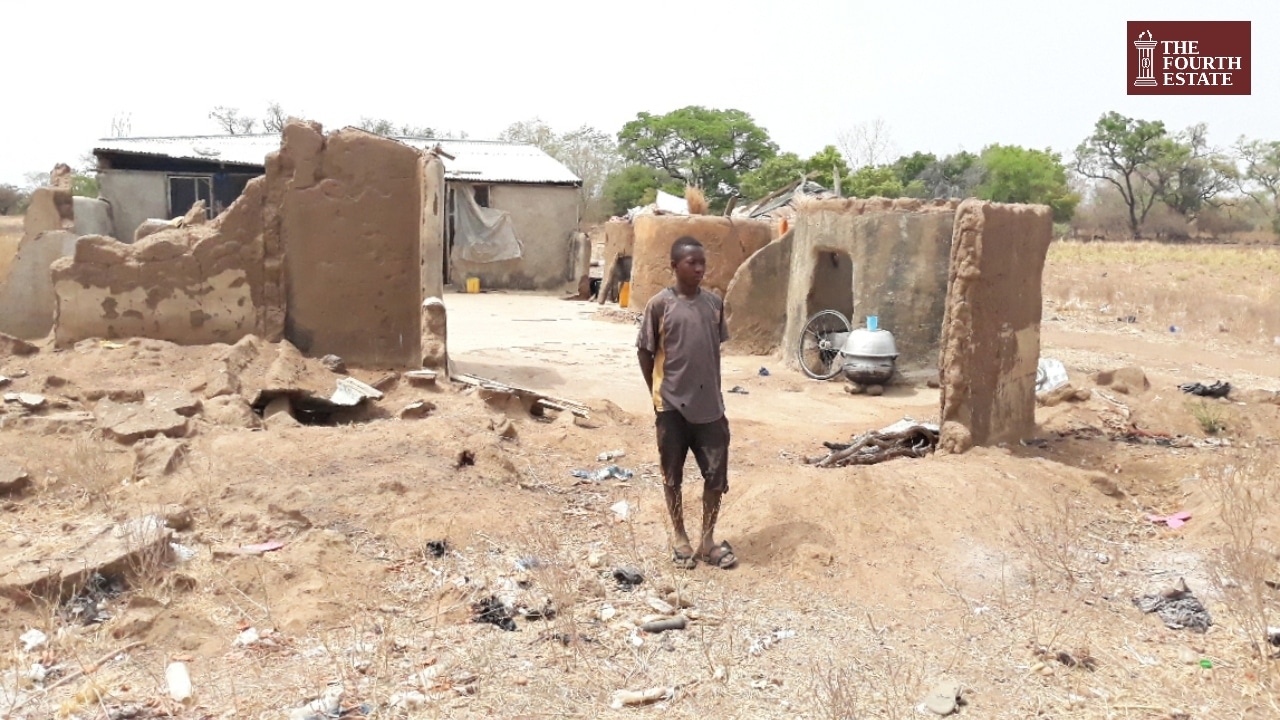
    Life’s struggle for Kojo include cooking in this dilapidated kitchen

    Sticky, starchy, and full of carbohydrates, tuo–zaafi, which in Hausa means ‘stirred (tuo) hot (zaafi)’, is made by cooking maize or millet flour with water, and it is traditionally served with slimy okra soup.

    On a daily basis in Kalaxi, Kojo stirred hot this meal on a traditional firewood stove. He did this to serve a family of nine. At the same time, his dream of becoming an electrical engineer that could enable him to handle sophisticated electrical gadgets gave him a cold stare.

    Kojo had hope that his father, who was serious about his education, would return home one day and take him back to Accra to continue schooling and live his dream. His father did return home a year later, but he died before anything meaningful to Kojo’s dream could be made.

    Having lived with his uncle and grandfather for the past six years at Kalaxi, located in the south-eastern part of the Sissala East District and farthest from the municipal capital, Tumu (60km away), Kojo’s dream to become an electrical engineer appeared to have died with his father.

    He is willing to go back to school, but no one is listening to him; not even his uncle and grandfather.

    “Anytime I tell them I want to go to school, they don’t take my words seriously. They don’t pay any attention to my pleas and rather tell me to go to the farm. When I was with my father in Accra, he was serious about my education and did everything possible to keep me in school,” he reflected on his past and present circumstances.

    Kojo knows his mother lives at Glefe, a slum at Dansoman Last Stop in Accra, and she could offer help, but he has never seen her ever since she packed out of marriage and home.

    “Even if I get someone to take me to school without giving me anything, I will be very content with that. The person should not give me anything. I only want the person to sponsor my education. That’s all,” Kojo said prayerfully.

    According to him, he had the technical ability to repair electrical gadgets when they go faulty, a claim that only defines destiny, as he looks for an opportunity to flee Kalaxi and free his galaxy of dreams.

    River Kunkono, a barrier to Kalaxi’s development

    The people of Kalaxi are mainly farmers of food crops such as maize, millet and beans, but since they do not have access to fertiliser to boost crop yield, they only farm for subsistence.

    At least two hundred people dwell in Kalaxi. 65 of them are children of school-going age.

    The deprivation of Kalaxi is ‘proudly’ sponsored by many factors, including lack of electricity, market, health facility, school and social amenities. Not even aid from the Livelihood Empowerment Against Poverty (LEAP) sniffs at Kalaxi.

    The only facility Kalaxi can boast of is a borehole, which was drilled in 2005 by Moses Dani-Baah, a former Member of Parliament (MP) for the area.

    In order to access the essentials of life they lack, inhabitants of Kalaxi like Kojo need to scale a water barrier by crossing the ox-bow-shaped River Kunkono. In short, survival at Kalaxi largely depends on crossing River Kunkono.

    There is one dilapidated canoe shared by all the communities along the banks of River Kunkono. This means whenever the canoe goes to one side of the river bank, anyone seeking its services may have to wait patiently for its return, which can take hours.

    The canoe snails on sail because it is man-powered, thus prolonging the journey across the water. Apart from enduring such prolonged voyage, sailors also use containers, not as a paddling device to aid velocity, but as a safety weapon to constantly scoop out water seeping through openings in the dilapidated canoe.

    This, undoubtedly, is a risky venture for inhabitants of Kalaxi, who cross the river on a daily basis, but it is riskier for them not to do so because that could spell death. In some instances, pregnant women due for delivery and need to be transported across the river to access health facilities in other communities, spend long hours waiting for the arrival of the canoe and sometimes their babies arrive before the canoe arrives.

    Talata Alumsinya lost her husband six months ago when he drowned in River Kunkono, imposing a huge burden on her as a single mother of five.

    “He was returning from the farm with three other persons when he fell into the river, and although he managed to swim out, no one knows what pulled him back in and got drowned,” she recalled the sad event.

    With the burden of catering for five children as a single mother now, Talata wishes for a school to be established at Kalaxi so her children and others in the community would not have to go through the risk of crossing River Kunkono before going to school.

    “The widows here do not have any form of assistance. Those with older children can farm to help themselves but those who are young cannot do so. Such families suffer from hunger,” she said.

    Why girls perform better than boys

    The danger posed by the mode of transportation, coupled with the distance from Kalaxi to the bank of River Kunkono (about 3km), is a major disincentive for children at Kalaxi to attend school at other communities across the river. The river sometimes dries up in the prolonged dry season.

    Although River Kunkono had dried up when The Fourth Estate visited in March 2, 2022, only two girls from Kalaxi attended school that day.

    Alumsinya Doris, a Form 1 junior high school (JHS) student, and Ajuidiok Juliana, a Class 6 pupil, had to trek a long distance to Kanjarga to school because it offers better prospects than the Musidema Basic School at a nearer community.

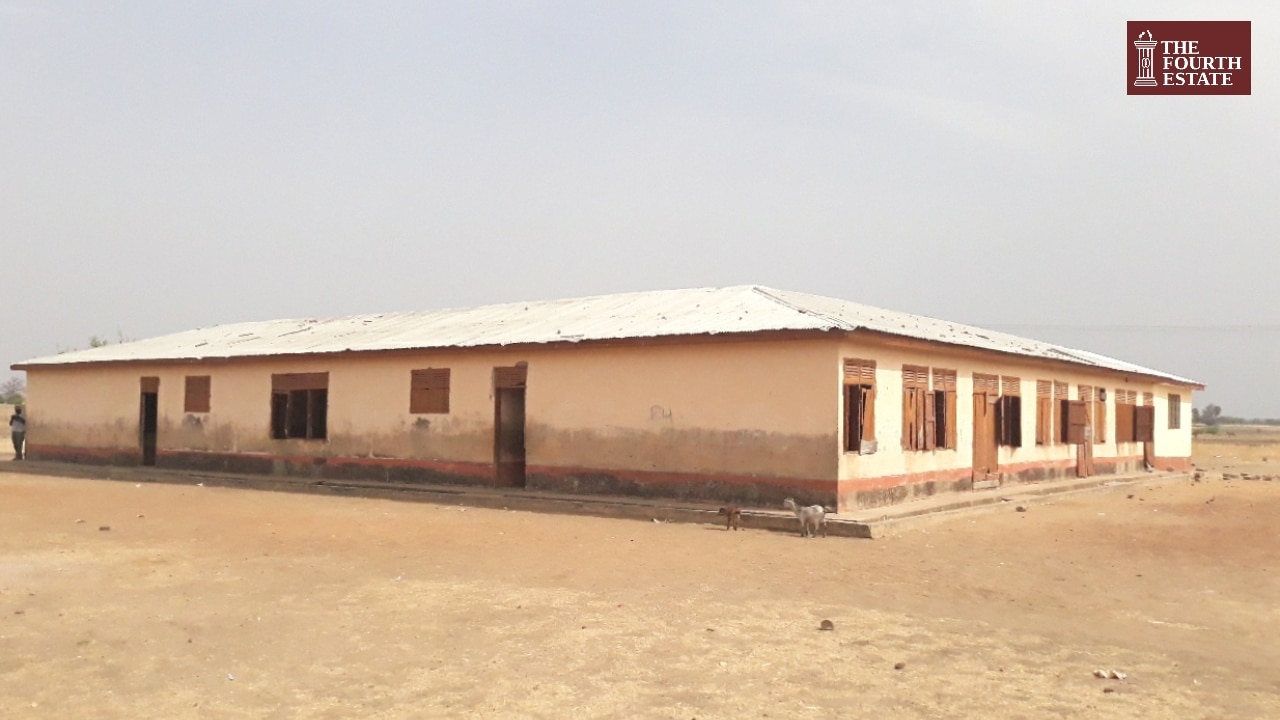
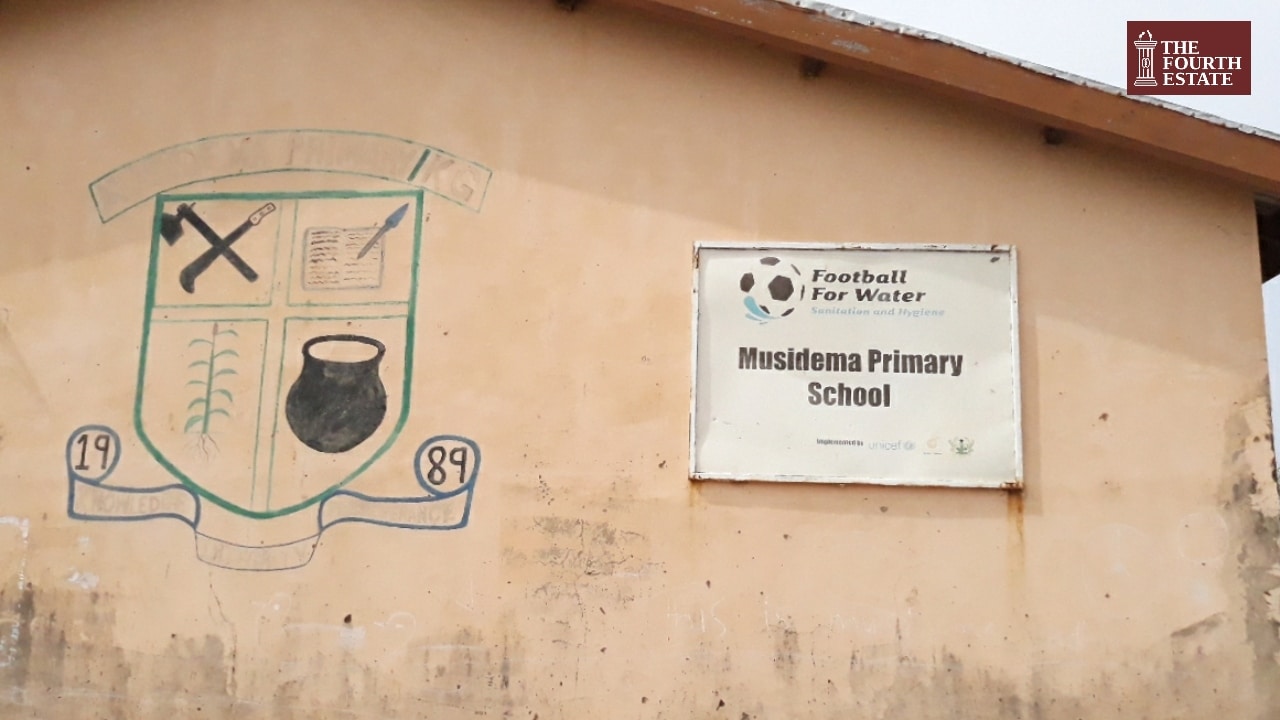
    According to Shadrach Asumang, a Class 4 teacher at Musidema Basic School, one major challenge the school faces is low enrolment and attendance rate, as well as lack of teaching and learning materials.

    “When it gets to the rainy season, when the parents start farming, they want the male students to leave school and support them on the farm.

    “So when it gets to the rainy season where there are a lot of farming activities, only the girls come to school. That is why academically, the girls perform better than the boys in this community,” he said.

    The Musidema Basic School has a population of less than 200 with its share of the deprivation. In some of the classrooms, there is no furniture at all.

    “Some of the pupils have to sit on the bare floor and stoop over before they can write or copy what is on the board,” Mr Asumang said.

    Why the people will not vacate their community

    The Chief of Kalaxi, Kwame Aspuru, bemoaned the neglect of Kalaxi, claiming that not even a mere visit by government officials had happened because it is cut off from the rest of the Sissala East District by River Kunkono.

    He said anytime it rained heavily, Kalaxi got flooded and all their food crops and homes were destroyed by the rains, adding that River Kunkono also overflowed its banks, making it impossible for schoolchildren to cross it and go to school.

    Chief Aspuru said although they had petitioned the Sissala East Municipal Assembly for help, no one had responded to their plight.

    “Since I was born, I have never witnessed the government bringing us any relief items before. No help comes from anywhere.

    “As for election times, they do everything possible to get here but right after the elections, we don’t see them again,” Chief Aspuru lamented.

    However, the Sissala East Municipal Chief Executive, Fuseini Yakubu Batong, said the district assembly made efforts earlier to relocate the inhabitants of Kalaxi to Gbenebisi, a nearby community, but that was not successful.

    “When we are pleading with them to help us relocate them closer to Gbenebisi, they are also dragging their feet and reluctant to do so,” he said.

    The Chief of Kalaxi explained their reluctance to relocate, saying, “we cannot leave our land to go and settle on someone’s land. What if someone else comes to claim our land?

    “They should try and bring us the needed help because my people will not agree to leave their land and settle on another man’s land,” he said.

    He pleaded with the authorities to come their aid and provide them with road, electricity, school and health facility to end their suffering.

    According to the Sissala East MCE, however, it would be difficult to connect Kalaxi to electricity, construct a health facility for the people of Kalaxi due to River Kunkono.

    “It’s a difficult task but we are looking at how to relocate the people so that when they are across the river, help can easily reach them,” he said.

    Reality check & reunion

    Over the years, about 200 inhabitants of Kalaxi have relocated to Kalaxi Number 2 in the Builsa South District in the Upper East Region in order to escape deprivation.

    According to Chief Aspuru, his people recently approached him to suggest a relocation to Kalaxi Number 2 since their kinsmen who left Kalaxi to settle at Kalaxi Number 2 had been provided with electricity, a road, a school and health facilities.

    “I have no option than to allow them to relocate if they insist; and when that happens, and the community becomes empty, I will also be forced to leave and there will be no more Kalaxi,” he said softly.

    If there would ever be any relocation, it is obvious Kojo would prefer Glefe down south, where his mother lives, to Kalaxi Number 2, up north, where his kinsmen may sojourn. But he knew little about how to locate his mother. All she knew was that she lived in Glefe Last Stop and that she is called Yaa, and she sold groundnut.

    Three weeks after returning to Accra from Kalaxi in the Upper West Region, The Fourth Estate , armed with that scanty information, went to Glefe to look for Yaa, the groundnut seller.

    It took only about 10 minutes to search and find Yaa, the groundnut seller and mother of Kojo Ibrahim.

    A week earlier, Kojo had already found his mother, Lamisi Yaa Abadankade, and mother and son reunited, 10 years after a separation between his parents put them (Yaa and Kojo) apart.

    “Since he has been able to safely come back, I will try my best to enroll him in one of the schools in the community so he can continue with his education,” Yaa promised.

    It was a promise to reunite Kojo and his dream of becoming an engineer.

    Gloom future for schoolchildren at Otengkope-Dawa

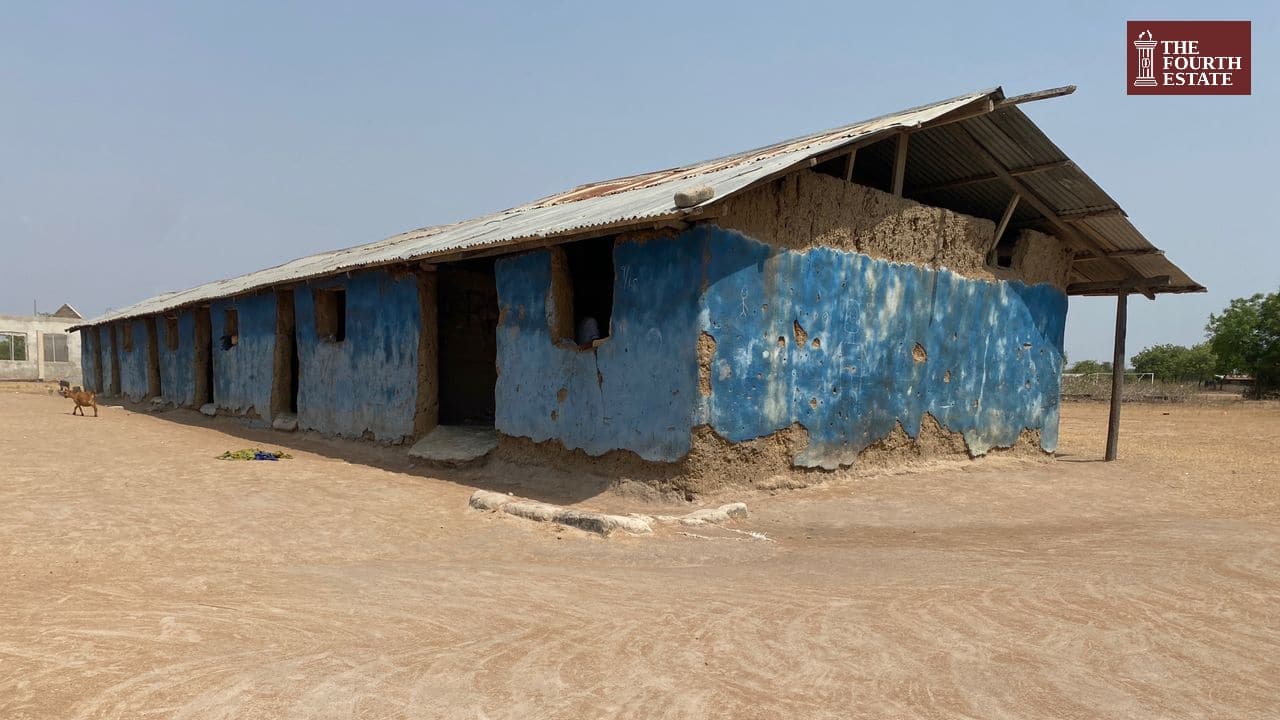
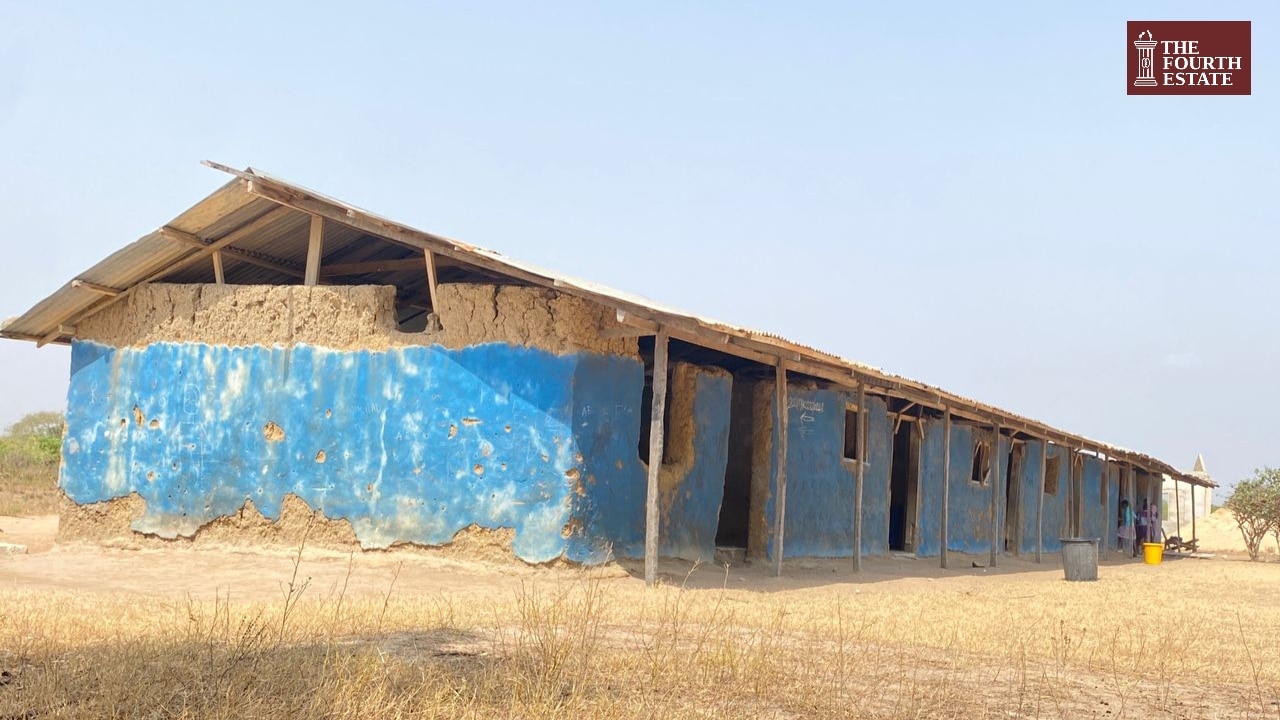
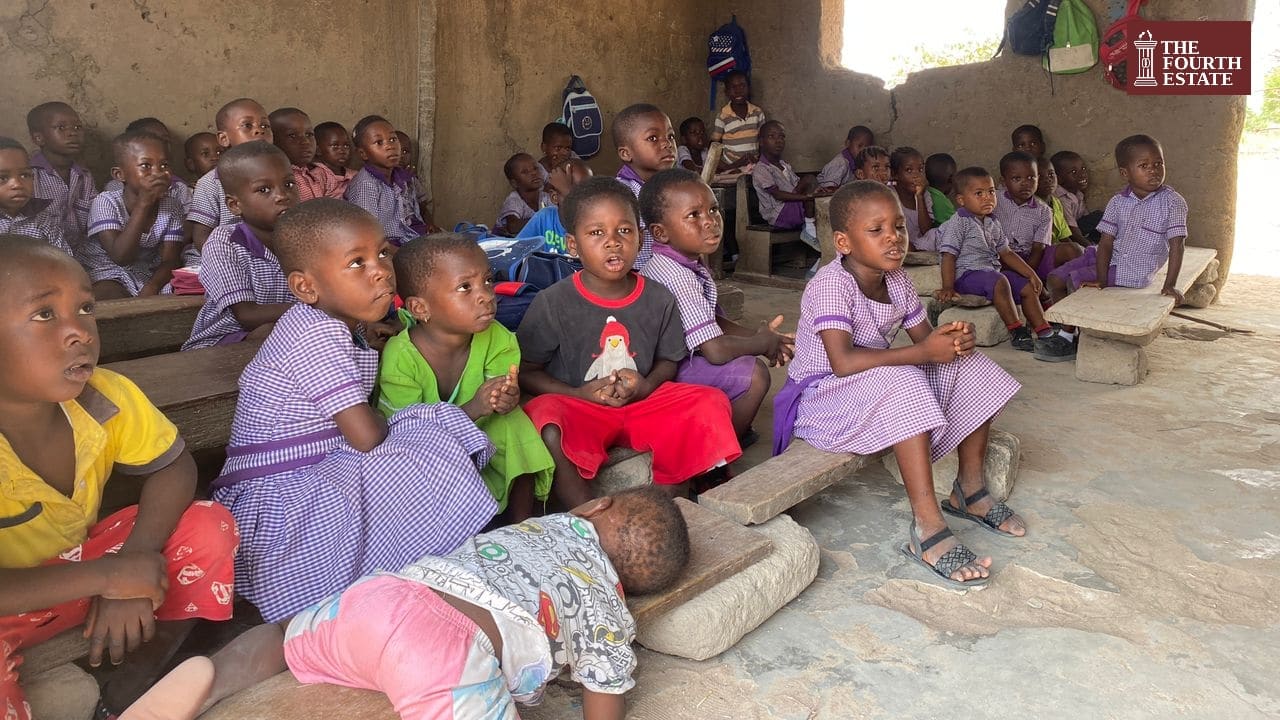
    Unlike Kalaxi, Otengkope-Dawa has a school, but Aggressive Academy is a caricature of a school on the verge of death. And it is dragging along the dreams of Melody and Abraham.

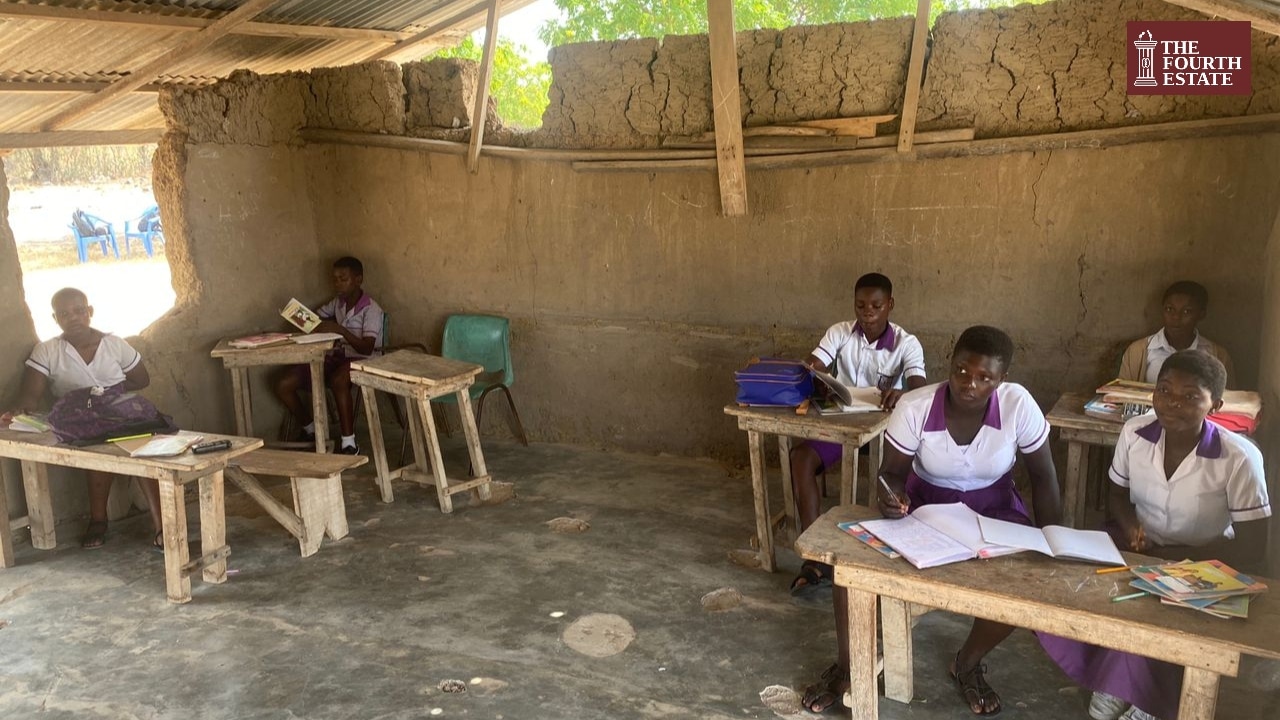
    Otengkope-Dawa is about one hour drive from Ghana’s capital, Accra, but the school structure with crack-walled, potholed floored, and doors and windows yet to be fixed, is not different from what is seen in some of the most deprived communities far away from the capital.

    It is in that dilapidated school, badly hit by the effects of the COVID-19 pandemic, that lie the destinies of Melody, Abraham and other children at Otengkope-Dawa.

    Background

    Otengkope-Dawa is a farming community in the Ningo-Prampram District. Its population of about 900 inhabitants grow mainly vegetables such as pepper, okro and tomato.

    The community did not have a school and so children had to cross a highway separating the community from another town to attend school. On many occasions, children were knocked down and killed by speeding vehicles.

    Parents in the community then decided not to expose their children further to the risk of crossing the highway, and that deprived children in the community of education until they were eight years, when parents deemed them mature enough to cross the highway safely.

    The lack of education for the children at an early age especially, is an affront to the 2004 Early Childhood Care and Development Policy, which promotes holistic early childhood development and programme packages that address the physical, mental, social, moral and spiritual needs of the child.

    A native of Otengkope-Dawa, Beatrice Adelah, driven by strong desire and passion to help address the problem, established a community school for the benefit of children in her native home.

    The Aggressive Academy currently has a population of 110 pupils and with four teachers, including the founder.

    However, when COVID-19 struck the country, Aggressive Academy reeled under the severe aggression of the pandemic. Some of the teachers and caregivers, unpaid for a long while, abandoned post to seek better jobs elsewhere.

    Even Borwin Addo, the eldest daughter of Ms Adelah, who left her pursuit of nursing to read education in order to support her mother’s dream of providing education to the children of Otengkope-Dawa, is in deep reflection now.

    “I sometimes want to leave because there is nothing good here. I need to get something doing that can earn me some good money for my future and my kids,” Miss Addo said.

    Due to the seasonal drought and poor crop yield, many parents do not have money to buy books, uniform and other essentials for their children. As a result, some of them have dropped out of school.

    Current situation Aggressive Academy

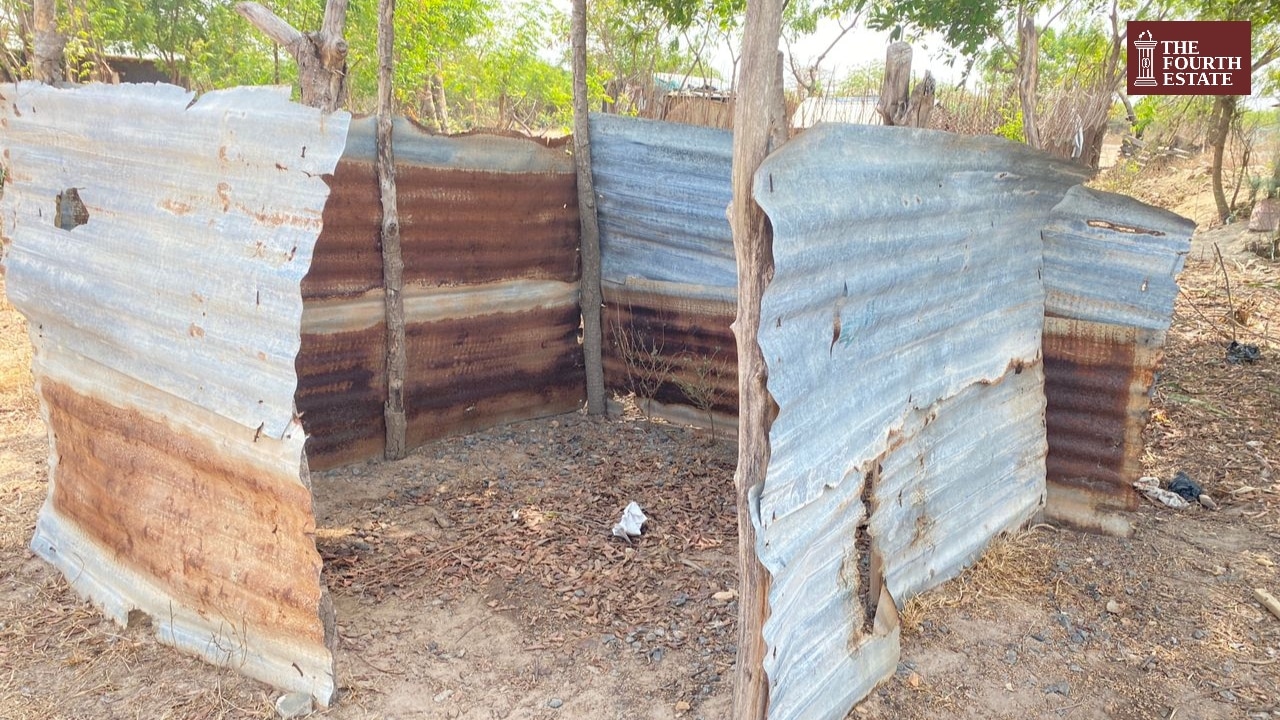
    Aggressive Academy lacks facilities such as furniture, teaching aid and toilet, compelling students to attend to the call of nature at a nearby public place of convenience, while the younger ones defecate in bushes around.

    The school has five classrooms, which accommodate pupils from Nursery 1 to JHS 2. One room is shared by JHS 1 and JHS2 classes, while classes 4, 5 and 6 also share one classroom. Classes 1, 2 and 3 occupy one room. Nursery 1 and 2, as well and KG 1 and 2 share the remaining classroom.

    The children study in extremely deprived environments

    Plea of students and parents

    Berzo Sampson, 16, and Kwenortey Ruth, 15, both in JHS 2, are deeply worried about the deteriorating state of the school building.

    “Because our classrooms do not have windows and doors, while learning, animals like goat and fowls enter the classroom. This  distracts us. There are cracks in the walls of our classroom and because it is built of mud, we fear that one day it may collapse on us,” Sampson said.

    “As we are in Form 2, we have to join another school for Form 3 because there is no classroom for Form 3. We wish to have extra rooms so we can transit easily to Form 3,” Ruth added.

    Faustina Kwetey, a single mother of three, who is also into pepper and okro farming, said: “We want our children to have a better future, and Madam Beatrice has done well over the years, but we need help to upgrade the school to ensure the safety of our children.”

    A Senior Programmes Officer of Child Rights International, Jennifer Nartey, said there was the need for schoolchildren to  learn under good conditions. He said the absence of a safe and supportive environment amounted to deprivation, which was against the child’s rights as stipulated in the Children’s Act.

    “It is sad that in this day and age, children have to go to school in this condition. These are some of the very important things we need to address immediately. If we say children are the future leaders, then we need to provide them with all the needed facilities and items to enable them grow and develop well,” she said.

    A Way forward

    The District Chief Executive for Ningo-Prampram, Al-atiff Tetteh Amanor, said he had heard about Aggressive Academy, but the deplorable condition of the school had not been made known to him.

    “What touched my heart was the fact that children had to suffer the risk of being knocked down by vehicles in their bid to access education,” he said.

    The elders of Otengkope-Dawa are also concerned about the dilapidated structure of the school and the challenges of education in the community but they seem helpless about the situation.

    “Even though we are aware of the present difficulties in the school, our financial constraints have been a major challenge, so we have not been able to assist as we wish.

    “We are mainly vegetable farmers and the absence of a dam or alternative source of water means we farm only one season within the year (May – August) which fetches us a little to feed our families,” William Adelah, a chief of the community, recounted.

    He was, however, optimistic when he said, “We wish to see Aggressive Academy as the best school in the community because the students do well in their academics in spite of their depravity. So we call on all and sundry to assist.”

    The founder, Madam Beatrice Adelah, is not giving up hope.

    “The thing that is giving me the morale in this school is these children; some of them will become nurses, teachers and others, and they will say, ‘It was Madam Adelah’s school that I attended’.

    “If I do not get help, this school might collapse and all my efforts will be in vain.” she said solemnly.

    You may also be interested in:

    The students who are taught how to cry

    The writers of this report, Joseph Kwaku Kpormegbey & Deborah Pokua Bempah, are Fellows of the Next Generation Investigative Journalism Fellowship at the Media Foundation for West Africa.

  • Between E-levy errors & safety of journalists: the mess in govt’s response

    The government in the last few days has been caught in a public relations nightmare over two issues it wished wouldn’t have clashed—the error-ridden implementation of the e-levy and the release of the Press Freedom Index.

    Masters in drowning controversies and scandals, President Nana Akufo-Addo and his band are struggling to ward off the mob of public opinion ready to literally lynch it over the two issues.

    Ghanaians are angry about the deductions that accompany the E-levy with some even in the exemptions bracket paying the levy. Journalists and their sidekicks in advocacy are mourning the deterioration in the safety of journalists in Ghana.

    The government’s responses to what many consider legalised pickpocketing (E-levy) and the country’s disastrous outing on the annual press freedom index released by Reporters Without Borders expose the level of insensitivity on the part of some government officials.

    Two outrageous things caught my attention during the day— a five-page statement released by the Ministry of Information trying to explain away Ghana’s performance on the global ranking.

    The Ministry of Information was desperately trying hard to justify our position on the ladder by blaming it on the methodology. The same methodology that pushed up Sierra Leone. Same one ranked Burkina Faso, a country led by military dictators, ahead of Ghana.

    The government sought to suggest that it did well everything within its control on the list of the new methodologies the SRF employed. However, the country flunked the only thing that lay outside its domain and in the hands of  journalists and media owners.

    “It is worthy of note that Ghana’s dip in ranking was largely influenced by two of the new parameters, namely the Economic and Safety of journalists where the country scored 47.22% and 62.25% respectively.

    The country comparatively performed better in guaranteeing safety of journalists (62.25%) juxtaposed to the economic factors that influence media work (47.22%) underpinned by poor salaries for journalists and the lack of financial sustainability of some media houses, making a number of them economically less viable,” the statement said.

    What it, however, failed to acknowledge is that, in media circles in Ghana, walls have ears. The subtle threats to media houses that the government will boycott their platforms and withdraw advertisements also threaten independence of the media.

    As our elders put it, “You can’t bite the hand that feeds you.” The dozens of media houses that depend on the advertising pie means they virtually have to look the other way when the government misbehaves.

    The suggestion that journalists and media owners should own up for the country’s fall, however subtle it was put in the statement, is repulsive and should not be coming from the Ministry of Information.

    Again, the government shot itself in the foot when the Deputy Minister of Information, Fati Abubakar, seemed to suggest that the journalists assaulted by security personnel had done something wrong.

    Hear her:

     “Acts of some overzealous policemen in handling cases of some journalists suspected to be involved in crimes are not the doing of government,” 3news.com quoted her as saying.

    How sad.

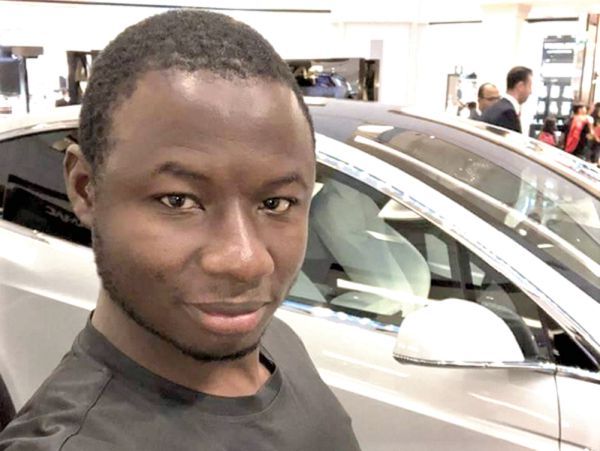
    In 2019, investigative journalist Ahmed Hussein-Suale was killed after a key member of the governing New Patriotic Party (NPP), Kennedy Agyapong, displayed his pictures on Net 2 TV, inciting the public to attack him.

    Ahmed Suale: Two years on, no closure yet - Graphic Online
    The killers of Ahmed Suale are yet to be found                          Credit: Graphic Online

    Ahmed Suale was later shot and killed by unknown gunmen, but nobody has been held responsible for his killing to date.

    In January 2022, the Executive Director of the Alliance for Social Equity and Public Accountability (ASEPA), Mensah Thompson, was arrested, detained and charged by the police for alleging on Facebook that the president’s family had used the presidential jet for shopping. This was after he apologised and retracted the comments.

    In February this year, Kwabena Bobbie Ansah of Radio XYZ was also arrested, detained and put before the court by the police for making disparaging comments about the president’s wife, Mrs. Rebecca Akufo-Addo.

    In June 2019, national security operatives allegedly tortured editors of modernghana.com. Their crime was that they had published negative reports about the minister. Their equipment and phones were seized in a  raid, and as of 2021, the gadgets had still not been returned to them.

    On May 4, 2018, a member of the New Patriotic Party, Hajia Fati, slapped Ohemaa Sakyiwaa of Adom FM in Accra. The journalist had gone to cover an event at the party’s head office in Accra.

    Unprofessional Adom FM reporter' resembled onion seller - Hajia Fati defends assault - Graphic Online
    Hajia Fati (left) said she mistook Ohemaa for an onion seller

    In these instances, what was the criminal motive of the journalists involved? Comments like Fati’s numb the seriousness the government should attach to dealing with those who see journalists as punching bags.

    In trying to shield itself from blame, the government can’t run away from the use of national security operatives to oppress journalists. Most of these operatives are party boys, taking directives from party men. Even if they aren’t, the national security minister is appointed by the president.

    Fati Abubakar admitted that the “government, however, acknowledges that these events negatively affect Ghana’s ranking, has instituted the coordinated mechanism for the safety of journalist, ran by the National Media Commission so that some of these issues can be addressed.”

    It would have been nice to add the success story of this mechanism, which is only on paper.

    The only thing to clap for about what she said during the event commemorating World Press Day is one of the most repeated lines about “Government is putting in the necessary steps including taking inputs from technocrats and industry experts to facilitate the passage of the Broadcasting bill.”

    It’s another skeptical promise. But it’s better than none.

    Away from the press freedom ranking, the government began legally picking our pocket from Sunday through a tax regime that virtually leaves some of us double taxed.

    But in trying to encourage people accept the tax—or is it to instill fear?— the deputy minister of finance, John Kumah goofed.

    Speaking on Neat FM, he sought to suggest legal ramification for people who refuse to accept mobile money payment as a way of avoiding the E-Levy.

    Social media was deep frying him on Thursday. Before he starts screaming that he was misquoted, I went looking for audio recordings of the interview.

    While rallying the public to pay the levy to support the government’s development agenda, he also warned mobile money vendors that the law would deal with them if they are caught defrauding people.

    But his faux pas came when he said ” those who refuse to accept momo and infringe on the law will be reported.” This is to mean that their refusal to accept momo as a form of payment means a crime of a sort has been committed.

    A rejection of mobile money transactions isn’t a rejection of a legal tender. A business can choose to operate a mobile money account or not. There is no law binding any business owner to running a momo account. For most business owners, the convenience of customers informs their decision to accept mobile money payments.

    For instance, almost every day, we patronize the services of a fruit seller who visits the office. The value of the purchases are less than GHC 10, most people pay by cash. This lady is kind enough to accept momo. I said kind because she is under no obligation to receive payment via momo.

    Is the deputy finance minister saying this woman can be dealt with by law if she refuses to accept momo?Will the owners of Heavy Do Chop Bar, the Managing Director of the Palace Mall or Shoprite,or the investors the president is luring into the country via his luxurious travels be arrested for opting out of mobile mobile payment options?

    The thing about misinformation is that when the enlightened recipient receives, he or she get revulsed by it.

    I was. I went scanning through the law to educate myself.

    Perhaps it could be a useful arsenal when the attendants at Goil refuse mobile money.

    Before doing this, however, I was damn sure the deputy minister was misinforming his audience or publishing fake news. A few journalists have ended up in police cells for what won’t even earn the deputy minister a slap on the wrist.

    As I checked it out, it turned out, the man who the Ghana Revenue Authority will be accountable to had his own version of the law. I don’t know if it was meant to instill fear in the public but it backfired. Public anger is swelling on social media.

    It is to be expected that the government will be in denial about the two cases.  But the magnitude of the response, especially from these two deputy ministers leaves one wondering if they really understood the magnitude of those words.

    It is obvious this administration has ticked the box of naysayers who say that in a typical African country, ordinary people don’t expect much of politicians, because people get tired of repeated empty promises.

    Again, in a typical African country, people have no delusions about what politics means to politicians. It has become a norm that those who have power have it for themselves, their friends and families.

    It is becoming increasingly clear that the idea that the state is a tool for people’s growth is a Western concept, only copied by the Asian Tigers.

    In Africa, we have a different script. Our leaders aren’t democracy ‘giraffes.’ They don’t copy from the originators. They remain happily Africans and are happy to serve or rather be served the African way.

    It is ironic that the two deputy ministers are in the government of Dr Mahamudu Bawumia whose chorus in 2016 still rings loud in my ears when issues of our economic woes come up for discussion:

    teachers are suffering,

    nurses are suffering,

    doctors are suffering,

    traders are suffering,

    journalists are suffering,

    Our  suffering yesterday hasn’t changed much today.

    Therefore, what we expect of people who drink from the tax payer’s well is a little sensitivity to our plight. John Kumah and Fati Abubakar should come again.

    You may also want to read:

    E-levy: This is what happened when other African countries passed it

    MANASSEH’S FOLDER: Context makes Elizabeth Ohene worse than the BBC

  • Ghana records worst press freedom ranking in 17 years

    Ghana’s celebrated press freedom status has deteriorated, pushing the country down on the ladder of the league of countries with the freest media in the world.

    According to the 2022 Press Freedom Index by Reporters Without Borders, Ghana fell from its 30th position in the global ranking in 2021 to 60th in 2022.

    In Africa, the country nosedived from 3rd to 10th. This is Ghana’s worst performance in 17 years when it placed 66th in 2005.

    The Reporters Without Borders (RSF) World Press Freedom Index measures pluralism, media independence, the robustness of legislative frameworks and the safety of journalists in 180 countries and five regions.

    The 2022 press freedom Index would not come as a surprise to many media watchers, who have expressed concerns over attacks and violations against journalists and media houses perceived to be aligned with the opposition.

    The slump makes Burkina Faso, a country governed by a military regime, better than Ghana in terms of press freedom.

    Ahead of Ghana in this year’s ranking is a list of other African countries such as Seychelles (13), Namibia (18), South Africa (35), Cape Verde (36), Cote dÍvoire (37), Burkina Faso (41), Sierra Leone (46), The Gambia (51) and Niger (59).

    Ghana’s ranking in ten years

    Year Ranking in Africa Ranking in the World
    2012 7th 41st
    2013 3rd 30th
    2014 3rd 27th
    2015 2nd 22nd
    2016 2nd 26th
    2017 2nd 26th
    2018 1st 23rd
    2019 3rd 27th
    2020 2nd 30th
    2021 3rd 30th
    2022 10th 60th

    Source: rsf.org

    In 2015, Ghana recorded its best performance when it ranked 22nd. In 2018 Ghana was ranked number one in Africa and 23rd in the world.

    The Akufo-Addo administration received plaudits for that, but from there on, the records began to go south.

    Press freedom violations in recent times

    In 2019, investigative journalist Ahmed Hussein-Suale was killed after a key member of the governing New Patriotic Party (NPP), Kennedy Agyapong, displayed his pictures on Net 2 TV, inciting the public to attack him.

    Ahmed Suale was later shot and killed by unknown gunmen, but nobody has been held responsible for his killing to date.

    That year, the country dropped to 3rd position in Africa and 27th in the world.

    This year’s report comes amid growing concerns about attacks against media freedom and the use of the law of publishing false news to arrest and detain journalists.

    “Although the country is considered a regional leader in democratic stability, journalists have experienced growing pressures in recent years. To protect their jobs and their security, they increasingly resort to self-censorship, as the government shows itself intolerant of criticism,” Reporters Without Borders said.

    It also notes:

    “Journalists’ safety has deteriorated sharply in recent years. In 2020, reporters covering the effectiveness of anti-Covid-19 measures were attacked by security forces. And political leaders are again making death threats against investigative journalists. Nearly all cases of law enforcement officers attacking journalists are not pursued.”

    In 2019, operatives of the National Security raided and arrested two journalists of modernghana.com. They seized mobile phones, computers and other gadgets of the journalists and the media house. The journalists were detained and allegedly tortured and asked to disclose the source of negative reports they had written about the National Security Minister.

    To date, the state security institution has not disclosed what the journalists did wrong. As of 2021, the equipment of the journalists was yet to be returned to them.

    In 2021, Citi FM’s Caleb Kudah was also assaulted by operatives of National Security when he went to film abandoned state vehicles hidden in the National Security yard.

    In both instances, nobody was punished for the violations.

    The creeping back of the Criminal Libel Law

    Media freedom advocates and civil society organisations have raised concerns about the increasing hostilities against journalists in recent times. Some have condemned what appears to be the reintroduction of the Criminal Libel Law, under the guise of publishing false news.

    Eric Nana Gyentua, endured a blitz of kicks, slaps, and smashes with the butt of the gun

    In 2011, as the leader of the opposition NPP, Nana Addo Dankwa Akufo-Addo criticised the use of the law of publishing false news to target journalists and other public commentators.

    “This has become particularly apparent since the government of the National Democratic Congress once more assumed office in January 2009 after winning the 2008 general elections. Bereft of the convenient tools of criminal and seditious libel laws, the ruling government has had to comb through the Criminal Code and to seize upon the offence of offensive conduct conducive to breaches of the peace and the sister offence of publishing false news likely to cause fear and alarm to the public,” Mr. Akufo-Addo said.

    Under his watch as president, however, this law has resurfaced and is being used against journalists.

    In January 2022, the Executive Director of the Alliance for Social Equity and Public Accountability (ASEPA), Mensah Thompson, was arrested, detained and charged by the police for alleging on Facebook that the president’s family had used the presidential jet for shopping. This was after he apologised and retracted the comments.

    Kwabena Bobbie Ansah of Radio XYZ was also arrested, detained and put before the court by the police for making disparaging comments about the president’s wife, Mrs. Rebecca Akufo-Addo.

    “We are deeply troubled by the growing use of the prosecutorial and judicial power of the State to punish criminally speech that allegedly falsely injures or damages the reputation of other persons or of an institution of state. Instructively, during the heyday of the criminal libel law in the 1990s, the criminal law was used in precisely the way it is now being used: to prosecute and punish journalists and public speakers for allegedly false or defamatory statements against certain family members or associates of the President,” four civil society groups in Ghana said in a joint press statement.

    The four— the Ghana Center for Democratic Development (CDD-Ghana), STAR-Ghana Foundation, IMANI Africa, and Africa Center for International Law & Accountability (ACILA)—said the law on publishing false news was being abused and should be repealed.

    “As a tool for regulating speech, the criminal law is fraught with the danger of politicization and selective prosecution, as it leaves it to a party-aligned attorney-general, an appointee who serves at the pleasure of the President, to determine which or whose allegedly false speech or publication to prosecute and which or whose speech to ignore,” they said.

    Some of the violations are also carried out by security agencies.On February 3, 2022, the police brutally assaulted Eric Nana Gyetuah, a radio presenter with Connect FM based in Takoradi in the Western for filming a police operation.

    In March this year, Michael Aiddo, an investigative journalist, was assaulted by military personnel at the Afari Military Hospital project site when he went to carry out investigations on abandoned projects.

    Akufo-Addo and press freedom

    Before his assumption of power, Nana Akufo-Addo was seen as a champion of press freedom. Although his critics say the president had been living a charade, his defenders point to his role in the repeal of the Criminal Libel Law in 2001, a legacy of the President John Kufuor era.

    Others also point to a policy on the mechanism for the protection of journalists, but media watchers say it is just another paper gathering dust while journalists continue to face violations in their line of work.

    In June 2017, six months after he was sworn in, the President described Ghana’s media environment as “loud and crowded” with some bouts of recklessness.

    “But I must say, I would much rather have the loud and reckless media than the meek and praise singing one that used to characterize our newspapers, radio and television,” he said.

    However, five years into his administration, press freedom advocates say his words and actions do not match.

    In February 2022, the Executive Director of the Media Foundation for West Africa, Sulemana Braimah, wrote an open letter to President Akufo-Addo, detailing the deteriorating media environment.

    “Under your first term of four years, there were over 55 individual incidents of violations of media rights in the country. The number exceeds what was witnessed over any four-year period since President John Kufuor’s government.  But what is even more significant is the gravity of the violations that occurred during your first four-year tenure,” Mr. Braimah wrote.

    You may also want to read:

    KILLED BY THE BULLET: Police,military fatal brutality victims since 2017 

  • Becoming the next generation investigative journalist

    Becoming the next generation investigative journalist

    Like the sound of any other healthy heartbeat, so did mine sound. Except that mine was louder and faster. And it came with discomfort in my gut. There were knots in my stomach. Knots I struggled to undo.

    The hall was slowly filling up with spectators. Lights danced on the walls. Tables and chairs were set. The podium was mounted. The atmosphere was growing with expectations, nerves and excitement.

    People from different backgrounds but with similar interests had gathered. They had all come to see the next generation of investigative journalists.

    Like a new bride bringing pride to their mother and family, so it was on that day.

    The ten investigators were the new brides. We shared a mother and had a big family. Our mother was Media Foundation for West Africa and our family was DW Akademie, The Fourth Estate and Fact Check Ghana.

    Now why the hurried heartbeat and knots in my gut? It wasn’t just the presence of the spectators or their glaring eyes.

    It was the beginning of the journey of ten investigative journalists in a world where they are loved and hated. A world where their safety is not guaranteed. We were going to face the world. Not as we came in our raw state but as the pride of our family.

    We have enjoyed all blessings that come with belonging to a family and now it was time to let us go into the world.

    Though we go into the world on our own, we carry our family’s name. We must behave out there in the world and like a good bride, bring honour and respect to our family name and be people of integrity. We must carry their legacy.

    Under the care and supervision of our family, we were being prepared to face the world. The world is broken. The world needs fixers. The ten investigators were going to be the fixers.

    We were going to be change makers. If not to restore balance, we were going to hold authorities accountable. And lobby for development. Reveal what is hidden for all far and near to witness.

    We were filled with knowledge for future tasks. We were armed with tools and gadgets to assist us on the road  to our purpose.

    We sought clarity from acquaintances of our family. We visited the Right To Information Commission and the National Media Commission.

    We were visited by people with similar tasks. The baton had been passed on to them. We engaged them and sought their expert advice.

    Armoured and trained, our voyage begins. Do not be swayed by those who want to keep your mouth shut, we’ve been told. It will be enticing. You may be at your lowest when they approach but accept not what they offer you. Do not sell your conscience nor the integrity you so wish to build. All the luxuries in the world may be offered to you but like a dainty lady, raise your nose in the air and walk away. A much more satisfying reward will seek you and your conscience will be white like the foam of the sea with no feeling of heaviness.

    This is my purpose. Among the ton I made a bold declaration.

    “Come for me if it comes to your knowledge that I have done otherwise.”

    A novice in the game, I’ve had the privilege to associate with the veterans. I shall not be subjected to society’s ridicule. I shall build a name for myself and make those who matter most proud of their investment.

    Like the classical words of Osibisa in Woyaya,

    ‘It will be hard we know

    And the road will be muddy and rough

    But we’ll get there

    Heaven knows how we will get there

    We know we will.’

  • Too Broke to Serve: The plight of unpaid National Service personnel 

    Abena Gyan is frustrated and tired of the excuses, tired of calling her mother or her brother for help.

    She’s tired of being afraid to eat more than twice a day because she is broke. Tired of the long walk from the Kwame Nkrumah Circle to the Ako-Adjei interchange, where her place of work is located.

    She lives in Dansoman, but she has had to deboard at the Nkrumah Circle and take a 4.3-kilometre walk to work on many occasions because she was too broke to continue on a vehicle.

    It is one of the many austerities she is taking to cope with the financial distress she is facing as a result of the failure of the National Service Secretariat to pay her allowance for five months.

    Abena is among thousands of new university and other tertiary graduates doing their mandatory National Service across the country. However, they have been paid only once in March 2022.

    Afraid of victimization, Abena and her colleagues spoke to The Fourth Estate on condition of anonymity.

    “The service, if not that it is compulsory, I wouldn’t do it anymore,” she said staring blankly into a canopy of trees.

    Some of the unpaid national service personnel have turned to anything; from borrowing from friends, asking for help from relatives or cut down on the number of their daily meals just to survive.

    In the case of Abena, her problem is compounded by her landlady’s stance on the time to lock the gate of the house.

    By 8pm, all tenants must be home or risk sleeping outside. This means, she has to spend money on taxi or similar means of transportation to get home early.

    On occasions that work demanded more time from her, she had to sleep at a guest house close to the house, she lamented. It costs money she cannot afford to part with.

    As she spoke about her dependency on her relatives, including a jobless mother, her face flashed with anger.

    Abena who spoke to The Fourth Estate on condition of anonymity wants the arrears of National Service personnel paid now

    “Sometimes, I have to call my mother or my younger brother to see if they can send me something. I don’t call them often because it looks as if you’re worrying them. You’re always coming for money. At this age, I don’t think I should be requesting money persistently,” she said.

    With prices of goods and services biting hard on almost every pocket in Ghana, Abena said the plight of national service personnel should attract the interest of the government.

    “The allowances they give us, GH₵ 559, can’t do much. Already things are expensive. Everybody can testify that when we entered this year within a short time, prices of things have increased. Even pure [sachet] water is now 40 pesewas.”

    The situation, she stated, was taking a toll on her mental health.

    “I rent. I take care of myself, and if, at the end of the day, they don’t pay the money, it is very stressful. When you realize that you don’t have money, it is a lot of mental stress.”

    Abena’s story shares the same pain, anger and frustration with Adjoa, who lives in Oyarifa but works in the heart of Accra.

    The journalist spends close to GHc 30 on transport and food daily.

    It is money from her parents. But it has a condition attached—she has to pay back when she is paid her allowance.

    But, like the others clutching on hope, she has been paid only once. That was for January. It was paid in March. Before then, she went October to February without her allowance.

    That amount, she said, went into settling debt. Not her parents’ but rather friends who lent her money to buy clothes.

    “My friends gave me the money, so that when the allowance came, I could pay them back. By the time the January allowance came, it was gone,” she said.

    When she started national service, Adjoa’s expectation was to save enough for short courses that would give her soft skills in preparation for the world of work after her National Service, which ends in August this year.

    But now, she said she felt defeated.

    “Upon all these, you still have to write stories because your creativity has to be on point,” she said, and pointed out that “the money is a motivation to cushion yourself for the most basic necessities of life.”

    Then there is Akua, the daughter of a single mother, who is on retirement. She has a degree in political science.

    She is worried about the pressure she is putting on her 67-year-old mother.

    “She is still supporting me like I’m in school. It is stressing her. I live at Kaneshie and the fare keeps increasing. In my department, you have to come every day. How do we feed?” she asked a question whose answers lie in the bosom of the National Service Secretariat (NSS).

    But the answers are not forthcoming.

    From Tuesday to Friday last week, The Fourth Estate continuously reached out to the Director, Public Affairs of the NSS, Armstrong Essah, through phone calls and WhatsApp messages for him to speak to the issues of the arrears owed the national service personnel.

    His only response was that he was overwhelmed with a busy schedule.

    Amstrong Essah, Director of Corporate Affairs at NSS
    Director of Public Affairs, NSS,  Armstrong Essah                              Credit: The Independent

    The president of the Ghana Broadcasting Association branch of the National Service Personnel Association (NASPA), Emmanuel Dei Anarkwa, told The Fourth Estate that his colleagues continued to inundate him with complaints about food, transport, rent.

    He said,“Some even go to the extent of weeping. It is very sad.”

    “Anytime you send these complaints to the regional and national executives, the feedback is that we’re working on it. We should exercise self-reliance; we should be patience and so on.”

    With little or no financial support to push them, Mr Anarkwa said some of his peers had stopped coming to work.

    “I know someone who has not been coming for a month now. She’s keen on it that until payments are made,” he disclosed. “She can’t come anymore because she has made sacrifices from October to December. But still she hasn’t still received anything.”

    Others The Fourth Estate spoke to also said if push came to shove, they would quit the National Service and probably do it next year.

    While his colleagues lament over their financial difficulties, the National President of NASPA, Emmanuel Brimpong Akosa, in a statement dated April 5, 2022 gave some assurances.

    According to the statement, NASPA could confirm that payment of allowances for February was to be made by April 6, 2022.

    Nothing happened.

    His colleagues were left angry and disappointed, but they had one plea to the NSS Secretariat.

     “Pay us, we are suffering,” Abena said.

  • SONA 2022: Contradictions in the number of trees planted during 2021 Green Ghana Day

    President Nana Akufo-Addo on Tuesday, March 30, 2022, delivered his seventh State of the Nation address (SONA).

    It was a report card that covered the social, economic, and financial state of the country in conformity with Article 67 of the 1992 constitution.

    The State of the Nation address also catalogued the challenges and achievements of the second year of his final term in office.

    Trumpeting the success story of last year’s Green Ghana Day, which was aimed at tackling the threats of deforestation, the President claimed that last year’s tree planting exercise exceeded the event’s five million target.

    Fact-Check Ghana has verified the claim and presents the report below.

    Green Ghana Day initiative won't be a one-off event – Akufo-Addo - South Dayi District Assembly
    President Akufo-Addo at the 2021 Green Ghana Day event Credit: Jubilee House

    Claim: “Mr. Speaker, the Green Ghana Day, last year, was a great success, as many people turned out to join in the exercise to plant trees. I urge all of us to continue to take care of what we planted to make sure that the seven million seedlings we planted, i.e., two million more than the original target of five million, become fully grown trees.”

    Verdict: Contradictory

    Explanation: As part of efforts to arrest Ghana’s alarming forest cover loss, the government in June last year introduced the Green Ghana Day Campaign.

    The government, through the Forestry Commission, provided free seedlings to all institutions and individuals willing to plant trees on June 11, 2021.

     Fact-Check Ghana has spotted an inconsistency in the data captured as the total number of seedlings planted and the verified number of trees.  The team has noted contradictions in the data presented by the President, the Minister of Lands and Natural Resources, Mr Samuel Jinapor; his Deputy, Mr Benito Owusu-Bio; and the Forestry Commission.

    On June 23, 2021, Graphic Online reported that the Forestry Commission (FC) distributed more than seven million assorted tree seedlings across the country during the Green Ghana tree planting exercise last year.

    “Even though planting figures are still being collated across the 16 regions, provisional figures from the FC [Forestry Commission] clearly show that we exceeded the five million targets. This is remarkable and historic,” the publication quoted Mr. Jinapor’s figures to Parliament on June 22, 2021.

    Mr Jinapor’s Deputy, Mr Owusu-Bio repeated similar lines on December 16, 2021, during a press briefing.

    Provide support to Oti Region- Benito Owusu-Bio to Volta Regional Lands Commission
    Deputy Minister for Lands and Natural resource, Benito-Owusu Bio        Credit: Vaultz News

    Mr Owusu-Bio, who heads the Green Ghana Day Monitoring and Evaluation Committee, said:

    “Overall, 7 million seedlings were distributed and we have the list of the regional distribution that was done and we can attest to the fact that almost everything was planted. In fact, there was very high demand to the extent that at a point in time we even ran out of the seedlings.”

    Green Ghana Project was successful, over 7 million trees were planted - Lands Ministry - MyJoyOnline.com
    Source: Ministry of Lands and Natural Resources

    This is consistent with what Mr Jinapor told Parliament on March 3, 2022 when he appeared before the House.

    He told the lawmakers that “the Forestry Commission procured 4,897,247 seedlings, out of the 7,193,424 seedlings distributed for planting during the maiden edition of the Green Ghana Day, on June 11, 2021.”

    Fact-Check Ghana leant from the Forestry Commission and Ministry of Lands and Natural Resources that the remaining close to three million seedlings were donations from plantation developers and individuals, including Ogyeahoho Yaw Gyebi ll, President of the National House of Chiefs.

    However, statistics Fact-Check Ghana obtained from the Forestry Commission through a Right to Information (RTI) request dated March 10,2022, shows that although 7,193,424 seedlings were distributed, 6,603,298 were verified as planted.

    This leaves a shortfall of 590,126 seedlings.

    The Forestry Commission’s data of the seedlings verified as planted is inconsistent with the figure the President presented at the State of the Nation.

    From the above therefore, Fact-Check Ghana can conclude that the figures the president provided to Parliament and that of his ministers are contradictory.


  • How Safo Kantanka’s church secretary sat on PPA Board that approved GH₵ 27m Kantanka vehicles deal

    How Safo Kantanka’s church secretary sat on PPA Board that approved GH₵ 27m Kantanka vehicles deal

    When the Ministry of Education in 2019 decided to purchase pickup trucks, it opted for a single-source procurement and chose the Kantanka brand produced by Kantanka Automobile Ltd.

    The company was founded by Apostle Kwadwo Safo Kantanka of the Kristo Asafo Church and Group of Companies.

    The procurement process fell on the laps of the Public Procurement Authority (PPA). However, on the board of the authority was a Deputy Secretary of the Kristo Asafo Church, Dr Emmanuel Yaw Boakye.

    It should have raised red flags.

    It didn’t.

    Again, Dr Boakye was the Technical Director of the Ministry for Procurement (MoP)  and Sarah Adwoa Safo, the daughter of Apostle Safo, was the Minister of State at that ministry.

    Another red flag. Ignored.

    The Commission on Human Rights and Administrative Justice (CHRAJ) has revealed that Dr Boakye took part in Board Technical Committee meeting which considered and approved the MoE’s application for the procurement of the vehicles worth GH¢27 million from Kantanka Automobile Company Ltd, a subsidiary of the Kristo Asafo Group of Companies.

    Sitting on the committee that approved the procurement of the vehicles put Dr Boakye in a conflict of interest position, CHRAJ has said.

    Before his appointment to the now-defunct Ministry for Procurement, Dr Boakye was the Project Director of the Kristo Asafo Group of Companies and a Board Member of Kristo Asafo Schools. He had been the Deputy Church Secretary for over two decades.

     He told CHARAJ that he had resigned as Board Member of the Kristo Asafo Schools in 2017 when his party, the New Patriotic Party (NPP), came to power. He was appointed to various positions.

    The revelations are contained in the latest CHRAJ report of the investigations into the activities of the dismissed CEO of the Public Procurement Authority, Mr Adjenim Boateng (A.B.) Adjei and member of the PPA Board.

    This investigative report is the second from CHRAJ on the PPA and its CEO since The Fourth Estate’s Editor, Manasseh Azure Awuni, released his “Contracts for Sale” investigative documentary. The documentary revealed that companies owned by Mr A.B. Adjei were winning government contracts and selling the contracts to prospective buyers.

    This latest report is in response to a separate complaint that the Ghana Integrity Initiative, Ghana’s chapter of Transparency International, filed with the anti-graft body to conduct a broader scope of investigations into the activities of the PPA CEO and the board.

    This report goes beyond A.B. Adjei and his companies to cover the board of the PPA such as Dr Boakye.

    “On his relationship with the founder of the Kristo Asafo Church and Kantanka Group of Companies, Dr Boakye said that he is a member of the Kristo Asafo Church and that the founder, Apostle Kwadwo Safo Kantanka, took care of him. He also said that he considers Apostle Kwadwo Safo as his father and Apostle Kwadwo Safo’s children as siblings.

     “He also admitted that he participated in the 25th Meeting of the BTC in 2019 that discussed and approved the request made to the PPA Board by the MoE for approval to use single-source procurement to engage Kantanka Automobile Ltd…,” he said.

    Asked why he failed to recuse himself from the meeting that approved the deal although he had a close relationship with Kantanka Automobile Ltd, he had a rather interesting explanation.

    “He said that the fact that he did not disclose that fact that the founder of Kristo Asafo Group of Companies had helped him before or took care of him, does not totally amount to having a relationship with him. He also said that he has no interest in the companies, and is not also a Board Member of the companies.

    “More so, per the records of proceedings at the meeting, he did not influence the decision of the Board. He further argued that there is no evidence to show that somebody was going to make money out of it. Moreover, the companies now belong to one of the founder’s sons,” he told CHRAJ.

    Banned

    But the Commission disagreed as it found the explanation unsatisfactory.

    For his sins, Dr Boakye has been barred from holding public office for three years. His disqualification is, however, limited to only public boards, councils and
    commissions, and not to extend to public office generally.

    Code of conduct

    Code of conduct for PPA officials required Dr Boakye to recuse himself in the procurement process since he had a personal relationship with the supplier of the vehicles.

    “Where any member of the Tender Evaluation Panel has a conflict of interest in any tender evaluation, he/she shall declare his interest in the tender, leave the meeting while the matter is considered and shall not participate in the deliberations or decision-making process of the Panel in relation to that submission,” the PPA’s Manuals – Public Procurement Act, 2003 (Act 663) advises.

    According to the Commission’s Guideline on Conflict of Interest (COI), “when the promotion of private interest of a public official result or is intended to result in or appears to be or the potential to result in an interference with the objective exercise of the person’s duty and an improper benefit or an advantage by virtue of his/her position, then it constitutes a COI.”

    The CHRAJ defines a Public Officer as a person nominated, elected or appointed to serve in a public office.

    The document notes that private interest could be financial or other interest, such as family members, relations, clubs and associations, among others.

    Asset declaration

    Article 286 of the 1992 constitution requires that “(1) A person who holds a public office mentioned in clause (5) of this article shall submit to the Auditor-General a written declaration of all property or assets owned by, or liabilities owed by, him whether directly or indirectly, (a) within three months after the coming into force of this Constitution or before taking office, as the case may be, (b) at the end of every four years; and (c) at the end of his term of office”

    But Dr Boakye never did.

    He, however, told CHRAJ in a letter dated August 18, 2020, that he was ready to right the wrong “if it is the view of the Commission that he is required to declare his assets and liabilities, he was prepared to do so.”

    CORRECTION: In the earlier version of this report, we quoted GHc270 million as the cost of the vehicles, which was contained in the CHRAJ report. Our attention has however been drawn to the fact that the correct figure was GHc27 million, as contained in an attachment in the CHRAJ report. The error is deeply regretted.