Author: Seth J. Bokpe

  • Court orders release of Barker-Vormawor’s passport, lifts travel ban temporarily

    For six months, the state took away his freedom to travel. He was considered a flight risk.

    But #FixTheCountry Convener, Oliver Mawuse Barker-Vormawor, can now travel because the Tema High Court has lifted the travel ban on him a few hours to his  intended trip outside Ghana.

    “I am minded to say this after looking at the bill of indictment and the process thereof to conclude that the fact that one has been charged with a criminal offence does not take away the person’s constitutional right to freedom of movement,” the court said.

    The court also ordered the release of the activist’s passport to him ahead of his scheduled travel to Senegal to deliver a paper at a meeting of Human Right Defenders.

    The social media activist led a hashtag that took on the government for the country’s harsh economic conditions and constitutional arrangements that benefit the political class to the detriment of the ordinary Ghanaian.

    However, his posts would trigger the state to an action that has curtailed his freedom.

    On February 10, 2022,  Mr Barker-Vormawor wrote on Facebook that “If this E-Levy passes I will do the coup myself. Useless Army!”

    This followed pictures which emerged on social media from the Majority Leader, Osei Kyei Mensah Bonsu’s 65th birthday party, showing an ‘E-levy’ cake.

    FixTheCountry convener Oliver Barker-Vormawor granted bail after 33 days in police custody | Pulse Ghana

    On his return to Ghana on February 11, 2022, he was arrested at the Kotoka International Airport, detained and later charged with treason felony, an offence he is fighting in court. His lawyers and some Ghanaians believe his comment does not warrant the charge.

    But the state does not think so.

    After more than a month in custody, he was released on March 17, 2022 with conditions that banned him from having his passport and travelling.

    Since then, he had been at the Ashaiman District Court in the last six months and his case adjourned six consecutive times while the state prepares to serve him with a bill of indictment.

    With his movement curtailed while his international peers in activism seek his experience, he went to the Tema High Court to challenge his right to travel.

    Making his case before the court presided over by Justice Daniel Mensah, he argued in an affidavit that months after his arrest, the prosecution was yet to commence committal proceedings to assess whether he should be committed to stand trial at the High Court.

    “The delays, which are entirely due to failings of the prosecution, breach my right to a speedy trial and have gravely affected my ability to effectively undertake my professional and academic engagements,” he said.

    The delays, he argued, had scuttled his professional engagement and career as he had been unable to accept any professional engagements outside the country nor travel to the United Kingdom, where he was studying at the University of Cambridge, in order to assess archival material for his doctoral research.

    With the West African Civil Society Institute requiring his presence in Senegal, he said he needed the court to unmake the bail conditions that had kept him from international flights.

    But the Attorney-General opposed the application, insisting that the prosecution had not delayed in the committal of Mr. Barker-Vormawor at the District Court.

    The Attorney-General in his affidavit in opposition to the accused person’s request backed its claim with the fact that Mr Barker-Vormawor had appeared before District Court judge, Eleanor Kakra Barnes Botchway, on June 29, 2022 for committal proceedings to begin but the matter was adjourned to August 1, 2022 for continuation.

    “The applicant has been charged with a serious offence and may not appear to stand trial if granted leave to travel out of the jurisdiction,” the Attorney-General further claimed

    Again, the Attorney claimed that although Mr. Barker-Vormamor had received the invitation to the event on June 30, 2022 and was to confirm attendance latest by June 4, 2022, he failed to confirm attendance.

    “He indeed has no real intention of attending the workshop, but rather to use the invitation as a ruse to obtain his passport to travel out of the jurisdiction to avoid standing on trial.”

    The Attorney-General continued:

    “The applicant has not provided evidence of a return date or flight to the country and has therefore not demonstrated a willingness to return to the country to stand trial.”

    The Attorney General alleged that by filing his application on July 12, 2022, six days after  being issued his  travel itinerary, the applicant intended to rush the court “into making a decision in his favour even though there is no demonstration that he would attend the workshop.”

    The A-G also pointed out that in the era of COVID-19 that allowed virtual meetings Mr Vormawor need not be physically present at the event.

    He therefore urged the court to dismiss the application.

    But the judge disagreed.

    “In this case, since the grant of bail to the accused person before me, he has religiously been attending court and thus complying with the court order,” he said.

    Justice Mensah asserted that Mr Barker-Vormawor’s travel would be outside the country from Monday, June 18, 2022 July 22, 2022 would not jeopardize the case.

    “Accordingly, I would order the District Police Commander of the Ashaiman District to release the passport of the applicant to him upon being shown a return ticket from and to Ghana within the aforesaid days.”

    He, therefore, removed the “stop travel order” within the period of Mr Barker-Vormawor’s trip to the West African country.

    He, however, directed the accused person to deposit his passport with the District Commander of Ashaiman Police District not later than 10am on July 25, 22.

    YOU MAY ALSO WANT TO READ:

    Police admit planting “stranger” with bread in Baker-Vormawor’s cell as he sues for torture 

    And they sang ‘Arise Ghana youth!’ – #FixTheCountry protesters want Nkrumah back 

  • Town Topics:  Dear Organised Labour, the IMF is not the vampire

    Like sticks of dynamite tapped together with a short fuse, our times in Ghana these days are really threatening. “Volatile” may be is a more apt description.

    Drivers are wearing their tempers on their sleeves against prices of fuel, their attention often divided between the fuel gauge and the road. Market women have sharpened their tongues in defence of sharp rise in the prices of goods. The entire country seems brimming with pent-up anger ready to explode.

    The pain being felt across the country is evident in the recent Afrobarometer report in which 89% of Ghanaians said the country was heading in the wrong direction.

    The government can’t even afford to feed students. But for parents and philanthropists, students in some public senior high schools in the country would sleep on empty stomachs. Their counterparts in public basic schools, who are benefitting from the school feeding programme, are barely surviving on 97 pesewas. This amount can’t buy three sachets of water.

    The crisis has been long in coming. The government has been living beyond its means because of its reckless borrowing and an even more reckless spending, including COVID-19 funds that the government is struggling to account for.

    No matter how hard the government tries to massage them, the economic figures don’t look good. President Nana Akufo-Addo and his appointees have been in denial for long. This month, inflation hit almost 30%–the highest rise in the prices of goods and services since 2003. Coincidentally, Ghana was in the throes of the Highly Indebted Poor Country (HIPC) programme at the time when the inflationary mess last hit the ceiling.

    To many Ghanaians, the current inflation figures is what is on paper. The true inflation is far higher than the official figures. Fuel prices have doubled from GH₵6 in January to almost GH₵ 12 in July, with a cascading effect on almost everything money can buy.

    Organised Labour threatens demo over poor wages | Rainbow Radio International

    How much has the government borrowed?

    The economy is choking on debt. The government has borrowed more than GH₵280 billion since 2017. Credit rating agencies—Moody’s and Fitch—have downgraded the country’s credit ratings, citing a heightened vulnerability to defaulting on paying our lenders and inability to access the capital market.

    The government claims that salaries and wages of the public sector munched the greatest chunk of its revenue but what happens when party faithful are packed into state agencies when they have no role to play? Today, interest payment on our debt is almost competing with public sector wages and salaries but many Ghanaians are asking what the money has been used for.

    Year 2016 2021
    Total debt GH¢53.4 billion 341.7 billion
    Compensation to employees GH¢14.1 billion GH¢33.0 billion
    Interest payment GH₵ 10.7 billion GH¢32.5 billion

    But how did we get here?

    The government says it is COVID-19 and the Russia-Ukraine war. On Thursday, Dr Bawumia, an erudite lecturer on economic mismanagement in the past, widened the scope to include the Mahama government’s excess electricity charges and a banking sector clean-up, which critics say was laden with more politics than economics.

    At a presentation in which he ducked behind his digitization drive, Dr Bawumia didn’t take credit for his government’s actions or inaction in the whole mess.

    Neither did he tell Ghanaians why Ghana’s economy is an outlier of high inflation, debt distress in the West African region and an outrageous currency depreciation.

    Admittedly, the twin troubles of external shocks—COVID-19 from 2020 and Russia-Ukraine war from February 2022— have a hand in our crisis that experts warn could morph into a national security threat.

    But it hasn’t been all doom for government. There are also developments that favoured the state kitty.

    When he presented the 2022 budget to Parliament last year, the finance minister pegged the benchmark crude oil price for 2022 at $61.23 per barrel. But Putin’s adventure in Ukraine has pushed global crude oil prices to more than $100 per barrel. This means the government is receiving a 40% increment in its expected oil revenue.

    Since the country has deregulated its oil sector, the government cannot claim to be burdened with subsidies. It even added more taxes, the COVID-19 levy and the sanitation levy.

    The rot

    In this period of economic crisis and shrinking of public expenditure, it is important to put the spotlight on some of the frivolous public spending in the recent past.

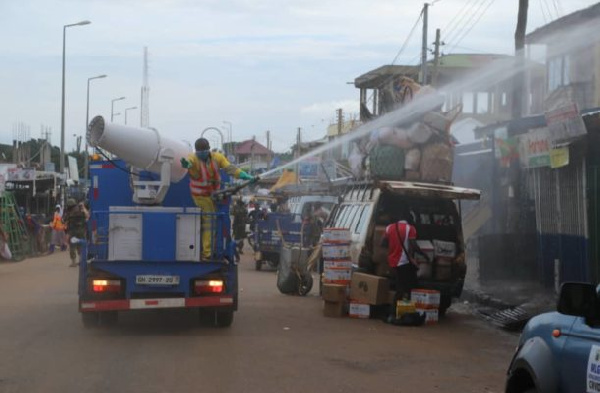
    Billions have been wasted in many scandalous enterprises under this administration. While the government has consistently used COVID-19 as an excuse for the economic kaput, how can it justify the GH₵500 million two ministries spent on fumigation and the graveyard of failed projects including One Village, One Dam and the almost GH₵30 billion worth of irregulaties in the last two Auditor-General’s reports?

    GhanaTalksRadio | zoomlion disinfects-109-markets-in-the-upper-west-region
    Only two ministries spent GHc500 million on fumigation exercise   Credit: Ghana Talks


    All these and other reckless expenditures sent us back into the arms of the IMF. Ghana’s romance with the IMF dates back to May 1966, three months after Nkrumah’s overthrow. Since then, we’ve made overtures at the Bretton Wood institution 18 times. The last one was in 2015 when Mahama’s government turned to the IMF for economic salvation.

    Each time we go to the IMF, we promise ourselves; it’ll be the last. When Ghana exited the last one in 2019, Mahama got his bout of insults, Akufo-Addo, Bawumia and Ofori-Atta received praises for keeping the economic ship assail. Bawumia even bragged about having arrested the depreciating cedi.

    But five years later, we’re back to square one.

    Managers of the economy, particularly, Mr Ofori-Atta had been emphatic on numerous occasions that Ghana would not join the IMF because of the repercussions.

    Less than two months afterwards, we’re begging for $1.5 billion in a three-year programme to given ourselves some credence before our lenders who at the moment don’t see us as responsible to trust us with their money.

    Effectively, Akufo-Addo’s two-term government will spend more time in IMF programmes than it managed the economy independently.  From 2017 to 2019, the economy was on an IMF life support.

    Whatever happened to our long-term vision, the finance minister had been proclaiming, only Gabby Otchere Darko, the government’s chief agenda setter, is better placed to explain.

    It has become obvious that the hesitation to go back to the IMF was political— the uncompromising stance and the wave of criticism then candidate Akufo-Addo and his running mate Bawumia heaped on Mahama.

    Ever since the government announced its decision, organized labour escalated its deep-rooted suspicion against the IMF.

    Who wouldn’t? This is particularly because the IMF has a history of having no sympathetic ears for Organised labour’s fears. Organised Labour had always suffered the austere measures that accompany IMF bailouts. These range from salary stagnations to a freeze in unemployment and sometimes layoffs in the name of workforce rationalization and downsizing.

    Keen on justifying why the IMF has saved our sinking ship, government spokespersons including Gabby Otchere Gabby and the Minister of information, Kojo Oppong Nkrumah, have sought to suggest that opposition lawmakers should be blamed for the failure of the e-levy to yield the required returns.

    The irony is lost on them.

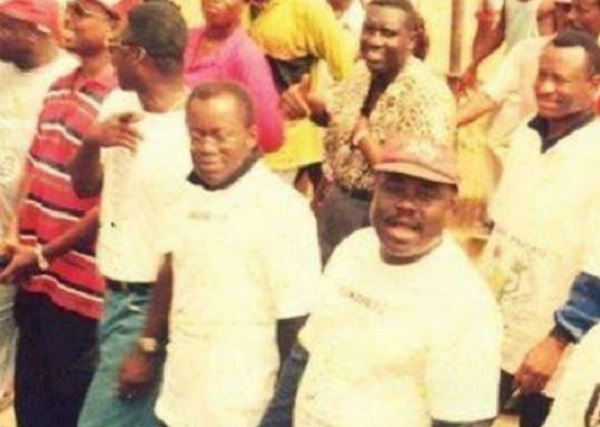
    In 1995, Nana Akufo-Addo led the Kumi Preko demonstration, one of biggest anti-tax protests in the history of Ghana against the introduction of value added tax (VAT). The Rawlings administration bowed to the public agitation. It took three years to roll out VAT in 1998.

    Today in History: The 1995 'Kume Preko' protest that rocked Ghana
    President Akufo-Addo (2nd right) led the 1995 Kumi Preko demonstration against VAT     Credit: Ghanaweb

    In any case, Ghanaians voted the NDC lawmakers to be a voice of dissent when necessary. Had it not been the shoe-string majority it has in parliament, the NPP would have bulldozed their way, leaving the minority with only their say.

    While labour’s concerns are valid, the IMF in reality is just like a doctor treating any health condition. If you decide to visit the consulting room, you must as well adhere to the medical advice on offer.

    The IMF is clear on its conditionalities:

    “When a country borrows from the IMF, its government agrees to adjust its economic policies to overcome the problems that led it to seek financial aid. These policy adjustments are conditions for IMF loans and serve to ensure that the country will be able to repay the IMF. This system of conditionality is designed to promote national ownership of strong and effective policies.”

    Our government, which lived recklessly after exiting an IMF in 2019, is the vampire siphoning the lifeblood of the economy. In the corporate world, the fate of the executive management is inextricably linked to the bottom line; there is a strong motivation for management not to embark on imprudent expenditure.

    The last thing Ghana needs now is now austerity. It needs investment in infrastructure in health, education, communications and agriculture and well-motivated labour force.

    But that expenditure can only be delivered by institutions which are not in the grip of corruption.

    Unfortunately, the vanguards of the public purse, the Ministry of Finance, begs propriety. The Ministry has been on the grimmest page of the Auditor-General almost every year for every irregularity thinkable.

    We can’t blame it on the IMF. It falls squarely on our ‘solid’ economic management team led by Dr Bawumia and driven by Ken Ofori-Atta.

    So, dear Organised Labour, the IMF is not chewing your COLA.  The IMF is not the vampire that suck the lifeblood out of the economy.

    It’s our government.

  • Judge did not understand Sir John asset-freezing case- Special Prosecutor

    Judge did not understand Sir John asset-freezing case- Special Prosecutor

    The Special Prosecutor says the High Court judge erred in dismissing his request to confirm the freezing of assets of the late Chief Executive of the Forestry Commission, Kwadwo Owusu-Afriyie.

    In a statement responding to Justice Afia Serwa Asare Botwe’s decision, the Special Prosecutor, Kissi Agyebeng, criticised the decision and schooled the judge on the matter.

    In June 2022, the Office of the Special Prosecutor (OSP) froze the assets of Mr Owusu-Afriyie, popularly known as Sir John, after his will showed that he had gifted many properties, including lands at the Achimota Forest and the Sakumono Ramsar, site to his relatives.

    Mr. Agyebeng subsequently went to court in compliance with the Special Prosecutor’s law, Act 959, to ask the court to confirm the freezing.

    However, the court said the Special Prosecutor came on the back of the wrong law.

    The Special Prosecutor cited Sections 38, 39 and 40 of the law:

    Section 38: Freezing of Property

    1. Where the special prosecutor considers that freezing of property is necessary to facilitate an investigation or prosecution, the special prosecutor shall in writing direct the freezing of 

    a.The property of a person or entity being investigated: or 
    b. specify property held by a person or entity other than the person or entity being investigated or prosecuted.
    2. The special prosecutor shall within fourteen days after the freezing of the property, apply to the court for a confirmation of the freezing.
    Section 39: Application for freezing order
    An application for confirmation of a freezing order shall be made unnoticed to the respondent and shall be accompanied by an affidavit sworn to by the special prosecutor or an officer authorised in writing by the special prosecutor to swear the affidavit detailing the grounds for the confirmation.
    Section 40: Issue of freezing order
    1. where an application is made for a freezing order, the court shall issue the order if it is satisfied that 
    a. the respondent is being investigated for corruption or corruption-related offence
    b. the respondent is charged with corruption or corruption-related offence
    c. there are reasonable grounds to believe that a property is a tainted property 
    d. the respondent derived benefit directly or indirectly from corruption or corruption-related offence
    e. the application seeks a freezing order against the property of a person other than the respondent because there are reasonable grounds to believe that a property is tainted property and that the property is subject to the effective control of the respondent 
    f. there are reasonable grounds to believe that a confiscation order shall be made under this act in respect of this property.

    The court, however, said the antigraft institution should have come to court on the back of Section 54 of the law. That law states:

    “The Special Prosecutor shall apply to the court for a confiscation order in respect of tainted property if the person from whom the property was seized:

    (a)is on trial for corruption or a corruption-related offence or (b)is convicted of corruption or corruption-related offence but dies or absconds.”

    The court then dismissed the Special Prosecutor’s application for the freezing order.

    But, the Special Prosecutor disagrees with the judge’s position.

    “The judge with respect totally misapprehended the application for confirmation of the freezing order and misdirected by characterising the application as that of a confiscation order, which regime regimes are governed by different considerations,” the Special Prosecutor said in a statement shortly after the ruling.

    “The regime for application for confirmation of a freezing order is designed to facilitate an investigation or a prosecution to avoid dissipation of the property in question,” the statement added.

    Explaining the differences, the Special Prosecutor said that a confiscation order is designed to permanently deprive the owner of the property.

    “The special prosecutor asked for the freezing order to be confirmed to facilitate the investigations into the circumstances of the purposed acquisition by the deceased of protected lands in the Achimota forest enclave and the Sakumono Ramsar site. The special prosecutor did not apply for confiscation of the estate of the deceased,” the Special Prosecutor said.

    The Special Prosecutor warned of a dire consequence in the fight against corruption of the decision stands:

    “The net effect of the ruling of the high court is that a person may in his lifetime gleefully, acquire property through corruption and then upon his demise happily pass on the corruptly acquired property to his beneficiaries for their benefit and by so doing, extinguish all scrutiny as to the propriety or their acquisition of the property because his corrupt activities were not discovered during his lifetime.

    “If the decision is left to stand the country will lose the fight against corruption in unimaginable ways.”

    The special prosecutor is therefore appealing the decision while it continues investigations.

    Background

    The OSP began investigations following a petition by Corruption Watch to the OSP to investigate the acquisition of state lands.

    Corruption Watch petitioned the OSP after The Fourth Estate published the will of Kwadwo Owusu Afriyie.

    The OSP said last week that it had begun “full investigations into suspected corruption and corruption-related offences in respect of alleged improper acquisition of state lands at the Achimota Forest enclave and Ramsar catchment in Accra by the former CEO of the Forestry Commission, Kwadwo Owusu Afriyie alias Sir John (now deceased) and other two persons.”

    The statement signed by Special Prosecutor, Kissi Agyebeng, asked the Ministry of Lands and Natural Resources to cooperate in the investigations.

    The wealth Mr. Afriyie bequeathed to his family and loved ones shocked many Ghanaians when The Fourth Estate exclusively revealed the contents of his will. Of particular interest have been the large parcels of land he owned at the Achimota Forest and the Ramsar site, a protected area he had warned people against acquiring land while he was in office.

    Corruption Watch petitioned the Special Prosecutor “to investigate the alleged acquisition of several acres of alleged state lands situated in the Achimota Forest and Ramsar sites in Sakumono by three artificial persons namely Jakaypros Limited, Fasoh Limited, DML Limited, and two natural persons namely Charles Owusu, an officer of the Forestry Commission and Kwadwo Owusu Afriyie, popularly known as Sir John, now deceased, who served as the Chief Executive Officer (CEO) of the Forestry Commission from March 2017 until July 2020.”

    Per the laws regulating asset declaration in Ghana—Article 286 of the 1992 Constitution and Public Office Holders (Declaration of Assets and Disqualification) Act—Mr Afriyie should have declared his assets upon assumption of office in 2017.

    The Fourth Estate’s checks from the Auditor-General’s department, however, revealed he did not declare his assets.

    YOU MAY ALSO WANT TO READ: 

    FULL DETAILS: Achimota Forest lands, gold businesses and guns in Sir John’s will

    Special Prosecutor freezes assets of Sir John

    Corruption Watch, 14 CSOs petition Special Prosecutor, and CHRAJ over Sir John’s will


  • Sir John’s successor, three deputies have not declared their assets

    When John Allotey was appointed the Deputy Chief Executive of the Forestry Commission in 2017, he became the first person to occupy that position in the 18-year-old history of the commission.

    That office comes with a number of responsibilities including a constitutional demand on its occupant to declare his or her assets and liabilities.

    However, The Fourth Estate has found that Mr Allotey, has not fulfilled that legal obligation.

    FORESTRY COMMISSION BOSS HAILED FOR LUMBER CHECKPOINTS DEMOLITION - Environmental Guide
    Forestry Commission CEO, John Allotey                       Credit: Environmental Guide

    Mr. Allotey replaced the late Kwadwo Owusu Afriyie as the Chief Executive of the Forestry Commission.

    Mr Afriyie, popularly known as Sir John, died on July 1, 2020. Two months later, his deputy was elevated to the position of chief executive on August 25, 2020.

    Coincidentally, Mr Allotey co-witnessed Sir John’s controversial will in which he gifted plots of land in the Achimota Forest and the Sakumono Ramsar site and more than 70 other properties to his children and other relatives.

    The Fourth Estate revealed that Sir John did not declare his assets, and his successor and his deputies appear to have taken a cue from him.

    When Mr Allotey assumed office in 2017, Ghana’s asset declaration laws—Article 286 and Act 550—required that he declares all his assets and liabilities within six months.

    He was to declare all assets relating to the following:

    (a)lands, houses and buildings;
    (b) farms;
    (c) concessions;
    (d) trust or family property in respect of which the officer has beneficial interest;
    (e) vehicles, plant and machinery, fishing boats, trawlers, generating plants;
    (f) business interests;
    (g) securities and bank balances;
    (h) bonds and treasury bills;
    (i) jewellery of the value of ¢5 million [now ¢500] or above; objects of art of the value of ¢5 million or above;
    (j) life and other insurance policies;
    (k) such other properties as are specified on the declaration form.

    However, through a right to information (RTI) request to the Audit Service, The Fourth Estate has found that just like his late boss, Mr Allotey failed to adhere to the law as of May 22, 2017.

    He is not the only one.

    None of his three deputies – Martha Kwayie Manu, Nyadia Sulemana Nelson and Musah Iddrisu (Musah Superior)–have complied with the law.

    For the first time since its establishment in 1999, the Forestry Commission has three deputy chief executives on its payroll.

    The commission is responsible for the regulation of utilisation of forest and wildlife resources.

    This puts the trio in charge of the country’s 266 forest and game reserves and six Ramsar sites.

     Responses  

    John Allotey

    When The Fourth Estate contacted Mr Allotey, he said he had earlier declared his asset but could not remember the exact date.

    He, however, said he had recently picked the form and would fulfill the constitutional obligation.

    Martha Kwayie Manu

    Martha Kwayie Manu, the immediate past District Chief Executive (DCE) of Juaboso in the Western North Region, was appointed deputy chief executive of the Forestry Commission in April 2021.

    See the source image
    Martha K. Manu was appointed in 2021              Credit: Forestry Commission

    She didn’t respond to calls, texts and WhatsApp messages sent on June 13, 2022, until June 20, 2022 when she sent a response which read:

    “They [Audit Service] should check their records well. I have done this four years ago, so they should check or I have to do it yearly?”

    When The Fourth Estate asked whether she had the receipt of the declaration and whether she did it in Accra or in the Western North Region, she did not respond.

    Musah Iddrisu, alias Musah Superior

    Musah Superior accused of sidelining NPP executives in award of contracts - Diamond 93.7FMIn November 2021, Mr Musah Iddrisu took to social media to announce his appointment as a deputy chief executive of the commission. Before that appointment, he had spent four years in office as the Metropolitan Chief Executive of Tamale.

    There was no trace of him declaring his assets there. He didn’t respond to calls and text and WhatsApp messages on June 13 and June 14, 2022.

    Mr Iddrisu is currently contesting for the NPP’s General Secretary position.

    Nyadia Sulemana Nelson

    Nyadia Sulemana Nelson - Deputy Chief Executive Officer - Ghana Forestry Commission | LinkedInHe was also appointed in April 2021. He did not respond to calls, text and WhatsApp messages sent on June 13, 2022.

    Walking the talk

    Although President Nana Akufo-Addo has in the past touted his appointees’ adherence to the asset declaration law, some of them did not walk his talk.

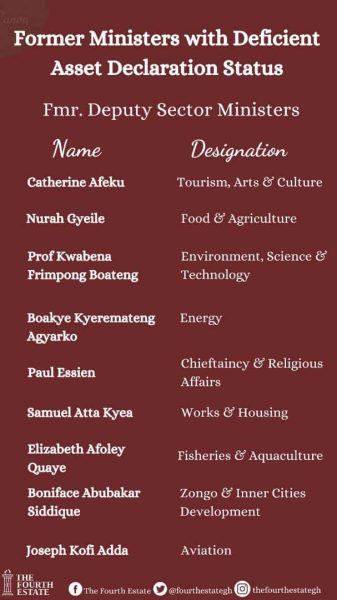
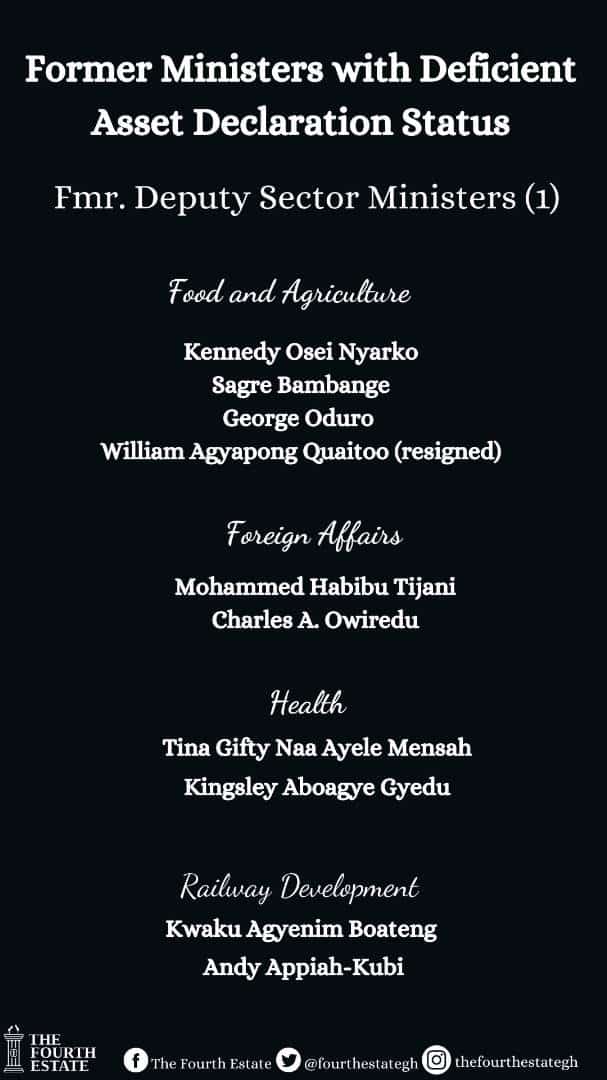
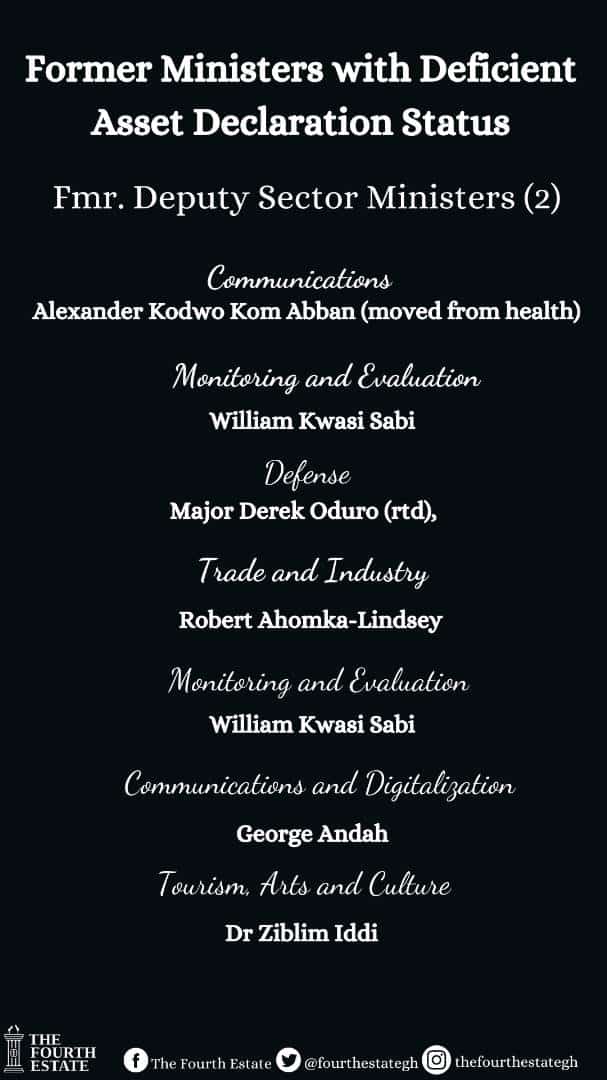
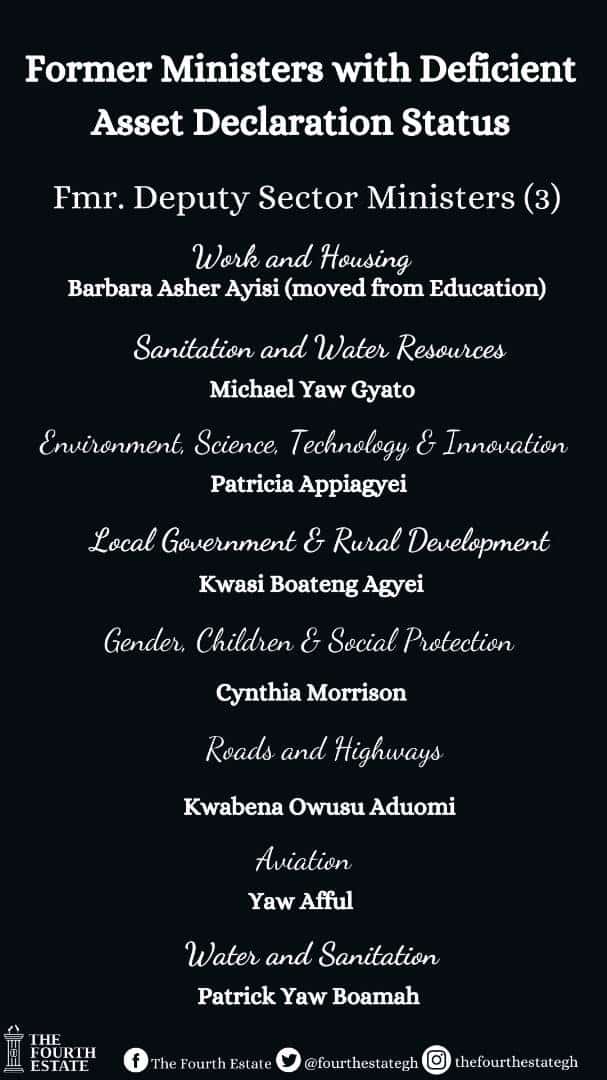
    While 27 ministers and deputy ministers in his first and second term never declared their assets, 92 others including Vice President Dr Mahamudu Bawumia, the finance minister, Ken Ofori-Atta; parliamentary affairs minister, Osei Kyei-Mensah-Bonsu, and former senior minister, Yaw Osafo-Maafo, did not fully comply with the law.

    Opaque law

    Anti-corruption crusaders have over the years criticised Ghana’s asset declaration law for lacking transparency.

    They want assets and liabilities public office holders declare to be verified and published when they come to office and when they leave. However, public office holders opposed such demands, citing privacy concerns.

    In other democracies, assets declared are published. President Barack Obama, for instance, reported an income of $5.5 million in 2009 on his tax returns, most of it from his books, “Dreams from My Father” and “Audacity of Hope”.

    According to White House financial disclosure forms, the Obama family declared assets of $7.7 million, not including the family home in Chicago. But they did include the family dog, Bo, which was valued at $1,600, and filed under “gifts, reimbursements and travel expenses.”

    In Ghana, anti-corruption advocates, including OccupyGhana want the six months grace period in Act 550 removed from a new Conduct of Public Officers Bill, which is before the cabinet.

    It said the six months provides a possible window of opportunity for public office holders who do not declare their assets immediately they assume office to acquire possessions.

    “This is possible because although the Constitution categorically demands that persons being appointed to public office ‘shall’ declare their assets ‘before taking office.’ In 1998, politicians from all the political parties in Parliament, conspired to breach this constitutional provision by passing a law (Act 550) that allows the declaration to be filed up to 6 months ‘after’ taking office,” OccupyGhana said in a press statement in May 2022

    It went on: “The effect of this travesty is that for more than two decades, once people assume public office without first declaring assets and liabilities, they either do not declare at all, or sometimes engage in ‘assumptive declarations’ by declaring what they do not have, in the expectation that they might, while in office, acquire the assets or make sham payments in purported satisfaction of sham debts declared.”

    YOU MAY ALSO WANT TO READ:

    EXCLUSIVE: Sir John did not declare his assets 

  • Agric minister’s claims on maize-production figures since 1950 completely false

    On Tuesday, June 21, 2022, the Minister of Food and Agriculture, Dr Afriyie Akoto, appeared on Joy FM to discuss topical issues concerning his sector.

    The ministry’s flagship project, Planting for Food and Jobs (PFJ), became the most dominant topic of the conversation.

    He praised the achievement of the Akufo-Addo-led administration in the agriculture sector, scoring the PFJ a 100%.

    “Going back into the history of government expenditure, there’s no government that has spent so much on Agriculture and farmers as the Akufo-Addo government and has had this magnificent impact and it has been internationally acknowledged that this [PFJ] program is running successfully,” he said.

    The minister proceeded to make claims about supposed unparalleled achievements of the policy since 1950.

    Fact-Check Ghana has verified the claim Dr Akoto made and presents the facts below.

    Claim: “We have never been able to produce so much food. You go to the records from 1950, till now…Maize, until we came to office, we have never been able to produce 1.8 million metric tonnes. Don’t forget I was the ranking member of agriculture and cocoa affairs for eight years, so I know the statistics. Last year, we produced 3.1 million metric tonnes.”

    Verdict: Completely false

    Explanation: Through a right a right to information (RTI) request to the Ministry of Food and Agriculture (MOFA), Fact-Check Ghana has established that 12 years ago, under the Mills administration, the country produced more than 1.8 million metric tonnes of the grain. Ghana has since produced more than 1.8 million metric tonnes without any special initiative such as the PFJ, contrary to the Agric Minister claim.

    Below is a table showing the annual maize production figures from 2010-2021

    Year Production
    2010 1, 871,695
    2011 1,683,984
    2012 1,949,897
    2013 1,764,477
    2014 1,768,577
    2015 1,691,643
    2016 1,721,911
    2017 2,011,179
    2018 2,306,384
    2019 2,911,884
    2020 3,031,691
    2021 (Provisional) 3,584,501

    Souce: MOFA, 2022

    This is not the first time Dr Akoto has made false claims on food production, contrary to figures from his ministry.

    In February this year, he misrepresented soyabean and rice production figures before the Akufo-Addo came to power during a meeting with potential investors at a breakfast meeting in Accra.

    The one-day event, organised by the Tony Blair Institute for Global Change, was meant to woo investors into Ghana’s agriculture sector.

    Read more at:

     Meeting with Tony Blair: Agric Minister’s food production figures fact-checked

    When Dr Owusu Afriyie Akoto, Minister-designate of the Ministry of Food and Agriculture, appeared before the Appointment Committee of Parliament on February 19, 2021, he made some claims about the government’s PFJ programme.

    Specifically, the claims he made related to the food security, production of maize, and quantities of fertilizer supplied under the PFJ programme.

     “Before we came into office in 2017, the highest amount of production of maize in this country was 1.8 million metric tonnes. And I am talking about 2016, which was the last year before we took over.”

    Again, Fact-Check Ghana found that claim and others to be full of falsehood and contradictions.

    Read more at:

    Ministerial Vetting: Afriyie Akoto’s Cocktail of False Claims and Contradictions

  • Town topics: Ken Ofori-Atta’s moral high horse and need for integrity vaccine

    There’s a new virus going round in Ghana. It may not be as deadly as COVID-19 or the influenza that is giving life to the nose mask business again.

    But it is depressing. It’s called PEB— Post Election Blues. The symptoms? Grumbling, a mixed feeling of self-pity and regrets, resentment and smoldering anger towards the government.

    The cure is a good governance vaccine. But it appears in the midst of the challenges with COVID-19 vaccines and the Russian-Ukraine war, we’ve run out of wisdom to produce this vaccine.

    When Ghanaians went to the polls and elected the New Patriotic Party (NPP) in 2016 and 2020, we thought we found the perfect solution to a virus of economic instability, corruption and mismanagement that plagued the nation under former President John Mahama.

    The problem is, after six years in office, President Akufo-Addo and his administration have proven to be the wrong antidote.

    At a time, we need a vaccine with ingredients including integrity, transparency, accountability and a stable economy desperately, President Akufo-Addo and his band have simply lost the plot.

    When he stood before Ghanaians in 2017, the President swore to defend the public purse – a pledge he had repeated on countless occasions on the campaign platform.
    But the mounting public debt, high cost of living, corruption, nepotism, cronyism and the shifting goal posts on his promises have shredded the pledges and goodwill the government enjoyed.

    Photos] Colour & tradition meet politics as Ghana swears in President | Africanews
    President Akufo-Addo has gone back on his promise to defend the public purse        Credit: Aljazeera

    If I had any belief that the president and his finance minister had an agenda to fix the difficulties facing the country, I discarded that on my way to work on Monday, June 13, 2022.

    The Finance Minister, Ken Ofori-Atta’s comments when he appeared on GTV’s Talking Point programme clearly showed the government’s misplaced priorities. Neither did our white-cloth-wearing, bible-quoting finance minister disappoint his critics in making an absurd case for the President’s private pledge nor did he explain the gross violation of Article 178 of the 1992 Constitution.

    That constitutional provision states that:
    No moneys shall be withdrawn from the Consolidated Fund except
    a. to meet expenditure that is charged on that Fund by this Constitution or by an Act of Parliament; or
    b. where the issue of those moneys has been authorised
    i. by an Appropriation Act; or
    ii. by a supplementary estimate approved by resolution of Parliament passed for the purpose;
    or iii. by an Act of Parliament enacted under article 179 of this Constitution; or
    iv. by rules or regulations made under an Act of Parliament in respect of trust moneys paid into the Consolidated Fund.
    2. No moneys shall be withdrawn from any public fund, other than the Consolidated Fund and the Contingency Fund, unless the issue of those moneys has been authorised by or under the authority of an Act of Parliament.

    According to Mr Ofori-Atta, while Ghana had achieved tremendous success on the political and economic fronts with tangible monuments to show, it lacked a symbol of spirituality, hence the need for the National Cathedral.

    “At any point in time when these buildings were built in Europe, was it ever the right time? How do we fund it? will become the question. Is the executive mindful of the current situation? We shouldn’t snuff out our religiousness or spirituality because we are poor. The Lord will understand if we put our widow’s mite in there,” he said.

    Mr Ofori-Atta, who is seen as an apostle of piety, has been on a flip flop ever since he announced the cathedral project in parliament in 2019.

    The cost of that project has moved from $100 million, to $ 250 million through $300 million, but the Ghanaian taxpayer will now be billed $350 million to build a house for a God who lives in hearts.

    In the last three years, Mr Ofori-Atta and the government’s praise singers have not been truthful to Ghanaians. I wonder how anyone would think that a cathedral built on a foundation of deception will please God.

    The government has been dodgy and cunning about what the state kitty will pay in support of a project that has already cost us millions in state properties, including the passport office, judges’ homes, the scholarship secretariat and the residence of the Malian Ambassador to Ghana.

    Even more sly is the decision not to tell us how much the so-called seed money will cost us. We’ve already blown GHc 200 million into the project without parliamentary approval.
    If the finance minister has a message of religiosity and spirituality for us, it should start with propriety within his ministry.

    Finance Minister to read Ghana's 2019 Budget on November 15 - Ghana Talks Business
    Mr Ofori-Atta has been shifting goal post on the cost and how much the government is contributing to it    Credit: Graphic

    While he jumps on a high horse to jibe critics of the government, his ministry has been cited as the most reckless when it comes to fiscal responsibility between 2015 to 2020.

    This is according to data from the Fiscal Recklessness Index 2020 report released by Imani Center for Policy and Education and Oxfam Ghana, which ranked financial irregularities for ministries, departments, and agencies within the five-year period.
    Ken Ofori-Atta was not in office in 2015 to 2016. But what has happened under his watch from 2017 to date should leave him worried.

    “Two key irregularities account for the trend observed at the Finance Ministry: (1) tax irregularities and (2) cash irregularities. For example, the Finance Ministry is responsible for 99.63% (GHc9.10 billion) of the combined GHc9.12 billion tax irregularities from 2015 to 2020. Likewise, the Finance Ministry accounted for 80.10% (GHc 2.35 billion) of the combined GHc2.93 billion cash irregularities from 2015 to 2020,” the report said.

    The Auditor-General’s Report also sings from the same hymn book about financial irregularities involving the Ministry of Finance.

    It is, therefore, baffling that the man who heads the most financially irresponsible institution in Ghana is preaching spirituality to us.

    It appears Mr Ofori-Atta can’t resist the temptation of annoying us whenever he gets the opportunity to speak about the cathedral.
    Hear him in 2019:

    “From 1957 to where God has brought us and the blessings, He has given us and now a small land we are giving to God should rather be given to real estate agents? I get afraid because we are a Christian country, even if we don’t do it, the stones themselves will get up and do it,” he told Asempa FM in defence of the decision to build the cathedral at that location.

    Isn’t it obvious that most Ghanaians are against the construction of the cathedral, which should give him the opportunity to rally his stones to work?

    Ghana does not need the Cathedral of all cathedrals to turn the clock of moral degeneration. In the last 30 years, we have built more mega churches than ever before, but corruption is getting worse.

    Our performance on the corruption barometer, the Corruption Perception Index, continues to give us annual migraines.

    Ahuntumano community shares streams and rivers with livestock
    In 2022, communities continue to share drinking water with animals           Credit: GNA

    There is nothing spiritual about building a cathedral when our hospitals lack beds, when God’s children share drinking water with animals, when children lie on their bellies to learn, when congested public senior high schools are running shifts because of lack of facilities.

    Mr Ofori-Atta’s sense of propriety needs raking for him to see the desperate needs of people who rely on the Livelihood Empowerment Against Poverty (LEAP) programme, whose pittance of allowances have been in arrears for months.
    Comic analysis

    In trying to justify this misplaced importance, he played with Israel and Saudi Arabia’s tourism figures.

    “Constructing such a facility secures a steady arrival of religious tourists. Israel hosts more than four million people annually with an associated $6 billion contribution to the economy. The Hajj pilgrimage on the other hand brings in 2.5 million attendees, with an associated economic impact of $8 billion,” he said.

    How sad.

    The idea of comparing tourism figures from Saudi Arabia and Israel where the footprints of Christianity and Islam could be traced makes Mr Ofori-Atta’s analysis comical.

    What makes Ghana an attractive destination for Christian pilgrims? A cathedral?

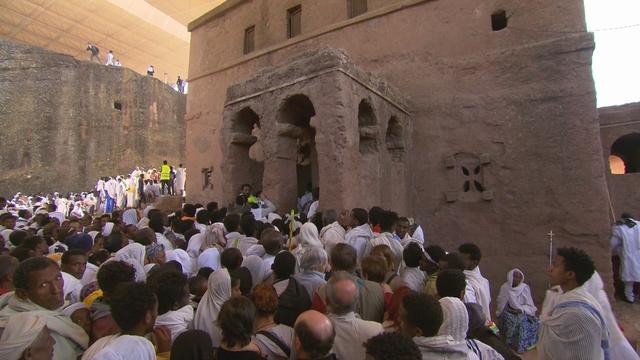
    Lalibela: 11 churches, each sculpted out of a single block of stone 800 years ago - 60 Minutes - CBS News
    The famous Libela rock-hewn churches don’t attract more than 100,000 pilgrims annually      Credit: CBS

    Even Ethiopia, Africa’s ‘Jerusalem,’ famous for its rock-hewn churches in Lalibela does not attract more than 100,000 people annually to such world heritage sites.

    We know that President Akufo-Addo and his finance minister are not thrifty because they were not born into a family of straw. But sadly, the reality hasn’t dawn on them that they’re managing the purse of people who live frugal lives and that the choices of the administration must reflect the priorities of these poor people.

    We didn’t elect them to fix our spiritual deficits. We have been battling that with our spiritual leaders, some of whom have been hoodwinked into applauding this misplaced priority.

    If there is anything we need right now, it is the common sense to fix the needs of the distressed Ghanaian and not a grandiose cathedral promised God in Jerusalem.

    YOU MAY ALSO WANT TO READ:

    The students who are taught how to cry

    Billions in the bush: 8 hospitals delayed, abandoned


  • Five Ghanaians petition CHRAJ to investigate Akufo-Addo’s ministers, others who failed to declare their assets

    Five Ghanaians petition CHRAJ to investigate Akufo-Addo’s ministers, others who failed to declare their assets

    Five Ghanaian citizens have petitioned the Commission on Human Rights and Administrative Justice (CHRAJ) to probe some ministers and deputy ministers in the Akufo-Addo administration over their failure to declare their assets.

    In a petition dated June 14, 2022, the petitioners, who are all residents of Accra and Tema, want CHARJ to open investigations into whether the failure of the said ministers and deputy ministers to declare their assets breached the oath of office they swore to “preserve, protect and defend the Constitution.”

    Article 286 of the Constitution and Section 1 of Act 550 place an obligation on public officers to submit a written declaration of all property or assets owned by, or liabilities owed by them, directly or indirectly, to the Auditor-General, (i) before taking office, (ii) at the end of every four years, and (iii) at the end of their term of off.

    The petition is in reaction to a series of stories The Fourth Estate published revealing that more than 400 public officeholders either never declared their assets or did so partially.

    Dissatisfied with the conduct of these appointees, the petitioners—Nicholas Opoku, Lolan Sagoe Moses, Crystal Selorm Amudzi, Francis Boye and Elias Elias Ashkur—want CHRAJ to open investigations into:

    1. a. The failures of public officers not listed in Appendix 1 (booklet containing list of those who declared their assets) to declare their assets.

    b. Whether the failure of the above-mentioned public officials to declare their assets amounts to a breach of the oaths of office they swore to “preserve, protect and defend the Constitution” as mandated by Article 286 (7) and the Second Schedule of the Constitution.

    1. Take appropriate action against the defaulting public officers pursuant to CHRAJ’s mandate in Article 287 of the Constitution, including but not limited to:

    a. Directing each of the defaulting public officers to promptly declare their assets to the Auditor-General.

    b. Initiating legal actions at the courts against the defaulting public officers to compel them to promptly declare their assets to the Auditor-General or have them sanctioned for default, pursuant to CHRAJ’s mandate under Section 9 of Act 456.

     The petitioners argue that given the importance of asset declaration as a tool in the fight against corruption, “we take a serious view of these constitutional violations.”

    Article 287 of the Constitution states that “An allegation that a public officer has contravened or has not complied with a provision of this Chapter shall be made to the Commissioner for Human Rights and Administrative Justice…who shall, unless the person concerned makes a written admission of the contravention or non-compliance, cause the matter to be investigated.”

    This constitutional mandate is reiterated in Section 7(e) of the Commission on Human Rights and Administrative Justice Act, (Act 456).

    Background

    On March 4, 2022, The Fourth Estate wrote to the Audit Service, using the right to information law, to request information on public office holders who had declared their assets from January 2013 up to that date.

    The Audit Service responded with the data on May 17, 2022. Combing through the two booklets of almost 350 pages, The Fourth Estate did not find the names of 27 ministers and deputy ministers of state officers who served or were still serving in the Akufo-Addo administration. These ministers had never declared their assets since the Akufo-Addo administratin began in 2017.

    At least 90 others, including the Vice-President, Mahamudu Bawumia; former senior minister, Yaw Osafo-Maafo; parliamentary affairs minister, Osei Kyei-Mensah-Bonsu, and finance minister Ken Ofori-Atta, failed to fully comply with the asset declaration law.

    Only 19 ministers in President Akufo-Addo’s first and second terms fully complied with the law.

    In February this year, CHRAJ banned the former board chairman of the Public Procurement Authority, Prof Douglas Boateng, from holding public office for two years for failing to declare his assets.

    CHRAJ also banned the former PPA boss, A.B.A Adjei 10 years for his role in the contract for sale deal and also directed him to declare his assets within three months.

  • Four problems Council of State ex-gratia could have solved

    The first loan of the Akufo-Addo administration was approved in April 2017, a little over three months after taking office.  That loan was a $2million facility from Societe Générale Bank.

    It was used to buy new cars for members of the Council of State, advisors of the president, who are often made up of accomplished Ghanaians.

    Per Ghana’s constitution, members of the Council of State are also entitled to ex-gratia.

    An immediate past member of the Council of State, Togbe Afede XIV, has announced his reasons for rejecting GH₵365,000 ex-gratia paid to him.

    Togbe Afede XIV, a businessman and paramount chief of Asogli State in the Volta Region, has called the sum “unconscionable” and “inappropriate”.

    “I believe it was paid to everybody who served on the Council of State. However, I thought that extra payment was inappropriate for a short, effectively part-time work, for which I received a monthly salary and was entitled to other privileges. So, I was very uncomfortable with it,” he said in a press statement.

    He continued, “I want to add that my rejection of the payment was consistent with my general abhorrence of the payment of huge Ex Gratia and other outrageous benefits to people who have by their own volition offered to serve our poor country.”

    In total, GH₵8.76 million was paid as ex-gratia to the members of the Council of State for their four years of service to the state.

    What the Council of State ex-gratia could do?

    If the GH₵8.76 million was put into infrastructural development, it could have built 12 six-classroom blocks at a cost of GH₵ 700,000 each.

    Or

    If it went into procuring dual desks for schools, it could have procured 87,600 desks at GH₵ 100 each and saved 226,542 pupils from learning on the bare floor.

    Or

    It would have provided 4,171 beds to deal with Ghana’s no-bed syndrome in public hospitals.

    Or

    In the health sector, it could give life to 604 pre-mature babies in need of incubators, sold at GH₵ 14,500 each. Incubator shortages in the country’s major hospitals is a major headache for the healthcare systems. In some facilities, three babies have to share a single incubator while some health facilities don’t have any at all.

    Data from the Ghana Health Service indicates that at least 8,700 children pre-term babies die in the country annually.

    Council of State members

    Some Ghanaians have long described the Council of State as a useless entity. Members are supposed to advise the president but the Supreme Court ruled in  in 2015 that their advice was not binding on the president.

    The following is the full list of the members of the Council of State from 2017 to 2020, the period Togbe Afede XIV served:

    1. Greater Accra: Nii Kotei Dzani, the Chief Executive Officer of the Ideal Group of Companies
    2. Ashanti: Nana Owusu Achiaw Brempong, a 63-year-old chief of Agona Akrofoso and entrepreneur
    3. Western: Ms Eunice Jacqueline Buah, a 52-year-old businesswoman of Takoradi
    4. Upper East: Tongo-Rana Kubilsong Nalebgtang, Paramount Chief of the Tongo Traditional Area (known in private life as Robert Nachinab D. Mosore)
    5. Upper West: Kuoro Richard Babini Kanton IV, Paramount Chief of the Tumu Traditional Area
    6. Eastern: Nana Somuah Mireku, a 63-year-old accountant
    7. Brong Ahafo: Mr Kodwo Agyenim-Boateng, a 73-year-old retired public servant
    8. Volta: Mr Francis Albert Seth Nyonyo, a 50-year-old oil and gas dealer from Anloga
    9. Northern: Bo-Na Professor Yakubu S. Nantogma, a 74-year-old Chief of Bogu, near Savelugu in the Northern Region
    10. Central: Obrempong Appiah Nuamah II, Omanhen of the Twifo Mampong Traditional Area

    Appointed members

    1. Lt. General Joseph Boateng Danquah (rtd), a former Chief of Defence Staff of the Ghana Armed Forces.
    2. Nana Owusu Nsiah, a former Inspector General of Police.
    3. Mr Sam Okudzeto, a former President of the Ghana Bar Association.
    4. Mr Stanley Nii Adjiri Blankson, a former Accra Mayor.
    5. Nana Otuo Siriboe II, Juabenhene.
    6. Nana Kofi Obiri Egyir II.
    7. Alberta Cudjoe
    8. Alhaji Aminu Amadu.
    9. Dr Margaret Amoakohene of the School of Communication Studies at University of Ghana, Legon,
    10. Alhaji Sahanun Moqtar
    11. Georgina Kusi (Georgia Hotel)
    12. Alhaji Sule Yiremiah
    13. Paa Kofi Ansong
    14. Togbe Afede XIV, Agbomefia of Asogli State and President of National House of Chiefs (ex-officio member of Council of State)

    ALSO READ:Asset Declaration: Bawumia, Ofori-Atta, Osafo-Maafo, Kyei-Mensah-Bonsu, and 89 others did not fully comply

  • Asset Declaration: Bawumia, Ofori-Atta, Osafo-Maafo, Kyei-Mensah-Bonsu, and 89 others did not fully comply

    Asset Declaration: Bawumia, Ofori-Atta, Osafo-Maafo, Kyei-Mensah-Bonsu, and 89 others did not fully comply

    When President Nana Addo Dankwa Akufo-Addo was sworn into office in January 2017, one of the first constitutional obligations he embarked on was the declaration of his assets.

    The Fourth Estate’s sources in government say the Chief of Staff sent reminders to ministers and other top appointees to declare their assets.

    In July 2017, the president said, “I declared my assets within two weeks of my inauguration and so has the Vice-President. The ministers have declared their assets, and I am insisting that all those required to do so under the law, should comply.”

    In March 2022, The Fourth Estate wrote to the Audit Service using the right to information law to request information on public office holders who had declared their assets from January 2013 up to that date.

    The Audit Service responded with the data in May 2022, with two booklets of information of almost 350 pages. The booklets contain the names of all public office holders who have declared their assets and the dates of declarations in all the regions of Ghana from 2013 to May 2022.

    That information revealed that 28 ministers and deputy ministers of state who served or are still serving in the Akufo-Addo administration did not declare their assets at all.

    The information also revealed that the president and 19 of his ministers have fully complied with the asset declaration law. The president and his ministers on that list, who have served since 2017, have declared their assets at least three times.

    They declared at the beginning of the first term and declared at the end of the first term. They again declared their assets at the beginning of the second term in office.

    President Akufo-Addo, for instance, first declared his assets on January 24, 2017. On February 17, 2021, he declared again for the end of his first term.

    Then, on May 7, 2021, the president declared his assets to cover the beginning of his second term. He did this in conformity with Article 286 of the 1992 Constitution and Act 550.

    However, the vice-president and more than 90 ministers and deputy ministers who have served in Akufo-Addo’s government have not fully complied with the law as the president did.

    Some ministers who spoke to The Fourth Estate in the course of this series have argued that declaring one’s assets at the beginning of the first term and at the beginning of the second term cover for the end of the first term.

    To them, not declaring at the end of the first term doesn’t amount to a breach because the end of the first term and the beginning of the second term are almost within the same period.

    The declaration of assets is administered by the Auditor-General. When The Fourth Estate contacted the Auditor-General, Johnson Akuamoah Asiedu, for a clarification on the Law, he said that could better be explained by the lawyers such as the Attorney-General.

    “It’s an Omission but it’s not grave,”—Attorney-General

    The Minister of Justice and Attorney-General, Godfred Yeboah Dame, told The Fourth Estate that the constitution required political office holders such as ministers of state to declare their assets at the beginning of their term in office and at the end of their term.

    Dame to Parliament: You can't control admission into Ghana School of Law - Asaase Radio
    Attorney-General & Minister of Justice, Godfred Yeboah Dame                               Credit: Asaase Online

    For those continuing after the four years, they are supposed to declare at the beginning of their second time, making it three declarations for ministers who have served in the Akufo-Addo administration since 2017.

    “That is the constitutional requirement, and that’s why I did mine like that,” he said.

    Mr. Dame declared his assets on July 20, 2017. He filed his exit declaration on January 26, 2021. On his elevation to the position of Attorney General in this second term of the president, he declared his assets on May 25, 2021.

    Two lawyers, Samson Lardy Anyenini and Martin Kpebu, are of the view that a full declaration and compliance with the law ought to follow what the president and 19 of his ministers did.

    Citing the ruling of the Supreme Court in J.H. Mensah v Attorney-General, the two lawyers argue that every appointee’s tenure ends after the four years when the president’s tenure ends.

    “The argument that they are continuing and should not declare their assets at the end of the tenure cannot be right because no appointee walks into the position even if they are reappointed,” Samson Lardy Anyenini said. “All of them go through a fresh appointment and vetting.”

    The Attorney-General, however, noted that if someone declared their assets at the beginning of the four years and files again at the beginning of a continuing second term of four years, their failure to declare at the end of the first term is not a grave offence.

    He said the essence of declaring at the beginning and at the end of the four years is to ascertain the amount of assets and liabilities that were added on when the public officer was in office.

    With that, he said the period between the end of the first term and the beginning of the second term is a few days or weeks, within which not much would change.

    He said the continuing appointees who failed to declare at the beginning and those who served for one term but failed to declare when exiting commit grave breaches of the asset declaration law because it will be difficult to know what has been added to their assets and liabilities while they serve in office.

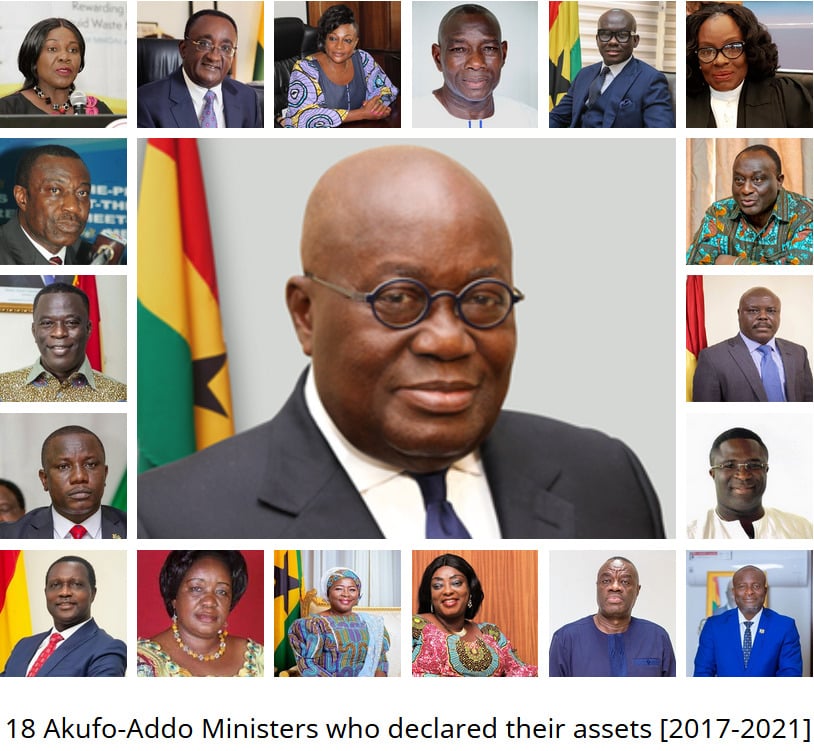
    ALSO READ: The 18 Akufo-Addo ministers who fully complied with assets declaration law

    A good number of office ministers and deputy ministers, however, do not appear to appreciate the assets declaration requirement at the end of the term. Here are some of the notable names in that list:

    Vice-President Dr. Mahamudu Bawumia: Vice-President Dr Mahamudu Bawumia, declared his assets twice since coming into office. He first declared at the beginning of the first term, on January 27, 2017. When he was sworn into office in January 2021 to begin the second term he declared his assets again. The Fourth Estate’s checks revealed that he declared on February 8, 2021.

    The world is moving away from certificate to skills – Bawumia
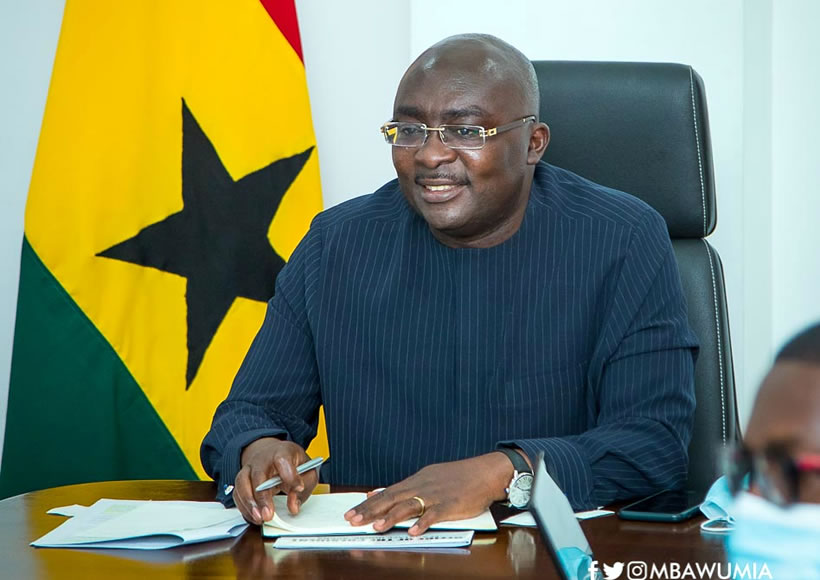
    Vice-President Dr Mahamudu Bawumia declared his assets twice, instead of thrice         Credit: Office of Vice-President

    The Office of the Vice President explained to The Fourth Estate that vice-president complied with the asset declaration law based on the legal advise he received on the matter.

    The Office said the exit declaration was within the same period as the beginning of the second term of the Akufo-Addo administration and the assets or content of the declaration was the same. In the vice-president’s view, the declaration at the beginning of the second term covered the declaration at the end of the first term since the assets were the same.

    However, the Executive Secretary of the Ghana Anticorruption Coalition (GACC), Beauty Emefa Narteh, said the Vice-President’s asset declaration deficit was disturbing.

    “This is a surprise and a shock that a simple thing as asset declaration, the Vice-President was not minded to do the needful, I find this worrying.”

    Below is the list of all ministers, deputy ministers and other appointees in Akufo-Addo’s first and second terms who declared their assets once or twice:

    ALSO READ: Akufo-Addo’s First & Second Term: 27 ministers who didn’t declare asset at all

    Other former appointees who declared their assets only once during Akufo-Addo’s first term of Akufo-Addo’s government are:


    What the law says 

    Article 286 (5) requires the President, Vice-President, the Speaker, Deputy Speakers of Parliament, ministers and deputy ministers of state, ambassadors, the Chief Justice and managers of public institutions in which the state has interest submit to the Auditor-General written declarations of all property or assets owned by, or liabilities owed by them, whether directly or indirectly.

    Per the law, by the end of the President’s first term, all his appointees should have declared their assets twice—before or when they assume power and when the term ends—according to Article 286 and the Public Office Holders (Declaration of Assets and Disqualification) Act.

    Section 1(4) of the Act clarifies when this should be done:

    “The declaration shall be made by the public officer— (a) before taking office; (b) at the end of every four years; and (c) at the end of the term of his office and shall in any event be submitted not later than 6 months of the occurrence of any of the events specified in this subsection.”

    For those who were called back in the second term, which began on January 7, 2021, they were to march back to the Audit Service and hand over the list of their assets and liabilities. This will make it a third declaration for this group.

    Section 4 of Act 550 requires public office holders to declare their assets and reliabilities related to:

    (a)lands, houses and buildings;
    (b) farms;
    (c) concessions;
    (d) trust or family property in respect of which the officer has beneficial interest;
    (e) vehicles, plant and machinery, fishing boats, trawlers, generating plants;
    (f) business interests;
    (g) securities and bank balances;
    (h) bonds and treasury bills;
    (i) jewellery of the value of ¢5 million [now ¢500] or above; objects of art of the value of ¢5 million or above;
    (j) life and other insurance policies;
    (k) such other properties as are specified on the declaration form

    You can reach the writer of this story, Seth J. Bokpe, via email at [email protected] You can follow him on twitter @thekekeli

    Adwoa Adobea-Owusu, Evans Aziamor-Mensah, Paul Gozo, Clement Edward Kumsah & Prosper Prince Midedzi of The Fourth Estate also contributed to this story. 

  • Akufo-Addo’s First & Second Term: 27 ministers who didn’t declare assets at all

    Akufo-Addo’s First & Second Term: 27 ministers who didn’t declare assets at all

    For years, Herbert Krapa served Nana Addo Dankwa Akufo-Addo, a man who is a stickler to rules when it comes to assets declaration.

    Now a Deputy Minister of Trade and Industry, Mr Krapa was President Akufo-Addo’s special aide when the New Patriotic Party (NPP) was in opposition. He would even go on to study law, a profession that gave the president a name and fame.
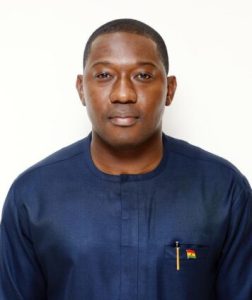
    While in opposition in 2010, Mr Krapa preached and took on the late President J.E.A Mills for not holding his ministers accountable for failing to declare their assets.

    “Then comes the matter of asset declaration, which is supposed to be a mandatory constitutional requirement and so, cannot stricto senso be left to the funny discretion or indiscretion of anyone,” he wrote in an article published online.

    But it appears Mr Krapa forgot this memo when he was sworn in as a deputy minister in June last year alongside 39 other ministers. Per the law, he should have declared his assets by December 2021.

    On March 4, 2022, The Fourth Estate wrote to the Audit Service, using the right to information law, to request information on public office holders who had declared their assets from January 2013 up to that date.

    The Audit Service responded with the data on May 17, 2022. Combing through the two booklets of almost 350 pages, The Fourth Estate did not find the names of 28 ministers and deputy ministers who served or continue to serve in the Akufo-Addo administration since 2017.

    It is from this data that The Fourth Estate found that Herbert Krapa has not declared his assets. He has not followed the example set by the president who appointed him.

    By May last year, President Akufo-Addo had declared his assets and liabilities three times. The president first declared his assets on January 24, 2017. On February 17, 2021, he declared again for the end of his first term.

    On May 7, 2021, the president declared his assets for the beginning of his second term. He did this in conformity with Article 286 of the 1992 Constitution and Act 550.

    Defaulters in Akufo-Addo’s Second term (2021 to date)

    Mr Krapa is not alone in breaching the asset declaration laws. Eight other ministers and deputy ministers currently serving in government also failed to declare their assets. These ministers and deputy ministers are:

    Thomas Mbomba : He is a  Deputy Minister of Foreign Affairs & Regional Integration and a first-term legislator who represents Tatale-Sanguli.

    Kwaku Ampratwum- Sarpong: The Deputy Minister of Foreign Affairs & Regional Integration also represents the people of Mampong in Parliament. He is a second-term MP.

    Frederick Obeng Adom:  A Deputy Minister of Transport, he is a first-term lawmaker for Upper West Akim.

    Kofi Amankwah-Manu: The  Deputy Minister of Defence represents  Atwima Kwanwoma Constituency in Parliament . He is a first-term parliamentarian.

    Ama Pomaa Boateng: She is a third-term lawmaker, representing Juaben constituency in the Ashanti region and the Deputy Minister of Communication and Digitisation.

    Abdulai Abanga: He is a first–term legislator for Binduri and the  Deputy Minister of Works & Housing

    Yidana Zakaria: The  North East Regional  Minister was an Assistant Registrar of the Tamale campus of the University for Development Studies (UDS) before he was appointed.

    Richard Obeng: The capital market analyst is  Western North Regional Minister.

    Ministers’ responses

    A call to Kwaku Ampratwum- Sarpong, a Deputy Minister of Foreign Affairs & Regional Integration, dropped after the reporter introduced himself. Subsequent calls and a WhatsApp message to him were not responded to.

    Messages to Richard Obeng, Western North Regional Minister and Herbert Krapa were not responded to. Others could not be reached for responses.

    Defaulters in Akufo-Addo’s first term (2017 to January 2021)

    By the end of President Akufo-Addo’s first term, he had appointed almost 130 people.

    They took the sacred Oath of Ministers, to “uphold, preserve, protect and defend the Constitution of the Republic of Ghana.”

    The Fourth Estate has found that at least 19 of them failed to declare their assets and liabilities.

    On July 18, 2017, president Akufo-Addo said that all his appointees had declared their assets.

    Information available to The Fourth Estate, however, reveals that at least 19 of the ministers and deputy ministers of his first term did not declare their assets even once since 2017.
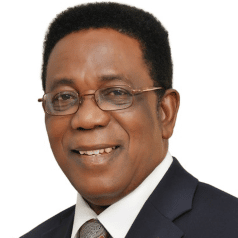
    Prof Kwesi Yankah: The Fourth Estate could not find the name of the minister of state in charge of tertiary education, who served in the Akufo-Addo administration from 2017 to 2020. An academic don, Prof. Yankah contested the 2020 parliamentary election in the Agona East Constituency on the ticket of the governing New Patriotic Party (NPP) but lost. He was in office from April 4, 2017, to January 7, 2021.
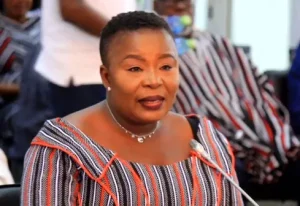
    Tangoba Abayege: She succeeded Rockson Bukari as the Upper East Regional Minister after Mr. Bukari was moved to the presidency as minister of state in 2018. Like her predecessor, Tangoba Abayege did not declare her assets. Tangoba Abayage, who lost the Navrongo Central parliamentary polls in 2020 was also missing from the list. Before becoming regional minister, she was Ghana’s ambassador to Italy. She was in office from November 2018 to January 7, 2021.
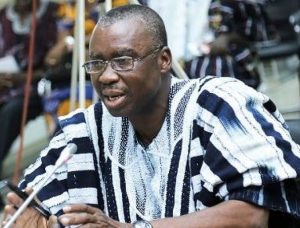
    Salifu Adam Braimah: He was the Savannah Regional Minister, who contested but lost the Salaga South parliamentary seat. He did not disclose his assets. He was in office from March 27, 2019, to August, 2019.
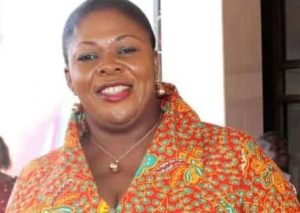
    Evelyn Ama Kumi-Richardson: When the Bono Regional minister-designate came to the floor of parliament for approval in April 2019, it met stiff opposition from the minority National Democratic Congress (NDC).

    The NDC lawmakers alleged at the Appointments Committee of Parliament that Evelyn Ama Kumi-Richardson, who had been a former Sunyani Municipal Chief Executive, committed perjury in the declaration of assets and refund of money to the state as demanded in the Auditor General’s report.

    There were also unanswered questions regarding the redistribution of a vested land. But the report of the Appointments Committee of Parliament, which recommended Ms Kumi-Richardson’s approval by majority decision, cleared her of all the allegations by the Auditor General.

    After secret voting, the minority had their say but the majority had their way.

    Despite this, Ms. Kumi Richardson did not declare her assets when parliament approved her to become a regional minister. She served from March 27, 2019, to January 7, 2021.

    Also, on the list of the ministers and deputy ministers who failed to declare their assets are the following and the portfolios they served:

    • Sulemana Alhassan–Upper West Regional Minister (March 27, 2019, to January 7, 2021)
    • Carlos Ahenkorah–Deputy Minister, Trade and Industry  (April 11, 2017, to July 3, 2020)
    • William Owuraku Aidoo–Deputy Minister, Energy (April 11, 2017, to January 7, 2021.) He was reappointed when President Akufo-Addo won a second term.
    • Vincent Sowah Odotei–Deputy Minister, Communications (April 2017 to April 2020).
    • Bernard Oko Boye–Deputy Health Minister (April 20, 2020, to January 7, 2021).
    • Anthony N-Yoh Puowele Karbo–Deputy Minister, Roads & Highways  (April 11, 2017, to January 7, 2021)
    • Francis Kingsley Ato Cudjoe–Deputy Minister, Fisheries & Aquaculture (April 11, 2017, to January 7, 2021)
    • Siaka Stevens–Deputy Regional Minister, Bono  (March 27, 2019, to January 2021)
    • Samuel Yeyu Tika–Deputy Regional Minister, Savannah ( March 27, 2019, to January 2021)
    • Tahiru Tia Ahmed–Deputy Regional Minister, North East – (March 27, 2019, to January 7, 2021)
    • Johnson Avuletey–Deputy Regional Minister, Volta Region – (March 27, 2019, to January 2021)
    • Thomas Adjei Baffour–Deputy Regional Minister, Central – March 3, 2017, to January 7, 2021
    • Joseph Tetteh–Deputy Regional Minister, Eastern  (March 3, 2017, to August 2018)
    • Elizabeth Kwatsoo Tetteh Sackey–Deputy Regional Minister, Greater Accra (March 3, 2017, to January 7, 2021).

    Two out of the 19 defaulters, Carlos Ahenkora and William Owuraku Aidoo, are still lawmakers in the current Parliament. But Vincent Sowah Odotei, Bernard Oko Boye, Anthony Karbo, Francis Kingsley Ato Cudjoe, Siaka Steven and Joseph Tetteh lost their seats in the 2020 election.

    Four others who were deputy regional ministers in Akufo Addo’s first term have been offered new jobs in the president’s second term.

    They are William Owuraku Aidoo,  Bernard Oko Boye, Elizabeth Kwatsoo Tetteh Sackey and Samuel Yeyu Tika. They are expected to declare their assets in their current positions but they haven’t.

    The MPs in the list also swore the oath of lawmakers to “uphold, preserve, protect and defend the Constitution of the Republic of Ghana.”

    But they desecrated the oath.

    Responses to The Fourth Estate

    Assets declaration is seen as crucial in fighting corruption by helping to track illicit wealth public office holders acquire while in office.

    You may also want to read: EXCLUSIVE: Sir John did not declare his assets

    Per the law, any assets acquired by a public officer holder after the initial declaration, which does not come from “sources reasonably attributed to income, gift, loan, inheritance or any other reasonable source would be classified” as illegal.

    The Fourth Estate reached out to the ministers whose names were not found in the assets declaration list for comments. Here are those we contacted and their responses.
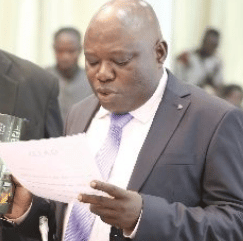
    Thomas Adjei Baffoe –Deputy Regional Minister, Central

    The Audit Service stated that no public office holder declared their assets in the Central Region from 2017 to 2019.

    But Thomas Adjei Baffoe, who served as deputy Central Regional Minister from March 2017 to January 7, 2021, insisted, he did.

    “I declared my assets. I deposited them at the regional office of the Audit Service. It was even one of the employees of the Local Government who does audits, who did it for me. His name is Ben Issah,” he told The Fourth Estate.

    Asked for the evidence of his declaration, he said he was not sure he took it from the said officer but said he would check and get back to this reporter because he was not in Cape Coast.

    Prof Kwesi Yankah–Minister of State in charge of Tertiary Education

    All attempts to reach him failed. Calls, texts and WhatsApp messages were not responded to.
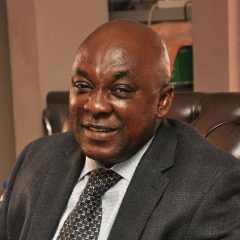
    Carlos Ahenkora–MP for Tema West & former Deputy Minister of Trade

    He resigned in July 2020 after public pressure mounted on the president to sack him for breaching the COVID-19 restrictions. He had tested positive for the virus and went to campaign instead of self-isolating.

    Mr. Ahenkora told The Fourth Estate he fulfilled his asset declaration obligation and that he submitted his forms to the Tema office of the Audit Service.

    “It is not true. I have declared my assets,” he said, but added, “I don’t know if I can give you the date, but I did declare my asset. Check with the Audit Service.”

    “The Audit Service has given us the document [list of those who declared their assets] we needed, from 2013 to 2021,” this reporter pointed out to him.

    “My brother, I am telling you that I have declared my assets and I am asking you to check well before you make pronouncements, because I know I declared my asset in 2017,” he said.

    “I didn’t finish the term because I resigned along the line. I am 120% sure that I declared my asset,” he added.

    “So, when you exited, too, you declared?”

    “I resigned so I did not declare. My term was terminated. I did not finish.”

    “But, sir, when you exit, you still have to.”

    “I don’t have that information. I didn’t have that advice.”
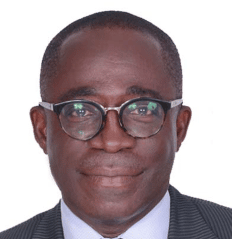
    William Owuraku Aidoo–Deputy Minister of Energy (MP, Afigya Kwabre South)

    He said he declared his assets in the Ashanti regional office of the Audit Service in Kumasi.

    “I did. I did it in Kumasi after the elections,” he said but couldn’t remember the exact date.

    When The Fourth Estate asked if he declared in 2021, after he exited as a deputy minister, his tone turned condescending.

    “But in what capacity are you calling me. You are a journalist. You cannot call and interrogate me like this.

    “Sir, I am not interrogating you. I’m just giving you a fair…”

    “Why don’t you write to me,” he snapped

    “I should write to you?”

    “Yes, if you think there is something I have not done right, write to me. Today is Sunday, you don’t have the temerity to call me that I haven’t declared my asset (sic). Massa, don’t call me again.”

    Tangoba Abayege–Upper East Regional Minister (former Ambassador to Italy)

    She said she declared her assets to Parliament prior to her vetting because she thought that was expected of her.

    “I didn’t know it was supposed to be the Audit Service. It was Parliament that vetted me. That is where I submitted every document, including my tax clearance certificate.”

    She, however, urged the Audit Service to make the declaration easy because some of the questions were cumbersome and unreasonable, including the value of family land, which she said she didn’t buy.
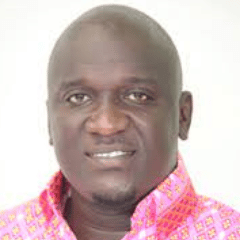
    Anthony Karbo–Deputy Roads & Highway Minister (former MP, Lawra)

    In a response to a WhatsApp message, he said, “It was done as far back as 2017 and submitted to Audit Service. Thank you.”

    A follow-up question on whether he declared in Accra or Wa and if he also declared again when he exited and any evidence was not responded to.
    Joseph Tetteh–Deputy Eastern Regional Minister & Former MP, Upper Manya Krobo

    He said prior to the 2016 elections, he filed the document at the Audit Service Head Office in Accra as part of the election requirement.

    “We did it before we entered Parliament,” he said.

    “So, you did it as an aspirant?”

    “Yes, by then.”

    “So, when you became an MP, you did not?”

    “No, I didn’t. I also became a minister. I didn’t until I left parliament.”

    “When you read Article 286 and Act 550, it says when you become an MP you have to declare your assets and when you become minister, you have to.

    “Ah! That is what I didn’t do. I didn’t do anything like that.”

    “But is there any reason why you didn’t?”

    “I thought I did it before entering Parliament. Maybe parliament would take that one. I was not asked to do it again.”

    “There was no orientation to do it again?”

    “I can’t remember.”

    “The president said at a point that you all had declared your assets.”

    “I can’t remember.”

    “He said it on July 18, 2017, that all his appointees had declared their assets. At that time, I’m sure you were a deputy minister.”

    “July 18, yes, yes, I was a deputy minister.”

    Joseph Tetteh said he would check from his personal assistant if he did, but he couldn’t remember.
    Johnson Avuletey–Deputy Volta Regional Minister

    He said when he was in office, he didn’t add any property to what he had, so he didn’t know what to declare.

    “I was in my own house before I was appointed. Is it necessary for me to declare that one too?” he asked, suggesting it was only properties gotten from the public office that had to be declared.”

    “When you come to the office, you have to declare within six months and when you exit, too, within six months, you have to declare,” The Fourth Estate reminded him.

    “Ok, ok,” he said, like someone who just received a new insight.

    “Was there no orientation on this?”

    “We didn’t have any orientation about that. I was not given any form to declare my assets. When I was an assemblyman, I declared assets. When I became a deputy minister for just two years, there was nothing like that,” he added.

    Rockson Bukari–Upper East Regional Minister

    Mr Bukari told The Fourth Estate his lawyer did it on his behalf in Bolgatanga.

    He, however, said he couldn’t remember where he had put the receipt.

    Asked whether he did when he left office, he said he couldn’t remember.

    But he said he would get in touch with his lawyer for clarity.

    Evelyn Ama Kumi Richardson–Bono Regional Minister

    She insisted she declared her assets.

    “Please, I declared,” she said.

    “Do you have records of it?

    “Yes.”

    “I would be very grateful if you could provide the evidence. You know when you file it, they give you a receipt.”

    “Well, I’ll see if I can submit the receipt.”

    “I would be grateful if you do because we want to get this clarity.”

    “I did. Even Parliament was demanding a copy. So, I sent it to them.”

    “When you were leaving, too, you declared?

    “When I was leaving, I think I picked a form. But I’m not too sure…”
    Vincent Sowah Odotei- Deputy Minister, Communication (former MP, La-Dadekotopon MP)

    He was relieved of his job in April 2020.  Calls, text and WhatsApp messages to him were not responded to.
    Francis Kingsley Ato Cudjoe – Deputy Minister, Fisheries & Aquaculture (former MP, Ekumfi)

    He said he completed his application with his personal assistant and handed it over to him for submission. He, however, admitted not declaring his asset when he left office.
    Samuel Yeyu Tika – Deputy Regional Minister, Savannah (now Deputy Chief Executive, Minerals Commission)

    He told The Fourth Estate he declared his assets in the Tamale office of the Audit Service.

    He, however, said he couldn’t remember the exact dates he filed the document.

    He was also not sure if he filed it when he contested for parliament or afterward but was confident that he did.

    He said he would reach out to his accountant for the details. He later called to say the accountant was not sure.
    Siaka Stevens, Deputy Bono Regional Minister 

    He said before he became a deputy minister, he had declared his asset as a member of parliament.

    “I spent two years in office as a Deputy Minister. I didn’t add anything to it.”

    “When you left office, did you declare?”

    “If you exit? I’ve not seen that portion of the law that says so.”

    “So, when you enter office, you declare within six months and when you exit too, you have six months to do so.”

    “I’m not privy to that law.”

    “You can check Article 286 and Act 550”

    “I’ll check.”

    “But where did you file it?”

    “I filed it in Accra. The day I went to file, I even met Akua Donkor. I went right after her.”

    Mr Stevens became a deputy minister in March 2019.

    He said he didn’t declare his asset as a deputy regional minister.

    “We were there for only two years.”

    “Sir, the law doesn’t say if you’re there for two years you shouldn’t declare your assets. If you even spent six months, you have to. A lot can happen in six months.

    With that, he laughed …

    “As for that, I didn’t do it.”

    Sulemana Alhassan–Upper West Regional Minister

    When he was asked about his asset declaration profile, he laughed out loud and said, “I’m no more even in the system.”

    According to him, he had started the process with the regional coordinating director at the time, but could not remember if the document went to the Audit Service.
    Tahiru Tia Ahmed– Deputy Regional Minister, North East

    He couldn’t be reached for comment.
    Elizabeth Kwatsoo Tetteh Sackey–Deputy Regional Minister, Greater Accra (now Metropolitan Chief Executive, Accra Metropolis)

    She didn’t respond to calls, text and WhatsApp messages.
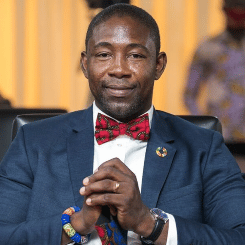
    Bernard Oko Boye — Deputy Health Minister (now CEO, National Health Insurance Authority)

    He didn’t respond to calls, text and WhatsApp messages.

    What does the Asset Declaration law say?

    By law, ministers are to declare their assets within six months in office and latest six months after the end of a government’s first term.

    Article 286 (1) of the 1992 Constitution states that “a person who holds a public office mentioned in clause (5) of this Article shall submit to the Auditor-General a written declaration of all property or assets owned by, or liabilities owed by, him whether directly or indirectly (a) within three months after the coming into force of this Constitution or before taking office, as the case may be, (b) at the end of every four years; and (b) at the end of his term of office.”

    The Constitution requires the declaration to be done before the public officer takes office. However, Section 1(4)(c) of the Public Office Holders (Declaration of Assets and Disqualification) Act directs public office holders to meet this requirement not later than six months after taking office, at the end of every four years and not later than six months at the end of his or her term.

    The law requires that the President, Vice-President, the Speaker, Deputy Speakers of Parliament, ministers and deputy ministers of state, ambassadors, the Chief Justice and managers of public institutions in which the state has interest submit to the Auditor-General written declarations of all property or assets owned by, or liabilities owed by them, whether directly or indirectly.

    They are required to declare their assets relating to:

    (a)lands, houses and buildings;
    (b) farms;
    (c) concessions;
    (d) trust or family property in respect of which the officer has beneficial interest;
    (e) vehicles, plant and machinery, fishing boats, trawlers, generating plants;
    (f) business interests;
    (g) securities and bank balances;
    (h) bonds and treasury bills;
    (i) jewellery of the value of ¢5 million [now ¢500] or above; objects of art of the value of ¢5 million or above;
    (j) life and other insurance policies;
    (k) such other properties as are specified on the declaration form.

    Sack them

    Reacting to The Fourth Estate’s findings, the Executive Secretary of the Ghana Anti-Corruption Coalition, Beauty Emefa Narteh, expressed disappointment at the revelations. She wants the president to be more than just a role model in asset declaration.

    “You can’t appoint people and then they do the opposite of what you do. What measures did the president put in place to even ensure that his appointees do what is required in terms of asset declaration?” she asked.

    She continued, “It shouldn’t take the president too much to determine if his appointees have declared their assets or not. As an appointing authority, he could have added that they show evidence of declaration. He could have easily confirmed it. This situation is a wake-up call to the president to ensure that his appointees do not go contrary to what he is promoting.

    “Based on this information, those who are currently in government, I think the president should do the needful by sacking them for embarrassing him in such a manner.”

    She said the President should be worried about the non-compliance because the appointees may be breaking other laws on his blind side.

    CHRAJ investigations 

    She also urged the Commission of Human Rights and Administrative Justice (CHRAJ) to immediately investigate such appointees.

    In February this year, CHRAJ banned the former board chairman of the Public Procurement Authority, Prof. Douglas Boateng, from holding public office for the next two years after CHRAJ found out in the Contracts for Sale investigations that he had failed to declare his assets.

     Asset declaration law is a weak law

    Critics of Ghana’s asset declaration laws say it is opaque because what is declared cannot be verified or published by the Auditor-General.

    A former Auditor-General, Daniel Yao Domelevo, agrees. “What is missing in Ghana’s situation is verifying the assets to ensure that it’s in conformity with what has been declared.”

    Mr Domelevo recommends a lifestyle audit for public office holders to match their income with their possessions, he told Joy News.

    “The current asset declaration is a substandard measure of transparency and accountability. If we can’t verify what you declared, where lies the transparency and accountability. It’s unfortunate,” Beauty Emefa Narteh agrees.

    Anti-corruption campaigners believe the repealed Provisional National Defence Council (PNDC) Law 280 in 1998 which regulated asset declaration during Rawlings’ military and civil administration was much more transparent.

    Under that law, public officials had a thirty days grace period to declare their assets and it had to be done every two years. The Auditor-General also had 14 days to publish all assets declared by public office holders.

    However, even that law had its critics who claimed it was nothing more than a charade.

    For instance, the Ghanaian Chronicle reported on October 26, 1992, that the bank balances declared by some senior members of the PNDC were less than one month’s pension of a retired civil servant.

    But, unlike the current laws, it had a relatively stiffer punishment for those who broke it.

    Section 4 of that decree stated that persons who contravened the law were “liable on conviction to a fine not exceeding five hundred penalty units or to imprisonment not exceeding two years or to both the fine and the imprisonment.”

    With the current system, at worse, a person guilty of failing to declare his or her assets can only be banned from holding public office for 10 years, according to provisions of Act 550.

    The law, however, gives CHRAJ  a lot of discretion to decide the appropriate sanction. It is probably the reason the former Board Chairman of the Public Procurement Authority, Prof Douglas Boateng, was in February this year banned from holding public office for two years.

    That discretion, Beauty Emefa Narteh said, must be taken away and specific punitive measures put in place to deal with any kleptomaniacs in public office.

    You can reach the writer of this story, Seth J. Bokpe, via email at [email protected] You can follow him on twitter @thekekeli