Author: Seth J. Bokpe

  • VIDEO: Police under fire for accepting motorbikes from gold baron charged with multiple crimes

    The police in the Upper East Region have come under a barrage of criticism for accepting motorbikes from Paazie Naab, a small-scale gold miner accused of committing multiple crimes in the region.

    Apart from his recent alleged crimes, which the police have failed to act on, Paazie Naab, was put before the High Court in 2013, charged with four offences of stealing, causing unlawful damage, unlawful entry and conspiracy to commit a crime.

    Even though the accused’s recent comments of settlement suggested admission of the crimes, the state discontinued the case. The Fourth Estate questioned the Attorney-General’s Department and the High Court on the reason for the discontinuation, but the two institutions could not give any reason.

    Docket missing after Attorney-General’s Department withdrew criminal case against Naab

    In 2013, Naab and four other men― Binaab Boazie, Suguru Naabil, Boazie Naabil (also known as Tiger) and Berimamwe Naabil― were put before a High Court in Bolgatanga in a criminal case.

    They were accused of unlawfully entering Kolog’s house in 2012 and making away with some valuables worth Gh¢302,660.00.

    A charge sheet filed at the court by the Justice and Attorney-General’s Department in the region stated that Naab and the other accused persons caused “unlawful damage” to the victim’s property valued at Gh¢9,540.00.

    The court granted the accused bail in February 2014 on the application filed by their lawyer, Joseph Dindiok Kpemka.

    In June 2022, Naab told reporters he had paid back to Kolog a portion of the amount the damaged and stolen belongings were worth. The following month, he told the press the court had advised the parties to resolve the matter and that it had been settled as recommended.

    Contrary to Naab’s claims, Kolog told journalists that the case had not been settled. He told The Fourth Estate that the High Court said the case had been withdrawn by the Republic.

    On September 5, 2022, The Fourth Estate asked officials of the Attorney-General’s Department in the region why the case was withdrawn. They replied that they were unable to explain because the docket of the case could not be traced at the department.

    Following the inquiry at the Attorney-General’s Department, The Fourth Estate caused a further search at the High Court for the reason the case was withdrawn. The court, in a written reply, said “no reason [was] given”.

    The case was withdrawn on December 15, 2014.

    Wielding and firing a gun in public places

    A few months ago, a man in a public place fired aover 10 shots into the air from a pistol. The action is captured in a 30-second video showing the shooter in a white smock with an adoring crowd surrounding him.

    The gunslinger, identified as Paazie Naab, is one of the sons of Naab Pubortaaba Nabil, a deceased traditional chief of Gban, a gold-mining suburb of Talensi. He is widely referred to as “Commando” and he is one of the gold barons on the district’s rich list.

    His gunfire sparked public outrage as observers said the shots were launched unlawfully. An angry teacher, who wanted to see Naab brought to trial for brandishing and firing a handgun, furnished the Upper East Regional Police Headquarters with a copy of that video recording on June 27, 2022. The teacher was disappointed as he did not see the police take the action he sought.

    Several other residents felt disappointed in the same way. Suspecting the police at the regional headquarters were compromised, the upset residents lodged fresh protests on some social media platforms with the footage.

    While they were thinking about where else to turn with their complaints, another video emerged from Talensi days later. The new video showed Naab holding a pistol in the midst of another crowd in another public place.


    The footage, 17 seconds long, also showed three men in police uniforms. The three men served as bodyguards to Naab as he hastened towards a building with the pistol in front of a charged civilian crowd. Each of the three bodyguards― one in front and two flanking him on either side― held an AK-47 rifle.

    Accused donates to police

    On 5th July 2022, a group of Talensi residents issued a press statement on Naab’s gun-brandishing spree.

    “He discharged the gun to show how powerful he is over the State. We will pursue his unlawful action with the appropriate state institutions in due course because crime never expires,” the statement, signed by the group’s secretary, Sadique Buzong, said.

    “But even before we seek redress through the appropriate state institutions, we wish to use this medium to call on the Inspector General of Police (IGP), Dr. George Akuffo Dampare, to have the law deal rigorously with Paazie Naab, aka Commando, for unlawfully discharging a gun in public just as some individuals were arrested and made to face to the full rigours of the law in Ghana under the current IGP irrespective of their status or wealth for brandishing guns and for firing shots in public,” the statement added.

    On 18 July 2022― about two weeks after the statement was issued― Naab donated two motorbikes to the Ghana Police Service.

    He presented the motorbikes to the Upper East Regional Police Headquarters and announced that the donations were meant to help the police in going after lawbreakers.

    The police accepted the gift with applause in front of news cameras. Some residents described it as an irony for the police to welcome a gift from a man who has been spotted on the wrong side of the law.

    “Somebody who has committed a crime has given the police motorbikes to fight crime and the police accepted it. Is there any sense in that? And he never donated anything to the police until after some people threatened to have him prosecuted for brandishing and shooting a gun publicly,” reacted a resident, Noah Wongnab. “This only tells you that the police can no longer be trusted in the region.”

    Another saddened resident, Martha Aniah, asked: “Are the police allowed to receive donations from a person who should be standing trial for firing bullets in public? Is it not the same offence Shatta Wale, Medikal and others committed in this country and were punished for? How can we be sure of our safety in this region when such a person dangerously goes unpunished?”

    Alleged death threat and a dead end

    Naab was reported in June 2022 to have issued a death threat to Zongdan Buyak Kolog― a miner otherwise known as “Polo” and famed for his charity to poor people in the district.

    The alleged threat was issued after Kolog and Naab got into an argument during a meeting of small-scale miners in Bolgatanga.

    Kolog confirmed the alleged death threat to journalists as well as authorities of the Upper East Regional Police Headquarters in the same month he received it.

    Answering questions from reporters, Naab said (in Twi) that he only told Kolog that he would “hire boys to stop him from working in the community”.

    Subsequently, the Upper East Regional Police Command invited Kolog and Naab for a meeting and requested the two men to reconcile.

    Police Professional Standards Bureau condemns donation

    The Director of the Police Professional Standards Bureau (PPSB), Assistant Commissioner of Police (ACP) Thomas Tindow, told The Fourth Estate it was inconsistent with the police professional standards for any law enforcer to accept donations from an individual who was reported to have offended the law. Accepting such gifts, he stressed, connoted bribery.

    “How can an accused person come and donate to the police? You can’t do that. That means you are bribing them. As an accused person who has been charged for court, you are already alleged to be a criminal until otherwise disproved,” said ACP Tindow.

    He added: “The police are not the final arbiter in criminal cases. It is the court. It is when the court says you are innocent that you are a good citizen. Then, you can donate. If you want to donate to the police, you must be a genuine person, with a good background.”

    Executive Director of the Bureau of Public Safety (BPS), Nana Yaw Akwada, said he felt “scandalised” after seeing the images of Naab’s gunfire and donations to the police.

    “It is very offensive that in 2022 in Ghana, a country that touts itself as the beacon of democracy in Africa, one small man can take on the entire state security with such ease and indecent fashion, and the State appears weak. The seemingly weak action by representatives of the central government in that part of town is not only an indictment on the state but also an affront to the rule of law,” he said.

    “In any serious democracy, Parliament should be questioning the Interior Minister and the National Security Minister over such serious infractions that continue to offend the sensibilities and endanger the safety of well-meaning members of the Talensi community,” he added.

    Defence and Interior Committee MP condemns donation

    The Member of Parliament (MP) for Wa West and former Executive Secretary to the IGP, Peter Lanchene Toobu, said the police must thoroughly check the backgrounds of individuals and organisations before they welcomed any donations from them.

    “Policing is affected so much by public perception. What the public perceives you to be has an impact on your performance. On this issue, even if the said Commando (Naab) has no criminal record, because of the public outcry in his area, the police should be conscious and cautious in dealing with him.

    “It is professional for every police commander to do profiling of anybody who wants to donate to the police,” the MP, who is also a member of the Defence and Interior Committee in Parliament, told The Fourth Estate.

    YOU MAY ALSO WANT TO READ:

    NTOASO KILLINGS: How police shot NPP organiser and five others in alleged extra-judicial killings 

    Four bloodied as gunshots add salt to injury in controversial Ada salt mining project 
  • 8 Judges rush to declare assets after The Fourth Estate letter   

    8 Judges rush to declare assets after The Fourth Estate letter  

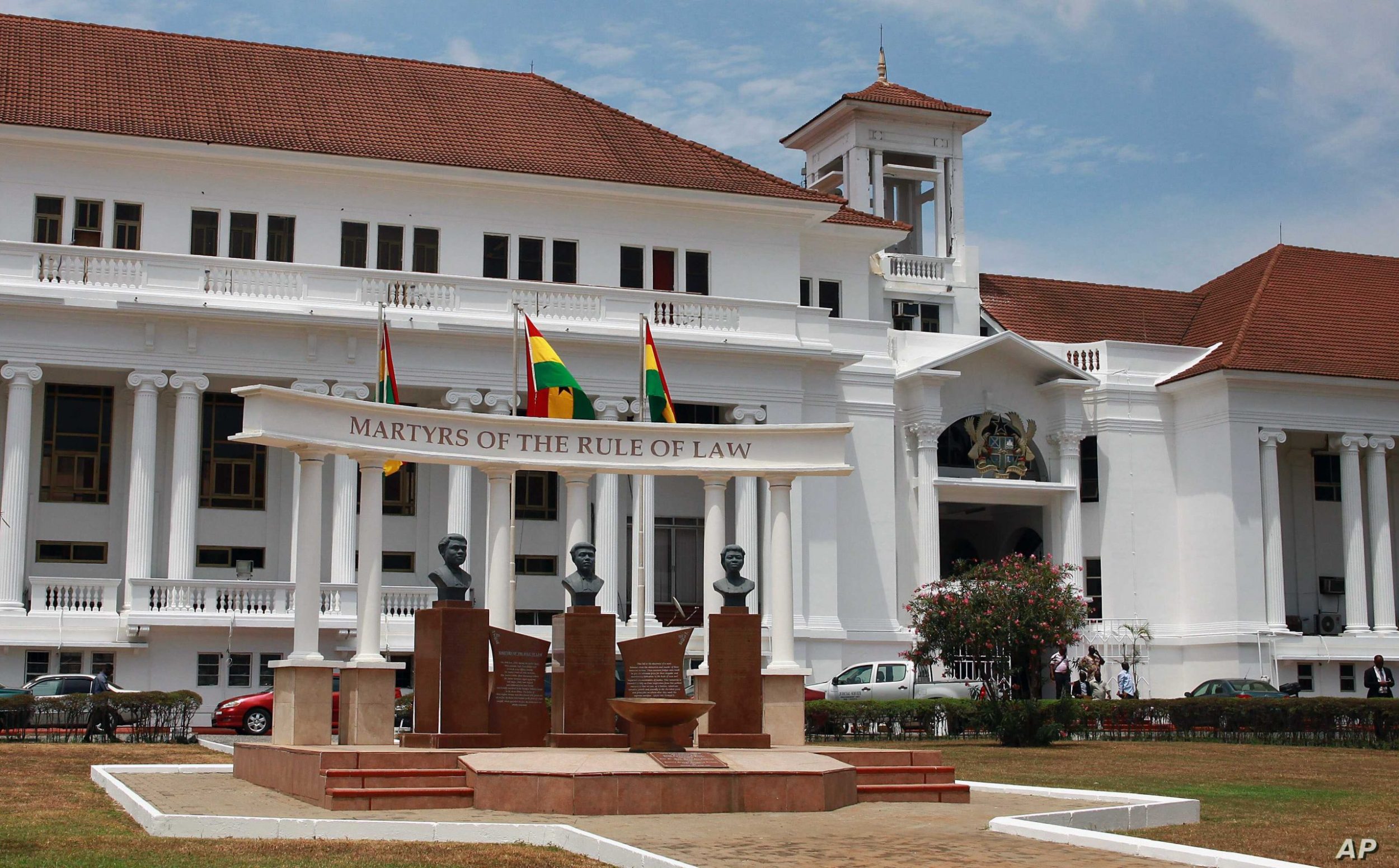
    Eight judges of Ghana’s Superior courts rushed to the Audit Service to declare their assets days after The Fourth Estate wrote to the Judicial Service seeking clarity on the asset-declaration status of 15 judges, including the eight.

    Those who declared their assets immediately after The Fourth Estate‘s letter are the Judicial Secretary, who is also a Court of Appeal judge, and seven High Court judges appointed in 2019 and 2020.

    It took the judges two to three years to comply with the asset declaration law that required them to declare their assets and liabilities within six months after their appointment. And they did that only a few days after they received The Fourth Estate letter.

    The Fourth Estate obtained the full list of public office holders who had declared their assets by March 2022 from the Audit Service, through a right-to-information (RTI) request.

    Noticing that the names of 15 judges appointed in recent years were missing from the list, The Fourth Estate then wrote to the Judicial Service on August 17, 2022, seeking to find out if the judges had declared their assets and liabilities.

    The Judicial Service responded on August 31, 2022, with evidence of declaration for 12. But the evidence showed that eight out of the 15 defaulting judges only declared their assets and liabilities after the Judicial Service received The Fourth Estate’s letter.

    They declared between six to 14 days after receiving the letter.

    Justice Ernest Yao Gaewu, who has been nominated to the Supreme Court, also violated the asset declaration law when he was appointed to the High Court. The former private legal practitioner was among eight High Court judges appointed in September 2020.

    Per the law, his declaration should have been done by March 2021, but he did so on June 22, 2022, a month before he was appointed a Supreme Court Judge and more than two years after he became a High Court judge. His name was not on the list because declared after The Fourth Estate obtained the list from the Audit Service.

    The Judicial Service said three judges whose names were not listed as having declared their assets could not be reached for their responses.

     They are Justices Yaw Owoahene Acheampong, Solomon Oppong-Twumasi and Nana Yaw Gyamfi Frimpong, who were all appointed to the High Court in September 2020.

    They could not be reached because of the legal vacation, according to the Judicial Secretary, Justice Cynthia Pamela Addo, who declared her assets only after The Fourth Estate’s request to the Judicial Service.

    Three other judges, including a Supreme Court justice, who were not on the Audit Service list, provided evidence of declaration.

    The following are the eight judges who violated the asset declaration law, but declared after The Fourth Estate wrote to the Judicial Service for their comments.

    1. Cynthia Pamela Akotoaa Addo: The former Deputy Chief Executive of the EXIM Bank, Ghana, was appointed Judicial Secretary on October 2, 2018.  She declared her asset two almost two years later on July 16, 2020. Per the law, she should have declared her assets by April 2018. She was later appointed a Court of Appeal Judge in August 2020. By February 2021, she should have declared her asset.  But she did it on August 30, 2022, which is 13 days after The Fourth Estate letter.
    2. Gabriel Mate-Teye: He joined the bench as a Magistrate in 2008. He was elevated to the Circuit Court in 2012, where he served until his appointment as a High Court judge in December 2019. He should have declared his assets and liabilities by June 2020. But he declared on August 29, 2022, which was 12 days after The Fourth Estate letter.
    3. Mariam Saleh Sinare: She was elevated from the Circuit Court to the High Court in December 2019. Per the law, her list of assets and liabilities should have been filed with the Audit Service by June 2020. But she filed on August 29, 2022. It was done 12 days after The Fourth Estate letter.
    4. Justice Cynthia Wiredu: She joined the High Court from the Circuit Court in December 2019 and should have handed over the list of her assets and liabilities to the Audit Service by June 2020. But she did this on August 26, 2022. This is nine days after The Fourth Estate letter.
    5. Justice Emmanuel Bart-Plange Brew: He became a justice of the High Court after his promotion from the Circuit Court in September 2020. March 2021 should have been the deadline for his asset declaration. However, it was done on August 29, 2022, which is 12 days after The Fourth Estate letter.
    6. Justice William Osei-Kuffour: The private legal practitioner was appointed to the High Court in September 2020. He should have declared his assets and liabilities by March 2021. He did that on August 31, 2022, exactly two weeks after The Fourth Estate letter.
    7. Justice Douglas Seidu: Before his appointment to the High Court in September 2020, he was a private legal practitioner. He declared his assets on August 29, 2022, two years after his appointment when it should have been done by March 2021. His declaration was done 12 days after The Fourth Estate letter.
    8. Justice Elfreda Amy Dankyi: She was also a private legal practitioner before her appointment to the High Court in September 2020. She also declared her assets on August 26, 2022, when she should have declared them in March 2021. This was done nine days after The Fourth Estate letter.

    Article 286 (1) of the 1992 Constitution states that “a person who holds a public office mentioned in clause (5) of this Article shall submit to the Auditor-General a written declaration of all property or assets owned by, or liabilities owed by, him whether directly or indirectly (a) within three months after the coming into force of this Constitution or before taking office, as the case may be, (b) at the end of every four years; and (b) at the end of his term of office.”

    The Constitution requires the declaration to be done before the public officer takes office. However, Section 1(4)(c) of the Public Office Holders (Declaration of Assets and Disqualification) Act directs public office holders to meet this requirement “not later than six months after taking office, at the end of every four years and not later than six months at the end of his or her term.”

    This is not the first time the justices of the superior court have failed to live up to the terms of Ghana’s asset declaration laws.

    When he appeared before the Public Appointments Committee of Parliament in 2019 to be vetted for the position of Chief Justice, Justice Kwasi Anin Yeboah, admitted to the legislators that he had not declared his assets and liabilities.

    Justice Anin Yeboah had been a judge at the Court of Appeal from 2003 to 2008 before being appointed to the Supreme Court in 2008. He also served as a High Court judge from 2002-2003.

    In 2019, however, when the Minority Chief Whip, Muntaka Mohammed Mubarack, asked when he declared his assets, he said his first declaration had been at the instance of Chief Justice Georgina Theodora Wood when he was appointed to the Supreme Court in June 2008.

    “Last week, I filed it at the Auditor-General’s office,” he responded.

    Before admitting that he had not declared his asset on the two occasions he went through the Judicial mill, he said judges were overwhelmed with work, a reason they failed to meet the requirement.

    The Asset Declaration Law

    The law requires that the President, Vice-President, the Speaker of Parliament, Deputy Speakers of Parliament, members of Parliament, ministers and deputy ministers of state, ambassadors, the Chief Justice, Judges of Superior Court, Judges of Inferior court and managers of public institutions in which the state has interest submit to the Auditor-General written declarations of all property or assets owned by, or liabilities owed by them, whether directly or indirectly.

    They are to declare their assets relating to:

    (a)lands, houses and buildings;

    (b) farms;

    (c) concessions;

    (d) trust or family property in respect of which the officer has a beneficial interest;

    (e) vehicles, plant and machinery, fishing boats, trawlers, and generating plants;

    (f) business interests;

    (g) securities and bank balances;

    (h) bonds and treasury bills;

    (i) jewellery of the value of ¢5 million [now ¢500] or above; objects of art of the value of ¢5 million or above;

    (j) life and other insurance policies;

    (k) such other properties as are specified on the declaration form.

    YOU MAY ALSO WANT TO READ:

    Asset Declaration: Bawumia, Ofori-Atta, Osafo-Maafo, Kyei-Mensah-Bonsu, and 89 others did not fully comply

    Akufo-Addo’s First & Second Term: 28 ministers who didn’t declare asset at all 

    Sir John’s successor, three deputies have not declared their assets 

  • Only two Chinese in Ghana’s prisons: two groups petition for investigations

    Only two Chinese in Ghana’s prisons: two groups petition for investigations

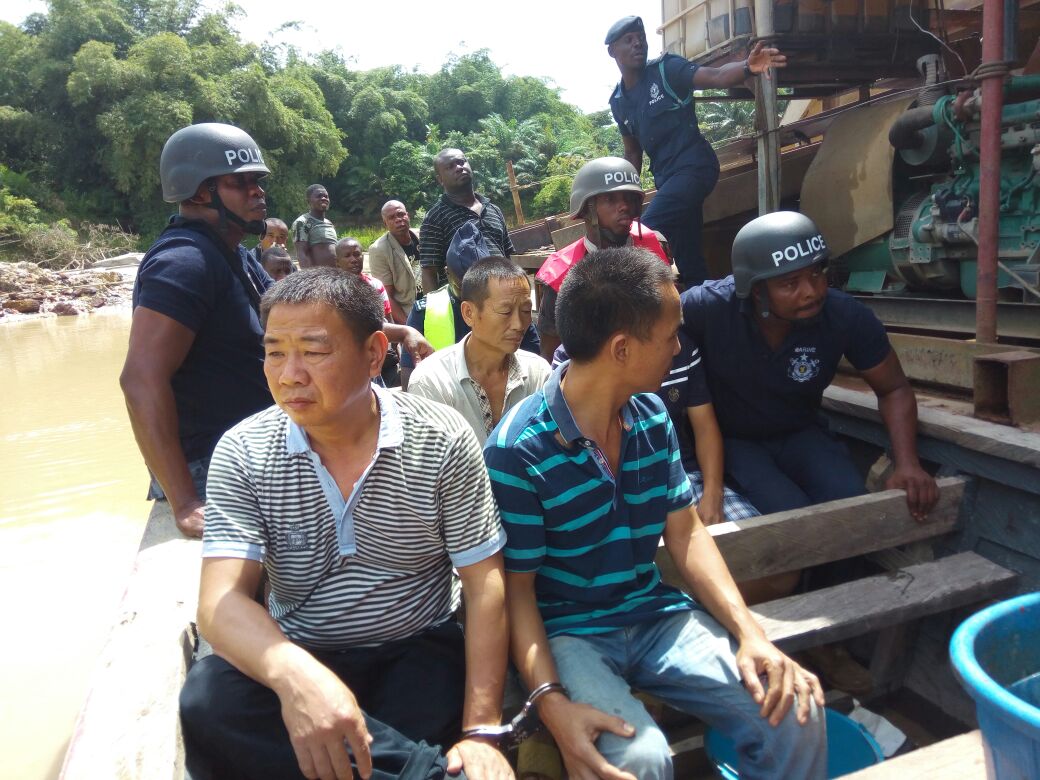
    Two environmental non-governmental organisations have asked for investigations into why only two Chinese nationals are in Ghana’s prisons in spite of the hundreds arrested over the years for illegal mining.

    Ghana Environmental Advocacy Group and Arocha Ghana said they were highly disappointed at how the Chinese arrested for illegal mining got away with their crime.

    They have, therefore, petitioned the Attorney General and Minister of Justice, the Inspector General of Police, the Chief Justice and the Ghana Immigration Service to investigate the matter.

    “To read that those arrested end up quietly deported to their home countries with their loot without any further consequences while the state and local communities are left to reel under the weight of the environmental degradation they leave behind is both unconscionable and irresponsible,” the petition said.

    The petition followed The Fourth Estate publication on July 20, 2022, which revealed that although hundreds of Chinese nationals were arrested for engaging in illegal mining (galamsey) in Ghana from 2012 to date, only two were in Ghanaian jails.

    The petition, which was signed by Elizabeth Allua Vaah and Seth Appiah-Kubi, observed that it was no secret that the kind of illegal mining most foreign nationals engaged in caused some of the worst environmental damage to Ghana’s water bodies, lands and forests.

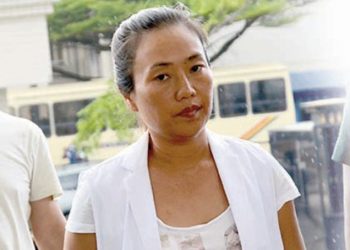
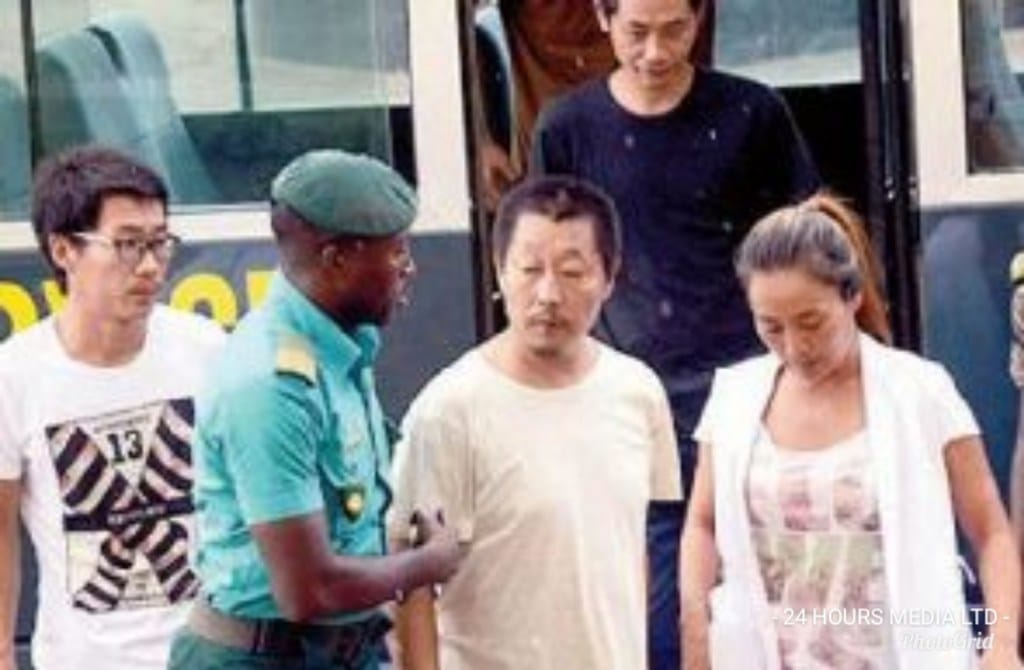
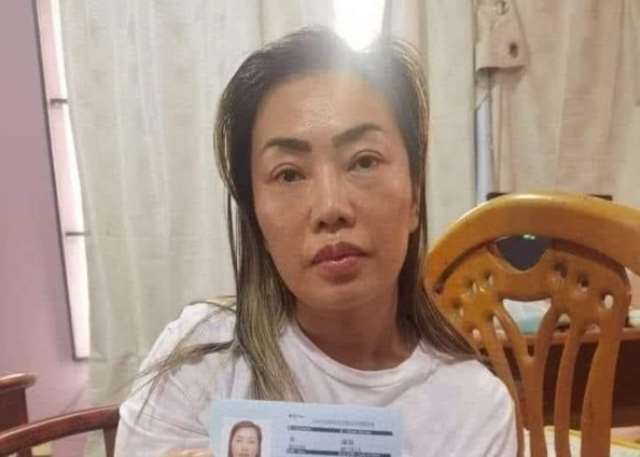
    In May 2017, a notorious Chinese female illegal miner, En (Aisha) Huang, nicknamed the “queen of galamsey”, was arrested and put before court, but deported in December 2018 with the tacit endorsement of public officials.

    These officials include the former Attorney General and Minister of Justice, Gloria Akuffo; the then Senior Minister, Yaw Osafo-Maafo; and a former Minister of Lands and Natural Resources, Kwaku Asomah-Cheremeh.

    Aisha was charged with three counts of undertaking small-scale mining operations, contrary to Section 99 (1) of the Minerals and Mining Act, 2006 (Act 703); providing mining support services without valid registration with the Minerals Commission, contrary to the Minerals and Mining Act, 2006 (Act 703); and the illegal employment of foreign nationals, contrary to the Immigration Act, 2000 (Act 573).

    The other four accused persons were charged with disobedience of the directives given by or under the Immigration Act, 2000 (Act 573).

    Aisha was arraigned before the court on May 9, 2017, for engaging in galamsey activities at Bepotenten in the Amansie Central District in the Ashanti Region.

    However, on December 19, 2018, the Attorney General filed a nolle prosequi to discontinue the trial and subsequently deport the culprits.

    The petitioners say Aisha’s deportation set a bad precedent.

    “Since her arrest and very controversial deportation, there has been other countless, highly publicized arrests with pictures showing disturbing environmental degradation arising from the actions of these culprits.

    Criminals negotiate way out?

    “The posturing by our justice system, indicating that foreigners can ‘negotiate’ their way out of punitive penalties after committing environmental crimes is scary and does not bode well for our justice system, perpetuates impunity and erodes public confidence in the justice system. This lapse in the system also erodes the moral authority of our courts to enforce the law without fear or favour among citizens,” the petition said.

    To make the punishment for breaching Ghana’s mining laws stiffer, the Akufo-Addo administration amended the Minerals and Mining Act in 2019.

    The new law criminalises aiding and abetting illegal mining activities and the use of unapproved equipment for mining in water bodies.

    It also prescribes a minimum sentence of 15 years and maximum of 25 years for foreigners who engage in illegal mining.

    Making reference to  Minerals and Mining (Amendment) Act, 2019, Act 995, Section 99 (3) and (4), the petitioners wonder if the lack of punishment for foreigners could “be the reason why galamsey continues unabated with impunity defying all efforts by government to halt.”

    The petition called on  the Chief Justice, the Attorney General and Minister of Justice, The IGP and the Ghana Immigration Service to, as a matter of urgency:

    1. Share with Ghanaians the number of foreign nationals arrested for engaging in illegal mining in Ghana and their nationalities.
    2. Number of those arrested that are currently in jail
    3. Number of those who have been released and for what reason (s)
    4. Number of those deported and under what conditions
    5. Number of such deportees who have returned and
    6. Measures that have been put in place to ensure that new people coming do not engage in illegal mining in Ghana.

    Meanwhile, almost four years after her deportation, Aisha Huang has been re-arrested in Ghana engaging in the very activity that got her arrested, charged and deported.

    Reports say Aisha and three other accomplices have been charged with mining without license and engaging in the sale and purchase of minerals. They are expected to reappear in court on September 14, 2022.

  • Ghana’s special needs children face a special, new problem

    Abu-Sadik Yahaya lost his first child and looked forward to a replacement. However, the joy with which he expected his second child vanished when it dawned on him that he would have to live with a special needs child.

    “I wanted a way out. I needed a solution. I sold my car. I spent every resource at my disposal and was ready to go anywhere and do everything possible. So, once a place was recommended by neighbours and friends, I dashed there,” Abu-Sadik recounted his adventures in search of a cure.

    As a spare parts dealer, he knew where to get the right components to fix defects in vehicles, but as a desperate father looking for healing for his child sick with cerebral palsy, he did not know where to get the solution.

    Eventually, he found his ‘solution centre’ on the premises of a mallam (a seer who is able to reveal past, present and future happenings and provide remedy or counsel).

    “You have not offended anyone; this is from God. This is your trial because God knows you can bear this burden,” the mallam told him in words that travelled deep into his heart, as they resonated with Qur’an 2:286: “God does not burden any soul with more than it can bear.”

    Abu-Sadik does not walk alone in this fate; he has a partner in Eric Akwasi Banor, who initially, did not understand why his daughter should suffer from down syndrome.

    Just like Abu-Sadik, Mr Banor, a driver, drove around town, seeking medical help from orthodox practitioners and herbalists, all to no avail.

    “I must be paying for the sins of my forefathers,” he thought at a point.

    However, after wandering in vain in search of deliverance from the “sins of his forefathers”, he decided to accept Jemima [his daughter] just as God gave her to him.

    “We are very happy to have her as a child,” he said in an interview with The Fourth Estate.

    Mabel Aku Kuleapenu and her family are also in search of relief for their brother, David, who is suffering from speech and walking impairment.

    According to her, the family could not help David, their physically challenged brother, to either go to school or learn a trade because they were too poor to do that.

    “We don’t know where to take him so we are only hoping and praying that God will help him grow so that we can discover his talent.
    “We lost our mother in 2018 and that is our father sitting there,” 30-year-old Mabel said, pointing to her father. “He is not working so it is myself and other siblings who are taking care of them [David and their father]. It is difficult for us.”

    Children, gifts from God

    Children are mostly considered a gift from God. But while that gift may be divine, human factors such as age, self-medication during pregnancy, hormonal imbalance, and pre-natal or post-natal conditions can alter the formation of children, according to experts.

    “Special needs” is an umbrella term for a wide array of diagnoses, from mild to very challenging conditions.

    Experts say children with special needs may have developmental delays, medical conditions, psychiatric conditions, and/or congenital conditions.

    Ms Joan Kafui Wenya, the Coordinator for Special Education at the La Dade-Kotopon Municipal Education Office says as a special needs educator, she is also stigmatised.

    The physical conditions suffered may include multiple sclerosis, allergies and asthma, juvenile arthritis, leukaemia, muscular dystrophy and epilepsy, while the developmental conditions may include down syndrome, autism, dyslexia, dyscalculia, dysgraphia, dyspraxia, aphasia or dysphasia, auditory processing disorder and visual processing disorder, Ms Joan Kafui Wenya, the Coordinator for Special Education at the La Dade-Kotopon Municipal Education Office, explained.

    Stigmatisation

    Ms Wenya, further explained that stigmatisation pushed frustrated and depressed parents to mete out inhumane treatment to special needs children, including locking them up in rooms, starving and, sometimes, poisoning them so they (parents) can be free.

    “In public, people shun us as if he’s a plague. When we board public transport, some passengers would not even want to sit close to us. As such, I have no option but to charter a taxi or an Uber for all our rounds. Even when I have to take him to the hospital, it has to be a private one to avoid the weird and uncomfortable glances from people,” Abu-Sadik recounted his encounter with stigmatization.

    The ugly face of stigmatization is not directed at parents only; special needs workers and officials like Ms Joan Kafui Wenya also face it.

    “You find people tagging and jesting. They say things like, ‘Some of your people are here. And when having a discourse, one can jokingly say, ‘You are an adult with special needs,’” she recounted.

    According to her, when she got pregnant, some people, told her they could not wait for her to give birth to a special need child because she championed their cause.

    Effects of COVID-19 on special needs education

    When the COVID-19 pandemic took the world by storm, it unleashed catastrophic effects on the economy, business, health and education of many countries.

    In Ghana, special needs education received very little or no attention from the state in the interventions the government put in place to mitigate the effects of the pandemic.

    As the traditional education system at the pre-school, basic, high and tertiary levels transited to online studies in the wake of COVID-19, special needs education was neglected, as parents and caregivers had no support to cater for the education needs of such children.

    A caregiver to special needs children, Auntie Maggie, said due to the underlying conditions of special needs children, their schools closed down even before the government directed the closure of schools.

    “It was more disturbing as there was an escalation of behavioural issues, throwing of tantrums and refusal to eat since they were cut off from their usual routine of going to school. We tried online classes for our students, but they were so new to it and it wasn’t sustainable because even face-to-face is not easy, how much more online?” she said.

    In his 21st broadcast to the nation on measures taken by the government against COVID-19, President Akufo-Addo announced the reopening of schools.

    “Our children must go to school, albeit safely, and we are satisfied that in the current circumstances, the reopening of our schools is safe,” the president said.

    Prior to the lockdown, the New Horizon Special School had a population of about 100 pupils but only about 30 of them reported when school resumed after the Covid-19-induced closure of schools.

    The school authorities could not reach out to the parents of some of the children, while others were said to have relocated to places very far from the school.

    However, the global pandemic did not spare the Ghanaian special needs schools. The ravages of Covid- 19 were heavily felt among them after the president’s announcement. The fullest weight was felt when these expatriates sent information that they had to withdraw their support due to the economic crises that came with the pandemic, a parent mentioned in an interview with The Fourth Estate.

    The special school owners knew that the withdrawal of the donors will affect enrolment and attendance of students because part of the bills which had earlier been waived for parents due to the availably of funding would now have to be borne solely by the parents without any reduction.

    For parents, they knew it was “a door of no return”. That is, without funding, or subsidy on charges and fees, they could not bear the expenses to keep their children in the special schools. As a result, some of the children were withdrawn. The fortunate ones were sent to regular schools and the others, were kept at home.

    For those who enrolled their wards in regular school, it was because they could not afford the fees, but others have completely dropped out of school.

    According to Ms. Wenya, a special needs advocate, some parents were scared that their children’s condition would deteriorate if they sent them back to school, so they preferred to keep them at home.

    Yahaya, Jemima and David

    Yahaya Abubakar and Jemima Barnor are children with cerebral palsy and down syndrome respectively. They are among children with special needs who have enrolled in regular schools after Covid-19 struck.

    Yahaya, 14, is in Class 4, while Jemima, 10, is in Class 1. But they are struggling in their new school environment.

    “Yahaya is coping. He is unable to hold items; not even a pen. He has to be fed because he is unable to eat by himself. His teacher and friends feed him,” Abu-Sadik said.

    At Manu in the Ketu North District in the Volta Region, David may be far away from Yahaya and Jemima, who are in Accra. Suffering from speech and walking disability since birth, however, the 17-year-old David shares a similar fate with Yahaya and Jemima.

    David lost his mother in 2018. His father is bedridden with a stroke. This has compounded David’s situation.

    He is 4.5ft tall, but with his walking disability, he requires the support of his six siblings, especially Ewoenam. Failure to get such support could make him fall anytime he attempts to walk.

    David started school late. He dropped out after Class 1 at the Ohawu Basic School for three reasons. First, he had to walk for 21 minutes, about 1.8 Km to school. Second, his classmates mocked him because of his speech impairment. And, third, he hardly grasped what was taught.

    Ohawu Basic School does not have the support system to enable him to access the classroom and function as a pupil.

    According to a former head teacher of the school (at the time David was in school), Daleku Daniel Kwaku, David needed a skill support system that would ease his mobility and speech.

    Ewoenam, David’s sister’s life is on hold because he can hardly do anything for himself

    He found such a support system only in his sister Ewoenam in junior high school who accompanied him to school.

    This means on days Ewoenam was unwell, David could not go to school.

    In fact, Ewoenam had to abandon her dream of continuing her education after completing JHS in order to cater for her sick brother.

    A ‘cursed child?’

    The joy of giving birth to a second boy did not last long in David’s family. At age 3,
    David could not walk, could not speak nor communicate in a clear voice with his
    parents or siblings as his age mates did.

    David suffers from childhood apraxia of speech (CAS), a speech disorder that makes it difficult for a child’s brain to coordinate the complex oral movements needed to create sounds into syllables, syllables into words, and words into phrases.

    To some community members, David is a cursed child from the gods and that is the basis for deep-seated stigmatization against him.

    In spite of the challenges David’s walking aide, Ewoenam, is excited that her brother is improving in terms of managing his life.

    “David is growing. He is now 17 years old. His voice is a bit clearer now than in the past. He can now eat by himself and can also walk alone, except that he sometimes slides off and falls. But anytime he falls, he hurt himself, so sometimes I have to help him to walk around,” she said.

    David has to be propped up to enable him stand. Without it, he can’t stand for even five minutes

    Taking care of David has put Ewoenam’s life on hold. She cannot do anything else, but she is willing to continue to be her brother’s keeper.

    She appealed to benevolent individuals and institutions to support David to enable him to function independently, adding, “Any help to David will lift the dependence burden on me, then I can also do something for myself.”

    “I wish to see him grow, get married and make his family,” she added.

    Mabel could not agree more with her sister.

    “We need a support system or school that can give him [David] the needed skills and training. Even if he cannot learn or continue the school, we are only hoping that he will be supported to learn a vocation so that as he grows, he does not become a burden but have the capacity to take care of himself and his family,” she said.

    Empathy, not sympathy

     According to Ms Joan Kafui Wenya, in order to ensure that people better appreciate the state and conditions of special needs children, caregivers and society must show empathy instead of sympathy.

    “I’ve made colleagues, teachers and other people know that we must not sympathize with persons with special needs. They don’t need our sympathy, but we need to empathize with them. Empathy means putting yourself in their condition to see how you can manage it. Accept the child’s condition and make sure you are pushing for the child’s reformation,” she explained.

    On her part, Auntie Maggie considers three decades of her job as a “ministry”, saying seeing the children independent and doing things they could not do earlier brings her so much joy.

    “Seeing the crafts of some of these kids brings a bunch of joy. They are pure; they are affectionate and very appreciative of what you do for them,” she noted.

    The Communications Director for Child’s Right International, Afia Nyamekye Kumah-Abrafa, said taking care of children in society was everyone’s responsibility so all should get involved.

    “Investment is not only money. Investment is love, care and attention. Children with special needs should not be looked at as liabilities because an Adult is a child who has survived,” she said.

    The families of Jemima, Yahaya and David have accepted them as gifts from God, and they keep offering them the requisite assistance for their daily progress.

    That is why Jemima has a good reason to be cheerful and express it in singing and dancing. Yahaya and David have big dreams for the future, the former wanting to become an Imam (an Islamic teacher) and the latter, a mobile phone repairer.

    YOU MAY ALSO WANT TO READ:

    The students who are taught how to cry


    The writers of this report, Deborah Pokua Bempah & Richard Mensah Adonu, were Fellows of the maiden edition of the Next Generation Investigative Journalism Fellowship at the Media Foundation for West Africa.

  • 62 hours in Liberia: the flight we nearly missed

    Thursday, July 28, 2022: The flight was uneventful, except for the cabin crew celebrating a passenger’s birthday.  I have been on a dramatic few though. The most memorable was on South Africa Airways to Joburg in 2014. That night, my stomach rebelled for snacking on banana and groundnut paste sandwiches, which I had assembled hurriedly before running to the airport.

    While I stood in front of the washroom tapping gently on the door, the occupant took forever in the place of convenience. After 20 minutes, I couldn’t endure standing on my wobbly legs anymore while whatever it was in my tummy was fast moving downward. I threw gentility into the sky and banged on the door so loudly that the cabin crew turned up for peacekeeping duties. A minute later, a woman cat walked out, carrying a rainbow on her head. In one hand was a make-up kit; the other, a lipstick.

    On another flight on Egypt Air to Dubai, turbulence kept rocking the plane so violently that a group of Ghanaians started chanting, “Rough road! Rough road!”

    But this Kenya Airways flight, my first to Liberia, had nothing for the bank of memory. I was curious about the country I had heard so much about and was visiting for the first time.

    Liberia, one of Africa’s oldest nations, conjures images of a nation pressing a self-destruct button. Its unemployment figures have been flagged as a national security threat. Corruption has grown into a full brown cancer with the executive and the legislature conniving to dissolve the country’s antigraft institution, the Liberia Anti-Corruption Commission (LACC). Their reason? The anti-graft body was carrying out unnecessary prosecutions.

    West Africa is struggling with unemployment and corruption, but Liberia’s is peculiar because of its recent past civil wars.

    The country failed to pick the blueprint of visionary leadership from Rwanda and its neigbour Ivory Coast, which recently spent perilous times in the jaws of civil war.

    In the four years since the election of President George Weah, poverty has reportedly increased from 50.9 to 52%, according to the World Bank’s 2021 Poverty and Equity Brief. The brief revealed that “44 per cent of the population lived under extreme poverty ($1.90 per day) and poverty in Liberia is projected to increase over the next few years, driven by increasing food prices, lower commodity prices for minerals, and the ongoing COVID-19 pandemic.” The country’s rich mineral and agricultural resources are hardly tricking down to the common man.

    On the security front, there have been recent murders of three prominent Liberians. John Hilary Tubman, 76, son of former Liberian President William V.S. Tubman; and William Richard Tolbert III, 68, the last-born son of the late William R. Tolbert Jr, Liberia’s 20th president; were mysteriously murdered in what looked like a hatched job. Ms Maude Elliot, a senior officer of the Liberia Immigration Service, also met a similar fate.

    As an avid listener of the BBC, optimism is hardly heard in the voices of the many Liberians who complain about their living conditions. In Ghana, the Liberian refugees at the Bujumbura Camp, who have refused to go back home, say it all. All is not well.

    All these were on my mind when I boarded the aircraft.

    As the aircraft shot up to the sky, I picked a book to read. The book “Left Behind” is a Christian fiction about the rapture. It starts with dozens of passengers in an aircraft disappearing naked, leaving behind their clothes.

    Fortunately for the passengers left behind, heaven didn’t find the pilot worthy. However, panic struck that flight.

    Amid the chaos on the aircraft in the book, I dozed off. I caught myself a few times trying hard not to stray my head onto the shoulders of my co-passengers, Adiza, a colleague at the Media Foundation for West Africa and a Liberian woman who was chewing gum loud enough to perhaps warn me about the undesirable direction of my adventurous head.

    I snapped out of the nap an hour into the two-and-half-hour flight and shuffled between the book and conversation with my colleague.

    Landing at Robert’s International

    By 5.10 p.m., the captain’s voice filled the aircraft. It was raspy as if he had been warned that speaking loudly and clearly would cost him his flying licence.

    As we descended, Liberia’s verdant forests and beaches came into view. The Robert’s International Airport itself appeared as though it was enveloped in a forest. What it lacks in the concrete jungle that constitutes most airports around the world is made up for in tranquillity.

    At 5.30 p.m., we touched down. As the aircraft taxied towards the arrival hall, it didn’t take long to realise that Liberia’s only international Airport had seen better days.

    A few dilapidated buildings lined up on the edges of the tarmac. Some looked burnt.

    It gave the impression of a country yet to collect the ashes of the two bloody civil wars that killed and maimed thousands. And the long road to recovery was yet to reach the airport.

    Inside the arrival hall, influence peddling was at play. A man in plainclothes waved on a couple that was to meet port health officials for a COVID-19 vaccination card inspection.

    Soon, it became a turf war. Another official ordered the couple back into the queue. Their benefactor ordered them back.

    A friendly port health official’s “Hello, Akwaaba to Liberia” jolted me, and truncated my concentration on the unfolding drama. After this, an immigration officer broke into a welcoming smile with another round of Akwaaba and a fatal attempt at speaking Twi.

    With the immigration formalities out of the way, the luggage claim became another hurdle. Luggage handlers were busily tossing the bags onto the dysfunctional carousel for someone else to lift them onto the floor.

    It didn’t end there. The airport had no trolley. We had heavy stationery meant for a training programme on investigative journalism and anti-corruption reporting. I had to lift the luggage on my shoulder. But after 20 steps, a man whose stomach was threatening to tear his shirt’s buttons pointed to a scanner.

    “Put your luggage there, it has to be scanned,” he said with a dismissive wave.

    We complied.

    With the stationery back on my shoulder and my main luggage firmly in my grip, it didn’t take long to be out of the airport. Then came haggling with a taxi driver over the fare to our hotel.

    We settled on US $50.

    To Liberia’s credit, one can’t help but notice the landscaping around the airport, particularly the well-manicured lawns. I jokingly told my colleague it appeared Liberia’s elites were not interested in airport lands.

    “They probably don’t have the money yet to develop it,” she replied.

    Journey to Monrovia, President Weah’s performance

    As the green fields faded behind us, the everyday struggle of the average Liberian began to manifest.

    I was shocked to see petrol and diesel in jars for sale. Their patrons are the ubiquitous commercial motorcycles, okada, as they are known across West Africa.

    Unlike Ghana, where illegal miners have heavily polluted rivers, Liberia’s rivers and streams were impressively clean.

    Unlike Ghana where illegal miners have heavily polluted water bodies, in Liberia, the rivers and streams are clean

    However, our driver, Peter, was quick to point out that Liberia was also dealing with illegal miners, particularly from Ghana and Nigeria.

    When the discussion turned political, he had no kind words about President George Weah, who he said deceived his way into power.

    “He is vindictive. No leader has divided this country after the civil war like Weah,” he said, as he steered off a hole that nearly swallowed a tyre.

    It would take almost 30 minutes before we enjoyed some level of normalcy from the dust and bumpy ride.

    Apart from completing a few projects that the country’s post-civil-war President, Ellen Johnson Sirleaf, had started, Peter said  President Weah found more pleasure in dancing on TikTok and cooking on television than delivering on his promises.


    Liberian leader George Weah gets the BUGA dance bug - P.M. News
    Liberian President, George Weah, has received a lot of backlash for dancing on Tiktok

    He had no compliments for Madam Sirleaf either. Interestingly, former President Charles Taylor, who is in prison for war crimes, fared better on Peter’s scorecard.

    It was clear that in the absence of well-developed transport infrastructure, commercial motorbikes were filling the gap. Some of these motorbikes had umbrellas fixed on them to protect the rider and passenger.

    On a section of the highway, which our chatty taxi driver claimed had been abandoned for more than two years, minutes passed between seeing a single car or any of the rusty minibuses that provide transport. The commercial buses that mocked the term “road worthy” were not as many as the yellow taxis that defy cargo limits.

    Some taxi drivers defy cargo limits

    The driving skills on the roads made me wonder who are the worse drivers—Ghanaians, Liberians or Nigerians. When it comes to driving in Ghana, some say it’s chaos out there. In Liberia, it is no different.  The traffic rules appear simple. Rule one: big cars and tricycles have the right of way. Rule two: you’re responsible for whatever the rider in front of you chooses to do. The recklessness with which the tricycles bob and weave through traffic can heighten the condition of hypertensive motorists.

    Hunting for a hotel, the Asian influence

    After almost two hours on the road, we finally arrived at Bela Casa. But a quick look at the cracks on the façade and the hotel’s dimly lit corridors didn’t inspire hospitality.

    My colleague, an ardent traveller within the subregion was quick to suggest that we take a look at the rooms first. The hotel manager reluctantly agreed. Adiza’s intuition was right. It was stuffy enough to trigger a cold.

    Our taxi driver quickly suggested an alternative— Boulevard Palace—a hotel that dominates the skylines of Monrovia. However, it is expensive, the driver warned. It’s a Lebanese property.

    On our way to Boulevard, we settled for Murex Plaza another Lebanese-owned chic boutique hotel. The rates were high for what was on offer, but Adiza, an adept bargainer, helped the situation.

    With the training done on Friday, Saturday was meant to be for sightseeing. However, we had to abandon the idea because our host couldn’t remember any tourist attraction in Monrovia, except the beach.

    A street in Monrovia’s central business district

    But that idea was quickly dismissed when we learnt foreigners were targets of knife attacks. A UK embassy travel advice and a few friends we spoke to didn’t give much encouragement.

    I ate, read, worked and slept.

    In the afternoon, my colleague suggested we give our taste buds a treat at Boulevard after she took the trouble of scanning their menu online.

    The taste of the  food didn’t match the US$82 we spent altogether. Fried plantain saved the day. Liberians, for some strange reason, spend the US dollar alongside the Liberian dollar. If we were paying our bill in Liberian dollars, it would have been L$12,628

    The food didn’t taste as appealing as it looked on the menu

    In the country’s central business district, the Asian influence was glaring. Lebanese, Indian and Chinese shops competed for business. I learnt that those three countries contributed about 70% of Liberia’s economic backbone.

    On Sunday, we headed back to the airport. The hotel receptionist promised an airconditioned car for $US50. We had the car without the air-condition and the driver appeared to have taken driving lessons from the snail. At the airport, he tried to pull a fast one. He said we were to pay $US50 each. He didn’t have his way.

    However, the biggest trouble awaited us at the entrance of the departure hall.  The gate had been closed. A security man appeared from nowhere to man the gate. I tried calmly to explain things to him, but he wouldn’t budge.  Adiza tried too, but he just gave a mean look, his hands buried in his pocket.

    Then Adiza, one of the calmest people on earth, burst into rage. I joined the tantrum match. It made some headway, and it attracted eyeballs and ears too. A Fly Africa World staff appeared, but, after hearing what was causing the commotion, he shrugged and left. A more diplomatic one came out of the hall and had sympathy.

    The gate was opened.

    The explanation for closing the departure gate 30 minutes before the check-in time ended didn’t make sense. The airline’s staff explained that it was because most passengers who arrived late after the check-in had been closed, created scenes when they’re denied boarding.

    At the immigration, the officer was interested in changing GH₵ 55, which he probably begged from Ghanaian travellers, into dollars. And he wanted a tip too. I only smiled and moved on. The security personnel were subtly making similar demands.

    After clearing these hurdles and the boarding formalities, we raced to the bus sending us to board the aircraft. It was just the two of us. Three other passengers came in later.

    We took off 30 minutes ahead of the schedule. Our destination was Freetown, Sierra Leone.

    The flight to Liberia may have been uneventful, but there was enough in my 62 hours stay in Monrovia to convince me that Liberia needs to shake off the dead skins of its bloody civil war.

    Rwanda did it. Liberia can, too.

    You may also want to read:

    Sierra Leone: Protests, Blood, Curfew and Crisis

    Chaos, grief in Mano River States as authorities tighten repression against protests

  • CHRAJ investigates Akufo-Addo’s nominee for Gender Ministry

    CHRAJ investigates Akufo-Addo’s nominee for Gender Ministry

    The Commission on Human Rights and Administrative Justice (CHRAJ) is investigating allegations of conflict of interest against the Deputy Minister-designate for Gender, Children and Social Protection, Francisca Oteng-Mensah.

    The Kwabre East MP is accused of using her influence as the Board Chairperson of the National Youth Authority (NYA) to lead the board in approving the procurement of sanitisers from a company in which she is a director and shareholder.

    Documents from the Registrar General’s Department show the Adonko Bitters Limited has nine directors, including the lawmaker and her father, Kwaku Oteng.

    Ms Oteng-Mensah is alleged to have supervised the board to pay GH₵700,000 to Adonko Company —a subsidiary of the Angel Group of Companies.

    A resident of Nima in Accra, Ismail Mohammed, on January 21, 2021, therefore, petitioned the anti-graft institution to look into the conduct of the MP, insisting the NYA’s GH₵3 million expenses on a COVID-19 campaign in 2020 had elements of impropriety.

    The NYA board’s approval of the expenditure on March 31, 2020 came at a time the country had recorded more than 150 cases of COVID-19 and was girding its loins to confront the pandemic.

    Fourteen out of the 15 board members of the institution were in a Zoom meeting to approve the amount. That meeting had the board chairperson, Francisca Oteng Mensah; the CEO, Sylvester Tetteh; and a Deputy Executive Director of the National Service Secretariat, Henry Nana Boakye, in attendance.

    Minutes of the board’s virtual meeting on that day show the CEO presented management’s proposal for GH₵3 million for a campaign to support the government’s fight against COVID-19.

    Three board members, Joshua Makubu, now the Oti Regional Minister; Henry Nana Boakye, now the New Patriotic Party’s National Organiser; and Theodora Williams Anti, now the Acting Executive Director Foundation for Security and Development in Africa (FOSDA), supported the management’s proposal.

    This paved the way for the Board Chairperson to call for a voice vote on the matter.

    “Majority of the members voted for the approval of GH₵ 3 million for management to undertake various activities towards the fight against COVID-19, with no indication of dissention,” the minutes said.

    However, a member of the board, Emmanuel Yao Dormenya, asked for more than approval. He suggested that “management should submit [a] budget to the finance committee for scrutiny.”

    Ms Oteng-Mensah shot the idea down.

    “The Chairman in view of the exigency of the request directed the CEO to present regular updates on the activities on the board’s page and a comprehensive report to the board on the outcomes of the lined-up activities under the programme during the subsequent meeting,” the board minutes indicated.

    The petitioner alleged that by superintending the meeting to approve the COVID-19 campaign, Ms Oteng-Mensah had violated Article 284 of the 1992 Constitution and Section 7 of the NYA Act.

    Both laws require that public office holders declare their interest in matters that are before them for consideration.

    The constitution says:

    “A public officer shall not put himself in a position where his personal interest conflicts or is likely to conflict with the performance of the functions of his office.”

    The NYA is no different. Its law states:

    “(1) A member of the Board who has an interest in a matter for consideration shall (a) disclose the nature of the interest and the disclosure shall form part of the record of the consideration of the matter; and (b) not be present at, or participate in the deliberations of the Board in respect of the matter.

    (2) A member ceases to be a member of the Board if that member has an interest in a matter before the Board and (a) fails to disclose that interest; or (b) participates in the deliberations of the matter.”

    With these laws in mind, the petitioner said Ms Oteng-Mensah rather “participated, deliberated and presided over this particular matter and subsequently failed to disclose her interest in matter.”

    On March 31, 2020, the NYA issued a statement launching a nationwide youth campaign against the COVID-19 pandemic.

    The authority mentioned that it would “restrict the campaign to electronic means, thus social media, traditional media and text messages. Short and informative videos and messages will be created and broadcasted on the various social media platforms, radio and television stations.”

    In April 2020, the National Youth Authority as part of its ‘COVID-19 Youth Campaign’  donated assorted essential medical logistics to the Ministry of Health. The items included goggles, personal protective equipment (PPEs) and hand sanitisers.

    Oteng-Mensah’s response

    In a response to the petition, the lawyers for Francisca Oteng-Mensah, Ghartey & Ghartey, told CHRAJ that the petition had “no facts that would support the belief that our client has been involved in a conflict of interest situation. There is without question no basis for the belief that there has been a conflict of interest situation.”

    The lawyers for the MP say the mere fact that the NYA board chair was linked to Adonko Bitters, where the NYA bought hand sanitizers, did not put her in a conflict of interest situation.

    “Respectfully, our client admits that she is and remains a director and shareholder of Adonko Bitters Limited. She was also a director and shareholder of Adonko Bitters Limited during the period, a subject matter of this petition. However, she is not in any way responsible for the da-to-day management of Adonko Bitters Limited. She is not an employee or a marketing and sales executive for the company. Our client submits further that she is not an executive director of Adonko Bitters Limited,” the response to CHRAJ stated.

    The NYA board chair, according to her lawyers, “never ‘participated’, ‘deliberated’ and ‘presided’ over the purchase of hand sanitizers from Adonko Bitters Limited as alleged by the petitioner”.

    An invoice from Adonko Bitters Limited, payment vouchers and a cheque from the NYA attached to the response to CHRAJ, according to Francisca’s lawyers, indicate that the purchase of and payment  for the hand sanitizers preceded the March 31, 2020 meeting cited by the petitioner as having discussed the Covid-19 expenditure.

    It said NYA paid GHc68,980.58 to Adonko Bitters for the supply of 290 cartons of hand sanitizers on March 29, 2020.

    Covid-19: Wa residents endorse Adonko Hand sanitizer. | KESMI 107.1 FM
    A petitioner is alleging that the NYA bought GHc700,000 worth of hand sanitisers from Adonko   Credit:KESMI FM

    The attached documents show that the invoice from Adonko Bitters and the Bank of Ghana cheque for payment are dated March 29, 2020. The cheque payment voucher from the NYA to the Bank of Ghana is, however, dated March 27, 2020, two days before the invoice was received.

    The lawyers said the amount was within the Public Procurement Authority’s threshold that the CEO of the NYA could approve without seeking the board’s approval, a reason the board was not involved in the deal. They told CHRAJ that the petitioner did not produce any evidence that links the board chair to the transaction.

    CHRAJ’s “delay” and Francisca’s deputy ministerial nomination

    The Member of Parliament for Essikado-Ketan and Senior Partner at Ghartey and Ghartey, Joe Ghartey, told The Fourth Estate that CHRAJ’s investigation into the allegation had unduly delayed. He said this was a straightforward matter and that his client had provided all the necessary documents and evidence to enable CHRAJ arrive at a conclusion. He says this was not a case that should travel over a year.

    He strongly believes the MP and board chair is innocent and that the delay amounts to justice being denied her.

    On the deputy ministerial nomination of Francisca Oteng-Mensah, Joe Ghartey, who is a former minister of Justice and Attorney-General, believes the current probe by CHRAJ should not impede her appointment.

    He says the law only bars persons that have been found guilty by commissions of enquiry and not the mere fact that an allegation has been leveled against someone and that allegation is being investigated.

    According to him if allegations and investigations are used to stop people from holding office, anybody could be paid to make allegations against a person nominated to serve a public office in order to stop them. He says Francisca Oteng-Mensah is innocent and wants CHRAJ to expedite its investigation and come out with a conclusion.

    CHRAJ’s Conflict of Interest position

    However, CHRAJ has confirmed to The Fourth Estate that it has almost completed investigations into the matter.

    According to CHAJ’s Guideline on Conflict of Interest (COI), ‘when the promotion of private interest of a public official result or is intended to result in or appears to be or the potential to result in an interference with the objective exercise of the person’s duty and an improper benefit or an advantage by virtue of his/her position, then it constitutes a COI.”

    CHRAJ defines “a Public Officer as a person nominated, elected or appointed to serve in a public office.”

    In recent times, the commission has found a number of public office holders guilty of conflict of interest and recommended various sanctions against them. The most notable one is the dismissed Public Procurement Authority (PPA) CEO, A.B. Adjei, who was found guilty of Conflict of interest and banned from holding public office for 10 years.

    Mr. Adjei was investigated by CHRAJ for corruption and conflict of interest after he was accused of using his office for personal gains.

    He was caught in an investigative report of The Fourth Estate’s Editor-in-Chief Manasseh Awuni Azure in 2019, which revealed that a company owned by Mr. Adjei was winning government contracts and selling them to prospective buyers.

    READ MORE AT:

    CONTRACTS FOR SALE: Special Prosecutor slaps former PPA boss and brother-in-law with 18 charges 

  • VIDEO: How CCTV camera caught uniformed Ghana Fire Service man in shoplifting and phone theft

    A fireman with the Ghana National Fire Service (GNFS) who did the unexpected inside a supermarket, thinking his action was hidden, held his head in disbelief when a video of his conduct was played back to him before his superiors.

    The shop stands on the edge of a road which joins the Bolgatanga-Navrongo Highway from the direction of the Upper East Regional Hospital. It is painted in a deep shade of green and nailed atop its roof is an upright board boldly showing its trade name― Joy Step Supermarket.

    The fireman, Ibrahim Mohammed Alemiakurugo, had joined a number of shoppers at the store on the hot and humid night of June 1, 2022.

    Shortly after the fireman had stepped out of the shop, a polo-shirted young man, who had bought items at the store earlier and left, reappeared. He is Mohammed Sidi, a computer technician fairly familiar to some Bolgatanga residents.

    With long strides and feverish haste, the young man made his way back into the supermarket. He looked very desperate.

    He approached the sales clerks with a complaint that his mobile phone― a black Tecno smartphone― had gone missing. He told them he might have left it on the counter while paying for the goods he had bought.

    His complaint interrupted sales activities temporarily. An unusual scene was created in the shop as a search for the phone began. But the sales staff had first asked among themselves who possibly was responsible for the disappearance of the device.

    While the search was underway, the customer-turned-complainant stood speechless in front of the counter. Filled with disquiet, he ran his fingers through his hair and let out a long sigh of despair from time to time.

    His worry was not just about the contacts on the missing phone. He had been contracted to execute some graphic-design projects under a strict deadline. The tasks had been completed but had not been forwarded yet to his impatiently waiting clients. Those pieces of work were on that smartphone, too.

    The search was taking so long with no hope of recovery. But suddenly, the frustrated customer himself suggested that the sales personnel go into the store’s security camera system and view the footage recorded from his first visit onwards.

    They abandoned the search upon that advice and moved to a desktop computer connected to the Closed-Circuit Television (CCTV) system in the variety store.

    An Unlikely Suspect Uncovered

    All eyes were trained on the 12-inch screen of the security monitor. A string of clips was chosen from a file of video recordings on the computer. Then, a finger hit the playback button.

    A uniformed customer appeared on the screen. His service cap was not on his head. The black beret was rather stuck halfway into a pocket at the back of his trousers and was partially hanging out from under his untucked shirt like a tail.

    The officer walked through a passageway in the store and stopped in front of a stocked shelf. He picked a roll of powdered milk sachets from the rack, folded it and placed it back on the shelf. Then, he went for another roll of a different brand of powdered milk on the same shelf.

    He stretched his neck and gazed over the top of the shelf in a manner quite similar to how somebody who is about to commit an offence would first check to see if they are being watched.

    He then observed the product. Again, he stretched his neck over the top of the shelf with a watchful eye. Then, he folded the roll, thrust it into his left trouser pocket and pulled down his shirt to conceal it.

    He kept looking over the top of the rack while using both hands to adjust his shirt to ensure that the items he had pushed into the pocket were well hidden.

    The clip also showed him picking two more rolls. But he dropped those ones just before another customer appeared and joined him at the shelf.

    Another scene involving the same firefighter came into view on the screen. This time, he was at the counter, where the complainant had suspected he left the phone. He was holding in his right hand a baked food item wrapped in a transparent polybag and staring indecisively at it.

    At that point, the complainant appeared, walking towards the counter in a white polo shirt and a pair of black trousers. Slim and dark in complexion, Sidi was seen holding a black smartphone to his left ear with his left hand as he approached the checkout.

    Upon arrival at the counter, he pulled out some notes from his pockets. He placed the phone on the countertop and began to check the money.

    While the young man was checking the notes, the fire officer placed the baked food item beside a sachet of premix tea powder which was already on the countertop. He reached for a black polybag on the counter, removed a loaf of bread from the bag and placed the bread on a shelf that was standing within arm’s reach.

    Sidi was seen making payment. But he left the phone on top of the counter after making the payment. He took his change and turned his back on the phone. But he remained around the checkout, looking in every direction except his back. The fire officer stood with a few customers near the counter. He was doing nothing except just looking and turning around in the same spot.

    After a while, he drew closer to the counter. He looked around again and, certain that nobody was watching him, covered the phone with a black polybag and thrust the phone together with the polybag into the pocket of his trousers. He took the phone from the counter just before its owner picked up his own bag and left the shop.

    Search and Investigation

    After watching the footage, the owners of the supermarket were initially not quite sure that the man captured pilfering inside their shop was a fire officer. And none among those who had the firsthand view of it immediately knew where to find him.

    One of the store’s managers, Joyceline Abiire, related the development to a relation who is also a fire officer at the Ghana National Fire Service (GNFS) national headquarters in Accra.

    “I forwarded the video to him and asked him if it was their uniform,” she told The Fourth Estate. “He looked at it and confirmed that it was their uniform.”

    “He reported the matter at the national level. Then, they called the Regional Commander here. My interest was to get the customer’s phone back to him.”

    Subsequently, the Upper East Regional Fire Commander, ACFO Anthony Gyasi Boateng, reached out to Abiire by phone. He promised to dispatch a team to the supermarket to conduct an investigation into the reported act.

    Following that telephone conversation, the team visited the store and addressed its enquiries to the staff.

    But before the visit, the Regional Commander had received clips of the footage from the national head office and summoned the fireman to his office.

    “I brought him here,” the Regional Commander told The Fourth Estate, pointing at an upholstered seat in his office with a glow of disappointment in his eyes. “The video was shown to him. He confirmed he was the one in the video and he admitted the offence.”

    “We set up a committee. They met him. All that he said was put on paper and we forwarded it to our head office.”

    The Regional Commander also retrieved some of the stolen items from him― the mobile phone and the rolls of powdered milk and premix tea powder—before the team visited the supermarket. The man had consumed some of the milk and tea.

    The mobile phone, which had remained switched off for weeks since the day it was taken away from its owner, and the remaining food items were sent back to the supermarket by the investigation team. The team paid back Gh¢20:40p to the store for the already-used items.

    Soon after the enquiry visit, the fireman was interdicted, pending a final decision by the GNFS national headquarters.

    “I least suspected that the person who stole it was a fire officer,” said Sidi in an interview with The Fourth Estate after the retrieval of his phone. “I was worried and angry about the loss. It affected my business.”

    “People had given me some work to do, but because I couldn’t do it on time due to the absence of the phone, they had to take the work elsewhere. Some wanted to give me some fresh work to do but my line was off when they called me. They, too, changed their minds. I lost those coins that could have been mine.”

    Dismissal and reactions

    Several GNFS officers say they are crestfallen because Alemiakurugo was wearing the service uniform when he committed the act.

    “If he was in mufti, it may have been a different story,” the Regional Commander said. “But in uniform, in fact, it’s so pathetic for us.”

    On July 17, 2022, the fireman was fired. The GNFS’ Public Relations Officer in the Upper East Region, DOIII Callistus Nibunu, confirmed the dismissal to The Fourth Estate.

    He also shared in the worry voiced by the Regional Commander that the development had significantly dented the image of the GNFS.

    “Conclusive evidence was made that he committed the act, so his dismissal letter came. The act was committed in uniform. That sends a very bad signal as far as the image of the service is concerned.

    “No organisation will want to be tagged with such an act. It’s indeed a dent on the image of the service and the service has also used the Legislative Instrument 1725, which we are all bounded by, to apply the appropriate punishment as expected,” he said.

    The Regional Commander disclosed that the dismissal came just when the fireman was about to take his first-ever promotion examination. He would have been promoted from Fireman (FM) to Leading Fireman (LFM) if he had taken the examination and had passed.

    Reacting to his dismissal, the fire officer described the punishment as “too harsh”. He said the eyes of some of his coworkers were filled with tears of sympathy after he received his release letter on Saturday July 30, 2022.

    “It is true that it happened. But I thought the committee would have tempered justice with mercy. I don’t want to go scot-free, but the dismissal is too harsh,” he said.

    He added: “Recently, an officer stole our office items in the Savannah Region. You reduced his rank. You didn’t dismiss him. As a first-time offender, they should have taken my salaries for some months.”

    Opinions are divided in the region over the removal of the firefighter from office. Some residents say anything less than firing would have been a disappointing outcome.

    “It shouldn’t end at dismissal. He should be prosecuted. Once it has been established that he stole the things, I think the laws of Ghana need to follow,” remarked Eric Abambire Nsoh, a healthcare worker.

    For some, he ought to face punishment not only for the damage done to the image of the GNFS but also for some possible financial losses the victims of his theft may have suffered. But they think his dismissal is too severe for a married man.

    “I’m of the view that the rule of law has not been applied. I condemn what he did. But this is petty stealing. He should be punished but not to the extent of dismissal. I think a reduction of rank, or transfer, would be fine.

    “We know people who have done worse things in the fire service and are still in the service. The rule of law has not been applied because if he had been taken through the lawcourt, it wouldn’t have ended in dismissal but in being fined. The fire service has no right to dismiss him because no court of competent jurisdiction has found him guilty yet,” an educationist, Tii-roug  Zumah Yaro, opined.

    FULL DETAILS: Achimota Forest lands, gold businesses and guns in Sir John’s will

  •  Nigerians dominate Ghana’s foreign prisoners list, in spite of arrests of hundreds of Chinese

    A long red bus parked in front of the Tamale Central Prison in June 2021. Armed immigration officers were on guard, ushering in groups of 43 men and a woman into the bus.

    They had regained their freedom after 99 days in the Tamale Prison in the Northern Region of Ghana.

    They were Nigerians locked up for three months for offences, including staying illegally in Ghana. The court that sent them to jail also sent them away from Ghana.

    It was the court’s order that they should be expelled from Ghana after serving their sentences.

    According to Joy News, it was the first time the Ghana Immigration Service (GIS) was deporting a large group of people from the Northern Region in response to a wave of illegal entries into the country.

    There are more Nigerians in Ghana’s prisons than any other foreign citizens, The Fourth Estate has found.

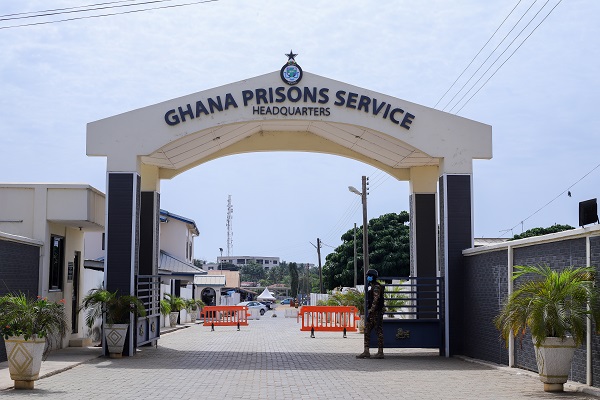
    The Fourth Estate wrote to the Ghana Prisons Service through the right-to-information (RTI) law requesting data, including the number of foreign inmates in the country’s prisons.

    From the data, out of the 893 foreign prisoners in the country’s jails as of July 2021, 314 were Nigerians.

    It means Nigerians constitute 35% of the foreign convicts in Ghana’s prisons and 2% of Ghana’s total prison population As at July 27, 2021, there were 13,200 convicts in prisons across the country.

    Country Prison population
    1.    Ghana 12,307
    2.    Nigeria 314
    3.    Togo 125
    4.    Burkina Faso 106
    5.    Niger 98
    6.    Benin 85
    7.    Cote dÍvoire 69
        8.Mali 34
       9.Liberia 19
       10. Zambia 4
        11. Tanzania 4
       12.  Kenya 3
      13. Guyana 3
       14. Cameroon 3
        15.Zimbabwe 3
        16. Uganda 3
        17. Sierra Leone 2
          18. Gambia 2
         19. South Africa 2
          20. Malawi 2
           21. Britain 2
           22. China 2
            23. Spain 1
           24. Morocco 1
           25. St Vincent 1
            26. United States 1
           27. India 1
           28. Malaysia 1
            29. Jamaica 1
            30. Venezuela 1

    Source: Ghana Prisons Service

    Although Chinese illegal miners are among the highest number of foreign suspects arrested in Ghana in recent times, there are only two in Ghana’s prisons.

    Ghana has no extradition treaty with China requiring that Chinese offenders in Ghana be repatriated to their country to face the law.

    Ghana’s Attorney-General and Minister of Justice, Godfred Yeboah Dame, made this position clear in May 2021 when he appeared on Joy Fm’s Newsfile programme.

    With Ghana reviewing its mining law in 2019, the Attorney-General was emphatic that, under the revised law, no Chinese citizen arrested for illegal mining would be deported.

    “The current laws do not countenance the extradition of any Chinese after the person has been convicted. So, you can be assured that the process will be followed to its conclusion and there will be conviction and they will serve their sentences in Ghana after which they will be deported if any.”

    At the time, he made this commitment, he said 45 persons, including 10 Chinese were under prosecution for engaging in illegal mining, popularly known as galamsey.

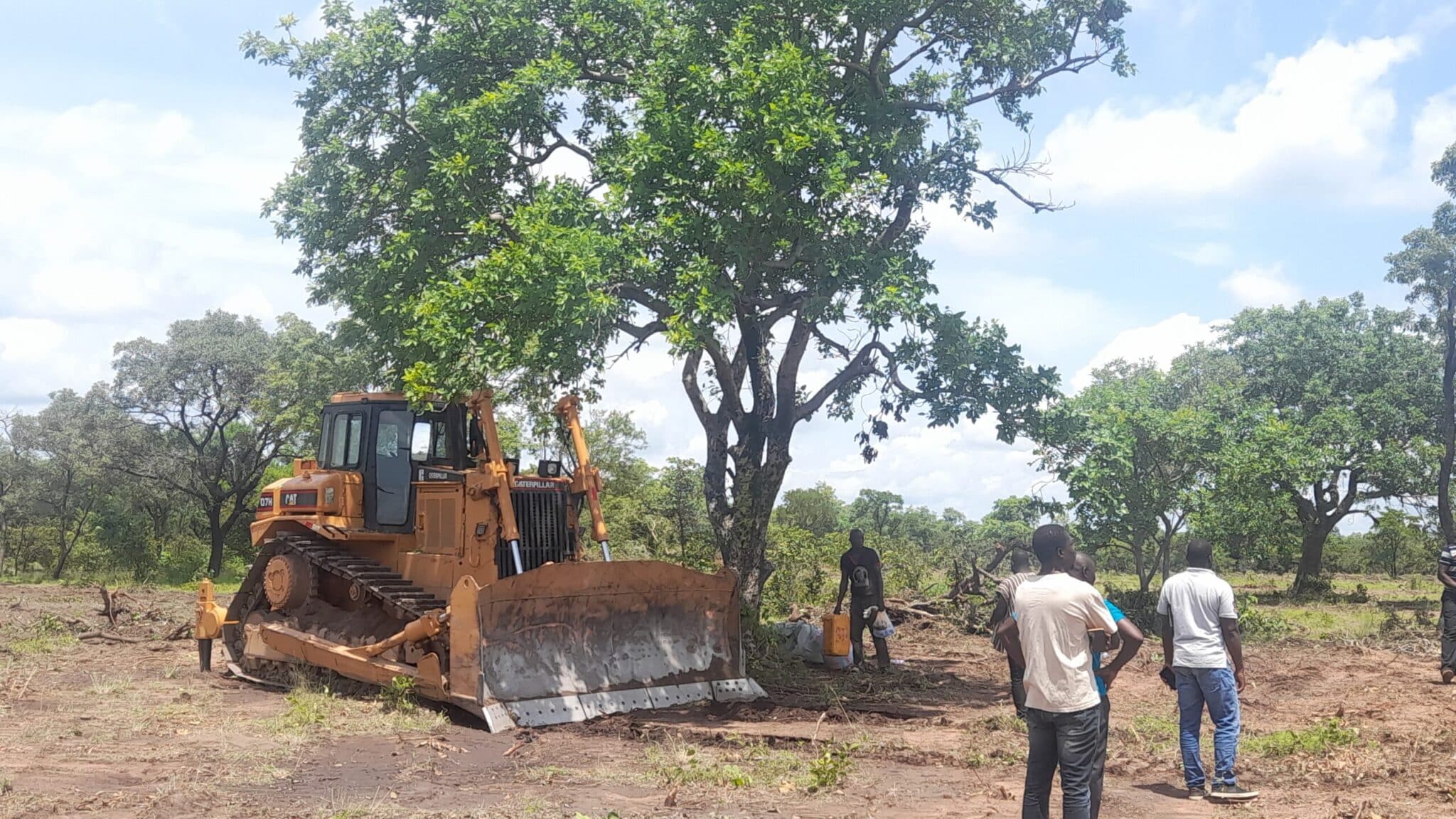
    Ghana’s water bodies and forests have come under intense attack from illegal miners who, with little regard for the environment, mine in water bodies or on river banks.

    Illegal miners have destroyed many water bodies in Ghana

    The environmental consequences have been devastating, according to experts. Traces of two heavy metals, arsenic and mercury, have been found in the country’s rivers in researches conducted by the Water Research Institute (WRI).

    These chemicals have been tagged as harmful by the World Health Organisation (WHO). Although the WRI found small traces of the dangerous chemicals in some of the water bodies, the WHO paints a deadly picture of the chemicals, saying even small amounts may cause serious health problems, and are a threat to the development of the child in the womb.

    Data for 2016, 2018, 2019 and 2020, which The Fourth Estate received from the Ghana Prisons Service through a right-to-information (RTI) request showed that 220 people were jailed for illegal mining offences. These were mainly Ghanaians and other West African nationals.

    Ghana’s renewed fight against illegal mining between 2017 and 2021 saw the arrests of hundreds of Chinese illegal miners either as sponsors or workers at illegal mining sites.

    However, statistics of foreign nationals in Ghana’s prisons, which the Ghana Prisons Service provided to The Fourth Estate, showed that as of July 2021, only two Chinese nationals were in Ghana’s prisons.

    This does not come as a surprise to many because some of the biggest Chinese culprits in illegal mining and illegal logging, whose arrests dominated national headlines for weeks, were set free under inexplicable circumstances.

    Ghana launches effort to restore landscapes and rivers damaged by illegal mining
    Although hundreds of Chinese illegal miners have been arrested in Ghana, they are can’t be found in the country’s prisons   Credit: Revitalisation

    Disappearing Chinese

    The prosecution of two Chinese women heavily involved in galamsey and the illegal harvesting and export of rosewood was surreptitiously aborted and the two were deported at different times.

    In July 2019, Huang Yanfeng, aka Helena Huang, who was standing trial for transporting large quantities of rosewood to Tema for illegal export to China, was deported and her prosecution was discontinued.

    The most infamous case that outraged the nation involved another Chinese woman who was described as the “galamsey queen”. En Huang, for that was her name, was arrested on May 9, 2017, together with her gang of four other Chinese nationals.

    However, on December 19, 2018, the Attorney General filed a nolle prosequi to discontinue the trial.

    She was also deported.

    The then Senior Minister, Yaw Osafo-Maafo, defended the decision during a townhall meeting in the United Kingdom, choosing economic diplomacy over the punishment of environmental crimes Aisha Huang committed.

    President Nana Akufo-Addo would later describe the decision as a mistake during

     “I think the decision to deport Aisha Huang, in hindsight, was a mistake and that is why that process and procedure is being stopped,” he told his audience at a forum in the United States in September 2019.

    The Ghana Immigration Service (GIS) has refused to respond to The Fourth Estate’s RTI request on the number of Chinese nationals who arrived in the country from 2012 to date and the number deported during the same period.

    The GIS told the United Kingdom’s The Guardian in July 2013 that more than 4,500 Chinese nationals were deported after a series of swoops on illegal goldmines in Ghana.

    YOU MAY ALSO WANT TO READ:

    Only two Chinese citizens in Ghana’s prisons despite hundreds arrested for illegal mining 

  • Anger as company clears 100-acre protected forest to produce beer

    Anger as company clears 100-acre protected forest to produce beer

    The Paramount Chief of Nakong, Pe Joseph Banapeh Afagachie II, said he had been stabbed in the back. He was talking to his council of elders and representatives of some state and nonstate institutions in the Upper East Region at his palace.

    There is a forest in his community. The forest is part of a restricted zone called Community Resource Management Area (CREMA). Pe Afagachie II was worried because a landowner in his chiefdom, Bukari Kobajei, had leased an estimated 100 acres of that forest to one of the leading beverage distributors in Ghana― Lesken Ghana Company Limited― to cultivate sorghum for commercial beer production.

    The educationist-turned-chief, aware of the consequences, expressed shock at how parts of the restricted forestland were released without his notice.

    The chief told the gathering he felt more disappointed because he had also found out that the agreement between the landowner and the company was facilitated by a member of his household.

    Pe Joseph Banapeh Afagachie II expressing strong reservations about the issue  at the meeting with his people

    Of great concern to him also was an official report that some economic trees had been knocked down in the process of preparing the land for the beer business.

    “A shea tree will take so many years to grow and to bear fruits. And you came and destroyed them in one day,” he said, choosing his words without hurry. “Do you destroy a baby to bring forth another baby?”

    The Little-known No-Go Area called CREMA

    The Forestry Commission of Ghana defines a CREMA as a “geographically defined area that includes a number of communities that have agreed to collectively manage their natural resources in a sustainable manner for their mutual benefits”.

    The CREMA initiative was established in 2000 by the government under the Ghana Forest Investment Programme (GFIP). The initiative is being sustained with funding from the World Bank to address Climate Change.

    There are six such areas within the Western Wildlife Corridor in Ghana’s north at present. The corridor starts from Burkina Faso and ends in Ghana, covering Ghana’s Upper East, Upper West, North East and Savannah regions. It is called the “Western Wildlife Corridor” in Ghana because it is a route used regularly by wild animals (including elephants) moving between Ghana and Burkina Faso and it lies on the left (western) side of Ghana. It is the opposite of the Eastern Wildlife Corridor that lies on the right (eastern) side of Ghana.

    Each of the CREMAs has a specific name as well as a number of communities under it and a CREMA Executive Committee (CEC) that protects it. The six CREMAs are named Builsa Yenning, Bulkawe, Chakali Sungmaaluu, Moagduri Wuntanluri Kuwomsaasi, Sanyiga Kasena Gavara Kara (SKGK) and Sissala Kasena Fraah. The Nakong Traditional Area falls under SKGK. The worried Paramount Chief is the patron of that CREMA.

    Environmental Activist causes arrests of five men inside SKGK CREMA

     Julius Atudeko Awaregya, an environmental activist, known to a number of nature conservation organisations in the world for his relentless campaign against misuse of the natural environmental, shares in the chief’s grief.

    He is in the front line of protests against the lease and the occupation of the restricted acres. On June 28, 2022, he and some officials of the Organisation for Indigenous Initiatives and Sustainability Ghana (ORGIIS-Ghana), a civil society agency he formed some years ago, led state security personnel into the forest.

    Five men, found clearing the land with two excavators for the company, were arrested and granted bail hours later at the Navrongo Divisional Police Headquarters. The culprits are Bismarck Agyei, John Awuni, Sebastian Afagachie, Kwabena Agyei and Cletus Akana. The activist told journalists about 15 acres had been cleared before the arrests cut the “illegal” operation short.

    The land has been reduced to nothing but bare ground

    “This is one of the six CREMAs within the Western Wildlife Corridor. The World Bank, through the Government of Ghana, spends $23 million each year for the creation of these CREMAs. And they have a second phase, which is now over 100 million dollars,” he told journalists.

    “All these monies I mentioned [are] not free, [are] not grants. They are loans the state takes to invest in the management of our natural resources. So, you’ll go and take [a] loan, invest in an area and, then, people will come and clear it in this manner― with impunity.”

    Communities leaders going over the CREMA map

    208 Economic Trees felled― Forest Services Division

    A report initially circulated that the acres the company acquired and cleared were within the Wildlife Protected Area. It turned out to be false when the Wildlife Regional Manager in charge of Ghana’s Northern Zone, Joseph Binlinla, confirmed it was rather within the Western Wildlife Corridor.

    Binlinla, who was part of the meeting at the palace, explained that the Wildlife Protected Area was a state property gazetted and protected by law. The Western Wildlife Corridor, according to him, is the opposite. He said it was owned by communities and was neither gazetted nor protected by law. He, however, added that government was interested in its protection and management.

    “If [the company] had gone to the Wildlife Protected Area, it would have been serious prosecution. The machines would have been set ablaze because it is against the wildlife laws of this country to get to a protected area with any machinery,” he told The Fourth Estate.

    Bulkawe and SKGK share boundaries as CREMAs. Some members of the 10 communities that are under SKGK say parts of the area acquired by the company are within the adjoining Bulkawe and the nearby Sissili Central Forest Reserve. None of the 15 communities that make up Builkawe has spoken to the issue yet. Meanwhile, the Executive Secretary of the SKGK’s CEC, Edward Allou Bagetewone, says the company will be sanctioned according to the CREMA Constitution.

    “Even if you are given whatever permits from EPA, from Forestry, from Wildlife, you still need to meet the CREMA for permission. Section 4 of our byelaws says no person shall at any time indiscriminately fell trees and uproot trees within the CREMA. For the categories of the trees that were felled, dawadawa (African locust bean) trees were there. We have also shea trees,” Bagetewone said in an interview with The Fourth Estate.

    He added: “Sanctions could be payment of fines, or we go to the law court. The farm falls within two areas― the on-reserve and the off-reserve. When you look at the map, the on-reserve is the forestry side and the off-reserve is our (CREMA) side. We are yet to meet as CEC. But we will come up with a report soon.”

    Meanwhile, a letter written to the company by the Forest Services Division (FSD) says 208 economic trees including rosewood, papao, shea and senya trees were destroyed. The FSD Manager in charge of the Kassena-Nankana Municipality, the Kassena-Nankana West District, the Builsa North Municipality and the Builsa South District, Emmanuel Owusu, told journalists the destruction was done outside the nearby Sissili Central Forest Reserve. He said the FSD had ordered the company― although it felled the trees outside a forest reserve― to pay a Gh¢44,161.70 fine for felling the trees without the FSD’s authorisation.

    Only a few trees are scattered on the land meant to preserve flora and fauna

    “Before you start the clearance,” an assistant programme officer at the Upper East regional office of the Environmental Protection Agency (EPA), Roger Yelsong Pondorh, told the company’s representatives in the meeting, “you have to get our permit.”

    “Because we have to come and inspect [to be certain] that where you want to [work] is not inside a forest reserve or close to a sensitive area,” he explained.

    “We didn’t know there was CREMA” ― Company

    The Manager of the company’s sorghum plantation project, Cletus Akana, told the gathering at the palace that the step the company took into the restricted land was a regrettable error.

    He said the company’s representatives had not come to the meeting to challenge anything said against the company by any stakeholders but to make amends wherever any wrongs had been committed by the company and to assist the community in charting a mutual way forward.

    Fielding questions from reporters at the palace, Akana explained that the company’s representatives followed due process in acquiring the land. He said the representatives’ first port of entry was the palace. The chief, according to Akana, said he did not own any land but suggested they look for those who owned land in the community. He said after a successful search for a landowner, they visited the land and expressed interest in it.

    He also stated that the contingent presented two goats, two sheep, two fowls, millet, tobacco and some other items the landowner reportedly demanded for the gods of the land. The gods, he explained, needed to be pacified with the items in accordance with the local tradition before any work could start on the land. He said the company was not CREMA-conscious as of the time it searched for the land, acquired it and cleared portions of it.

    “I believed that by seeing the landowner and giving the landowner animals to sacrifice to appease his gods meant he had given [us] the land. We didn’t know there was CREMA. We didn’t know there were a lot of stakeholders involved until this thing happened,” Akana said.

    “After our arrest and bail, we engaged the community and got to know that there was a society called CREMA. There were people in the community here who should know better and who should lead us. I think they didn’t play their part well― because they are from the community [and] they know that there is a society called CREMA. They should have directed us to see CREMA even before the landowner would give us the land.”

    Although Akana admitted the company hacked down some trees, he said the trees it felled did not have economic value. The landowner, an elderly man with a walking disability, told journalists at the palace he released the land because of chronic hunger. Leaning on a stick, he said he became too weak to farm on his own after he got injured in the waist while he was trying to pasture a cow in the community some years ago.

    “I gave the land to the company free of charge because of hunger. We agreed that they (the company) would always give me some of the produce they harvest from the farm from time to time to sustain my family,” Kobajei said.

    “The Mat is a Soothsayer” ― CREMA Chiefs

    Some four other paramount chiefs whose traditional territories are within the SKGK CREMA zone, from Upper East and Upper West regions, joined the host Pe Afagachie for the meeting.

    Three of the chiefs― the Paramount Chief of Kayoro, Pe Oscar Batabi Tiyiamu II; the Paramount Chief of Katiu, Pe Ayikode Zangwio Atoge IV; and the only paramount chief from the Upper West Region involved, Pio Sumaila Yakubu Batiadan II of the Banu Traditional Area― were at Nakong themselves.

    The other traditional leader―the Paramount Chief of the Builsa Traditional Area, Nab Azagsuk Azantilow II― was represented in the meeting by a retired National Commission for Civic Education (NCCE) regional director, Pontius Pilate Apaabey Baba.

    The words spoken by the visiting chiefs during the meeting were few. The Paramount Chief of Katiu observed that time was of the essence to the company because the rainy season― the most suitable period for the farm project to begin― would soon pass. He said it would do every party good if the executive committee could come up with a rapid report on its findings so the CREMA authorities could decide in time whether the company should remain or relocate.

    The Paramount Chief of Kayoro said the CREMA authorities needed more time on their individual “mats” for further deliberations before they could draw any conclusion on the matter.

    “The Lesken people realised that they have erred. We can’t just use today to finish the whole matter. A team will go to the area and come back and feed us with information. Then, we will draw our conclusion.

    “There is a saying that the mat is a soothsayer. We will all go to our mats or wherever we are going to lie and think about it. We will get another day and meet over the matter,” he remarked.

    The Navrongo Divisional Police Commander, Chief Supt. Yahaya Muchiraru, told The Fourth Estate a police team had inspected the cleared acres and returned with a report that the acres were not in any forest reserve.

    The Divisional Crime Officer, ASP Kingsley Dan Addah, said the police had asked the chiefs to deal with the matter at the community level since it was a CREMA issue. He, however, stated that “the case is not yet closed”.

    Pe Afagachie II still looked bothered as he, after the meeting, made his way slowly out of the palace in the company of his elders. And by the time the curious members of the community were leaving the palace, they could tell that their paramount chief had enough to worry about.

    INSIDE STORY: The faces behind five impounded Rosewood containers

  • Only two Chinese citizens in Ghana’s prisons despite hundreds arrested for illegal mining 

    Only two Chinese citizens in Ghana’s prisons despite hundreds arrested for illegal mining 

    On May 10, 2021, three men stood in the dock in the quietude of the Koforidua Circuit Court, awaiting their fate.

    Their options were limited. It was either freedom or prison.

    Alhassan Abass, 28; Ibrahim Mohammed, 45; and Munkaila Djebo, a 38-year-old Nigerian, had been on trial for three years, charged with conspiracy to commit crime and mining without a license— breaches of Section 99 (2) of the Minerals and Mining Act, 2006

    An anti-illegal mining (galamsey) taskforce had arrested the three at an illegal mining site at Tentenku No.8 near Kofi Pare in the Ayensuano District.

    They were among hundreds of Ghanaians and foreign illegal miners arrested in a crackdown on illegal mining, the degradation of forests and the pollution of water bodies with toxic chemicals including mercury and cyanide.

    In their defence, the three claimed they had nothing to do with the mining on the one and half-acre land that had contributed to the heavy pollution of the Ayensu River.

    They, therefore, pleaded not guilty to the charges.

    Court documents show that the first accused, Abass Alhassan, claimed he was an excavator mechanic hired to repair a broken-down excavator while the third accused, Munkaila Djebo, told the court he was there to sell shoes.

    But the prosecution made its case, proving beyond reasonable doubt that the trio were guilty.

    In the end, the presiding judge, Mercy Addie Kotei, found the three guilty and sentenced each of them to five years imprisonment.

    She also ordered that Munkaila Djebo, the Nigerian, should be deported after serving his sentence.

    In a case with similar facts but in a different location and  culprits, a Takoradi Circuit Court on June 9, 2021, jailed three accused persons—Joseph Donkor, Charles Ewusi and Joseph Paul. They were sentenced to 15 years each and also fined GH₵ 720,000.

    They were arrested in February. Within three months, their trial was over.

    The presiding judge, Abigail Animah Asare, described the sentence as lenient as she had given the minimum sentence of the law because the three convicts had cooperated with investigators and the court.

    Similarly, on May 10,  2022, the Daily Graphic reported that eleven persons who were involved in illegal mining in the Atewa Forest in the Eastern Region were given between five and 15-years jail terms.

    Data for 2016, 2018, 2019 and 2020, which The Fourth Estate received from the Ghana Prisons Service through a right-to-information (RTI) request showed that 220 people were jailed for illegal mining offences.

    These were mainly Ghanaians and other West African nationals.

    Ghana’s renewed fight against illegal mining between 2017 and 2021 saw the arrests of hundreds of Chinese illegal miners either as sponsors or workers at illegal mining sites.

    However, statistics of foreign nationals in Ghana’s prisons, which the Ghana Prisons Service provided to The Fourth Estate, showed that as of July 2021, only two Chinese nationals were in Ghana’s prisons.

    This does not come as a surprise to many because some of the biggest Chinese culprits in illegal mining and illegal logging, whose arrests dominated national headlines for weeks, were set free under inexplicable circumstances.

    Disappearing Chinese

    The prosecution of two Chinese women heavily involved in galamsey and the illegal harvesting and export of rosewood was surreptitiously aborted and the two were deported at different times.

    In July 2019, Huang Yanfeng, aka Helena Huang, who was standing trial for transporting large quantities of rosewood to Tema for illegal export to China, was deported and her prosecution was discontinued.

    According to the Ghana Immigration Service, Huang was deported for engaging in an illicit business.

    The most infamous case that outraged the nation involved another Chinese woman who was described as the “galamsey queen”. En Huang, for that was her name, was arrested on May 9, 2017, together with her gang of four other Chinese nationals.

    Aisha Huang, as she was popularly called, was charged with three counts of undertaking small-scale mining operations, contrary to Section 99 (1) of the Minerals and Mining Act, 2006 (Act 703); providing mining support services without valid registration with the Minerals Commission, contrary to the Minerals and Mining Act, 2006 (Act 703); and the illegal employment of foreign nationals, contrary to the Immigration Act, 2000 (Act 573).

    The other four accused persons were charged with disobedience of the directives given by or under the Immigration Act, 2000 (Act 573).

    This was two months into the heat of the campaign against illegal mining, a campaign championed by the Media Coalition Against Galamsey.

    Aisha was arraigned before the court on May 9, 2017, for engaging in galamsey activities at Bepotenten in the Amansie Central District in the Ashanti Region.

    However, on December 19, 2018, the Attorney General filed a nolle prosequi to discontinue the trial.

    She was also deported. Ghana has no extradition treaty with China.

    The then Minister of Lands and Natural Resources, Kwaku Asomah Cheremeh, provided an excuse that the government’s critics described as irresponsible.

    “Our discretion was to the effect that the trial of Aisha Huang should be truncated to afford her the opportunity to go to her country. That was in line with the laws of our country. The Attorney General is clothed with the capacity to enter nolle prosequi in respect of this matter,” Asomah-Cheremeh told JoyNews.

    In April 2019, the then Senior Minister, Yaw Osafo-Maafo, told Ghanaians at a town hall meeting in the United Kingdom that the government didn’t want to sacrifice its diplomatic relations with China.

    He said the Akufo-Addo administration intended to partner with China in key infrastructural projects, including the $2 billion Sinohydro deal.

    “Today, the main company that is helping develop the infrastructure system in Ghana is Sinohydro, it is a Chinese Company. It is the one that is going to help process our bauxite and provide about $2 billion to us,” he said in justification.

    “So, when there are these kinds of arrangements, there are other things behind the scenes. Putting that lady [Aisha] in jail in Ghana is not going to solve your economic problems.

    “It is not going to make you happy or me happy. That’s not important. The most important thing is that she has been deported from Ghana,” he added.

    President Nana Akufo-Addo would later describe the decision as a mistake.

     “I think the decision to deport Aisha Huang, in hindsight, was a mistake and that is why that process and procedure is being stopped,” he told his audience at a forum in the United States in September 2019.

    Aisha and Helena were not the only Chinese to have escaped the jaws of the law.

    On June 24, 2021, The Fourth Estate wrote to the Ghana Prisons Service through the right to information (RTI) requesting data including the number of foreign inmates in the country’s prisons.

    The service responded in a letter dated July 29, 2021. From the data, The Fourth Estate found that there were only two Chinese convicts in the country’s prisons as at July 2021.

    When The Fourth Estate followed up, the Prison Service later declined to provide the crimes that got the two incarcerated.

    The two Chinese in Ghana’s prisons is in spite of the hundreds of Chinese illegal miners arrested from 2013 to 2020.

    The Ghana Immigration Service (GIS) has refused to respond to The Fourth Estate’s RTI request on the number of Chinese nationals who arrived in the country from 2012 to date and the number deported during the same period.

    The GIS told the United Kingdom’s The Guardian in July 2013 that more than 4,500 Chinese nationals were deported after a series of swoops on illegal goldmines in Ghana.

    The Ghana Immigration Service at the time indicated that data from the Ministry of Lands and Mines at the time showed that 3,800 submitted themselves for voluntary repatriation in 2014 alone.

    It appears the deportations were not deterrent enough, for the Chinese illegal miners returned in their multitudes.

    From 2017 to date, figures from some media reports show at least 150 Chinese illegal miners were arrested in Ghana. They were arrested at mining sites in the Ashanti, Western, Eastern, Central, Western and Western North regions.

    Data release threatens national security

    In August 2021, The Fourth Estate again wrote to the Ghana Prisons Service requesting further details on the crimes the foreign nationals in the country’s prisons had committed.

    But the Director-General of the service, Isaac Kofi Egyir, declined to release the data after requesting a meeting with The Fourth Estate team.

    His reasons were that such information could compromise the security of the prisons and also that it also had the potential to undermine diplomatic relations between Ghana and countries with inmates in Ghanaian prisons.

    Although his predecessor, Patrick Missah, had released part of the information in July, Mr. Egyir said the release of such information was not in the interest of the country.

    The Fourth Estate wrote to the Attorney General and Ministry of Justice requesting information on cases in which the Attorney General had decided to discontinue the trial.

    The Fourth Estate found that of the 54 cases whose prosecution the state discontinued, none of them involved the cases of Chinese citizens, including the major ones involving the rosewood and the galamsey “queen”.

    The Attorney General, later did not respond to request for comment on the number of jailed Chinese in the country’s prisons.

    Taming Judges’ discretion

    To make the punishment for breaching Ghana’s mining laws stiffer, the Akufo-Addo administration amended the Minerals and Mining Act in 2019.

    The new law explicitly criminalises aiding and abetting illegal mining activities and the use of unapproved equipment for mining in water bodies.

    It also prescribes a minimum sentence of 15 years and maximum of 25 years for foreigners who engage in illegal mining.

    When he met members of the Council of State in September 2019, the president said the motive for the new law was more than making the punishment for illegal mining stiffer. It was also to take away discretionary powers of judges who were sometimes seen as an impediment to the fight against galamsey.

    The president said the reason was “largely because, with the greatest of respect, they are not cooperating on these matters. People are caught, taken to court and granted bail. And then at the end of the day they disappear.

    “All these Chinese people are caught, they have been put before court, granted bail, you don’t hear of it again only to hear that they have resurfaced in the country,” he said.

    “So, we felt it was important to take over the discretion of the judges. It is unfortunate that that should be so because all of us should be able to trust the judges also to do their bit in stamping out crimes and their consequences in our society,” the president said.

    Contrary to the president’s claim that the judges were allowing the Chinese miners to walk free, many of the deportations and discontinuation of prosecution were not ordered by judges. They were decisions taken and justified by the executive.

    In the case of En Huang and her countrymen, it was not a judge who discontinued the case. It was the President’s chief legal adviser at the time, Attorney-General Gloria Akuffo.

    The lure

    Ghana is one of Africa’s largest gold producers and is among the top 10 producers of gold globally—a reputation that makes it attractive for both blue chip companies and illegal miners.

    So massive is the foreign invasion that, in 2013, the South China Morning Post, for instance, estimated that the number of Chinese miners in Ghana, mainly from China’s Shanglin Province, in the gold hunt, was about 50,000.

    Illegal foreign miners have a rather sneaky way of entering the small-scale industry. It takes only seeing the chief of the mining area and paying the lease to him to get mining concessions which, otherwise, are prohibited by the law.

    Section 83 of the Minerals and Mining Act states clearly that foreigners cannot engage in small-scale mining.

    However, foreigners are allowed into the small-scale mining sector to provide ancillary support in the form of technical support to small-scale miners.

    However, in recent times, some of these foreigners including Chinese nationals mistake their licences to mean they can fully engage in illegal mining.

    In some cases, some of the legal small-scale miners only take the mining licenses only to front for the Chinese.