Author: Seth J. Bokpe

  • Ghana’s 2023 district-level elections: who cares?

    In the last few weeks, several national issues have dominated media headlines and public discourse. From the visit of the US Vice President to Ghana; the adrenaline rush by Ghana’s Parliament to pass the three tax bills; attempts by the National Democratic Congress (NDC) to torpedo the approval of six newly appointed ministers; to the failed attempt by the Electoral Commission to make the Ghana card the sole document for voter registration ahead of the 2024 national elections amidst takes on Ghana’s economy and the International Monetary Fund (IMF).

    For the key players in Ghana’s near political duopoly, the ruling New Patriotic Party (NPP) and the main opposition NDC, the elections clock for the presidential and parliamentary elections is automatically re-set immediately after the end of an election. Since 2020, they have been super busy strategising, chastising and competing with each other on all fronts.

    But there is the other bigger ‘vote’—the 2023 district level elections—which appears lost on us in the cacophony of all the “important” subjects. Ghana’s Electoral Commission has a major assignment this year to conduct elections for the renewal of the mandate of local assembly members and the election of new ones across the various metropolitan, municipal and district assemblies (MMDAs). But how much we know about this? Although the district level elections are expected to be held this year, the electoral hype has been on the 2024 presidential and parliamentary elections. There are many who do not even know that there is an election this year.

    Ghana’s District Assembly Elections Act of 1994, stipulates: “District Assembly elections (DLE) are held every four years and shall be held at least six months apart from parliamentary elections.” Be that as it may, district assembly elections in Ghana, have been held in 1988/89, 1994, 2002, 2006, 2010, 2015 and 2019; obviously showing a certain pattern by Ghana’s Electoral Commission, to hold the elections before the general presidential and parliamentary elections.

    While local level elections present the most practicable opportunity for citizens to participate actively in selecting their local representatives to the various MMDAs and contribute to local government decision-making, it has rather gained notoriety for apathy and disinterest. Consistently, the turnouts have been fluctuating, most of the time producing less than half of the turnout in presidential and parliamentary elections.

    Year Turnout
    1988/89 59.3%
    1994 29.3%
    2002 41.6%
    2006 33.1%
    2010 35.5%
    2015 30.6%

    It is more than 600 days to the 2024 presidential and parliamentary elections. However, the citizens’ interest in those elections is blazingly overshadowing the local level elections this year. One cannot blame the citizens entirely because the state institutions that are supposed to spearhead the district level elections appear disinterested in it.
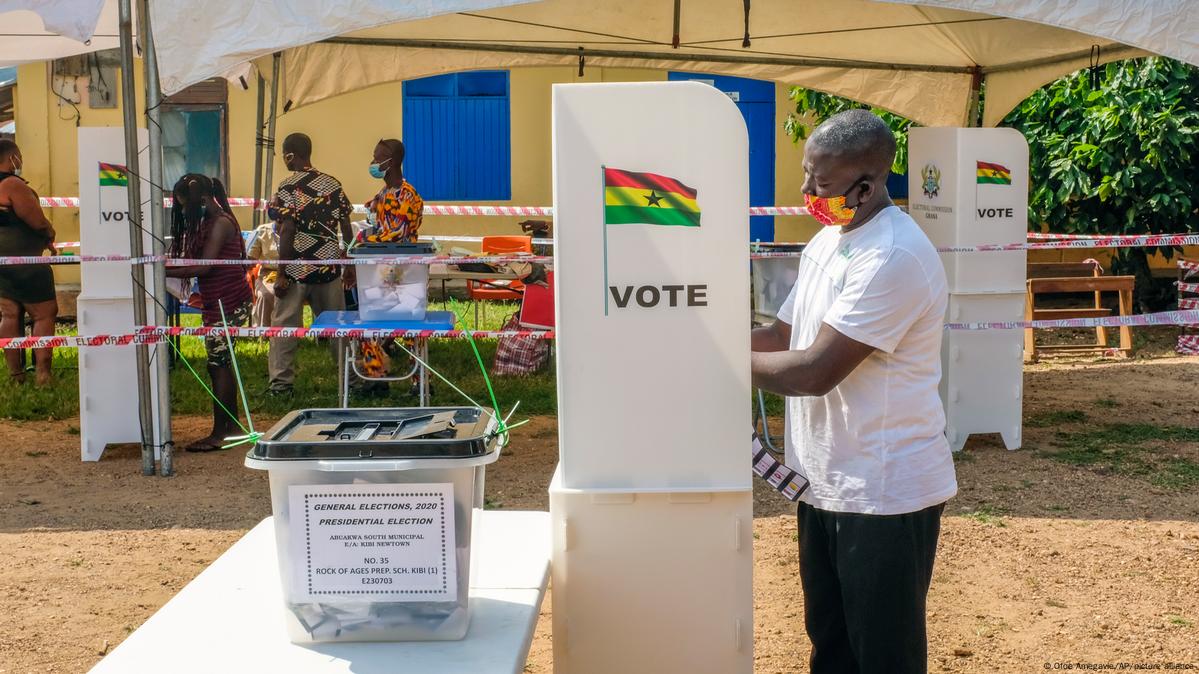
    Ghana votes in tight election – DW – 12/07/2020
    Unlike the presidential and primary elections, district-level elections attract low-voter turnouts.

    The Electoral Commission (EC) has the mandate to announce the date for the district level elections as well as the timelines for the processes leading to it. However, as of the time of this publication, there is yet to be any official announcement of the date for the 2023 district level election & timelines for electoral processes leading to the D-day except for grapevine reports that it could be held in October.

    For instance, the landing page of the EC’s website (as of April 21, 2023) shows only information on the 2020 presidential and parliamentary elections with a ticking time count down to the 2024 presidential elections. The EC’s 197.9k follower twitter handle and Facebook page have no post yet on the district level elections either.

    While this may not legally constitute a breach of the constitutional provision regarding the time frame allowed between the conduct of parliamentary elections, a 2015 report by the Ghana Coalition of Domestic Election Observers (CODEO) said,“Arguably, the absence of a specified timeframe for the conduct of the DLE [district level election], unlike the parliamentary elections may be a contributing factor for the EC’s laxity in preparations for the conduct of those elections.”

    For instance, in 2015, the district level election was postponed two times from the original date of November 2014, then to March 3, 2015, and then eventually on September 1, 2015. There is anecdotal evidence to suggest that when the elections were postponed, some female candidates lost the interest to re-contest when the polls were re-opened. Even in 2019, the November 26 date that was initially announced was later postponed to December 17.
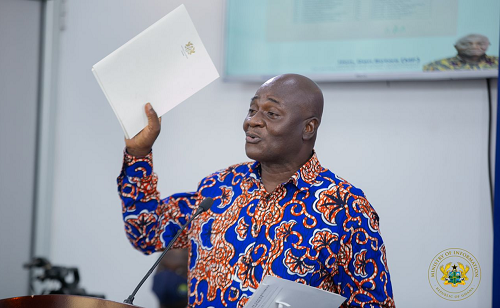
    The Minister of Local Government and Rural Development, Mr Dan Botwe

    Again, as of April 21, 2023, the sector ministry in charge of local governance, the Ministry of Local Government and Rural Development, had no information or message on the district level elections on its website. It is the same with the websites of Ministry of Information, the Local Government Service (LGS) and the newly created Ghana Today website by the Information Services Department. What is worse, about 90% of the websites and Facebook pages of the country’s 261 Metropolitan, Municipal and District Assemblies (MMDAs) who have a core mandate to ensure citizens participation in local governance, were yet to have any information or message on the district-level elections either.

    Among the many challenges contributing to the low-level interest in district level elections, democracy watchers observe that the loud silence of the 1992 Constitution on a specific date for district level elections as is the case with the presidential and parliamentary elections is worrying. Again, the EC’s dependence on the government’s financial support to conduct the elections remains a concern.


    There is no doubt that Ghana’s local government system requires reforms. Indeed, in 2019, the country failed in its attempt to amend Article 243[1] of the Constitution, which gives the President, the power to appoint all metropolitan, municipal, and district chief executives (MMDCEs). The amendment was to make these positions elective. A referendum to seek citizens’ support to amend Article 55[3] of the Constitution (an entrenched provision), which bans political parties from participating in local level elections and making such elections partisan, was also suspended. In a graphiconline publication of August 2020, a former local government minister, Hajia Alima Mahama, said the NPP government would ensure the partisan election of MMDCEs in its second term in office.

    Ironically, a 2021 survey by CDD-Ghana on citizens’ support for the election of MMDCEs showed that more than seven in 10 Ghanaians (76%) favour the election of MMDCEs while Seventy-one (71%) percent of Ghanaians said they prefer that MMDCEs be elected on a non-partisan basis.

    While we await such weightier reforms to take place, the mandated national institutions, civil society, the media and citizens should continue to engage the discourse on local governance processes. Can the Electoral Commission proceed to make public the date for the 2023 district level elections early enough to allow citizens to prepare and actually participate?

    Can MMDAs, as part of their mandate to ensure citizens’ participation in local governance, team up with the National Commission for Civic Education (NCCE) to utilize their communication and information dissemination platforms to sensitise citizens and create more visibility and awareness about the elections? Can the media consciously incorporate conversations about the District Level Elections on their platforms early enough? This is not only important, but it is also our collective civic responsibility.

    The writer, Abigail Larbi, is the Programme Manager, Media & Good Governance at the Media Foundation for West Africa, Accra Ghana. She can be reached at [email protected]
  • Journalist in custody for publishing “false news” about McDan


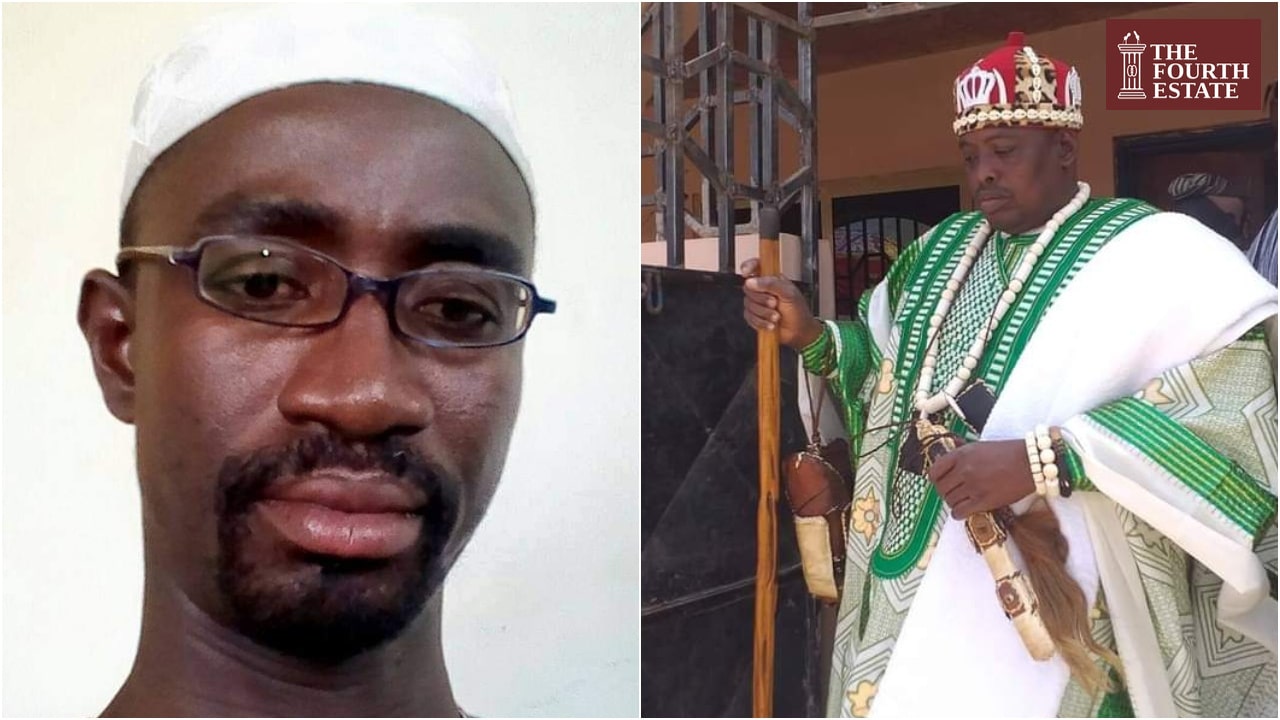
    The Tema Circuit Court has remanded the Deputy Station Coordinator of Radio Ada, Noah Dameh, for publishing “false news” about businessman Daniel McKorley (McDan), whose company has been given the concession to mine salt in Ada.

    Noah was remanded in the custody of the Tema Habour police on March 30, 2023, and is expected to reappear before the court on April 13, 2023.

    His lawyer, Samuel Ofosu, told The Fourth Estate that after Noah was discharged in December last year because the court lacked jurisdiction in dealing with the charges proffered against him.

    He was charged with the publication of false news contrary to section 208 of the Criminal Offences Act, 1960 (Act 29).

    However, immediately after he walked out of the courtroom, the police arrested him and granted him a police enquiry bail.

    “Curiously, they had refiled the case under a different section of the law which makes publishing false news a misdemeanour,” the lawyer said.

    “Apparently, they had appeared before the court three times. The difficulty here is that we had no notification of this second suit because if we had, we would have appeared in court, as we’ve done in the earlier suit. Mr Dameh has always appeared in court to stand trial,” he said.

    After the police failed to notify him of their latest case against him, Noah’s lawyer said they had an unusual call to action.

    The person who stood surety for Noah was served a notice ordering him to produce Noah in court on Thursday, March 30, 2023.

    That was done. However, the court remanded him.

    Noah’s colleague at Radio Ada, Gideon Amanor Dzeagu, who is also the Head of the Programme, told The Fourth Estate that the police prosecutor had alleged in court that “he went looking for Noah on two occasions in Ada but did not find him.”

    Based on that, the prosecutor asked that Noah should be remanded so he could be at the next court session.

    The presiding judge agreed and Noah has since been in police custody since Thursday.

    The Facebook post 

    Noah Narh Dameh had made a post on his Facebook wall about the sidelining of indigenous salt miners by some Chiefs of Ada and Daniel McKorley (McDan), whose company has been given the concession to mine salt in Ada.

    Daniel McKorley is the founder of Electrochem Ghana, a subsidiary of the McDan Group. Electrochem Ghana now operates the defunct Songor salt factory.

    Noah Narh Dameh’s Facebook post on May 8, 2022, had a picture of McDan and a young man in bandages and handcuffed to a hospital bed. The post incurred the displeasure of Mr McKorley, who reported it to the police.

    The police subsequently invited Mr Dameh, who is a co-host of the Manor Munyu current affairs programme on Radio Ada, for questioning.

    According to the police facts sheet sighted by The Fourth Estate, “…the news posted was false and because the accused person attached the photograph of Dr. McKorley his life is in danger within the community where his company undertakes project.”

    It said when Noah Dameh was invited to the police station, “he could not justify why he posted the news with a photograph of Dr. Daniel Mckorley on his Facebook wall…”

    Below is the text Noah posted with the photograph:

    Reflection:
    Must our people suffer torture and bullet wounds for speaking against their source of livelihood that is being grabbed from them?

    What is preventing Daniel McKorley – McDan from going into vegetable and livestock farming as he stated but rather removing the hands of Ada people from their cultural salt-winning business to farm as alternative livelihood.

    Must the Nation’s human right activists continue to remain silent because McDan is more powerful than the laws of Ghana, groups and individuals?

    Must the people of Ada take the law into their own hands to take back their source of livelihood because of hunger and ordeal they are going through?

    Nene Lomo IV, Chief of Ada Lomobiawe division,
    Nene Agudey Obitchere III, Manklalo of Ada and Naana Adikie Adi, Queen mother of Adibiawe division, to ask, were you installed by your people as PROs for McDan and his ElectroChem salt production company or you have been installed to serve the interest of your people?

    Is it best to mandate one person to control salt for the entire nation?

    For how long will you use the National media to throw dust into the eyes of Ghanaians and the international world.
    ………………………………………………..
    You are compressing peoples anger into a glass bottle and when it explodes, it will not go well with Ghanaians.

    McDan can not feed over 15, 000 salt winners, producers and sellers in Ada as you are proclaiming on the commercial media.

    You are accountable for the peoples inheritance, their livelihood, culture and habitat that is being snatched by McDan through your support.
    #AdaSongorLagoonAssociation

    The charge sheet stating the particulars of the offence,which the police presented to the court, reads:

    “Noah Narh Dameh, journalist: On the 8th of May 2022, at Ada in the Tema District and within the jurisdiction of this court, you made a publication on your Facebook wall and displayed the photograph of Dr Daniel Mckorley and one Benjamin Anim in handcuffs at Dzodze Hospital and attributed the said Benjamin Anim in handcuffs at the hospital as an action undertaken by Dr Daniel Mckorley, news which you well know to be false at the time of publishing it.”

    In his statement to the Police, Noah Dameh recounted that Benjamin Anim, the young man handcuffed to the hospital bed, tried to prevent the abduction of a fellow community member who was struggling with some men suspected to be land guards. The suspected land guards were said to be forcing Benjamin into a private vehicle.

    “On Friday, 14th May 2021, at about 2:00 p.m., Benjamin Anim was on a motorbike heading to the Wudakope lagoon site, otherwise known as Star Chemical,” Noah said in a typed statement to the police.

    “On reaching the site he found one of his fellow Salom community members, Peter Anim, struggling with four men who were forcibly putting him into a private Opel vehicle with registration number GW 8486-11 to be driven away.

    “Benjamin Anim suspected the men to be among the land guards and men in police uniform who shot at community members at Salom and Madagber on the 5th of February 2021, when the community members raised issues over the Songor lagoon lease awarded to Electrochem company,” part of the statement said.

    ALSO READ: Ada Traditional Council bans Radio Ada from covering 2022 Asafotufiami Festival

    He told the police that when Benjamin Anim rushed to rescue his fellow Salom community member, he hit his hand against the vehicle and sustained cuts in the process. He said Benjamin later sought medical attention at Sege and later asked for a referral to a health facility at Dzodze.

    According to Noah Dameh, the District Police commander for Sege, DSP George Aboagye, and five others on May 16, 2022, handcuffed Benjamin to the hospital bed for five weeks without access to lavatory.

    “As a result, Benjamin Anim sustained a sore patch of the skin around his wrist where the handcuff was worn for many days. Again, lying on his back only for all the five weeks resulted in his back developing sore,” he narrated in the police statement.

    Benjamin Anim was put in police cells in Dzodze and later arraigned before a court in Tema. Together with other community members, he is facing trial for allegedly destroying the property belonging to ElectroChem company, the company owned by McDan.

    A photograph of Benjamin handcuffed to a hospital bed and that of McDan were put together in the Facebook post that got Noah into trouble.

    There have been protests by residents of Ada who say their livelihoods were taken from them when the salt they had mined all their lives was given to McDan’s ElectroChem.

    Some of the residents have been arrested and are now facing various charges and prosecution.

    Noah Dameh’s Radio Ada, which has championed the cause of the indigenes was attacked and vandalised by thugs in January this year. The attackers are yet to be arrested.

    In August 2022, chiefs of the Ada Traditional Area banned Radio Ada from covering the traditional festival of the area.

    Noah Dameh and two others were specifically warned to stay away from the grounds of the festival.

  • High Court judge convicts paramount chief’s secretary and another chief over attempts to influence him

    High Court judge convicts paramount chief’s secretary and another chief over attempts to influence him

    When the Acting Upper East Regional Supervising High Court Judge, Justice Alexander Graham, asked the two men in the dock to tell the court what their mission was for visiting him earlier that morning in his chambers, they could not utter a word.

    The two men, Richard Sunday Yinbil, the Secretary to the Paramount Chief of Talensi, and Naab Nyakora Mantii, Chief of Baare in the Talensi Traditional Area, on Friday, March 10, 2023, went to see the judge behind closed doors.

    They reportedly went to the judge at the behest of the Paramount Chief Talensi, Tongraan Kugbilsong Nanlebetang, who doubles as a member of the Council of State.

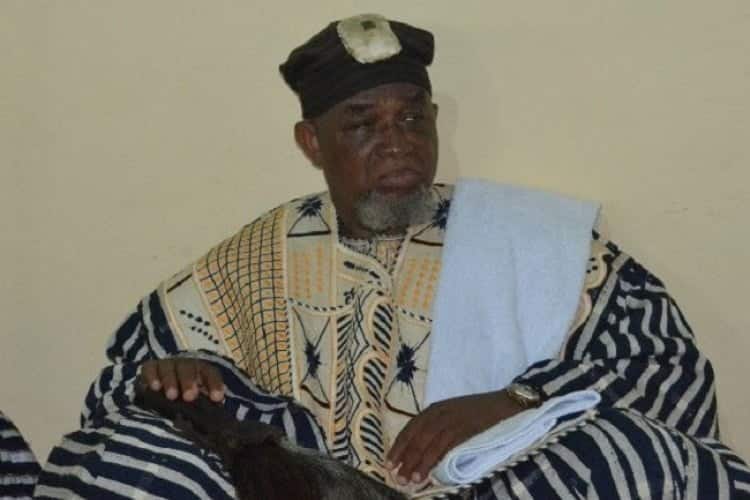
    Paramount Chief Talensi, Tongraan Kugbilsong Nanlebetang, Credit: A1 Radio

    The judge, however, caused their arrest after they had stated their mission for visiting him.

    They were subsequently arraigned before the Bolgatanga High Court 2 and charged with contempt of court for attempting to influence the judge.

    Mr. Yinbil and Naab Nyakora had been reportedly sent by Tongraan Kugbilsong Nanlebetang to invite Justice Graham over to his palace for a discussion regarding some mining-related cases, most of which involved Earl International Group (Ghana) Gold Limited formerly Shaanxi Mining Limited, pending before him.

    The discussion was to supposedly help the judge better understand the issues before him for determination.

    Infuriated by this, Justice Alexander Graham caused their arrest and subsequently arraigned them before the court.

    Justice Graham said the action of the two men was an attempt to compromise him and therefore, charged them with contempt of court.

    He noted that he had, on several occasions, issued warnings against attempts to circumvent the judicial processes as it had become a common practice in the region for parties of cases pending before the court to seek to influence presiding judges by visiting them privately.

    Mr. Yinbil and Naab Nyakora pleaded guilty when the charges were read to them.

    But the judge demanded that the two produce the Tongraan in court before their convictions. A number of lawyers, who were present at the time waiting for their cases to be called, had to intervene and pleaded on behalf of the two accused persons.

    The judge then proceeded to convict them on their own plea and ordered that they sign a bond to be of good behaviour for six months. The convicts were, however, held in custody till around 4 pm in the evening before they were handed over to the Upper East Regional Police Command, where they were expected to sign the bond of good behaviour under police supervision.

    One of the lawyers who pleaded for a lenient punishment for them, Abdulai Jalaldeen, told The Fourth Estate the action of the two men was against the principle of justice.

    He, however, said the two, whom he knows personally, were ignorant of the law and merely acted as messengers of an authority whose request they could not have turned down even if they were aware of the consequences of their action. This, he said, prompted the lawyers’ decision to plead on their behalf for a noncustodial sentence.

    Mr. Yinbil, declined to comment on the matter when The Fourth Estate contacted him. He, however, accused an anti-graft group, National Patriots Against Injustice and Corruption (NAPAIC) Ghana, which issued a press statement on the matter, of distorting the facts of the matter. He added that the Tongraan would respond to the issues “at the appropriate”.

    Lawyer for Tongraan, Mohammed Nambe, who was said to have apologised to the court on behalf of the Traditional ruler, also declined to comment on the matter when The Fourth Estate contacted him but stated that he only discharged his duty as an “advocate”.

    This is not the first time the Traditional ruler and member of the Council of State Member has been involved in a case of this nature.

    In 2019, his name popped up in a leaked tape in which a former minister of state, Rockson  Bukari, was heard allegedly talking to a journalist over a story involving the Shaanxi Mining Limited, located in the Talensi area.

    Mr. Bukari resigned following the incident and the judge recused himself when the case was brought before him at the Bolgatanga High Court. The Traditional ruler denied his involvement in any attempt to influence the journalist to drop the story.

     “The Tongraan is unaware of any matter that has to be ‘killed’ in favour of Shaanxi Mining Ghana Limited for which he has any interest. The Tongraan does not and will not support any illegal conduct by any of his subjects or company operating in the area or stand in the way of genuine exposure of wrongdoing by the media,” a statement from the chief’s palace said.

    NAPAIC Ghana, a Bolgatanga-based anti-corruption pressure group, commended Justice Graham for resisting attempts to compromise him and taking action on it.

    “We at NAPAIC-Ghana see the development recorded today within the Judicial Service of Ghana as one of the best actions led by a judge in the Upper East Region, and we humbly ask of him to do more,” a statement signed Akobulgo Zotipeliba Ayeo, the vice-president of the group, said.

    The group also appealed to the Chief Justice “to identify good judges like His Lordship Alexander Graham and award them enormously to serve as motivation for others to emulate”.

    YOU MAY ALSO WANT TO READ:

    8 Judges rush to declare assets after The Fourth Estate letter 

  • Husband of pregnant woman shot in her sleep found guilty of attempted murder

    A seven-member jury has found Effort Dankwa guilty of attempted murder for shooting his pregnant wife in her sleep.

    Benita Dankwa woke up on August 29, 2015 “feeling like a balloon” only to realise she had been paralysed. The police later found a bullet, shot through her chest at a close range, in the couple’s mattress.

    Her husband, Effort Dankwa, was the prime suspect.

    The jury, made up of six men and a woman, returned a 5-2 guilty verdict after an initial 4-3, “guilty” verdict. The judge explained that if it wasn’t an offence punishable by death, a unanimous decision was not required. However, it ought to be at least 5-2 for a guilty verdict to be arrived at.

    The jury went back and returned shortly that the verdict was now 5-2.

    The face of Effort Dankwa, which had lighted up after the initial verdict, turned blank after the second verdict was announced by the female member of the jury.

    The judge ordered he should be placed in police custody awaiting his sentencing on Tuesday, March 14, 2023.

    The parents of the victim Benita Dankwa, who was paralysed from her chest downward  said they were happy that justice had finally been served.

    “It is not the number of years he is going to spend in prison that matters to me, but the fact that he has been proven guilty is my main interest. I am satisfied and okay with the court,” her father, Seth O.S. Yirenkyi, told The Fourth Estate.

    Her mother said she felt relieved. “My heart is at peace and comforted by God’s word that patience begot victory. Jehovah is a lover of justice. If, after all these years, they have investigated and found that he is guilty, then that is God’s verdict. It isn’t that I am happy nor sad. My daughter is forever incapacitated, but the truth has been unveiled,” she said.

    The jury’s verdict came seven years after Effort, then 36 years, was arrested after police investigations identified him as the prime suspect in an attack on his wife, Benita Dankwa, then 29.

    The Fourth Estate’s Editor-in-chief, Manasseh Azure Awuni, who broke the story reported that Benita was eight months pregnant at the time.

    She was shot in the chest, in what she believed was an attempt by her husband to kill her.

    She did not die, but the attack left her paralysed and incapable to pass urine or faecal matter the natural way.

    She was first taken to the Tema General Hospital because her husband failed to mention she had been shot. The doctors at Tema General Hospital referred her to the Korle Bu Teaching Hospital after noticing the gunshot wound.

    “On August 29, 2015, when the nurses saw me, they said this is a gunshot, so they have to report the case before they operate on me,” Benita said.

    She was advised to get a police report. Her husband who was in the room with her when she was shot claimed he never heard the gunshot. He also failed to report the matter to the police when his wife’s family asked him to do so. Benita’s brother eventually went and reported to the police.

    He was arrested, detained briefly, and released on bail. A family friend who feared the case might die reported the case to Manasseh Azure Awuni, who produced a documentary on the matter that shocked a number of Ghanaians.

    Effort Dankwa was rearrested and charged with attempted murder. He denied the allegation and claimed some armed robbers from Ashaiman might have been responsible for the shooting.

    Investigations showed there was no break into the house the night of the attack and the only person Benita spent the night with was her husband.

    Effort Dankwa was arrested in 2016 after police investigations identified him as the prime suspect in an attack on his wife.

    During the proceedings, Benita told the court that she was convinced her better half perpetrated the act because he did not want a child.

    “I wanted to have kids, but he said he didn’t want kids before and during the course of the marriage,” she said in her evidence to an Accra High Court.

    She told the court that her husband appeared to care less about her pregnancy.

    The bloody towel

    According to court documents, a day after the incident, Effort Dankwa, allegedly asked his wife’s cousin, Priscilla, to clean the crime scene.

    While Priscilla was doing the chore, she claimed she saw a towel soaked in blood hidden under the bed. She said she immediately identified the owner of the towel because Effort had always used the said towel for bathing.

    Describing the towel, Priscilla said it was a green towel with flowers and three red dolls imprinted on it. According to her, when she showed the bloody towel to the accused, he asked her to throw it away.

    “When the accused told me to throw it away, I didn’t. I added the towel to the other things and took them to Community 8. There, I washed all the things but left the towel.

    “I told my mother that the accused had asked me to throw it away, but she asked me to wash it because we can still use it as a rag. There was so much blood that I had to rinse it twice after washing,” she said.

    Watch the full documentary on the shooting of Benita Dankwa here:

  • CHAINED: Helpless families, communities troubled by untreated mentally ill persons

    Around midnight of February 5, 2016, a mentally ill young man, Kingsford Akagiire, unleashed a sudden attack on his mother, Atampoka Akagiire, at the family’s home in Zorkor, a community in the district.

    While his mother was asleep, he appeared on the cemented compound of the house and smashed her head with a stone.

    “The stone was so huge he must have lifted it with both hands before he crushed her head with it,” Kingsford’s elder brother, Clement, told The Fourth Estate.

    The 52-year-old woman was rushed to the Bongo District Hospital in an unconscious state and referred to the Tamale Teaching Hospital for a head surgery, according to Clement. She died in Tamale on June 16, 2016.

    “He just returned from the Zorkor market that night and carried out the attack,” Clement recalled. “Our mother was sleeping on a mat outside at the time because there was heat in her room.”

    “Seeing the blood spilling out from our mother’s head and a crowd gathering around, he realised that his action had stirred up anger and so he fled the house immediately.”

    Inside a two-room old mud house a few metres away lives another woman, 75, who was almost burned alive in 2019 when his mentally ill son, Atampubire Ayambire, set fire to the house.

    The woman, Azaare Ayambire, told The Fourth Estate she was traumatised because the actions of her 42-year-old son were posing danger to her life.

    She said the latest attack came at dawn on December 31, 2022, when he whacked her on the waist with a stick.

    “After he set the house on fire, I became more frightened and resolved to leave the house. I packed my belongings,” she told The Fourth Estate. “But I reconsidered the decision because I couldn’t go and leave a biological son behind in his condition.”

    Standing in front of the partly burnt house with the same stick her son had used to hit her waist, Madam Azaare said she hardly had enough sleep because of fright.

    “He is often emotionally charged. He can be in that mood all night, walking up and down in the house, talking loudly to himself and acting violently.

    “I hardly close my eyes on such occasions for fear that he might break into my room and attack me. This prevents me from getting enough sleep almost every night,” the old woman added, her voice quavering. Her son was wandering in the main market at Zorkor at the time.

    Scared families resort to chains to avert attacks

    Anaba Azure

    Mental healthcare givers say most of the mental health cases in the district are due to drug and substance abuse. There are oral medications and jabs at health facilities in the district for treating mental illness.

    The costs of the medications and injections vary. Depending on the medicine and the brand, they range from Gh¢30 to Gh¢200, or more.

    The medications and jabs are administered periodically, generally every month, until the illness is treated. Several families in the district cannot afford them.

    Poor families, whose mentally ill relations are aggressive, mostly resort to chaining them up to prevent them from causing harm to life and property.

    Several mentally ill persons are in chains in the district. No fewer than five mentally ill people, two of whom have been in shackles for years, are regularly seen in ragged appearance at the district’s central market.

    One of them, a shaggy-headed man called Anaba Azure, gained notoriety for attacking people at the central market and on the streets before his feet were shackled.

    “We don’t have the money to treat him. When his violent attacks on people in public places got out of control, all we could afford was a chain,” said Anaba’s auntie, Akiske Azure.

    “We got some men who overpowered him and chained him. Even with the chains on his feet, he is still dangerous. We fear to go near him to change his clothes.”

    Apodola Abenaba is shaggier than Anaba. Both his hands and feet are in chains. He frequents the central market, begging traders for food. He eats from the market’s dustbins when nobody seems to have any food to spare. He was chained up after he unleashed a string of attacks on people, including one attempt on his mother.

    Apodola Abenaba
    Apodola Abenaba

    “One night, he attempted to beat me. He was holding a stick. I told him to let me lie down so he could kill me because already it was no use for me to live a life which had been rendered meaningless by his condition,” his mother, Asampana Abenaba, told The Fourth Estate at Anafobiisi.

    She continued: “He was raising the stick; then, he paused and stared at me. After a while, he threw the stick away and left the room.”

    The chain on Apodola’s feet, which he has worn and walked with everywhere for many years, has peeled off parts of the underlying skin around his ankles. He is often seen using his chained hands to scratch around the bruises inflicted on his ankles by the itchy chain on his feet.

    “I weep each time I see my own son at the market this way. He was extremely violent, hurling stones at people and vehicles. We had to chain him as there was no money to treat him,” said his mother.

    Similarly, Kingsford, the mentally ill young man who committed matricide at Zorko with a stone, was later captured and chained in both hands and feet after that attack.

    Mentally ill man warns parents

    Kingsford-Akagiire-was-chained-up-after-he-killed-his-mother
    Kingsford Akagiire was chained up after he killed his mother

    A mental health nurse at the Zorkor Health Centre, Norbert Akayeti, observed that families were resorting to chaining up their mentally ill relations not only for the safety of the public but also for the protection of the mentally ill.

    He cited an example of a mentally ill young man who once attempted to take his own life in a dam at Zorkor but was obstructed by somebody who saw him heading towards the dam.

    He was later put on treatment at home. But while undergoing treatment, one day he told to his parents that he had plans to physically harm people or himself sooner or later. After putting his parents on the alert, he also urged them to chain him and lock him up in a room to avert the intended attack. Although his parents took the warning into account, they delayed in putting preventive measures in place.

    Soon after the warning, he appeared at the door to his parents’ room and, with a threatening tone, demanded that his father come out.

    “The father was fortunate that the door was locked. When I visited the house later, he was in chains. Nobody can convince the family to release him.

    “Meanwhile, the same area has a history of a mentally ill person drowning himself in water. Mentally ill persons are dangerous to themselves, too,” said Akayeti, adding that at least five mentally ill persons were in chains in Zorkor alone between 2019 and 2022.

    Akayeti said he did not subscribe to the idea of keeping mentally ill persons in shackles because it was a violation of their human rights. But he admitted that there was a limit to how far mental healthcare givers could go in persuading some families to avoid the use of chains and focus on medications alone.

    After taking his mother’s life, Kingsford initially did not receive any medical treatment as his family could not meet the cost. He kept struggling in shackles in the streets of Zorkor, mostly wearing only a particular pair of underpants everywhere, until Akayeti put him under medical treatment, the nurse footing the bills himself. When The Fourth Estate visited Kingsford on December 31, 2022, he was not in chains. He was found weaving straw baskets for sale.

    “While I make sure he (Kingsford) takes the oral medication or the jab every month so that he does not relapse at any point, I also expect that the family would do away with the chains,” Akayeti told The Fourth Estate.

    “But the family does not want to take chances. I shouldn’t force them, either. I want to avoid a situation where I would be blamed should anything unpleasant happens.”

    Some years ago, a mentally ill man died of malaria while in chains at Namoo, one of the district’s border communities. His death drew not only sympathy from a section of the public, but also condemnation over the neglect he suffered.

    Clement said the shackles posed restrictions to his brother and stigma to the family. He said he wished Kingsford regained his freedom, but there was little or nothing he could do because the decision to tie him down was a collective one.

    “I feel sorry to see him this way. He was a brilliant student at Bongo Senior High School. He completed there with good grades in his final exams.

    “Nobody knows what caused the mental disorder all of a sudden,” he said.

    Several individuals in the district are in the same dilemma as Clement. They maintain they resorted to the use of chains because they had nowhere else to turn.

    The Assembly Member for Tarongo/Atiabiisi, Patrick Aduko, said he had tried to seek help for Kingsford but his efforts yielded no result.

    “I went to the social welfare office in Bongo. They promised to work on it. I followed up but nothing has come out of it,” he stated. “These are not issues we can go to bed and sleep over. When hallucinations set in, they can kill. Authorities, including mental health organisations, need to act now.”

    Assembly Member for Tarongo-Atiabiisi, Patrick Aduko
    Assembly Member for Tarongo-Atiabiisi, Patrick Aduko

    Aduko’s call was reaffirmed by the Assembly Member for Kanga, Prosper Atogyire, who said he sympathised with Atampubire but feared for the lives of those who lived close to him.

    “It’s very serious. I feel sorry for him and the family. The trauma that the mother and the auntie are going through is very pathetic. He has been beating them. His brother’s wife came to stay in that house.

    “She was pregnant. He beat her up. She has run to a different place. He has broken all the walls around the house. I fear for their lives. His case needs urgent attention,” he said.

    “The youths are the most affected”

    The Assembly Member for Atampiisi, Asampana Mba.
    The Assembly Member for Atampiisi, Asampana Mba.

    Speaking to The Fourth Estate, the Assembly Member for Atampiisi, Asampana Mba, said his electoral had a high number of mentally ill persons.

    “In my electoral area alone, there are about 12 people I know as having mental disorders. Some of the mentally ill people are breadwinners in their families. You see them roaming, unconscious of where they are and causing problems for their families. The youth are the most affected. They need to be taken to the hospital and given drugs.

    “But some families cannot afford the drugs because they are poor. I want to appeal to the Government of Ghana and the Ghana Health Service to come to the aid of these families, at least, by supporting them with drugs. I believe they will become normal and help society if they get the drugs,” he said.

    Felix Giba, another mentally ill man, lives in the same electoral area, near the Bongo District Assembly. His brother, Peter, told The Fourth Estate that Felix was a successful kola-nut businessman until his goods were seized twice at a border checkpoint in the late 1980s.

    “He became frustrated and developed mental illness following that experience between 1988 and 1989. He still sells kola-nuts at the market but this time on a small table.

    “Sometimes, he abandons the kola-nuts on the table and starts roaming everywhere. Then, he returns home at night and starts talking alone. His condition surfaced gradually and grew to this point. We are afraid it might get worse with time if we don’t get help,” Felix said.

    Another mentally ill person, Asale Atanga, lives in Atampiisi. His wife, Ndigura Atanga, told The Fourth Estate her husband’s illness began in 2014 when he returned home from the market, screaming while claiming that he was being chased by an imaginary aircraft. He reportedly kept pointing at the skies as he ran zigzag on the compound for cover in front of a bewildered family. According to his wife, nobody else but Asale saw the alleged aircraft.

    “Since then, I have remained the family’s sole breadwinner,” Ndigura said.

    She was sitting on the cemented compound of the family’s house and removing shells from a small heap of groundnuts by her side. Her husband sat a few inches behind her, interrupting her speech and voicing words that had no clear meaning.

    “I am a farmer. The farm has been our source of survival. He does not consume any produce from the farm. He does not allow me and the children to eat anything from the farm, either.

    “We normally sell our harvests and use the proceeds to buy food. There is no peace in the house. An entire family’s burden is squarely on my shoulders. I’m taking care of him and the children alone,” she added.

    Ghana’s Chief Psychiatrist explains how a rescue mission failed

    Some years ago, the Mental Health Authority (MHA) embarked on a nationwide mission to rescue all mentally ill persons from the streets.

    Dubbed ‘Operation Clear the Streets’, the project was launched after a rapid study undertaken by the MHA in 2015 revealed there were 6,000 mentally ill persons on the streets nationwide.

    But, after a reported promising start, the programme encountered a sudden flop.

    Ghana’s Chief Psychiatrist and MHA’s Chief Executive Officer, Dr Akwasi Osei, told The Fourth Estate that all mentally ill persons would have been out of the streets today if the programme had continued.

    “We went to the streets across the country. We brought 5 patients at a time to the hospital and treated them. Within one or two months, they were well. We sent them back to their communities, not the streets, and reintegrated them. Then, we looked for another set of five. All over the country, we treated 600. A time came we could not continue because we didn’t have funding coming from the central government and the civil society also was not supporting [us],” Dr. Akwasi Osei said.

    “So, we had to stop, unfortunately. If we had continued, by now there would be no single person on the streets to be causing the havoc that we are hearing. These are real security issues. If you give us the money we need, we will take all these patients from the streets within two years and treat them,” he said.

    He added: “I won’t be surprised we might be hitting between 10,000 and 12,000 of such patients on the streets today. That is the situation. It’s a huge problem.”

    YOU MAY ALSO WANT TO READ:  

    The students who are taught how to cry 

  • 294 political appointees rush to declare assets following The Fourth Estate’s exposé

    294 political appointees rush to declare assets following The Fourth Estate’s exposé

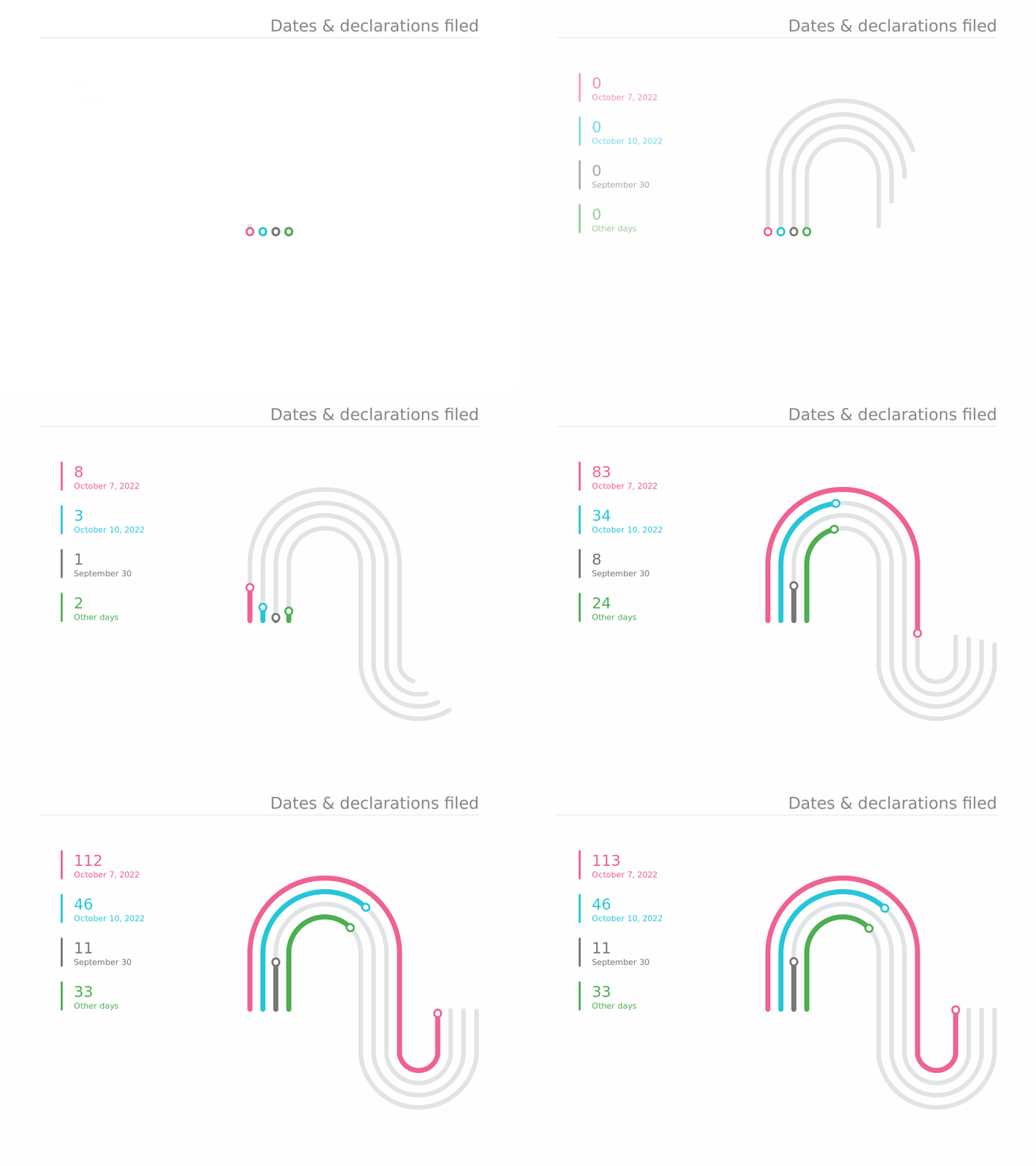
    Two hundred and three (203) metropolitan, municipal and district chief executives (MMDCEs) rushed to the Audit Service between May to November 2022 to declare their assets and liabilities in unprecedented compliance with the Asset Declaration Law, Act 550.

    While 65 of the MMDCEs, who filed their declaration, have been in office since 2017, 19 others who took office after the creation of new regions in 2018 have now complied with the law. 114 others appointed in October 2021 also declared their assets in the said period.

    The MMDCEs were among 294 political appointees, including ministers and former ministers, members of Parliament, presidential staffers, judges and heads of state institutions who declared their assets and liabilities after The Fourth Estate’s exposé on public officials’ non-compliance with the Asset Declaration law.

    Before The Fourth Estate’s story, only six MMDCEs appointed in October 2021 had declared their assets and liabilities.

    Also, 20 ministers and former ministers; 48 members of Parliament; 15 presidential staffers, 6 heads of state institutions and 8 judges declared their assets after The Fourth Estate publication. Asset declaration by certain categories of public sector workers is a requirement of the 1992 Constitution.

    Compliance List by The Fourth Estate on Scribd

    Article 286 (1) of the 1992 Constitution states that “a person who holds a public office mentioned in clause (5) of this Article shall submit to the Auditor-General a written declaration of all property or assets owned by, or liabilities owed by, him whether directly or indirectly (a) within three months after the coming into force of this Constitution or before taking office, as the case may be, (b) at the end of every four years; and (b) at the end of his term of office.”

    The law requires that the president, vice-president, the speaker, deputy speakers, and members of Parliament, ministers and deputy ministers of state, ambassadors, the chief justice, judges of superior and lower courts and managers of public institutions in which the state has interests submit to the Auditor-General written declarations of all property or assets owned by, or liabilities owed by them, whether directly or indirectly.

    The Constitution requires the declaration to be done before the public officer takes office. However, Section 1(4)(c) of the Public Office Holders (Declaration of Assets and Disqualification) Act directs public office holders to meet this requirement “not later than six months after taking office, at the end of every four years and not later than six months at the end of his or her term.”

    The frantic declarations took place between May and November 2022 after The Fourth Estate started a series in May 2022 on public officeholders’ compliance with the law. The publications were based on the list of public officials who had declared their assets, which we requested and obtained from the Audit Service of through a right to information request in March 2022.

    The data revealed widespread non-compliance among public officeholders in the executive, judiciary and legislature. It, however, showed high levels of compliance among civil and public servants in the Ghana Revenue Authority, the Audit Service, Commission on Human Rights and Administrative Justice, and the Petroleum Commission.

    To track compliance after the series, The Fourth Estate made another right to information request in November 2022. This time, the data showed that hundreds of public officeholders had scurried to declare their assets. The asset declaration traffic to the Audit Service peaked on Friday, October 7 and Monday, October 10, 2022, when 159 declarations were filed.  On October 7, 2022, alone, 113 declarations were submitted.

    159 MMDCEs declared their assets on October 7 & October 10, 2022, alone.

    Going by the dictates of the law, all the MMDCEs who were appointed in 2017 should have declared their assets by December 2017, given that they were endorsed between May-July 2017. Those appointed in October 2021 should have met their obligation by April 2022. But the majority of them disregarded the law. This was in spite of a presidential directive.

    On July 5, 2017, President Nana Addo Dankwa Akufo-Addo directed 119 MMDCEs present at an orientation ceremony to declare their assets and liabilities by July 24, 2017.

     “That exercise will be monitored,” the president warned. However, only four MMDCEs complied with the directive.

    They are Martin D. Bomba-Ire, Lawra; Marian Iddrisu, Sagnarigu; Samuel Kwame Agyekum, Asuogyaman; and Emmanuel Kofi Agyemang, Dormaa East.

    By the end of President Akufo-Addo’s first term on January 6, 2021, not a single MMDCE had fully complied with the law. They were expected to file their declaration within six months of assuming office and within six months after their tenure had expired. They did partial declarations.

    But between March 2019 and December 2020, 53 of them filed their declarations. This was at a time they were leaving office.

    Compliance with the asset declaration law by MMDCEs was not different in President John Mahama’s era.

    Only four MMDCEs declared their assets from 2013-2017—one MMDCE did when she assumed office while three others did when they exited.

    Akufo-Addo’s administration

    During the president’s first term (2017-2021), only 18 out of his 126 ministers declared their assets fully.  18 others never declared their assets. For the second term, 8 out of 87 ministers did not declare their assets, while 89 appointees, including the vice-president, did partial declarations.

    However, after The Fourth Estate’s work, 19 ministers and deputy ministers, who either never filed their asset declarations or did partial declarations, have lived up to their responsibility. Eleven others are still indebted to the asset declaration regime.

    Presidential staffers

    Although the Secretary to the President, Nana Asante Bediatuo, has been signing President Akufo-Addo’s appointment and dismissal letters since 2017, the legal practitioner failed to file his asset declaration when he was supposed to do so. He and 14 others, including the vice-president’s economic advisor, Dr Gideon Boako; secretary to the vice-president, Augustine Blay; the presidential advisor on media and communications, Florence Oboshie Sai Cofie, and national security advisor, Brigadier General Emmanuel Okyere (Retd), have also now done the declaration. They did it after The Fourth Estate publications.

    Lord Commey who is the director of operations at the Office of the President, is yet to declare his asset since 2017.

    Parliament

    In the current Parliament, 95 legislators have complied with the law. 180 0thers have not. 85 of them are first-time MPs. The compliance scorecard of the legislators was 35%.

    Parliament Asset declaration status as of March 2022

    The list of non-complying MPs included at least 10 leaders of the House. However, after The Fourth Estate’s revelations, the deputy Minority Leader, Alex Afenyo-Markin, and former Deputy Minority Leader, Dr. James Klutse Avedzi, declared their assets. So did the Adansi Asokwa MP, K.T. Hammond, who hurled insults at The Fourth Estate journalist after he was asked about his asset declaration status.

    Lawmakers in the seventh and eighth parliament were not different. Only 20 MPs who served in the House from 2017-2021 fully declared their assets. They had a 7.2% compliance rate. While 129 did not declare their assets and liabilities at all, 126 did partial declaration either when they entered parliament or when they exited.

    Heads of state institutions

    The National Identification Authority Chief Executive, Prof Ken Attafuah; the Chief Executive of the Forestry Commission, John Allotey; the CEO of the Minerals Income and Investment Fund, Edward Nana Yaw Koranteng; the Chief Executive of the Public Procurement Authority, Frank Mante; the Administrator of the Scholarship Secretariat and the Administrator of the National COVID-19 Trust Fund all breached the law as they exceeded the grace period for declaration. They declared only after The Fourth Estate reports.

    Mahama’s administration

    The data showed that, under former President Mahama’s administration, out of the 102 ministers who served at one point or the other, only 34 fully complied with the law.11 ministers never declared their assets. 56 others failed to fully comply.

    However, only one Mahama-era minister, Nii Osah Mills, who was the former Minister of Lands and Natural Resources, did his declaration after The Fourth Estate’s listed him among the defaulters. It came nine years after his appointment in 2013 and six years after he left office.

    What they are to declare

    Section 4 of Act 550 requires public office holders to declare their assets and reliabilities related to:

    (a)lands, houses and buildings;
    (b) farms;
    (c) concessions;
    (d) trust or family property in respect of which the officer has beneficial interest;
    (e) vehicles, plant and machinery, fishing boats, trawlers, generating plants;
    (f) business interests;
    (g) securities and bank balances;
    (h) bonds and treasury bills;
    (i) jewellery of the value of ¢5 million [now ¢500] or above; objects of art of the value of ¢5 million or above;
    (j) life and other insurance policies;
    (k) such other properties as are specified on the declaration form

  • Ghana fails to make progress on Corruption Perception Index

    Ghana fails to make progress on Corruption Perception Index

    The government’s big talk about building the capacity of antigraft institutions to tackle corruption has not reflected in this year’s Corruption Perception Index (CPI) as Ghana failed to make any significant progress in the latest ranking released by Transparency International.

    This year, Ghana placed 8th in sub-Saharan Africa behind Seychelles, Botswana, Cabo Verde, Rwanda, Mauritius, Namibia and Sao Tome and Principe. Ghana shared the same spot with Senegal and South Africa. Ghana placed 9th last year.

    President Nana Akufo-Addo has been crediting his government for being the most audacious in the fight against corruption in Ghana.

    In a televised address on the eve of the Constitution Day to mark 30 years of Ghana’s Fourth Republic, the President said his government deserved plaudits for taking giant steps to deal with the canker.

    “I say, without any form of equivocation, that my government has undertaken, arguably, the boldest initiatives since independence to reform and strengthen the capacity of our institutions to tackle corruption in the public sector,” the president said.

    However, his words are not reflecting the country’s performance on the CPI.

    In the latest CPI, Ghana ranked 72 out of 180 countries /territories assessed annually by Transparency International, the global anti-graft body. Last year it ranked 73rd globally.

    For the third year in a row, the country scored 43 out of 100 on the index, which measures the levels of perceived corruption in the systems of various countries around the world. The maximum points a country can score is 100 points. For a country to be ranked average, it needs at least 50 points.

    President Akufo-Addo’s best scores in the last three years remain the worst in the Mahama administration, which then-opposition candidate Akufo-Addo described as corrupt.


    Ghana’s best CPI score in the past 11 years was in 2014 when the country scored 48. It dropped to 40 in 2017, went up marginally to 41 in 2018, stayed that way in 2019 before climbing marginally to 43 which it has maintained in 2020, 2021 and 2022.

    Corruption and the Covid-19 pandemic

    The latest ranking comes in the wake of the Auditor General’s report on COVID-19 funds management which opened a pandora box of wasteful expenditure.

    “This score reflects a lack of progress in the country’s fight against corruption. Addressing the problem of corruption is critical now more than ever as corruption is a major contributor to the country’s current economic woes as evinced by several reports including that of the Auditor General’s report on Government of Ghana’s COVID-19 expenditure,” a statement issued by the Ghana Integrity Initiative, the local chapter of Transparency International, said.

    The Auditor-General’s report showed that millions of COVID-19 funds the government mobilised towards the fight against the virus cannot be accounted for because only 3.5% of the spending went through GIFMIS, the govt accounting system.

    The report revealed that the Ministry of Health entered into a 25-year Finance Lease Agreement valued at GH¢15,265,000 in 2020 to be used as a holding and isolation centre in Adaklu, in the Volta Region. Although the ministry failed to use the place, it is remodelling the building at an additional cost of GH¢20,382,247.70 out of which GH¢13,726,079.86 has been paid.

    The Ministry of Chieftaincy and Religious Affairs paid GH¢451,800.00 to paramount chiefs of six traditional councils to fight the COVID-19 pandemic. The report further indicated that the Northern and Volta Regional houses misapplied a total amount of GH¢154,161.97.

    The Ministry of Gender, Children and Social Protection paid almost GH¢12 million in cash to caterers who provided hot meals during the COVID-19 lockdown period. However, the auditors could not authenticate the cash payments because they were supported with honour certificates, and lacked internal checks. It feared this could result in the possibility of payments being made to persons who may not have provided any service.

    It is not only the CPI and the Auditor-General that have recorded Ghana’s underperformance in the fight against graft.

    Results of the Round 9 of the Afrobarometer report released last year gave a damning verdict of the public’s perception of corruption in Ghana. According to the report, Ghanaians say the level of corruption in the country increased in 2021.

    The GII is worried that the increasing level of corruption could affect trust in state institutions.

    “The misuse, embezzlement or theft of public funds can deprive the very institutions of resources they need to fulfil their mandate, which includes protecting citizens, enforcing the rule of law and safeguarding peace,” the GII said.

    “In Ghana, corruption continues to negatively affect citizens’ trust in government and institutions, hinders the provision of essential services, impedes economic development and creates vulnerabilities that have the tendency of being exploited by extremists. Corruption, if not addressed, has a potential to lead to social unrest and conflict. As such, it is essential that steps are taken to combat corruption in order to ensure a more peaceful and secure society,” it adds.

    Starving anti-corruption institutions

    While President Akufo-Addo continues to give his government high marks on the anticorruption scorecard, his critics say his performance is full of inertia and contradictions as some anti-corruption institutions continue to cry for funds.

    For instance, although the Office of the Special Prosecutor requested GHc 1.2 billion to fully operationalise, it was slashed to approximately GHc 80 million (about 6.6%) in the budget. It is unclear how much of that was released. The OSP made a similar request in 2021 but got GHc 170.5 million allocated to it in the budgeted. On top of that, the Special Prosecutor, Kissi Agyebeng, had not been paid for 16 months as of December last year.

    In May last year, the Speaker of Parliament lamented that Parliament was broke and had no money to run its affairs. The Speaker attributed the development to the delay by the Ministry of Finance to release funds to Parliament.

    “Parliament is currently being run on arrears and the House should not be treated like one of the ministries, departments and agencies (MDAs),” he said.

    The Right to Information Commission, which oversees the implementation of the Right to Information law, has also been complaining about its limited funding which constraints it.

    GII Recommendations

     To address the problem of corruption in Ghana, the GII recommended the following measures:

    1. Relevant state agencies must address security vulnerabilities and protect the country against external threats. This should include measures such as strengthening the defence sector, increasing intelligence and security capabilities, and control the perceived politicisation of enlistment/employment. Strengthening the professionalism of the defence sector and improve border security to counter smuggling, illicit trade and potential terrorist activities.
    2. b. Government must promote economic development and reduce barriers to investment. This includes the implementation of effective monetary and fiscal policies and the creation of a transparent environment in the public and private sectors where corrupt practices are easily identified and addressed more effectively.
    3. c. The Executive should urgently take steps to lay the Conduct of Public Officers’ Bill in Parliament while we call on the Legislature to attach equal level of urgency to its timely passage.
    4. d. Parliament should ensure implementation of recommendations contained in the Auditor General’s report by referring it to the Attorney General to recover lost funds and prosecute persons found culpable to have engaged in fraud, misapplication or embezzlement of state resources.
    5. e. The Auditor General must exercise its powers of disallowance and surcharge per Article 187 (7) of the 1992 Constitution to recover misappropriated funds and prevent the reoccurrence of wastage in the public sector. Government should as a matter of urgency ensure that the Office of the Special Prosecutor (OSP) is adequately resourced to enable the office effectively perform its mandate of prevention, prosecution and recovery of proceeds of corruption and corruption related offences.


  • “The Fourth Estate wrote to us, but we refused to respond” — Lighthouse witness tells court

     A bishop of the Lighthouse Chapel International has admitted that the church “refused” to respond to a letter The Fourth Estate wrote for a response before publishing the “Darkness in the Lighthouse” series. The series contained allegations of economic exploitation and psychological abuse six aggrieved former pastors of Lighthouse made against the church.  

    While under cross examination on Tuesday in the church’s defamation case against The Fourth Estate, Bishop Marcel Aboagye said the church ignored the media outlet because it suspected “collusion” between The Fourth Estate and the lawyer for the six former pastors, Kofi Bentil.

    “We suspected there was collusion between the former pastors, Kofi Bentil and the defendants [The Fourth Estate]. We thought a response to the letter would mean giving away the potential defence to an imminent suit,” he told the court.

     Bishop Aboagye said a few days before the church received The Fourth Estate’s letter requesting a response, he had a personal discussion with Mr Bentil on phone about the former pastors’ grievances.

    He claimed Mr Bentil declined to write officially to the church but warned that “if we don’t respond to his oral complaint, he was on the verge of filing suits on behalf of the former pastors.”

    The former pastors had a number of grievances against the church, including its failure to pay their social security contributions, underpayment of their salaries and psychological abuses.

    The Fourth Estate’s attempt to get the church’s side of the story failed. The Fourth Estate also sought the help of a prominent charismatic leader to get Lighthouse Chapel to respond before the publication of the story, but the church declined.

    Bishop Dag Heward Mills (left) and Bishop Marcel Aboagye of Lighthouse chapel
    Bishop Dag Heward Mills (left) and Bishop Marcel Aboagye (right)

    However, Bishop Aboagye, who is a lawyer and the Director of Crusade of Lighthouse, said after his encounter with Mr Bentil, he sent him messages in expectation of a phone call Mr Bentil had promised but he did not call.

    “Then three or four days later, the defendants [The Fourth Estate] rather wrote to us detailing almost all the grievances my colleague lawyer Kofi Bentil had told me against the plaintiff [Lighthouse],” he said.

    He continued: “The language of the letter was as though the defendants [The Fourth Estate] were literally eavesdropping on the call between myself and Kofi Bentil. I reported to the plaintiffs [Lighthouse] Kofi Bentil’s foreboding words that, if we don’t get back to him, and the suit hit the media, ‘it will be electrifying.’ My Lord, it’s against this background that the plaintiffs refused to reply defendant’s letter.”

    The lawyer for The Fourth Estate, Samson Lardi Anyenini, asked if it was on the back of that suspicion that the church failed to explain itself.

    “The writs were filed on the 19th of April. We were not served the whole week until Monday. It is clear in the publication, by references to the suit, that the defendants, although not party to the suit had access to the suit long before we got them,” he said.

    Although Bishop Aboagye admitted that the eight-point reasons the church gave for not paying Bishop Larry Odonkor’s SSNIT contribution as contained The Fourth Estate’s s story were factual, he said the entire letter was not published. He added that after publishing the reasons the church gave for not being responsible for paying Larry Odonkor’s pension contribution at a certain period, The Fourth Estate proceeded to “bastardise” the church in the next section of the story.

    “In your testimony, you said that in the paragraph headed ‘inconsistencies’ and reaction to the church’s response, the “defendants proceeded to ‘bastardise’ the plaintiff [Lighthouse].  Kindly point the court to this claim of yours,” Mr Anyenini said.

    “My Lord, first of all, the use of the word ‘inconsistencies’” Bishop Aboagye said, reading The Fourth Estate‘s report in the court document. “Next, the publication says, ‘There appear to be some inconsistencies in the response from the church when held against some documents of the church, as well as the treatment of Bishop Oko Mensah and others in similar situations. While the UD-OGLC maintains that Larry Odonkor was not entitled to SSNIT because he was a volunteer, the Bishops Governing Handbook of the church states that full-time ministers who are even “interns”, are to benefit from “monthly social security payments also made on their behalf.’”

    The voice of God

    In one of the stories, The Fourth Estate published about the plight of the six aggrieved pastors, it quoted a statement from Bishop Larry Odonkor: “And I heard God say to me on 6th March 2020, that ‘if you don’t leave, you will not fulfil your ministry.’”

    Asked to point out what he disagreed with in that statement, the witness said “Maybe not disagreeing, but I found that quote defamatory to the plaintiff [Lighthouse].”

    “I put it to you that there is not a whiff bothering on defamation in the pastor’s said encounter with his God as quoted in the publication,” Lawyer Anyenini said.

    Bishop Aboagye said “to the extent that those words question the objective of the church,” it was defamatory.

    “You agree with me, don’t you, that those words to the pastor in question, are the words of God speaking to him,” Mr Anyenini pointed out.

    “This is according to the claimant,” Bishop Aboagye said.

    “Is it your contention, sir, that this quotation is not factual?” the defendants’ lawyer asked.

    “My contention is that defendants or journalists cannot hide behind a deity and cast aspersions, okay? And publish insulting matters against anybody,” Bishop Aboagye said.

    “I put it to you that these words are the facts in pastor’s interview with the defendants.”

    “That is correct,” Bishop Marcel Aboagye said.

    Who was defamed?

    Lawyer Samson Lardy Anyenini also questioned the witness on the relationship between the founder of the Lighthouse Chapel International and the church.

    “It is your contention that the plaintiff’s founder, Bishop Dag Heward Mills, is the same as the plaintiff. Not so?”

    Bishop Aboagye asked to be allowed to refer to the court document.

    “You may look at paragraph 5 of your amended statement of claim,” the defendants’ lawyer pointed told him.

     “It is the Plaintiff’s contention that the relationship of the Plaintiff and its founder is so closely fused and inseparable that an attack on the Plaintiff’s leader is as good as an attack, both directly and indirectly, against the Plaintiff,” Bishop Marcel read from the Lighthouse Chapel’s statement of claim.

     Mr Anyenini demanded a yes or no answer, but the lawyer for Lighthouse, Kweku Paintsil, stepped in: “I have an objection. You ask a question in which you put it to the witness. He reads. If that’s not an answer to the court, I don’t know what the answer is.”

    The judge overruled the objection and asked the witness to respond to the question.

    “The answer is no,” Bishop Marcel Aboagye said. “The paragraph says the relationship between the founder and the plaintiff is so fused that an attack on the founder especially in the way defendant [The Fourth Estate] did is an attack on the plaintiff. And, again, paragraph 5 should be quoted in context. The preceding paragraphs and the ones after talk about the writings of the founder and how the plaintiff uses the writings of the founder to work. And therefore, attacking the founder casts a dark shadow on the modus operandi of the plaintiff [Lighthouse],” he explained.

    Samson Lardy Anyenini asked the witness to explain what he meant by an “attack in these circumstances.”

    “My Lord, within this context, an attack refers to the three defamatory publications of the defendants. Going through each of them, the founder’s name is mentioned so many times in connection to the operations of the plaintiff,” he said, and continued:

    “The publications say, for instance, that the founder imposes, in an unbiblical manner, the teachings of his books in the plaintiff’s [Lighthouse] churches. Again, the publications say that the founder exercises undue and brutal influence on the plaintiff pastors and that one even says that the founder tried to force one or some of the plaintiff bishops, one in particular, Okoe Mensah, to divorce his wife. These attacks cast a dark and gloomy shadow on the plaintiff and that cannot be denied. Finally, just as attacking the person of the Pope is an attack on the Catholic Church.”

    “Bishop Dag Heward Mills is not a party in this suit. Is that so?” Samson Lardy Anyenini asked.

    “That’s correct,” the witness said.

    Background to Lighthouse case against The Fourth Estate

    In December 2021, Lighthouse Chapel International sued publishers of The Fourth Estate alleging defamation in a series of reports the news outlet had published about the church and its former pastors and bishops.

    The church cited the Editor-in-Chief of The Fourth Estate, Manasseh Azure Awuni; and the investigative reporter, Edwin Appiah; who wrote the story, as defendants. The other defendants are the Executive Director of the Media Foundation for West Africa, Sulemana Braimah, and The Media Foundation for West Africa.

    The church had turned down an opportunity to respond to the allegation after the journalist sought its side of the story ahead of the serialised publications. The charismatic church, founded by Bishop Dag Heward-Mills, sued for defamation, claiming that it was losing members because of the story.

    The church said it had also “suffered considerable damage, distress and embarrassment” because the stories cast the church as a “two-faced” Christian organization and a “ranking hypocrite”.

    The church wants the court to restrain The Fourth Estate from publishing “similar words defamatory of the plaintiff.” It also wants The Fourth Estate to apologise for the stories and also pull down all the stories.

    After a back-and-forth including a court directive in July 2022 that the parties explore an amicable settlement, which failed, the court began the trial of the case on Tuesday.

    YOU MAY ALSO WANT TO READ:

    Lighthouse sues all six former pastors again 

  • ‘I saw skeletons in the Sahara Desert’

    When Ibrahim left Ghana in June 2019 for Niger, it was meant to be the springboard out of abject poverty for him and his family.  

    For nine months, the 26-year-old butcher spent time in the ghettos of Agadez, a crossroad for people on the move and hive for migrant smugglers.

    He waited for the right moment with assurances from smugglers for the death-defying journey through the Sahara Desert to Libya and then Europe.

    “In the early part of 2020, I finally got a break. The smugglers demanded $2,000 per head to take about 30 of us in a pickup across the Sahara. When we got to Libya, we paid another $1,000 to cross the sea to Europe.  The day we left; we wore a mask and carried just a small backpack. The entire vehicle had one jerry can of water,” he told The Fourth Estate.

    They left in a convoy of seven vehicles. The only encounter with the law was a lonely police checkpoint on the immediate outskirts of Agadez, Ibrahim, recalled. Not much of a check happened. The rest of the journey was through an endless expanse of sand as far as the eye could see.

    A day into what was to be a three-day journey, the vehicle Ibrahim was travelling on broke down. He and his colleagues became a dough in an oven; the sun baked them so severely that one person lost consciousness from dehydration. Their water was rationed with a syringe. A drip on the tongue at a time, nothing more.

    Eight Bodies, Heartbreaking Note Found In Car Stranded In Libyan Desert - Zenger News
    Abandoned vehicles such as this are common in the Sahara Desert              Credit: Zenger News

    The few hours they were promised the vehicle would be fixed turned into a day, then two.

    For two days, they took turns sleeping in a congested pick-up truck, while stranded in sand dunes. The women wanted to go back to Agadez. The men had the patience to wait for the next truck. But the water in the jerrycan was fast draining.

    “People were just falling left and right in the sand out of fatigue. The combination of the hot sand and dust was wicked,” Ibrahim recalled, shaking his head.

    Eventually, on the third day, another vehicle arrived. But the journey took more than a day to make it to Libya. There were more stops, where the smugglers paid bribes. It was the most horrifying journey of his life, he said.

    “I saw dead bodies in the sand, there were skeletons, bags, and shoes on the route. By the time we got to Libya, almost everyone in the vehicle was crying,” he remembered, breaking into tears for the first time in years.

    Skeletal remains of migrants are said to be common sight in the Sahara Desert
    Skeletal remains of migrants are said to be common sight in the Sahara Desert Credit: KPBS

    At this point, he stopped and mopped beads of sweat. It was like a mock demonstration of his job as a cleaner in a hotel in Niamey.

    Ibrahim said he stayed in Libya for 10 months and returned to Ghana because of COVID-19.

    “I ran out of money. I couldn’t get any job to keep going. There was an evacuation of Ghanaians by the International Migration Organization. I joined and returned to Ghana in November 2020.”

    He returned safely, but the feeling of an unaccomplished mission kept eating away his sanity. So, he jumped into a bus again. Niger is now his temporary home as he eyes another sojourn through the desert.

    He found the cleaning job through a Nigerian friend he made in Libya.

    “I’m accumulating enough money to try my luck again. I want to go to Italy. I have friends there,” the former butcher from Banda in the Bono Region said.

    His friends in Italy sold to him the prospects of a better life in Italy once he crossed the twin hurdles of the desert and the Mediterranean.

    These friends got to Italy with the help of smuggling rings.

    But when Ibrahim arrived in the West African country deep in the Sahara, he began to understand the scale of the smugglers’ deceit and his friends’ oversimplification of the dangers that awaited him.

    These smuggling rings also have links to other countries in North Africa including Morroco and Algeria.

    The story of Ibrahim and other African migrants was the focal point for the discussion when more than 200 stakeholders gathered in Niamey for Regional Conference on Media and Migration in West and Central Africa this year.

    Celebrate successful migrants

    The conference took place within the framework of the project, “Empowering Youth in Africa through Media and Communication”, which has been implemented since 2019 in eight West and Central African countries—Cameroon, Cote d’Ivoire, Ghana, Guinea-Conakry, Mali, Niger, Nigeria and Senegal.


    The project is funded by the Government of Italy through the Italian Agency for Development Cooperation (AICS). The Regional Conference, which marked the end of the project, engaged the participants in a reflection on the main issues related to the media coverage of migration.

    It became obvious at the conference that many young people are making their decisions to travel from uninformed positions.

    The media is, therefore, seen as an antidote for the information deficit and the misinformation that create fertile grounds for young people to make their decisions to embark on perilous journeys across the Sahara and the Mediterranean to Europe.

    West Africa’s high unemployment is a push factor that drives thousands of young people annually out of their countries.

    International Migration Organisation’s data shows more than 100,000 young people make this extremely risky journey each year

    According to the European Council on Foreign Relations, extreme poverty, food insecurity, and the predatory behaviour of authoritarian regimes also prompt people to flee their countries to find alternatives both within Africa itself (about 90% of African migrants remain on the continent) and in Europe.

    Africa Union’s (AU) data suggests that only 20% of migrants actually leave Africa. More migrants move from the Horn of Africa to Southern Africa than those crossing the Sahara to North Africa to reach Europe.

    But even before they join the dingy boats for the make-or-break journey across the Mediterranean, an average of 25 migrants lost their lives daily on their way to North Africa, IOM data revealed.

    Thousands risk their lives to cross the Mediterranean Sea to Europe on dingy boats                     Credit: The Guardian

    From 2014 to 2019, at least 7,400 people died on Africa’s migration routes.

    These numbers notwithstanding, there were echoes of dissatisfaction at the conference about skewed media reportage which paints migration as irregular, dangerous and unwarranted.

    “There are stories about the success stories of migrants that must be told.  We are not telling enough of these stories. If we don’t do it, others will in a manner they deem fit,” Peter Iorter, the Executive Director/CEO at Safer-Media Initiative, said.

    The success stories of African entrepreneurs, academics, politicians among others remain untold, he said.

    Niamey Declaration on Migration

    In a declaration read by Ghana’s Deputy Minister of Information, Fatimatu Abukakar, the participants from the eight countries rallied the media and civil society organisation operating in the field of migration:

    • Ensure the diversification of narratives, including through the treatment of the subject from various angles, to contribute to the provision of comprehensive information on migration;
    • Support the production of diversified editorial content in local languages on migration;
    • Make narratives in migration-related editorial content more inclusive, by engaging more voices from youth, women, and people living with disabilities, as well as stakeholders;
    • Contribute to the deconstruction of stereotypes and other prejudices relating to migrants;

    Participants also wanted development partners to “Support initiatives to enhance the plural and inclusive representation of migrants and the diversification of narratives on migration; strengthen the capacity of media and fact-checking organisations in the region to counter misinformation and disinformation on migration; strengthen national and cross-border collaboration between media from the region and other relevant regions to foster collaborative journalism in media coverage of migration.”

    They also recommended that governments in the eight countries should do the following:

    • Adopt access to information law, in conformity with the African Union model law and international standards, and ensure their effective implementation to guarantee the right to information;
    • Strengthen mechanisms and arrangements for the safety of journalists, particularly in relation to the production of migration-related content;
    • Promote policies and mechanisms that support pluralism, diversity and economic viability of the media;
    • Pursue capacity-building initiatives for media professionals, particularly on the treatment of information related to migration;
    • Encourage and support research initiatives on the causes, effects, and dynamics of migration in West and Central Africa;
    • Support the creation or development of migration information and documentation centres to facilitate access to information sources;
    • Adopt and implement strategies to popularise media and information literacy among young people in order to equip them with the necessary skills to critically research, verify, evaluate and use information.

    YOU MAY ALSO WANT TO READ:

    The Dubai in Cote D’Ivoire: Scores of Ghanaians lured and trapped in a net called Qnet

    62 hours in Liberia: the flight we nearly missed 


  • School block burns as riot breaks out at Sandema Senior High School in Upper East Region

    A violent demonstration erupted around midnight on Sunday at the Sandema Senior High School (SANSEC) has resulted in the burning of a school block.

    Police personnel stationed in Builsa North, a municipality in the Upper East Region, raced to the school to restore order.

    How riot at Sandema Senior High School started

    Eyewitnesses say the riot started building up around 9:30 p.m. on Sunday when the school’s cadet corps attempted to seize mobile phones from some students under the instruction of a teacher.

    The students refused to hand over their phones. The refusal resulted in a struggle as the cadet team would not leave the scenes without executing their mission. Tension flared up and spread as some students joined the fray. The situation took a sharp turn for the worse when a senior student trimmed the hair of another senior student who was reportedly wearing an unapproved hairstyle on campus.

    Some students stormed dormitories, hurled stones at anything in sight and set an entire building on fire. Scores of boarding students fled the campus in different directions. They stayed the rest of the night outside.

    “Some of us ran to Wiaga to sleep there,” a student told The Fourth Estate in the early hours of Monday. “Some who did not take part in the disturbance slept in the bush overnight. Many students fainted as they were running during the confusion. Some of the students already were asthmatic patients. But they are fine now. Those involved in the riot entered dormitories, throwing stones and saying if we didn’t go out, they would kill us.”

    Another student told The Fourth Estate on Monday: “We just returned to campus. Police are around. There are about five police cars in front of the administration block― police cars alone. Even though the school authorities have not asked us to go home, everybody is packing because some are saying they can’t wait and die. We are still in our exams period but I don’t think we will write today.”

    The fire from the riot ripped the roof of the  Sandema school block
    The fire from the riot ripped the roof of the school block

    It was difficult for The Fourth Estate to reach the headmaster of Sandema Senior High School,  Robert Yelioni, on the telephone for his comment on the development at the school as his mobile line was still busy before press time. But he is said to have assembled the students on Monday, entreated them to be calm and asked them to go to their classrooms.

    Speaking to The Fourth Estate, a teacher, who wished to remain anonymous, said the building torched by the rioting boarders was a block where Visual Arts equipment and foodstuff among other kinds of items were kept.

    “It’s a whole block. The school has its practical equipment, cadet equipment, even foodstuff and so many things inside the building. But everything is calm now. Authorities are meeting.

    “So, we are waiting for the outcome as to whether the students should go home or whatsoever. So many visitors are in because of this issue. The headmaster is busy in an engagement with the visitors,” the teacher told The Fourth Estate.

    Police have no business in granting interviews on student demonstration― Police PRO

    The Navrongo Divisional Police Commander, Chief Supt. Yahaya Muchiraru, declined to speak on the riot when The Fourth Estate contacted him.

    “If it is in connection with it, get in touch with the police PRO in the region,” said the commander.

    When The Fourth Estate reached the Upper East Regional Police PRO, ASP David Fianko-Okyere, on the telephone, he retorted: “I don’t think student demonstration is for police to come and grant an interview on that. You have called me. I’m the PRO for the Upper East Regional Police Command. I am saying that I can’t comment on this matter.”

    Meanwhile, the National Peace Council (NPC) says the region may continue to witness student unrest if stakeholders fail to sustain engagement of both students and school authorities in effective ways of resolving conflicts.

    “We started doing some engagement with them, but I think last year and this year we haven’t been able to do much. When you start something and it fizzles out, people would go back to their normal way of doing things.

    “There is nothing that cannot be resolved, particularly if people would sit down and talk. There should be constant engagement between students and school management. But we don’t seem to attach importance to this. We think school riots are part of school life. Even this year, we had a similar incident at the Bolgatanga Technical Institute,” the Upper East Regional Peace Council’s Executive Secretary, Ali Anankpieng, told The Fourth Estate on Monday.

    A large crowd of students and community members besieged the school the day after the inferno

    The frequency of campus unrest has been a major concern in the region. Such was the prevalence some time ago that a former Upper East Regional Minister, Tangoba Abayage, convened a meeting with heads of second-cycle institutions in the region for deliberations on how to check it.

    There are more than 30 second-cycle schools in the region. Many of them have been involved in campus disturbances that saw investigative committees instituted and students surcharged in the long run for causing damage to school property.

    Riots have occurred at some of these schools on more than two occasions. A riot has been very rare at Sandema Senior High School. Observers in the region generally attribute the school’s peacefulness to the calm nature of the headmaster.

    “We have a good father in him,” one of the students, Linda Aba-enge, once spoke about Robert Yelioni. “He is very calm. He calls us his sons and daughters any time he is addressing us.”