Author: Seth J. Bokpe

  • Did mate Bawumia sleep on the job for the driver to end up in the ditch?

    Did mate Bawumia sleep on the job for the driver to end up in the ditch?

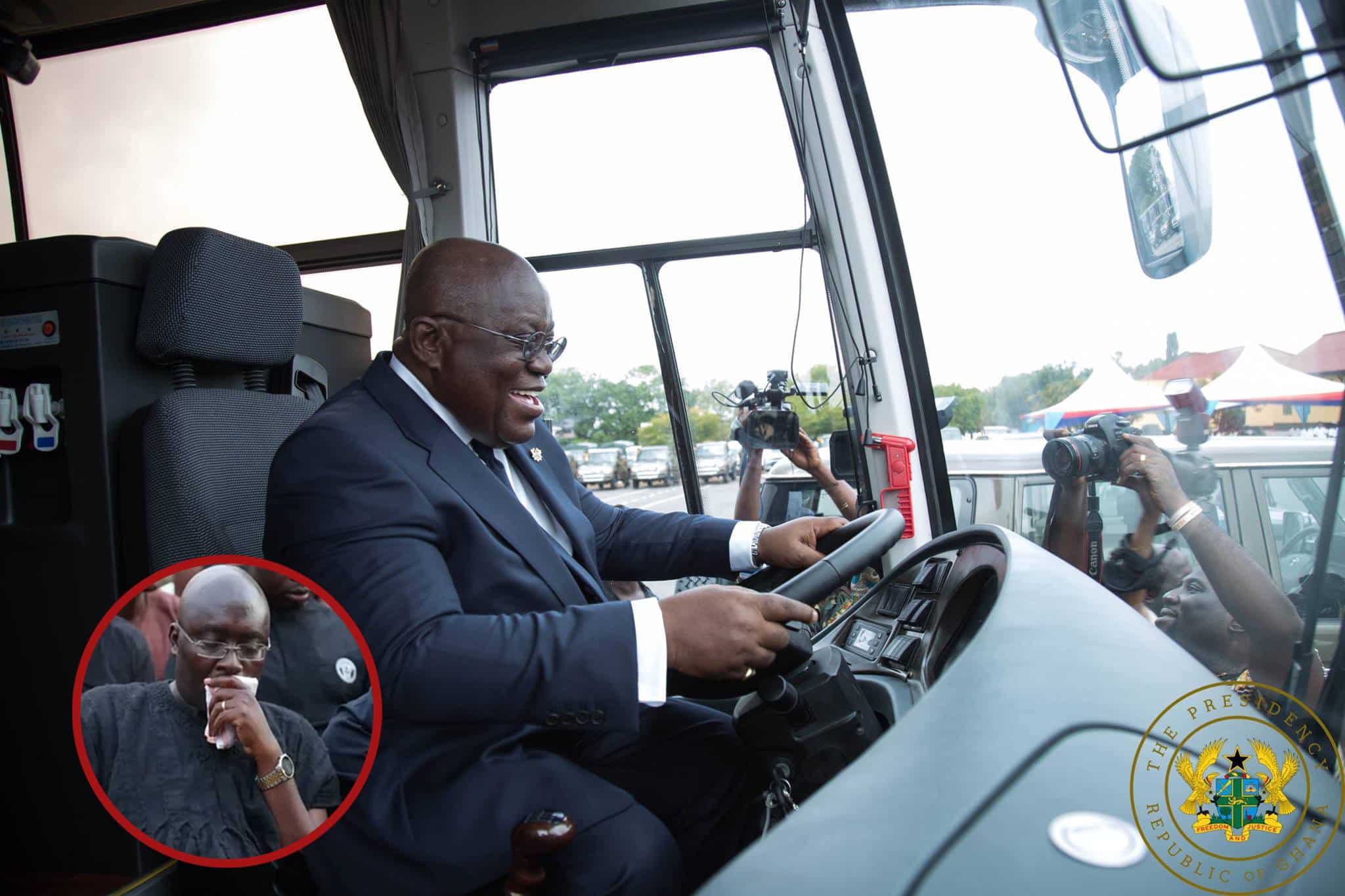
     Ghana’s second most powerful man last Wednesday joined the ranks of the ubiquitous conductors on our commercial buses—trotro— to sell himself to Ghanaians ahead of election 2024.

    Dr Mahamudu Bawumia, the Oxford-trained economist literally joined the league of the ‘aplanke,’ the Ga word for the men and women, also known as mates, who control affairs on trotro while the driver focuses on the wheel.

    “As Vice President I am like a driver’s mate. But if, by the Grace of God, you make me President, I will be in the driver’s seat with constitutionally mandated authority to pursue my vision and my priorities,” he told cheering New Patriotic Party (NPP) members and supporters in Accra.

    The strategy was ostensibly to purge himself off the sins of the Akufo-Addo administration.

    Facing a referendum on December 7 on the tenure of the administration in which he was more than Akufo-Addo’s cheerleader, Dr Bawumia’s use of the allegory of a mate and the spin he gave it makes it a political concert with a borrowed chorus from dancehall artist, Shaggy’s hit song, “It wasn’t me”.

    Music reviewers say Shaggy claimed that the message behind the evergreen song more than two decades ago had been misunderstood for years. It is exactly the way I felt about Dr Bawumia’s aplanke analogy.

    The aplanke analogy

    I am no economic expert, but I have an expertise in the work of mates. Until seven years ago, trotros run my mobility. This was before I bought my first car, a Toyota Corolla that had seen better days, and defiantly left me in the middle of the road on a number of occasions.

    So, I’m well versed in the work of the trotro mate. It varies but there are certain things that remain constant. In every trotro, the mate has the responsibility to collect fares, ensure passengers receive change and keep law and order in the bus. However, it is not uncommon for some mates to contribute to the chaos on board.

    Mates are also in charge of filling vehicles with passengers. They strategically know where to direct the driver to stop and load passengers. A bad mate could end up with an empty car. A careless mate could cause the driver to lose money and ultimately result in the driver not being able to fulfill his financial obligation to the car owner.  The driver could end up borrowing to even buy fuel for the next day’s journey.

    With my experience as a driver now and trotro passenger, good trotro mates don’t limit themselves to financial sustainability, they also ensure the safety of the vehicle and passengers. I can’t count the number of times they used body language to help the driver switch lanes. The notorious ones even help drivers reverse on highways.

    These roles are akin to that of Dr Bawumia’s responsibility as the head of the economic management team.  He is the government’s chief economic advisor which meant that he was supposed to ensure the economy is healthy and not as ailing as it is now.

    In collecting the fares, mates ensure that the balance sheet of the vehicle is kept clean for the driver to pay for fuel and the daily sales that must go to the car owner, and on good days collect enough to make his boss happy.   On the campaign trail, Dr Bawumia made us believe that as a former Deputy Governor of the Bank of Ghana, he knew where to find money and that we needn’t borrow. But in office, Dr Bawumia the able mate supervised perhaps the biggest borrowing spree in the history of Ghana. How does he a mate who promised to ensure that the driver doesn’t go borrowing end up with so much debt that even the passengers are unable to get their change when the debtors came calling?

    In their effort to hoodwink us into believing the infallibility of Dr Bawumia, his handlers have told us, albeit subtly that the finance minister, Ken Ofori-Atta, is overbearing and more powerful than the vice-president. However, the latter’s posturing and utterances over the years until the crisis kicked in did not depict someone who was playing second fiddle in an administration in which he was supposed to be the economic guru.

    As he attempts to deflect his contribution to the economic mess while taking credit for the dividends of digitalisation, Dr Bawumia forgot that he is the driver’s mate who posed 170 questions to the mate who previously handled affairs in the same car some years ago.

    It appears karma has been on steroid with our eloquent Veep whose 170 questions followed the late Vice-President Paa Kwesi Amissah Arthur to the grave.

    And if a driver works with a mate with a greedy appetite for stashing cash away unnoticed or insatiable appetite for snacks, the trotro’s account suffers as the national economy would do if we had a corrupt Vice-President. But Dr Bawumia has been off the corruption index—an admirable quality in the midst of looting happening in this administration.

    But being incorruptible isn’t enough. After all, President Akufo-Addo had that image in 2016.  There are question marks on the Vice-President’s delivery. It’s disingenuous for him to watch Ghanaian hemorrhage financially under heavy taxes especially when he had needled the Mahama administration about the draconian taxes only to quadruple it under the guise of dealing with the aftereffects of COVID-19 and the Russian Ukraine.  Covid-19 levy is still on goods and services almost two years after the disease was declared over as a pandemic. E-levy has become an albatross, oil prices are surging. Our air is polluted more than ever, although we’re paying 10 pesewas on every liter of fuel to improve air quality and sanitation.

    On the log of terribly managed polices are Planting for Food and Jobs, One District, One Factory, One Constituency, USD 1million and to some extent free senior high school. Our debt has ballooned beyond our means while the economy run on treasury bills for the first time in our history.

    Thousands of Ghanaian investors including myself are still waiting for our locked-up funds from a financial-sector clean up that was laced more with political malice than economic scruples. We’ve been made financially bald by ruthless haircuts that the president promised would never happen.

    Dr Bawumia, who is now taking cover under digitalisation, told us on Wednesday that he is a man of solutions. One wonders why he has not found the antidote to curtail the billions of state funds that disappear in the name of corruption only to appear on the grim pages of the Auditor-General’s report?

    In all these, our ‘aplanke’ veep believes that he was merely a mate whose solid economic management team was merely an advisory body that counted for nothing. There is a lot wrong with the veep attempt to sanitise his image while we are neck deep in a crisis that he contributed to.

    Members of Ghana’s Economic Management team in President Akufo-Addo’s first term

    Credibility deficit?

    In an attempt to battle and contain widespread disillusionment with his performance in the role, Dr Bawumia is further damaging his standing. In the last four years that the economy has been on backfoot, the Vice-President has struggled to seize the initiative on issues that give the average Ghanaian migraine—the cost of living, taxes, lost investments among others.

    Dr Bawumia wants us to believe that in 11 months to come, e-levy, sports betting among other taxes won’t be necessary. He also wants us to believe that he could grant tax amnesty and wave off taxes under an International Monetary Fund programme that requires that we spend less and collect more taxes to pay off our debts.

    In the midst of an economic crisis, Dr Bawumia’s bid for the presidency carries with it the weight of accountability and leadership. However, his reluctance to accept responsibility for the economic turmoil, despite heading the economic management team, casts doubt on his credibility. By distancing himself from his role in steering the nation’s economy, he reveals a lack of accountability and leadership integrity, which undermines public trust. This evasion of responsibility not only reflects poorly on his appeal but also raises questions about his capability to navigate the country through future challenges.

    As a voter, I see his reluctance to own up to his role in the economic downturn as a sign of weakness and opportunism rather than genuine concern for the nation’s welfare.

    Moreover, the Vice-President’s refusal to acknowledge his part in the economic crisis highlights a disconnect between his actions and the reality we face as citizens.  His attempt to shift blame onto others within the economic management team may further erode public confidence in his ability to lead effectively.

    As I scroll through social media post, the question that keeps running through most of the post is whether Dr Bawumia has the foresight and competence to address complex economic issues if he cannot even acknowledge his own role in creating or exacerbating them.

    Some mates graduate to become drivers after understudying their boss and occasionally drive the car as spare drivers. How do we trust Dr Bawumia the mate and spare driver who learnt driving from a boss that has a passion for the reverse gear?  With the driver always forced to borrow money to maintain the car while telling the car owner fairy tales, how do we entrust our car into the hands of this mate who handled the car’s finances.

    Can we trust him not to sleep on the job just as he did as a mate?

    YOU MAY ALSO WANT TO READ:

    #BawumiaSpeaks: Here are the false, misleading claims in the Veep’s economy speech 

    The word ‘corruption’ missing in Akufo-Addo’s State of Nation Address 

    Views expressed in this article are that of the author and do not reflect the stance of The Fourth Estate.  
  • Ada chiefs, former PIAC Chairman file lawsuits to stop Electrochem salt project

    Ada chiefs, former PIAC Chairman file lawsuits to stop Electrochem salt project

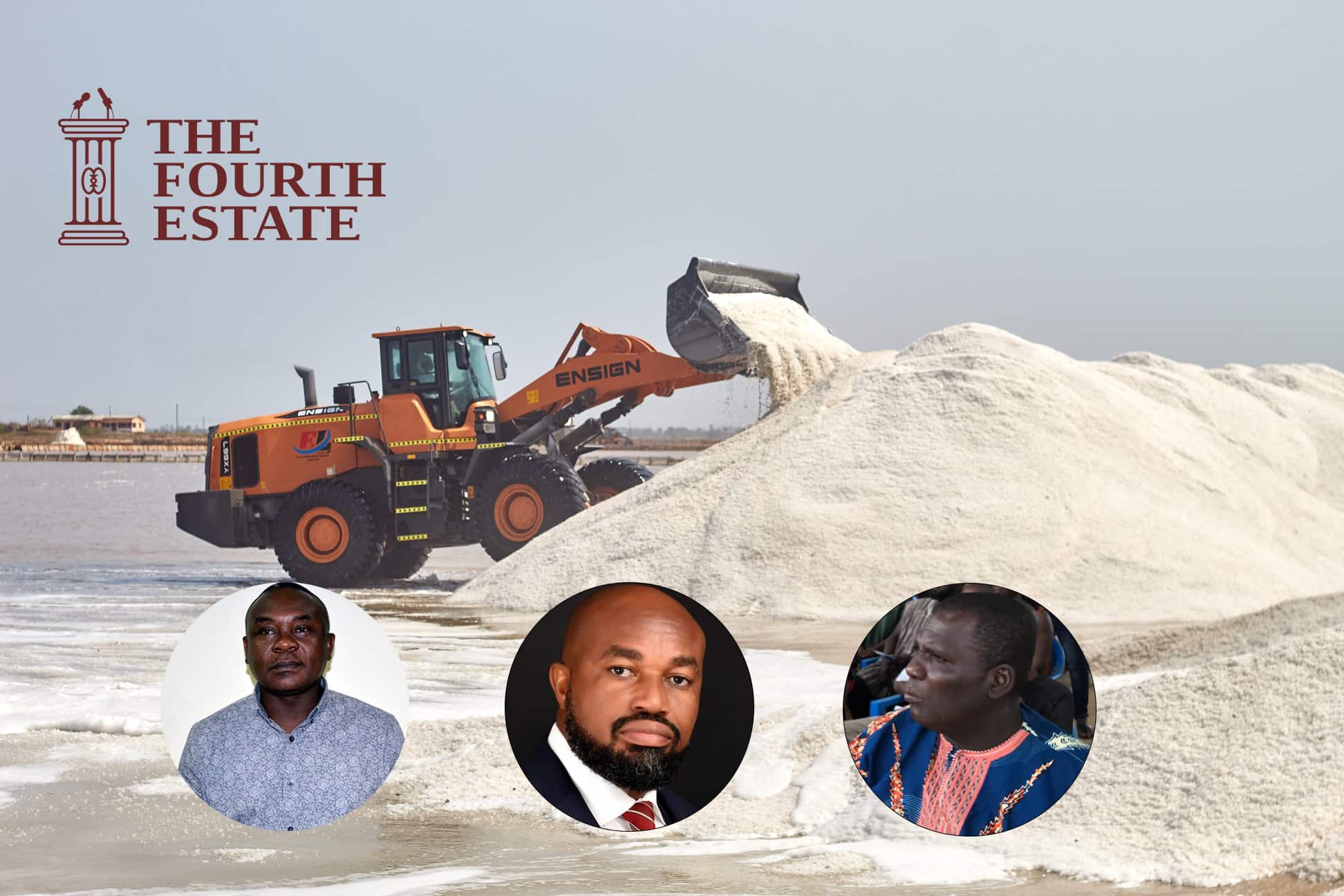
    A private citizen and four chiefs of Ada have filed two separate lawsuits seeking an injunction to stop Electrochem Ghana Limited from mining salt at Ada in the Greater Accra Region.

    Noble Wadzah, a former Chairman of the Public Interest and Accountability Committee (PIAC) and Nene Amartey Korley, Chief of Aminapah and three other chiefs, also want the High Court to, among other reliefs, declare the lease granted Electrochem illegal.

    Joined to the legal action are the Ministry of Lands and Natural Resources, State Interest and Governance Authority (SIGA), Minerals Commission and the Ada East District Assembly.

    The plaintiffs’ case is anchored on the grounds that the Electrochem deal was in gross violation of PNDC Law 287 and the Master Plan for the development of the salt industry in the Ada area. They are also claiming that the lease is an affront to the rights of indigenes who have lived within the Songhor Salt enclave for centuries.

    They also accused Electrochem of violating some terms of the lease agreement.

    PIAC former Chairman’s case

    In his suit filed before an Accra High Court, Mr Wadzah said the legal action was prompted by a letter from the district assembly directing salt miners on the Ada Songhor Lagoon site to vacate by December 31, 2023.

    He wants a judicial review of the lease agreement and a declaration by the court that the Electrochem lease is illegal, particularly when the company’s obligations in the lease do not conform with PNDCL 287 and the Master Plan.

    Mr Wadzah argues that Electrochem was required by the lease agreement to pay GHS2.3 million, which is 10% of the offer price of the lease as a deposit by August 31, 2021.

    Court documents show that it was not until September 7, 2021, that Mr Daniel McKorley, Executive Chairman of the McDan Group wrote to the branch manager of ADB Head Office, to request the transfer of the said amount to SIGA to make the deposit on behalf of Electrochem, which is a subsidiary of the McDan Group.

    Mr Wadzah also argues in his lawsuit, failure to make the deposit by the agreed date meant that Electrochem was in breach of the lease agreement.

    Further, Mr Wadzah stated that President Nana Akufo-Addo, who holds the Songhor Lagoon salt deposits in trust for the owners, must ensure that the salt is mined, and the salt industry developed in compliance with PNDC Law 287.

    President Nana Akufo-Addo was at the commissioning of the Electrochem Project in August last year

    He said a cursory look at Electrochem’s business plan showed that it had no plans to operate with the master plan for the area but rather to completely marginalise and eliminate small-scale mining at the lagoon site.

    “The Interested Party’s [Electrochem] acts of impunity have been fueled by the failure of the second and third respondents [Minerals Commission and SIGA] to ensure that the lease granted to the Interested Party and the divestiture respectively were granted in accordance with the law,” he added.

    Chiefs’ suit

    The case of the four chiefs is that they and their community stand to suffer greater hardship and irreparable damage if the Minerals Commission, the Ada East Assembly and Electrochem are not restrained from their lands until the final determination of the case.

    In their case filed before the Tema High Court on January 17, 2024, the chiefs claim that the government knew that the Terkpebiawe clan owned the Songhor Lagoon.

    According to the chiefs, although they had responded to a notice published by the Minerals Commission, indicating that their lives could be affected by the lease, the government failed to consult the principal members of the Terkpebiawe Clan but went ahead to grant the lease to Electrochem on October 29, 2020.

    Artisanal salt miners at Ada say they’ve mined the commodity in the Songhor lagoon for centuries but are being ejected because of Electrochem

    Our villages fall within the concession area and the indigenes of the villages have put up properties in the said areas. The properties in these villages include houses, schools, churches and other structures put up by the indigenes for the commercial activities, they said.

    The chiefs noted that although the Ada East District Assembly knew of the concession granted Electrochem, it kept issuing business permits to indigenes to win salt. The permits gave the indigenes the green-light to put up structures and buy machines to facilitate their salt-winning activities.

    “The defendants are aware of the fact that Parliament is re-examining the agreement between the State and the third defendant [Electrochem] but the defendants continue to intimidate and oppress the indigenes with the sole purpose of getting them out of their land even though they have not put in place any plan of resettling them,” the plaintiffs said.

    Citing an example of the harassment their communities were suffering, the chiefs said on December 14, 2023, the district assembly “ordered all persons occupying the lands within concession area to vacate the land for the third defendant [Electrochem].”

    YOU MAY ALSO WANT TO READ: 

    How a private company’s salt mining is undermining livelihoods, human rights, press freedom 


  • Because of your report Mahama says he will terminate our contract if elected: SML says in suit against MFWA, Manasseh

    Because of your report Mahama says he will terminate our contract if elected: SML says in suit against MFWA, Manasseh

    Strategic Mobilisation Limited (SML) says The Fourth Estate’s investigative reports on the SML and Ghana Revenue Authority (GRA) contracts has courted extreme publish backlash against the company to the extent that former President John Dramani has promised he would terminate the deal if elected president.

    The company in its legal action against the Media Foundation for West Africa (MFWA) said The Fourth Estate’s reportage had evoked among the public feelings of hatred and outrage against it, as well as a lot of reputational damage.

    SML said the reportage “has also resulted in public reactions and backlash, which had further hurt, marred and damaged the reputation of the plaintiff in the eyes of Ghanaians, causing distrust and a lack of confidence in the plaintiff’s operations in the petroleum sector.”

    SML claimed in court documents that although The Fourth Estate had published its rejoinders which rebutted earlier publications against it, The Fourth Estate continued to use words such as ‘shady’ and ‘questionable’ without any evidence in its subsequent publications.

    The company, therefore, wants the court to slap the MFWA with GHS 10 million in damages for what it said were the sins of The Fourth Estate, the accountability journalism project of the MFWA.

    The plaintiff also wants the court to grant a gagging order to restrain The Fourth Estate from publishing “any further defamatory material” about SML, as well as retraction and apology from The Fourth Estate.

    This is the second time SML is suing about The Fourth Estate’s stories. The company took legal action against The Fourth Estate in February 2024 following the release of the investigative report.

    The report raised questions about the circumstances surrounding the signing of the contract and its rationale as the services SML was contracted to provide were already being performed by other state agencies.

    In that suit, SML was demanding the same chain of reliefs including GHS10 million damages, a retraction and apology.

    However, the court last month dismissed the case because The Fourth Estate is not a registered entity but rather a project of the MFWA which could not sue nor be sued.

    SML indicated to the court that it would amend its suit to replace The Fourth Estate with MFWA.

    It did.

    Background

    After The Fourth Estate released its investigations in December last year, President Nana

    Akufo-Addo in January 2024 directed audit firm, KPMG, to audit the GRA/SML deal, following The Fourth Estate’s exposé on the revenue assurance contract.

    As contained in a statement released by the office of the President, the KPMG audit report revealed, among others, that despite initial disapproval from the Public Procurement Authority, the GRA went ahead to sign a contract with SML.

    “On three occasions, the GRA sought approval from PPA to use the single source procurement method to engage SML to provide transaction audit services. PPA did not grant approval,” the presidency said in a statement on April 24, 2024, almost four months after The Fourth Estate’s exposé.


  • Critical journalism: The Fourth Estate’s most impacful stories in 2023

    Critical journalism: The Fourth Estate’s most impacful stories in 2023

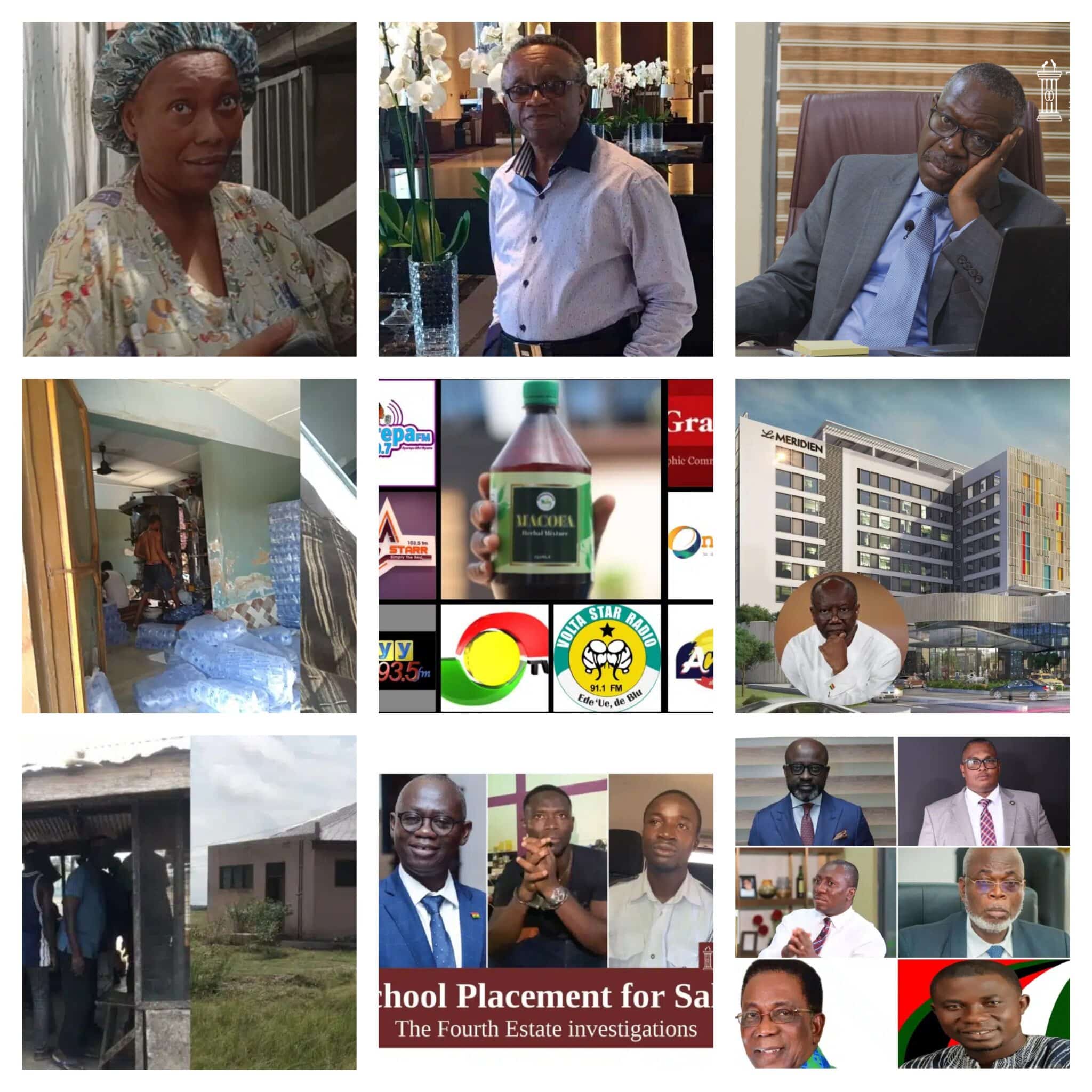
    As the clock ticks towards the end of 2023, it is time to reflect on stories that defined the year for The Fourth Estate. From exposing a quack midwife who is responsible for the death of babies and the maiming of others to the shedding of light on corruption in the school placement system through to the discovery of a questionable contract in the downstream oil sector that is stashing millions of dollars into the bank account of an offshoot of a timber company, The Fourth Estate has been at the forefront of accountability and critical journalism that made impacts.

    Join us in revisiting the most impactful headlines that got public officeholders to act.

    The GH₵ 3 billion lie

    With a few days for the sun to set on the year, The Fourth Estate released The GHC3 billion lie: Government pays hundreds of millions to company in a shady deal — a-year long investigation— that revealed how the Ministry of Finance awarded a questionable contract to Strategic Mobilisation Limited (SML), a company with no history of  revenue assurance to track the operations of the downstream petroleum sector. This is a job the Ghana Revenue Authority (GRA) and the National Petroleum Authority are already doing.

    The Fourth Estate estimates that the company will rake in over $100 million annually with the expanded new contract.  

    Ever since the two-part investigation was released SML and the GRA have been falling over each other to defend the deal which has triggered a national uproar.

    Unconvinced by the rationalisation from SML, GRA and finance ministry,  Parliament has directed the GRA to suspend payments to SML as it investigates the questionable contracts.

    Macofa exposé

    The Macofa Herbal Mixture artwork

    The Fourth Estate in September released a bombshell that shook the media and herbal medicine industry in Ghana. Through Dangerous endorsements: Exposé on herbal medicine advertising in Ghana, we sought media and regulatory accountability by revealing how the media bypassed advertising regulations to advertise a herbal medicine that was not approved by the Food and Drugs Authority (FDA). The story also revealed a rather lax regulatory environment, which exposed the FDA and the Traditional Medicine Practice Council (TMPC) for sleeping on their job. Flowing from the story, the Ministry of Health promised a probe into the affairs of the TMPC to find its staff who issued licenses without due diligence. The FDA took a cue from the  health ministry’s pledge, and also vowed to  clamp down on media advertisement of unapproved drugs.

    Quack midwife

    Full Video_ The Quack Midwife

    Medical negligence is a malaise the Ghanaian healthcare system seems unable to cure. In most instances it is qualified health professionals who are accused of not living up to their professional responsibilities, leading to fatalities or injuries.

    However, in 30 years of deception: quack midwife’s shocking trail of deaths and malpractice exposed The Fourth Estate discovered how the owner of a private medical centre allowed an unqualified midwife to practice midwifery in his South Odorkor medical centre with tragic results. The 18-month investigations also exposed the Health Facilities Regulatory Authority (HeFRA) and the Nursing and Midwifery Council’s sloppy regulatory work. In the end, HeFRA found its teeth and fined two healthcare institutions involved while two victims were compensated. The quack midwife is currently on the run.

    School Placement Corruption

    school-placement-for-sale

    In the first half of 2023, The Fourth Estate put faces to the corruption that plague the school placement system, which is rigged annually by faceless people selling spots in some of the nation’s best schools to the highest bidders. The Fourth Estate uncovered fraud in the computerised school placement programme with the involvement of some top officials of the education ministry.  Following our work, eight persons are currently under prosecution.

    Is your sachet water safe?

    Water is life. Few will disagree with that. But in Accra, water exposes hundreds of thousands to several debilitating diseases. Through a nine-month investigation The Fourth Estate uncovered 144 sachet water companies in Accra producing without FDA license and in unhygienic environments. After the publication, the FDA shut down a sachet water company for producing an unregistered brand.

    Many more are out there, still operating illegally.

    1D1F hotel

    Do hotels qualify to be designated as factories? May be their kitchens produce enough food to take on the title of a factory. In August, The Fourth Estate unveiled a rather cunning way 4-Mac Limited, a Ghanaian company, received almost $4 million in tax exemptions after it was designated as 1D1F entity. The 1D1F is the government’s ambitious industrialisation policy to motivate the private sector to set up at least one factory in all 261 districts in the country. The story caught the attention the Chairman of the Finance Committee of Parliament and Member of Parliament for Obuasi East, Kwaku Kwarteng, who initially apologised for what he described as an embarrassing error only to turn around and issue three rejoinders.

    Asset declaration law  

    Leaders-of-parliament-who-never-declared-their-assets
    Leaders of parliament who had not declared their assets

    Asset declaration law  

    There were no rejoinders from Parliament when The Fourth Estate put its spotlight on public officeholders who have not declared their assets and liabilities in compliance with Article 286 of the 1992 Constitution. Rather, there was a scramble for compliance as lawmakers, judges, ministers, metropolitan, municipal and district chief executives rushed to meet the constitutional obligation. A spillover from last year’s asset declaration series, The Fourth Estate found that 294 political appointees rushed to declare assets following the publications.


  • New Generation Medical Centre compensates victims of quack midwife

    New Generation Medical Centre compensates victims of quack midwife

    The New Generation Medical Centre has compensated two victims of its medical negligence, after an 18-month investigation by The Fourth Estate revealed the death of at least two children and the maiming of others.

    The Fourth Estate’s sources say two of the victims, who asked to be known only as Kate and Bernice during the investigations, received GHC50,000 each from the hospital following their ordeal at the hands of a quack midwife, Francisca Quaye. The two had threatened legal action against the South Odorkor-based health facility.

    But before the threat developed into a full-blown legal battle, the hospital opted for settlement.

    Kate’s baby died at the New Generation Medical Centre but was told that the baby had been taken to the Neonatal Care Unit at the Korle-Bu Teaching Hospital. Bernice had a crude episiotomy performed by none other than a quack midwife, Francisca Quaye, alias Matron Gaga. About a week after the medical procedure, her vagina emitted an unpleasant odour, which led her mother to discover that a pad had been left inside her.

    An episiotomy is a cut (incision) through the area between the vaginal opening and the anus. This procedure is done to make the vaginal opening larger for childbirth.

    Both Bernice and Kate said they are psychologically scarred by their experiences at the hospital.

    Prior to the compensation payout to Kate and Bernice, the New Generation Medical Centre paid a fine of GHC80,000 for employing the services of the quack midwife, Francisca Quaye, who had been in the service of the health facility for almost 30 years. A second hospital which employed Ms Quaye after she was sacked from New Generation Medical Centre was fined GHC25,000.

    The Health Facilities Regulatory Agency (HeFRA) said the number of deaths, cases of injury, and other incidents, the use of an unqualified staff to provide service in a licensed facility for nearly 30 years informed the decision to impose the heaviest fine ever in the agency’s history on the two facilities.

    HeFRA’s Registrar, Dr Philip Bannor, said the fine imposed on the New Generation Medical Centre was the highest penalty ever slapped on a facility for flouting HeFRA’s regulations. He explained that management of the two facilities looked on while the quack midwife practised, without any checks, with preventable deaths recorded at the New Generation Medical Centre.

    HeFRA’s position affirmed Dr Ralph Obeng Owusu Snr, the Chief Executive Officer of the New Generation Medical Centre’s confession to The Fourth Estate that he could have handled the situation better.

    “It was probably a little bit of naivety on my part…But the thing with her was she was a little boisterous when it came to things of that nature,” Dr Obeng told The Fourth Estate. “…Partly, I’ll take the blame because she had been under my tutelage for quite a while.”

    The Fourth Estate’s investigations revealed that at least two babies died within 11 months due to the negligence of Ms Quaye.

    The New Generation Medical Centre, however, concealed the two deaths recorded at the facility, as it told the Greater Accra Regional Health Directorate that it did not record a single death, be it a mother or a child from 2016 to 2021.

    The quack midwife, who is currently on the run, had practised for more than 30 years.

    The President of the Midwives Association of Ghana, Mary Ofosu, condemned Ms Quaye’s unconventional and incompetent actions, including inducing pregnant women and asking them to go home, while she worked at the New Generation Medical Centre. She said the practice was inconsistent with midwifery practice.

    “A midwife cannot do induction on her own,” she said. “There must be a medical officer or specialist around. You should also have a theatre around because induction can fail. So, when you induce and it fails, we need to take the client to the theatre. So, before you do induction, you need to get all those things around.”

    The Fourth Estate’s investigations revealed that Ms Quaye had never been to any nursing or midwifery training school.

    To be recognised as a midwife in Ghana, one has to attend an accredited nursing/midwifery training institution and pass a licensing exam conducted by the Nursing and Midwifery Council (N&MC), renewable annually. Any exemption to this rule may only be granted by the board of the N&MC.

    Ms Quaye had neither a license nor an exemption. She was a janitor at the now-defunct Susan Clinic, where she met Dr Obeng, who did little to stop her from working in his labour ward.

    Unannounced inspections by HeFRA

    Until The Fourth Estate’s exposé, HeFRA was required to announce schedules for its visits to health facilities for inspections.

    However, Agyeman Badu, HeFRA’s Director of Compliance and Enforcement, told The Fourth Estate that the two healthcare facilities had lost that privilege as the agency’s inspectors would now visit the facilities for six months until it was satisfied with their level of compliance.

    Similarly, he said HeFRA had decided to pay unannounced visits to all registered healthcare facilities nationwide as part of measures to curtail the ingenious ways some facilities hid their unscrupulous activities.

    He observed that the gaping loopholes in HeFRA’s monitoring system had been reviewed and that mechanisms for monitoring health facilities in the country had been enhanced.

    “Relative to this particular story, [The Fourth Estate’s Quack Midwife Series], we have decided that it shouldn’t always be the case that we are prompted.

    “So, we have stepped up our monitoring activities across the regions such that even facilities that have been licensed also fall in line, to make sure that the conditions for which they are licensed are not varied, which will affect patients’ safety,” he said.

  • The Fourth Estate’s exposé leads to fines on two hospitals for employing quack midwife

    The Fourth Estate’s exposé leads to fines on two hospitals for employing quack midwife

    The Health Facilities Regulatory Agency (HeFRA) has imposed a fine of GH₵105,000.00 on two healthcare facilities at South Odorkor in Accra, for employing the services of a quack midwife.

    While the New Generation Medical Centre was slapped with the heaviest fine of GH₵ 80,000.00, the Adams Family Specialist Clinic has to cough out GH₵ 25,000.00 (both equivalent to $9,051.72).

    HeFRA said the number of deaths, cases of injury, and other incidents, the use of an unqualified staff—Francisca Quaye— to provide service in a licensed facility for nearly 30 years informed the decision to impose the heaviest fine ever in the agency’s history on the two facilities.

    In May this year, the regulatory agency launched investigations into the activities of the two healthcare facilities, following The Fourth Estate’s investigations into the work of Francisca Quaye, alias ‘Matron Gaga’, an unlicensed midwife. She worked at the two medical centres. The Fourth Estate’s 18-month investigations discovered that the quack midwife, who is currently on the run, had practiced for more than 30 years.

    The Fourth Estate found evidence of multiple medical mishaps, including the disturbing death of at least two newborn babies at the New Generation Medical Centre within 11 months. The records of the facility were sanitised to hide these deaths.

    Registrar of the Health Facilities Regulatory Authority (HeFRA), Dr Philip A. Bannor

    HeFRA’s Registrar, Dr Philip Bannor, told The Fourth Estate that “both of them [the two medical facilities] have paid the fine. The reason [they were fined] is that they should have checked her credentials before employing her.”

    Dr Bannor said the fine imposed on the New Generation Medical Centre is the highest penalty ever slapped on a facility for flouting HeFRA’s regulations. He explained that management of the two facilities looked on while the quack midwife practiced, without any checks, with preventable deaths recorded at the New Generation Medical Centre.

    Dr Ralph Obeng Owusu Snr, the Chief Executive Officer of the New Generation Medical Centre said he’ll partly take the blame for Francisca’s unethical behaviours

    HeFRA’s position affirmed Dr Ralph Obeng’s confession to The Fourth Estate that he could have handled the situation better.

    “I agree with you. It was probably a little bit of naivety on my part…But the thing with her was she was a little boisterous when it came to things of that nature. Anytime there was a problem, I used to talk to her. It was supervision, I didn’t know there would be so many problems,” Dr Obeng told The Fourth Estate in October 2021.

    “…Partly, I’ll take the blame because she has been under my tutelage for quite a while,” he added.

    HeFRA said as part of measures to ensure compliance with the sanctions, the two facilities have been informed that there would be unannounced special monitoring visits.

    These visits are meant to ensure that the two facilities do not employ the services of an unqualified staff.

    Dr Nana Esuman, Medical Director, Adams Family Specialist Clinic had told The Fourth Estate that the quack midwife did not deliver any baby at his facility but further investigations by HeFRA showed that Francisca Quaye delivered two babies during her two-month stint at the clinic

    During the investigations, the Medical Director of the Adam Family Specialist Clinic, Dr Nana Oduro Essuman, told The Fourth Estate that the quack midwife was employed as a midwife assistant, a position the Nursing and Midwifery Council (N&MC) says does not exist. However, further investigations by HeFRA showed that Francisca Quaye delivered two babies during her two-month stint at the clinic.

    Unannounced inspections by HeFRA

    The fine is part of a wave of reforms The Fourth Estate investigations have triggered.

    Until The Fourth Estate’s exposé, HeFRA was required to announce schedules for its visits to health facilities for inspections.

    However, Agyeman Badu, HeFRA’s Director of Compliance and Enforcement told The Fourth Estate that the two healthcare facilities had lost that privilege as the agency’s inspectors would visit the facilities for six months until it was satisfied with their level of compliance.

    Similarly, he said HeFRA had decided to do intermittent unannounced visits to all registered healthcare facilities nationwide, as part of measures to curtail the ingenious ways some facilities hid their unscrupulous activities.

    He observed that the gaping loopholes in HeFRA’s monitoring system had been reviewed and that mechanisms for monitoring health facilities in the country had been enhanced.

    “Relative to this particular story, [The Fourth Estate’s Quack Midwife Series], we have decided that it shouldn’t always be the case that we are prompted. So, we have stepped up our monitoring activities across the regions such that even facilities that have been licensed also fall in line, to make sure that the conditions for which they are licensed are not varied, which will affect patient safety.”

    He said HeFRA now has 200 monitoring officers nationwide for the job.

    Background

    Quack midwife, Francisca Quaye, whose 30-year practise resulted in the death of babies at the New Generation Medical Centre

    HeFRA announced investigations into the activities of the two health facilities following an investigative report by The Fourth Estate which showed the shocking trail of deaths and malpractices at the New Generation Medical Centre under Francisca Quaye’s watch.

    Now on the run, she had practised without either training or license for more than 30 years. During this period, she was the instrument of numerous medical mishaps, with at least two children dying during delivery and another maimed at the New Generation Medical Centre within 11 months.

    The New Generation Medical Centre, however, concealed the two deaths recorded at the facility, as it told the Greater Accra Regional Health Directorate that it did not record a single death, be it a mother or a child from 2016 to 2021.


    President of the Midwives Association of Ghana, Mary Ofosu, condemned Francisca Quaye’s unconventional and inconsistent actions

    The President of the Midwives Association of Ghana, Mary Ofosu, condemned Francisca Quaye’s unconventional and inconsistent actions, including inducing pregnant women and asking them to go home, while she worked at the New Generation Medical Centre. She said the practice was inconsistent with midwifery practice.

    “A midwife cannot do induction on her own,” she said of Matron Gaga’s Cytotec procedure. “There must be a medical officer or specialist around. You should also have a theatre around because induction can fail. So, when you induce and it fails, we need to take the client to the theatre. So, before you do induction, you need to get all those things around.”

    The Fourth Estate’s investigations revealed that Francisca Quaye had never been to any nursing or midwifery training school.

    To be recognised as a midwife in Ghana, one has to complete an accredited nursing/midwifery training institution and pass a licensing exam conducted by the N&MC, renewable annually. Any exemption to this rule may only be granted by the board of the N&MC.

    Francisca Quaye has neither a license nor an exemption. In fact, the closest she got to the ward was being a janitor at the now-defunct Susan Clinic, where she met Dr Obeng, who did little to stop her from the labour ward.

    You may also want to read:

    30 years of deception: quack midwife’s shocking trail of deaths and malpractice exposed 

    Quack midwife: How regulatory bodies failed patients of South Odorkor clinics 


  • Ken Agyapong’s presidential bid: A potential toxic presidency or a path to transformative leadership?

    When Assin Central Member of Parliament, Ken Agyapong, announced his 2024 presidential bid, many dismissed it as one of his usual rhetorics.

    To some analysts, the six-term legislator’s decision is to gain another level of relevance in a race that pollsters had predetermined to be between Vice-President Dr Mahamudu Bawumia and former Trade and Industry Minister, Alan Kwadwo Kyerematen, who has since left the New Patriotic Party (NPP).

    There were several reasons for this scepticism. First, he had literally washed his hands off a presidential ambition multiple times since 2017. The last time was in February last year, when he insisted, he did not need to be president to change the lives of Ghanaians. He would later claim he didn’t want to distract President Nana Akufo-Addo with his aspirations.

    Secondly, given his loud, quick-tempered and headline-grabbing feuds, political analysts were quick to write him off as a presidential material.

    However, his second-place finish during the NPP’s August Super Delegates conference made his intention clear. He has been tapping into the growing discontent against the Akufo-Addo administration because of the country’s economic crisis while positioning himself as a major contender against Vice-President Dr Mahamudu Bawumia.

    With Alan Kyerematen’s presidential odyssey in the NPP coming to an end, Mr Agyapong appears ready to fight for the ticket.

    Source of wealth

    Ken Agyapong, a graduate of Fordham University in the United States, is widely regarded as a wealthy businessman. However, his critics have questioned his source of wealth; with some labelling him as a drug lord, although no evidence has been produced to back this claim. While quick to laugh off the tag, in 2015, he set tongues wagging with the assertion that about 85 percent of indigenous businessmen are drug barons.

    He takes credit for the financial engineering that got Chinese funding for the construction of the Bui Dam. His business portfolio also includes radio and television stations, cold stores, real estate, shopping centres, a commercial farm and an energy company.

    Beyond the NPP internal politicking, Mr Agyapong has been talking a great game about how he can revitalise the ailing economy, putting emphasis on growing tourism, reducing interest rates, industrialisation, job creation, foreign direct investment and eliminating nepotism and favouritism from public office.

    He has also given a hint of what would engage his attention in his first 100 days in office—reorient the mindset of Ghanaians through a collaboration with musicians.

    As an MP, he does not have a significant legislative record. Although he chaired some committees, he is loudest outside the chamber. The applause, however, is resounding for his philanthropic work and lobbying for projects for his constituency.

    But Ken Agyapong is a man of a thousand controversies.

    Ghana’s version of Trump?

    One to easily court controversy, many have likened Mr Agyapong to former American President Donald Trump, the anti-establishment politician and businessman, whose populist slogans and promises convinced Americans to elect him over former Secretary of State, Hillary Clinton.

    He is, however, uncomfortable with being compared to the controversial former American president, who is currently on trial for nearly turning American democracy on its head. But he is interested in borrowing a Trump idea – build a wall around the Korle Lagoon to protect the water body from unending pollution.

    On that score, their similarities are many.

    A volcanic temper is a common trait of the two. They both command a lot of respect from the grassroots.

    Both do not count on classroom education as their biggest strengths but are quick to point to street credo as the foundation of their success in businesses and highlight this as evidence of their ability to manage the economy and create jobs.

    Similar to Trump, Mr Agyapong uses a lot of unfiltered language whether it’s on his employees, opponents, his party or the state institutions he is seeking to lead.

    Just like the former American President, Mr Agyapong in his attempt to appeal to voters who are disillusioned with the government has positioned himself as an outsider who is not part of the political establishment.

    But is Ken Agyapong truly an outsider? Mr Agyapong, who has been meeting delegates, has been touting his business credentials and painting himself as a Jubilee House outcast.

    The records, however, say otherwise.

    In Ghana, the award of contracts to party members is seen as the spoils of electoral war. Although Mr Agyapong has a record of railing against the elites and powerful in the Akufo-Addo administration, and past governments, the reality is that he is not an outsider. Having been an NPP financier for years, he shouts the loudest when perks of party financing, including contracts don’t go his way.

    A generous financier of the NPP, Ken Agyapong feels entitled to contracts and does not hesitate to point that out

    In March 2017, just three months after the NPP came to power, Mr Agyapong was involved in shadow boxing with the Executive Secretary of the National Identification Authority (NIA), Prof Ken Agyeman Attafuah, over a $293 million contract the authority had awarded a rival company, the Margins Group, for the printing of the Ghana card.

    He claimed he bided for the printing of the Ghana card and could have done it for less. He accused Prof Attafuah of inflating the contract sum to $1.2 billion which turned out to be false. He also alleged that the NIA Executive Secretary received bribe, including a parcel of land to award the contract to the Margins Group. Prof Attafuah vehemently denied that allegation.

    A year after the verbal exchanges with the NIA Executive Secretary, it came to light that a company belonging to Mr Agyapong’s wife, Imperial World Ventures, was awarded a GH₵100 million contract for the supply of 150Watts LED streetlights through restrictive tendering.

    In July 2021, he was appointed as the board chairman of Ghana Gas, the company that operates the country’s natural gas resources. Such appointments have been criticised in the past because they contribute to weakening parliament. Experts say MPs who chair these boards are often caught in a conflict-of-interest situation and are often swift to lobby their peers in the House, rallying them to close their eyes to wrongdoing in the state-owned enterprises they oversee.

    In February 2022, the MP claimed he had to beg like a child to secure contracts from the government. However, he contradicted himself in September 2022 when he claimed that he had not been awarded any government contract since 2021.

    While Ken Agyapong (left) wants the electorates to believe he is outside the inner circle of the Akufo-Addo (right, in blue) administration, the reality says otherwise.

    Even in a loose sense, anti-establishment politicians do not frolic with the executive let alone benefit from political perks. Mr Agyapong belongs to the inner circle of President Nana Akufo-Addo and was even reported as saying that the president was shocked to hear that he (Agyapong) was not getting government contracts.

    Further evidence of him being a close associate of the president also played out in his own admission in 2021. He claimed he had collected GH₵120,000 from the Chief of Staff, Frema Osei Opare, to deposit into Dome-Kwabenya MP, Adwoa Safo’s account. This transaction was meant to serve as an incentive to persuade Ms Safo to return home during a critical period in Parliament when the government was struggling to pass the e-levy, given its thin majority in the House. The Dome-Kwabenya MP, who was also the Gender Minister, had abandoned post to live in the US with the excuse of attending to her sick child. The two lawmakers have children together.

    Lawless causes

    Mr Agyapong has had his days in the courtroom from criminal to defamation cases.

    In July 2013, a circuit court acquitted and discharged Mr Agyapong after more than a year of trial. The vociferous legislator was dragged before court in April 2012 and initially charged with attempted treason, genocide and terrorism, but the state later substituted the charges and slapped him with provocation of riot and offensive conduct conducive to the breach of the peace.

    Given everything that has happened in the past seven years, it’s not a surprise that Mr Agyapong during his recent campaign had denied having anything to do with the death of Ahmed Hussein Suale, the undercover investigative journalist who was shot weeks after the lawmaker blew his cover on television. On January 16, 2019, Suale was fatally shot by men on a motorbike as he drove his car in his neighbourhood at Madina in Accra. But more than five years later, the police have failed to identify the culprits.

    Other journalists, including Joy News’ Erastus Asare Donkor, have been threatened by the lawmaker. The Speaker of Parliament in 2021 referred the threat against Mr Donkor to the Privileges Committee but the outcome is yet to be made public.

    Although a lawmaker, Mr Agyapong has often supported causes that question his commitment to law and order. When members of the Delta Force, a vigilante group in the NPP attacked and forced out the Ashanti Regional National Security Coordinator, George Agyei, because he was not from the region, the legislator was quick to rally to their support.  He was reported as saying that if he had been there, he would have clapped for them and urged them to slap Agyei.

    “Anyone should dare and put any of the Delta Force guys on trial. I would personally lead demonstrations against the NPP and Kan Dapaah. Nana Addo didn’t win easily; we fought and these boys were at the war front when they were fighting,” he threatened.

    In 2017, these members of Delta Force invaded the court trying some of their members for assaulting the Ashanti Regional National Security Coordinator

    Probably taking inspiration from this statement, the Delta Force members invaded a courtroom to release 13 of their members who were on trial. In the end, they each paid GH₵1,800 for their rowdy behaviour. In the past, others have been jailed for words that were in contempt of court.

    He is also on record to have defended persons caught in alleged corrupt practices including the former Public Procurement Authority Chief Executive Officer, A.B Adjei, who allegedly formed a company that won and sold contracts to the highest bidder and Kwesi Nyantakyi, a former President of the Ghana Football Association, who is currently being prosecuted for a raft of corruption allegations.

    Work as an MP

    When the sun sets on the tenure of the eighth Parliament, Mr Agyapong would have been a lawmaker for 24 years. But when counting Ghana’s most outstanding legislators of the Fourth Republic, the six-term MP might not make the list.

    As a member of Parliament, Ken Agyapong’s record in the chamber is more of silence than action      Credit: 3News.

    Under his tenure as the Chairman of the Communications Committee, the National Communications Authority shut down more than 100 radio stations from 2017-2019 for various offences including operating with invalid licenses. Some of these stations were said to be affiliated with the opposition National Democratic Congress (NDC). His own radio station, Oman FM, was reportedly on the list of the blemished, but was not shut down.  He later claimed he pleaded with the Ministry of Communications to have the decision reversed to no avail.

    As Chairman of the Defence and Interior Committee in 2021, and one who claims hatred for injustice, one would have expected that he would champion an investigation into the murder of the eight people in the Techiman South Constituency during the 2020 elections. It did not happen.

    Attack on institutions 

    Over the years, Mr Agyapong has used his radio and television stations to castigate all those who got on his wrong side. The judiciary, former presidents John Mahama and Prof J.E.A Mills (now late) and parliament have all received tongue lashes.

    Kennedy Ohene Agyapong, MP for Assin Central
    Ken Agyapong’s commentary on Net 2 TV is often fiery

    So has he often been embroiled in seemingly trivial rows with various public figures, including musicians, actresses, journalists, pastors, trading unpleasant soundbites.

    In September 2020, Mr Agyapong stunned the country when he descended on a judge handling a land case he was involved in, describing him with unprintable words. In response, the judge ordered him to appear before the court.

    He did.

    Before the judge, his volcanic outburst disappeared and was replaced by a much tamer demeanour. But before the judge could take a decision in the contempt case, Mr Agyapong ran to the Supreme Court, accusing the judge of being biased because the judge mentioned “severe punishment”. The apex court agreed with him and directed that the case be sent to another judge for the contempt trial. He later apologised to the judiciary and in 2021 became a member of the Judiciary Committee of Parliament.

    That trial is yet to happen.

    However, when he offended his peers in Parliament, allegedly calling the House ‘cheap and useless’, they did not spare him. The then Minority Chief Whip, Mohammed Muntaka Mubarak, dragged him before the Privileges Committee of the House where he was found guilty of contempt of Parliament.

    Again, he got away with punishment because of the partisanship in the House.

    While they were in office, former presidents J.E.A Mills and John Mahama tasted his venom. He described the now late Prof Mills as the country’s ‘chief thief’ and Mr Mahama as greedy and incompetent.

    In December 2020, he accused Mr Mahama of being a thief and the brain behind numerous burnt markets and threatened to burn down the former president’s house, only to recently apologise that allegations he made against the former president were jokes.

    The most denigrating of these insults was directed at Charlotte Osei, the then EC Chairperson, whom he accused of trading sex for her position.

    Economics and Political Risk Analyst, Dr Theo Acheampong, told The Fourth Estate that although Mr Agyapong had lofty ideas, it would be impossible to implement them.

    “Nothing shows that he can. Isn’t he a part of the rot/mess of this country?”

    On Mr Agyapong’s ability to fight corruption, Dr Acheampong observed that Mr Agyapong is far from being a redeemer.

    “Everyone is neck deep. Me, I doubt if he or anyone else can fight it unless there is a fundamental resetting through major constitutional reforms,” he said.

    Is Ken Agyapong suitable for the presidency?

    Economist and Political Risk Analyst, Dr Theo Acheampong, while not optimistic about a better Ghana under a Ken Agyapong presidency noted that “the grassroots or ordinary people like him because he’s seen as a doer or no nonsense person.”

    From the evidence in this analysis, Mr Agyapong’s conduct over the years in attacking presidents, the judiciary, and even parliament, where he is a legislator, openly supporting persons accused of corruption, threatening journalists and the use of inflammatory language against public officeholders raises serious concerns about his suitability for higher office.

    Such actions demonstrate a lack of respect for democratic institutions and the rule of law, which are essential pillars of any functioning democracy. His divisive actions and rhetoric could further polarise the nation, thereby undermining social cohesion. Already, tribal politicking is showing in his campaign ahead of the NPP’s November 4, 2023, presidential primary.

    Aspiring to be president requires statesmanship, integrity, and the ability to unite people. Mr Agyapong’s current conduct is at odds with his ability to fulfil these criteria.

    If he cannot show decorum and continues to undermine institutions, can he preserve Ghana’s democratic values and uphold and defend the constitution?


  • Lighthouse loses court case again

    Lighthouse loses court case again

    A former bishop of the Lighthouse Chapel International (LCI), Larry Odonkor, on Friday walked out of an Accra Circuit court a free man after the court acquitted him of charges of stealing his social security contributions and income tax.

    In siding with the accused, the court presided over by Ellen Ofei-Ayeh stated that the prosecution failed to prove the necessary ingredients of the alleged crime.

    It is an end to 19 months of the case in which the LCI had alleged that Bishop Odonkor had pilfered funds that he should have used to pay his income tax and Social Security and National Insurance Trust (SSNIT) contributions after he had written cheques for those purposes.

    He was charged with two counts of dishonestly appropriating GH₵3,257.00 belonging to the church. He pleaded not guilty to the charges.

    The court agreed with him and ruled that the prosecution failed to prove the intent to steal and that the accused had a legitimate claim of right to the money contrary to the church’s complaint to the police.

    The judge also ruled that the prosecution failed to prove the salary of the accused which would have determined the accompanying tax and social security contributions.

    The latest court decision is the third time the church has lost a case against Bishop Odonkor, who is one of six former ministers of the LCI, who sued the church in April 2021 for non-payment of their pension contributions, economic exploitation, and emotional abuse.

    Bishop Larry Odonkor in a photo with Bishop Dag Heward Mills, Founder of the UD Group of Churches

    The church struck back, counter-sued all six, and filed criminal complaints against Mr Odonkor in Ghana and then later in Madagascar.

    In August last year, the same court in response to an application for a ” submission of no case to answer” filed by the accused, ruled that the accused had only one count to answer for, and dismissed the other charge against him.

    The judge said having considered all the evidence in record, she did not “find any evidence has been led by the prosecution that the accused person in April 2020 appropriated funds [to] the sum of GHC 3,527.00 dishonestly, belonging to LCI, as charged under count two. It is for this reason he is accordingly acquitted on this charge as no case has been made on this count.”

    Larry Odonkor and his lawyer, Kofi Bentil, had a fist bump in celebration after his acquittal at the Accra Circuit Court

    Before his legal tussle with the church, Bishop Odonkor had headed branches of the church in South Africa and later, Madagascar. He spent at least a decade outside the country in the name of the LCI.

    He returned to Ghana in January 2020 and was sent to Akim Oda in the Eastern Region to head the church’s branch there. He resigned four months later.

    In December 2021, the LCI in Madagascar sued Bishop Odonkor, accusing him of selling the church’s Toyota Land Cruiser and pocketing the money. Lighthouse had asked the court to order Bishop Odonkor to cough up 80 million Ariary (GH¢157,200.00) in damages.

    The court published its judgment in French, copies of which The Fourth Estate obtained and translated into English.

    It said the court “hereby rules in favour of Larry Odonkor; declares all claims by Lighthouse Chapel International to be ill-founded and dismisses them all without prejudice…”

    Background

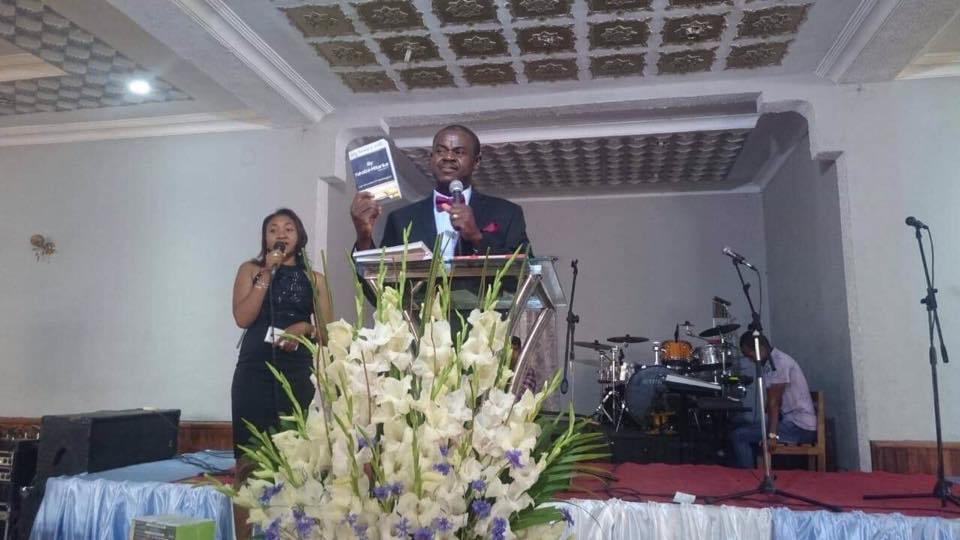
    Bishop Larry Odonkor holds a book during a sermon. Credit: Facebook/Larry Odonkor

    The prosecution’s case against the former LCI bishop was that, from January 2020 to April 2020, Bishop Odonkor served as the head pastor of the Akim Oda branch of the church, and as such, he was responsible for the day-to-day administration of the branch.

    As part of his responsibilities, he was to see to the payment of his SSNIT contributions and those of others working under him. In March, he allegedly wrote a cheque of GH₵8,527.00 dated March 10, 2020, comprising his February 2020 salary of GH₵5,000.00, together with his SSNIT contributions and income taxes of GH¢1,667.00 and GH¢1,850.00 respectively for the months of January 2020 and February 2020. The funds were deposited in his personal account. However, he failed to pay the SSNIT contributions and tax components of the amount drawn to the appropriate authorities.

    Again, in April 2020, he wrote a cheque of GH¢8,527.00 comprising his salary of GH¢5,000.00 for the month of March 2020, together with SSNIT contributions and taxes of GH¢1,667.00 and GH¢1,850.00 respectively for the months of March 2020 and April 2020. However, he failed to remit the social security and tax portions to the relevant institutions.

    The church, which is a complainant in the case, claimed that its attention was drawn to the issue in September 2020 and it was made to cough out the SSNIT contribution and the unpaid taxes with their penalties amounting to GH¢10,963.00. The prosecution also alleged that the accused admitted to signing the two cheques, the reason he was charged for the alleged crimes and dragged to court.

    Court records show that Bishop Odonkor in his defence had said the amount in question was lower than his expected salary which was in arrears for over a month, but he was told to “hold on to this”, meaning he could expect more later.

    He had also informed the human resource manager then that his previous salary was the equivalent of $1,000 in Madagascar and he had been upgraded to a level that he expected a salary of $1,200 or more, which was far in excess of what he was paid.

    His lawyer also told the court that upon his resignation, Bishop Odonkor attempted to find out from an Archbishop of the church regarding any financial obligations he might have towards the church; however, he was told he had none.

    Furthermore, the document showed that “there was no discussion or instruction given that Larry should pay a portion of the cheque to SSNIT or Ghana Revenue Authority (GRA), indeed it was never mentioned. Usually when SSNIT payments are added to the duty of the bishop, he is given detailed instructions as provided in evidence. The entries on the vouchers were not made by Larry and he was not alerted to them at any time till this case started.”

    Employees not responsible for PAYE deduction and payment 

    The court documents also showed that in October 2021, the police wrote to the GRA to request information on the tax status of Bishop Odonkor.

    The GRA in response said Bishop Odonkor had not paid any tax to the GRA ever since he registered for a tax identification number in 2020.

    The GRA was also quick to point out that “the decision of the church, LCI to allow Mr Odonkor to collect the tax component with the pretense of paying same to GRA is not consistent with Section 114 of the Income Tax Act 2015 (Act 896) which requires [an] employer as a withholding agent, to deduct from income of employee PAYE and remit to GRA.”

    SSNIT also responded to a police inquiry stating that no contribution was made in the name of Bishop Odonkor during the period in question. However, in September 2020, the church made payments to settle the arrears.

    You may also read:

    https://thefourthestategh.com/2022/06/21/lighthouse-loses-case-against-resigned-bishop-larry-odonkor/

    https://thefourthestategh.com/2023/07/13/lighthouse-chapel-revokes-car-gift-to-former-bishop-drags-him-to-police/


  • Why President Akufo-Addo will not fall for the grand plot against IGP Dampare

    In the last two days, the name, Dampare, has been trending on both mainstream and social media. This follows public conversations about the content of a leaked audio recording that reveals a plot against the current Inspector General of Police (IGP) Dr. George Akuffo Dampare.

    The recording features a voice that is said to be that of a Commissioner of police in a conversation with a senior member of the ruling New Patriotic Party (NPP). The leaked tape mainly features a discussion on why the current IGP must be sacked. In the conversation, the senior police officer accuses the IGP of many things and says the NPP cannot win the 2024 elections with Dampare as IGP.

    It is not surprising to hear that a top police officer is against an IGP for one reason or another.  The current exposé, however, reveals a rather bizarre and dirty plot against the IGP and also provides credence to ongoing speculations about some clandestine attempts to seek the removal of Dr. Dampare as IGP.

    All the machinations and plots are meant to achieve one thing – convince the President to sack the IGP. Even though it is difficult to read the mind and intention of the President, for once, I am convinced that President Akufo-Addo will not fall for the dirty plots.

    My convictions are based on the following firm predictions and reasons:

    First of all, I can predict that President Nana Akufo-Addo will not want to go down in history as the President who presided over the annihilation of Ghana’s most priced asset, which is our peace and stability.

    Secondly, I believe that President Nana Akufo-Addo will not want to go down in history as the President under whose tenure Ghana’s long march to democratic consolidation was curtailed.

    Thirdly, I have some conviction that President Akufo-Addo will not want to go down in history as the President under whose reign civil war erupted in Ghana as a result of some desperate attempts to impose his political party on Ghanaians even if the people choose to reject his party in the 2024 elections.

    Finally, I can confidently predict that President Akufo-Addo knows very well that if the NDC, under the very charismatic and brave Jerry John Rawlings, lost the 2000 elections and handed over power peacefully to the NPP’s John Agyekum Kufuor, then the will of the Ghanaian people will always reign supreme.

    It is on the basis of these convictions that I have no doubts that President Akufo-Addo will not heed to any orchestrations and sinister plots to remove the man who has proven to be exactly the one he needs to protect and preserve Ghana’s most valued asset – peace and stability. Certainly, the President should want to hand over Ghana to whoever emerges as the winner of the 2024 elections in peace and not in pieces.

    It is unwise for anyone to assume that President Akufo-Addo does not know that what he needs the most to govern the country is not political sycophancy but the internal security of the state, which Dr. Dampare is admirably helping him to have.

    Also, anyone who assumes the President will be naive to remove Dr. Dampare must be someone who doesn’t follow the President’s pronouncement about his appreciation of the performance of the IGP or someone who simply disregards what the President says as useless commentary. This is because IGP Dampare has received praises and commendations from the President more than any other appointee.

    The President appointed Dr. Dampare as acting IGP in July 2021. In September 2021, the President publicly praised him and stated that he (the IGP) had vindicated his decision to appoint him as IGP.

    In early October 2021, the President confirmed Dr. Dampare as the substantive IGP and commended him for his great work during the few months he acted as IGP. Later that same month, during the swearing-in of the Police Council, the President again praised the IGP saying: “the IGP’s actions thus far, have received the strong backing of Ghanaians and many are now realizing that if you fall foul of the laws of the land you will not be spared.”

    Prez Akufo-Addo delivers State of the Nation Address today - Graphic Online
    In the recent past, President Akufo-Addo has praised IGP Dampare for being on top of his job

    In March 2022, during the presentation of the statement on the State of the Nation (SONA) in Parliament, President Akufo-Addo singled out the IGP for praise. Here is what the President said on that auspicious occasion: “Mr. Speaker, I believe we can all testify that our Police Service is undergoing a great improvement and a change of image before our very eyes. During times of anxiety, we need a responsive police service to boost the confidence of the population and it is good to see the police rise up to the challenge. The police service is gradually regaining the trust and confidence of the public, under the leadership of its new IGP.”

    In February 2023, President Akufo-Addo continued with his praises for the IGP. Here is what he said about the leadership and performance of the IGP: “We see the discipline that has been restored to our roads, the enhanced police visibility and general discipline in society under the leadership of the IGP Dr. Akuffo Dampare. I want to assure him that he has my full support and the support of my government to continue his transformation of the police service.”

    And just a few months later, in April 2023 the President said: “I want to commend the outstanding Inspector General of Police and his team for the deployment of officers across the country for the Easter festivities. Your officers could be seen everywhere in our streets smartly dressed on their motor bikes and on our roads, all in the bid to protect the people.”

    So why would anyone think that the President can be praising the IGP all the time and suddenly turn around to remove him just to satisfy some sycophants under the false pretext that an IGP can help a party rig or win elections?

    In fact, the conspirators against the IGP ought to have known that having contested for President for four consecutive times, President Akufo-Addo, knows very well that what is needed to win an election is super performance and quality message, and not a malleable, unprofessional, sycophantic and an overtly partisan IGP. Such an IGP can only bring about lawlessness, chaos, insecurity and instability.

    The President knows very well that President John Agyekum Kufuor won the 2000 elections not because the then IGP, Mr. Peter Tenganabang Nanfuri, was an NPP member or appointed by candidate Kufuor. Peter Nanfuri was appointed by former President Jerry John Rawlings of the NDC. Yet, the NPP won the 2000 elections.

    President Akufo-Addo knows very well that he lost the 2008 election not because IGP Patrick Kwarteng Acheampong, was an NDC member or appointee. He was appointed by President Kufuor, yet the NPP lost the 2008 elections.

    IGPs don’t collate election results

    The President is also fully aware that he won the 2016 elections by a landslide against the then incumbent, John Dramani Mahama, not because the then IGP, Mr. John Kudalor, was an NPP member or appointee. Mr. Kudalor was appointed as IGP by his competitor, President John Mahama on February 19 2016 (the year of the elections), yet he, Nana Akufo-Addo, won that election with over one million votes.

    So certainly, the President knows that an IGP neither conducts elections nor collates results. The President knows that an IGP does not assign police officers as party agents or polling station officers. In the context of elections, the IGP’s job is to professionally lead the police to ensure peace, law and order as was exemplified by IGP Dampare in the recent Kumawu and Assin North by-elections.

    From the foregoing, I also find the reaction of the opposition NDC to the ongoing brouhaha about IGP and elections, quite strange. This is because, I believe NDC officials will also know, or at least should know, that candidate Mills did not lose the 2000 elections to former President Kufuor because of an NPP-affiliated IGP.

    It must also be clear to the NDC that President Mills did not win the 2008 elections because there was an NDC-affiliated IGP at the time.  Of course, the NDC also knows that it did not lose the 2016 elections and the 2020 Presidential elections because of the conduct of an IGP.

    So, it is, therefore, baseless for senior members of the NDC to be saying that they will resist any attempt to remove IGP Dampare in order for the NPP to rig the 2024 elections.

    It may be worth reminding the NDC that, an IGP does not collate results. An IGP does not gather pink sheets for a party. An IGP does not appoint who represents the party at the strong room of the Electoral Commission (EC) during the collation of results at the national level. An IGP cannot also prevent a party agent at the EC’s strong room from focusing on having tea with the EC chairperson, instead of remaining vigilant in the results collation process.

    I can understand the NDC’s defence of Dr. Dampare for his exceptional professionalism and leadership as IGP, but that should be done devoid of needless partisanship and false elections-rigging conspiracy theories.

    It is not for nothing that for the first time, we are witnessing overwhelming public support for an IGP. The Ghanaian people know true leadership when they see and experience one. For once, let’s leave the partisanship and hatred and support Dr George Akuffo Dampare to continue with his exceptional effort and leadership to build the Ghana Police Service we want and deserve as a nation.

    The author of this article, Sulemana Braimah, is the  Executive Director of the Media Foundation for West Africa

  • How Ankaful inmate masterminded mobile money fraud from prison cell

    How Ankaful inmate masterminded mobile money fraud from prison cell

    Prisoners in Ghana normally lose certain rights to their personal freedom upon incarceration, including the right to have mobile phones.

    However, an inmate at the Ankaful Maximum Security Prison in the Central Region has managed to, not only possess a contraband mobile phone in prison but also successfully mastermind a mobile money fraud scheme probably defrauding countless victims on the outside.

    He seems to have built a network of accomplices who assist him in defrauding unsuspecting Ghanaians at home and abroad from his small cell at Ankaful Prison. Among his victims are a lawyer, a tiler, and a welder, who worked together to blow his cover.

    The tiler, John Atsu, received GH₵3,000 from his employer, Canada-based Ghanaian lawyer, Francis Ontoyin, through mobile money. He was to send the money to a welder, who was working on the lawyer’s house.

    John also received the welder’s phone number and promptly reached out to him. They both agreed to use a mobile money merchant for a secure transaction the following day. This arrangement was meant to help them avoid the telecom operator mobile money charges and the 1% e-levy on the GH₵3,000.

    Early the following day, however, John received a call from an unknown number. The caller addressed him by his last name and asked if he had sent the money.

    John, who by now thought he was talking to the welder, responded that he was waiting for the welder’s call before doing the transfer. The caller, however, changed the agreed mode of the transaction. He wanted the money sent to a mobile money wallet instead. Since the money was meant for the welder anyway, John said he didn’t challenge the new directive.

    He transferred the money, only to realise that the earlier phone call was a scam when the real welder’s call came later. The GH₵3,000 landed in the wrong wallet.

    John reached out to the call centre of his mobile operator, MTN, to report the transaction and seek a reversal. MTN informed him that the money had been withdrawn and nothing could be done about it.

    The lawyer’s investigation

    John’s Canada-based employer Francis Ontoyin, who is a lawyer, started his probe by unmasking the name behind the mobile number that stole from him. The mobile money wallet which received the GH₵3,000 was registered in the name of Samuel Adom. Having the phone number and a name connected to the scam, Ontoyin said, was a good start.

    About a week after the incident, Ontoyin called the fraudster’s number with a Canadian phone number. Under the guise of acquiring land in Ghana, the lawyer asked Samuel for his help to buy land in Accra because someone had recommended Samuel to him as a real estate broker. Samuel, however, told the lawyer that he didn’t have land to sell but he had a friend who could help him acquire land. He identified this property seller as Nana Agyei.

    Ontoyin contacted Nana Agyei, and he readily offered to sell him a parcel of land. The lawyer told Nana Agyei that he was a resident of Canada but would be coming to Ghana soon. The two began to exchange Whatsapp messages.

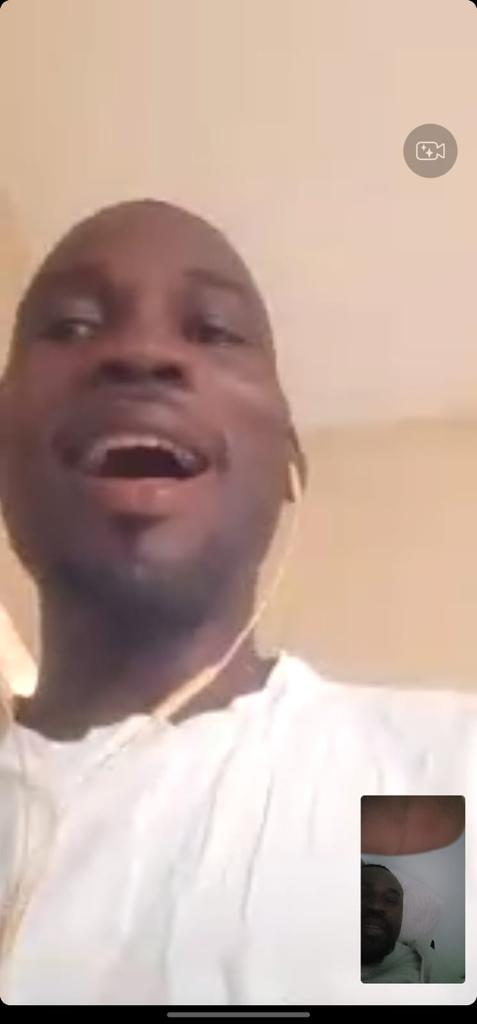
    To see the face behind the WhatsApp texts and phone calls, the lawyer talked Nana Agyei into making video calls. It was also a strategy to win the purported land dealer’s trust.

    Looking for love and business partnership

    As the days turned into weeks, and the two discussed the land deal, Nana Agyei wanted more than a land transaction. He also spoke about entering into a business partnership with the lawyer. He expressed interest in importing cars from Canada. Ontoyin fed his newfound “business partner’s” hope by taking time to visit garages to show Nana Agyei cars on display for sale so he would make his choice.

    Beyond business, Nana Agyei also wanted love and wanted the lawyer to play a matchmaker. In one of the recorded video calls made available to The Fourth Estate, Nana Agyei asked Ontoyin to match him with a white woman because life in Ghana was difficult. A match with a foreign white partner would mean a green card to a soft life outside Ghana, he envisaged.

    As their virtual friendship bloomed, Francis also wanted to know if, indeed, the land existed. He made arrangements with his friend in Ghana to go and check it out. Nana Agyei and Samuel asked for money for transportation to Pokuase, where he claimed his land was located.

    With the hope of unveiling more faces behind the alleged scam, Ontoyin didn’t mind losing some more money to them. He transferred GH₵200 to Nana Agyei for transportation.

    Nana Agyei failed to uphold his end of the bargain despite receiving the money for transportation. After a few failed attempts, another appointment was made. This time around, he gave the lawyer’s friend the exact location, which turned out to be a parcel of overgrown land.

    To ensure his trusted friend’s safety, Francis Ontoyin advised him not to go there with them. At this point, the lawyer was upset about Nana Agyei’s evasiveness, so he cut off communications with him for a while.

    Airport pick-up and arrest

    Before departing Canada, however, Ontoyin reconnected with Nana Agyei. He told him he was returning to Ghana and was still keen on buying the land when he arrived in a few months. Nana Agyei offered to pick him up at the airport.

    The police arrested Shadrack when he was sent to pick up Francis Ontoyin at the Kotoka International Airport.

    While on the flight, the lawyer received a WhatsApp message from an unknown person who claimed he had been instructed to pick him up when he arrived at the airport. The person claimed Nana Agyei had sent him. Nana Agyei confirmed to Ontoyin that he had, indeed, sent someone named Shadrack to pick him up.

    To identify Shadrack, Ontoyin requested photos of the driver and a paging board with ‘Francis Ontoyin’ on it for easy identification at the arrival lounge of the airport. They also spoke via Whatsapp video call when Ontoyin landed at the Kotoka International Airport.

    The lawyer gave his friend in Ghana all the photos of Shadrack. This friend liaised with the police at the Airport Police Station to monitor Shadrack’s movements before Ontoyin could reach the departure hall. The police then arrested Shadrack.

    The revelation

    Shadrack told the police that he had been sent by his brother who was away on a trip. He later changed his story and revealed that his “brother” was a prisoner named Nana Agyei.

    The Fourth Estate can confirm from Shadrack’s cousin, who asked not to be named, that Nana Agyei is in the Ankaful Maximum Security Prison.

    The source further revealed that the said Nana Agyei is actually known as Kofi Debrah. He also revealed that Shadrack and Kofi Debrah are half-brothers from the same mother. Kofi Debrah’s phone is registered in the name of Monica Donkoh and he appears to be using multiple phones.

    Kofi Debrah on a WhatsApp video call with Ontoyin while in prison.

    The Fourth Estate has confirmed from sources in the Ankaful Maximum Security Prisons that Kofi Debrah is indeed a prisoner at the Ankaful Security Prison. However, we have not been able to confirm the crime for which he is in prison and the number of years he is serving.

    Sources within the Ghana Police Service say the police have written to the Ghana Prisons Service to confirm the identity of Nana Agyei alias Kofi Debrah.

    MTN’s response

    When The Fourth Estate contacted MTN to speak to the issue, it said its subsidiary, Mobile Money Limited (MML), “has not worked on any case involving fraudulent transactions from prison inmates,” an email response signed by the company’s Head of Corporate and Legal Affairs, Paapa Osei stated.

    “Reported cases of fraud are investigated using internal processes and when required, we collaborate with our regulators and state agencies, including the police, EOCO [Economic and Organised Crime Office], Cyber Security Authority, and the relevant agencies,” it added.

    The Fourth Estate found that the phone numbers involved in the fraud have been reported to MTN for fraud.

    However, the company said since MML was subject to the Data Protection Law, it could not respond to whether the numbers had been reported to it for fraud.

    “Details on the accounts listed can only be obtained after a court order has been presented to Mobile Money Limited. All cases reported for fraud through our official channels are dealt with in line with our internal procedures and as required by law,” it said.

    Asked about the protocol for dealing with mobile money fraudsters,  the company said, “Any mobile money account used for illegal purposes or involved in any suspicious activity on our platform is blocked pending investigations. The affected customers (complainant/victim) are required by law to initiate the complaint and file a report with the police to begin criminal investigations.”

    The company said the procedure was in line with the Payment Systems and Services Act and the Anti Money Laundering Act. It declined to state the number of mobile money fraud cases it recorded in the last five years.

    However, Bank of Ghana data suggests that mobile money fraud is a growing concern. According to the data, in 2021, fraudsters succeeded in stealing GH¢12.8 million, which represents a 90.14% success rate of attempted fraud using mobile money platforms.

    How prisoners smuggle contraband phones

    Although Ghana’s prisons do not allow prisoners to have access to mobile phones, the Ghana Prison Service told The Fourth Estate that some prisoners find cunning ways of smuggling phones into their cells.

    Some of the phones are smuggled into the prisons hidden in bread.                   Photo credit: Ghana Prison Service

    “People put the phone or SIM cards inside bread, soap, balls of banku, onion and so on just to outwit prison officers.  It is part of the reason we are praying for detectors because currently, we do everything manually,” the Chief Public Relations Officer of the Prisons Service, Chief Superintendent Vitalis Aiyeh, said. “In some cases, the phones are dismantled and the parts smuggled into the prison in bits and assembled.”

    A woman grabbed for attempting to smuggle SIM cards into one of the prisons          Photo credit: Ghana Prison Service

    He said in the past, the service had attempted to deploy signal jam equipment but had to suspend its usage because residents of communities in the immediate environs of the prisons were complaining about interference with their mobile network signal.

    A consignment of contraband SIM cards the Prison Service seized in one of the prisons             Credit: Ghana Prison Service
    SIM cards stashed into onions and smuggled into the prisons Photo credit: Ghana Prison Service

    “We were threatened with court action, I think,” he said. “What we need is something that can centre in only the prisons. It is difficult blocking mobile phones from entering the prisons. They come in several forms. For officers, when you’re caught, you’re dismissed.

    SIM Card registration vs. fighting MoMo fraud

    One of the strongest cases the Ministry of Communication and the National Communication Authority (NCA) made for the re-registration of SIM cards was the fight against fraud.

    However, the Chief Executive of the Ghana Chamber of Telecommunications, Dr Kenneth Ashigbey, indicated that many people in Ghana had not registered their SIM cards because they did not have the Ghana Card and had been granted a lifeline until May 31, 2023.

    He observed that there was a possibility that some of the fraudsters may be among those yet to be disconnected.

    “What surprises me is how they are able to get access to mobile phones when they are in prison,” he told The Fourth Estate.