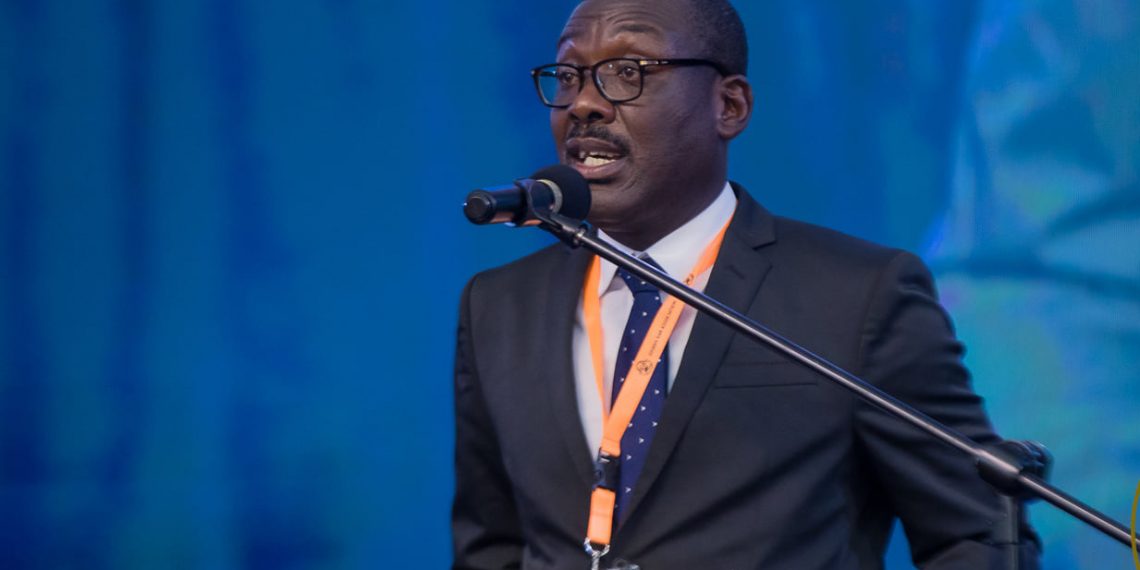
Six civil society organisations and an individual have filed a lawsuit at the Accra High Court seeking to stop persons or companies that have been granted licenses to mine in forest reserves in Ghana under the Environmental Protection (Mining in Forest Reserves) Regulations, 2022 (L.I. 2462).
They want to prevent these companies from mining before the court decides on their substantive case, which is an order for the revocation of LI 2462—the law regulating mining in forest reserves.
The suit seeks for “an order restraining any person or entity, to whom mineral rights, licences, or leases and or environmental permits have been issued by the 1st, 2nd, 3rd, or 4th Defendants/Respondents for the undertaking of mining activities in forest reserves, from undertaking any such activities, pending the final determination of the substantive suit.”
The defendants include the Minister for Environment, Science and Technology, the Environmental Protection Agency, the Minister for Lands and Natural Resources, the Minerals Commission, the Speaker of Parliament, and the Attorney-General.
Their suit follows an investigation by The Fourth Estate that revealed the identities of officials of the incumbent New Patriotic Party (NPP) and government appointees who are scrambling for mining licences in Ghana’s forest reserves. The owners of some of the companies that have obtained these licences include the mayor of Ghana’s second biggest city, Kumasi, Sam Pyne and a Parliamentary Candidate for the NPP in Juaben, Francis Owusu-Akyaw.
The Ashanti Regional Chairman of the NPP, Bernard Antwi Boasiako, the District Chief Executive of Wassa East, Emmanuel Boakye, and the NPP’s Women’s Organizer in the Western Region, Angela Bint Ntaama, including a presidential staffer, Harriet Kyeremanteng, all have companies whose licences are waiting ministerial approval to mine in forest reserves.
The Fourth Estate’s investigations revealed that since 2023 at least 10 companies have been granted mining leases to mine in 11 mining forest reserves. Four of the companies are to operate in globally significant biodiversity areas.
Regulation 3(2) of LI 2462 gives the President the discretion to approve mining activities in globally significant biodiversity areas. The CSOs want this power curtailed while they argue for the annulment of the LI in court.
The law was passed in November 2022 and has since seen a sharp increase in mining applications in mining forest reserves.
According to the suit, LI 2462 is not only inconsistent with the Forests Act, 1927 (CAP 157), the Minerals and Mining Act, 2006 (Act 703), the National Land Policy, the Forest and Wildlife Policy, the Forestry Development Master Plan, but it also contravenes the 1992 Constitution.
Ghana’s Land Policy states that “lands declared as forest reserves, strict nature reserves, national parks, wildlife sanctuaries and similar land categories constitute Ghana’s permanent forest and wildlife estates, and are fully protected for ecosystem maintenance, biodiversity conservation and sustainable timber production…. Land categories outside Ghana’s permanent forest and wildlife estates are available for such uses as agriculture, timber, mining and other extractive industries, and human settlement within the context of a national land use plan.”
The Forestry Development Master Plan targets total elimination of mining and prospecting in Ghana’s forest reserves by 2036.
Article 36 (9) of the 1992 Constitution states that “the State shall take appropriate measures needed to protect and safeguard the national environment for posterity; and shall seek cooperation with other states and bodies for purposes of protecting the wider international environment for mankind.”
In their substantive case, the plaintiffs are asking the Court to declare LI 2462 as null and void not only because of its negative ramifications.
They also say that the laying of the LI in Parliament breached the Public Financial Management Act, 2016 (Act 921). Section 100 of the Act requires that a fiscal impact analysis is carried out before a law is laid in Parliament.
Through a right to information request, the plaintiffs asked Parliament to confirm whether or not a fiscal impact analysis accompanied the LI. Parliament responded that the fiscal impact analysis had not been carried out.
Based on this and other factors, the environmentalists are praying the Court for “a declaration that any legislation or proposal which is laid before Parliament that is not accompanied by a fiscal impact analysis contrary to section 100 of the Public Financial Management Act is null and void.”
Many environmental groups have not hidden their concerns about the grave impact LI 2462 would have on the country’s forest estate since it was passed in November 2022.
In a recent statement, the Ghana Institute of Foresters said although the LI appears to be seeking to protect the country’s forests, it has rather “has opened the floodgates for institutionalized mining in our forest reserves.”
The umbrella body for forestry experts said it was “completely left in the dark” throughout the processes that led to the passage of LI 2462.
The GIF indicated that it was shocked when they learnt about the passage of the LI.
This is because, according to the body, the LI 2462 “legally permits unlimited mining in forest reserves. Not even the ecologically sensitive Globally Significant Biodiversity Areas have been spared.”
Before LI 2462, an administrative framework for mining called the Environmental Guideline for Mining in Production Forest Reserves permitted limited mining of not more than 2% of timber production reserves.
To give the guideline the legal teeth to bite its offenders, stakeholders called for a total ban on mining in forest reserves and the enactment of a law to protect these reserves.
However, LI 2462, which was supposed to fill this gap, appears to have incentivised some government appointees to apply for license to mine in Ghana’s forest reserves.
The Fourth Estate’s investigations revealed that as of August 13, 2024, at least 25 companies had filed 32 applications to mine and prospect in 24 forest reserves. Ten of these mining leases have been granted by the Minister of Lands and Natural Resources, with 22 others awaiting approval. Four of these leases are in GSBAs.
As result, the CSOs, in their substantive case, are praying the Court to order the Ministry of Lands and Natural Resources and the Minerals Commission “from issuing any mineral rights, licences or leases for the undertaking of mining activities, including reconnaissance or prospecting activities in a forest reserve.”
The plaintiffs are also requesting an order to prevent all persons who have received mining permits from the regulatory bodies under LI 2462 from operating a mine in a forest reserve.
“An order restraining all persons to whom mineral rights, licences or leases have been issued by the 3rd and 4th Defendants for the undertaking of mining activities in a forest reserve from undertaking any mining activities allowed by the mineral rights, licences or leases,” according to the plaintiff’s writ of summons.
The investigations revealed that scholarships meant to support academically gifted but financially disadvantaged students were often dished out to individuals with strong political ties, including people from wealth and well-off families. The Fourth Estate also found that some of the beneficiaries received multiple scholarships while many deserving students were overlooked.
NDC’s pledge
In its manifesto launched on August 24, 2024, the NDC promised to overhaul the current scholarship regime. The party has committed to introducing legislation that will regulate the granting of government scholarships, specifically prohibiting political appointees from benefitting. The country’s largest opposition party said this will form part of its broader strategy to restore good governance, combat corruption and transform the education sector.
The NDC’s plan goes further, aiming to “align scholarships with national development policies, eliminate political patronage, corruption, cronyism, and nepotism in the award of government scholarships.”
In what seemed like a jab at the current administration, the party emphasises that it will ensure that government scholarships are reserved for the vulnerable and marginalised and awarded in line with the principles of meritocracy, equity and inclusivity.
Former President and flagbearer of the NDC, John Dramani Mahama, committed to exempting government appointees and politically connected individuals from benefitting from national scholarship programmes.
Persons with conflicts of interest will not be allowed to apply for scholarships,” Mr Mahama said. “I will not apply for scholarships for my children, none of my ministers will do it. Any political appointee must not apply for scholarships, you must pay for yourself. Leave the scholarships for the children of the underprivileged, those who cannot afford it are the ones who must get the scholarships.”
NPP’s Commitment
While the NPP manifesto avoided speaking about how it intended to address issues of the rich, political elite, and their associates benefiting from national scholarships, it promised to ensure transparency in the scholarship scheme. The ruling party’s manifesto highlights its commitment to publishing the full list of scholarship beneficiaries annually.
With the country’s scholarship schemes and student financing schemes currently scattered across multiple agencies, including the Student Loans Trust Fund (SLTF), Scholarship Secretariat, GETFund, and Ghana National Petroleum Corporation (GNPC) Scholarship Scheme, the NPP promises to “integrate scholarship databases across all the public sector institutions managing such schemes, to ensure full visibility.”
During a recent media engagement, the NPP flagbearer and Vice President, Dr Mahamudu Bawumia, reaffirmed the party’s dedication to ensuring transparency and efficiency in the administration of public scholarship schemes.
Background
The investigation by The Fourth Estate were based on analyses of data obtained from the Scholarships Secretariat through a Right to Information request. It uncovered how the Scholarship Secretariat had been awarding scholarships meant for underprivileged but brilliant students to the well-connected and affluent.
Among the notable beneficiaries identified were Dr Dennis Addo, the founder of the Claron Hospital and a member of the New Patriotic Party; Lucie Ekeleba Blay, daughter of Freddie Blay, Board Chairman of the Ghana National Petroleum Corporation and former National Chairman of the NPP; Gifty Oware-Mensah, the Deputy Director of the National Service Secretariat and Nana Adubea Asante-Apeatu, the daughter of a former Inspector-General of Police, David Asante-Apeatu.
The former Auditor-General, Daniel Yao Domelevo as well as the Executive Director of the Institute of Education Studies, Dr Peter Anti, urged Parliament to enact a law to streamline the Secretariat’s operations to promote equity and transparency in the administration of scholarships.
The Minority Caucus in Parliament echoed these demands calling for the immediate interdiction of the Registrar of the Scholarship Secretariat, Dr Kingsley Agyemang.
The opposition Members of Parliament also urged the Special Prosecutor to conduct a forensic audit of all scholarships awarded since January 2017.
The Fourth Estate’s investigations revealed that at least 17 individuals received multiple scholarships which allowed them to pursue different programmes in two consecutive years or different programmes in a single year.
This means while some needy students struggled to secure funding for a single programme, others received scholarships covering two different programmes.
Eleven individuals received multiple scholarships in consecutive years (2019 and 2020), while six others were granted two different scholarships within the same year, either in different countries or in the same country. Amounts awarded ranged from GBP 13,250 to GBP 55,000 per school, covering tuition and living expenses.
Following these revelations, Osman Ayariga, Deputy National Youth Organiser of the National Democratic Congress, petitioned the Office of the Special Prosecutor to investigate the Registrar of the Scholarships Secretariat for misconduct.
The Fourth Estate has filed a Right to Information request to the Presidency requesting information on the full list of companies that President Nana Akufo-Addo has written to, to undertake mining in forest reserves designated as Globally Significant Biodiversity areas (GSBAs).
The Fourth Estate has also requested copies of the letters the President wrote to the mining companies as required under Regulation 3(2) of Legislative Instrument (LI 2462)—the law regulating mining in forest reserves.
The law prohibits mining in some forest reserves but makes exceptions for mining in GSBAs on condition that the President “may subject to Article 268 of the Constitution, give approval in writing to a mining company to undertake mining in a globally significant biodiversity area in the national interest.”
Article 268 requires that all mining licenses receive parliamentary ratification.
In an ongoing investigation into mining leases granted in the country’s forest reserves, The Fourth Estate found that despite Ghana’s international commitment to protect GSBAs, at least four companies have been granted mining leases in these forest reserves, spanning between six to 30 years in four of these critical reserves.
These forest reserves— Boin Tano, Draw River, Neung South, and Tano Anhwia forest reserves –all in the Western Region— provide essential services including air and water purification, pollination, climate regulation, and carbon sequestration.
Until November 2022, these reserves were shielded from productive activities including mining, timber harvesting and farming.
However, that changed after the government enacted the Environmental Protection (Mining in Forest Reserves) Regulation (LI 2462) two years ago, triggering a scramble for mining leases in the country’s forest reserves.
The Fourth Estate asked for evidence of presidential consent which allowed these mining companies to receive concession in these forest reserves safeguarded by international conventions.
However, the Minerals Commission, the mining regulator, has not disclosed this key information since July 2024, along with other details, including the list of companies granted mining operating permits and the names of the mining companies whose leases have been ratified by Parliament from 2020 to date.
In addition to the four mining leases, at least four other applications for mining and prospecting licenses in GSBAs are awaiting ministerial approval. These include the Krokosua, Subri River, Tano Nimiri, and Fure Headwaters forest reserves.
Daryl Bosu, the Deputy National Director of Arocha Ghana, described the granting of concessions in GSBAs as a betrayal of trust.
“Handing over Ghana’s remaining protected forest reserves for mining is a deliberate betrayal of future generations, stripping away their last safeguards for a sustainable environment, and undermining the very foundation of environmental stewardship, leaving a legacy of irreversible loss,” he stated.
The Ghana Institute of Foresters (GIF) has demanded that President Nana Akufo-Addo immediately withdraws all licenses granted for prospecting and mining in Ghana’s forest reserves.
The GIF in a statement said the government’s decision to allow mining in the country’s forest reserves defeats the wisdom behind their reservation.
The umbrella body of forestry experts has, therefore, called for “the withdrawal of all licenses granted for prospecting and mining in forests and protected reserves (including GSBAs) and around water bodies.”
The GIF’s demand comes after The Fourth Estate’s recent investigations revealed that officials of the New Patriotic Party and government appointees have been granted concessions to mine and prospect in forest reserves.
But the GIF wants this to stop. Among other things, it is also demanding the repeal and revocation of the Environmental Protection (Mining in Forests Reserves) Regulation, also known as LI 2462, and Executive Instrument (EI) 234. Whereas EI 234 de-gazetted about one-third of the Achimota Forest Reserve, LI 2462 gives the President the power to allow mining in Globally Significant Biodiversity Areas (GSBAs).
According to the GIF, the government’s decision to de-gazette portions of the Achimota Forest Reserve sets a bad precedent for the protection of Ghana’s forest estate: “The government should desist from setting bad precedence for de-reserving reserved lands.”
Since LI 2462 came into force in November 2022, many environmental groups have expressed grave concerns about its ramifications.
“Though presented as seeking to regulate mining in forest reserves, LI 2462 has opened the floodgates for institutionalized mining in our forest reserves,” GIF’s statement bemoaned.
Many environmentalists have complained bitterly about how the government pushed for such a law in Parliament without any consultation. The GIF affirmed this in its statement by indicating that it was “completely left in the dark throughout the processes leading [to] the passage of L.I. 2462.”
According to the foresters, it was a “bigger shock” when they finally got to know about the law as it “legally permits unlimited mining in forest reserves. Not even the ecologically sensitive Globally Significant Biodiversity Areas have been spared.”
Before LI 2462, an administrative framework for mining called the Environmental Guideline for Mining in Production Forest Reserves permitted limited mining of not more than 2% of timber production reserves.
To give the guideline the legal teeth to bite its offenders, stakeholders called for a total ban on mining in forest reserves and the enactment of a law to protect these reserves.
However, LI 2462, which was supposed to fill this gap, appears to have incentivised some government appointees to apply for license to mine in Ghana’s forest reserves.
The Fourth Estate’s investigations revealed that as of August 13, 2024, at least 25 companies had filed 32 applications to mine and prospect in 24 forest reserves. Ten of these mining leases have been granted by the Minister of Lands and Natural Resources, with 22 others awaiting approval. Four of these leases are in GSBAs.
The institute of foresters further pointed out that 37 forest reserves have been ravaged by mining activities. Some of the “severely impacted” reserves, according to them, include Uppaw Wassaw, Apamprama, Oda River, Subin Shelterbelt and Asenanyo River Forest Reserves.
“This is very worrying. It is important to note that about 80% of the approved forest reserve mining leases are for alluvial mining, which are incompatible with forestry as a land use option,” the GIF noted.
“The ability of the forest to provide the known benefits depends on how well the forest ecosystem functions which is also dependent on the size and condition of the forest. Our current forest reserve area is far below the minimum 10% of the total land area targeted for environmental protection,” the statement highlighted.
An earlier statement of the foresters’ issues indicated that forest cover bigger than the size of the Greater Accra Region risks being wiped out given the number of licenses the government has issued so far.
Given the impact of allowing unfettered mining in protected greenbelts, the foresters called on the President, his government, lawmakers, and the judiciary, to help end activities inimical to the protection of these critical reserved areas.
They are demanding that the government and Parliament declare a State of Emergency which includes “an order to ban all forms of alluvial mining (legal or illegal) in forest reserves and around water bodies. Immediate evacuation of all mining equipment in forest reserves and around water bodies.”
The foresters have also requested the deployment of the Police and Military to support the Forestry Commission to protect the forest reserves.
For the Chief Justice and the judiciary, the foresters expect that illegal mining cases before them would be expedited to send a strong signal to individuals who are bent on destroying the forest reserves.
“Currently, 850 illegal miners’ cases are pending before the courts. In some instances, Chinese illegal miners are released due to a lack of interpreters. We call for the urgent allocation of resources to these courts to enable them to expedite the illegal mining cases brought before them,” it said.
Organised Labour is demanding the immediate repeal of the law regulating mining in forest reserves (LI 2462) and has threatened massive labour unrest by the end of this month if the government fails to act.
“Organised labour demands the immediate revocation and withdrawal of all licenses granted for prospecting and mining in forest and protected reserves, as well as around water bodies,” said a joint statement by the labour unions.
Among their demands, they are also calling for the immediate declaration of a state of emergency, in line with the constitution, with a direct order from President Nana Akufo-Addo to halt all forms of mining—both legal and illegal—within forest reserves and near water bodies.
They further demand the evacuation of all mining equipment from these areas and the deployment of military and police forces, empowered to remove or destroy any mining machinery in these sensitive regions.
The unions are also pressing for the establishment of a special court to prosecute those involved in the illegal mining menace, which has escalated into a major public health concern.
Their statement follows a series of publications by The Fourth Estate, highlighting how the passage of LI 2462 in November 2022 led to 32 applications from 25 companies to mine in 24 forest reserves. Ten of these applications have been approved, with 22 others awaiting approval. Many of the beneficiaries are prominent members of the ruling New Patriotic Party (NPP), including Ashanti Regional Chairman, Bernard Antwi-Bosiako, Wassa East District Chief Executive, Emmanuel Boakye, NPP Deputy Western Regional Women’s Organiser, Angelina Bint Ntaama, and the 2024 Juaben Constituency parliamentary candidate, Francis Owusu-Akyaw.
These revelations, along with widespread media reports of illegal mining in water bodies, have sparked outrage among the public and labour unions. The Trades Union Congress (TUC), the Ghana Federation of Labour (GFL), and theForum for Public Sector Associations and Unions, are joining other prominent voices—including the Minority in Parliament and the National House of Chiefs—in calling for the repeal of LI 2462.
According to the statement, signed by Joshua Ansah, Secretary-General of the TUC, and Kenneth Koomson, Deputy Secretary General of the GFL, and Isaac Bampoe Addo, the unions are deeply concerned about the environmental destruction caused by illegal mining, or ‘galamsey’ and its accompanying health risks. They cited exposure to toxic chemicals like mercury and cyanide, as well as a rise in respiratory and waterborne diseases due to polluted air and water.
“It is now clear to us, as it is to all well-meaning Ghanaians, that the menace of ‘galamsey’ has reached crisis proportions,” the statement read. “The depletion of our forest cover has never been this rapid. The destruction of our water bodies is at an unprecedented scale. Our entire ecosystem is on the precipice.”
The Ghana Water Company Limited (GWCL) has had to shut down several treatment plants due to the severe pollution of water bodies, causing a surge in production costs and a drastic reduction in water supply to communities across the country. Residents of Cape Coast, Elmina, Kyebi, Beposo, Supom-Dunkwa, Bokorkope, and Atwereboanda are among those suffering from the effects of illegal mining, while rivers like the Offin, Pra, Birim, and Ankobrah remain heavily polluted.
The unions warn that these developments have dire consequences. “The cost of treating water has increased about tenfold, according to GWCL. Ghana risks having to import water for household and industrial consumption,” they warned.
They also expressed concerns about food security, noting that agricultural lands are increasingly being appropriated for mining activities.
“The inappropriate use of mining-related chemicals is reducing the productivity of agricultural lands and threatening food safety,” they said.
The President of the Ghana Bar Association, Yaw Acheampong Boafo, has called for a review of how government scholarships are awarded.
His demand follows The Fourth Estate’s investigation, titled “Scholarship Bonanza” which exposed how individuals with political connections and those from well-to-do backgrounds benefitted from scholarships at the expense of brilliant but needy people.
Delivering a speech at the GBA’s annual Bar conference, Mr Boafo expressed concern about the corruption, nepotism, and political patronage plaguing the scholarship process. He criticised the current process, calling for scholarships to be awarded based on merit, financial need, and relevance to critical areas of study.
“In my opinion, the award of government scholarships should be only what it is,” he stated, “That is informed by real merit, economic and financial need of beneficiaries especially those from poor backgrounds and relevant to specific critical areas of study and research particularly in science, technology, and research programmes that are not offered by local universities.”
I find it immoral and troubling that government are given or awarded to persons with political connections and who are already from privileged and rich backgrounds at the expense of brilliant but truly needy individuals and students.”
The politically connected and the rich benefit
The Scholarship Bonanza series revealed a list of politically connected individuals and social elites as beneficiaries, including Dr Dennis Addo, the founder of the Claron Hospital, and a member of the New Patriotic Party; Lucie Ekeleba Blay, daughter of Freddie Blay, Board Chairman of the Ghana National Petroleum Corporation, and former National Chairman of the NPP; Gifty Oware-Mensah, a Deputy Director of the Ghana National Service Secretariat and Nana Adubea Asante-Apeatu, the daughter of a former Inspector-General of Police, David Asante-Apeatu.
Some beneficiaries of scholarship from the scholarship secretariat
The investigation also found cases where the Scholarship Secretariat awarded some individuals multiple scholarships, with amounts ranging from GBP 13,250 to GBP 55,000, covering tuition and living expenses for foreign studies. Meanwhile, countless deserving students in Ghana are denied this support and are left struggling to continue their education. Many of those who received scholarships are now facing harsh realities—tuition and living expenses are in arrears, leaving some at risk of deportation. Others are forced to turn to unconventional means just to scrape together enough money for tuition and hostel fees.
It is equally unacceptable for multiple government scholarships to be given to an individual while in some cases, awardees take the scholarship and never attend the courses or programmes while other Ghanaians who need a fraction of the amount at local universities are denied and waste away at home with all their skills and talents,” the GBA president lamented
He also condemned the practice of awarding scholarships in foreign currencies for courses that could easily be pursued at local universities.
The investigative series is based on analyses of data reluctantly provided by the Scholarships Secretariat in response to a right-to-information request for a list of scholarship beneficiaries.
The investigation led to widespread public outrage and political discourse, sparking demands for accountability. Mr Boafo’s remarks add to the growing pressure on the government to overhaul the current scholarship system.
He also called for legislation that would regulate and streamline the distribution of scholarships, ensuring that the process is based on merit and need, not favoritism or wealth.
Despite these calls, the government has yet to take any meaningful action toward reform.
The Minerals Commission has deleted crucial information about mining companies from its website after The Fourth Estate reported on how leading members of the New Patriotic Party (NPP) and government appointees had been granted concessions to mine and prospect in forest reserves.
The deleted information pertains to the ‘contact persons’ of mining companies and the political affiliations of applicants for mining leases. The Chief Executive of the Minerals Commission, Martin Ayisi, had referred to contact persons as “consultants” in an interview with The Fourth Estate. These individuals apply for mining licenses on behalf of mining companies and serve as the liaison between the mining industry regulator and the companies.
In a recent exposé, The Fourth Estate revealed that the NPP Parliamentary Candidate for Juaben, Francis Owusu-Akyaw, serves as the contact person for at least 15 mining companies. Some of these companies, including his own, FJ Minerals Limited, have obtained mining licenses to operate or prospect in forest reserves across various regions in Ghana.
He also owns another company, DML Investment Limited. DML is the company through which Mr Owusu-Akyaw provides consultancy services for mining companies. On its website, the company touts its connections to the top hierarchy of the Minerals Commission as a competitive advantage.
“We have established key relationships with upper management at the Ghana Minerals Commission. These relationships have been instrumental in securing and operating concessions in the country,” it says.
When The Fourth Estate questioned Mr Ayisi about the relevance of knowing the political affiliations of individuals applying for mining leases in an earlier interview, he responded: “Sometimes it informs the kind of decision you should make.”
However, the Minerals Commission removed this crucial information from its website on the very day The Fourth Estate published its report.
The Commission’s Chief Executive, Mr Ayisi, did not respond to The Fourth Estate’s enqiries regarding the reason for the deletion of the information
EITI’s Response
In an email to The Fourth Estate, the Extractive Industries Transparency Initiative (EITI), an international organization promoting open and accountable management of oil, gas, and mineral resources, emphasized the importance of disclosing the identities of Politically Exposed Persons (PEPs) in the minerals application process.
Gilbert Makore, EITI’s Regional Director for Anglophone and Lusophone Africa, stated that this is crucial because “a PEP, by using their political prominence and influence, maybe in a position to abuse their power to solicit bribes, secure public funds, or engage in other corrupt practices, including on issues relating to license allocations.”
Regarding Francis Owusu-Akyaw’s consultancy services for the 15 companies, Mr. Makore said he could not comment specifically on the case as he was unaware of it. He noted that any follow-up action would be the responsibility of the relevant authorities.
Without referencing any particular case, Mr. Makore highlighted that the involvement of PEPs in companies seeking mining licenses can elevate the risk of conflicts of interest. To mitigate these risks, he said: “It is imperative that the procedures for licensing are clear and that there are no deviations from the established processes.” He added that the Ghana EITI publishes an annual report that provides citizens and stakeholders with a diagnostic summary of potential deviations in the licensing process.
With many applicants owning multiple companies and applying for various concessions—some for as many as 10—Mr. Makore noted that most mineral licenses in Ghana are allocated on a ‘first-come, first-served’ basis, with some awarded through a tendering process. He explained that if an owner with multiple companies uses one to apply for a mining right, priority is given to the first company that applies, provided they meet all the obligations and requirements of the Minerals and Mines Act and its regulations.
He also noted that laws regarding mining ownership vary significantly by country and jurisdiction. For example, Zambia’s mining sector is considering anti-monopoly provisions that would limit a company to holding no more than five mining permits. Such provisions help manage risks related to ownership concentration, political capture, and conflicts of interest in the mining sector.
February 23, 2023, was a day of reckoning for Samuel Abu Jinapor, the Minister of Lands and Natural Resources.
Mr Jinapor, who is also the Member of Parliament for Damongo, was summoned to the House to respond to a string of questions mostly from opposition National Democratic Congress (NDC) lawmakers.
The MP for Sisala West, Mohammed Adams Sukparu asked the most pointed question of the day.
“How many companies have been given permits to mine in forest reserves from the year 2017 to 2022,” Mr. Sukparu asked, attracting nods of approval from his peers sitting by him.
With his eyes glued to a book, Mr Jinapor told the House that six companies had been issued forest entry permits.
“Out of these six, only Chirano Gold Mines and Koantwi Mining Company Limited, are actually involved in mining,” he explained. “The others are still working on permits and authorisations required to commence their operations.”
These authorisations, Mr Jinapor told his colleague MPs, were mandated by Section 18 of the Minerals and Mining Act which requires that “before undertaking an activity or operation under a mineral right, the holder of the mineral right shall obtain the necessary approvals and permits required from the Forestry Commission and the Environmental Protection Agency for the protection of natural resources, public health, and the environment.”
It turned out, however, that the minister was not exactly telling Parliament the truth.
The Fourth Estate’s investigations show that Koantwi Mining Company Limited, one of the two companies the minister claimed had received authorization to mine in a forest reserve, did not have the required Environmental Protection Agency (EPA) permit.
Mining without EPA permit
What Koantwi had was rather a 30-year mining lease in the Anhwiaso Forest Reserve in the Western Region. And without the environmental permit, the company had no right to enter the forest – not to mention mine there.
At the time Mr Jinapor was answering questions in parliament from his colleagues like Mr. Sukparu, the government had passed LI 2462. Its promoters, the Environmental Protection Agency, claimed the new law would help to properly regulate mining in forest reserves even though it was going to open up even more forest reserves for mining.
Koantwi is owned by one Kofi Antwi, according to information at the Office of the Registrar of Companies. Its application to mine in the Anwhiaso Forest went to the Minerals Commission in December 2022, less than a month after LI 2462 came into effect.
Mr Jinapor approved it.
But when questioned in parliament, he insisted that mining in forest reserves was prohibited except under “exceptional circumstances”. He did not explain what circumstances could be classified as exceptional to the legislators but he was the one who approved mining leases to some companies in forest reserves, which had been designated as no-go areas for mining, timber harvesting, and farming.
Through a right-to-information request to the Environmental Protection Agency (EPA), The Fourth Estate has found that Koantwi Limited is not on the list of companies that have obtained their environmental permits. Yet, as Mr. Jinapor told parliament, it is mining in a protected forest.
The country’s environmental laws and regulations require mining companies to conduct an Environmental Impact Assessment (EIA) and submit a report to the EPA before obtaining an environmental permit and other approvals for a mining license. This ensures that mining activities comply with national and international environmental standards.
EPA figures show that between 2020 and 2024, eleven companies had ticked this box of requirements. Koantwi Mining Company Limited is not one of them.
Disregard for master plan on eliminating mining in forest reserves
The ironies and contradictions surrounding the passage of LI 2462, its implementation, and supposed benefits are legion. The most glaring of all is that it contradicts the country’s 20-year Forestry Development Master Plan, which was developed in 2016.
The master plan targeted a 60 percent reduction in mining activities in Ghana’s forest reserves by 2020, with an ultimate ambition to completely end mining in forest reserves by 2035.The first target has been missed and with the passage of LI 2462, environmental activists are warning that mining in forest reserves could continue beyond 2035, with a serious risk that large swathes of the country’s forest cover would be depleted.
Data from the Minerals Commission’s website shows that in less than two years, ten companies have been granted 10 leases to mine in eleven forest reserves with some of the companies being granted concessions that will expire in 2053.
To put this in context, it is noteworthy that in the 24 years from 1992 to 2016, only five companies obtained mining leases in forest reserves. Since its passage LI 2462 has, in less than two years, permitted more mining in forest reserves than any legislation before it.
In interviews with the head of the Minerals Commission, Martin Ayisi, and the EPA’s Deputy Director of Operations, Ransford Sekyi, The Fourth Estate reporters pointed out the rather worrying contrast between LI 2462 and the country’s ambition to eliminate mining in forest reserves by 2035 as indicated in the forestry master plan. Strangely, they both said they had no idea about the existence of the Forestry Development Master Plan.
“I’m quite straightforward and honest. If I have no knowledge of something, I will tell you. I have not read that master plan,” Mr Ayisi said.
Mr Sekyi’s response was equally shocking.
“That master plan is from who?” he asked.
When the Forestry Commission granted 47 forest entry permits to 24 companies to prospect in forest reserves in 2018, the EPA seemed to have serious reservations about that.
An internal memo signed by the agency’s then Chief Programme Officer at its Mining Department, Justine S. Seyire Dzadzra, expressed concern about the “upsurge in the number of Forest Entry Permits” granted to new companies to prospect within forest reserves.
“In view of the environmental sensitivity of these forest reserves and in the light of illegal full-scale mining operations being clandestinely undertaken in some forest reserves under the guise of prospecting, it is critical that the Agency carefully considers this phenomenon to shape its decision on this issue,” Ms Dzadzra wrote in a memo addressed to the Executive Director of the EPA.
Kwadwo Owusu Afriyie, alias Sir John, was the Chief Executive of the Forestry Commission at the time these permits were issued. Before he passed away in 2020, he was accused of being neck deep into illegal mining in the country’s forest reserves.
Strangely, it was the EPA that would later champion the passage of LI 2462, a law that experts say is even less stringent than the Environmental Guidelines for Mining in Forest Reserves, which had regulated mining in forest reserves from 2001 until LI 2462 was passed in November 2022.
In a rather ironic twist, it is now the Forestry Commission, the agency previously accused by the EPA of wantonly issuing forestry entry permits, which is now expressing concerns about the negative impact of LI 2462, particularly on Ghana’s Globally Significant Biodiversity Areas (GSBAs).
The Forestry Commission did not respond to The Fourth Estate’s interview request, but Hugh Brown, the executive director of the Forestry Services Division (which is under the Forestry Commission) is one of those most worried about the obvious negative impacts of opening up more of Ghana’s forest reserves for mining. Mr. Brown made his fears known in an internal communique. He wrote that “management [of the Forestry Services Division] is uncomfortable with the recent spate of conversions of the status of GSBAs to production areas” and recommended a “suspension of the process of conversions.”
Mr Brown also complained about the lack of consultation leading to the promulgation of LI2462. Environmental activists who spoke to The Fourth Estate also complained that they did not know much about the new law until it was passed.
“I’ve spoken to some CSOs and some experts within this space and they seem not to have known anything about it,” Tony Aubyn, a former Chief Executive of the Minerals Commission, also said. “It is quite disappointing.”
The EPA, though, insists that there was extensive consultation with CSOs and 20 communities in Kumasi in the Ashanti Region and Chirano in the Western region before the LI2462 was passed.
Environmental CSO, A Rocha Ghana’s National Director, Dr Seth Appiah-Kubi, told The Fourth Estate that “the EPA’s claim that the Kumasi meeting was a consultation on the LI was an afterthought.”
Changes
Although Mr Sekyi of the EPA claims the passage of LI 2462 was to give legal backing to the pre-existing guidelines, stakeholders in the environmental sector say the old guidelines (now repealed) were “stricter” than the new LI.
For example, while the old guidelines allowed mining activities in only two percent of the area of some forest reserves, LI 2462 has no such restriction. The guidelines also prohibited mining in Globally Significant Biodiversity Areas. LI2462, on the other hand, gives the President discretionary power to approve mining in these uniquely critical reserves. Also, whiles the guidelines mandated that the Forestry Commission must give its written consent before any mining activity can occur in a forest reserve, the new law puts the Forestry Commission’s written approval at the bottom of the raft of statutory requirements needed to mine in forest reserves.
An Environmental lawyer who specialises in forestry regulation, Clement Akapame, questioned the logic behind the new sequence of mandatory approvals.
“The LI creates a certain hierarchy of which permit you should receive first, who [you] should talk to first and interestingly enough, the forest entry permit is the last on the list,” he explained. “How do you start a process to mine in the forest reserve, and the forest entry permit is the last. It should be the first.”
The EPA and the Minerals Commission, however, do not see anything wrong with the changes introduced by LI 2462
But the management of the Forestry Services Division, which is under the Forestry Commission, has bemoaned how some of its officers are easily cajoled into allowing entry for mining companies without forest entry permits, with many believing that a mining lease in a forest reserve is good enough to permit entry.
The Ministry of Lands and Natural Resources did not respond to The Fourth Estate’s repeated requests for an interview.
Repeal the law
Environmental activists say since its passage, LI 2462 has failed to serve its core purpose of better regulating mining in forest reserves. They, therefore, are demanding its immediate repeal before it causes further damage to Ghana’s already depleted and degraded forest reserves. The Minority in Parliament and the National House of Chiefs have both made similar demands.
“Clearly, LI 2462 should not have been passed. It should be revoked,” Mr Akapame said. “We can do better to protect our forest reserves. LI 2462 will not protect our forest reserves. It will rather destroy them all before we know it.”
When the government on June 9, 2023, rallied Ghanaians to plant trees as part of the Greening Ghana campaign, the Chief Executive of the Kumasi Metropolitan Assembly (KMA), Sam Pyne, was one of the leading political figures in the Ashanti Region who actively participated in the tree-planting event.
“This exercise is vital for beautifying, protecting, and ensuring environmental sustainability,” Mr Pyne told the Ghana News Agency.
However, an investigation by The Fourth Estate into a worrying scramble for mining concessions in forest reserves has revealed an interesting irony on the part of Mr. Pyne: while advocating for the public to promote environmental sustainability through tree planting, his company is involved in a business that threatens the existence of a forest reserve.
Records from the Minerals Commission reveal that just four months before nudging others to help make Ghana green, Mr Pyne’s company applied for a lease to mine for gold in the Oda River Forest Reserve, located in the Ashanti Region.
This area, like many others, is already reeling from the devastating effects of illegal mining, including the destruction of forest reserves, farmlands, and road networks.
Records at the Minerals Commission show that the company, Sam & Gyan Limited, applied for the mining license in February 2023, months after the government enacted the Environmental Protection (Mining in Forest Reserves) Regulation in November 2022. Known as LI 2462, the law lists some designated green belts as protected areas, including Globally Significant Biodiversity Areas (GSBAs), which are safeguarded by international conventions. This should make them a no-go area for mining and timber harvesting.
However, under the law, the President has the authority to allow mining and prospecting in these forest reserves if he deems it necessary in the national interest. Records from the Minerals Commission indicate that there was a surge in applications for mining concessions in the forest reserves from June 2022, when the LI was presented to Parliament.
There are media reports, corroborated by satellite imagery, that show the hefty environmental damage caused by mining in Ghana’s forest reserves, where some lush rainforests have been turned into toxic and barren wastelands. It is against this backdrop that the new law has sparked outrage among environmental activists who warn that it could obliterate what remains of the country’s forest reserves, already severely damaged by illegal mining and logging.
Activists warn that by authorizing companies like Sam and Gyan Limited to mine in forest reserves, LI 2462 will only worsen the environmental damage caused by illegal mining in the country.
An environmental lawyer, specialising in forestry regulation, Clement Akapame, points out that the basis for the passage of LI2462 is questionable, because the Environmental Protection Agency (EPA), which championed its passage, has no mandate to push for a law that regulates mining in forest reserves.
“Our first point is the lack of legislative capacity,” Mr. Akapame says. “Even if there’s going to be something like this, we think the lead agency should be the Forestry Commission [which] has the primary mandate to regulate and manage our forest estate.”
The irony, however, is that in 2019, an internal EPA memo raised concerns about the “upsurge in the number of forest entry permits” being issued by the Forestry Commission.
“In view of the environmental sensitivity of these forest reserves, and in the light of illegal full-scale mining operations being clandestinely undertaken in some forest reserves under the guise of prospecting, it is critical, that the agency, carefully considers this phenomenon to shape its decision on this issue,” the memo, written by the then chief programme officer, Justine Dzadzra, said after the Forestry Commission had issued 47 forest entry permits within a year.
Three years after the memo raised the alarm, the EPA was pushing for the passage of LI 2462, which appears to have attracted even more interest in mining in Ghana’s forest reserves. The Fourth Estate investigations revealed that as of August 13, 2024, at least 25 companies had filed 32 applications to mine and prospect in 24 forest reserves.
Samuel Pyne(left), the MCE for the Kumasi metropolis and Ohene Amankwa Gyan (right), a lawyer and a radio presenter are the joint shareholders and beneficial owners of Sam and Gyan Limited which was registered in 2017
A number of these companies are owned by politicians from the governing New Patriotic Party. It appears most of these companies had anticipated that the law would be passed and were already preparing themselves and angling for concessions to mine for mineral resources ahead of its passage. The Fourth Estate’s investigations show that Mr Pyne, a former Ashanti regional secretary of the NPP, is a joint shareholder and beneficial owner of Sam and Gyan Limited, incorporated in 2017. He owns this company with Ohene Amankwah Gyan, a Kumasi-based radio presenter, who is also the lawyer for the Ghana Integrated Iron and Steel Development Corporation.
Sam and Gyan Mining Limited has a mining lease in the Oda Forest Reserve in the Ashanti Region until 2053. Other companies owned by people with serious political connections to the ruling NPP have either been granted concessions or are in the final stages of the approval processes.
Chairman Wontumi
Months before the government scrapped the guidelines that limited mining in forest reserves in November 2022, Akonta Mining Company Limited was actively felling trees and digging in the Tano Nimiri Forest Reserve and the Ministry of Lands and Natural Resources declared the company’s operation illegal. The Office of the Special Prosecutor is currently investigating allegations of illegal mining against the company.
Chairman Wontumi Source: Graphic Online
According to records at the ORC, the company has two shareholders, Bernard Boasiako, the Ashanti Regional Chairman of the NPP, who is popularly known as Chairman Wontumi, and one Kwame Antwi.
Akonta Mining, which was registered in 2010 for mining and exploration applied to mine in the Tano Nimiri Forest Reserve (where it is already accused of mining illegally) on August 25, 2022. This was just a month after the LI 2462 was gazetted. The Minerals Commission has forwarded the company’s application to the Ministry of Lands and Natural Resources for possible approval.
Without the regulatory permits, the company mined with impunity until investigations by Joy News’ Erastus Asare-Donkor exposed its destructive activities in the reserve. According to the Minerals Commission’s data, Chairman Wontumi currently has two other active mining leases in the Amenfi District. Apart from Akonta Mining, Wontumi also has a 50% shareholding in another mining company, Akosdwomo Mining Limited, which has several mining and prospecting leases in the Minerals Commission database.
The middle man
A very intriguing character in the frenzy for permits to mine in forest reserves is Francis Owusu-Akyaw, the NPP’s 2024 Parliamentary candidate for the Juaben Constituency in the Ashanti Region. Mr Owusu-Akyaw, The Fourth Estate established, was part of the Inter-Ministerial Committee on Small-Scale Mining which President Akufo-Addo set up to crack down on illegal mining and propose reforms for the small-scale mining sector.
The then Secretary to the Committee, Charles Bissue, confirmed to The Fourth Estate that he was sacked from the committee. This was because he (Owusu-Akyaw) had allegedly suggested to him( Bissue ) that they could take advantage of their positions on the committee to get involved in small-scale mining.
A search through the Minerals Commission’s database revealed that Mr Owusu-Akyaw is the contact person for at least 15 mining companies.
Source: Minerals Commission
Four of these companies — Sam and Gyan Limited (owned by Sam Pyne), Unipower Mining Company Limited, Hapic Mining Limited, and FJ Minerals Limited — have at least four leases to mine in forest reserves. Two others, Oleum Ghana Limited and Akonta Mining (owned by Chairman Wontumi), have applications pending with the Ministry of Lands and Natural Resources.
Mr Owusu-Akyaw himself owns two companies — DML Investment Limited and FJ Minerals Limited. DML’s website describes him as a director of the company and a mineral consultant. This company was listed in the highly-publicized and litigated will of the late former Chief Executive of the Forestry Commission, Kwadwo Owusu Afriyie, alias Sir John. In his will, Sir John bequeathed some of the land he had acquired within the Achimota Forest to DML. He had been accused of amassing questionable wealth when his will became public after his death in July 2020.
DML is the company through which Mr Owusu-Akyaw provides consultancy services for mining companies. On its website, the company touts its connections to the top hierarchy of the Minerals Commission as a competitive advantage.
“We have established key relationships with upper management at the Ghana Minerals Commission. These relationships have been instrumental in securing and operating concessions in the country,” it says.
Our investigations revealed that Mr Owusu-Akyaw is a joint beneficial owner, shareholder, and director (with one Joyce Nyarku) of FJ Minerals Limited. The company was incorporated on June 3, 2022, the very month LI 2462 went to Parliament. The company applied for a concession in the Jimira and Jimira Extension Forest Reserves on November 9, 2022, two weeks before the LI became law, and obtained approval for a six-year mining lease, ending in 2029. FJ Minerals also put in an application in May 2023 to mine in the Tano Suraw Forest Reserve in Sefwi Wiawso in the Western North Region. Interestingly, another company, Kaboa Plux, which Mr Akyaw consults for, also applied for the same concession in July 2023. Both applications are under review.
Influential Chinese citizens
Another one of Mr Owusu-Akyaw’s clients is Unipower Mining Company Limited, which has two Chinese directors as shareholders – Liu Dingfeng and Liu Renxiu (named beneficial owner). The company was registered on August 22, 2019. From the ORC’s records, the company was registered to provide mining services.
A former Chief Executive of the Minerals Commission, Tony Aubyn, explained to The Fourth Estate that this categorization means that the company cannot own concessions of its own but, can be hired by concession owners as a service provider.
However, The Fourth Estate discovered that Unipower applied for mining leases in the forest reserves on November 25, 2022 – the day LI2462 came into force. The company currently has two active mining leases. While one of these concessions is in the Boin Tano Forest Reserve in the Western Region, the other one is partially in the reserve by the Tano River. Seven other applications from Unipower are at various stages of consideration, the Minerals Commission’s database shows.
A family business
Solomon Gozey, Ryan Gozey, and Cynthia Perpetual Agboada may not be well-known names, but their involvement in mining in forest reserves is attention-grabbing. In addition to their active concessions, the trio is actively seeking permits to mine in more forest reserves. Between them, they have registered at least five mining companies:
Limespec Mining Limited and Hapic Mining Limited were incorporated just three days apart, on September 19, 2022, and September 22, 2022, respectively. This was two months before the new mining law came into effect.
Rygo Excel Globe Mining Limited was registered on April 11, 2023, six months after LI 2462 came into being.
Kapsord Mining Limited and Lotus Impact Limited (formerly Nana Ansah Resources) were registered on July 24, 2018, and August 10, 2020, respectively.
Together these companies have four active mining concessions in six forest reserves, including in the Neung South Forest Reserve, a Globally Significant Biodiversity Area in the Western Region. They also have two applications awaiting approval at the Ministry of Lands and Natural Resources. To illustrate their influence, it is noteworthy that one of their companies, the Kingsperp Group, donated three salon cars to the Ghana Armed Forces in 2020 while an official of Kapsord Mining, David Yarquah (variously described as a “contact person”), built a 100-bed hostel for the Ghana Armed Forces at Michel Camp in 2022.
The DCE and organiser of NPP women
The DCE for Wassa East, Emmanuel Boakye(left) & Angelina Bint Ntaama (right) are listed as part of the four beneficial owners of Essaman Mining Limited registered in July 2024
Essaman Mining Company Limited was registered as a mining company on July 3, 2024, with the ORC. Eight days later, the company’s application to prospect for gold in the 75-year-old Subri River Forest Reserve speedily moved from the Minerals Commission to the Ministry of Lands and Natural Resources. The Subri River Forest Reserve is located in the Wassa East District of the Western Region. One of the four joint beneficial owners and shareholders of Essaman Mining Company Limited is the District Chief Executive of the Wassa East District, Emmanuel Boakye. In March 2024, Mr Boakye caused the arrest of a queenmother in his district over allegations of illegal mining. The other politician on the list of beneficial owners of the company is the NPP’s Deputy Western Regional Women Organiser, Angelina Bint Ntaama.
Similarities and seeming coincidences
The Fourth Estate also found that Oleum (GH) Limited (whose joint shareholders bear names similar to that of NPP’s aspiring MP for Nkoranza South, Harriet Kyeremanteng and Ghana’s Deputy Ambassador to Turkey, Faisal Ahmed Mairiga) is also interested in mining within a forest reserve. Ms Kyereremanteng is a presidential staffer and special aide to the Chief of Staff, Frema Osei Opare.
Incorporated on July 11, 2014, Oleum’s registration details showed that its principal businesses include oil and gas services and buying and selling of precious minerals. Mining is not one of their business objects. However, the company applied for a mining concession in the 90-year-old Bonsam Bepo Forest Reserve located at Akrodie in the Ahafo Region in December 2022, a month after LI 2462 was enacted. That application is also awaiting possible approval from the Ministry of Lands and Natural Resources.
Another noteworthy coincidence is the fact that on the very day LI 2462 came into force, two companies applied for permits to mine in forest reserves. One of them was Unipower, owned by two Chinese nationals who are clients of the NPP parliamentary candidate for Juaben, Francis Owusu-Akyaw. On the same day, another company, Betterland Ghana Limited also applied for a lease to mine in the Draw River Forest Reserve, another GSBA. One application has been approved since May 10, 2023, and is to last till May 9, 2033. Betterland has another application, filed on December 23, 2023, awaiting ministerial approval.
Betterlands’s applications angered the environmental group, Ghana Environmental Advocacy, which raised concerns in a petition about the company’s application to mine in a greenbelt protected by international conventions. At the time in May 2024, the civil society organization observed that the Draw River Forest Reserve was one of the least already degraded forest reserves in Ghana and risked being completely destroyed if the company was allowed to mine in it, suggestions the company rejected.
Some of these concessions have been granted to these companies at a time when the country has received millions in green funding from the United Nations, and some European countries including the Netherlands, France, and the United Kingdom to conserve the country’s forests while restoring degraded forests.
Ironically, although the country has adopted the ECOWAS Environmental Action Plan spanning 2020-2026, which stresses environmental and biodiversity protection and the Sustainable Developement Goals (SDGs), the Ministry of Lands and Natural Resources has endorsed some of these mining leases which could lead to the destruction of some of the country’s Globally Significant Biodiversity Areas (GSBAs.)
“ECOWAS will also aim at maintaining the productive base of natural forest and marine environment in a context of strong vulnerability caused by climate change, while adding value to their resources for the benefit of local populations,” the action plan states.
The objective of SDG 15 is to “protect, restore and promote sustainable use of terrestrial ecosystems, sustainably manage forests, combat desertification, and halt and reverse land degradation and halt biodiversity loss.”
Reactions
When The Fourth Estate reached the mayor of Kumasi for comment on whether he owned a company seeking to mine in the Oda Forest Reserve, he said he had done nothing wrong.
“I am a Ghanaian, I have a company, and I can apply for anything that I want. If I apply and they give it to me, what is your concern with that? What is it? Why this personalisation and victimization, bringing people down? What do you gain from that?” he said before dropping the call.
The DCE for Wassa East, Emmanuel Boakye, and the NPP’s deputy Western Regional Women Organiser, Angelina Bint Ntaama, denied registering any company to mine.
When The Fourth Estate informed the DCE that his tax identification number (TIN) is connected to the incorporation documents obtained from the ORC, where he is also listed as a shareholder and beneficial owner, his response was: “Ah! Is that so? I don’t know what you’re talking about.”
When The Fourth Estate asked about his tax identification number, he said he was in a meeting and that the reporter should call back in an hour. He did not respond to subsequent calls and text messages.
Ms Ntaama, while denying her connection to the venture, also insisted that she was not involved in mining and therefore could not own a mining company. She claimed she did not know what a tax identification number was.
However, Mr Richmond Owusu, who is listed as the majority shareholder of Essaman Mining, confirmed that he incorporated the company. When informed about the DCE’s denial of owning any part of the company, he stated that the DCE did not know about the company. When asked how the DCE’s name appeared in the company’s profile as a shareholder and beneficial owner, he responded, “I will look into it.”
The Fourth Estate’s calls to Harriet Kyeremanteng were not responded to nor returned, but the Deputy Ghana Ambassador to Turkey, Faisal Ahmed Mairiga denied being a shareholder in any company in Ghana.
“I have no idea about what you’re talking about. I don’t do whatever you’re talking about” he said.
When The Fourth Estate asked if he knew Harriet Kyeremanteng, he chuckled and responded “Massa, go and look for whatever you’re looking for. I don’t know anybody.”
Solomon Gozey, who is the beneficial owner of multiple companies that have been awarded several concessions, did not respond to The Fourth Estate’s calls and whatsapp message.
Minerals Commission’s response
One of the requirements on the Minerals Commission’s website is for applicants for mining leases to indicate their political affiliation but none of the owners of the companies named in this story, including those belonging to politicians, have made these declarations.
Asked why it was necessary to indicate one’s political affiliation when applying for a mining lease, the Minerals Commission’s Chief Executive, Martin Ayisi, said “Sometimes it informs the kind of decisions you should make”. He was quick to point out, however, that politicians, irrespective of their political affiliation, were Ghanaians and could not be denied mining leases because of partisan considerations.
While the evidence was glaring that there were politicians from the ruling party who have applied and have been granted mining leases since LI 2462 went to Parliament, Mr Ayisi denied that was the case.
“[I’m saying] no to that question that says that it’s an attempt by the ruling government to allow their cronies or persons linked to them to do mining in forest reserves,” Mr. Ayisi said. “It is below the belt.”
Asked if parliamentary candidates needed to declare their affiliations while applying for mineral rights, he responded in the affirmative but said to be considered for the lease, they must not have a relationship with the commission.
“Any parliamentary candidate or any member of parliament can acquire a mineral right, provided you don’t have any relationship with Minerals Commission,” he said. “So, for example, a Member of Parliament who serves on our board cannot be given a mineral right.”
A Rocha Ghana
Reacting to The Fourth Estate’s findings, the Director of Operations of A Rocha Ghana, Daryl Bosu, described them as “shocking.”
“This actually clarifies and confirms all that we’ve been saying that the main reason the government passed this LI is just to open up for their own people, family, and friends, to capture all mining concessions and have access so they can make themselves better off at the expense of the citizens. If the leaders who are supposed to supervise the protection and care of our forest reserves are appropriating it for themselves, then I think we’re doomed and it’s very unfortunate,” he said shaking his head.
The second part of this story will reveal the contradictions and lies fueling the interest in mining in forest reserves in Ghana.
No part of this story can be published or rewritten without the express permission of the Editor.
It was about 2:45pm when Yahsmen Kamal Kokroko was born at the Amoah Hospital at Ablekuma in Accra.
“The baby was not crying. She was silent,” her mother, Salamatu Adams, recalled the events of October 21, 2021.
Midwives and parents often anticipate a baby’s first cry in the labour ward because it signals a newborn’s ability to breathe on its own. But, about four hours after her birth, Yahsmen did not cry.
It was the most devastating period for the first-time mother, Salamatu Adams, and her husband, Kamal-deen Kokroko.
Salamatu watched frightfully as the midwife wrapped Yahsmen in a cot sheet screaming “Jesus, Jesus”.