President John Dramani Mahama, on February 18, 2025, ordered his appointees to declare their assets by March 31, 2025, or face dismissal.
However, by April 17, 2025, at least 55 of them had failed to comply with the President’s directive, which is also enshrined in Article 286 and Act 550.
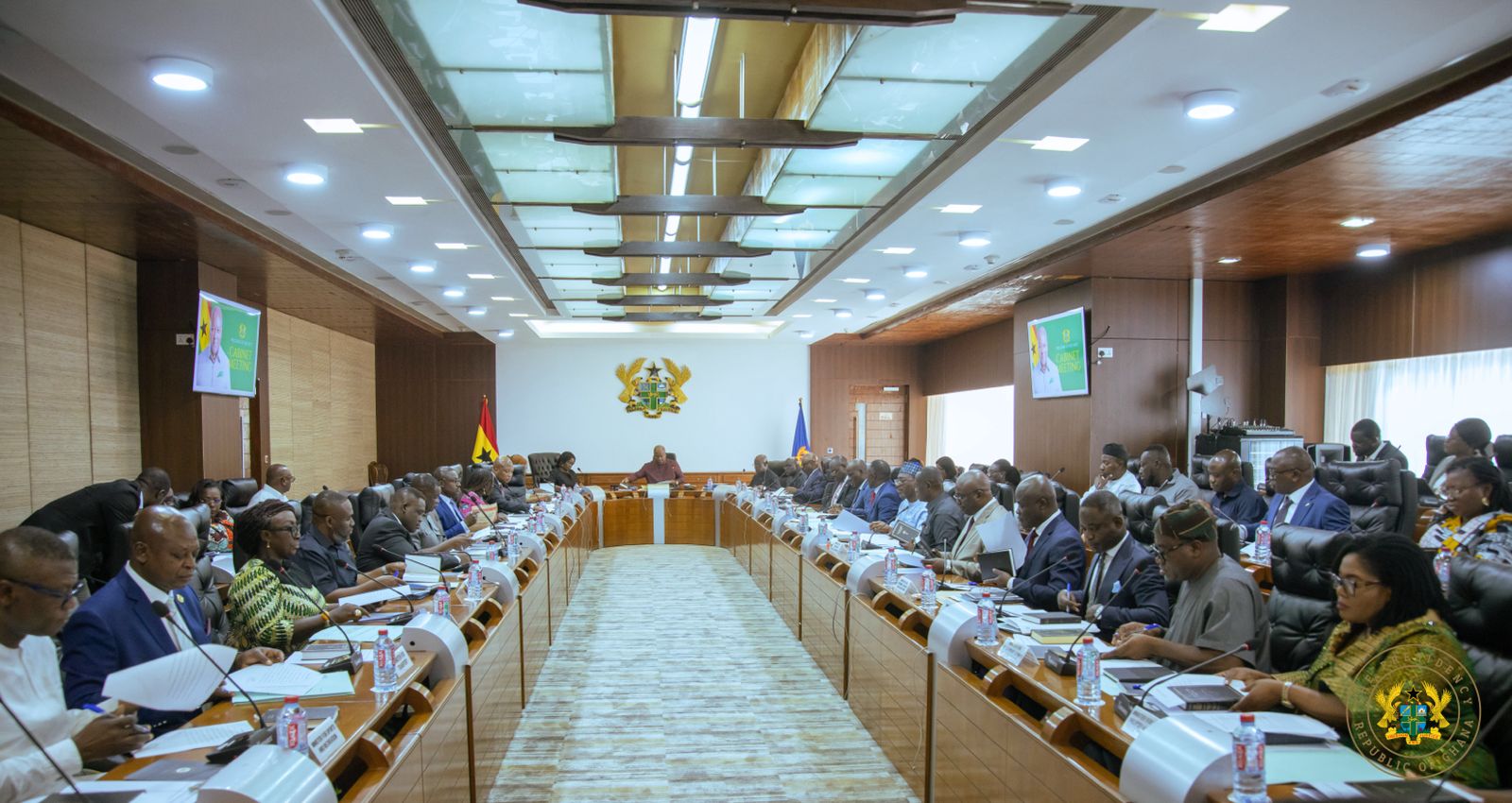
Following The Fourth Estate’s publication of April 29, 2025, which revealed the list of defaulters, the President, on May 5, 2025, summoned his appointees to the Jubilee House and launched a Code of Conduct for them.
He also gave the defaulters until May 7, 2025, to comply with the law, which aims to ensure that public officeholders do not use their position to enrich themselves illicitly.
The Fourth Estate followed up, using the Right to Information law to obtain data from the Audit Service and provides the compliance list below.
The Fourth Estate can confirm that this is the first time since 2013 that nearly all of the president’s appointees have complied with the law within six months.
In earlier investigations published in 2022, The Fourth Estate found that 27 of President Nana Akufo-Addo’s appointees who served in his first and second terms did not comply with the law. Similarly, 11 from President Mahama’s administration from 2013 to 2017 also failed to meet their constitutional obligation.
President John Dramani Mahama has given his appointees until close of business today to declare their assets and liabilities in conformity with Article 286 or consider themselves automatically fired.
This followed The Fourth Estate’s revelation that more than 50 of the President’s appointees, including ministers, presidential staffers, and heads of state institutions, have failed to do their declaration by the March 31, 2025, deadline set by the President.
In response, the President fined them three months’ salary and also ordered them to fulfill their constitutional obligation by the close of today.
The Fourth Estate is publishing the full list of those who honoured it and those who have not as of April 17, 2025.
President John Dramani Mahama’s appointees who defied his directives to declare their assets and liabilities before March 31, 2025, will lose three months’ salary as punishment.
The President has also given these defaulting ministers a new lifeline: May 7, 2025, to comply or be fired.
This follows an investigation by The Fourth Estate titled “ASSET DECLARATION: 55 Appointees & Staffers Defy Mahama’s Order.… Will the President go by his words, or it was just an empty threat?”
The investigative report revealed widespread non-compliance among ministers, presidential staffers, and heads of state institutions.
It chronicled how fifty-five appointees and staffers in the Mahama administration had failed to declare their assets despite a March 31, 2025, deadline issued by the President.
The publication was greeted with widespread public outcry, with some calling on President Mahama to dismiss the appointees who have defied his directive.
Five days later, the president has responded.
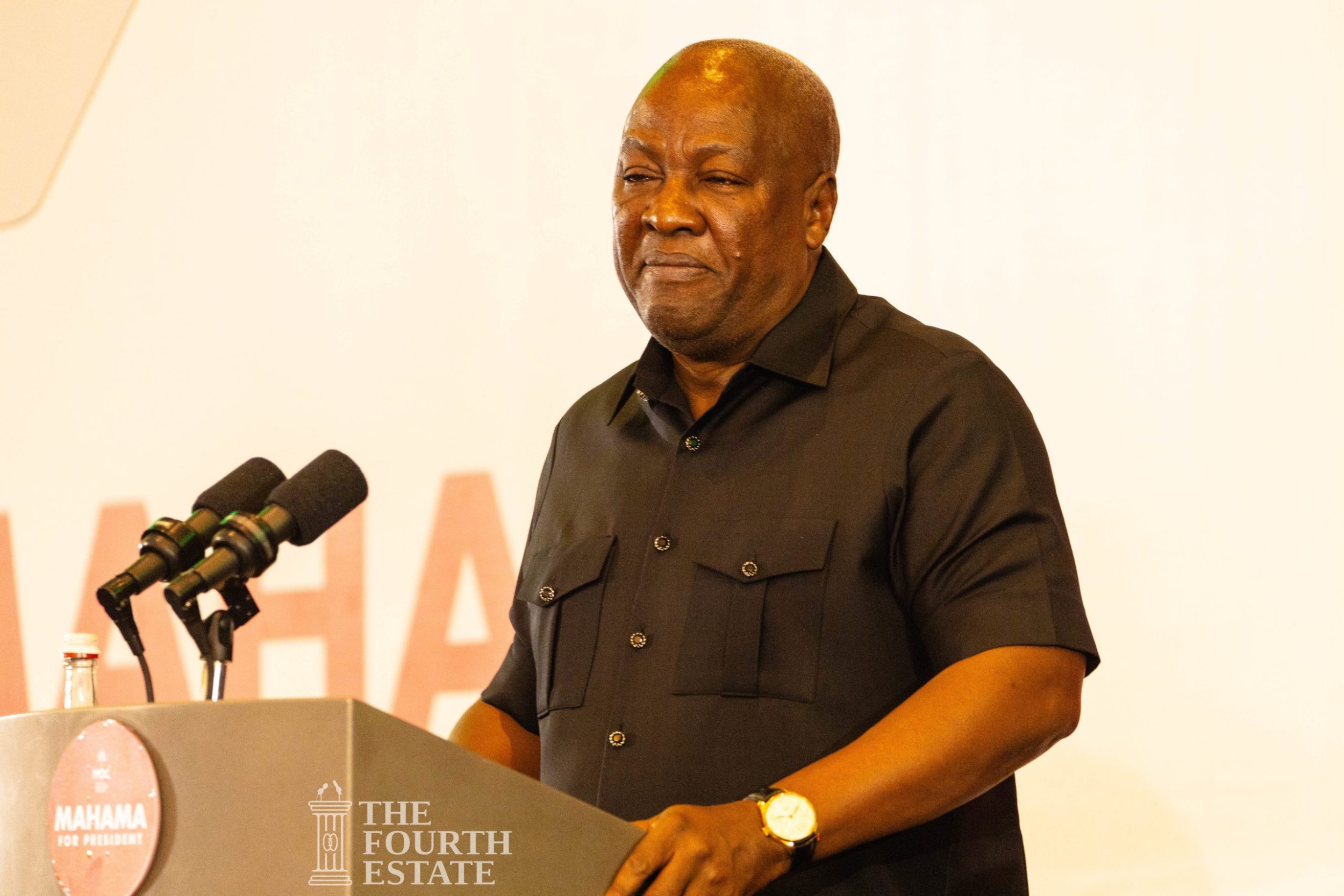
Speaking at the launch of a new Code of Conduct for his appointees at the Flagstaff House on Monday, May 5, 2025, the President said all affected appointees will forfeit three months’ salary as punishment for failing to meet the March 31 deadline he set earlier this year.
“On February 18, 2025, I set a deadline of March 31 for all appointees who had taken office or had been nominated at the time to declare their assets,” the President said.
”An update provided by the Audit Service to my office indicates that some of you failed to meet that deadline.”
President Mahama announced that the forfeited salaries would be donated to a newly established Ghana Medical Trust Fund named after him—‘Mahama Cares’—designed to support specialist-level treatment for a wide range of chronic illnesses, including cancers, diabetes, cardiovascular diseases, chronic kidney failure, stroke, and others.
“In addition to the one-month salary that I have asked all appointees to donate to the Mahama Cares Trust Fund, it means those who failed to declare their assets by the deadline are paying a total of four months’ salary to the fund,” he clarified.
However, the President warned that stiffer sanctions awaited those who still had not complied.
“If by close of day, Wednesday, 7th May 2025, any of you still fails to declare your assets, count yourself automatically dismissed,” he cautioned.
President Mahama emphasised that the asset declaration regime remains one of the most powerful legal tools in the fight against corruption and abuse of office.
He described the law, anchored in Article 286 of the 1992 Constitution and Act 550, as a non-negotiable requirement for all public officials, regardless of rank.
“The asset declaration regime is an important mechanism to check corruption and abuse of office, and it must be respected by all,” he said.
Background
President Mahama publicly declared his assets and liabilities on February 18, 2025, and directed all his appointees to do the same by March 31, 2025, warning that failure to comply would attract severe sanctions, including dismissal.
This was meant to demonstrate a commitment to transparency and enforce Article 286 of the 1992 Constitution and the Public Office Holders (Declaration of Assets and Disqualification) Act, 1998 (Act 550), which require public officials to declare their assets and liabilities either before or shortly after assuming office.
However, investigations by The Fourth Estate reveal that as of April 17, 2025—nearly a month after the deadline—32% of the President’s appointees had failed to comply. These include 55 ministers, deputy ministers, presidential staffers, and heads of state institutions appointed between January 15 and March 18.
High-profile defaulters include Presidential Adviser, Seth Terkper; Special Envoy to the Alliance of Sahel States (AES), Larry Gbevlo-Lartey; Director of Operations at the Presidency, Nathan Kofi Boakye; Director of National Investigations Bureau (NIB), Charles Kipo; Deputy Minister of Roads and Highways, Alhassan Suhuyini; Deputy Minister of Works and Housing, Gizella Tetteh-Agbotui; and Deputy Minister of Food and Agriculture, John Dumelo.
The Commissioner-General of the Ghana Revenue Authority, Anthony Kwasi Sarpong and Dr. Peter Otukunor, head of Presidential Initiatives in Agriculture, were also cited through the data The Fourth Estate obtained from the Audit Service through a Right to Information (RTI) request.
Former Auditor-General Daniel Yao Domelevo criticised the failure to comply, stating that appointees are constitutionally mandated to declare their assets before taking office. While he disagreed with the president’s assumption deadline, he insisted the directive should have at least been respected.
“If I were the president, you’re gone—nothing will save you,” he fired!
Scores of Ghanaians believe that the widespread non-compliance raises serious questions about accountability and the political will to enforce anti-corruption laws within the new administration.
During President Mahama’s first term from January 2013 to January 2017, at least 11 of his ministers never declared their assets.
Fifty-five appointees in the John Mahama administration have defied the president’s ultimatum to declare their assets and liabilities by March 31, 2025.
An analysis by The Fourth Estate reveals that eight out of 55 ministers and deputy ministers have failed to comply with the law and the president’s directive. Similarly, eight out of 32 presidential staffers and 38 of the 84 heads of state institutions appointed between January 15 and March 18 have yet to meet the president’s anti-graft directive as of April 17, 2024.
This means that 32% of the appointees have ignored the president’s directive and failed to fulfill an important constitutional obligation.
Prominent figures on the list of defaulters in the new administration include Seth Terkper, Presidential Adviser on the Economy; Larry Gbevlo-Lartey, Special Envoy to the Alliance of Sahelian States; Nathan Kofi Boakye, Director of Operations at the Presidency; Charles Kipo, Director of the National Investigations Bureau; Nana Yaa Jantuah, a presidential staffer; Alhassan Suhuyini, Deputy Minister of Roads and Highways; Gizella Tetteh-Agbotui, Deputy Minister of Works and Housing; and John Dumelo, Deputy Minister of Food and Agriculture.
Others on the list of defaulters The Fourth Estate compiled through a Right to Information request includes Commissioner-General of the Ghana Revenue Authority Anthony Kwasi Sarpong and Dr Peter Otukunor, who is in charge of Presidential Initiatives in Agriculture and Agribusiness at the Presidency.
President Mahama’s directive
When President John Mahama summoned the Auditor-General, Johnson Akuamoah Asiedu, to the Jubilee House on February 18, 2025, to publicly declare his own assets and liabilities, he sent a strong signal that his government would strictly enforce the constitutional requirement for public officials to declare their assets and liabilities.
He followed the symbolic public gesture with a stern directive to all his appointees to comply with the law by March 31, 2025 or face the consequence.
“I have taken this step to send an unmistakable signal to all public officeholders, especially those that I have appointed that I take the declaration of assets very seriously and expect full compliance from them,” the president declared. “I have asked the chief of staff to send word to all appointees to ensure that they declare their assets by the end of the first quarter of this year, that is by 31st March, 2025. I wish to stress that any appointee failing to meet this deadline would face severe sanctions not excluding removal from office.”
Almost 30 days after the President’s deadline, some ministers and deputy ministers have failed to fulfil perhaps the most important constitutional obligation, something they are required to do either before or after taking the oath of office. Similarly, some presidential staffers who work in the office of the president have defied the directive.
The asset and liabilities declaration requirement are enshrined in Article 286 of the 1992 Constitution and the Public Office Holders (Declaration of Assets and Disqualification) Act, 1998 (Act 550). These demand that public officials including the President, Vice-President, the Speaker, Deputy Speakers of Parliament, ministers and deputy ministers of state, ambassadors, metropolitan, municipal and district chief executives, the Chief Justice and heads of state-owned enterprises, submit to the Auditor-General written declarations of all property or assets owned by, or liabilities owed by them, whether directly or indirectly.
They are to do this upon assumption of office, every four years, and at the end of their tenure.
The process involves picking up a declaration form from the Auditor-General’s Office, filling it out, sealing it, and submitting it back to the Auditor-General.
President Mahama’s highly publicized asset declaration in February was meant to set the tone for a transparent and accountable administration.
“We must not only comply with the law but also demonstrate to the public that we have nothing to hide,” he told his appointees during the meeting.
But the findings by The Fourth Estate raise questions about the level of compliance by his appointees and whether they are as committed to transparency and accountability as their boss sought to demonstrate.
“Even as we strive to hold the past government accountable for their stewardship, I deem it even more imperative to enforce anti-corruption [laws] among our present public officeholders,” President Mahama said of his resolve to enforce the law. “Charity, they say begins at home. I am therefore determined that we fight corruption vigorously so that the precious little resources that has been entrusted to us by the Ghanaian people are used only in their interest.”
Mahama’s first term defaulters
President Mahama’s appointees have a history of non-compliance to the asset declaration law.
In October 2015, when President John Mahama sat behind the microphones of Twin City Radio in Takoradi, he was categorical that all his appointees had fulfilled their asset declaration obligations.
In reality, however, only 31 ministers out of 101 ministers who served in Mr Mahama’s first term (from 2013 to 2017) fully complied with the law. 11 ministers completely failed to comply. More than 50 others partially complied – either whiles in office or at the end of their tenure.
A former Auditor General, Daniel Yao Domelevo, told The Fourth Estate that those who fail to declare their assets should face severe consequences.
He stated that the constitution clearly requires public office holders to declare their assets before assuming office. While he disagrees with the President’s deadline, which he says does not align with the constitutional requirement, he emphasized that the defaulting appointees have not only violated the law but also disrespected the President.
“You’re supposed to declare before even going into office,” Mr. Domelovo says. “If I were the president, you’re gone, nothing will save you. The president has given a directive that does not conform with the law. [But] at the minimum, you should respect [his ultimatum].”
CHRAJ’s position
Mr Domelevo also takes issue with the Commission on Human Right and Administrative Justice (CHRAJ) over what he claims is the commission’s soft stance on defaulting public officeholders.
“I have been on CHRAJ that they are not helping us because anyone who is sent [to CHRAJ is just told] to ‘go and sin no more.’ This should not be tolerated,” he says.
When The Fourth Estate contacted the Commissioner of CHRAJ, Joseph Whittal, regarding the consequences for failing to declare assets, he said he was unable to share his position, as he had already submitted it for consideration in the draft 2021 Conduct of Public Officers Bill, which is yet to be passed.
“The final version is in the AG’s office. I don’t want to venture into something that is outside of what I have myself recommended. Because I don’t have a copy of the final version to look on,” Mr. Whittal said.
He, however, indicated that his position is reflected in CHRAJ’s ruling on the petition against the Chairperson of the Electoral Commission, Jean Mensa, for failing to declare her assets and liabilities.
According to multiple media reports, CHRAJ concluded that since the EC Chairperson had declared her assets and liabilities with the Auditor General — albeit later than the law stipulates — the complaint did not merit further investigation.
Mrs. Mensah was appointed on August 1, 2018, but declared her assets and liabilities on February 17, 2019. This violated Article 286 of the 1992 Constitution, which requires such declarations to be made before assuming office. However, it aligns with Act 550, which sets the deadline at six months.
CHAJ’s position, contained in its investigative report was that: “Having established in the course of the investigation that the Respondent has now complied with Article 286, albeit late, the Commission is of the considered view that the appropriate action, having regard to the circumstances of the case, is to refuse to investigate the matter any further as further investigation would not be necessary.”
Assets declaration is seen as crucial in fighting corruption by helping to track illicit wealth public office holders may acquire while in office.
According to the law, any assets acquired by a public officer holder after the initial declaration, which does not come from “sources reasonably attributed to income, gift, loan, inheritance or any other reasonable source would be classified” as illegal.
Editor’s note: In an earlier version of this publication, we indicated that Dr Adam Bonaa, the Executive Secretary of the Small Arms and Light Weapons Commission, and Ernest Brogya Genfi, the Deputy Minister of Defence, did not declare their assets and liabilities. The error is regretted.
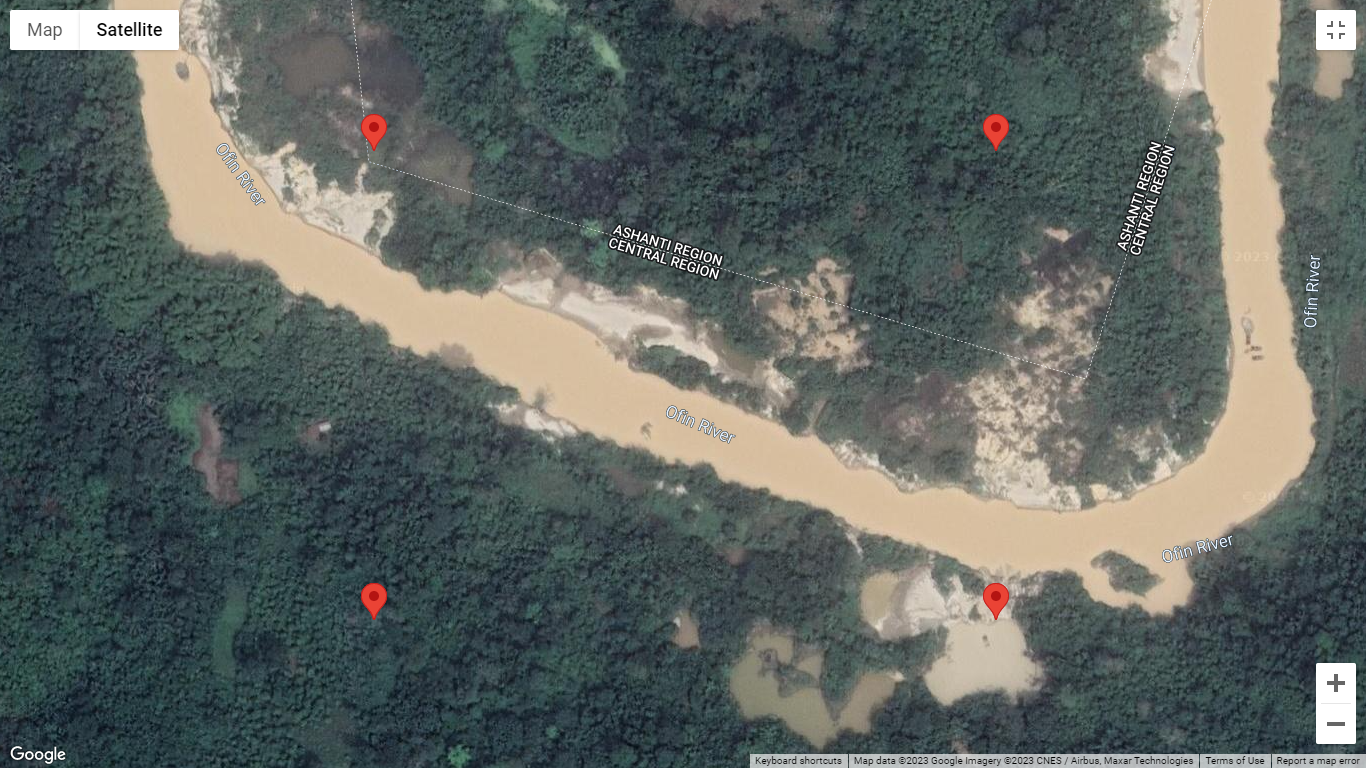
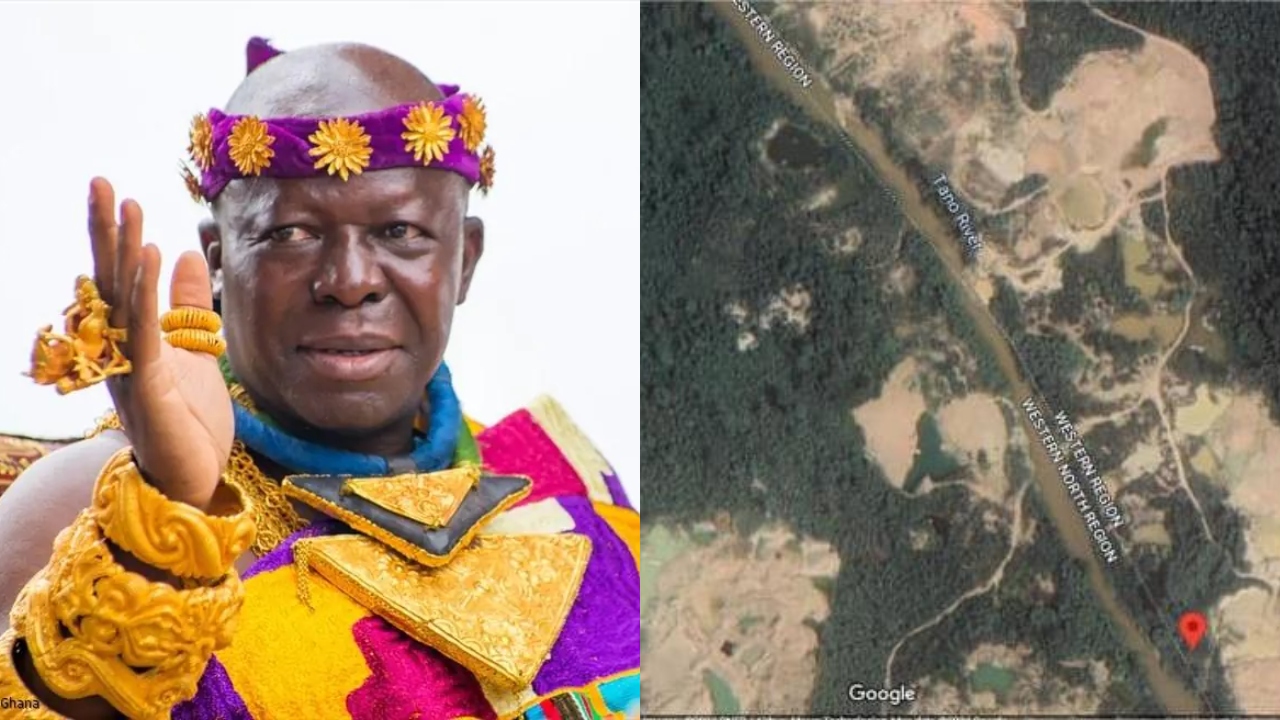
It remains to be seen, what steps the government will take after the Asantehene, Otumfuo Osei Tutu II, publicly lamented that illegal miners had overran a gold prospecting concession belonging to him.
He revealed that unauthorized mining was taking place on the concession without his knowledge, raising serious questions about who is responsible for the environmental destruction from the illegal mining operations which have devastated the banks of the Tano River.
“I have heard that the concession Ayisi [former chief executive of the Minerals Commission] granted me has been overran by illegal (galamsey) miners. But I don’t even know the place,” he said on February 14, 2025, when the Minister of Lands and Natural Resources, Emmanuel Armah-Kofi Buah, visited him at the Manhyia Palace in Kumasi.
“The concession was given to me, and I intended to develop it, only to hear that illegal miners had taken over,” Otumfuo Osei Tutu said. “If I am accused of engaging in galamsey as a traditional ruler, what can I say when I do not even know where the place is?”
His remarks have brought The Fourth Estate’s scrutiny to Bodukwan Holding Company Limited, the entity holding the concession, and its links to the Manhyia Palace. Investigations by The Fourth Estate suggest that despite having only a prospecting license, extensive mining has taken place on the concession, raising legal and environmental concerns.
Bodukwan Holding Company Limited applied for a prospecting license on June 2, 2023, to explore for gold in Moseaso, Odumase in the Western Region. Six months later, the Minister of Lands and Natural Resources approved the request, granting the company three years to conduct exploration over an area the size of 250 football pitches. A significant portion of this concession overlaps with the Tano River, a key water source for communities in Ghana and Côte d’Ivoire.
Prospecting licenses allow companies to conduct preliminary exploration but do not permit mining activities. Yet, satellite imagery reviewed by The Fourth Estate reveals widespread mining on the concession – evidence that illegal operations are taking place on the concession.
Environmental degradation and legal violations
Ghana’s mining laws prohibit activities that degrade the environment, particularly near water bodies. While the law does not explicitly require a 100-meter buffer zone, both the Minerals Commission and Water Resources Commission have advised that mining should not take place within this range to prevent pollution. In 2021, the government declared riverbanks no-go areas for mining, a directive emphasized by then-President Nana Akufo-Addo and former Lands Minister, Samuel Jinapor.
The Fourth Estate found that Bodukwan Holding lacks key regulatory approvals, including an Environmental Protection Agency (EPA) permit and a Water Use Permit from the Water Resources Commission (WRC). The Minerals Commission has also refused to provide a list of companies with operating permits.
Who owns Bodukwan Holding?
Incorporation records from the Office of the Registrar of Companies show that Bodukwan Holding is closely linked to Manhyia Palace. The company’s beneficial owner, Nana Duah Bonsu, serves as a co-director alongside Mujeeb Rahman Ahmed, a lawyer for Manhyia Palace, and Julia Ama Adwapa Amaning, widely known as Lady Julia, the wife of the Asantehene.
Beyond its mining interests, Bodukwan Holding is also the parent company of the Bodukwan Multifruit Processing Factory, which processes mangoes from its farms in the Nkoranza North District.
When contacted, Mujeeb Rahman Ahmed denied any involvement in illegal mining. He insisted that Bodukwan Holding had not begun operations at its site near Bibiani, let alone engaged in mining. This was before the Asantehene’s recent public remarks about the invasion of illegal miners on the concession.
“If anyone is there, we need to deal with them,” Mr. Rahman told The Fourth Estate. “We have no knowledge of any such activity. If someone is mining in our name, it is wrong. We are not aware of it.”
Who could be responsible?
Environmental activists argue that once a company obtains a concession, it is legally responsible for protecting it from illegal mining. Kwaku Afari, Technical Director of WACAM, an environmental advocacy group, maintains that if mining is taking place on a concession with only a prospecting lease, then the company is in breach of the law. He stressed that companies are required to report illegal activities to the Minerals Commission and security agencies and are responsible for securing their own land.
Under Article 18 of the Constitution, Mr. Afari noted, every individual has the right to protect their property. He also pointed out that if a company remains silent while its land is used for illegal mining, it raises questions about whether it is benefiting from the activity or is simply being negligent.
His concerns were echoed by Sandow Ali, Director of Mining at the EPA, who emphasized that companies cannot operate without securing four essential permits: a license from the Minister of Lands and Natural Resources, an EPA permit, an operating permit from the Minerals Commission, and a water use permit from the Water Resources Commission. He made it clear that obtaining a ministerial license alone does not grant the right to begin mining and that any activity without the full set of approvals is illegal.
Will the government intervene?
With clear evidence of mining activity on Bodukwan’s concession and a lack of regulatory compliance, the question remains: will the government take action? The Asantehene’s frustration highlights the broader challenge of illegal mining in a country where even high-profile concessions are not spared from galamsey operations.
Editor’s note: A portion of this story has been revised.
Officials at the National Service Authority (NSA) circumvented mandatory validation processes for payments of allowances to national service personnel, enabling thousands of nonexistent names to be added to the payroll.
This made it easy to use the ghost names to drain the public purse of millions of Ghana cedis in allowances intended for national service personnel.
The Fourth Estate has been investigating allegations of corruption at the NSA for some months and has discovered evidence of fraudulent addition of nonexistent names, otherwise referred to as ghost names, to the list of personnel deployed annually since 2018. The inclusion of tens of thousands of fictitious names each year is done through the generation of fake student index numbers that are clandestinely created for various universities and other tertiary institutions. The index numbers that are used for the ghost names are not only fake, but most of them do not follow the patterns used by the universities and colleges whose names were used in assigning the fake index numbers to the ghost service personnel.
The Fourth Estate’s investigations show that the NSA’s system is designed to ensure rigorous verification of work attendance of service personnel before allowances are paid. This process, known as pre-approval, requires district managers and regional directors to authenticate personnel and confirm their presence at their assigned posts. This is done on monthly basis before payments are made to the personnel.
However, a source familiar with the NSA’s operations disclosed to The Fourth Estate that during the tenure of the immediate-past Director-General, Osei Assibey Antwi, certain high-level accounts operating the authority’s database manipulated the system monthly, allowing ghost personnel to be cleared before regional directors could complete verification procedures.
How the process should work
According to the sources, the NSA is mandated to ensure that only personnel who have actually worked receive allowances each month. The process begins at the workplaces of service personnel (known as user agencies) where their immediate supervisors sign a monthly duty report form confirming attendance. This form is then submitted to the NSA District Office.
“The district manager verifies that the personnel have reported to work and met the required days for payment,” the source explained. “The manager then enters the data into the NSA system, where it is reviewed by the regional internal auditor before reaching the regional director.”
The regional director works on the pre-approval process and forwards the verified list to NSA headquarters in Accra. There, the internal audit team performs additional checks before sending the list to the finance department. Once approved by finance, the list is then forwarded to the Director-General and then to the Ghana Interbank Payment and Settlement Systems (GhIPSS) for final payment.
Breach of protocol
Evidence obtained by The Fourth Estate suggests that this procedure was not followed for all pre-approvals at the regional level, despite management being alerted to the irregularities.
During a virtual management meeting in May 2023, the NSA’s Western Regional Director, Okatakyie Amankwaa Afrifa, who has oversight responsibility of the Western North Region, raised concerns about the number of pre-approvals in the two regions under his supervision, hinting at possible padding of personnel numbers.
“My Western Region account always has 250 personnel already approved when I’m doing my pre-approvals, and for Western North, it’s always 993. I don’t know where that number is coming from. I want to supply you with this information to see how you can address it,” Mr. Afrifa, who is also the New Patriotic Party’s Western Regional Secretary, told the meeting, recordings of which are available to The Fourth Estate.
In response, the then Director-General, Osei Assibey Antwi acknowledged the concerns and promised to look into the matter. However, there is no evidence that any action was ever taken to address Mr. Afrifa’s concerns.
NSA’s Western regional director, Okatakyie Amankwaa Afrifa raised concerns about pre-approvals in the authority’s system for allowance payments| Photo: facebook/oktafrifa
When The Fourth Estate contacted Mr. Afrifa, the Western Regional Director of the NSS, he confirmed the irregularities. “I didn’t understand it. That’s why I raised it in our meetings,” he said. He explained that, under normal circumstances, the pre-approval stage in the system should show zero approvals before the regional director’s verification.
He said, he however, discovered that numbers were already appearing at the pre-approval stage before he completed his checks – meaning some payments had been approved without his verification and input.
“I raised it a number of times and didn’t get a response, so I just kept quiet. I thought it was because it was technical, and people didn’t understand,” he added.
When asked if the issue still persisted, Mr. Afrifa could not provide any confirmation due to inconsistencies in monthly allowance payments.
“What about 2024?” The Fourth Estate asked.
“That was last year, I think there were still some [pre-approved] numbers.”
“And 2023?”
“That was when I raised the issue.”
When The Fourth Estate requested an interview with the directors of the NSA on November 27, 2024, Mr. Assibey Antwi, said he would not be available until December 10, 2024.
Later, The Fourth Estate received a letter from the NSA stating that the institution was unable to grant interviews to The Fourth Estate because it was cooperating with the Office of the Special Prosecutor, which had opened investigations into the scandal following a petition from The Fourth Estate.
The findings from The Fourth Estate investigations raised serious questions about the integrity of the NSA’s payroll system and the potential loss of public funds through ghost names.
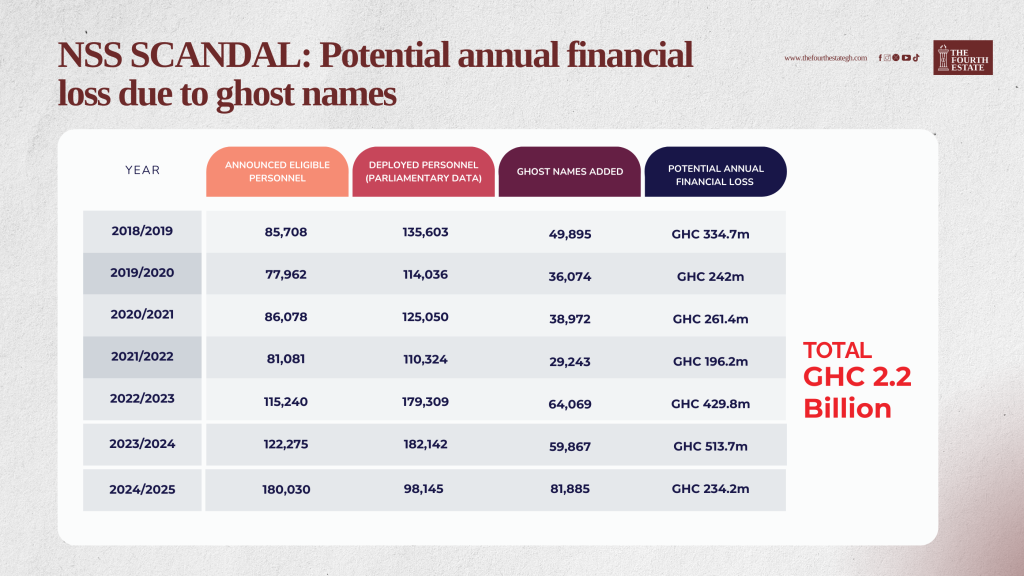
At the beginning of every service year, the authority announces to the public, the total number of personnel to be deployed. But behind the scenes, thousands of additional names are added through the creation of fake index numbers of universities and fake PINs for supposed service peronnel who could not take up national service in previous years.
A comparison of figures put out by the NSA to the public for each service year and what was presented to the Parliamentary Select Committee on Education since 2019 reveals a systematic pattern of significantly inflated figures.
These dubious activities are happening at a time when the NSA struggles to pay thousands of genuine service personnel posted across the country on national service.
“It is disgusting that while many of us struggled to barely feed after being sent to marginalized communities in the middle of nowhere, people were riding on our presence to enrich themselves,” a former national service person, who wants to be known as Joel told The Fourth Estate. “I’m really disappointed. The most annoying part is they didn’t pay me two months of my allowance.”
In February 2022 when former Vice President Dr Mahamudu Bawumia visited the National Service Authority (NSA), its management, led by the Director-General, Osei Assibey Antwi, claimed they had implemented a digitalization process that had saved the country GHC 112 million.
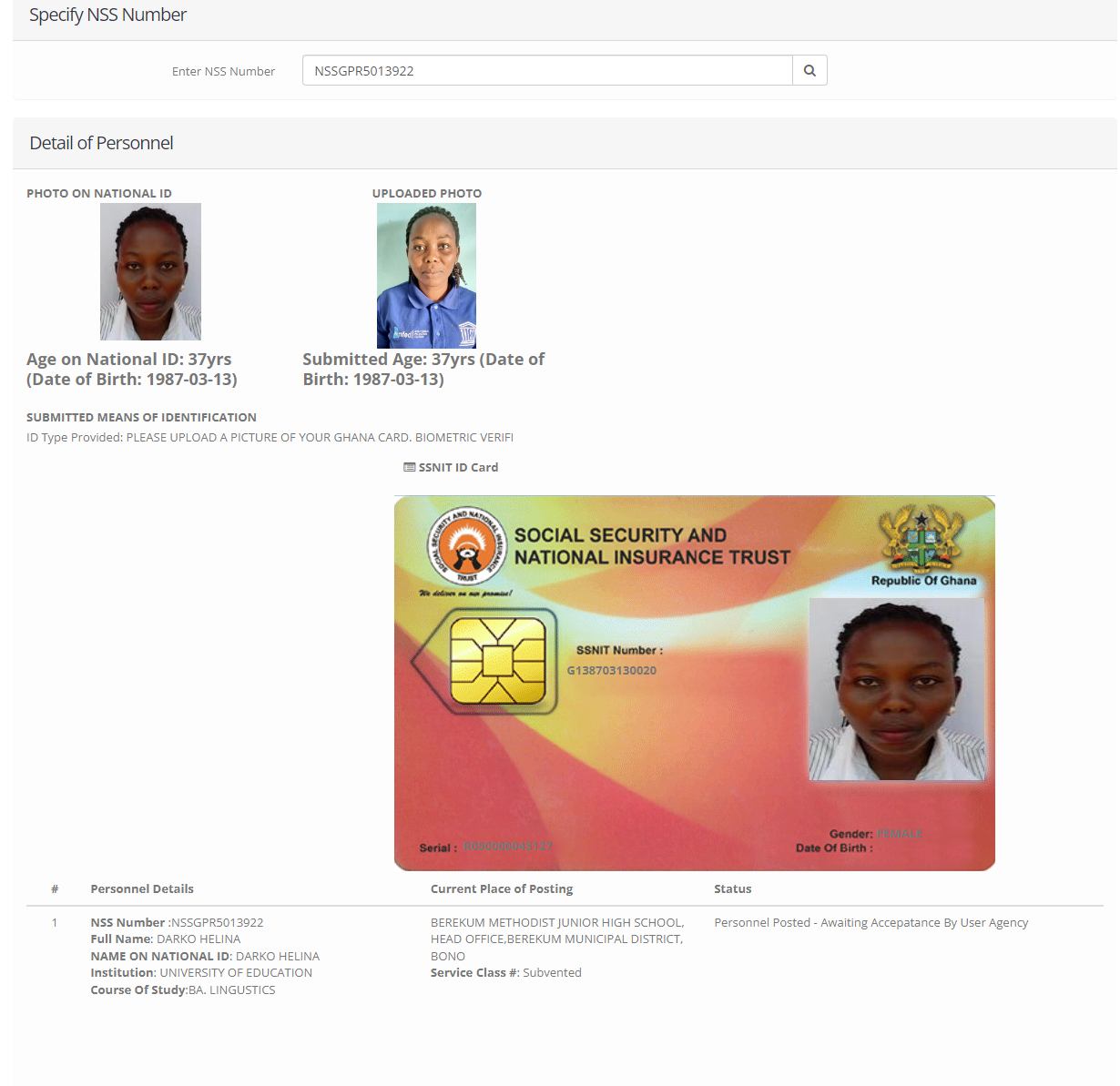
Mr Antwi, the 59-year-old former Mayor of Kumasi, said the introduction of an app called ‘Metric app’, which combines facial recognition technology and identity card checks for verification and validation, had blocked the enrolment of some 14,027 potential fraudsters onto the scheme for the 2021-2022 service year.
“We had them (ghost names) on our list as potential service persons, but they ran away and could not register because the system raised red flags and weeded them out,” he boasted.
“This achievement is massive by any stretch because if we replicate this in ten institutions, we are talking of saving the country almost a billion cedis,” the NSA website quoted him as saying. “You can understand why it is so important to link the payroll with the Ghana Card which in your case has chased 14,027 people away.”
Since this development, Dr Bawumia used the case of the National Service Scheme as a classic success story of how digitalisation can prevent ghost names and enhance the fight against corruption.
However, The Fourth Estate’s months-long investigation has exposed a vastly different reality. Rather than preventing fraud, the NSS’s digital system has been co-opted to facilitate one of the country’s most brazen financial scams, where fake identities (some belonging to non-existent individuals and even 90-year-old “graduates”) regularly receive national service stipends.
Ghost names, fake index numbers and inflated personnel data
At the beginning of each service year, the NSS announces the number of personnel to be deployed. However, internal records show that thousands of additional names are added through the creation of fake index numbers and Personal Identification Numbers (PINs) linked to nonexistent students.
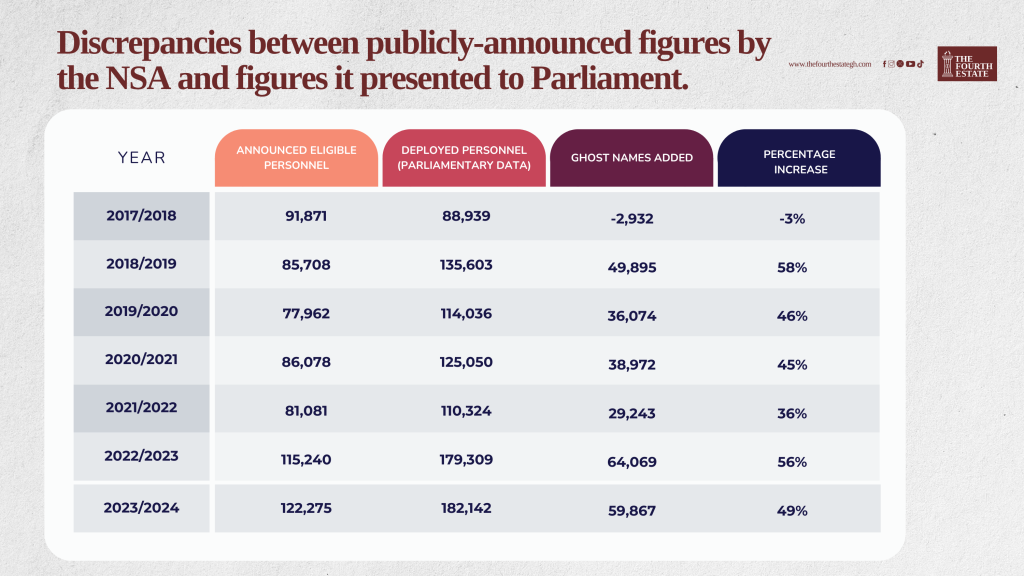
A comparison of NSS figures released to the public and those submitted to Parliament’s Select Committee on Education in June 2024, reveals consistent and significant inflation of personnel numbers.
The figures in the table below show that in the first year of President Nana Akufo-Addo (2017/2018), the authority announced that 91,871 personnel were eligible to be enrolled on the scheme. The data for the same year shows that in the end, 88,939 personnel were deployed, indicating that 2,932 of the eligible personnel did not enroll in the scheme that year.
Experts say this is a normal pattern since it is impossible to have all persons eligible for national service in a particular year undertaking the service.
If we are going through the advertised processes of the NSA for personnel deployment religiously, there shouldn’t be much discrepancy in the data,” Dr Peter Anti, Executive Director of Institute for Education Studies, said. “‘Normally about a range of one to three percent do not take up the positions when they are posted, and there are others who return to do their service. Therefore, it becomes very difficult to have a large discrepancy between the number that’s announced and what’s given to parliament.”
In all the subsequent years after the first year of President Akufo-Addo, the announced figures of eligible service personnel shot up by tens of thousands.
The Fourth Estate’s investigation found thousands of names assigned fake student index numbers supposedly linked to institutions such as Kwame Nkrumah University of Science and Technology (KNUST), University for Development Studies (UDS), University of Education, Winneba (UEW), Tamale Technical University, Valley View University (VVU) and some colleges of education.
For example, born on January 1, 1963, Abubakar Fuseni was listed in the NSS database as a graduate of UDS in the 2022/2023 service year. His index number, 591GHA-725913201-2, was flagged by UDS officials as fake. More shockingly, the 2022/2023 NSS list contained 226 other individuals named “Abubakar Fuseni,” all supposedly from UDS, and all with identical degree qualifications – Bachelor of Arts in Integrated Development Studies. On the NSS posting list for the 2022/2023 service year, 2,338 names with index numbers similar to Abubakar’s and inconsistent with what the University officially issues can be found.
Similarly, in the same 2022/2023 service year, Collins Benneh, supposedly a BA Linguistics graduate from UEW, was assigned an index number VL09T/0002/09T. However, UEW’s Acting Registrar, Wilhelmina Tete-Mensah, confirmed that “this is not a UEW index number. We do not use alphabets in our numbering.”
This pattern of issuing fraudulent index numbers extends across multiple educational institutions – private and public, with fake identities inserted into NSS postings every year over the past eight years.
80-year olds and 90-year olds “serving” asnational service personnel
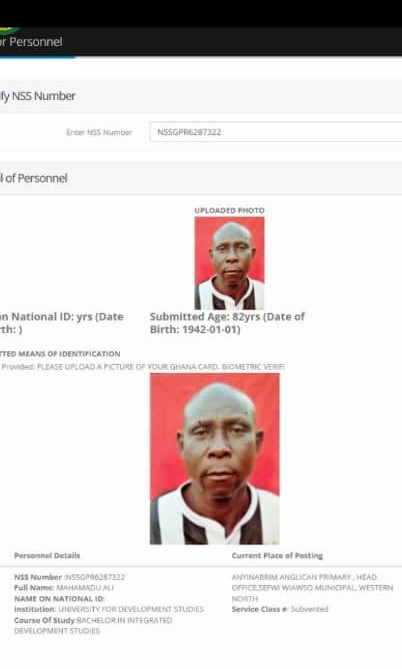
Among the most bizarre discoveries was the inclusion of individuals well past retirement age in the NSS database. 93-year-old Nimatu Salifu was listed as a UDS graduate, deployed to Kpiyagi D/A Primary School in the Upper West Region in the 2022/2023 service year.
In the same service year, 91-year-old, RuthAbdulai, supposedly a Development Studies graduate from UDS, was posted to Adakura Primary School in the Upper East Region. There is also an 82-year-old Mahamadu Ali, another UDS graduate, who was posted to Anyinabrim Anglican School in Sefwi Wiawso in the Western North Region.
According to the NSA, 82-year-old Mahamadu ali was as service personnel in sefwi wiawso in the 2022/2023 service year
Fake IDs and manipulated biometric data
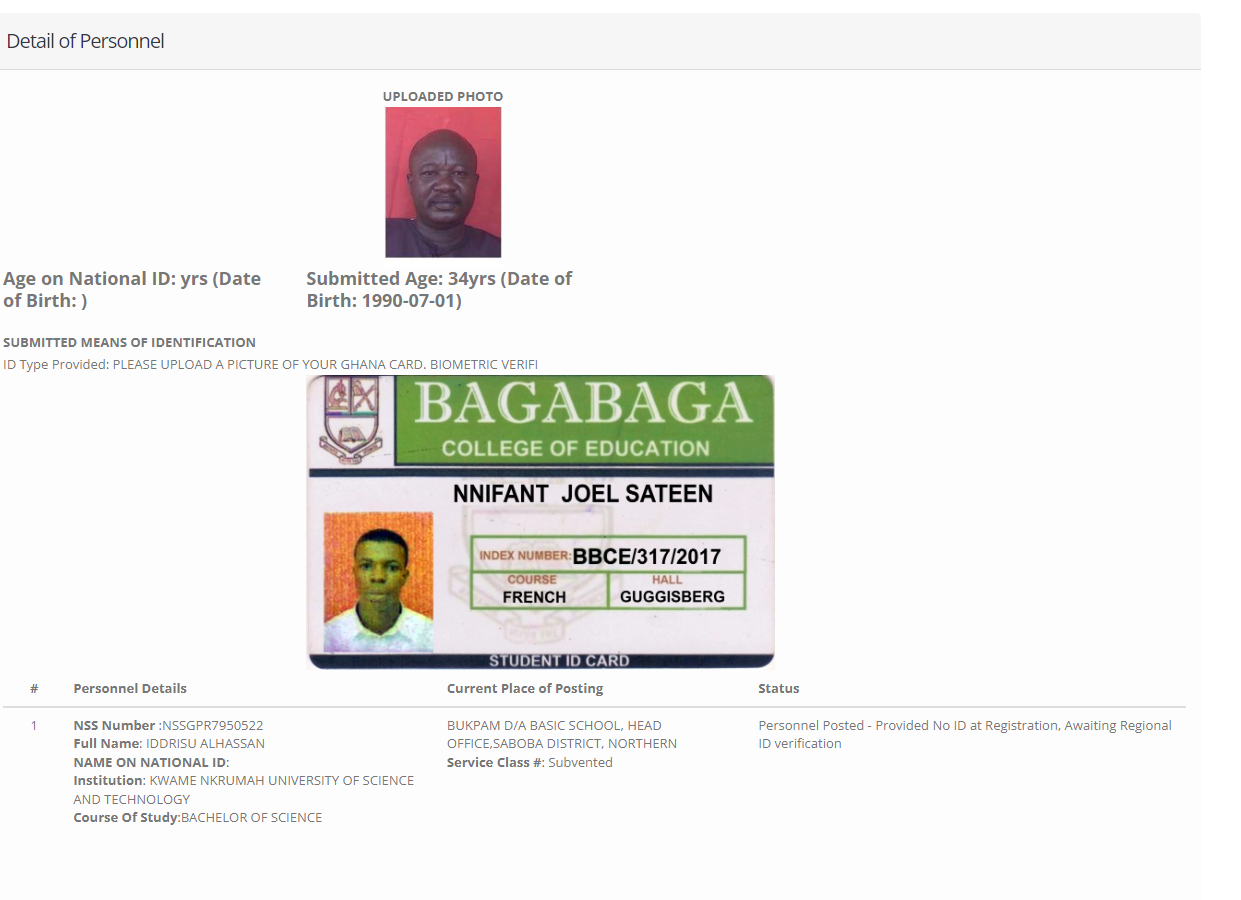
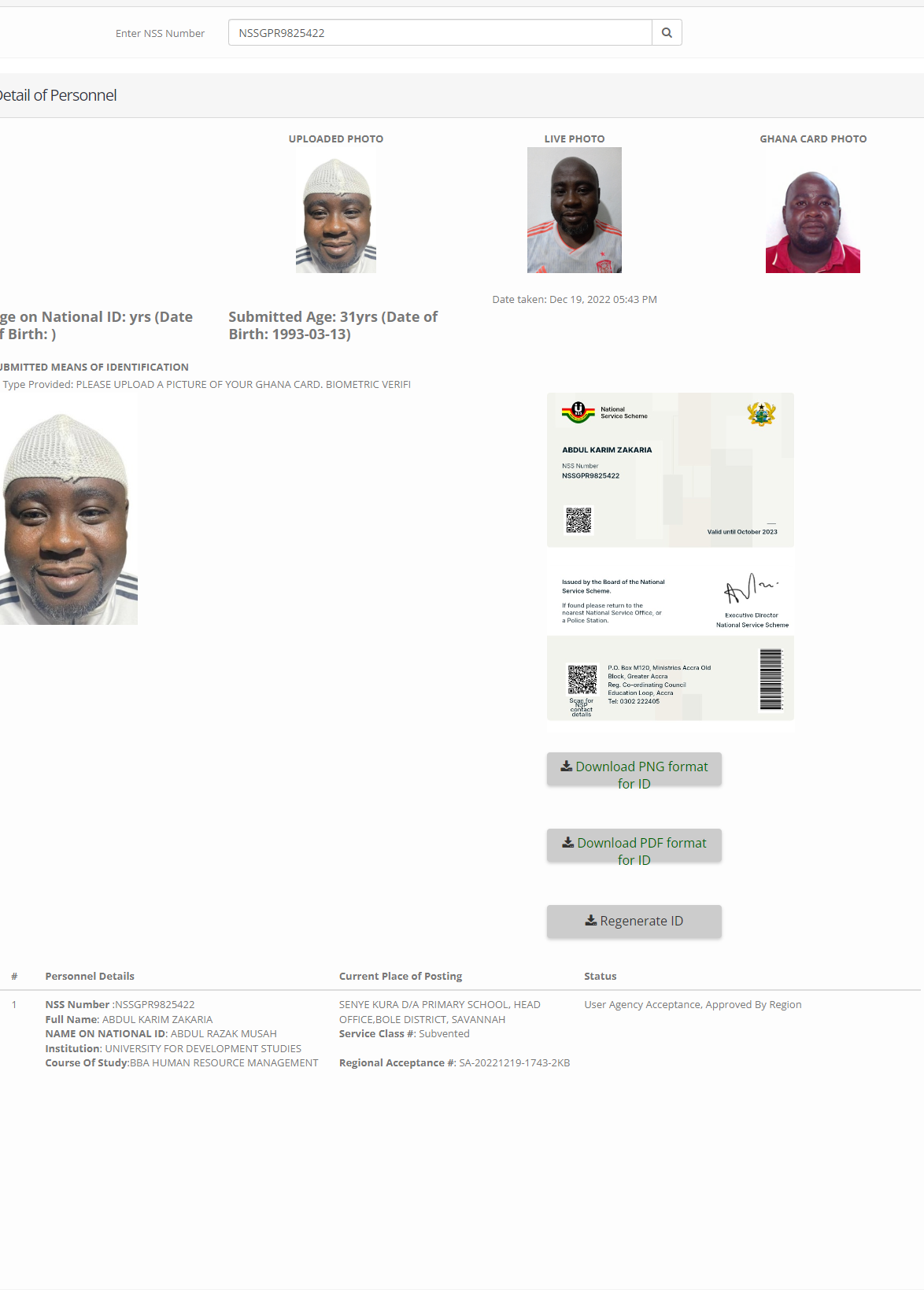
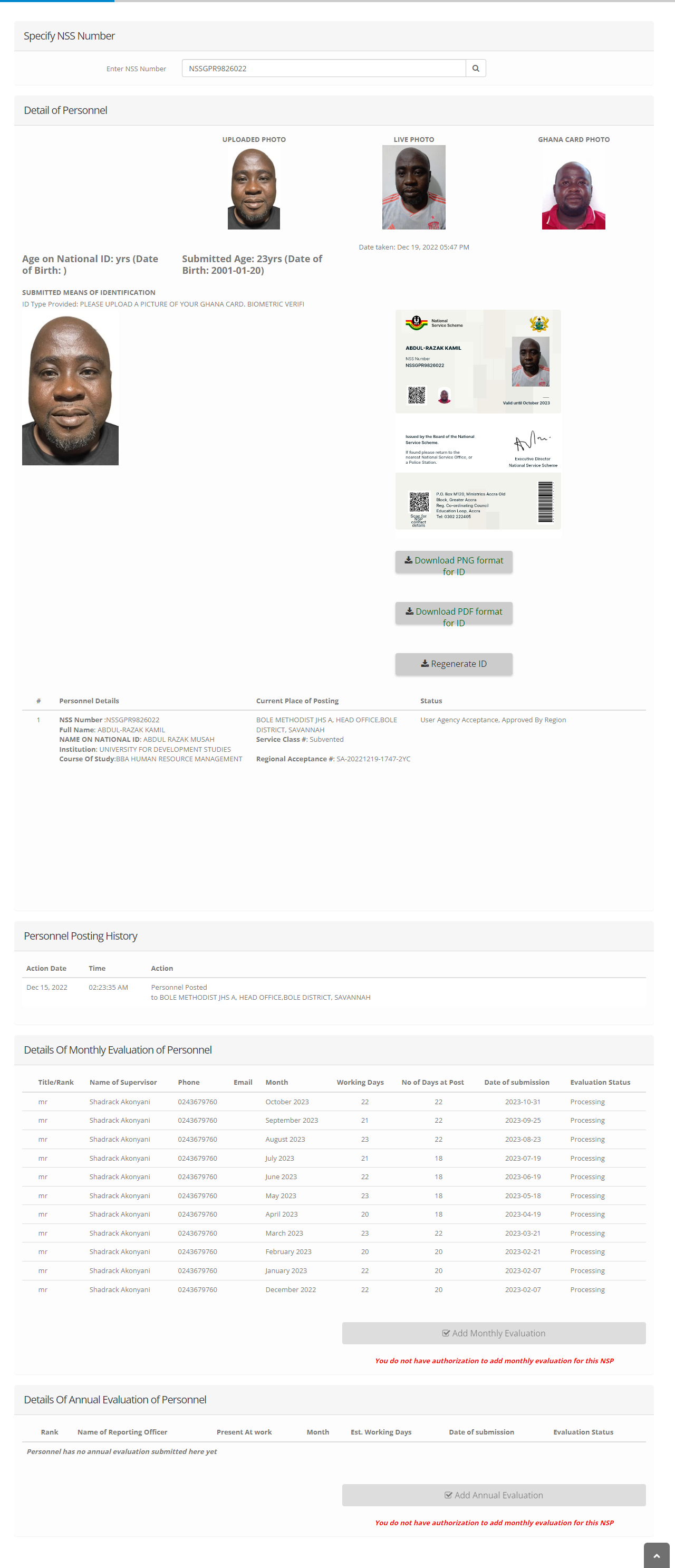
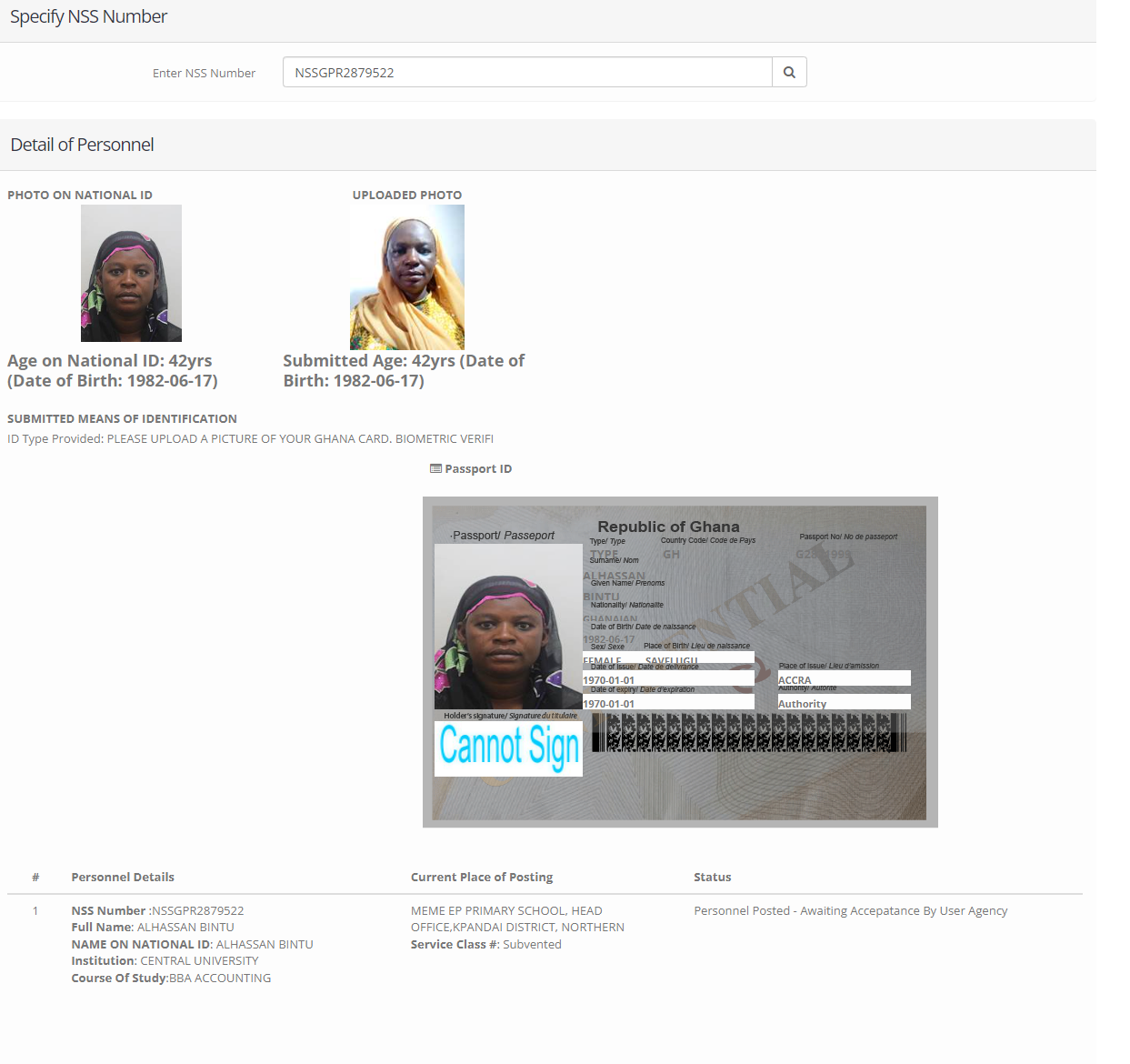
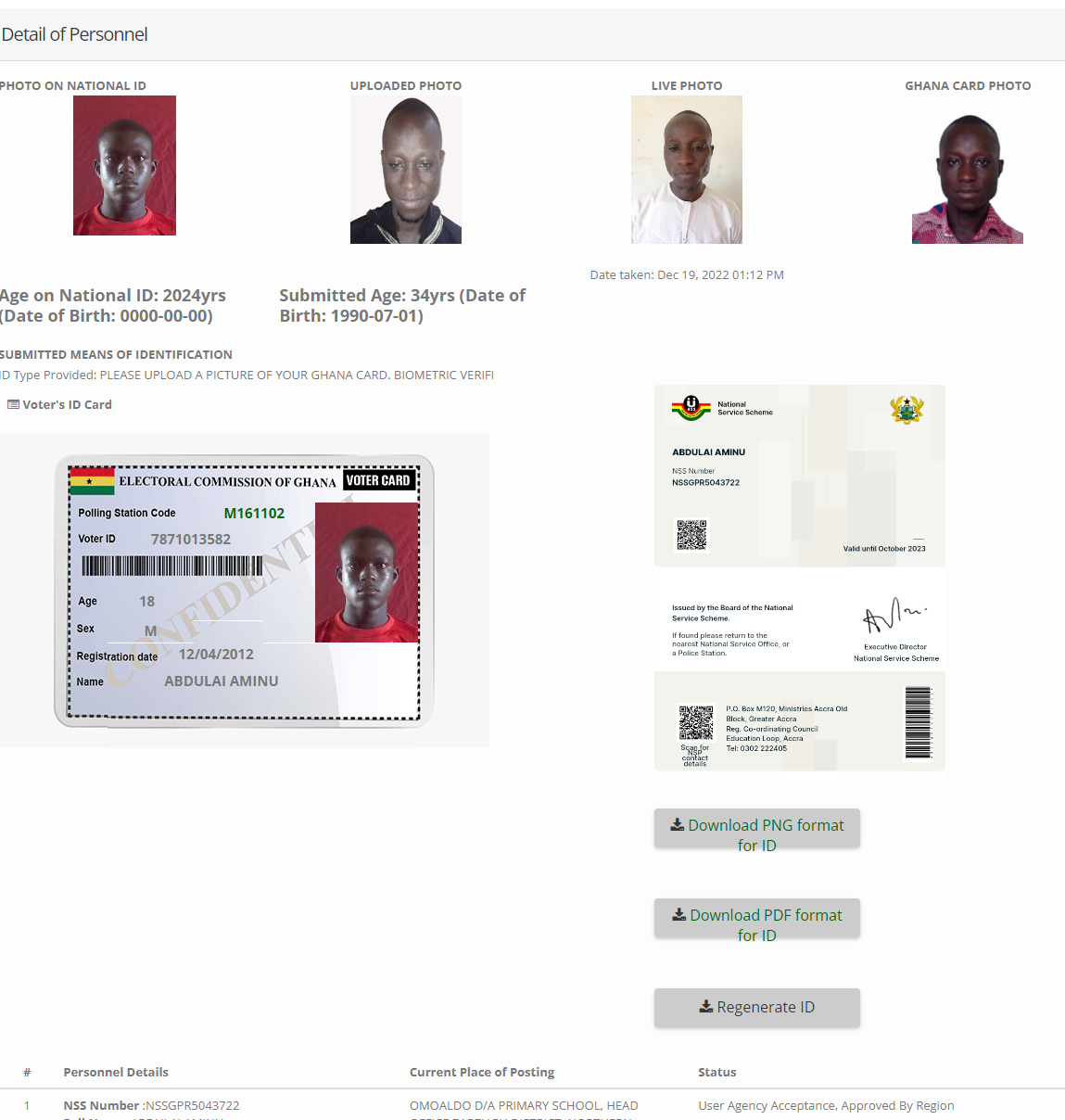
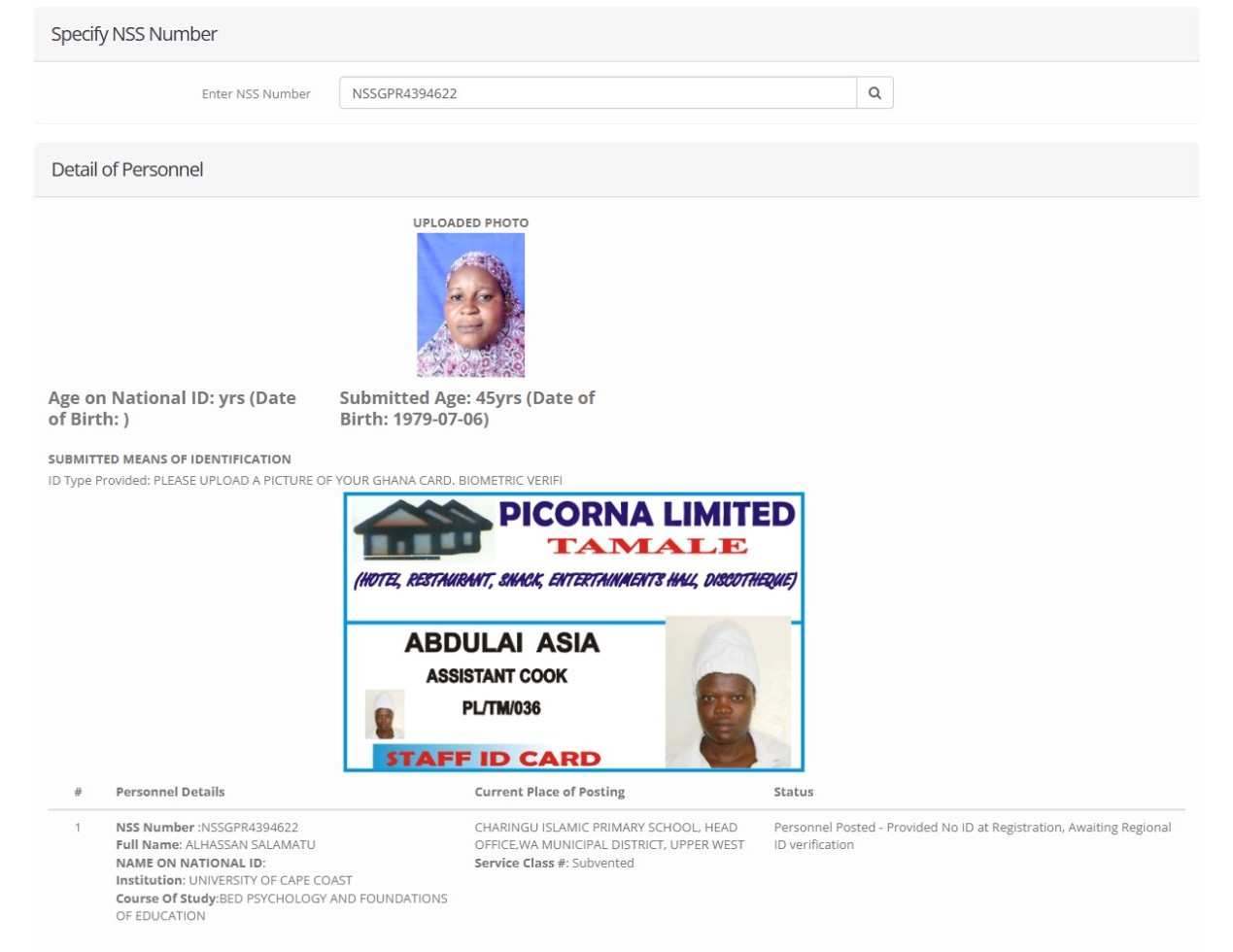
Despite the NSA’s claim of using the Ghana Card for biometric verification, The Fourth Estate found that multiple forms of identification, including doctored school ID cards, Ghana National Fire Service ID cards, provisional voter ID cards, and even private company ID cards, were used to register fake personnel.
For example, a supposed student ID card from Bagabaga College of Education in Tamale, bearing the name Nnifant Joel Sateen was used to register at least two different people. First, it was used to register Iddrisu Fatima, 34, a purported KNUST graduate. Again, the same ID card was used to register 34-year-old Iddrisu Zakaria supposedly from KNUST who was posted to Sakogu Senior High School in East Mamprusi District in the North East region in the 2022/2023 service year.
Alhassan Salamatu, 44, a supposed UCC graduate, registered using a Ghana National Fire Service ID card bearing the name of Ophilia Akolgo, 41, who joined the Service in 2016.
Kwame Donkor, 72, was registered without any ID card. In place of an ID card, a photo was used. When The Fourth Estate run a reverse image search, it was revealed the photo was a certain Emmanuel Mutio, a Human Resource Manager of a private IT company in Kenya.
NSA’s legal attempts to suppress publication
When The Fourth Estate requested an interview with the Directors of the NSA on November 27, 2024, the Director-General, Osei Assibey Antwi, said he would not be available until December 10, 2024. The NSA also said it would need more time to respond to an RTI request for data it had earlier shared with parliament.
Upon learning of The Fourth Estate’s impending publication of its investigations, the NSA took a legal action to block the publication of the report. On December 2, 2024, a day before the scheduled publication, the NSA secured a 10-day injunction to prevent the story from been published. When that injunction expired, they sought another, arguing that publication without their response would cause “irreparable harm.”
However, on December 19, 2024, an Accra High Court struck down the NSA’s injunction request, after The Fourth Estate’s lawyers described the NSA’s legal manouvres as a SLAPP lawsuit (Strategic Litigation Against Public Participation) intended to silence investigative journalism. The court awarded costs of GHS6,000 against the NSA in favor of the Media Foundation for West Africa, which runs The Fourth Estate as a non-profit, public interest and accountability investigative journalism project.
A digital ruse that stole millions
Rather than eliminating ghost names, digitalization at the NSS has been used as a cover for one of the most sophisticated financial scams in Ghana’s public service. The scheme has resulted in financial losses to the country amounting to millions of cedis while allowing fraudulent actors to exploit a system designed to ensure transparency.
With the NSS refusing to release additional data under the Right to Information Act, The Fourth Estate has now filed an appeal with the RTI Commission to force disclosure of further records.
Part two of this story will reveal how the NSS bypassed systems monthly to pre-approve ghosts names who are paid monthly
Companies owned by individuals with political connections and some entrepreneurs have concessions near heavily mined riverbanks despite former President Akufo-Addo’s directives that mining companies maintain a 100-meter distance from water bodies.
The Fourth Estate’s investigations show that these companies lack permits from regulatory authorities including the Environmental Protection Agency and the Water Resources Commission. Yet, destructive mining activities have been carried out on their concessions, severely affecting the Tano and Ankobra rivers.
Among the companies with mining leases that affect water bodies, two—Cape North Limited and Tera Nayo Limited— stand out because of their links to the son of the third most powerful person in the Jubilee House during the Akufo-Addo administration –the Chief of Staff, Frema Osei Opare.
The Minerals Commission database shows that the two companies have two active mining leases that are valid for ten years.
The former Minister of Lands and Natural Resources, Samuel Abu Jinapor, granted the leases for the two companies on March 15, 2023.
The two companies’ leases are part of several others that Mr Jinapor approved that straddle rivers, contradicting his own directives and environmental regulations which stipulate that there should be no mining within 100 metres of any river or water body.
Portions of Cape North Limited’s concession overlap the Ankobra River. The Ankobra River is rich in minerals, especially gold, which has led to mining activities within and around its banks. Some of these activities, including illegal mining, have contributed to its pollution.
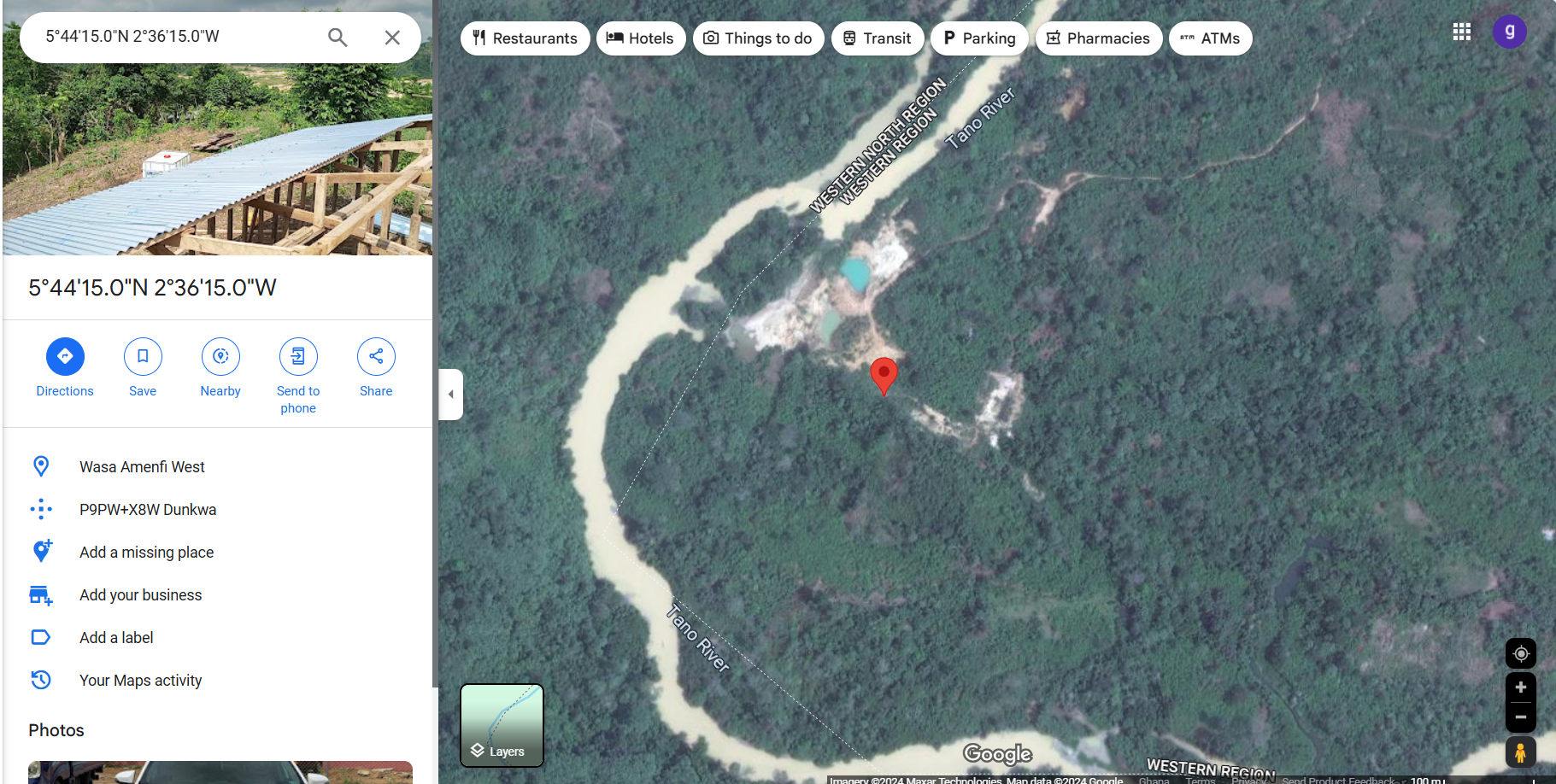
Tera Nayo’s concession also stretches across two water bodies, the Tano River and the Amumeri Stream.
The Tano River originates in the Ahafo Region and empties into the Aby Lagoon and the Atlantic Ocean near the Ghana-Côte d’Ivoire border. The river is essential for both agricultural production and local livelihoods, providing water for irrigation, fishing, and other uses.
The Fourth Estate’s searches at the Office of the Registrar of Companies (ORC) indicated that Cape North and Tera Nayo are both owned by one man – Nana Osei Opare, who is a co-director with Maataa Opare.
Former Chief of Staff, Frema Osei-Opare and her children, Maata Osei Opare (left) who is a director of multiple mining companies her brother, Nana Osei-Opare owns
Nana Osei and Maata are both children of Akosua Frema Osei-Opare, President Akufo-Addo’s Chief of Staff for eight years.
Satellite imagery shows that Cape North’s concession has been heavily mined in a way that affects the ecology of the Ankobra River.
The situation on the banks of the Tano where Tera Nayo’s concession is located is no different.
Nana Osei-Opare owns two other mining companies, Optec Limited and Mech Resources Limited. His sister, Maataa Opare, and another person, Nana Yaa Serwaa Opare, serve as co-directors with him in the companies.
The former Chief of Staff and her son
Optec Limited is an offshoot of an information technology company where Mr Osei-Opare is the CEO/Founder and Maata Opare is the legal manager.
Together, their four companies, have applied for 23 mining and prospecting licenses. Five leases have been granted from these applications.
Three of these companies have Francis Owusu-Akyaw, the MP for Juaben in the Ashanti Region, as their consultant. Mr. Akyaw alone has provided consultancy services for at least 18 companies, all of them mining in forest reserves or near water bodies.
A former Chief Executive of the Minerals Commission, Tony Aubyn, tells The Fourth Estate that when mining concessions are granted across water bodies “it means you can mine in the river itself.”
“I know that in my time some applications were rejected because they straddled a major river,” Mr Aubyn says.
“The one that I am recalling was on the Pra River. The demarcation was across the Pra River, so we declined it and then we asked the applicant if he is so minded, he could have two concessions, one at the east side and one at the west side,” He adds.
Under the regulations of LI 2173 and environmental standards set by the EPA, mining activities are generally restricted near water bodies. The Minerals Commission and Water Resources Commission require a buffer distance of at least 100 meters from major rivers and other water bodies to protect natural resources and prevent pollution.
Apart from Mr Osei-Opare’s two companies, other companies have mining concessions that cut across major rivers whose banks have been decimated by mining.
For example, Zogok Gold and Construction Limited is a mining company with a concession that stretches across the Ankobra River. There is extensive damage along the banks of the river that runs through the concession. This company has two beneficial owners—Thomas Amewu-Duglu, the General Manager of Volta Forest Products. Mr. Amewu-Deglu is the brother of the former minister of Railways Development, John-Peter Amewu, who was Lands and Natural Resources Minister from January 2017 to August 2018. Multiple media reports described Mr Amewu-Duglu’s partner, Victor Gadri, as a businessman, small-scale miner, and philanthropist.
Zogok Gold and Construction Limited applied for the concession in September 2023 and was given the green light to mine from November 1, 2024, for 30 years.
In addition to this concession located at Dompim in the Western Region, Zogok also has another active mining lease in the Western Region which was granted in 2021 for mining for 12 years. The company applied for this concession in 2015, but it was only approved days after Lands and Natural Resources Minister, Samuel Abu Jinapor, visited Hohoe in the Volta Region on December 13, 2021. Coincidentally, he visited the VFP, where Mr Amewu-Duglu was a General Manager. Ten days later, the company was issued a mining lease.
Former Railway minister John-Peter Amewu(Left) and his brother Thomas Amewu-Duglu, Manager of Volta Forest Products(Right) during the former Minister of Lands and Natural Resources, Samuel Jinapor’s tour of the Volta Region in 2021
Another mining company, Berksgold, incorporated in February 2019, has a small-scale mining concession near Manso Nkwanta in the Ashanti Region. The company’s five-year mining lease was granted in July 2022.
Three other companies, K. Kukom Ventures, White Pearl Enterprise Limited, and Open Job have also been granted mining licenses extending across water bodies in areas heavily devastated by illegal mining.
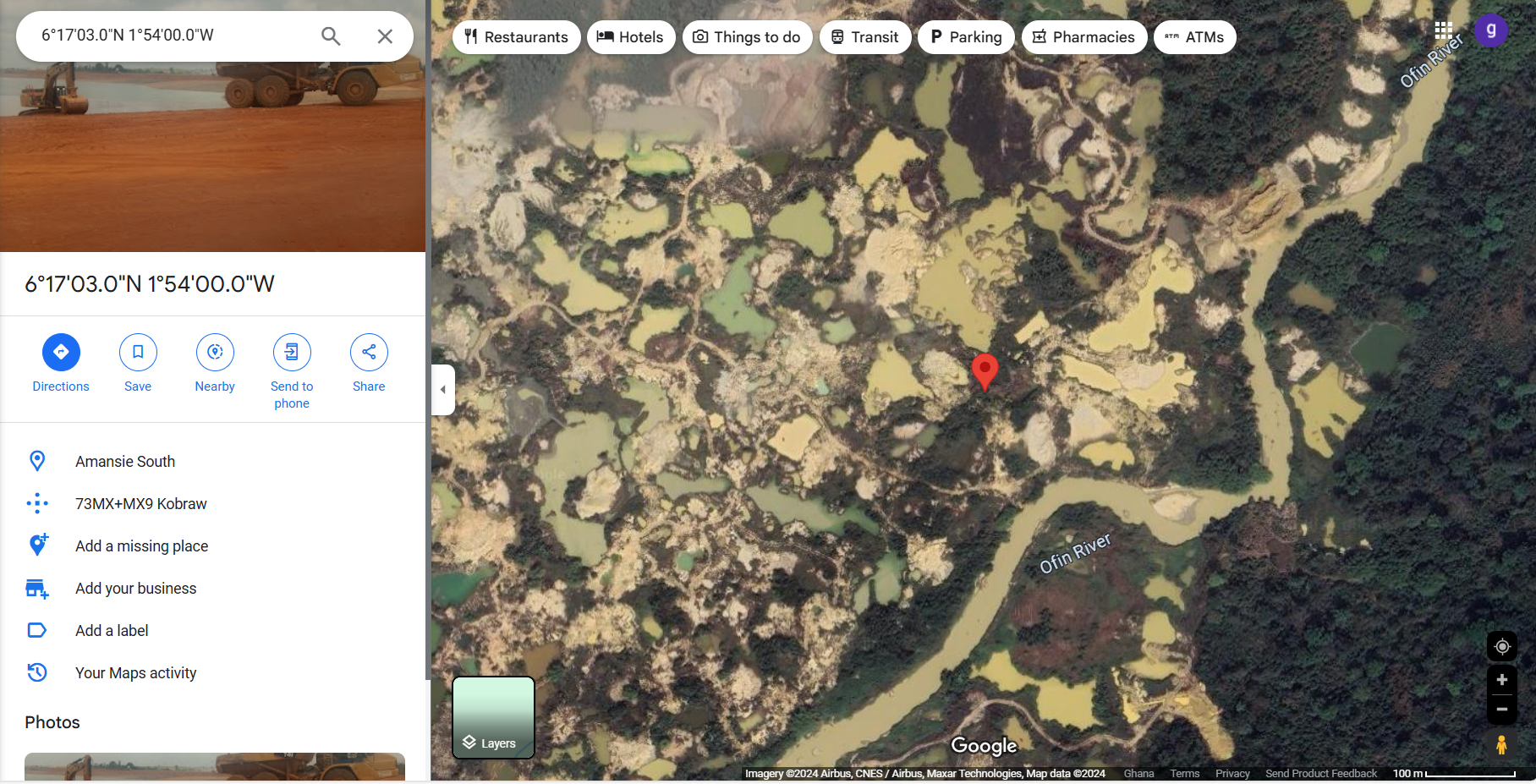
Satelite imagery showing the damage on the concession
Section 18 of the Minerals and Mining Act stipulates that before a company undertakes a mining activity, it “shall obtain the necessary approvals and permits from the Forestry Commission and the Environmental Protection Agency for the protection of natural resources, public health, and the environment.”
However, data obtained from the EPA shows that none of the companies mentioned in this story has an environmental permit to either prospect or mine for precious minerals in Ghana.
The Minerals Commission has refused to respond to The Fourth Estate’s request for information on mining operating permits it has issued from 2020-2024.
Companies’ responses
In an interview with The Fourth Estate, Nana Osei-Opare, the former Chief of Staff’s son, distanced himself from the extensive mining operations on his companies’ concessions. He blames it all on illegal miners and insists he does not know what is going on. He claims forcefully that the issue has been reported to the relevant authorities.
“It first came to our notice in maybe 2020 and we’ve been fighting,” he insists. “We have written to the Minerals Commission, Operation Galamstop [a joint police-military operation to fight illegal mining], the police. It just can’t be contained,” he claims.
Mr Osei-Opare says his companies don’t own a single excavator or chanfang— a crude piece of Chinese machinery used for mining on water bodies—nor have they ever rented one.
“Any machine there can be burnt,” he said, insisting that “we stayed away from that game [galamsey] because that is not a game we want to play,” he insists.
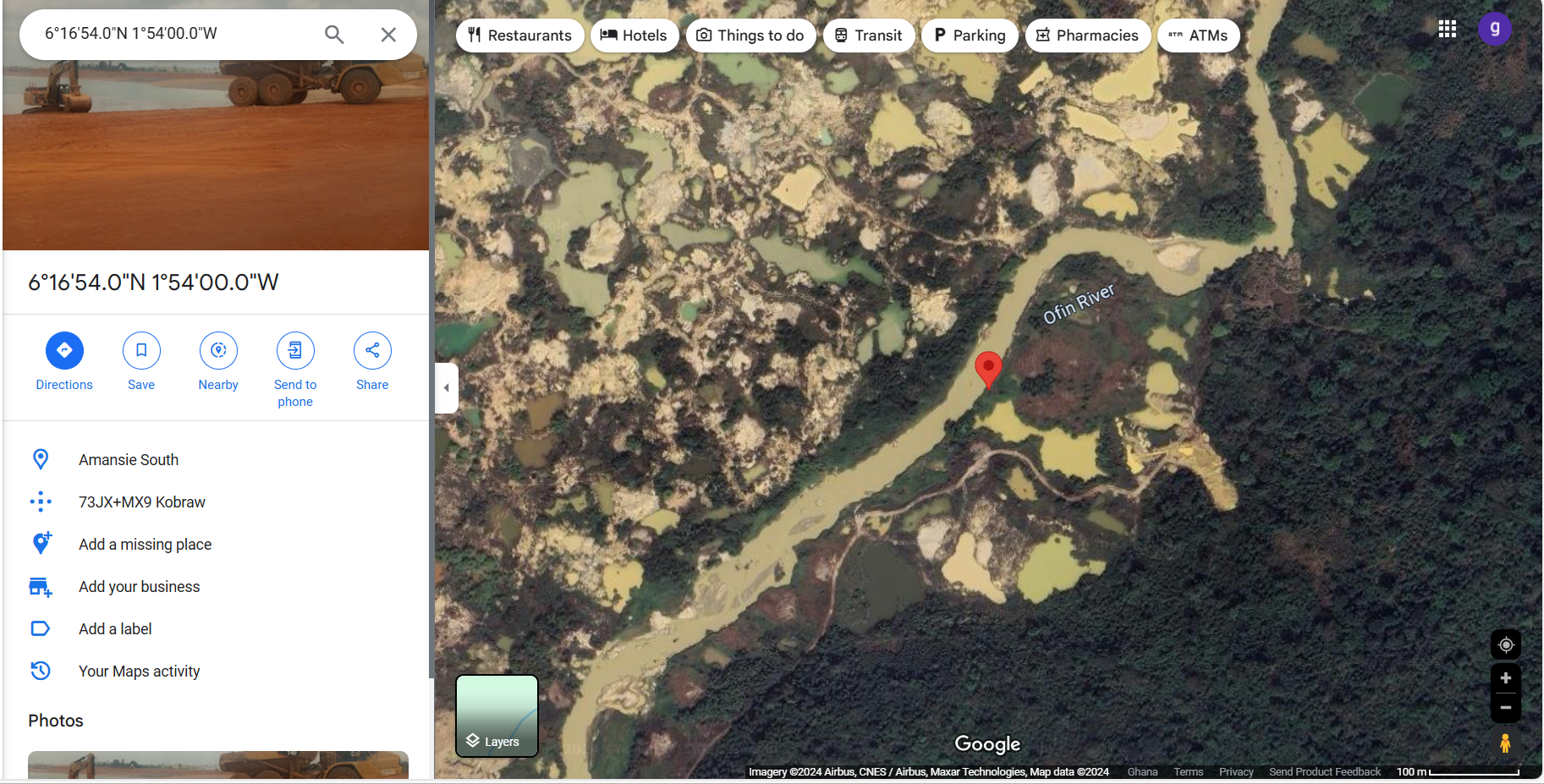
Satelite imagery showing the damage on the concession
He provided a copy of a letter one of his companies, Tera Nayo Limited, sent to the Minerals Commission in 2021 complaining about how illegal miners had taken over his company’s concession. However, he did not provide any evidence of a similar complaint about Cape North’s concession, the most ravaged among his companies’ concessions.
Mr Osei-Opare says none of his four companies has started mining yet, claiming that Cape North and Tera Nayo will start mining in November 2025. He says they have both been undertaking exploration activities.
Although he tells The Fourth Estate that his companies have “concluded” their exploration activities, they are yet to obtain permits from the EPA.
When asked why they do not have EPA permits, he said obtaining permits for exploration “depends on what type of exploration” a company is engaged in.
“We are not drilling,” he says, claiming his companies are only engaged in soil sampling. “You don’t need an EPA permit [for that]. From what the [geologists] have informed me, you don’t necessarily need that. What you need the EPA for, is for drilling.”
Mr Amewu-Duglu, a director of Zogok Gold and Construction insists in an interview with The Fourth Estate that he does not know about any gold mining concessions as the company had been dormant for a while.
“I know the company exists but I don’t know about any gold mining work you’re talking about,” he says.
He directed The Fourth Estate to Mr Victor Gadri, who is also listed as a director and beneficial owner of the company.
When we asked Mr Gadri if the company had all the regulatory permits, his response was “I have all my permits.”
He claims his detractors have given The Fourth Estate false information about him.
Although the river bank on his concession appeared damaged, he insists he had nothing to do with it.
Mr Gadri says the company was only drilling and not mining and those parts of the concession were damaged before the company’s mining lease was granted.
When The Fourth Estate pointed to him that Mr Amewu-Duglu is one of the directors and beneficial owners of the company, his response was: “Are you sure? You’re getting everything wrong.”
“When you registered the company at the Registrar General, which names did you use as directors and beneficial owners” we asked him.
“He is not part of it,” he responded.
“His name is there. How is he not part of it?”
“Zogok is not for only gold. We do construction, oil, and other things. Maybe his name is in another business.”
Mr. Gadri subsequently requested an interview in his office the next day, only to say he was “in a meeting in town and would call later” when we called him at the scheduled time. He is yet to return our call.
The former Minister of Lands and Natural Resources did not respond to The Fourth Estate’s request for an interview.
You must report – WACAM
Kwaku Afari, the Technical Director of WACAM, an environmental NGO, rejects Mr Osei-Opare’s claim that he is not responsible for the active mining on his concession. He noted that once a company acquires a mining lease and fulfills all its financial obligations to land owners, it becomes the responsibility of the company to protect its concessions. He says when there is evidence of mining on a concession of a company that has been granted a prospecting lease, then the company has broken the law.
“A prospecting [license] is not a mining lease where you should find big holes being dug,” he explains.
Mr Afari says it is inexcusable for a company to say it is not responsible for mining activity on its concessions.
The onus lies on you to report to the necessary authorities, which is the Minerals Commission and the security agencies. [If] there are illegal operators on your land, you are supposed to act,” he says. “You are also supposed to protect your concession. Whatever property that you have, by law, if you look at Article 18 [of the Constitution] everyone has the right to protect his property.”
He says it is even more important “if your property or whatever is due you is being used to perpetrate illegality and you more or less are silent on it, then that means it is either you are benefiting to some extent or you think it is of some importance to you.”
He points to the need for adherence with Section 17 of the Minerals and Mining Act which requires mining leaseholders to obtain a permit from the Water Resources Commission as a pre-requisite for diverting, impounding, conveying, and using water from a river, stream, underground reservoir, or watercourse.
The EPA’s Mining Director, Mr Sandow Ali, agrees. He tells The Fourth Estate that at any stage of exploration, a company needs an EPA permit. He mentions four permits that a company must have: a license from the minister, an EPA permit, an operating permit from the Minerals Commission, and a water use permit from the Water Resources Commission.
“Just the license alone does not give you the permission to go and start working. If you pick the license alone and start working, it is illegal,” he says.
None of the four companies owned by Mr OseiOpare were on the list of companies that have obtained water use permits.
But Mr Ali emphasizes that “for exploration, you use a lot of water, so you need a water use permit from the Water Resources Commission.”
The Minerals Commission’s Chief Executive, Martin Ayisi, insists in an interview that the fact that a company has been granted a concession across a water body does not mean that it is allowed to mine in the water body.
He did not respond to The Fourth Estate’s subsequent questions on the specific cases found. He failed to pick up calls and did not respond to an email, although he requested the specific cases. He did not respond to a letter delivered to his office as well as WhatsApp and text messages.
A Rocha Ghana, an environmental conservation organization, has criticised the government for giving out mining concessions that straddle water bodies even after it had banned mining close to these areas.
“The Minerals Commission has given out several licenses in 2022 and 2023 that straddle critical water bodies, including at the exact locations already decimated by galamsey,” the Operations Director of A Rocha Ghana, Daryl Bosu, tells The Fourth Estate.
“It is incomprehensible why the Minerals Commission is issuing licenses alongside and across rivers when the devastation of mining is now so clear. That these licenses are for precise locations already decimated by galamsey is even more disturbing.
The communities are suffering greatly from the pollution of their water sources and farmlands, which is already affecting their health, including kidney problems. Mining leases across and adjacent to rivers do not meet the President’s red zone directive.”
In an interview with The Fourth Estate, the Director of Operations at the EPA, Mr Ransford Sekyi, insists that although some concessions have rivers and streams in them, such water bodies are protected. However, coordinates provided by the Minerals Commission covering concessions along the water bodies do not show compliance with the regulations.
Let’s get it clear. There’s no doubt that there are streams or rivers within concessions. There are, but there is no stream that is being mined or a river [that is being mined] like that,” he says.
Mr Sekyi, however, concedes that “as a matter of caution, it’s better not to award mining concessions that straddle river bodies.”
The Fourth Estate contacted the Founder of Perez Chapel, Bishop Charles Agyinsare, to facilitate a meeting with Lighthouse Chapel International (LCI) to address allegations of exploitation and abuse raised against the church by six of its former pastors, but the church declined the request.
The former Editor-in-Chief of The Fourth Estate, Manasseh Azure Awuni, told an Accra High Court in an ongoing defamation suit against the news portal that this compelled The Fourth Estate to proceed with its series of stories about the pastors’ allegations without the church’s reaction.
“One side[pastors] made an allegation and the only way to have gotten verification from the other side [the church] would have been to speak to the church, but the church refused to cooperate with us,” Mr Awuni told the court during cross-examination via video conferencing.
“It is worth noting that even before we wrote the letter to the church, we had information that the church wasn’t going to cooperate with us or give us any information. That was why we decided to reach out to Bishop Agyinsare. So even before we wrote a letter, we had used [Bishop] Agyinasare as an intermediary and had been told that the church would not cooperate with us. We took these steps because of the possibility of factual inaccuracies on the part of one side of the parties in the matter.”
Mr. Awuni’s response was to claims made by the lawyer of Lighthouse Chapel International (LCI), Kwaku Paintsil, that Mr. Awuni, as a journalist, failed to verify statements made by Seth Duncan, one of the former LCI pastors who sued the church. Mr Duncan claimed to have suffered losses, including losing a school he built and the breakdown of his marriage.
However, the LCI lawyer claimed that the information was not true as Mr Duncan’s marriage was still intact. Mr. Awuni in response stated that he had no reason to doubt the former LCI pastor.
Background
Six former ministers of the church sued the church in April 2022 for non-payment of their pension contributions, economic exploitation, and emotional abuse.
The church counter-sued the pastors and accused them of causing The Fourth Estate to publish “sensational” allegations even before and after they came to court to sue the church.
The church also sued The Fourth Estate for defamation, claiming among things that the publications sought to suggest that the church was “not only intolerant but extremely callous, insensitive, inconsiderate and cold-hearted in its treatment of and abandonment of its volunteers and employees with exacting demands calculated to house them out of their posts.”
For relief, it wants The Fourth Estate to apologise for the stories and also pull them down.
Those stories also contain the former pastors’ accounts of the sacrifices they made in establishing churches they were allegedly forced to abandon because of a church policy.
The LCI and The Fourth Estate have been in court since December 2021.
Verification of allegations
During the hearing last Thursday, the church’s lawyer, Mr Paintsil sought to suggest that even when the church failed to respond to The Fourth Estate letter requesting information, Mr Awuni could have gone on the ground to verify the information from the school’s administration.
However, Mr Awuni disagreed.
My lord, there was an attempt to verify [Seth Duncan’s claim] from the most credible source in this matter, which is the employer of the pastor against whom the allegation was made. Any other source would not have been complete until the party [against] whom the allegation was made was contacted,” Mr Awuni explained
The LCI lawyer also insisted that the issues around Mr Duncan’s loss of investment and his broken marriage published by The Fourth Estate were not in the former pastor’s suit against the church and also missing from the letter The Fourth Estate wrote to the church requesting its side of the story.
“I put it to you that those two allegations were your invention,” the lawyer said, looking sternly at the video conferencing screen.
However, Mr Awuni shot down the claim. He insisted that The Fourth Estate did not rely only on documents flowing from Mr Duncan’s suit against the church.
“My lord, the said pastor mentioned that he personally raised funds to assist in establishing the church. But as I’ve said, we didn’t solely rely on the court document. We interviewed them, and even the plaintiff [the church] didn’t speak to us, but we quoted some of its responses to the issues through third-party sources.”
During the hearing on November 13, 2024, the LCI lawyer claimed that the church responded to The Fourth Estate’s request for information that it would “defer to a determination by the Court.”
Again, Mr Awuni disagreed.
“That is not accurate. The Plaintiff Church did not respond to our request for information I think the Plaintiff’s Witness gave reasons to that effect. Besides, our letter to the Plaintiff’s church was written more than a month before the suits were filed,” he explained.
Meanwhile, a bishop of the Lighthouse Chapel International, Bishop Marcel Aboagye, admitted to the court on January 10, 2023, that the church “refused” to respond to a letter The Fourth Estate wrote for a response before publishing the “Darkness in the Lighthouse” series
“We suspected there was collusion between the former pastors, Kofi Bentil and the defendants [The Fourth Estate]. We thought a response to the letter would mean giving away the potential defense to an imminent suit,” he told the court.
Civil society organisations are urging the government not only to pledge the revocation of the law regulating mining in forest reserves but also to cancel all mining leases granted under LI 2462.
They argue that such actions would demonstrate the government’s genuine commitment to environmental protection, rather than simply yielding to pressure from labour unions and environmental civil society groups.
The Operations Director of A Rocha, Ghana, Daryl Bosu, and Convenor of the Media Coalition Against Illegal Mining, Ken Ashigbey, say while the government’s decision to repeal the law is a welcomed one, there are still pertinent issues that remain unaddressed.
Their demands come on the back of the government’s recent announcement that it plans to revoke the law regulating mining in forest reserves, LI 2462, when Parliament reconvenes this month.
According to a statement from the Ministry of Information, this decision follows a meeting between President Nana Akufo-Addo and organised labour, which had threatened industrial action if the government failed to take drastic steps, including declaring a state of emergency and repealing LI 2462.
The labour unions’ anger was triggered by an investigation by The Fourth Estate, which revealed that as of August 13, 2024, at least 25 companies had submitted 32 applications to mine and prospect in 24 forest reserves. Ten of these mining leases had already been granted by the Minister of Lands and Natural Resources, while 22 others were still awaiting approval. Four of these leases are located in Globally Significant Biodiversity Areas.
A Rocha Ghana’s response
Responding to the government’s decision, Daryl Bosu, Director of Operations at A Rocha Ghana, expressed the environmental civil society organization’s approval of the decision to repeal the law but emphasised that this action must also include the termination of all mining leases granted under it.
“We are happy to hear that the campaign for the revocation of the LI 2462 is now bearing fruit, but why has it taken the government almost two years? It only took the pressure of organized labour and other groups to force the government into action,” he said. It is unfortunate. Without the pressure, the government would not have taken any action. That, in itself, is a dent in the credibility of the government when they say they are committed to sustainable forest management.”
He further noted that it is troubling the government did not recognize the governance flaw in enacting LI 2462 in the first place.
“That is a problem we need to fix. The mindset of sustainability is not strong enough. We need to fix that among our leaders,” he added.
Figures from the Forestry Commission SHOWS THAT at least 30 forest reserves have been destroyed by illegal miners
A Rocha Ghana is currently in court seeking a restraining order to prevent all companies granted leases under the law from mining. Mr Bosu stated that even if the law is repealed, A Rocha Ghana would continue to pursue the case until a final decision is made.
Mr Ken Ashigbey, who is a party to the suit, told The Fourth Estate that all the permits issued under the law must not be allowed to stand.
“Beyond the revocation, the President would have to take steps to revoke all the licenses issued under the law,” he said. “It is a critical conversation we must have. If they claim that they have revoked the LI, then the EPA [Environmental Protection Agency] should not be approving applications for permits that are before them.”
He said the government’s statement on what it intended to do had no timelines but noted that it was encouraging that actions were being taken including the burning of chanfans—a crude machinery of Chinese origin used in mining in water bodies.
“I am only hoping that they would pull the chanfans out of the water and take them away because if you burn them and the base remains, they would come and rebuild them,” he said.
Who owns the concessions?
Among those granted leases in forest reserves are companies owned by prominent political figures such as Sam Pyne, the Mayor of Kumasi; Emmanuel Boakye, District Chief Executive of Wassa East, who co-owns a company with the deputy regional women’s organizer of the New Patriotic Party (NPP); and Francis Owusu-Akyaw, the NPP parliamentary candidate for Juaben. Bernard Antwi Boasiako, the Ashanti Regional Chairman of the NPP, has not yet had his company’s lease approved, but Akonta Mining Limited, owned by Mr Boasiako, was involved in illegal mining activities in the Apramprama Forest Reserve, according to the Minerals Commission.
These revelations, along with other media reports, heightened tensions among organized labour, which demanded stronger government action against illegal mining in forest reserves and water bodies.
“Organized labour demands the immediate revocation and withdrawal of all licenses granted for prospecting and mining in forest and protected reserves, as well as around water bodies,” a joint statement from labour unions declared.
They also called for the declaration of a state of emergency, with a direct order from President Akufo-Addo to halt all mining activities, both legal and illegal, in these sensitive areas. Additionally, they demanded the removal of all mining equipment from these locations and the deployment of military and police forces to dismantle any machinery used for mining.
The unions also pushed for the creation of a special court to prosecute individuals involved in illegal mining, which has become a significant public health issue. They set a deadline of the end of September 2024 for the government to address their concerns, threatening labour unrest if action was not taken.
In response, the Minister of Information issued a statement, after the meeting with the labour unions, noting, “The Attorney-General will collaborate with the Chief Justice to ensure swift adjudication of illegal mining cases.” The government also agreed to labour’s request that all presidential candidates in the 2024 elections sign a pact committing to the fight against illegal mining in order to depoliticize the issue.
Despite this, with the government failing to meet the unions’ ultimatum, organized labour declared a strike for October 10, 2024. However, the government expressed surprise at the decision, stating, “The government is surprised by the decision of Organized Labour to proceed on industrial action from 10th October, 2024. The government will, however, continue to engage Organized Labour and other stakeholders in constructive dialogue to find solutions to this national problem.”
The statement reiterated the government’s commitment to combating illegal small-scale mining and called on all stakeholders to join the fight. Subsequently, the labour unions called off the strike.
Thousands of Ghanaians in recent times have been on the street calling for an end to illegal mining that has destroyed the country’s forests and water bodies. At least 52 protesters have been arrested, detained, and charged for offenses including disturbing public peace and stealing. Some have since been released on bail.
Ghanaians are protesting against the illegal mining activities that are devastating forests and water bodies.
In the meantime, the government has reportedly deployed over 100 military officers to remove illegal miners from water bodies and forest reserves. Media reports indicate that these efforts are being coordinated with the Ghana National Association of Small-Scale Miners. On Thursday, the team was active in the Eastern Region as part of the intensified anti-illegal mining operations. Multiple reports state that 18 chanfan machines used for gold extraction along the Birim River were seized and dismantled by the soldiers.
The activities of illegal miners, known as “galamseyers,” continue to pollute the country’s rivers, leading the Ghana Water Company to spend more resources on water treatment. Several cities and rural communities, including Cape Coast, are facing water shortages. Data from the Forestry Commission shows that at least 34 forest reserves have been compromised by illegal mining activities with 5,000 hectares of forest cover destroyed.


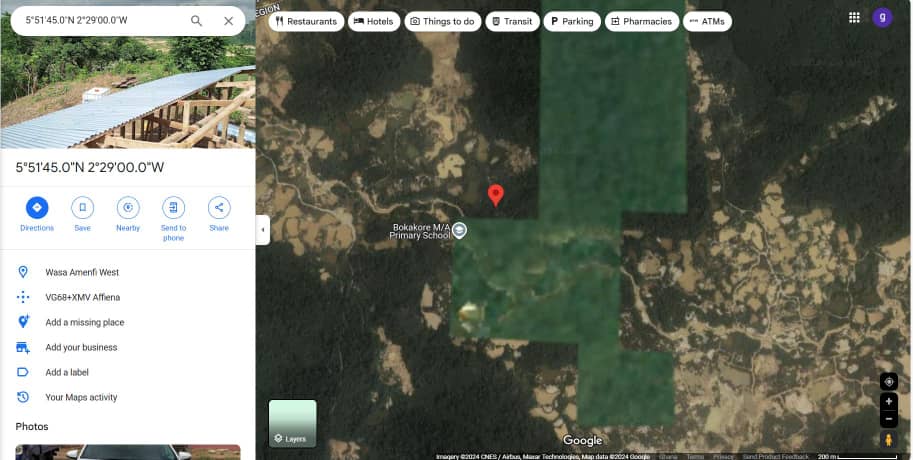
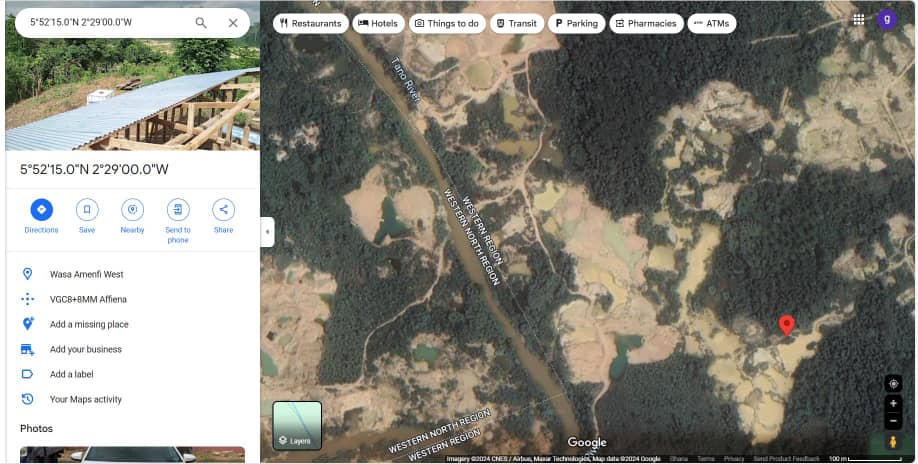
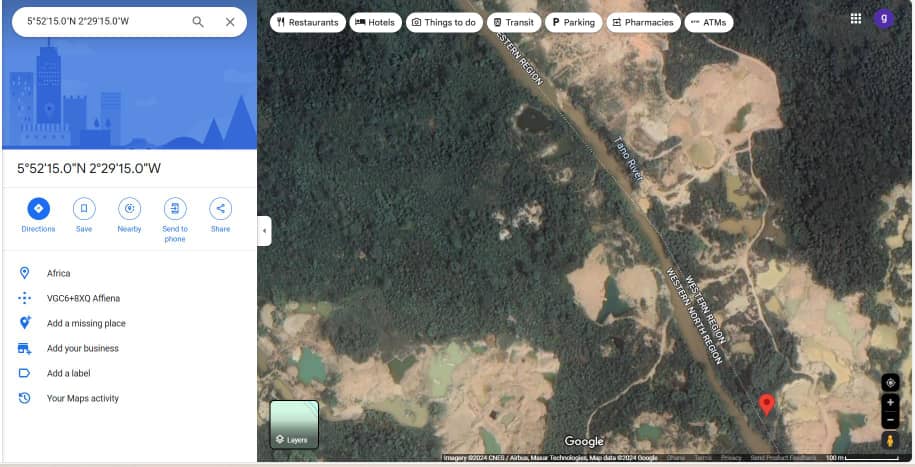






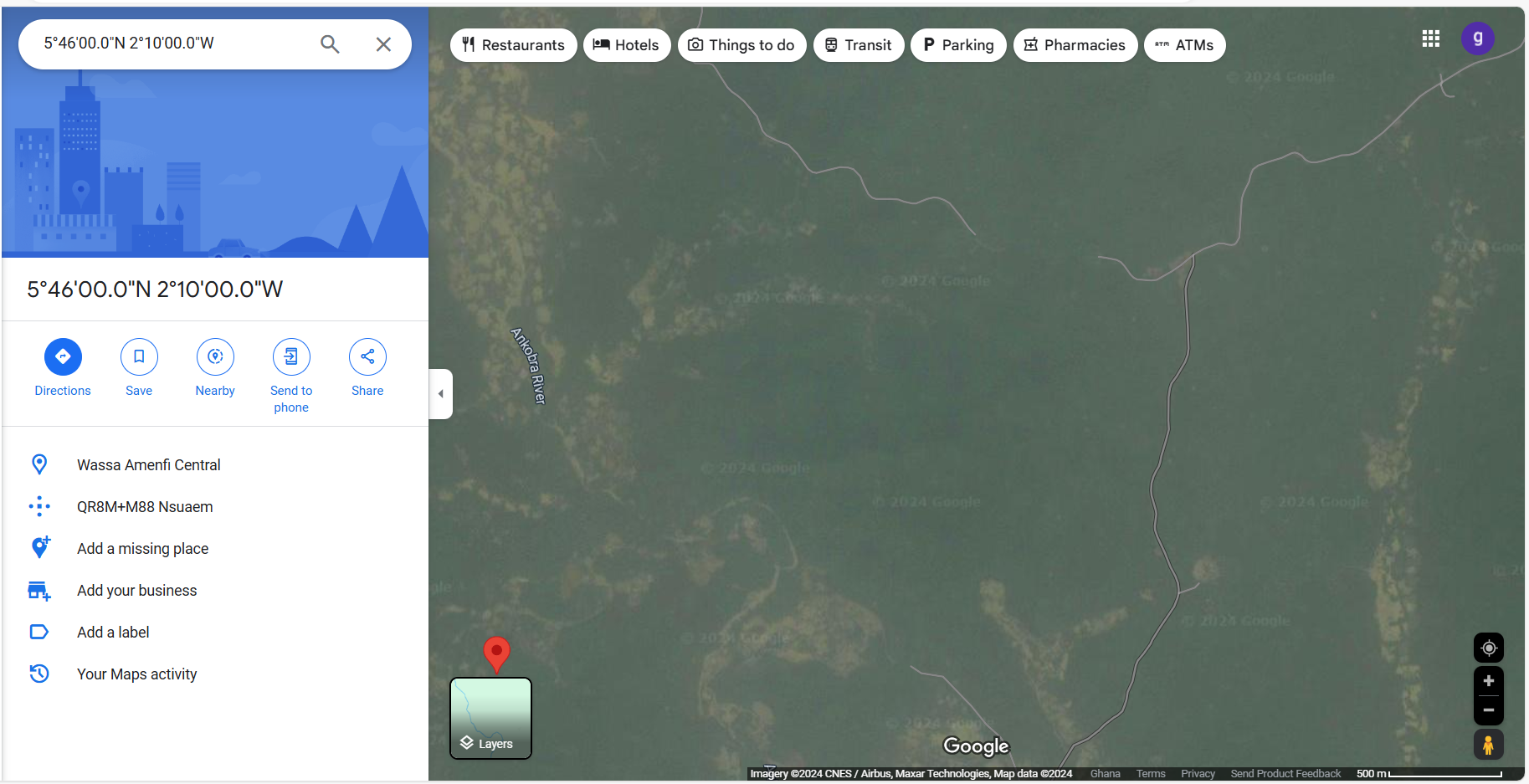
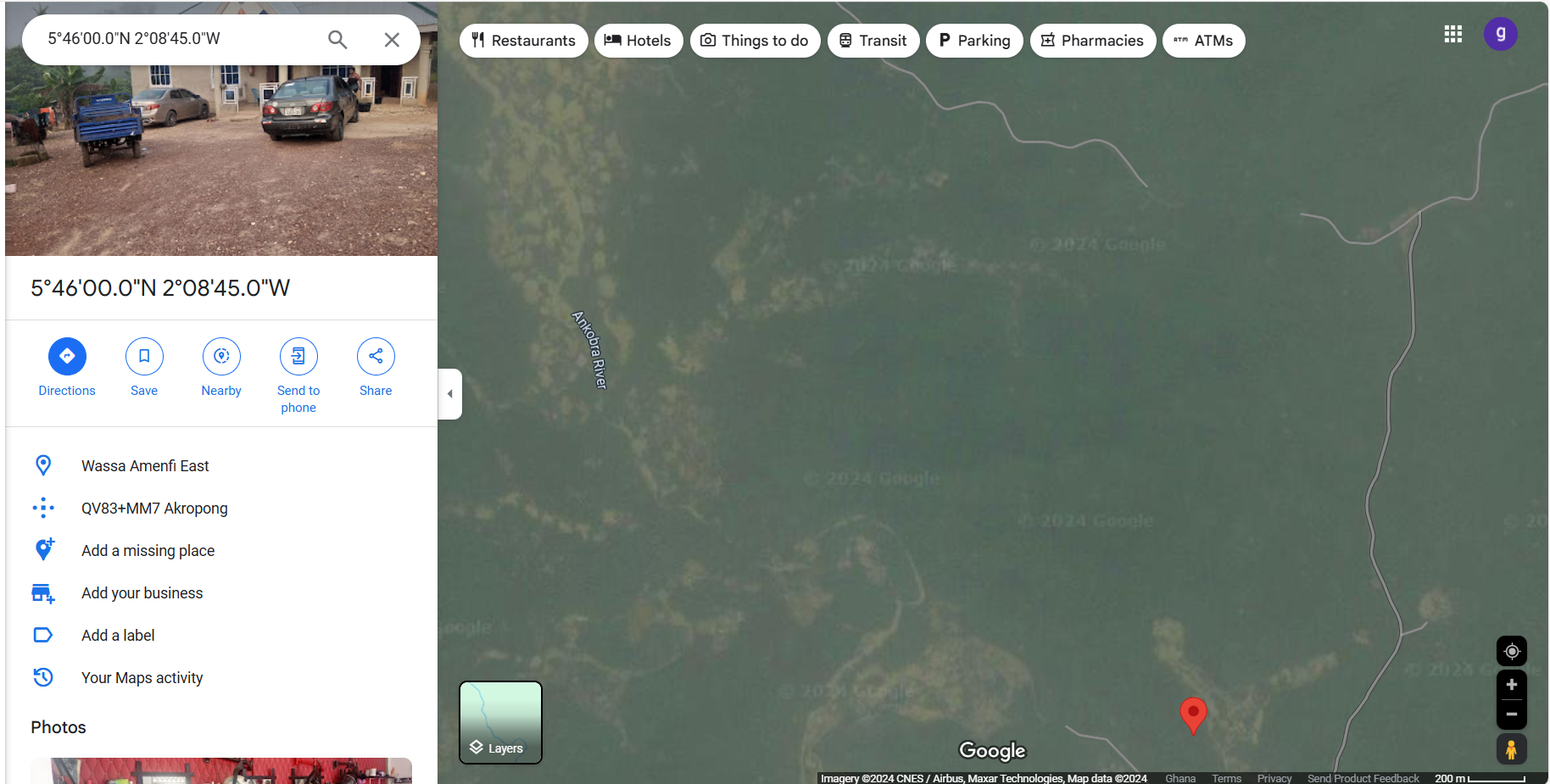
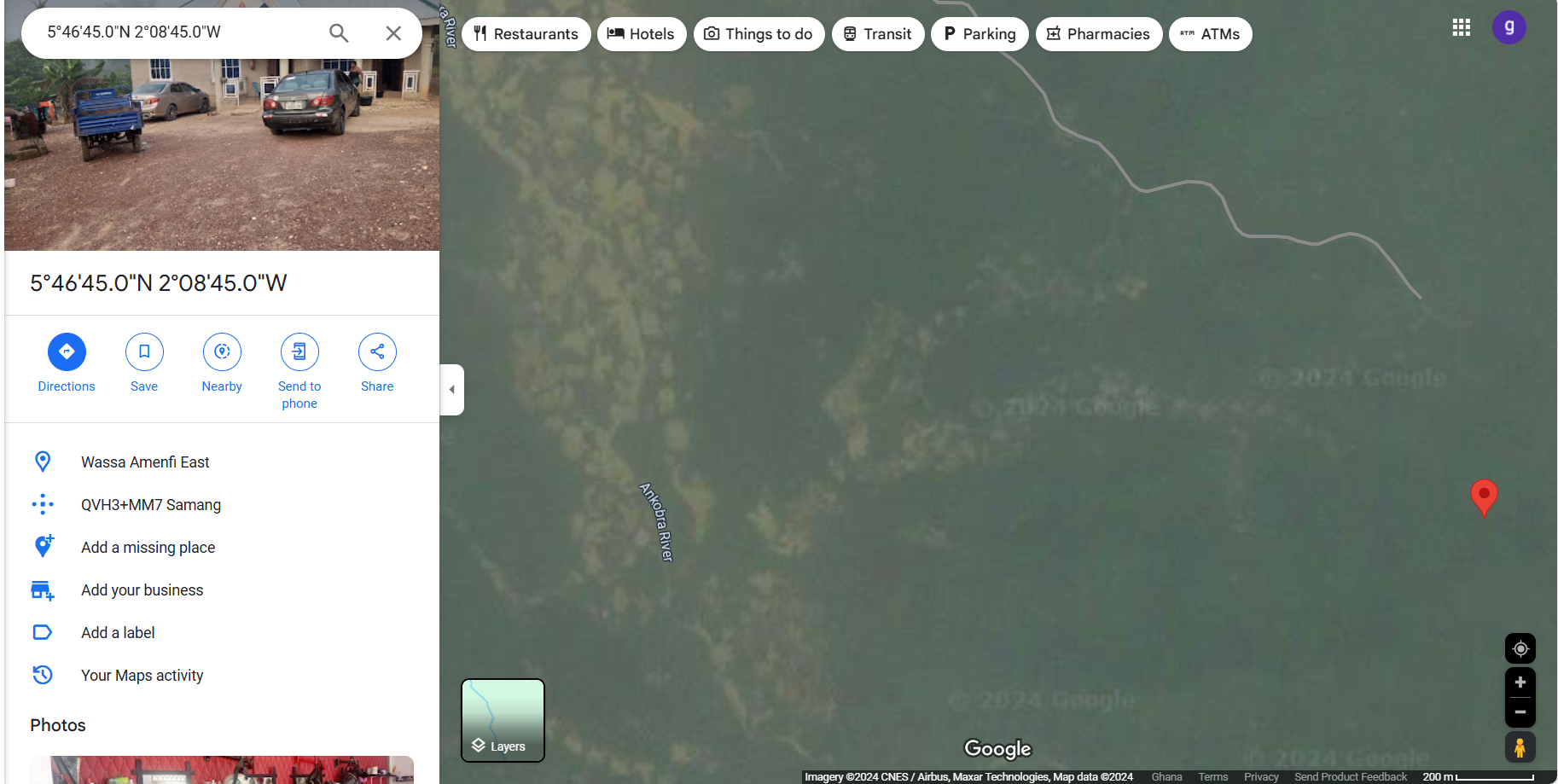
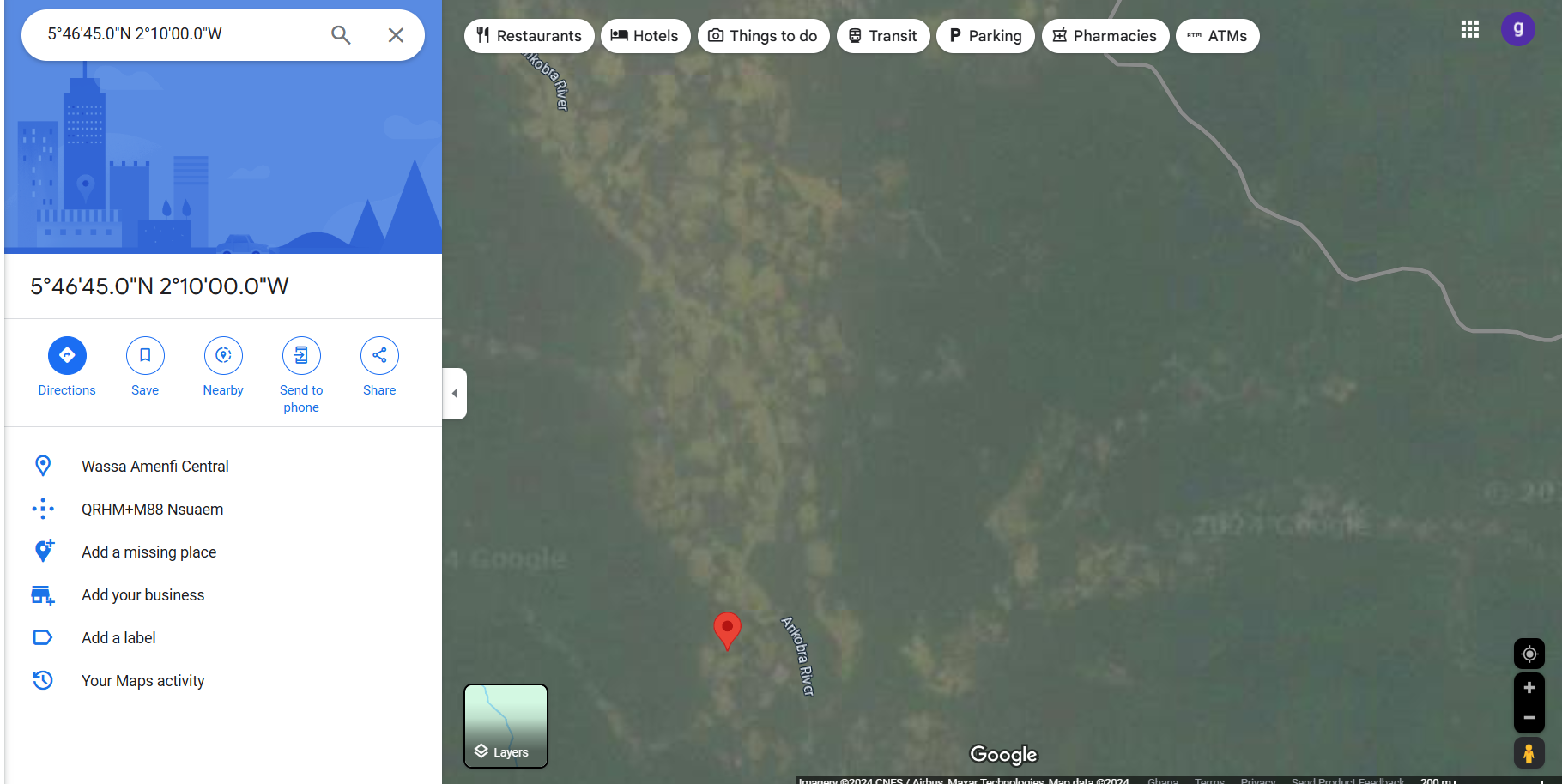


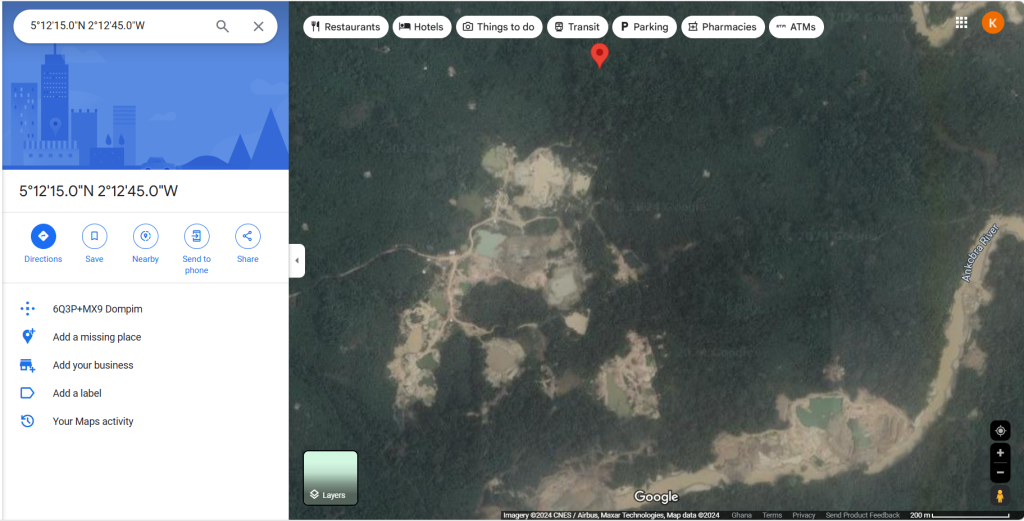
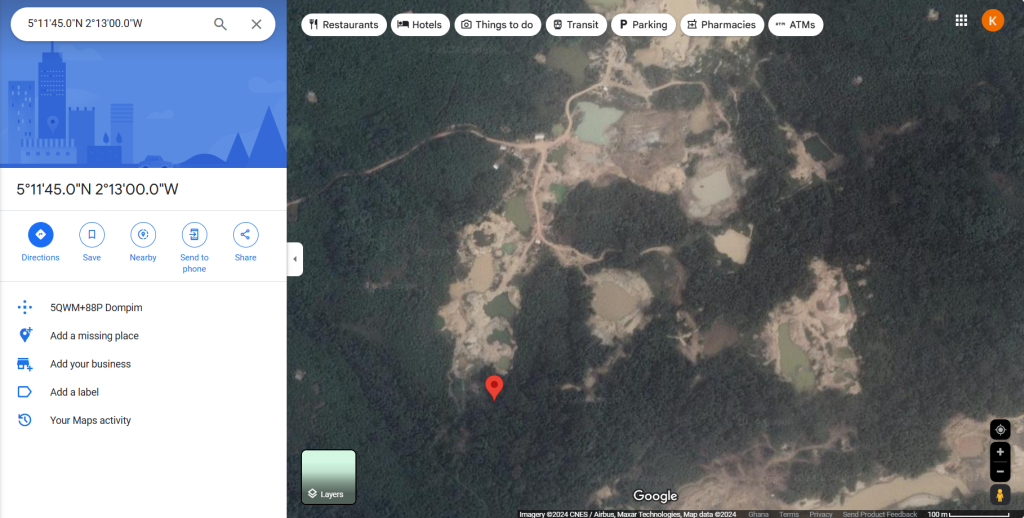
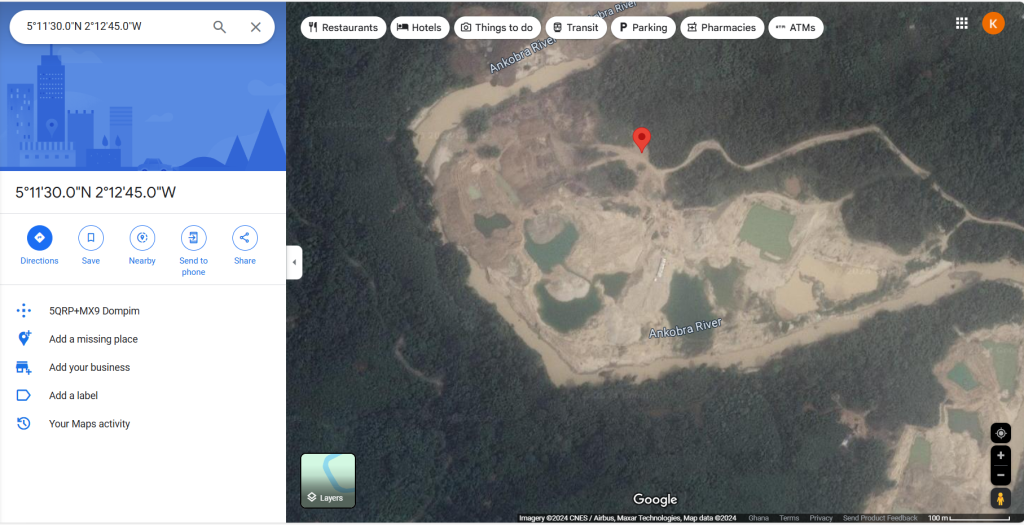

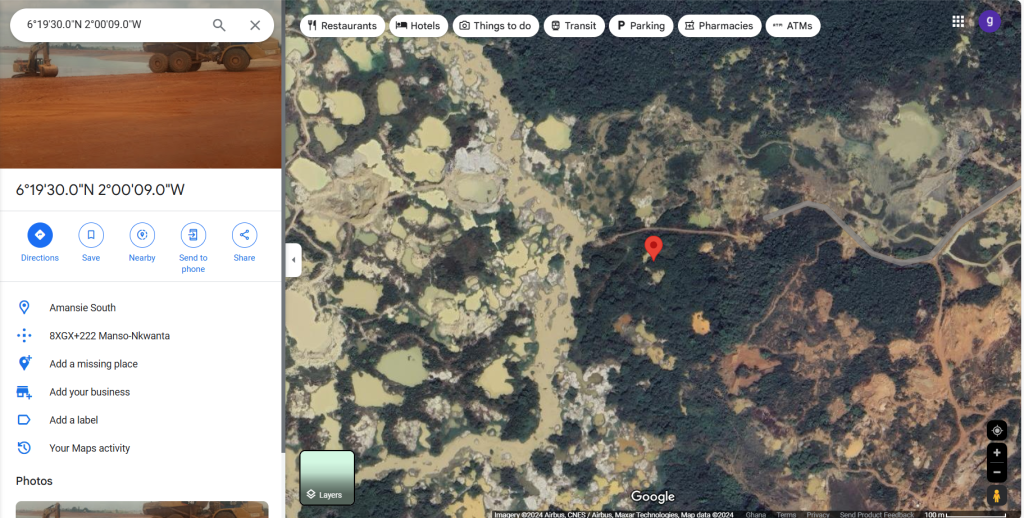
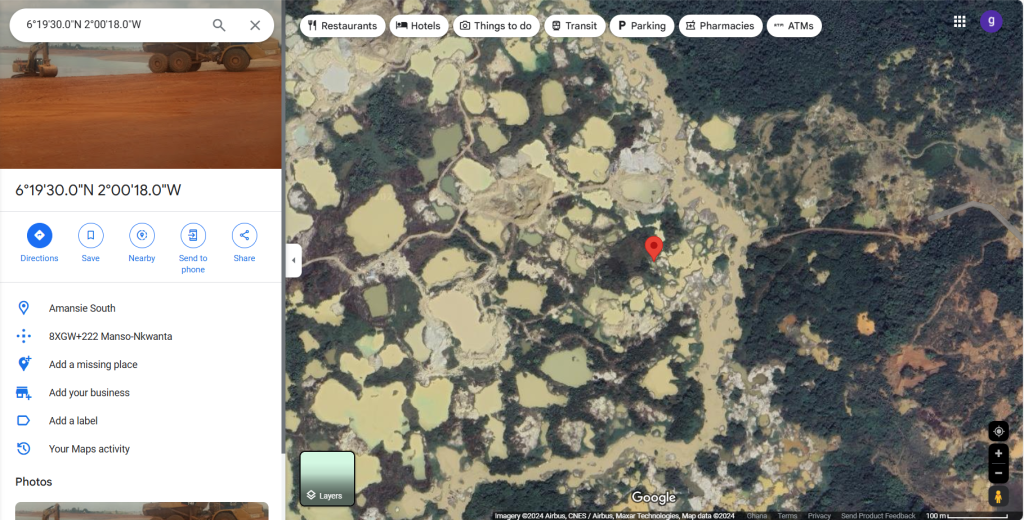
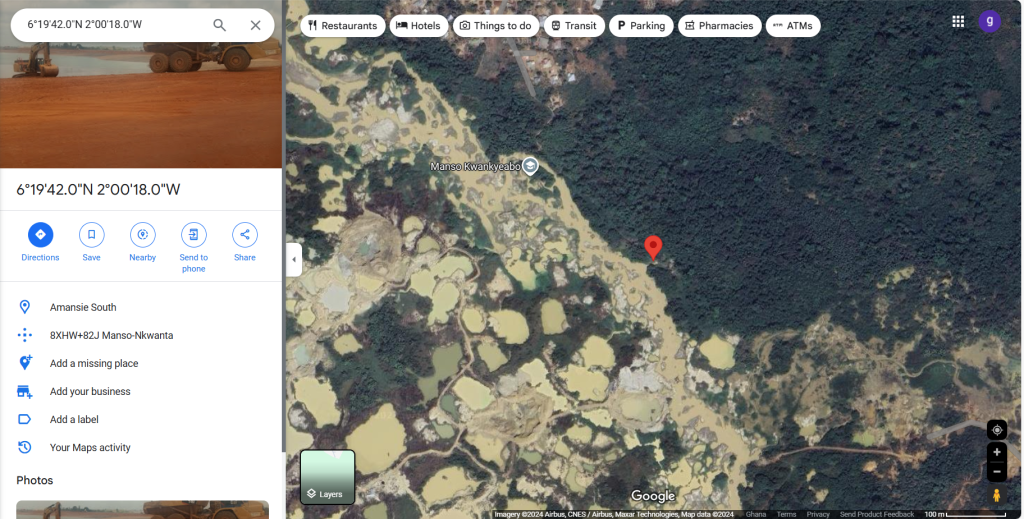
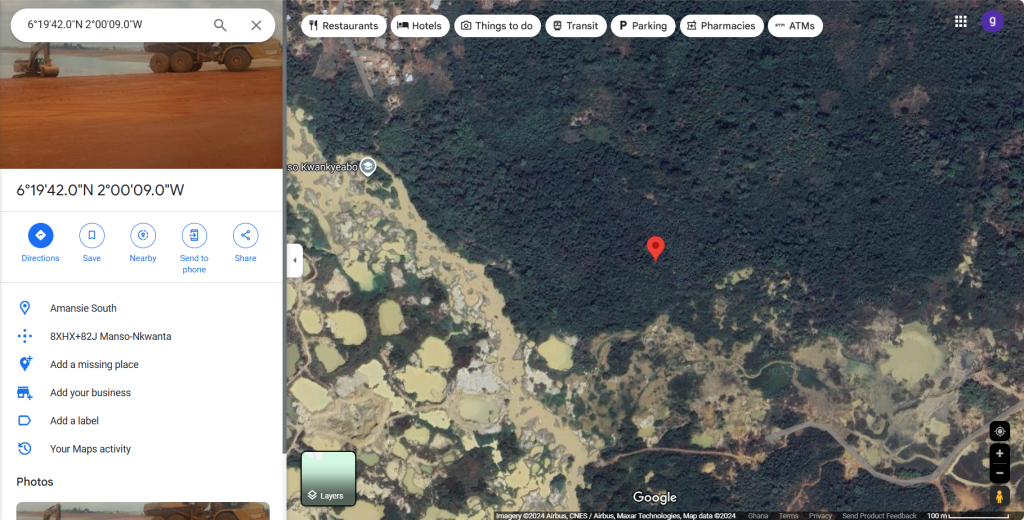
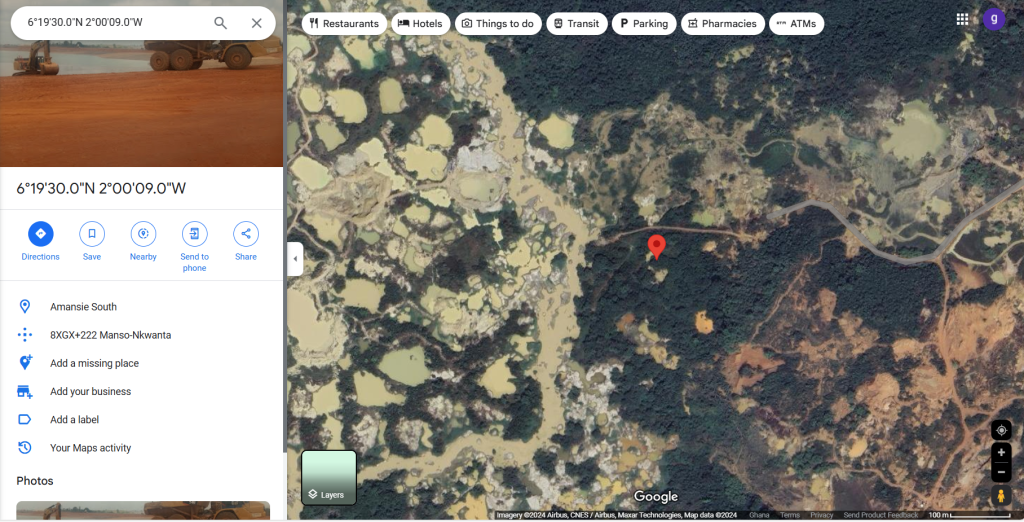
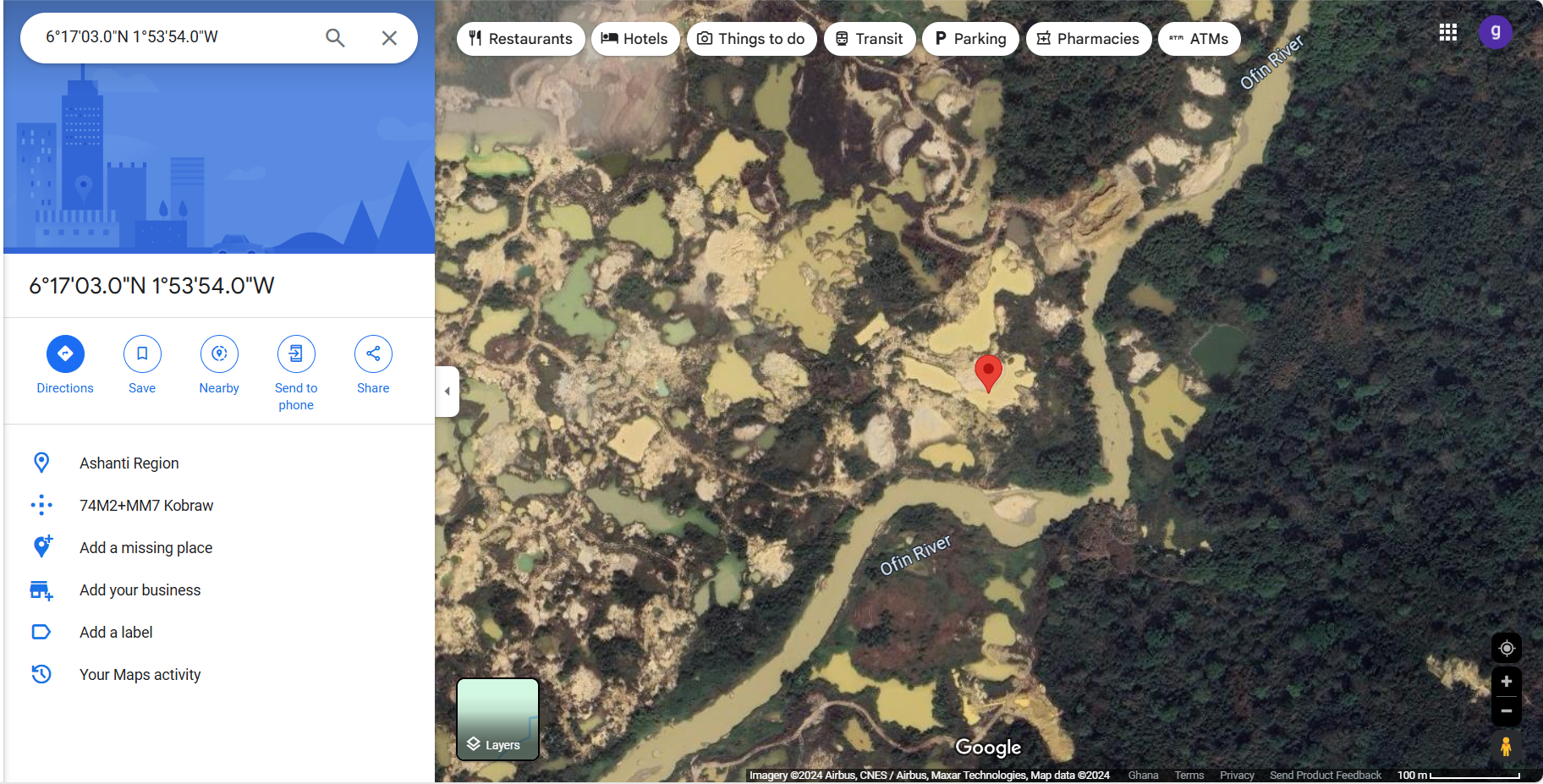
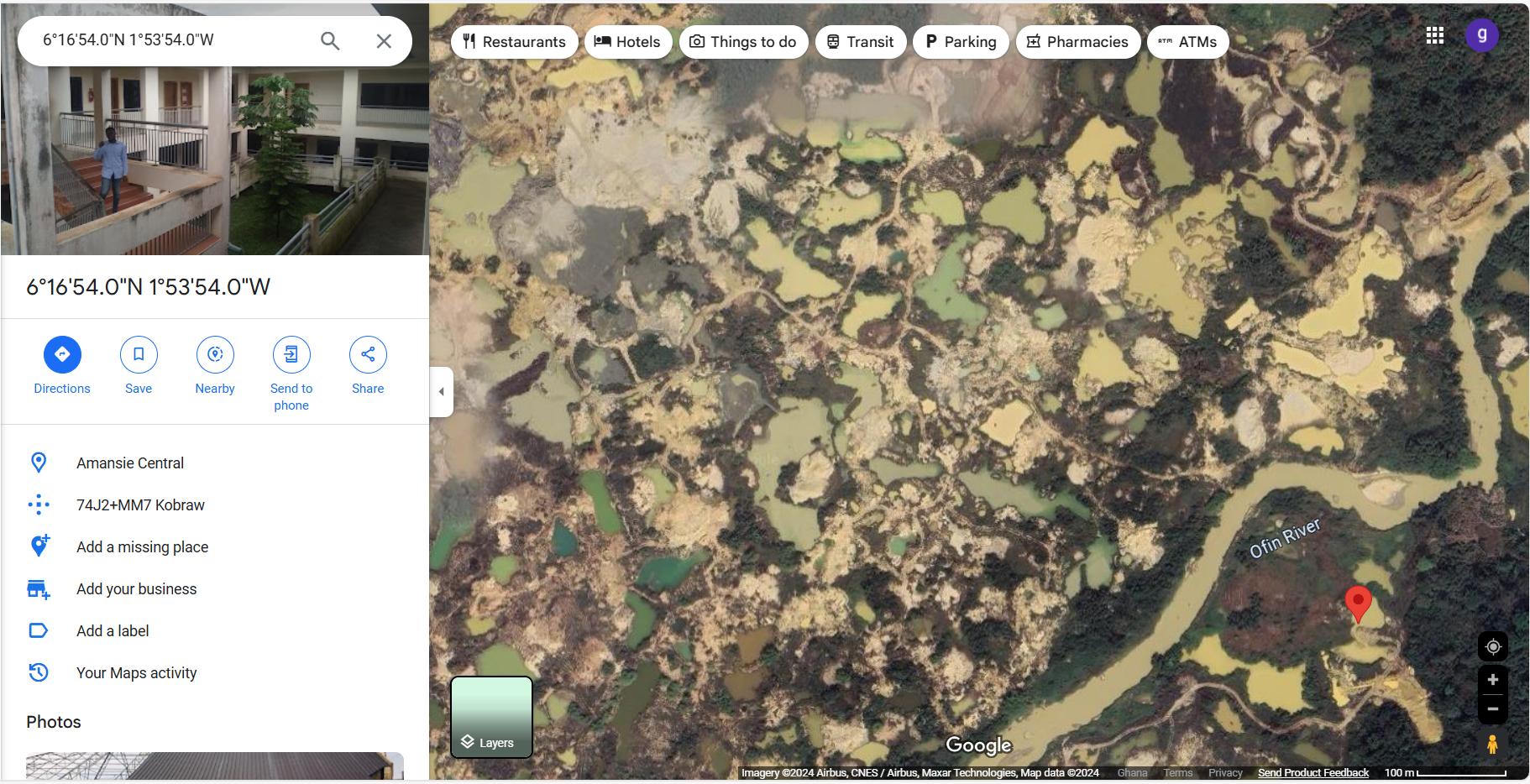
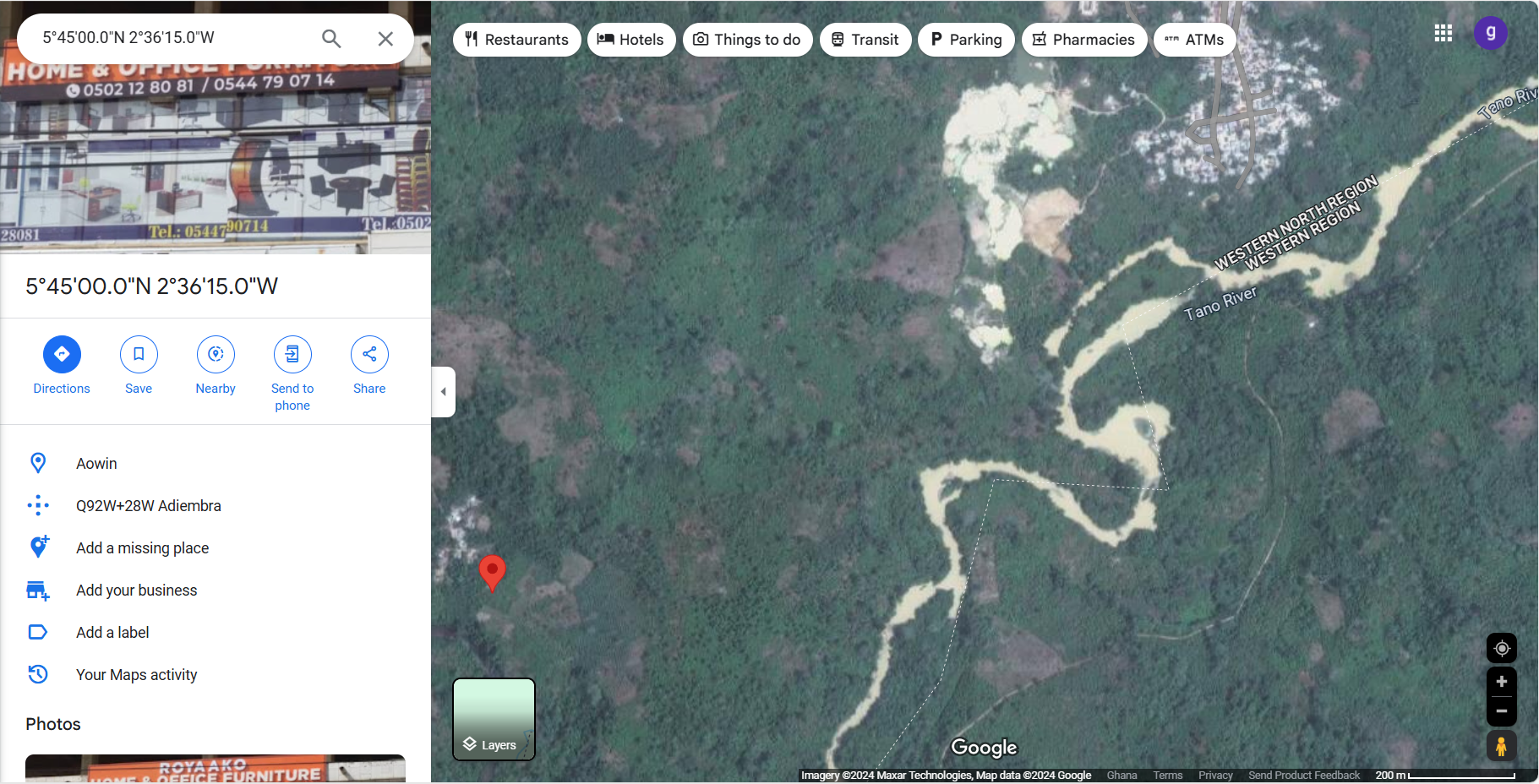 Satelite imagery showing the damage on the concession