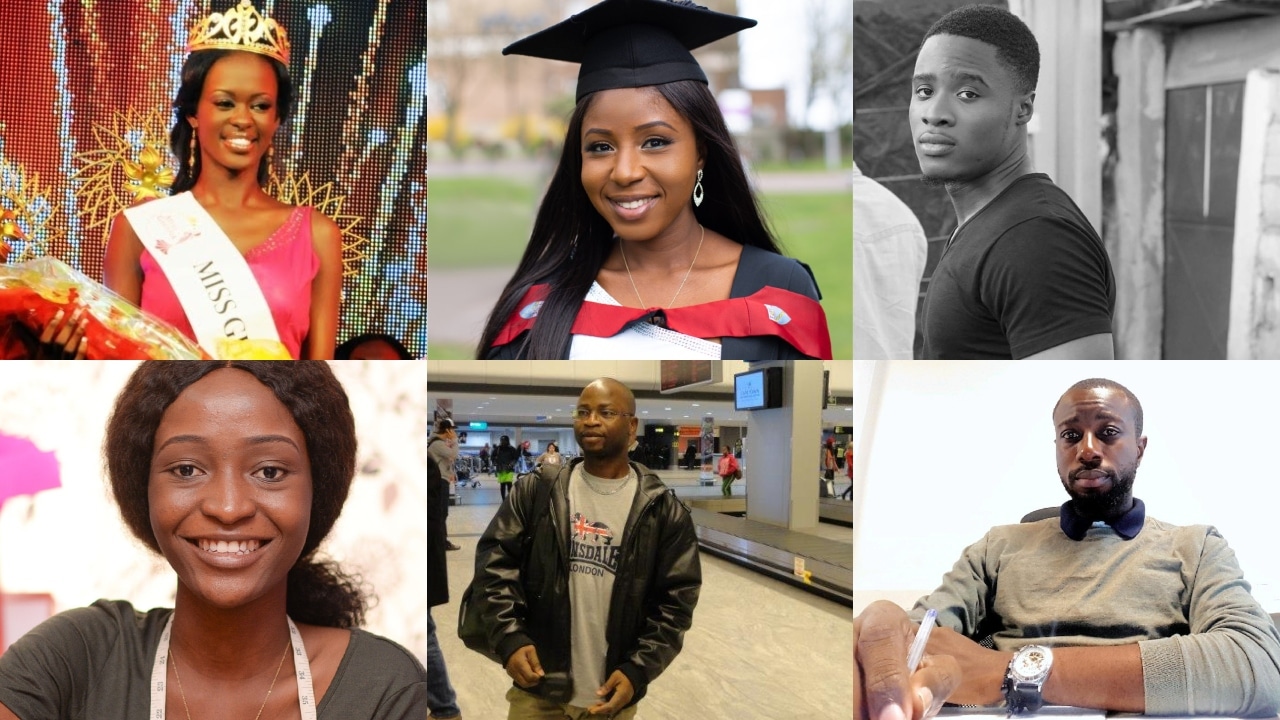
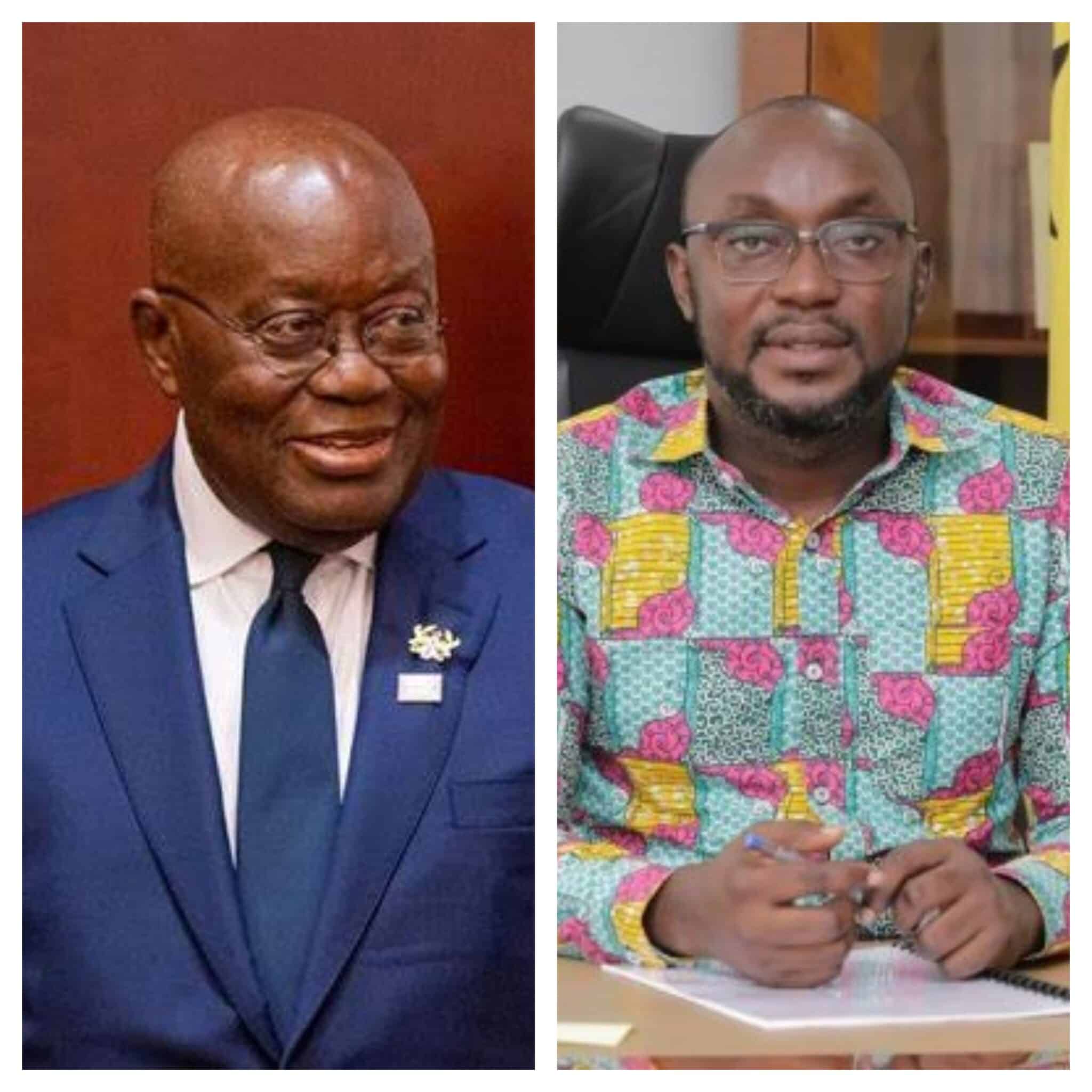
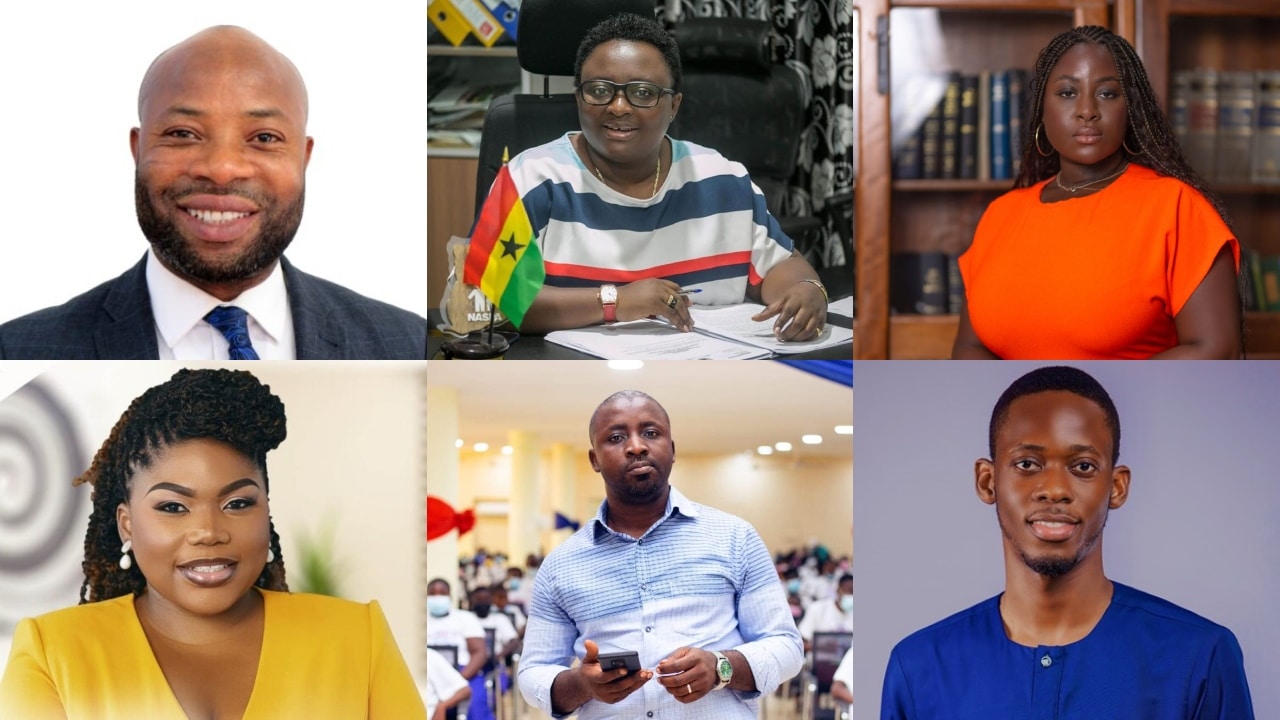
Author: Seth J. Bokpe

  • ‘Burnt’ baby: How parents’ joy was cut short after birth

    ‘Burnt’ baby: How parents’ joy was cut short after birth

    It was about 2:45pm when Yahsmen Kamal Kokroko was born at the Amoah Hospital at Ablekuma in Accra.

    “The baby was not crying. She was silent,” her mother, Salamatu Adams, recalled the events of October 21, 2021.

    Midwives and parents often anticipate a baby’s first cry in the labour ward because it signals a newborn’s ability to breathe on its own. But, about four hours after her birth, Yahsmen did not cry.

    It was the most devastating period for the first-time mother, Salamatu Adams, and her husband, Kamal-deen Kokroko.

    Salamatu watched frightfully as the midwife wrapped Yahsmen in a cot sheet screaming “Jesus, Jesus”.

    “[The midwife] asked the other staff [in the labour room] to heat water for her. She then pulled out a hot water bottle from a drawer,” Salamatu says.

    When the hot water came, Salamatu said the midwife poured it into the hot water bottle, which she then wrapped around the newborn Yahsmen.

    With the baby warming up in the cot sheet, the midwife turned to stitch up Salamatu, whose cervix was cut to open her up for the delivery of the baby with a birth weight of 3.5kg.

    As she stitched Salamatu’s cervix, Deborah allegedly forgot about the baby tucked in the cot sheet with the hot water bottle.


    The compound of Amoah Memorial Hospital


    “By the time she realised that the bottle was around the baby, Yahsmen’s skin had burnt,” Salamatu said, recounting her moment of horror. “When I saw it, I screamed.”

    The baby’s skin had turned pinkish. What shook Salamatu to the core was when the midwife said Yahsmen was about to die.

    “She then peeled the [baby’s scalded] skin and said ‘as for this, if you use Vaseline on it, it’ll heal’ [and then] she applied the Vaseline on the wound,” Salamatu said.

    At this point, the midwife bent the baby, forcing her knees to touch her forehead, Salamatu recalled.

    The baby let out a shriek, much to the relief of the little crowd in the labour ward. She had taken her first breath of life but all indications were that her first years of life were going to be filled with pain, distress and a lot of hospital visits.

    A test of fortitude

    Yahsmen is the couple’s first child, born after barely a year of marriage. They were expectant and had gone through so much trouble and anxiety in preparation for the baby.

    Salamatu first visited Amoah Memorial Hospital on October 7, 2021, to continue her antenatal care. That was when she first met the midwife, Debora Yeboah.

    “The nurses were good,” she told The Fourth Estate.

    On her third visit, a scan indicated she was due on October 22, 2021.

    Salamatu Adams, Mother of the burnt baby
    Salamatu Adams, the mother of the burnt baby

    On Wednesday, October 20, 2021, Salamatu went for antenatal care again. Deborah examined the expectant mother and told her that her baby bump was not as pronounced as expected though she could deliver any time soon.

    When she returned home, she and her husband washed and cooked. But in the night, Salamatu started experiencing labour pangs. So, her husband rushed her to the hospital that night.

    Twelve hours later, she delivered. It was supposed to be a joyous occasion. But it rather became the beginning of a trauma that has ruined the couple’s happiness.

    Five-hour surgery

    After following the midwife’s advice to use Vaseline, a petroleum jelly used to treat some skin conditions, Salamatu and her husband saw no improvement in the baby’s condition. That was when they decided to seek a second opinion.

    Parents of the burnt baby

    They went to the Ga South Municipal Hospital, on October 27, 2021.

    A quick examination of the little girl showed the wound was infected and the doctors recommended surgery. Yahsmen was just six days old – too young to go under the surgeon’s knife.

    Medical records from the Ga South Hospital show that the baby suffered 13% burns at Amoah Hospital, where she was born.

    “They said the best way was to wait for a while to enable the dead tissue which made the hard skin wear off before they could operate on her,” Salamatu said.

    Eventually, on November 4, 2021, baby Yahsmen was taken to the theatre. The procedure lasted five hours.

    Four days later, little Yahsmen was discharged from the hospital, and for six weeks, the family shuttled between their Ablekuma home and the Ga South Municipal Hospital at Mallam, also in Accra, for the dressing of the baby’s wound.

    The surgery cost the family GHS4,000, which they could only pay with a loan they secured. This is in addition to all the expenses on transportation and medical consumables for dressing the wound.

    At just about three years old now, Yahsmen’s burns have left her scarred for life. Her parents, devastated and traumatised by the experience of watching their joy fade into despair, can’t shake off the sense of regret over their choice of Amoah Hospital for the delivery of their first child.

    “I have not yet started feeling the love for my baby because I am feeling the pain,” Yahsmen’s father, Kamal-deen told The Fourth Estate in their Ablekuma home. “It has caused me so much pain that when I go to bed, I can’t sleep.”

    His wife shared her own pain of seeing her baby suffer.

    “I couldn’t take it when they had to inject her hands every day. The hospital staff kept asking how this little baby got burnt? What did I do to her?  Even the paediatrician threatened to get me arrested for burning my baby,” Salamatu said.

    Saved not burnt – Midwife’s account

    In the midst of it all, the couple are having to grapple with the hospital’s refusal to accept responsibility for Yahsmen’s suffering. Even the midwife who applied the hot water bottle to her delicate skin as a baby, insists she did nothing wrong and that Kamal-deen and Salamatu should be grateful that she pulled their child from the brink of death.

    Midwife Debora Yeboah has been accused of allegedly burning the baby.

    When The Fourth Estate contacted Debora Yeboah, the midwife, she claimed she was not an employee of the Amoah Hospital but rather came around to help. She claimed she lost the chance of getting a job with the hospital because of the allegations that she was responsible for little Yahsmen’s injuries.

    The Fourth Estate had more questions.

    “You said you did everything to resuscitate the child, what did you do?”

    “Mouth-to-mouth, chest compression,” she said.

    “You said you put something behind the child, or?”

    “Even with that, she didn’t respond,” she said, and went into another room in search of the hot water bottle but indicated that the hospital’s lawyer had come for it.

    “It is like a foam, it’s not something that will burn a child,” she insisted.

    “But can hot water be poured inside?”

    “Even when we heated the water, it wasn’t hot. Before it went near the baby, I even touched the man’s [Yahsmen’s father’s] body with it and asked him if it was hot. He said no.”

    The hospital also has a different account of what happened in the ward where Yahsmen was born.

    “Our client (Amoah Hospital) further states that, under no circumstance did the midwife fill a can with hot water and wrapped in a towel at the bare back of the newly born baby,” lawyers for the hospital said in a suit filed by the parents of Yahsmen.

    Alien practice

    The President of the Midwives Association of Ghana, Mary Ofosu, told The Fourth Estate that the use of the hot water bottle in a labour ward is an alien practice.

    Mary Ofosu, President of Ghana Midwifery Association

    “It’s not part of the protocol,” she said.  “I’ve never heard of its use like that. Hot water bottle? You can´t use anything hot on a baby’s delicate skin.”

    Mrs Ofosu, who has spent a decade and a half in different labour wards, said a hot water bottle was forbidden as a pain soother on even pregnant women.

    She said if a newborn baby does not cry within the “Golden Minute”, their first 60 seconds outside of the womb, there are various tried and tested procedures to help them draw breath. They do not include the use of hot water bottles.

    Mrs Ofosu said resuscitation could be artificially initiated using a procedure known as bag and mask. Here, the baby is positioned on a firm surface to clear the airway, a sized mask is then attached to the baby’s nose and mouth, and gentle puffs of air is squeezed from the attached bag. The baby’s heart rate, oxygen levels, and overall condition are closely monitored throughout to ensure a heartbeat.

    A midwife’s other options in resuscitation include sucking the baby’s mouth and nose or cleaning the baby to stimulate him/her. Chest compressions may also be used.

    Did the baby die?

    Yahsmen Kamal Kokroko, the burnt baby

    Midwife, Deborah Yeboah, employed none of these techniques but insisted that but for her Yahsmen wouldn’t be alive today.

    “When the child arrived, she was dead,” she claimed. “You can ask the man [Yahsmen’s father].”

    “When the child was born, she was dead? How?”

    “It happens,” she interrupted.

    “You can place a dead baby in bed for five hours?”

    “She was gone.”

    “But how do you keep a dead child for—-?”

    “I’ve been delivering babies for 40 years now. I have a lot of experience,” she insisted.

    “You said the baby was dead when she was born. What was the colour of her skin?”

    “The baby was gone. Unfortunately, those with me didn’t take a picture of her.”

    “You said the baby was dead. What showed she was dead?”

    “She was lifeless. Her mouth was wide open.”

    “But if a baby is born and it dies, what do you do?”

    “A doctor comes to assess it.”

    “So, for those five hours, the doctor didn’t come?”

    “It wasn’t five hours. A doctor came from Ridge to give her a vaccine.”

    “So, the baby was there from 2pm till the doctor came at 6pm?”

    “She cried at 5pm.”

    “Did the doctor see the wound?”

    “The doctor doesn’t work here. He came from the Ridge Hospital.”

    “How long did the water bottle stay behind [the baby]?”

    “I had wrapped her. The father was sitting by her. I didn’t check the time. She was behind me in the cot sheet.”

    “How long did it take?”

    “It wasn’t that long.”

    “When I was suturing [restitching the mother], I was watching the baby. We were praying. A pastor’s wife was around and she was praying with us. I told all of them to pray to see what God can do [for the baby].”

    A legal tussle begins

    In their quest for justice and some recompense, Salamatu and her husband, Kamal-deen wrote a letter to Amoah Hospital demanding GHS500,000 for negligence on the part of its staff. They intended to use the money to defray the cost of Yahsmen’s treatment.

    The hospital, through its lawyers, responded that Yahsmen was born with her umbilical cord around her neck, leading to asphyxia (or suffocation) which nearly killed her.

    “Our client denies that under no circumstance did the midwife fill a can with hot water and wrapped in a towel at the bare back of the newly born baby,” the letter from Amoah Hospital’s lawyers said. They also claim that Yahsmen’s condition was a result of the asphyxia she had suffered.

    “Post-delivery examination of the baby showed that she had a blister at the right flank area about one centimetre by two centimetres.”

    The hospital has also rejected the couple’s demand for compensation, insisting like the midwife that they saved Yahsmen’s life.

    Dissatisfied with the hospital’s response to their demand letter, Salamatu and Kamal-deen instructed their lawyers to take the matter to court.

    In a suit filed on March 18, 2022, they demanded two million cedis from the Amoah Hospital for Yahsmen’s injuries —”Plaintiffs say that the damages they suffered by them was as a result of the negligence of the Defendant which negligence arose from the breach of the duty of care owed to the Plaintiffs by the Defendant and its agents/staff, the writ stated.

    Kamal-deen told The Fourth Estate he wanted to use the case to help save others from the ordeal his family has suffered.

    “I told myself that if I don’t get justice for my child, some other person could fall victim,” he says. “It’s an experience that I would not want even my worst enemy to go through.”

  • High Court slaps cost on SML, throws out case against The Fourth Estate

    High Court slaps cost on SML, throws out case against The Fourth Estate

    An Accra High Court has thrown out the Strategic Mobilisation Limited (SML) case against The Fourth Estate in which it claims the news portal had published “defamatory and reckless” reports about its contracts with the Ghana Revenue Authority.

    The court, presided over by Justice John Eugene Nyante Nyadu, also awarded cost of GHS1,000 for SML’s failure to do due diligence on the legal status of The Fourth Estate before going to court and citing the investigative journalism project as a First Defendant in the case.

    The company took legal action against The Fourth Estate and its former Editor-In-Chief, Manasseh Azure Awuni, in February 2024, following the release of an investigative report which exposed how SML, an offshoot of a timber company, had made false claims about potential revenue losses it had helped the state to avoid.

    The investigative report also raised questions about the circumstances surrounding the signing of the contract and its rationale as the services SML was contracted to provide were already being performed by other state agencies.

    On March 12, 2024, lawyers for the Media Foundation for West Africa (MFWA), led by Samson Lardy Anyenini, filed a motion asking the court to dismiss the SML case against The Fourth Estate as First Defendant since The Fourth Estate is simply an investigative journalism project of the MFWA and not a legal entity.

    “That the applicant [The Fourth Estate] is neither a natural nor artificial legal person [company] capable of suing and being sued, being a project under the MFWA’s Media and Good Governance Programme,” lawyers for the MFWA argued.

    The Fourth Estate is a non-profit, public interest journalism project of the MFWA and not a company.

    However, lawyers for SML thought otherwise. So, on March 26, 2024, when lawyers for MFWA appeared in court to argue against the application, SML’s lawyers had other ideas.

    They told the court that they had filed a search at the Office of Registrar of Companies ostensibly to prove that The Fourth Estate was an entity capable of being sued.

    They, therefore, requested for time to produce the search results to allow them to take the necessary actions including filing their affidavit in opposition which would give reasons as to why The Fourth Estate’s motion should not be granted but be dismissed.

    Although lawyers for SML subsequently filed its affidavit in opposition, the defendants were never served.

    That notwithstanding, on Tuesday, lawyers for SML had to withdraw their affidavit in opposition to the motion.

    Lawyers for MFWA argued their motion and the court upheld it and set aside the suit, indicating that SML could not sue The Fourth Estate.

    Meanwhile, the court has granted an application by SML to join MFWA to the suit in place of The Fourth Estate.


    YOU MAY ALSO WANT TO READ:

    THE GH₵ 3 BILLION LIE: Government pays hundreds of millions to company in a shady deal 

    10-year questionable contract by Finance Minister gives SML over $100 million annually despite false claims (thefourthestategh.com)

    SML official contradicts himself and his Boss as he defends GH₵ 3 billion lie 


  • Government paid spousal allowance for scholarship beneficiary – Final list of beneficiaries for 2019 and 2020

    Government paid spousal allowance for scholarship beneficiary – Final list of beneficiaries for 2019 and 2020


    The Scholarships Secretariat paid the wife of a scholarship beneficiary more than £6,000 as spousal allowance in 2019.

    Desmond Asare received £25,480 (GHS430,612) for tuition and stipend to study for a Master’s programme at the Birmingham City University.

    However, while many other beneficiaries were denied their stipend or even local scholarships to study in Ghanaian universities, Mr Asare’s wife received the equivalent of GHS 103,428 as spousal allowance, according to data the Scholarships Secretariat released to The Fourth Estate.

    In the same year, the Secretariat sponsored a student to study Luxury and Fashion Management, although there are no recognised luxury fashion businesses in the country.

    According to data from the Scholarships Secretariat, Chelsea Naa Arday received €20,000 to study for an MSc. Luxury and Fashion Management at the Paris Business School in France in 2019.

    The former Ashesi University graduate now lives in Paris. She is one of 972 Ghanaians who obtained government scholarships to study in foreign universities in 2019 and 2020, according to data available to The Fourth Estate.

    Beneficiaries studied in countries including the United States of America, Great Britain, Canada, France and Australia.

    The Scholarships Secretariat spent a total of GHS437.5 million in the two-year period on both local and foreign scholarships, according to data supplied to The Fourth Estate in a reluctant and rather unenthusiastic response to a right to information request.

    That response came after the Right to Information Commission had instructed that the data should be released because the scholarship funds were public funds. A careful analysis of the data revealed that scholarships were awarded to the politically connected, as well as the kith and kin of the Ghanaian social elite contrary to the mission of the secretariat to fund brilliant but needy students and Ghanaian workers at a minimum access cost.

    In addition to raising questions about the prudence of awarding scholarships for beneficiaries to pursue a course like Luxury and Fashion Management, the data also revealed government paid for numerous other courses that are readily available in universities and colleges in Ghana.

    At least 17 beneficiaries were also found to have received more than one scholarship within the two-year period covered in the data.

    We publish below the final batch of scholarship beneficiaries in the list provided to The Fourth Estate by the Scholarships Secretariat:

    List of Foreign Scholarships Beneficiaries Batch 3 by Clem Journo on Scribd

  • Former Miss Ghana on government scholarship: Beneficiaries list – Part 2

    Former Miss Ghana on government scholarship: Beneficiaries list – Part 2

    A former beauty queen is on a list of scholarship beneficiaries obtained by The Fourth Estate in response to a Right to Information request.

    Giusepina Baafi, who won the Miss Ghana pageant in 2013, received a scholarship award of 18,500 euros as stipend to study for a Master’s degree at the Schellhammer Business School in Spain.

    She got the scholarship award in 2019 – six years after she won the beauty pageant, from which she would resign after a very public spat with the organisers of the event. She was one of 972 recipients.

    The Fourth Estate was supplied with the list of government of Ghana scholarship beneficiaries for 2019 and 2020 after a contested right to information request. The Scholarship Secretariat released the data only after an order from the Right to Information Commission, which ruled that as scholarship funds were public funds, basic information about beneficiaries could be made public.

    The data revealed that the Scholarship Secretariat has been awarding a good number of scholarships to the relatives, children, employees and associates of government officials, politicians and people with high society and political connections. Some of the beneficiaries, it was discovered, are also leading members and operatives of the governing New Patriotic Party.

    We publish below the second batch of the list of government of Ghana scholarships beneficiaries for the years 2019 and 2020.

    List of Foreign Scholarships Beneficiaries Part Two by Clem Journo on Scribd

    YOU CAN READ MORE AT:

    Scholarships Bonanza: Full list of Foreign Scholarships beneficiaries – Part 1 

    Scholarships bonanza: The powerful grab as double scholarships flow

    Scholarships Bonanza: CEO, Freddie Blay & former IGP’s daughters among those who grabbed scholarships for the needy 

    Scholarships bonanza: How some are struggling while others received double double 

    Scholarships Bonanza: How Scholarships Secretariat blows millions abroad on courses available in Ghana


  • Scholarships Bonanza: Minority demands interdiction of Registrar of  Scholarships Secretariat

    Scholarships Bonanza: Minority demands interdiction of Registrar of  Scholarships Secretariat

    The Minority Caucus in Parliament has demanded the immediate interdiction of the Registrar of the Scholarships Secretariat, Dr Kingsley Agyemang.

    This follows the publication of investigative reports by The Fourth Estate. The investigations, based on analyses of data reluctantly supplied by the Scholarships Secretariat in response to a right to information request, revealed how the Scholarships Secretariat has been awarding scholarships meant for brilliant but needy students to the wards, children, relatives and friends of the politically connected and the social elite.

    Notable beneficiaries include Lucie Blay Ekeleba, daughter of the Board Chairman of the Ghana National Petroleum Corporation, Freddie Blay; a Deputy Director of the Ghana National Service Secretariat, Gifty Oware-Mensah;  Michael Ofori-Atta Jr, a relative of President Nana Akufo-Addo and Ken Ofori-Atta; Nana Adubea Asante-Apeatu, the daughter of a former Inspector-General of Police, David Asante-Apeatu and Dr Dennis Addo, the founder of the Claron Hospital and a member of the New Patriotic Party.

    “The Minority’s call for swift action underscores the gravity of the situation and the need for decisive measures to restore public trust and safeguard the integrity of Ghana’s educational institutions,” a statement, signed by the Minority spokesperson on education, Peter Nortsu- Kotoe, said.

    “As the nation awaits further developments, all eyes are on President Akufo-Addo to heed the demands of the Minority and take decisive action to address this alarming scandal.”

    The opposition Members of Parliament also want the Special Prosecutor to conduct an immediate forensic audit of all scholarships awarded since January 2017.

    The Fourth Estate’s investigations also showed that at least 17 people received multiple scholarships which allowed them to pursue different programmes in two consecutive years or different programmes in a single year. This means while some needy students were struggling to secure a scholarship to fund one programme, others were receiving funding for two different programmes.

    At least 11 individuals received multiple scholarships in consecutive years (2019 and 2020), with amounts ranging from GBP13,250 to GBP55,000 per school to cover tuition and living expenses. Six others were granted two different scholarships within the same year, either in different countries or in the same country.

    The Minority condemned the award of multiple scholarships to certain individuals, describing it as an “abuse of the taxpayers’ money”.

    Meanwhile, a Deputy National Youth Organiser of the National Democratic Congress, Osman Ayariga, has petitioned the Office of the Special Prosecutor (OSP) to investigate the Registrar of the Scholarships Secretariat for misconduct in the administration of scholarships.

    He wants the OSP to conduct a comprehensive inquiry into the activities of the Registrar and other staff members of the secretariat in the award of scholarships.

    “I wish to state that these matters ought to be investigated as a matter of urgency to forestall any future misappropriation of our resources,” Mr Ayariga’s petition said. “I hereby request that the Registrar be subjected to investigations and be made to step aside pending the outcome of the investigations to prevent interference with the investigative process.”

    YOU CAN READ MORE AT:

    Scholarships Bonanza: Full list of Foreign Scholarships beneficiaries – Part 1 

    Scholarships bonanza: The powerful grab as double scholarships flow

    Scholarships Bonanza: CEO, Freddie Blay & former IGP’s daughters among those who grabbed scholarships for the needy 

    Scholarships bonanza: How some are struggling while others received double double 

    Scholarships Bonanza: How Scholarships Secretariat blows millions abroad on courses available in Ghana


  • Scholarships Bonanza: Full list of Foreign Scholarships beneficiaries – Part 1

    Scholarships Bonanza: Full list of Foreign Scholarships beneficiaries – Part 1

    The Fourth Estate in 2021 obtained data on Ghanaians who had received sponsorship for their education from the Scholarships Secretariat in the 2018/2019 and 2019/2020 academic years.

    In analysing the data, The Fourth Estate found that there were 972 scholarships funded by the Government of Ghana and that the Scholarships Secretariat disbursed the funds to beneficiaries who studied in countries including the United Kingdom, the United States, Canada, Germany, Spain, Australia and Russia.

    According to the Secretariat, it disbursed GHS237.5 million in 2019 and GHS200 million in 2020.

    In the last few days, The Fourth Estate has been publishing series of reports highlighting some grave anomalies in Ghana’s scholarships system where, for example, a good chunk of available funding had gone to people connected to the political and social elite.

    list of beneficiaries
    Scholarships beneficiaries

    The Fourth Estate provides below the first part of the list of government of Ghana scholarships beneficiaries for the years 2019 and 2020:


    [embeddoc url=”https://cms.thefourthestategh.com/wp-content/uploads/2024/04/ilide.info-full-list-of-foreign-scholarships-beneficiaries-part-1-pr_febf8137f80fc10101760e23f66f7723.pdf” download=”all” viewer=”browser” text=”Download This PDF”]

  • Scholarships Bonanza: How Scholarships Secretariat blows millions abroad on courses available in Ghana

    Scholarships Bonanza: How Scholarships Secretariat blows millions abroad on courses available in Ghana

    Gilbert Addo (not his real name) completed University of Cape Coast in 2019 and obtained a Cumulative Grade Point Average (CGPA) of 3.97 out of four— a super First Class.

    With a burning desire to be an academic, he applied for a Master’s programme in the same university and secured admission. But his parents were too broke to pay his tuition fee.

    Rich in grades but poor in finance, he turned to the state for support to fund his academic dream.

    He applied to the Scholarships Secretariat for GHS4,000 (equivalent of £237 today) to support him to do his Masters.

    He didn’t receive the funding.

    Eventually, he used the same credentials to apply for a PhD Programme in an American university. On the basis of his academic record, he was given a full scholarship to pursue his PhD.

    “It’s the same documents I used to apply for admission in UCC for Master’s.  The same CGPA. Nothing new,” he told The Fourth Estate.

    After receiving complaints from people like Gilbert and other frustrated applicants who applied for support from the Scholarships Secretariat in the past, The Fourth Estate asked in March 2021 for data on those who had been awarded scholarships in 2019 and 2020.

    The focus was on those two years because an earlier audit covering 2009-2018 had found impropriety in Ghana Education Trust Fund’s (GETFund) administration of foreign scholarships after it usurped the work of the Scholarships Secretariat. That audit revealed how the political elite had unduly taken advantage of funding from the GETFund.

    When we made the request, the Secretariat initially refused to grant us the information, claiming the data was confidential. But the Right to Information Commission ordered that personal information should be redacted and the data released. The Commission based its ruling on the premise that the scholarships were funded with public money.

    The information was released on February 8, 2022 – almost a year after The Fourth Estate made the initial request. It showed that the Scholarships Secretariat had spent GHS237.5 million and GHS200 million in 2019 and 2020, respectively on both foreign and local scholarships.

    The Scholarships Secretariat, an agency under the Office of the President, was established in 1960 with the primary purpose of providing scholarships to academically gifted but financially needy students. Following the country’s liberation from colonial rule, the Nkrumah administration set up scholarship programmes as a means to incentivise and attract top talents to bolster the nation’s workforce by assisting citizens who lacked the financial means to fund their education.

    A major source of funding for the Scholarships Secretariat today is the GETFund. Section 2.2(b) of the GETFund Act requires the Scholarships Secretariat to allocate funds to support “gifted but needy students for studies in second cycle and accredited tertiary institutions in Ghana.”

    The Scholarships Secretariat’s website states that its mission is to “utilise Government Funds, GETFund and donor support for the provision of scholarships to brilliant but needy students and qualified workers at a minimum access cost, for human resource development for the purpose of national growth and development.”

    Gilbert Addo qualified for a scholarship. But he was denied funding. He didn’t get the GHC4,000 he needed, ostensibly because there wasn’t enough money to go round.

    However, The Fourth Estate has found that the Scholarships Secretariat spent thousands of pounds on other students who applied for scholarships to study in foreign universities.

    We found, for instance, that in the year Gilbert’s application for GHC4,000 was rejected, his peer from the University of Cape Coast, Vanessa Ampofoa Boadu, received GBP19,000 (the equivalent of GHS321,100 at the current exchange rate of 16.9 cedis) for her Master’s programme at the University of Aberdeen in the United Kingdom (UK).

    Another beneficiary, Patience Oware-Danso, received as stipend 10,236 euros (equivalent of GHS172,988.4 based on the current exchange rate 14.5 cedis) to study for an MA programme at the University of Cologne in Germany.

    There was even more for Seiwaa Osei Afriyie. The Scholarships Secretariat considered the former student of one of the country’s most expensive private schools, Ghana International School needy enough to grant her GBP36,720 (GHS 620,000) in 2019 alone. This was for her to fund her first degree at the University of Warwick in the UK after enrolling in 2017.

    By the time she completed her studies in 2020, there was a job waiting for her at no less place than the Office of the President. The Fourth Estate confirmed that Ms. Afriyie is a Policy Associate at the Sustainable Development Goals Advisory Unit at the presidency.

    Courses are cheaper in Ghana

    The data we received showed that a substantial portion of the programmes that the Scholarships Secretariat funded were offered by Ghanaian universities, with much lower fees which could help save money and ensure that more needy but brilliant students benefit from government scholarships.

    According to the Secretariat’s data, a beneficiary, Mathias Abednego Bonir, received a total of 81,948.46 Canadian dollars (CAD) — the equivalent of GHS807,192 (based on today’s exchange rate of GHS9.85) for a post-graduate certificate in Project Management in 2019, as well as Human Resource Management in 2020. He attended the Georgian College in Canada.

    The Secretariat spent CAD16,441.13 on his tuition in 2019 and CAD17,507.33 in 2020. He received CAD2,000 as stipend monthly in the course of his studies.

    His stipend alone amounted to GHS19,700 monthly. This amount is more than sufficient to cover the full tuition (GHS17,696) for a Master of Science in Project Management at the University of Professional Studies, Accra (UPSA).

    Mr Bonir’s stipend could almost have covered the total fees (GHS20,423) for a Master of Science in Project Management at the Kwame Nkrumah University of Science and Technology (KNUST).

    His total fees and stipend for the two programmes he pursued would have been adequate to cover the fees of 45 MSc Project Management students at UPSA and 39 at KNUST.

    The Scholarships Secretariat spent funds on other programs that are available in several Ghanaian universities, including:

    MSc Computer Science: GBP15,800

    Masters of Law (LLM): GBP16,850

    MSc Project Management: GBP17,550

    MSc Accounting and Finance: GBP17,900

    MSc Business Administration: CAD35,100

    MSc in Marketing: GBP16,500

    MSc in Banking and Finance: GBP 17,355

    MSc in Information Technology: GBP 21,000

    MA Communication Studies: USD16,130

    MSc Management: GBP16,200

    The Fourth Estate obtained comparative fees of some Ghanaian public universities in the 2023-2024 against the Scholarship Secretariat’s tuition fees.

    Value for money

    Prof. Peter Quartey, the Director of the Institute of Statistical, Social and Economic Research (ISSER) of the University of Ghana, raised questions about spending huge sums of money to pay for Ghanaians to take courses in foreign universities when those same courses are on offer locally.

    Prof Quartey made a strong case for the Scholarships Secretariat to limit sponsorship of courses that are available in Ghana. That, he said would help ensure that scholarship funds are utilised in a more targeted and strategic manner.

    Comparing Ghana’s scholarship system with that of China, Prof. Quartey said he had learnt that individuals funding their own education were not even allowed to apply for foreign transfers to pursue courses in areas the state has not prioritised.

    “You cannot go and study literature or history, American history or British history and expect that the Chinese government will gladly allow you to fund and transfer hard-earned foreign exchange,” he said. “So, we need to be targeted in the way we sponsor people to attend schools outside the country. We must rethink the way we sponsor people to pursue courses with our tax money.”

    Additionally, Prof Quartey highlighted the importance of directing funds towards critical areas of national human resource need.

    “Our focus should be on the critical areas of our manpower needs.

    “We need people in IT [Information Technology] and cyber security. That is where the need is. Artificial intelligence and medicine are areas that we need expertise [in].”

  • Scholarships bonanza: How some are struggling while others received double bursaries

    Scholarships bonanza: How some are struggling while others received double bursaries

    Roberta Nti (not her real name) thought she had it all figured out financially when she was awarded a scholarship to study for a Master’s Degree in the United Kingdom (UK).

    She arrived at the university in London full of hope. The receipt of her first stipend of about 2,000 pounds from the Scholarship Secretariat helped her to settle in a bit. She was told she would be receiving more of such stipends every quarter. But that was it. The first was the last.

    “I thought I was going to focus only on my studies, have my stipend regularly to take care of my needs, but now it’s hell,” Roberta said.

    “The stress I had to endure before my fees were paid, it took the school shutting me out of their system and sending threatening messages to report me to the Home Office before the Scholarship Secretariat paid [my fees].”

    Having paid her fees, the Scholarship Secretariat stopped providing for her living expenses in a city as expensive as London.  With no stipends to cater for her needs, she started working as a cleaner, under what she described as “difficult conditions.”

    She earned about 800 pounds per month from the cleaning job. But she spent much of this (680 pounds) on rent. She had to fall on remittances from her parents back home and loans from her friends to survive.

    Now Roberta owes more than 5,000 pounds. As she struggles to pay off her debts, she is acutely aware that other government of Ghana scholarship beneficiaries in the UK have had it worse.

    “A girl was nearly raped because she went living with a male friend because she didn’t have money to rent because the stipend was not coming,” she told The Fourth Estate.

    “People are suffering. Students are depressed, some have been chased out of their accommodations and have been locked out of their school portals. But who is going to hear us?”

    While Roberta and her peers continue to bear the mental torture of unpaid fees and stipends, The Fourth Estate has found that some of their compatriots received multiple scholarships from the Scholarship Secretariat.

    After receiving numerous complaints from scholarship applicants, The Fourth Estate asked in March 2021 for data from the Scholarship Secretariat on those who had been awarded scholarships in 2019 and 2020.

    The Secretariat initially refused to grant the request, claiming the data was confidential. But the Right to Information (RTI) Commission ordered that personal information should be redacted and the data released. The Commission based its ruling on the premise that the scholarships were funded with public money.

    The Scholarship Secretariat’s response to the RTI request showed that it had spent GHS237.5 million and GHS200 million in 2019 and 2020, respectively, on both foreign and local scholarships.

    The Scholarship Secretariat, an agency under the Office of the President, was established in 1960 with the primary purpose of providing local and foreign scholarships to academically gifted but financially needy students. Following the country’s liberation from colonial rule, the Nkrumah administration set up scholarship programmes as a means to incentivise and attract top talents to bolster the nation’s workforce by assisting citizens who lacked the financial means to fund their education.

    A major source of funding for the Scholarship Secretariat is the Ghana Education Trust Fund (GETFund). Section 2.2(b) of the GETFund Act requires the Scholarship Secretariat to allocate funds to support “gifted but needy students for studies in second cycle and accredited tertiary institutions in Ghana.”

    In recent years, however, the secretariat has been criticised for allegedly perpetuating a system of patronage, often overlooking deserving applicants in favour of those with political and high society connections.

    For the underprivileged Ghanaians who do secure scholarships, many, like Roberta , are left stranded and frustrated in foreign lands. Unable to fend for themselves, they are often compelled to take on low-paying jobs to be able to fend for themselves as they abandon the courses they travelled abroad for.

    The situation is, however, different for the privileged and well-connected. Their fees get paid on time and some even go on to secure more government of Ghana scholarships, while their underprivileged compatriots struggle – either for a first scholarship or for their tuition and stipends to be paid on time to enable them focus on their studies.

    Multiple scholarships

    The data we received from the Scholarship Secretariat showed that at least 17 people received multiple scholarships which allowed them to pursue different programmes in two consecutive years or in a single year.

    [dflip id=”12455″ ][/dflip]

    At least 10 individuals received multiple scholarships in consecutive years (2019 and 2020), with amounts ranging from GBP13,250 to GBP55,000 per school to cover tuition and living expenses. Seven others were granted two different scholarships within the same year, either in different countries or in the same country.

    The Fourth Estate confirmed that a beneficiary, Sidney Osei-Owusu, for instance, received GBP28,330 in 2019 to cover his living expenses and tuition for an MSc degree in Management at the Brunel University in London. In 2020, the secretariat again paid GBP15,750 for his MBA in Business Administration at the University of the West of England.

    Another beneficiary, Kieve Kuuku Kittoe, received USD38,475 for an MA in Design Management at Savanna College in the United States in 2019. The following year, Mr Kittoe also received GBP14,500 for an MA in Visual Communication at the University of Derby in the UK.

    When The Fourth Estate pointed out concerns about double scholarships to some beneficiaries while other deserving applicants were denied, Dr Kingsley Agyemang, the Registrar of the Scholarship Secretariat, claimed that those who received the double scholarships pursued complementary courses. He insisted that the number of such double beneficiaries was insignificant.

    Dr Agyemang also attributed some of the multiple scholarships to “administrative error” on the part of some staff of the secretariat who are accustomed to manual record-keeping.

    However, Prof Peter Quartey, the Director of the Institute of Statistical Social and Economic Research (ISSER) noted that such multiple awards could only be justified if they were for courses that could not be undertaken in Ghana or for specialties in science, technology, engineering and mathematics, with stringent requirements for beneficiaries to return to the country to pass on their knowledge and skills.

    Scholarship beneficiaries are not returning

    Roberta Nti, who went to study in the UK on a government of Ghana scholarship, ended up fending for herself in the last one year. She remains in the UK, broke and in debt. She told The Fourth Estate that she cannot afford a plane ticket and so she has no immediate plans of returning to Ghana after graduating in January.

    She hopes to get a post-study permit which would allow her to work and pay off debts before she thinks about what next to do with her life.

    [dflip id=”12455″ ][/dflip]

    “It is difficult for my parents. They have to change money from cedis to pounds in these difficult times. My mum is complaining about how difficult things are back home,” she said.

    There are many Ghana government scholarship beneficiaries in several western nations like Roberta. It is hard to tell how many of them are refusing to return because of financial difficulties and how many have just decided that after using government support to gain some foothold in a developed country, Ghana is no longer good for them.

    But from our data analysis, there are at least 104 government scholarship beneficiaries (from 2019 and 2020) who have not returned to Ghana after their studies abroad, although they had signed bonds to do so. Some of these beneficiaries have drifted from their fields of study into other areas of work.

    Andrew Asafo-Agyei graduated from the University of Brunel in 2020 with an MA in International Relations. His education cost the Ghanaian taxpayer GBP29,030 in government scholarship funding.  But he is now working in the United Kingdom as mental health officer.

    With a GBP28,000 scholarship from the Scholarship Secretariat, Barima Kwame Adu Gyimah graduated from the University of Buckingham with a BA in Communications, Media, and Journalism in 2022. He currently serves as a retention sales executive in the UK.

    Similarly, Michael Yiadom Adarkwa, who received GBP13,260 in state sponsorship and completed his studies at the Solent University in the UK in 2021, now works as an assistant residence manager. He has an MA in Public Relations and Multimedia Communications.

    We also found that the Scholarship Secretariat does not have systems in place to ensure that beneficiaries return to Ghana.

    Dr Agyemang told The Fourth Estate that while some of the beneficiaries had the blessings of the Secretariat because they had secured jobs which could give them valuable work experience, others simply have refused to return.

    He admitted that enforcement is a major challenge but was quick to add that even those beneficiaries who have failed to return are contributing to the Ghanaian economy with their remittances.

    However, Prof Quartey insists that there’s a way to compel beneficiaries to return as the rationale for awarding government scholarships is to train people to pass on their knowledge and skills to other Ghanaians.

    He said the University of Ghana has a system which makes guarantors pay financial penalties for scholarship beneficiaries who fail to return home.

  • Scholarships Bonanza: CEO, Freddie Blay & former IGP’s daughters among those who grabbed scholarships for the needy

    Scholarships Bonanza: CEO, Freddie Blay & former IGP’s daughters among those who grabbed scholarships for the needy

    Dr Dennis Addo is by all indications an accomplished man. He is the founder and Chief Executive Officer (CEO) of the Claron Hospital and co-founder of Bisa, an international award-winning health app.

    His hospital, located on a quiet street in the affluent Airport Residential area in Accra, caters for some of the country’s elite with deep pockets.

    He is apparently so good at what he does that he was appointed to the board of the National Health Insurance Authority from 2017-2020.

    Dr Addo, by all indications, is not a poor man. He is not a man in need and he’s certainly not someone who is so desperate to further his education to boost his life chances.

    Yet, when he decided to pursue a degree in Public Administration in Harvard University, it was the Ghana government, through its Scholarship Secretariat, that paid USD50,031 for his tuition and living expenses in the United States in 2019.

    That money came from a fund meant to help needy, underprivileged Ghanaian students to further their education. But for his political connections and social privileges, it is hard to imagine how a man with Dr Addo’s credentials, not to mention wealth, could be classified as needy and eligible to access a government scholarship to the tune of USD50,031.

    Dr Addo describes himself as a pioneer member of the New Patriotic Party’s (NPP) students’ wing, TESCON. He recently contested in the NPP’s parliamentary primary at Atwima Nwabiagya South in the Ashanti Region but lost.

    In addition to the government scholarship, Dr Addo was also awarded the Cheng Fellowship at Harvard in the course of his studies.

    He did not respond to our email asking for comments.

    While there is no explicit information on the financial benefits of Cheng Fellowship, Harvard University’s policy on fellows renumerations stipulates that “generally between $55,000 and $70,000” is paid “per year depending on experience and the nature of each Fellowship assignment.”

    Dr Dennis Addo is the founder and CEO of the Claron Hospital in Accra. He received funding for his Masters in Public Administration in Harvard University        Photo credit: LinkedIn.

    For his studies at Harvard, therefore, Dr Addo had two streams of financial support – one from the Scholarship Secretariat and the other from Harvard University.  He was there for two years.

    The Fourth Estate has found that Dr Addo is one of many politically-connected and social elites who have been competing with some of the country’s poor but brilliant students for funding from the Scholarship Secretariat. We could not reach him for a response.

    Easy funding for the politically-connected, frustration for the needy

    Many ordinary Ghanaians who apply for assistance from the Scholarship Secretariat have told us that they face a monumental hurdle in the shape of protocol lists that make it next to impossible for them to receive the support they need.

    They had to compete with politicians, their relatives and associates, as well as socialites and diplomats.

    After receiving numerous complaints from scholarship applicants, The Fourth Estate asked in March 2021 for data from the Scholarship Secretariat on those who have been awarded scholarships in 2019 and 2020.

    The secretariat initially refused to grant the request, claiming the data was confidential. But the Right to Information (RTI) Commission ordered that personal information should be redacted and the data released. The Commission based its ruling on the premise that the scholarships were funded with public money.

    The Scholarship Secretariat’s response to the RTI request showed that it had spent GHS237.5 million and GHS200 million in 2019 and 2020, respectively, covering both foreign and local scholarships.

    The Scholarship Secretariat, an agency under the Office of the President, was established in 1960 with the primary purpose of providing local and foreign scholarships to academically gifted but financially needy students. Following the country’s liberation from colonial rule, the Nkrumah administration set up scholarship programmes as a means to incentivise and attract top talents to bolster the nation’s workforce by assisting citizens who lacked the financial means to fund their education.

    In recent years, however, the secretariat has faced criticism for allegedly perpetuating patronage, often overlooking deserving applicants in favour of those with political and high society connections.

    A major source of funding for the Scholarship Secretariat is GETFund. Section 2.2(b) of the GETFund Act requires the Scholarship Secretariat to allocate funds to support “gifted but needy students for studies in second cycle and accredited tertiary institutions in Ghana.”

    In 2019-2020, the Scholarship Secretariat spent at least 291,480 pounds sterling (GBP), 146,502 US dollars (USD) and 7,685 Canadian dollars (CAD) on 20 influential individuals and the associates of the political elite.

    The NSS Deputy Director, Gifty Oware-Mensah (nee Oware-Aboagye)

    For example, Gifty Oware-Mensah (née Oware-Aboagye), obtained a government scholarship  of GBP18,450 to study at the University of Birmingham in the United Kingdom in 2020 to pursue an MSc in Development Policy and Politics. She was awarded the scholarship three years after she started working for the National Service Secretariat as Deputy Executive Director. In the same year, she acquired Berry Ladies FC, a female football club formerly known as Halifax Ladies FC, currently playing in Ghana’s women premier league.

    When The Fourth Estate reached out to her on January 19, 2024, she denied receiving any scholarship.

    “From 2019, my name has been Gifty Oware-Mensah. Let me call Kingsley [Agyemang] and get back. I don’t know what you’re talking about. Let me speak to them and get back to you.”

    She later sent a text message that she was driving to Sunyani and would revert. Subsequent calls to her did not yield result.

    Fawzy Ramadan, a relative and personal assistant to Second Lady, Samira Bawumia, was awarded GBP17,355 to cover the cost of tuition for an MSc in Global Supply Chain Management at Brunel University in the UK. However, Mr Ramadan never pursued the course because he claimed he was involved in an accident during the peak of COVID-19 and could not defer the course. Neither he nor the state benefitted in any way from the tuition fee paid to the Brunel University on his behalf. He said the school later wrote to him demanding the cost of accommodation from him when he had not  stepped a foot on the university’s campus.


    Michael Ofori-Atta Jr is a relative of the former Finance Minister, Ken Ofori-Atta (right).

    Then there is Michael Ofori-Atta Jr. The weight of political connections appears to have heavily favoured him, being a relative of President Nana Akufo-Addo and former Finance Minister, Ken Ofori-Atta. In 2020, the Scholarship Secretariat paid the University of Birmingham GBP16,740 for Michael to enroll in a programme called the Foundation Pathways – Social Sciences, Business and Law. The university describes the course as a “pathway that will lead its students into a number of possible undergraduate degrees” within its College of Arts and Law or College of Social Sciences.

    We could not reach him for a response.

    If social media posts extolling the virtues of the NPP and some of its big wigs count for anything, then they certainly did for Celestina Amoako Atta. The NPP youth activist was granted a GBP27,980 scholarship to study for an MSc in Information Business Management and Digital Business at the Coventry University in the UK in 2019.

    Ms Amoako Atta is currently an Assistant Administrative Officer at the Ghana National Petroleum Corporation (GNPC).

    When The Fourth Estate disclosed the reason for reaching out to her during a phone call, she claimed she could not hear anything being said. She did not respond to subsequent calls.

    According to data provided by the Scholarship Secretariat, a leading member of the NPP, Nana Poku Frefre was awarded a GBP28,080 scholarship to study for an MSc in Strategic Studies and Energy Security at the University of Aberdeen, United Kingdom in 2019. Mr Frefre, who is a founding member of the NPP branch in Scotland, told The Fourth Estate that although he got the Scholarship Secretariat award, he opted for a much better one from GETFund.

    He is now the Head of New Media for the Ashanti Regional NPP Communication team and an aide to the Ashanti Regional Chairman of the NPP, Bernard Antwi-Bosiako, alias Chairman Wontumi.

    Kelvin Ofori Gyimah joined the league of state-sponsored students in the UK in 2020 for a Master of laws (LLM) degree in International Human Rights Law at Brunel University at a cost of GBP17,355.

    He is the current president of the NPP’s student wing (TESCON) in the UK.

    Mr Gyimah is yet to respond to our requests for comment.

    Amenyo Kwame Akoto is a Special Assistant to the then Member of Parliament for Mpohor, Alex Kofi Agyekum, received GBP17,355 for a Master’s programme in International Relations at the Brunel University in 2020. We could not reach him for comments.

    If the curriculum vitae (CV) of Charles Asmah is anything to go by, then he was nowhere close to being a needy student when he received GBP28,380 for tuition and cost of living expenses during his studies for a Masters of Law degree in Legal Practice at the BPP University. At the time he secured the scholarship, his online resume showed that he was working as a finance and tax consultant at WhitePoplar UK Limited, and a lecturer at the College of Haringey also in the UK.

    Mr Asmah is now a solicitor in the UK. Further checks showed that he has been living in the UK since 2008.  He is also the NPP’s UK branch Treasurer.

    He confirmed receiving the scholarship to The Fourth Estate. He, however, said he has been shuttling between the two countries. When The Fourth Estate asked if he was the Treasurer of the NPP in the UK, the line went mute, followed by shouts of “hello” from him, indicating he could not hear the question.

    Just like Mr Asmah, Christine Ofosu-Ampadu has an impeccable resume. She is a private legal practitioner. She graduated with LLB and LLM degrees from the University of Kent in the United Kingdom and had a Bar Professional training education at Nottingham Trent University, also in the United Kingdom. She was called to the bar in New York in 2020. She worked as a crown prosecutor in the UK. With all these credentials she still needed USD6,570 from the Scholarship Secretariat to intern at the International Criminal Court in the Netherlands in 2019.

    Ms Ofosu-Ampadu confirmed in an email to The Fourth Estate that she received the funds for her internship.

    Another lawyer, Amma Frimpomaa Dwumah, received USD12,200 for a certificate in programme Implementing Public Policy at Harvard University in the United States in 2019. Ms Dwumah was appointed Managing Director of SIC Saving and Loans in July 2017. Before that, she was a legal practitioner with Dery & Co, a law firm owned by the former Minister of Interior, Ambrose Dery.  She contested and lost the Sunyani West NPP parliamentary election earlier this year.

    The Fourth Estate reached out to Amma Frimpomaa through her official email address but received no response.

    Away from the legal gown, Raphael Patrick Sarfo is among the few who opted for professional development courses the state paid for. He received GBP5,995 for a course in Strategic Human Resource: Aligning with Corporate Vision. The Ashanti Regional NPP Youth Organiser attended Crown Agents Training and Professional Development in the UK in 2019.

    When The Fourth Estate reached Mr Sarfo, he said thousands of people had benefited from similar scholarships and that he was not accountable to The Fourth Estate.

    Children of the political & social elite.

    Former Inspector-General of Police, David Asante-Apeatu’s daughter, Nana Adubea Asante-Apeatu is one of the recipients.

    In 2018, Nana Adubea Asante-Apeatu was in Ashesi University, one of Ghana’s most prestigious private universities, offering Computer Science. Ashesi is a distant dream for many Ghanaian parents because of its high fees and reputation for excellence. Many consider the university as the country’s version of an ivy league institution. The Computer Science programme at Ashesi cost GHS51,200 per semester now. But with a Ghana government scholarship, Nana Adubea, daughter of former Inspector-General of Police, David Asante-Apeatu, withdrew from Ashesi in 2019 and headed to the United Kingdom where she enrolled at the University of Aberdeen to study for a Bachelor of Law degree (with options in Computer Science). In 2019 alone, the state paid GBP27,480 for her tuition and living expenses.

    Zina Asante (right) is the daughter of actress Juliet Asante who is now the CEO of the National Film Authority

    In that same year, Zina Asante, daughter of actress and CEO of the National Film Authority, Juliet Asante, secured a place at Emmanuel College in the United States of America for a pre-medicine programme, costing USD41,026. The school described the course as “a launching pad towards a remarkable journey into the field of medicine.”

    Zina was not the only beneficiary awarded a government scholarship to pursue a pre-med course. Nine others, including Araba Twumasi Mensah, the daughter of a former member of Parliament for Kwesimintim, Joe Mensah, also received funding for the same course. Miss Mensah took a pre-medicine course at the University of Oklahoma from 2019 to 2023. She got the scholarship at a time her father was a legislator. In 2019 alone, she received USD36,675 to cover her tuition and living expenses.

    The reputation of a prominent politician and lawyer can effortlessly swing doors open for his children. It probably did for Adom Effah-Dartey, son of Captain Nkrabeah Effah-Dartey, a leading member of the NPP, a former MP and a former deputy minister of Interior in the Kufuor administration. In 2019, Adom was awarded a scholarship to study for a Bachelor of Law degree programme at the University of Hertfordshire in the United Kingdom. The Scholarship Secretariat paid GBP19,130 for the course.

    Lucie Blay Ekeleba is a practicing lawyer and a daughter of Freddie Blay, the board chairman of the Ghana National Petroleum Company (GNPC), a former First Deputy Speaker of Parliament and until recently, the Chairman of the ruling NPP.

    Her mother, Gina Blay, has been Ghana’s ambassador to Germany from 2017 to date. Her parents co-own the biggest private newspaper in Ghana—the Daily Guide. She received GBP5,933 to pursue a course that would qualify her to practice law in England and Wales. These funds went to the City University of London (GBP2,283) and Kaplan University College (GBP 3,650) in 2020.

    Lucie Blay Ekeleba (middle) is a daughter of influential parents, Mr Freddie Blay, the Chairman of the Board of the GNPC and Ghana's Ambassador to Germany, Gina Blay
    Lucie Blay Ekeleba (middle) is a daughter of influential parents, Mr Freddie Blay, the Chairman of the Board of the GNPC and Ghana’s Ambassador to Germany, Gina Blay

    Florence Akonor became Ghana’s High Commissioner to Malaysia in July 2022. Before then, she had received GBP4,037 for a programme known as the Executive Leadership in Action run by Crown Agents Training and Professional Development in the United States in 2020.

    She is a career diplomat who has served in positions including head of chancery at the Ghana High Commission in India, Minister Counsellor at the Ghana Embassy in Ethiopia, Minister at the Ghana High Commissions in Canada and South Africa.

    She confirmed that the Scholarship Secretariat sponsored the short course in the United States.

    In the case of her peer in diplomacy, Mawutor N.K. Alifo, the state paid CAD7,685 for his Masters in Law programme at the University of Ottawa. Mr Alifo is a Foreign Service Officer who received the scholarship while in Canada. A year later, he acted as Ghana’s High Commissioner to Canada being the highest-ranking foreign service officer after the exit of the then High Commissioner, Nii Ayikoi Otoo.

    Worthy investment?

    The Scholarship Secretariat also invested 20,000 euros in a former Ashesi University student, Chelsea Naa Arday, to get a Master of Science degree in Luxury and Fashion Management at the Paris School of Business in 2019-2020. The beneficiary’s CV is not one that shows she is from a needy background.

    Another 44,180 euros was spent on Innocentia Manza Norku, a former Systems Administrator at the Controller and Accountant General to pursue a Master’s in Food and Beverage Management at the College of Paris in France.

    Discrepancies in criteria and guidelines

     The GETFund Act, which makes funding available to the Scholarship Secretariat, explicitly stipulates that government scholarships are meant to support brilliant but needy Ghanaian students.

    The Registrar of the Scholarship Secretariat, Dr Kingsley Agyemang, insists that this provision merely means that the primary criteria for receiving a scholarship are for the applicant to have a Ghanaian citizenship and an admission offer to a local or foreign university. The award of the scholarship has nothing to do with need, he claims.

    While rejecting suggestions that scholarships are being wantonly awarded to those who are well-connected to the political and social elite, Dr Agyeman implied that recommendations from powerful persons and offices sometimes influence the award of scholarships.

    I have journalists and the media making recommendations for people. I also do know that we have chiefs and the clergy making recommendations for people. I also do know that I have politicians on both sides also making recommendations for people they believe deserve an award, he said.

    “We live in a society where we are somehow connected in so many ways and it becomes difficult when we want to separate these little interactions.”

    Despite Mr Agyeman’s insistence on the existence of selection guidelines, the Scholarship Secretariat failed to provide any document with such guidelines to The Fourth Estate. Repeated calls and Whatsapp messages requesting for the guidelines went unanswered.

    Dr Clement Apaak, the deputy minority spokesperson on education, insists that using any criteria other than “brilliant but needy” to award scholarships, defeats the purpose of setting up the Scholarship Secretariat.

    Dr Apaak photo 2
    Dr Clement Apaak, MP for Builsa South

    “When we bring in exclusive groups as being conduits through which scholarships can be given, then we are subjecting the process to abuse,” he said.

    Prof Peter Quartey, the Director of Institute of Statistical Social and Economic Research (ISSER), agreed with Dr Apaak and noted that relying on recommendations to assess need is not good enough.

    “For the politically-exposed people, they are Ghanaians. They pay taxes. They should meet the minimum standards that are set and they should all be part of the process,” he said.

    “If we have an independent committee or board that assesses every application, they will all be given equal opportunity. When politically-exposed persons want to apply, they can apply – except when there is influence and they are the ones who benefit most.”

    Prof Peter Quartey, Director ISSER, University of Ghana

    Dr Apaak, however, insists that influential or politically exposed persons and their close relatives should not be eligible to apply for government scholarships.

    He asserted that it was not for nothing that tax laws are designed to positively discriminate in favour of the poor and added that the needy also deserve their fair share of opportunities offered by the state.

    He described the offering of scholarship to influential people, children of the affluent and their associates as a form of greed. This, he said, has the tendency to widen the inequality gap between the rich and the poor in society.

    “It is in their own interest not to continue to be greedy and selfish, where they can afford to educate their wards and yet they choose to let their wards benefit from scholarship that should be going to the wards of the less fortunate in society,” Dr Apaak said.

    “Society ought to be designed in a way that [we] would always sacrifice collectively to bring up those who are down.”


    EDITOR’S NOTE: This story shall not be republished or broadcast, in part or in full, in any form or shape without the express permission of the Editor-in-Chief.

    Watch out for part three of this story…

    You can reach the writers via email at [email protected] and amedekudede@ gmail.com.

  • Scholarships bonanza: The powerful grab as double scholarships flow

    Scholarships bonanza: The powerful grab as double scholarships flow

    She was born to a farmer and a petty trader. Money was always hard to come by. However, her disadvantaged background was no hindrance to her quest for academic excellence. After obtaining an undergraduate degree with First-Class honours, Franklina Mensah (not her real name) knew better than to rest on her laurels.

    The next step on her academic journey required funding she was well aware her parents could not afford. But with her stellar academic achievements, she was hopeful that support would not be difficult to come by. At least that was what Franklina thought when she submitted her application to the government-run Scholarship Secretariat, seeking funding for a master’s degree programme in the United Kingdom (UK).

    If the scholarship was going to be awarded on merit, she felt she stood a very good chance. Her sense of optimism soared higher when she received plaudits from the interview panel, who were full of praise for her excellent proposal and academic credentials.

    But optimism gradually fizzled into heartbreak.

    Several weeks had gone by since the interview. She should be preparing to travel to the UK to start her new academic journey. But she hadn’t heard from the Scholarship Secretariat. She was getting anxious and the only way to ease her anxiety was to go to the Secretariat to find out what could be causing the delay. Maybe some clerical or administrative error was to blame. At the offices of the Scholarship Secretariat, Franklina met an official whose name she couldn’t recall. What ensued left her stunned.

    “I mentioned my name, and he said, ‘Your name was on the list but there is so much protocol they had to take people out.’”

    The official claimed requests come from highly influential offices including that of the President, Parliament and ministers “for this same scholarship.”

    “You should understand that people will have to go off the list,” he told Frankina.

    In other words, she had been shortlisted for the scholarship but a protocol list from some higher office or authority had forced her name to be taken off the shortlist.

    “I was dumbfounded,” Franklina told The Fourth Estate.

    As luck would have it, however, or perhaps as a testament to her perseverance and the quality of her graduate proposal, she obtained a different scholarship which enabled her to pursue her studies that same year – and in the UK as planned.

    Franklina’s story is just an example of how what is supposed to be a merit-based scholarship scheme to help brilliant but needy Ghanaians achieve their academic dreams has gradually and cruelly been rigged in favour of those who are connected to the political elite.


    Request for scholarship data

    After hearing numerous complaints from people like Franklina, The Fourth Estate asked in March 2021 for data from the Scholarship Secretariat on those who have been awarded scholarships in 2019 and 2020.

    The secretariat initially refused to grant the request, claiming the data was confidential. But the Right to Information (RTI) Commission ordered that personal information should be redacted and the data released. The Commission based its ruling on the premise that the scholarships were funded with public money.

    The Scholarship Secretariat’s response to the RTI request showed that it had spent GHS237.5 million and GHS200 million in 2019 and 2020, respectively, covering both foreign and local scholarships.

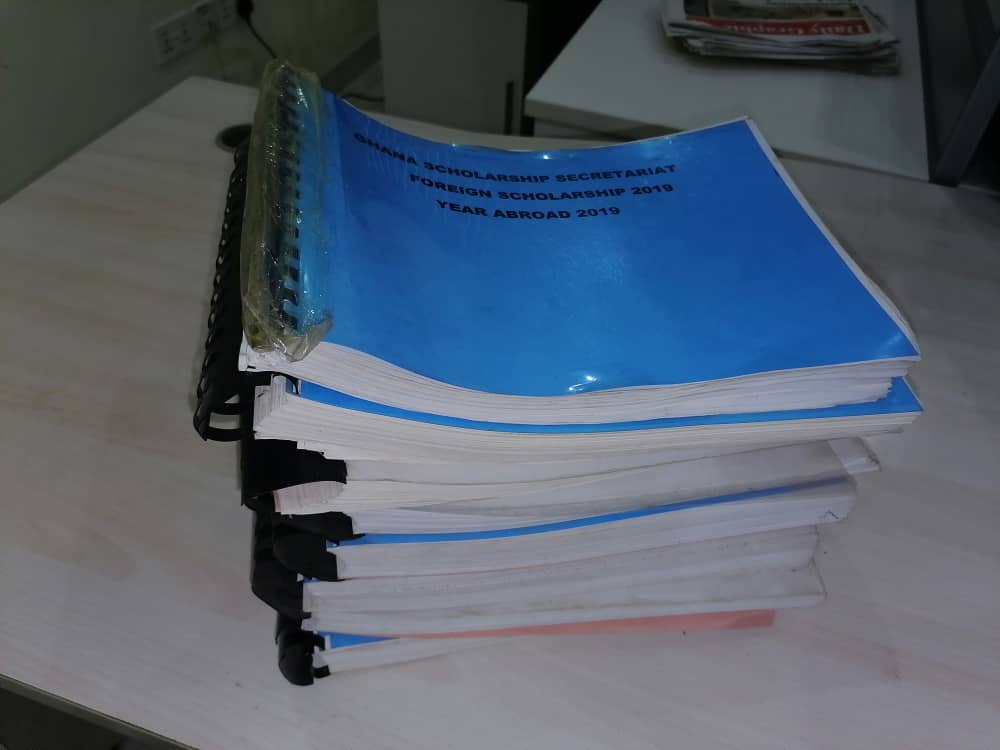
    The Scholarship Secretariat provided these booklets instead of the PDF-format data we requested.
    The Scholarship Secretariat provided these booklets instead of the PDF-format data we requested.

    The Scholarship Secretariat, an agency under the Office of the President, was established in 1960 with the primary purpose of providing local and foreign scholarships to academically gifted but financially needy students. Following the country’s liberation from colonial rule, the Nkrumah administration set up scholarship programmes as a means to incentivise and attract top talents to bolster the nation’s workforce by assisting citizens who lacked the financial means to fund their education.

    In recent years, however, the secretariat has faced criticism for allegedly perpetuating patronage, often overlooking deserving applicants in favour of those with political and high society connections.

    A major source of funding for the Scholarship Secretariat is GETFund. Section 2.2(b) of the GETFund Act requires the Scholarship Secretariat to allocate funds to support “gifted but needy students for studies in second cycle and accredited tertiary institutions in Ghana.”

    The Secretariat administers bilateral scholarships, funded by foreign countries, and non-bilateral scholarships, which are financed by the Ghanaian taxpayer. Non-bilateral scholarships include funding for both local and foreign categories.

    Scholarship for the well-connected and not-so needy

     The Fourth Estate asked for data covering 2019-2020 because the Auditor-General had released a report (covering 2009-2018) in which it highlighted how deserving but financially disadvantaged students were sidelined, while scholarships were granted to the well-connected.

    Our investigations revealed a similar trend—the funneling of scholarship funds to influential people as well as children, relatives and associates of powerful figures.

    The Fourth Estate conducted an analysis of the data specifically focusing on scholarships funded by the government of Ghana. This analysis included a breakdown of the expenditures on scholarship recipients in various countries, details of the programmes pursued by the beneficiaries and their backgrounds.

    From our analysis, in 2019-2020, the Scholarship Secretariat spent at least 291,480 pounds sterling (GBP), 146,502 US dollars (USD) and 7,685 Canadian dollars (CAD) respectively on influential individuals and the associates of the political elite.

    Notably, the founder and chief executive of a private hospital in Accra who recently contested and lost in the NPP parliamentary primaries in the Ashanti Region received USD50,031 for his master’s in public administration at Harvard University in the United States.

    An NPP constituency executive from the Eastern Region was awarded multiple scholarships for master’s programmes, totaling GBP57,210.

    An NPP youth activists and a management member of the National Service Scheme (NSS) funded her Master’s degree studies with a scholarship award worth GBP18,450.

    One of the most worrying details from the information we received concerned a special assistant to Second Lady, Samira Bawumia. GBP17,355 was paid for the special assistant to attend a university in the United Kingdom but he never stepped on campus and dropped out of the programme after attending only a few online classes from Ghana.

    There is also the case of the fam,ily member of President Nana Akufo-Addo and former Finance Minister, Ken Ofori-Atta whose path to law school in the United Kingdom (UK) was cleared with a GBP16,740 scholarship.

    A UK branch executive of the NPP, who has been living in that country since 2008, also received GBP28,380 for a Master’s Programme in Law.

    Two top diplomats are also on the list of beneficiaries of a scholarship meant to empower the underprivileged, according to information on the Scholarship Secretariat’s own website.

    Children of the political & social elite

    The data revealed that it wasn’t just the politically connected who obtain government scholarships. Children of Ghana’s political and social elite also received scholarships, leveraging influence and privilege to access educational opportunities intended for brilliant but needy Ghanaians.

    For example, the daughter of a former Inspector-General of Police received GBP27,480 for a first-degree programme in the UK.

    In that same year, the daughter of prominent actress received USD41,026 for a pre-medicine programme in the United States.

    The children of two former Members of Parliament received GBP19,130 and USD36,675 for a first degree in law and a pre-medicine programme respectively.

    The daughter of a former national chairman of the NPP, who is a lawyer, got funding of almost GBP6,000 to qualify to practice as a lawyer in England and Wales.

    The identities of these beneficiaries would be revealed in subsequent publications.

    Multiple scholarships

     Data from the Scholarship Secretariat showed that at least 26 people received multiple scholarships which allowed them to pursue different programmes in two consecutive years or different programmes in a single year. This means while some needy students were struggling to secure a scholarship to fund one programme, others received funding for two different programmes.

    At least 11 individuals received multiple scholarships in consecutive years (2019 and 2020), with amounts ranging from GBP13,250 to GBP55,000 per school to cover tuition and living expenses. Six others were granted two different scholarships within the same year, either in different countries or in the same country.

    The Fourth Estate confirmed that one beneficiary received GBP28,330 in 2019 to cover his living expenses and tuition for an MSc degree Management at the Brunel University in London. In 2020, the state again paid GBP15,750 for his MBA in Business Administration at the University of the West of England.

    Another beneficiary received USD38,475 for an MA in Design Management at Savanna College in the United States in 2019. In the following year, the same person received GBP14,500 for an MA in Visual Communication at the University of Derby in the UK.

    Discrepancies in criteria and guidelines

     The GETFund Act, which makes funding available to the Scholarship Secretariat, explicitly stipulates that government scholarships are meant to support brilliant but needy Ghanaian students.

    The Registrar of the Scholarship Secretariat, Dr Kingsley Agyemang, insists that this provision merely means that the primary criteria for receiving a scholarship are for the applicant to have a Ghanaian citizenship and an admission offer to a local or foreign university. The award of the scholarship has nothing to do with need, he claims.

    While rejecting suggestions that scholarships are being wantonly awarded to those who are well-connected to the political and social elite, Dr Agyeman implied that recommendations from powerful persons and offices sometimes influence the award of scholarships.

    I have journalists and the media making recommendations for people. I also do know that we have chiefs and the clergy making recommendations for people. I also do know that I have politicians on both sides also making recommendations for people they believe deserve an award, he said.

    “We live in a society where we are somehow connected in so many ways and it becomes difficult when we want to separate these little interactions.”

    Despite Mr Agyeman’s insistence on the existence of selection guidelines, the Scholarship Secretariat failed to provide any document with such guidelines to The Fourth Estate. Repeated calls and Whatsapp messages requesting for the guidelines went unanswered.

    Dr Clement Apaak, the deputy minority spokesperson on education, insists that using any criteria other than “brilliant but needy” to award scholarships, defeats the purpose of setting up the Scholarship Secretariat.

    Dr Clement Apaak, MP for Builsa South

    “When we bring in exclusive groups as being conduits through which scholarships can be given, then we are subjecting the process to abuse,” he said.

    Prof Peter Quartey, the Director of Institute of Statistical Social and Economic Research (ISSER), agreed with Dr Apaak and noted that relying on recommendations to assess need is not good enough.

    “For the politically-exposed people, they are Ghanaians. They pay taxes. They should meet the minimum standards that are set and they should all be part of the process,” he said.

    “If we have an independent committee or board that assesses every application, they will all be given equal opportunity. When politically-exposed persons want to apply, they can apply – except when there is influence and they are the ones who benefit most.”

    Dr Apaak, however, insists that influential or politically exposed persons and their close relatives should not be eligible to apply for government scholarships.

    He asserted that it was not for nothing that tax laws are designed to positively discriminate in favour of the poor and added that the needy also deserve their fair share of opportunities offered by the state.

    He described the offering of scholarship to influential people, children of the affluent and their associates as a form of greed. This, he said, has the tendency to widen the inequality gap between the rich and the poor in society.

    “It is in their own interest not to continue to be greedy and selfish, where they can afford to educate their wards and yet they choose to let their wards benefit from scholarship that should be going to the wards of the less fortunate in society,” Dr Apaak said.

    “Society ought to be designed in a way that [we] would always sacrifice collectively to bring up those who are down.”

     Multiple scholarships

    When The Fourth Estate pointed out concerns about double scholarships to some beneficiaries while other deserving applicants were rejected, Dr Agyemang claimed that those who received the double scholarships pursued complementary courses. He insisted that the number of such double beneficiaries was insignificant.

    Dr Agyemang also attributed some of the multiple scholarships to “administrative error” on the part of some staff of the secretariat who are accustomed to manual record-keeping.

    However, Prof Quartey of ISSER noted that such multiple awards could only be justified if they were for courses that could not be undertaken in Ghana or for specialties in science, technology, engineering and technology, with stringent requirements for beneficiaries to return to the country to pass on their knowledge and skills.

    Prof Peter Quartey, the Director of ISSER.

    Dr Apaak, on the other hand, described the multiple scholarship awards as unfortunate as they showed the insensitivity of the Scholarship Secretariat.

    EDITOR’S NOTE: This story shall not be republished or broadcast, in part or in full, in any form or shape without the express permission of the Editor-in-Chief.

    Watch out for part two of this story…

    You can reach the writer via email at [email protected] and amedekudede@ gmail.com.