The Minister of Finance and Economic Planning, Ken Ofori-Atta, has claimed that the National Democratic Congress (NDC) had planned, in the party’s 2020 manifesto, to introduce an electronic transactions levy (e-levy).
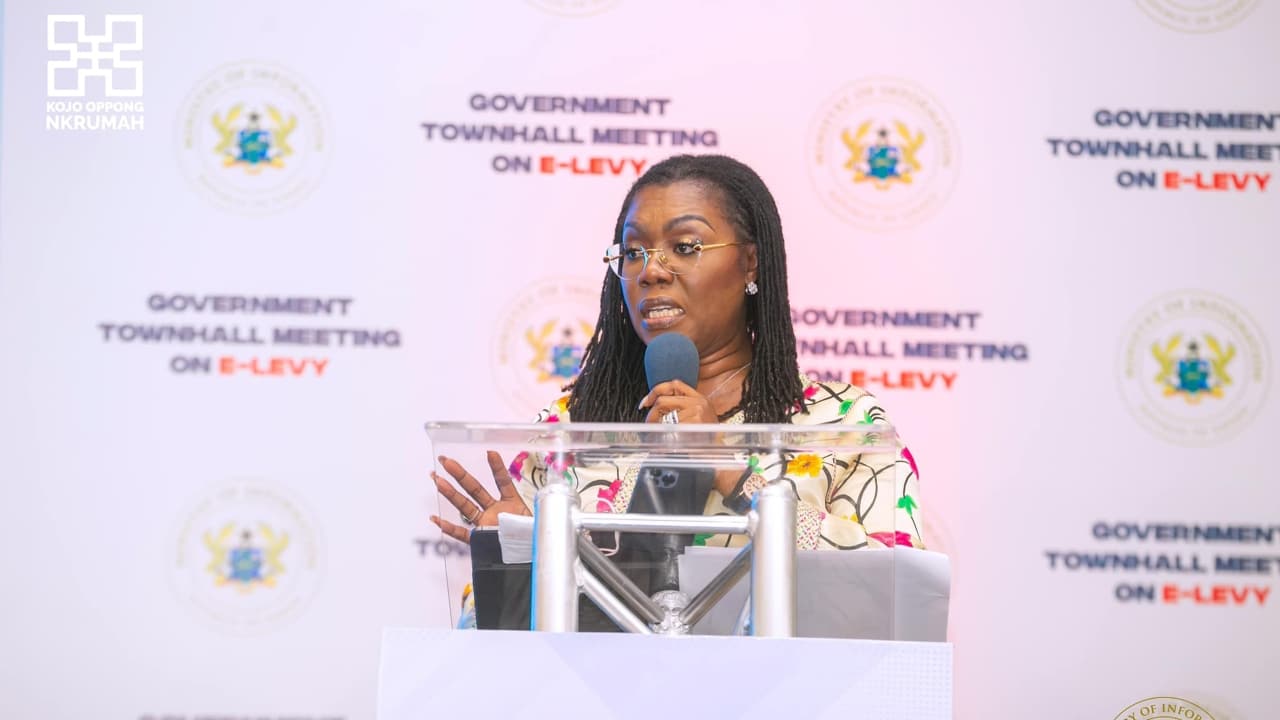
He said this at a town hall meeting in Wa on Monday, February 21, 2022, to push for the passage of the government’s e-levy, which has been greeted with strong disapproval from the opposition NDC and a cross-section of Ghanaians.
Fact-Check Ghana has verified the claim and presents the findings below.
Claim: “What is the reason for any of these [NDC] MPs to say, ‘No. Whatever argument you have, we won’t do it’? And then I go and look at their manifesto, on page 99, and they have something called Uniform Fees, which will look at taxing all electronic transfers—in their own manifesto. So what are they doing?”
Fact-Check Ghana has looked at the part of the NDC’s 2020 manifesto claimed by Ken Ofori-Atta to mean “taxing all electronic transfers”. It is titled “Financial Inclusion and Electronic Payments (FINTECH)”
The said portion of the manifesto talks about policies to ensure financial inclusion in the electronic space. The point referenced by Ken Ofori-Atta is captured there. The manifesto said the NDC government would “introduce a uniform transaction fee policy to guide the electronic payments industry.”
A screenshot of the page in the 2020 NDC manifesto (pg 99) the Finance Minister referenced
Nowhere in the manifesto did the issue of taxing is mentioned or a new fee is mentioned. Rather, it talks about a policy to make the fees uniform.
It is a fact there are existing fees and charges on electronic transactions. It is also a fact that the electronic fees clients pay are not uniform. Taking the telecommunication sector, for instance, the players in the industry do not charge uniform fees for mobile money transactions. Interoperability charges of these telcos are also not uniform.
In the banking sector, electronic fees and charges are not uniform across board. The various banks in the country charge differently.
The NPP government’s e-levy is not about making the fees uniform. It is introducing a new tax on users of electronic transactions.
The NDC’s manifesto highlights the uniformity in the fees and not the introduction of a new tax as the finance minister claims unless there is evidence elsewhere to back a claim that this was a decoy to introduce new taxes.
Besides taking the words in their ordinary meaning, the context in which the uniform fee policy is captured in the manifesto does not relate to revenue mobilisation or taxation.
Per the analysis of the NDC’s manifesto policy statement and the context in which it was made, Fact-check Ghana finds it misleading when Ken Ofori-Atta concluded that a policy on uniformity in fees already charged meant the introduction of a fee meant for “taxing all electronic transfers.”
The writer of this report, Prosper Prince Midedzi, is a fellow of the Next Generation Investigative Journalism Fellowship at the Media Foundation for West Africa (MFWA).
The Vice President’s Chief of Staff, Augustine Blay, has said that Ghanaians can travel to any country in West Africa with the Ghana Card without a passport.
He made the claim when he granted an interview on the morning show of Accra-based Citi FM. Below, Fact-Check Ghana produces a transcript of the conversation between Bernard Avle, host of Citi FM’s morning show, and Augustine Blay.
Bernard: As we speak, how many countries can I enter with the Ghana Card?
Augustine: In 2015, ECOWAS Protocol specified how each country must design their card that they will allow their citizens to circulate around the sub-region. So with the Ghana Card today, you can go around with your ID card, the Ghana Card, within the ECOWAS sub-region.
Bernard: So all 16 ECOWAS countries?
Augustine: Yes.
Bernard: So I can go to Nigeria tomorrow morning with my Ghana Card?
Augustine: Yes, yes, yes, you can do that.
To confirm the claim of the Veep’s Chief of Staff, Godfred Akoto Boafo, a co-host of the morning show, together with Bernard Avle, quizzed further.
“So you are saying that as we are sitting here, I can fly to any ECOWAS country comfortably without a passport”
“Yes,” Mr. Blay affirmed.
On the same day, Augustine Blay granted an interview with Accra-based TV3 and made similar claims.
“The multilateral agreement we have today, based on ECOWAS Protocol that was signed in 2015, Ghana Card can be used to travel across all the 16 ECOWAS countries,” he said.
In the last few days, the Ghana Card has become a topical subject of media and public debates. This followed the emergence of news that the International Civil Aviation Organisation (ICAO) had congratulated Ghana for a successful transformation of its biometric card (Ghana Card) to an e-passport for international travel. The ICAO later came out to clarify that it had not certified the Ghana Card as an e-passport as some media outlets had reported it. The clarification has generated a lot of concerns on whether the Ghana Card can indeed be used to travel.
Fact-Check Ghana followed up on the claim by Augustine Blay on whether the Card can be used to travel by air to any country in West Africa without needing a passport.
The team decided to verify the claim from the Ghana Immigration Service and the Airline companies that travel from Ghana to countries within the West Africa subregion. The two stakeholders are the main institutions that are immediately essential when one decides to travel particularly by air to any country in West Africa.
Interviews with Airline Companies
Fact-Check Ghana made enquiries from the Ghana offices of five airline companies that are reputed to regularly fly within West Africa. They are Africa World Airlines (AWA), Asky, Air Peace, Air Cote D’Ivoire, and Emirates.
All the Airline companies the team spoke with indicated they would not admit onboard their flight any passenger with just the Card as it is not valid for international travels.
“We only take valid passports,’’ Nora, a client service executive with Asky, told Fact-Check Ghana. “We haven’t received any mail or direction concerning using Ghana Card for travels”.
“We don’t accept Ghana Card at this moment. There’s no communication on that with regards to the Emirates,” Comfort of the Emirates told the team.
You cannot travel with the Ghana card yet – Public Affair Directorate of Ghana Immigration Service
The team proceeded to speak with the Ghana Immigration Service. The Head of the Public Affairs of the Ghana Immigration Service, Supt. Michael Amoako-Atta, said nothing had been approved yet on using the Card as an e-passport for travels to West African countries.
“At the moment, just at the weekend when this issue came out, stakeholders are now meeting to look at limitation modalities, if you look at the story that came out from the Vice President’s office. As one of the implementing agencies, we are looking at what Ghanaians need to know when it comes to travelling with the Ghana card,” he said.
Supt. Michael Amoako Atta said Ghanaians cannot travel with the Card yet
Supt. Amoako-Atta added that until March 1, 2022, when the details of using the Card to travel are communicated, Ghanaians will have to rely solely on a valid passport to travel anywhere outside the country as it has always been.
“So until the effective date takes effect, then you have to go through the normal way with the Ghana passport or the ECOWAS passport as we call it. So I am sure before the 1st [March] all the stakeholders will come out with certain guidelines whether you can use the e-card within ECOWAS members states or it’s only for returning journeys back to Ghana,” Supt. Amoako-Atta explained.
In conclusion, the claim that one could travel to any West African country as of yesterday with the Ghana Card is false.
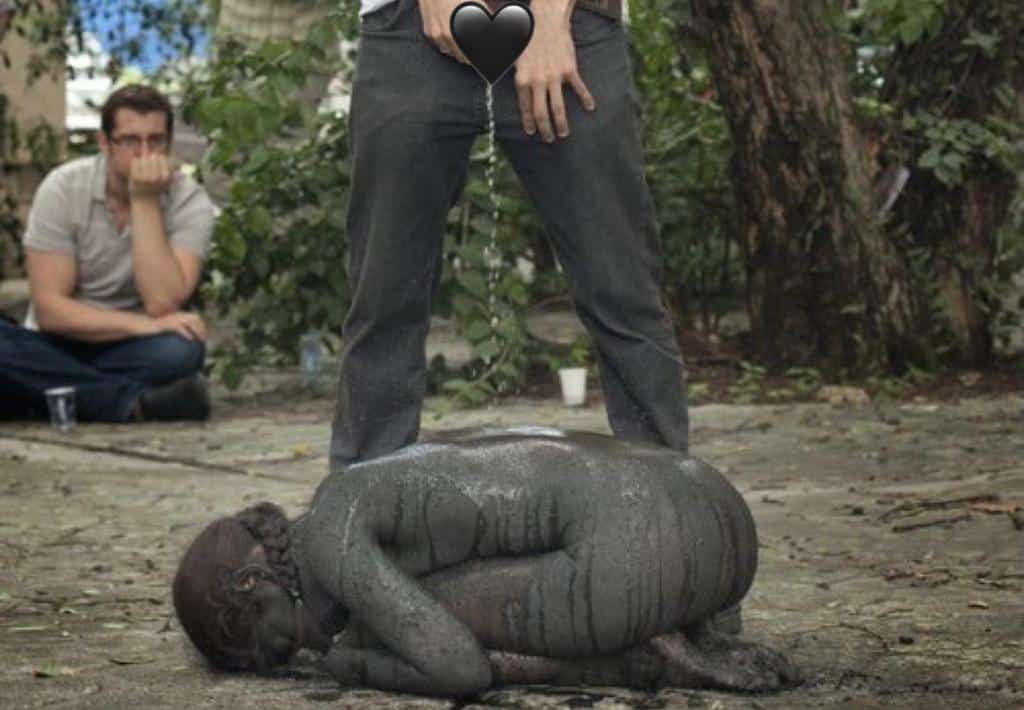
A video is circulating on social media suggesting an offensive racism act being meted out against a black girl by a group of white people.
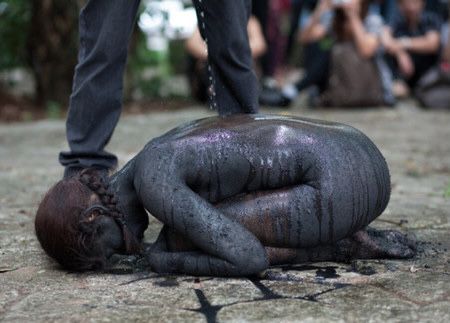
In the video, two white men and a woman take turns to urinate on a petite naked girl who appears to be black. With her face down, the girl curls her body on a hard ground of an open space. A group of white men and women who surround the incident look fixedly at her while the men and woman urinate on her.
The video has been shared widely on social media, accompanied by varying commentaries and descriptions, most of them calling attention to white racism against blacks.
Some social media posts have connected the video with the recent expulsion of the French Ambassador from Mali by the military government. The posts suggest the video is a retaliation by some French against a Malian and those sharing it are calling on Africans to respond through protests.
“After Mali sent out the French Ambassador, the French caught a Malian in a remote French village and urinated on him publicly. Africa must Wake up. We have to stage demonstrations in front of all French embassies in our countries. This act by the French is an attack on our very humanity & dignity thereof,” one of the posts said.
A screenshot of one of the commentaries accompanying the circulation of the video
Others have connected the video to a recent online protest against sportswear giant, Adidas. The sportswear brand had terminated its sponsorship contract with French soccer player Kurt Zouma, who plays for UK-based West Ham United. The player had been spotted in a viral video kicking his cat. The sportswear brand found the incident inappropriate and hence withdrew its deal with the player.
Fact-Check Ghana has verified the video and concludes the video is not real and does not relate to Mali or France.
Staged performance
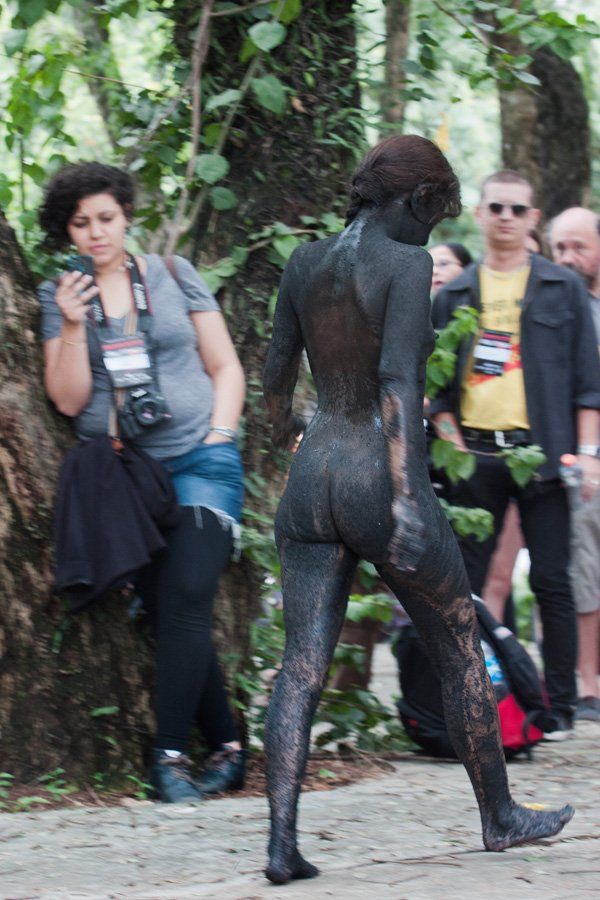
The video is a staged performance by the renowned Guatemalan performance artist Regina José Galindo. The artist is famous for staging similar body arts with political themes.
Regina José Galindo| Source: Wikipaedia
In fact, photos of Regina José Galindo show she’s not as dark as portrayed in the video. She painted her body with coal for the act.
See below photos of closer shots of the artist
About the Performance
The title of the performance is Piedra. It was staged in the Universidade de São Paulo, São Paulo, Brazil on January 17, 2013. The performance essentially underscores the defilement and violence against female bodies in the coal mining industry in many South American countries including Venezuela, Chile, and Brazil, where coal is the country’s largest non-renewable energy resource.
This is how Hemispheric Institute, a US-based art center that curates works of artists, writers, and activists, described the Piedra:
“Piedra stages a woman’s body and a stone as objects conditioned to endure violent enactments. The ease with which a male-bodied actor, both in and outside of the performance, can defile the female body with the perfunctory act of relieving his bladder parallels the unconscious daily violence against a woman’s body.”
It added: “Piedra’s simple yet poignant actions capture both a local and global crisis: the detrimental effects of coal mining on the environment, the predicament of exploited female laborers, and the pervasive structural violence against women that economic exploitation perpetuates.”
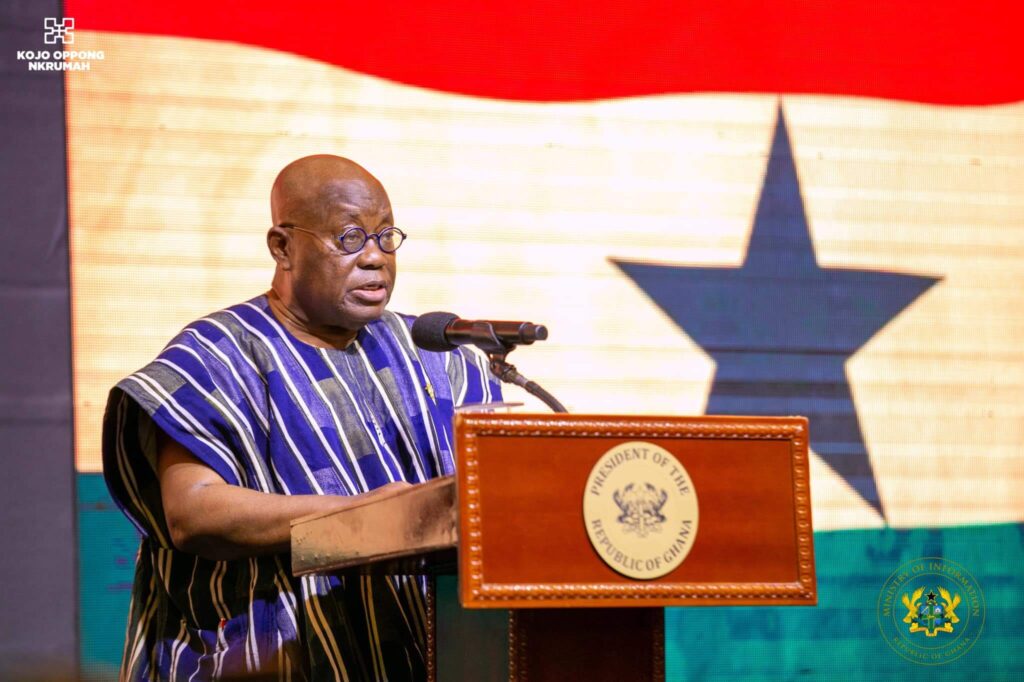
President Akufo-Addo addressed the opening of the 73rd Annual Year School at the Great Hall of the University of Ghana on January 25, 2022. In his speech, the president said Ghana had been ranked top among the countries that managed the COVID-19 pandemic well in the world.
“We pioneered life-saving innovations that WHO has since replicated elsewhere; with Ghana and Korea touted as the two best nations in dealing with the pandemic,” President Akufo-Addo said.
This was not the first time the president or a member of his government had boasted of how they handled the COVID-19 outbreak.
Ken Ofori-Atta said the government has managed the pandemic well to the praise of the world
In November 2021, the finance minister, Ken Ofori-Atta, at the reading of the budget statement for the 2022 financial year, said the government has managed the pandemic well to the praise of the world.
“We have been there with the people, playing the difficult but necessary balancing act of managing an economy put under extreme distress by the pandemic and, at the same time, supporting households and businesses to cope. Our response to COVID 19 thus far, has earned domestic and worldwide acclaim as our President and his Fellow Ghanaians will attest to,” Ken Ofori-Atta said.
But has Ghana indeed been ranked top among the countries that best managed COVID-19 in the world? The claim by the president, which comes with the mention of the WHO, could mislead a casual listener into thinking that the ranking was done by the WHO.
Fact-Check Ghana verified the claim and present the details below.
It’s difficult to compare countries’ approaches to COVID-19 – WHO
At the beginning of 2020, when many countries had not recorded COVID-19 cases, the World Health Organsation (WHO) instituted what it called “country preparedness and response status for COVID-19”. The project assessed and categorised countries based on their readiness and capacity to respond to the pandemic that was fast spreading across the globe. For instance, in February 2020, a month before Ghana recorded its first case, WHO rated the country 59%.
Based on its previous ranking and in following up on the claims that Ghana has been ranked among the best in COVID-19 management, Fact-Check Ghana, in email correspondence, enquired from the WHO if it indeed has any such ranking and what criteria guide such rankings.
Carlan Drysdale, Communications Officer at the WHO, who responded to the mail referred Fact-Check Ghana to a press conference that had been organised by her outfit on January 18, 2022. WHO had responded to the issue of comparing the approaches of different countries in fighting COVID-19 at the said press conference.
Responding to a question by a journalist, Mike Rydan, Executive Director of the WHO’s Health Emergencies Programme, who was addressing the conference said it was difficult to compare strategies of different countries to COVID-19.
“I think we have to be careful when we try to compare strategies because very often the starting conditions of this pandemic set up the opportunities that countries had. So, for example, many countries in Asia took a very aggressive position at the beginning and kept numbers very low so a zero-COVID policy was open to them because they had good control on the virus.
“Other countries really got caught, blind-sided by the virus and had very large and extensive transmission so it was very difficult for them to think in terms of zero-COVID because in fact, many, many countries have never been out of COVID. They’ve gone from high levels of COVID to slightly lower levels, maybe to low levels at times and straight back up so we’ve had these progressive waves,” Mike Rydan said.
He added: “So I think it’s very difficult to say that one country’s strategy is the right versus the wrong. Countries’ strategy in the face of the virus is based on what the country is experiencing, what the opportunities are for the country.”
Thus, despite having assessed and categorized countries at the beginning of the pandemic, the WHO does not compare the strategies and policies countries have adopted in fighting COVID-19. The global health body has, therefore, not ranked any country based on their COVID-19 response.
Different organisations are producing rankings based on different criteria
Even though, the WHO has stated it is difficult to compare the approaches and strategies that countries have adopted to fight the pandemic, many researchers and organisations, including news outlets have published rankings based on their own criteria.
MoveHub, a UK-based international shipping company, in February this year published their ranking based on death rates per million people, cases per million people, vaccination rollouts, and how countries have re-opened their economies.
In mid-2020, Time magazine published similar rankings by a group of researchers focusing on healthcare responses, political responses, and financial responses.
Lowy Institute, a think-tank based in Australia, also established what it calls “Covid-19 Performance Index”. According to the Institute, the index examined confirmed cases, confirmed deaths, confirmed cases per million people, confirmed deaths per million people, confirmed cases as a proportion of tests, among other criteria. The Index focused on a period of 43 weeks that followed the hundredth confirmed case of COVID-19 in about 116 countries using data available to them as of 13 March 2021.
The CNBC, US News, and many other international news media outlets have published various rankings produced by researchers on the management of COVID-19 by countries based on some form of criteria.
None of the rankings from the aforementioned institutions mentioned Ghana in its best or worst countries, and almost all of them have different countries in their findings. While that does not pass a verdict on whether Ghana managed COVID-19 well or not, it underscores the fact that there are many such rankings, focusing on varying criteria and periods of time, and are therefore producing different results.
Ghana ranked top in terms of communication and Rhetoric
One of the many rankings on how countries responded to the pandemic was published by a team of researchers led by Darren Lilleker, a professor of political communication in Bournemouth University, in a book titled “Political Communication and COVID-19
Governance and Rhetoric in Times of Crisis”.
The researchers ranked Ghana top, together with South Korea. This is the ranking President Akufo Addo was, perhaps, referring to in his speech at the new year school opening.
Prof Lilleker in an article explaining the methodology of their publications stated that the research was a “comparative study of how 27 countries responded to the emergence of the virus and first wave, and how they communicated that response to their citizens.”
He further added that the researchers “invited national experts to analyse their government’s communication style, the flow of information on coronavirus and the actions taken by civil society, mapping these responses onto the numbers of cases and deaths in the country in question.”
Thus, the ranking by Prof Darren Lilleker and the team of researchers focused specifically on how countries communicated to their citizens during the pandemic, unlike the other aforementioned rankings that focused on criteria like confirmed cases per million people, confirmed deaths per million people, confirmed cases as a proportion of tests.
Akufo-Addo provided periodic updates on measures the government has taken against the spread of COVID-19 on TV | Source: SIGA
Indeed, the researchers observed that President Akufo-Addo’s communication through his regular updates on COVID-19 determined Ghana’s position on the ranking.
“Akufo-Addo took responsibility for coronavirus policy and explained carefully each measure required, being honest about the challenges the nation faced. Simple demonstrations of empathy earned him acclaim within his nation and also around the world,” Prof. Lilleker explained in the article.
Therefore, even though Ghana was named among some of the countries that managed the pandemic well by some researchers, it was on the score of how the president communicated to the country on COVID-19 and its related matters.
In conclusion, the WHO has no official rankings of country performance on COVID-19. The International public health agency says it is difficult to compare countries based on their approaches to fighting COVID-19. Ghana, together with South Korea, has been ranked by a team of researchers based specifically on how the country communicated to citizens on the pandemic.
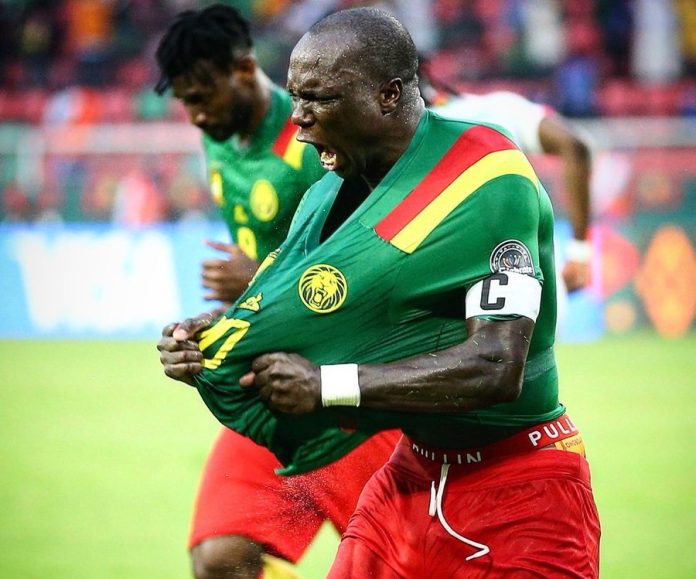
A video has emerged online suggesting that Vincent Aboubakar, skipper of the Indomitable Lions of Cameroon, was attacked after their game against Egypt in the ongoing African Cup of Nations (AFCON 2021).
The video, which is circulating widely, claims that after the February 3 semi-final clash in which the host nation, Cameroon, lost to the Pharaohs of Egypt, irate Cameroonian fans thronged to the pitch and attacked the players.
Indeed, in the video, a man who appears to bear some resemblance to the Cameroonian skipper is seen oozing blood from his face and receiving some assistance from a lady wearing the jersey of the Indomitable Lions of Cameroon.
The video has been shared by many notable social media handles including GH One’s Nana Aba Anamoah and Betty Yawson.
At the time of publishing this report, both of them had deleted the video from their Twitter handles.
Fact-Check Ghana has verified the video and concludes that the claims in the video are false. Below is the explanation.
Vincent Aboubakar was seen ‘walking away’ after the game
Contrary to the claims by the video and posts on social media that Vincent Aboubakar was attacked and “nearly killed” after the game, the 30-year-old Al-Nassr striker was spotted by journalists after the game walking all alone and dragging along a piece of luggage without any blood or cut. The photos and videos shared by many different local and international media outlets show that the skipper was visibly not in a good mood after his side lost in a penalty shootout and so walked away from the press and media interviews.
Joy News’ George Addo Jnr who’s in Cameroon shared a video of Vincent walking away after the semi-final clash with Egypt.
Also, yesterday, February 5, two days after the said attack is claimed to have happened, skipper Vincent Aboubakar came from the bench to score a brace against Burkina Faso in the penultimate match of the AFCON tournament.
Video is unrelated to Cameroon-Egypt Semi-final clash
Beyond establishing that the man in the video could not be Vincent Aboubakar, Fact-Check Ghana proceeded to verify the video further and spotted some inconsistencies in it that further underscores the fact that it is false.
Digital LED not wooden boards
The opening scenes of the video shows teeming soccer fans rushing to the pitch while a voice not clearly audible spoke French translated to mean: “This is war…Cameroon, this is bad”. The translation attempts to suggest that indeed the incident happened in Cameroon and perhaps at the ongoing AFCON.
However, a critical look at the photo suggests that the football pitch is hedged by what appears to be wooden or plastic boards. The ongoing AFCON is being played in six different stadia comprising Olembé Stadium and Ahmadou Ahidjo Stadium, both in Yaoundé; Japoma Stadium in Douala, Roumdé Adjia Stadium in Garoua, and Bafoussam Stadium in Kouekong.
Checks by Fact-Check Ghana indicate that none of the stadia is hedged by wooden or plastic boards. All the stadia are hedged by digital LED boards that display brands of sponsors during matches.
Alexander Tcheu, a journalist working with the government-owned Cameroon Tribune, confirmed when Fact-Check Ghana sent the video to him for a comment.
“You can see the stadium. The stadium is not surrounded by boards in Cameroon. It is only electronic devices in Cameroon’s stadiums,” he said.
This, therefore, indicates that the opening scenes of the video are not related to the ongoing African Cup of Nations.
Wounded man may be a victim of Olembe stadium stampede
The other scenes in the video show a woman attending to a man who’s wounded, with blood oozing from his face. The jersey the lady is wearing is the main kit of the Indomitable Lions of Cameroon at the AFCON.
The kits were officially launched in December last year ahead of the tournament. This suggests that the incident is very current.
A number of journalists who Fact-Check Ghana reached out to while verifying the video said the video of the wounded man may be related to the recent stampede that happened in Olembe stadium.
The journalists indicate that a number of videos of people who were dead or wounded and were receiving medical assistance following the stampede were circulated online.
“Maybe it is after the incident at Olembe Stadium,” Alexander Tcheu explained the part of the video where the woman was attending to the wounded man.
Reports indicate that some angry Cameroonian fans went on a rampage after the Indomitable Lions lost the game on penalty shootouts. However, this happened in the streets of Olembe, not on the football pitch, and no Cameroonian player was reported to have been attacked.
In conclusion, the video’s claim that Vincent Aboubakar was attacked after the semi-final match against Egypt is false. Also, the video is a product of two separate events put together for deception. The two events do not relate to the February 3 Cameroon-Egypt game.
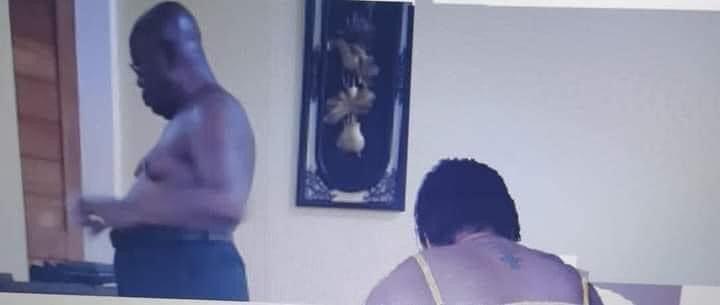
A photo of a half-naked man and woman in a room has been trending on social media. The man in the viral photo is claimed to be President Nana Addo Dankwa Akufo-Addo. The pages and handles that shared the photos also suggested that the woman is a lady named Evelyn Serwaa Broni, who has been rumoured to have had an affair with the president.
The photo has been widely shared on WhatsApp, Twitter and Facebook and has garnered a lot of comments on these platforms.
— Awal Mohammed, Akroso 🇬🇭🏴🇵🇸 (@AwalNDCAkroso) January 19, 2022
This is the president of the Republic of Ghana half naked with a lady called Serwaa Broni, she came out sometime ago to say, she had had an intimate relationship with president @NAkufoAddo.
Fact-Check Ghana has verified the photo through critical analysis of the various parts of the viral image and through the assistance of photo forensics software and concludes that the photo has been manipulated in many parts.
Cloning errors
To clone simply means to create a copy. In photoshop technique, cloning involves the duplication of part of an image to create uniform patterns in a photo or to remove blemishes in a photo. In many cases, especially when not done well, cloning leaves traces in a manipulated photo.
In the said photo, the background is presented as a uniform off-white wall but the right upper part of the wall (stretching from the right of the artwork hanging on the wall) shows a different colour pattern. A thin irregular ray at the top-right shows a white colour. The traces of the irregular ray of white colour exposes it from being an intentional design but an error that cannot appear in an original photo.
The varying, irregular colour pattern is further repeated on the bottom right corner of the photo, around the right arm of the lady. This time, the off-white colour is mixed with another patch of colour similar to the colour at the back of the lady.
Also, there are traces of different colours at certain portions of the wall in the room. These can be seen in the space between the man and the woman, and the extreme right part of the wall. The different colours do not appear to be natural or original but one created by cloning errors.
Pixelation
When a photo is modified, it can cause distortion. The distortion often takes the form of pixelation or imperfect colouring. This is a good indicator that a photo has been altered or manipulated.
It appears the editor or creator of the photo wants to present the lady in the photo as Evelyn Serwaa Broni. Photos of the lady on social media prove that she has tattoos on her back.
One of the tattoos is located at the mid-upper part of her back and looks like a cross pendant. There’s another tattoo on the right, which is indiscernible to Fact-Check Ghana. It appears the cross-like tattoo at the back of the lady in the viral photo has been fixed there making the photo pixelated.
Also, it appears the editor attempted to fix another photo on the right part of the back (closer to the arm) to represent another tattoo but there wasn’t enough space leaving the portion pixelated. As a result, the edges of the right shoulder of the lady are jagged instead of blending in with the background of the photo as seen on the left shoulder.
Akufo-Addo is noted to wear his wedding band in almost all public appearances. In the viral photo, the image that’s presented as the president appears to have the wedding band on but the part of the photo is very pixelated. The pixelation can also be seen in the area beneath the chin and around the neck. These suggest that parts of the photo have been modified.
Light
Objects within one frame of a photo will often have the same amount of light, especially when they are very close like the man and woman in the viral photo. However, a closer look at the photo suggests that the light surrounding that man is slightly different from what is in the room.
The light around the man is slightly dimmer than what appears to be the off-white colour of the room. Again, the light surrounding the man in the photo appears rectangularly shaped. This indicates that the photo of the man may have been cut out from somewhere and fixed in the photo to create the impression that both the man and woman were in the same room together.
Forensics by Fake News Detector by InVid WeVerify
Fact-Check Ghana also ran the viral photo in the Fake News Detector software by technology company InVID-WeVerify. According to the Poynter Institute, headquarters of the International Fact-Checking Network (IFCN), the InVID-WeVerify verification plugin “is one of the most powerful tools for spotting misinformation online“. The software helps generate forensics and data on photos and videos. It analyses them to highlight distortions, forgery and manipulations.
The Fake News Detector found many such distortions in the photo that supports the aforementioned manipulations.
The team checked for compression of the photo and cloning on the software. Under compression, the software highlighted distortions in the ghost and grid (CAGI) of the viral photo. On cloning, the software identified a copy-move forgery detection (CMFD) issue.
The reports below indicate how the software explains the various items it looked out for and the corresponding images it produced.
Compression
Ghost
Sofware: The JPEG Ghosts algorithm is based on recompressing the image in multiple different qualities and subtracting each of them from the original. The resulting difference images are post-processed to highlight regions that stand out and are likely to originate from a different JPEG image. Then, the images most likely to contain interesting findings are selected (i.e. those that feature localized inconsistencies). Consistent white, light-green or light-blue regions against a black background may correspond to traces of tampering, especially if they do not correspond to edges, but to entire regions.
Fact-Check Ghana: Observing from the ghost map submitted by the software, it is conclusive that the image has been tampered with.
CAGI
Software: JPEG compression operates in an 8-by-8 grid, which is near-invisible but detectable. Adding or moving an object on an image may locally disrupt this grid. The GRIDS algorithm seeks such discrepancies, and highlights them locally. The algorithm produces local white/light-green or light-blue blobs where it detects grid discrepancies. Generally, the GRIDS algorithm is less distracted by textures in the image, and focuses on grid disturbances. However, it should mostly be interpreted in combination with other outputs that highlight the same regions.
Fact-Check Ghana: The map presented by the software clearly points out discrepancies in the photo, some of which have already been noted above.
Cloning
CMFD
Software: This is a deep learning approach to copy-move forgery detection. Dark pixels are authentic and light-coloured ones are targeting a possible copy-move inside the image.
Fact-check Ghana: The map highlights some of the areas that have already been identified as alterations in the photo.
Conclusion
From the evidence presented from both critical physical analysis of the viral photo and the forensic analysis, the photo has been altered in many areas. The manipulations, therefore, cast immense doubts on the veracity of the photo.
At a town hall meeting in Koforidua on Thursday, January 27, 2022, Communications Minister Ursula Owusu-Ekuful said Ghana’s electronic transactions levy (e-levy) was lower than the rate of digital tax in the United Kingdom.
The proposed introduction of the e-levy has been greeted with opposition since the government presented its 2022 Budget statement to parliament last year.
Fact-Check Ghana has verified the claims and provided the key facts on the issue below.
Claim 1:“E-levy is being introduced at the lowest rate for any tax in Ghana, comparatively at 1.75%. Less than 2%.”
Verdict:Completely False
Explanation: Ghana has introduced a lot of taxes in recent times to shore up its budget deficit.
In 2021, for example, the government introduced the COVID-19 Health Recovery Levy Act, 2021 (Act 1068). The Health Recovery Levy Act imposed a 1% levy on the supply of goods and services made in the country, and goods and services imported unless exempted.
Aside from that, the John Mahama NDC government also imposed a 1% Special Import Levy on imported goods.
This tax is paid at the point of importation and computed on the Cost, Insurance and Freight (CIF) value of the goods.
It is therefore not true that E-levy is being introduced at the lowest rate for any tax in Ghana.
Claim 2: ”In other countries, digital taxes are being introduced at the rate of up to 10% and they’re paying.That’s the UK. And we go there and seek loans from them to finance our development. When we are not paying the requisite taxes that we should.”
Verdict:Completely False
Explanation: The government of the United Kingdom introduced a 2% digital services tax in April 2020, not 10%.
Unlike Ghana’s E-Levy, the UK digital service tax is not targeted at individual or citizen’s personal electronic transactions. The tax is expected to raise revenues from Large multi-national enterprises with revenue derived from the provision of social media services, search engines or online marketplace to UK users.
What does the Digital Services Tax cover in the UK?
The UK government said the Digital Services Tax would apply to businesses that provide a social media service, search engine or an online marketplace to UK users. These businesses would be liable to the Digital Services Tax when their worldwide revenues from these digital activities are more than £500 million and more than £25 million of these revenues are derived from UK users.
The government also said there was an allowance of £25 million, which means a company’s first £25 million of revenues derived from UK users will not be subject to Digital Services Tax.
Ursula Owusu’s claim is, therefore, both false and misleading. The two taxes are not the same.
While Ghana’s e-levy will have an impact on both individuals and businesses, the UK’s does not have any direct impact on individuals, but businesses only, according to the policy paper published on the UK government’s website on March 1, 2020.
This tax will, however, be short-lived because nearly 140 countries have struck a deal on new rules for international corporate taxation in October 2021.
A global tax reform, which is expected to take effect in 2023, will thereby replace the tax, according to US newswire services, Reuters.
It is therefore Completely False that the UK is implementing up to 10% digital services tax.
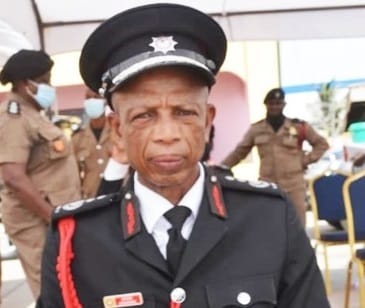
The Right to Information Commission has imposed a fine of GH¢50,000 on the Ghana National Fire Service (GNFS) for denying The Fourth Estate full access to information.
The fine is also as result of the Service’s refusal to respond to the RTI Commission’s request for explanation. The Ghana National Fire Service(GNFS) has 14 days to pay the fine or risk paying a penalty of 10% of the amount for every 14 days thereafter.
The RTI Commission has also ordered the Fire Service to furnish The Fourth Estate with all the information it requested within 14 days.
The Commission’s ruling was detailed in a determination document dated January 5, 2022, addressed to The Chief Fire Officer of the GNFS, and Kwaku Krobea Asante of The Fourth Estate, who petitioned the Commission.
“Based on sections 71 (2) (f) and 43 (c) of Act 989, on account of the Respondent’s failure to comply with its obligation under section 34 (1) of Act 989, an administrative penalty of GH¢50,000 is imposed on the Respondent [Ghana National Fire Service] and this shall be payable to the Commission by the Respondent not later than 14 days after the receipt of this decision,” the RTI Commission stated in the ruling.
The Fourth Estate’s RTI application to Fire Service
On March 30, 2021, The Fourth Estate’s Kwaku Krobea Asante made an RTI application to Ghana National Fire Service requesting the following information:
“The full list of fire outbreaks and locations in Ghana in 2016, 2017, 2018, 2019 and 2020
Report on the Accra Atomic Junction Gas explosion
Report on the June 3 fire disaster
Report on the fire outbreak at the Ghana Revenue Authority office near the Kwame Nkrumah Circle in 2019
A regional breakdown of the number of functional fire trucks and the years they were procured.”
After 14 days when the Fire Service failed to respond to the application, The Fourth Estate made an internal appeal to the Chief Fire Officer, head of the GNFS, in line with the RTI Law, Act 989. On July 6, 2021, The Fourth Estate petitioned the RTI Commission after the Chief Fire Officer did not respond to the internal appeal.
We are not bound to release such reports – Fire Service
On July 21, the Ghana National Fire Servicegranted partial access to the information requested by The Fourth Estate. The Service provided only “The full list of fire outbreaks and locations in Ghana in 2016, 2017, 2018, 2019 and 2020”.
The Fire Service, in a letter attached to the partial information it granted, explained that they are not obliged to release the other pieces of information because it was against their ethics. That letter was signed by DCFO James Owusu Agyei, Director of Operations, on behalf of the Chief Fire Officer,
“Fire Reports involving Institutions and Individuals cannot be made available to you. Legally we are not bound to release such reports until permission has been granted by such institutions and individuals concerned. The Ethics of our profession does not entreat us to divulge such information to a third party who was not directly involved in said incident,” the Fire Service stated in the letter.
No response to RTI Commission
On August 9, 2021, the RTI Commission wrote to the Fire Service requesting the Service to furnish the Commission with the names and addresses of the third parties involved in the reports The Fourth Estate had requested. This follows a petition The Fourth Estate brought to the Commission on the partial access the Fire Service has granted on the RTI application.
The Commission gave the Fire Service 14 days to produce the names and addresses of the third parties. But after three months, according to the Commission, the Fire Service did not respond.
“After over sixty (60) days of the receipt of the Commission’s second letter, the Respondent failed and/or refused to respond, neither did it furnish the Commission with the requested pieces of information,” the ruling stated.
The Commission added that, “failure and/or refusal of the Respondent to comply with the Commission’s request made under section 34 (1) of Act 989 smacks of failure to comply with an obligation under Act 989. Under section 71 (2) of Act 989, such a failure is liable to attract an administrative penalty being imposed by the Commission.”
The RTI Commission further stated that it did not find the information The Fourth Estate had requested as exempt information under the RTI law. The Commission said it was ,however, hoping the Fire Service would provide the names and addresses of the third parties especially because it bordered on ethical rules. That, the Commission said, would have helped it inform the parties about the pending investigations. But the Fire Service declined to respond.
The Commission said it was, therefore, made to act on section 34 (3) of the RTI law that gives it power to proceed with its work when details of the third parties are not provided. It ruled that the Ghana National Fire Service should release the information to The Fourth Estate within 14 days.
“Based on the Commission dispensing with third party notification under section 34 (3) of Act of 989, the Acting Chief Fire Officer, Deputy Chief Fire Officer (DCFO) Julius Kuunuor Aalebkure shall ensure that the following pieces of information are released to the Applicant not later than 14 days after receipt of this decision by the Commission;
i. Report on the Accra Atomic Junction Gas explosion
ii. Report on the June 3 fire disaster
iii. Report on the fire outbreak at the Ghana Revenue Authority office near the Kwame Nkrumah Circle in 2019; and
iv. A regional breakdown of the number of functional fire trucks and the years they were procured,” RTI Commission stated in its determination.
The RTI Commission concluded that the Fire Service should release the information to The Fourth Estate at “a reasonable charge of Gh¢ 1.80 per sheet, where it is being released in hard copy, either through printing or photocopying”. If the information is to be emailed, the Commission ordered that the Fire Service applies a charge of GH¢ 1.90.
Ahead of Ghana Black Star’s group stage match with Gabon on Friday in the ongoing Africa Cup of Nations in Cameroun, some social media handles have suggested that a Gabonese player has a falsified age.
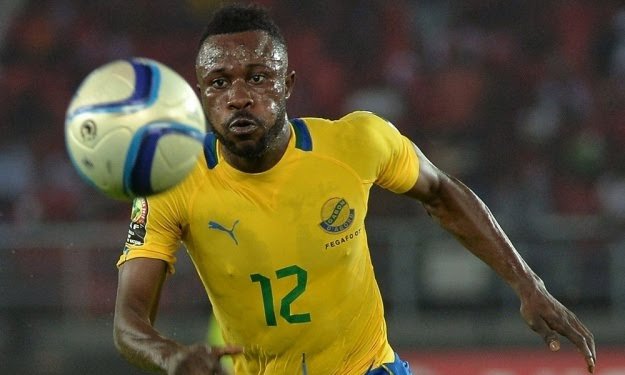
The player in question is Guélor Kanga. He is an attacking midfielder for the Gabonese national team and plays for Red Star Belgrad in Serbia. Kanga is 31 years old, but the social media posts claim his mother died 36 years ago. That, according to the social media claims, is the reason the player met the Federation of African Football’s (CAF) Disciplinary Committee.
Fact-Check Ghana has verified the claims and provides the key facts on the issue below.
DR Congo football federation says GuélorKanga is Kiaku Kiaku Kiangani Guélor
On April 14 2021, DR Congo (DRC) Football Federation (FECAFO) petitioned CAF’s disciplinary committee over what it considered an identity fraud on Guélor Kanga. The FECAFO said the player is actually a Congolese by name Kiaku Kiaku Kiangani. It stated that the player was born on October 8, 1985, in Kinshasa instead of the September 1, 1990 with which he officially registered as an international player with the Gabonese Football Federation (FEGAFOOT).
“Fraud has been orchestrated on the identity of player GUELOR KANGA registered by the Gabonese Football Federation (hereinafter the FEGAFOOT) as a citizen from Gabon,” a statement by CAF quoted FECAFO’s complaint to the continental football regulatory body.
FECAFO, therefore, called on CAF to consider the player’s registration as fraudulent and ineligible.
The FECAFO’s petition to CAF followed the DRC’s failed AFCON qualification campaign. The DRC finished third on the Group D qualification table behind Gabon and The Gambia who finished second and first respectively. The petition against Guélor Kanga, who featured in all the six qualification games, if successful, would ensure Gabon’s disqualification, making DRC replace them for the AFCON.
Did CAF invite GuélorKanga over why his mother died before he was born?
While many mediahouses in Africa have reported that CAF’s Disciplinary committee invited Guélor Kanga to answer why he was born in 1990 when his mother died in 1986, there’s no evidence of that investigation in CAF’s statement released on the issue.
The crux of the complaint by the DRC football federation against the player was about identity fraud in which they claimed the player was born in 1985 in Congo and not necessarily about when his mother passed.
Indeed, in adjudicating the matter, the evidence that Guélor Kanga was made to submit to CAF’s disciplinary committee did not contain information about his mother or when she passed.
CAF’s ruling
On May 26, 2021, CAF’s Disciplinary Committee ruled on the complaint brought against Guélor Kanga by the FECAFO. CAF had invited all the parties, including the player and the Gabonese Football Federation (FEGAFOOT), for hearing and to also submit their evidence.
According to CAF, Guélor Kanga submitted many documents in his defence including “deed of succession of the family building located at 162 Avenue Bosenge, certificate of composition of family, passport application form of Mr Nsiala Nkanga William, father of the player in question, and grandparent identification sheet.”
After examining all the evidence available to them, the Disciplinary Committee of CAF rejected DRC football federation’s complaint.
“Disciplinary Jury considers that the claims of FECOFA and the evidence presented by the latter were not considered conclusive and sufficient to establish the materiality of a falsification of the player’s identity by FEGAFOOT. In addition, the Disciplinary jury could not find any irregularities concerning the eligibility of the player in question, nor of His registration with the CAF,” CAF’s ruling stated.
— Fédération Gabonaise de Football (@fegafoot_gabon) May 26, 2021
FIFA’s rule on age and eligibility
According to FIFA’s eligibility rules, there’s no age limit for a player to represent their country at the senior national level. Thus, the age of Guélor Kanga is immaterial to his eligibility to play for Gabon’s senior national team.
Also, in 2004, an emergency FIFA committee ruled that to be eligible to play for a country they are not born in, players must be able to demonstrate a “clear connection” to that country. The way to demonstrate a connection to a country, the ruling stated, is for the player to have at least one parent or grandparent who was born in that country, or the player must have been resident in that country for at least two years.
From CAF’s Disciplinary Committee’s ruling, Guélor Kanga satisfies all these conditions and the Committee “could not find any irregularities concerning the eligibility of the player”.
On Wednesday, December 15, the National Communication Officer of the opposition National Democratic Congress (NDC), Sammy Gyamfi, made a tweet to back his opposition to mandatory Covid-19 vaccination. His tweet suggested that after taking the COVID-19 vaccine, one is likely to suffer adverse side effects including death. His tweet cited data from VigiAccess on adverse drug reactions (ADR) reported by the general public on COVID-19 vaccines.
Pfizer’s own document released upon a Court order and the WHO’s own data published on their https://t.co/j25V0S3e56 portal reveal an alarmingly high number of serious adverse effects including deaths. If only people will take time to do their own research. pic.twitter.com/l8Ig9Z9XFq
Sammy Gyamfi’s tweet followed the government of Ghana’s new COVID-19 protocols for international travels, which include mandatory vaccination for unvaccinated travellers.
Fact-Check Ghana has verified the data from VigiAccess and concludes that the National Communication Officer of the NDC’s claim is misleading.
VigiAccess says side effects does not mean vaccines caused them
VigiAccess was launched by the World Health Organisation (WHO) in 2015. It is a global database of reported potential side effects or ADRs of medicinal products of which the COVID-19 vaccines are part.
On its website, VigiAccess explains that the data is “intended as a useful starting point for people who wish to understand more about the types of potential side effects that have been reported in association with the use of medicinal products.”
It, however, cautions that “VigiAccess cannot be used to infer any confirmed link between a suspected side effect and any specific medicine.”
VigiAcces further gives the following explanation on its website:
“Information in VigiAccess on potential side effects should not be interpreted as meaning that the medicinal product or its active substance either caused the observed effect or is unsafe to use. Confirming a causal link is a complex process that requires a thorough scientific assessment and detailed evaluation of all available data. The information on this website, therefore, does not reflect any confirmed link between a medicinal product and a side effect.”
Thus, despite the ADR data on COVID vaccines reported by the general public, the fact that one suffered a particular side effect after taking a medicinal product does mean the side effect was caused by the medicinal product.
People are using our data on COVID-19 vaccines in misleading ways, VigiAccess tells Fact-Check Ghana
Fact-Check Ghana wrote to the Uppsala Monitoring Centre (UMC), WHO’s programme for International Drug Monitoring, who are also the managers of the VigiAccess data, for further explanation on the data on their website about COVID-19 vaccines adverse drug reactions (ADRs). Fact-Check Ghana cited Sammy Gyamfi’s tweet to the UMC for an explanation.
Maria Näsström, Internal Controller at the UMC, who responded to our request for a comment in an email said the growing misrepresentation of their data was worrying.
“Unfortunately, over recent months, we have seen countless versions of it shared on social media in highly misleading ways,” she said.
She further directed the team to a comment by Helena Skold, VigiBase Manager at Uppsala Monitoring Centre (UMC) to AP News, based in New York.
“Neither WHO or UMC vets the reports of suspected side effects in VigiBase (shown in VigiAccess) upon submission. The nature of spontaneous reporting, however, makes it very difficult to prove that reports are falsified as reporters are often anonymous,” Helena Skold told AP News.
“We only do a basic validation to confirm that the minimum required information is included,” she added.
Thus, from the information above, Sammy Gyamfi’s claim suggesting that COVID-19 is the cause of the side effects listed on the VigiAccess data is misleading.










 Software: JPEG compression operates in an 8-by-8 grid, which is near-invisible but detectable. Adding or moving an object on an image may locally disrupt this grid. The GRIDS algorithm seeks such discrepancies, and highlights them locally. The algorithm produces local white/light-green or light-blue blobs where it detects grid discrepancies. Generally, the GRIDS algorithm is less distracted by textures in the image, and focuses on grid disturbances. However, it should mostly be interpreted in combination with other outputs that highlight the same regions.